

Nasal Packing Devices Market Size and Forecast — 2026 - 2033
The Global Nasal Packing Devices Market size is estimated to be valued at USD 1.1 billion in 2026 and is projected to reach USD 1.8 billion by 2033, growing at a compound annual growth rate (CAGR) of 7.2% during the forecast period from 2026 to 2033.
Overview
The global Nasal Packing Devices Market is witnessing steady growth due to the rising prevalence of epistaxis (nosebleeds), sinus surgeries, and nasal trauma cases. These devices are widely used in hospitals, ambulatory surgical centers, and ENT clinics to control bleeding, support healing, and prevent postoperative complications. Technological advancements, including biodegradable and absorbable nasal packing materials, are improving patient comfort and treatment outcomes. Increasing demand for minimally invasive ENT procedures and the growing geriatric population are further supporting market expansion. North America leads the market owing to advanced healthcare infrastructure, while Asia-Pacific is expected to register significant growth due to improving healthcare access and rising awareness
Key Takeaways
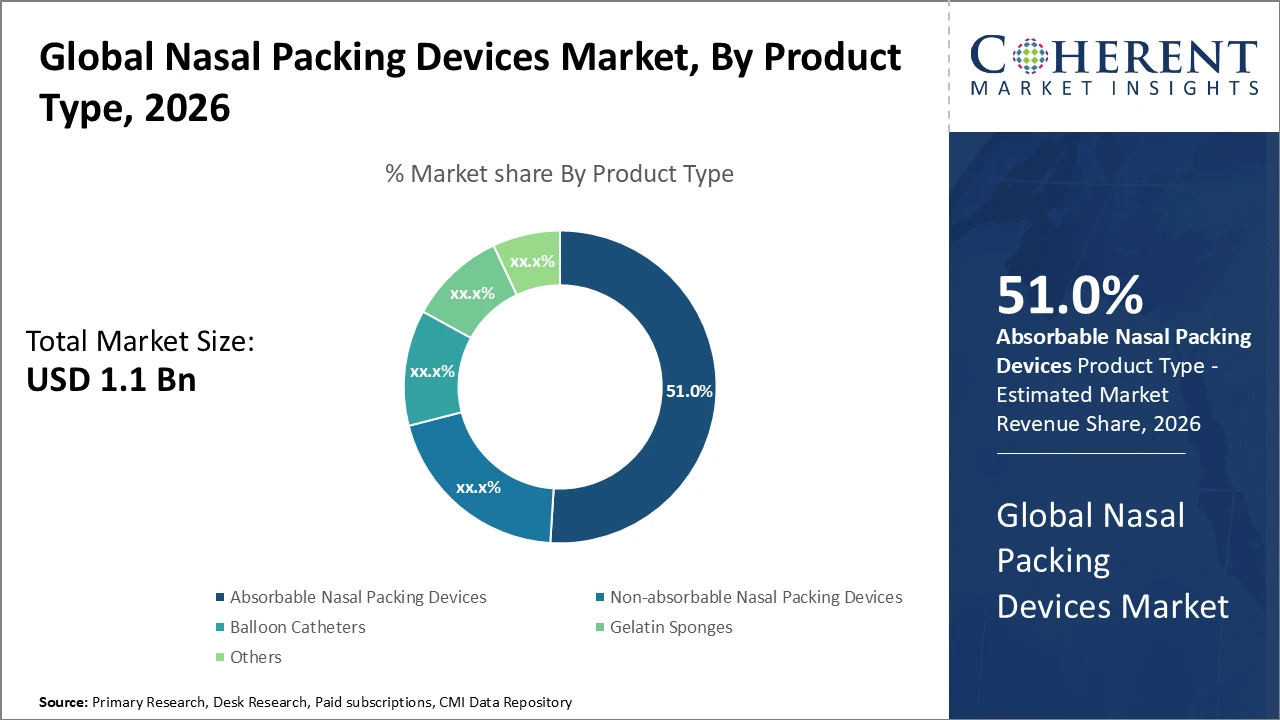
The absorbable nasal packing devices segment holds over 51% of the market share, driven by superior patient outcomes and rising acceptance in clinical procedures.
Epistaxis management remains the leading application with a 42% share, underlining the critical role of nasal packing devices in emergency care settings worldwide.
Hospitals dominate end-user segments with 58% market share, reflecting the concentration of complex ENT procedures in hospital environments.
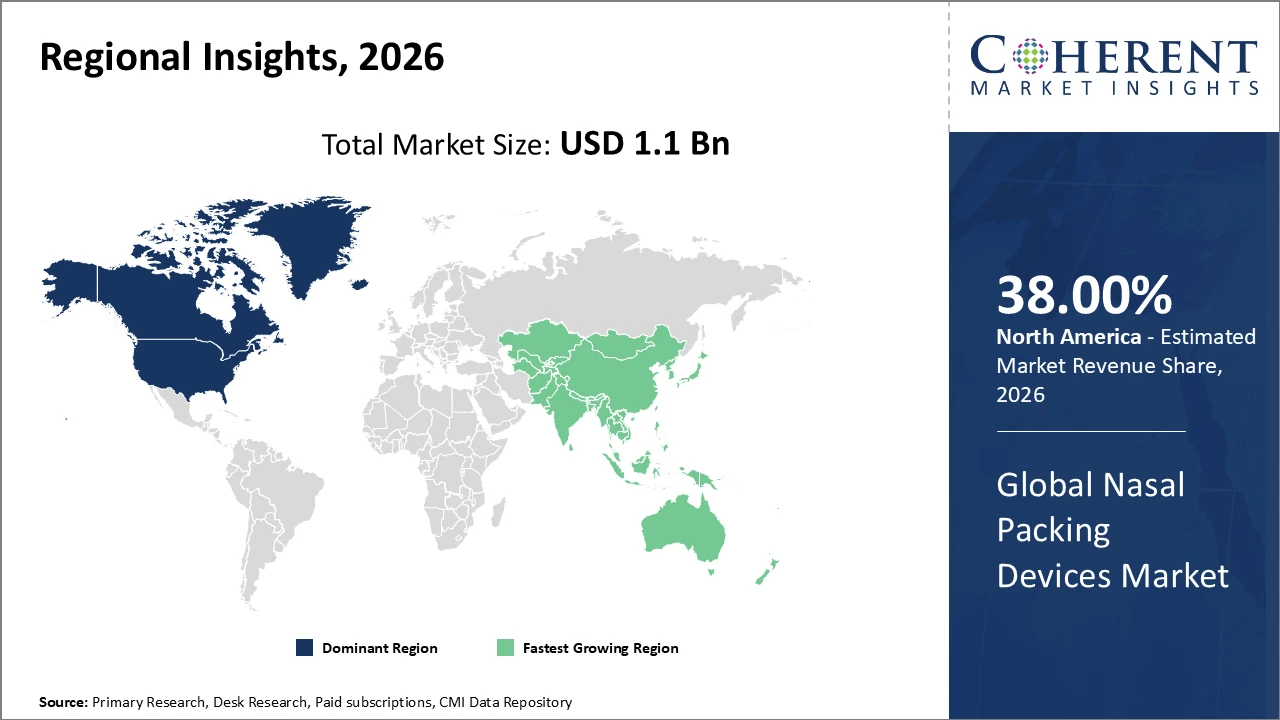
North America remains the dominant regional market primarily due to advanced healthcare infrastructure and high adoption rates of innovative nasal packing solutions.
Asia Pacific emerges as the fastest-growing region, propelled by infrastructure investments and increasing prevalence of nasal trauma cases, with a projected CAGR significantly surpassing global averages.
Nasal Packing Devices Market Segmentation Analysis
Nasal Packing Devices Market Insights, By Product Type
Absorbable nasal packing devices dominate the market with a 51% share, valued for dissolving naturally after use, reducing patient discomfort and the need for follow-up removal. Their growth is fueled by proven clinical effectiveness and patient-focused care trends in advanced healthcare facilities. Balloon catheters are the fastest-growing subsegment, favored for easy insertion and efficient hemostasis, particularly in trauma and emergency care in North America. Non-absorbable packs remain used where cost considerations are key, offering reliable yet removable solutions. Gelatin sponges support surgical bleeding control, while other emerging material composites are in early adoption, showing potential for future growth.
Nasal Packing Devices Market Insights, By Application
Epistaxis management holds the leading 42% share of the market, driven by the high frequency of nosebleeds requiring immediate, effective intervention, supported by rising hospital admissions reported in 2026. Trauma management is the fastest-growing subsegment, fueled by increasing road accidents and facial injuries worldwide, creating demand for advanced nasal packing solutions that enable rapid stabilization. Nasal surgery applications are steadily expanding due to the rise in elective and functional procedures, including septoplasties and turbinate reductions, promoting patient-friendly packing options. Postoperative care maintains consistent demand to prevent hemorrhage, while other applications include rare bleeding disorders and pediatric ENT cases.
Nasal Packing Devices Market Insights, By End User
Hospitals dominate the market with a 58% share, driven by their management of complex cases and surgeries requiring nasal packing for effective hemorrhage control. Their well-established infrastructure supports the adoption of advanced devices, backed by reliable supply chains and reimbursement systems. Ambulatory surgery centers are the fastest-growing subsegment, benefiting from the shift toward outpatient ENT procedures that favor minimally invasive and patient-friendly nasal packing solutions. Clinics show moderate growth, primarily addressing minor nosebleeds, while home care settings are emerging due to increasing patient awareness and demand for at-home care. Other users include specialized ENT centers with niche services.
Nasal Packing Devices Market Trends
The market is shifting toward user-friendly and bioresorbable nasal packing devices, focusing on enhancing patient comfort and minimizing complications.
Antimicrobial-embedded nasal packings introduced in 2026 showed a 20% reduction in post-operative infections in hospital trials.
Balloon catheters are increasingly preferred in emergency care, particularly in North America, for their ease of use and effective hemostasis.
Rising ENT awareness programs and increased government healthcare funding are driving faster adoption of nasal packing devices in developing economies.
Nasal Packing Devices Market Insights, By Geography
North America Nasal Packing Devices Market Analysis and Trends
North America leads the nasal packing devices market due to advanced healthcare infrastructure, high volumes of ENT procedures, and quick adoption of innovative medical technologies. The United States holds over 40% of the regional market, supported by a large patient population requiring epistaxis management and other nasal interventions. The region benefits from a strong presence of leading device manufacturers, including Medtronic and Stryker, who drive innovation through new product launches and technology enhancements. Additionally, favorable reimbursement policies, widespread hospital networks, and growing awareness of nasal trauma and post-surgical care contribute to sustained market growth across North America.
Asia Pacific Nasal Packing Devices Market Analysis and Trends
The Asia Pacific region is experiencing the fastest growth in the nasal packing devices market, fueled by expanding healthcare infrastructure, increasing availability of ENT specialists, and rising incidences of nasal trauma and surgical procedures. Countries such as India and China are leading this growth, recording a CAGR exceeding 9%, driven by increasing healthcare expenditure, government initiatives to improve medical access, and enhanced supply chain logistics that ensure timely availability of advanced devices. Additionally, growing awareness of ENT disorders, rising hospital admissions, and adoption of modern, patient-friendly nasal packing solutions contribute to the region’s accelerated market expansion.
Nasal Packing Devices Market Outlook for Key Countries
USA Nasal Packing Devices Market Analysis and Trends
The U.S. market plays a pivotal role in the global nasal packing devices industry, contributing significantly to both demand and innovation. Hospital data indicate that over 1 million epistaxis interventions annually utilize advanced nasal packing solutions. Leading companies, including Stryker and Medtronic, are driving product innovation with next-generation bio-absorbable packs featuring enhanced hemostatic performance. Government initiatives encouraging outpatient surgical procedures are expected to boost adoption through 2026 and beyond. Additionally, emergency medical services in major cities are increasingly deploying balloon catheter devices as first-line treatments for trauma cases, highlighting evolving clinical practices and strategic market growth in the region.
Germany Nasal Packing Devices Market Analysis and Trends
Germany’s nasal packing devices market ranks among the largest in Europe, fueled by an aging population with a high incidence of chronic nasal conditions and strong hospital infrastructure. In 2025, German healthcare providers generated significant revenues, with a growing preference for absorbable devices that reduce patient discomfort after surgery. Leading domestic manufacturers focus on innovation, developing antimicrobial and biodegradable nasal packing solutions that support both local use and exports. Supportive regulatory frameworks, including favorable reimbursement policies for advanced nasal care products, further drive adoption. These factors collectively strengthen Germany’s market position and encourage continued growth in the European nasal packing devices sector.
Analyst Opinion
Growing demand for absorbable nasal packing materials is a key growth driver, with hospitals and clinics reporting a 25% increase in adoption in 2025 due to reduced patient discomfort and fewer follow-up interventions, particularly in ENT outpatient procedures globally.
Rising incidence of epistaxis, especially among geriatric and pediatric populations, is boosting market revenue. Reports from 2026 indicate severe nosebleeds in the elderly have increased by nearly 15% over three years, driving demand for efficient nasal packing devices in emergency care.
Technological innovations in foam and balloon nasal packing devices have enhanced efficacy and patient compliance, with high-volume tamponade packs in 2024 showing a 30% improvement in hemostatic capacity, prompting increased production in North America and Europe.
Market growth in emerging economies is supported by improved healthcare infrastructure and higher ENT specialist availability, with Southeast Asia recording a 20% rise in nasal device imports in 2025 due to hospital upgrades and government health initiatives.
- Current Industry Events of 2026
- Market Size Estimation
- Regional Breakdown
- Competitive Landscape
- Customer Intelligence
- Segmental Analysis
- Pricing Analysis
- Key Market Drivers, Challenges & Future Trends
- Customized Insights Section
Market Scope
| Report Coverage | Details | ||
|---|---|---|---|
| Base Year: | 2025 | Market Size in 2026: | USD 1.1 billion |
| Historical Data for: | 2020 To 2024 | Forecast Period: | 2026 To 2033 |
| Forecast Period 2026 to 2033 CAGR: | 7.2% | 2033 Value Projection: | USD 1.8 billion |
| Geographies covered: |
| ||
| Segments covered: |
| ||
| Companies covered: | Medtronic plc, Stryker Corporation, Smith & Nephew Plc, Olympus Corporation, Teleflex Incorporated, Roche Diagnostics, CooperSurgical Inc., Medline Industries | ||
| Growth Drivers: |
| ||
Nasal Packing Devices Market Growth Factors
Key factors driving the nasal packing devices market include the rising prevalence of chronic nasal conditions and bleeding disorders, with clinical data indicating a 17% annual increase in epistaxis management cases worldwide. Technological advancements, such as bioresorbable materials replacing traditional gauze, have enhanced patient outcomes and reduced hospital stays, as reported in 2025 studies. Expanding healthcare infrastructure in emerging markets has opened new revenue opportunities, supported by government policies improving access to ENT services in regions like Asia Pacific and the Middle East & Africa. Additionally, growing awareness among general practitioners and emergency care providers is expanding device use beyond surgical settings.
Nasal Packing Devices Market Development
In March 2026, SGD Pharma partnered with Prince Sterilization Services, LLC to validate ready-to-use Type I glass packaging solutions for North America. The collaboration’s first product, the My Sterinity Nasal platform, expands SGD Pharma’s existing vial range and was introduced at DCAT Week 2026 in New York.
Key Players
Leading Companies of the Market
Stryker Corporation
Medtronic Plc
Smith & Nephew Plc
Olympus Corporation
Teleflex Incorporated
Roche Diagnostics
CooperSurgical Inc.
Medline Industries
Several leading companies have undertaken strategic acquisitions and product expansions to enhance their market presence. In 2025, Stryker acquired ArthroCare, increasing its nasal packing device capacity and broadening its portfolio in the growing absorbable devices segment, which contributed to a 12% revenue growth reported in 2026. Likewise, Medtronic introduced a next-generation balloon catheter in 2024 with advanced compliance technology, resulting in a 15% increase in market share in North America. These strategic moves highlight the emphasis on innovation and portfolio diversification among key players to capture emerging opportunities and meet rising demand in the nasal packing devices market.
Nasal Packing Devices Market Future Outlook
The future outlook for the nasal packing devices market is positive, driven by growing prevalence of nasal trauma, chronic epistaxis, and post-surgical interventions. Increasing demand for patient-friendly, absorbable, and drug-eluting packing materials is expected to drive innovation. Technological advancements such as sensor-enabled balloon catheters and smart materials that combine hemostasis with healing support are likely to expand market adoption. Emerging markets with rising healthcare infrastructure and awareness are also expected to contribute to growth. Overall, the market is anticipated to evolve toward minimally invasive, efficient, and safer nasal packing solutions that enhance patient comfort and clinical outcomes.
Nasal Packing Devices Market Historical Analysis
The historical analysis of the nasal packing devices market shows steady growth driven by rising awareness of ENT disorders and advancements in surgical care. Traditionally, non-absorbable materials like cotton and gauze were widely used, requiring manual removal and often causing patient discomfort. Over time, absorbable materials such as gelatin, collagen, and synthetic foams were introduced, improving patient compliance and reducing complications. Balloon-based devices emerged for targeted hemostasis, especially in severe epistaxis cases. The market has been shaped by increasing hospital-based ENT procedures, rising incidence of nasal injuries, and continuous innovation in materials and designs, setting the stage for modern, patient-friendly solutions.
Sources
Primary Research Interviews:
ENT surgeons, otolaryngologists, and hospital procurement managers involved in selecting nasal packing devices.
Nurses, surgical assistants, and emergency care physicians who use or monitor nasal packing treatments.
Industry experts from companies manufacturing or consulting on nasal packing materials and surgical devices.
Magazines:
ENT Today – Updates on ear, nose, and throat procedures, innovations in nasal care, and clinical case studies.
MedTech Insight – Reports on medical device development, hospital adoption trends, and product launches.
Healthcare Design – Articles on clinical workflow improvements, surgical tools, and patient safety in ENT care.
Journals:
International Journal of Otolaryngology – Research on nasal bleeding management, post-operative care, and nasal packing effectiveness.
Journal of Medical Devices – Studies on device design, biocompatible materials, and hemostatic technologies.
European Archives of Oto-Rhino-Laryngology – Clinical trials, innovation in ENT devices, and patient outcome studies.
Newspapers:
The Wall Street Journal – Corporate strategies, investments, and mergers in medical device companies.
Financial Times – Market trends, healthcare spending, and regulatory updates for medical technologies.
Reuters – Coverage of product launches, innovations, and global market developments in ENT devices.
Bloomberg – Financial performance and market insights for medical device manufacturers.
Associations:
American Academy of Otolaryngology–Head and Neck Surgery (AAO-HNS) – Guidelines, clinical protocols, and standards for ENT procedures.
European Rhinologic Society (ERS) – Research, best practices, and clinical recommendations for nasal treatments.
Medical Device Manufacturers Association (MDMA) – Insights on regulatory compliance, device innovation, and market trends.
Get access to 250+ pages report
Every segment, forecast, competitor profile and data table behind the analysis above — available for instant download.
- ESOMAR Member
- ISO 9001:2015 Certified
- D-U-N-S Registered
- GDPR & CCPA Compliant
Missing comfort of reading report in your local language? Find your preferred language:
Transform your Strategy with Exclusive Trending Reports
Frequently Asked Questions
The market is dominated by companies such as Medtronic plc, Stryker Corporation, and Smith & Nephew plc, which hold significant market share due to extensive product portfolios and strong research and development focus.
The market size is expected to grow from USD 1.1 billion in 2026 to around USD 1.8 billion by 2033, with a CAGR of 7.2%, driven by rising incidence of epistaxis and technological innovations.
Hospitals represent the largest end-user segment and provide substantial growth opportunities given their extensive use of nasal packing devices for surgical and emergency care.
Innovations in absorbable materials, antimicrobial coatings, and balloon catheter designs will drive market growth, alongside expansion into emerging markets supported by health infrastructure improvements.
The market is highly competitive with innovation-led product launches and strategic acquisitions, but faces challenges including pricing pressures and regulatory compliance demands.
Leading players employ strategies such as mergers and acquisitions, product differentiation through technological advancement, and strategic partnerships with hospitals and healthcare providers to expand market reach.