

Transdermal Drug Delivery Systems Market Size and Forecast — 2026 - 2033
The Global Transdermal Drug Delivery Systems Market size is estimated to be valued at USD 13.5 billion in 2026 and is projected to reach USD 24.7 billion by 2033, growing at a compound annual growth rate (CAGR) of 8.5% between 2026 and 2033.
Overview
The transdermal drug delivery systems market is driven by the growing prevalence of chronic conditions such as Diabetes Mellitus and Cardiovascular Diseases, which require long-term medication. Increasing preference for non-invasive, pain-free drug administration boosts adoption over oral and injectable routes. Technological advancements, including microneedle patches and controlled-release systems, enhance drug efficacy and patient compliance. Rising geriatric populations and demand for self-administration further support growth. Additionally, expanding research, favorable regulatory approvals, and the need to improve bioavailability of drugs with poor oral absorption continue to drive the market.
Key Takeaways
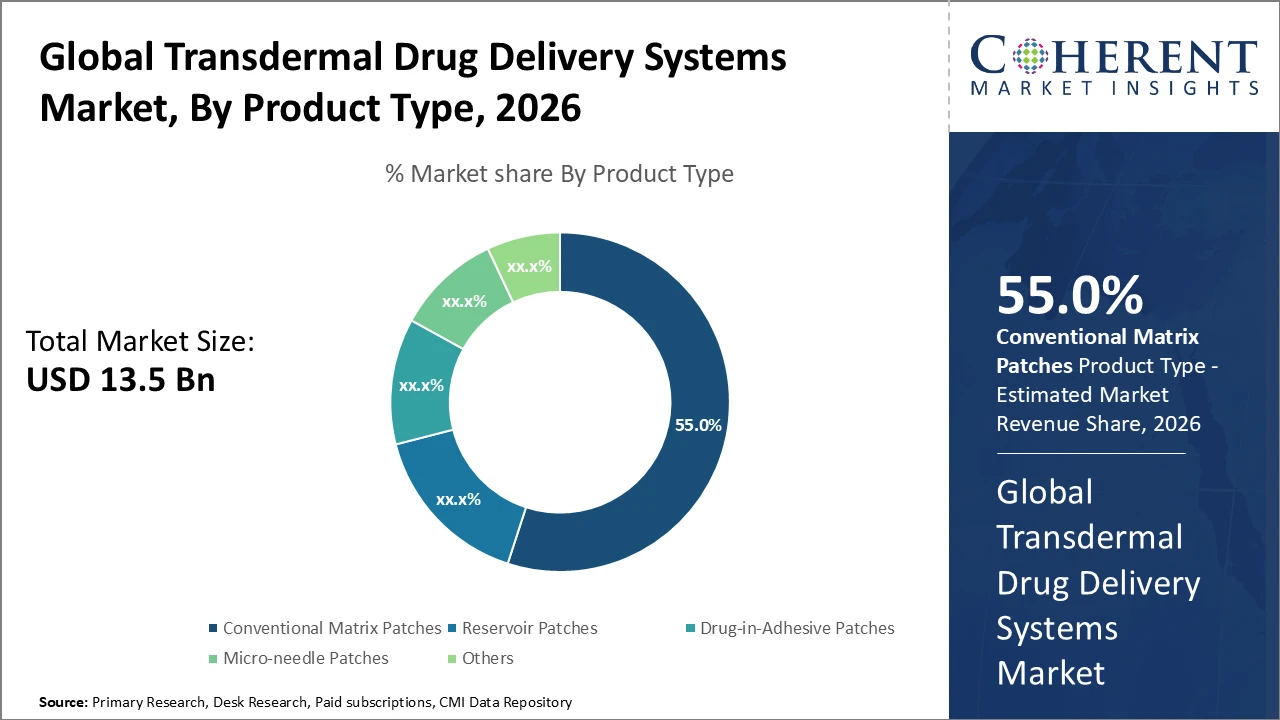
Conventional Matrix Patches hold the largest market share at 55%, favored for stable drug release and simple manufacturing.
Micro-needle patches are the fastest-growing subsegment, providing innovative drug delivery with improved patient compliance.
Pain management is the leading application, representing 35% of the market, driven by demand for sustained-release analgesics.
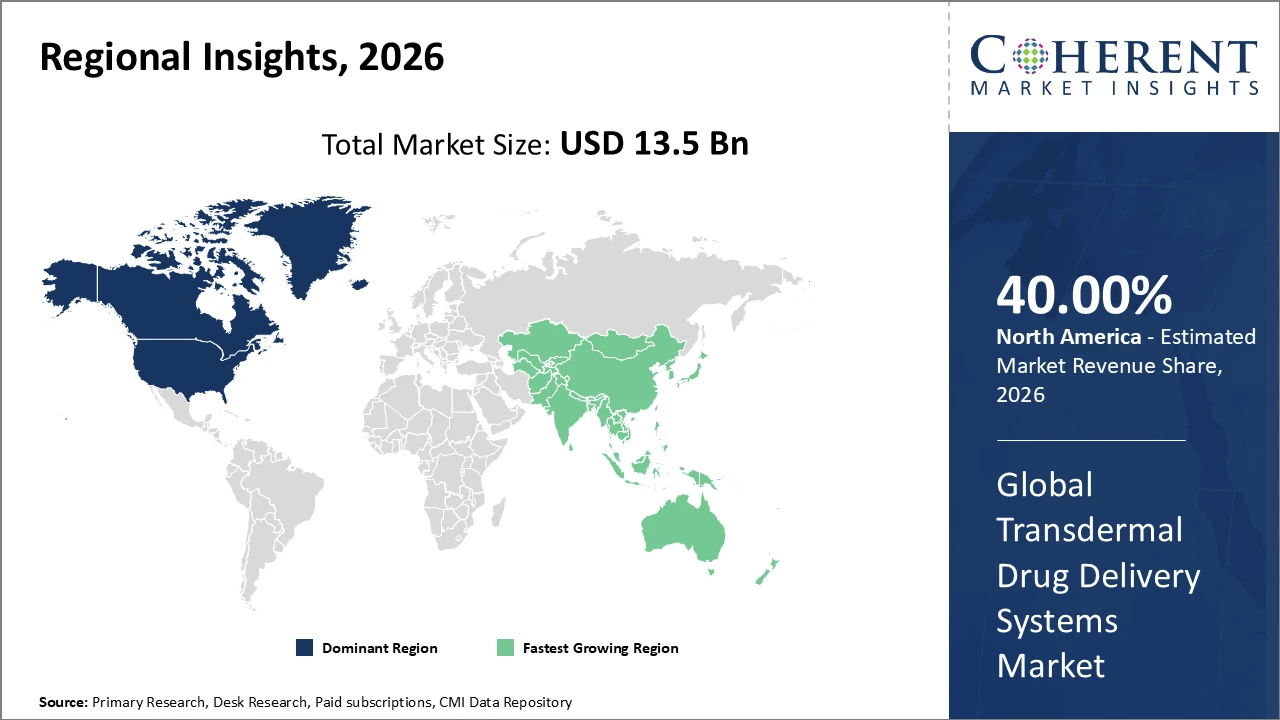
North America dominates regionally, contributing around 40% of market revenue due to advanced healthcare infrastructure and strong R&D investments.
Asia Pacific is the fastest-growing region with a CAGR above 10%, supported by expanding pharmaceutical manufacturing and improved healthcare access.
Europe maintains significant market importance, with high adoption of hormonal and cardiovascular therapies, aided by favorable regulations and government initiatives.
Transdermal Drug Delivery Systems Market Segmentation Analysis
Transdermal Drug Delivery Systems Market Insights, By Product Type
Conventional Matrix Patches dominate the market share at 55%, valued for their proven efficacy, ease of manufacturing, and cost-effectiveness, forming the core of transdermal drug delivery products. Micro-needle Patches are the fastest-growing subsegment, driven by pain-free administration and enhanced drug permeability. Reservoir Patches enable controlled drug release via micro-reservoirs but face regulatory scrutiny due to safety considerations. Drug-in-Adhesive Patches serve niche applications with precise dosing through direct drug reservoir designs. The Others category includes emerging formats such as spray-on and biodegradable patches, reflecting innovation. Overall, growth is fueled by technological advancements enhancing patient compliance and therapeutic outcomes.
Transdermal Drug Delivery Systems Market Insights, By Application
Pain Management leads the transdermal drug delivery systems market with a 35% share, driven by the demand for non-invasive solutions amid the opioid crisis, making patches preferred for post-surgical and arthritis-related analgesics. Neurological Disorders are the fastest-growing subsegment, fueled by innovations in dopamine and anti-epileptic drug patches enhancing blood-brain barrier penetration. Cardiovascular Disorders show steady growth due to ongoing need for hypertension and smoking cessation therapies. Hormonal Therapy is increasingly adopted for menopausal symptom management and female health. The Others segment includes vaccine delivery and anti-diabetic patches, expected to expand gradually as clinical approvals and adoption rise.
Transdermal Drug Delivery Systems Market Insights, By End User
Hospitals and Clinics dominate the transdermal drug delivery systems market, holding the largest share due to centralized administration and controlled therapeutic settings. Home Healthcare is the fastest-growing segment, driven by outpatient treatment, self-administration, and the adoption of smart patch technologies and telemedicine platforms. Research Laboratories play a crucial role in innovation and clinical trial applications, although they account for a smaller share. The Others category, including pharmacies and long-term care facilities, shows steady incremental growth. Overall, the end-user segment expansion reflects a shift toward patient-centric care models, emphasizing convenience, adherence, and reduced hospital readmissions through advanced transdermal therapies.
Transdermal Drug Delivery Systems Market Trends
Integration of technology in transdermal delivery is a key trend, exemplified by smart patches that provide real-time health data monitoring. In 2025, a sensor-enabled patch for opioid pain management improved patient adherence and reduced hospital readmissions.
Rising adoption of biodegradable materials aims to minimize environmental impact, with manufacturers reporting a 15% increase in demand for eco-friendly transdermal patches in 2024.
Combinational therapies delivered via single patches are reshaping treatment protocols for complex chronic diseases, with 2024 clinical studies showing a 20% reduction in adverse drug interactions.
Overall trends emphasize patient-centric, sustainable, and technologically advanced solutions in the market.
Transdermal Drug Delivery Systems Market Insights, By Geography
North America Transdermal Drug Delivery Systems Market Analysis and Trends
In North America, the Transdermal Drug Delivery Systems market is dominated by advanced pharmaceutical infrastructure, strong R&D investment, and supportive government policies promoting innovation. The U.S. leads the region, with major companies such as Johnson & Johnson and 3M spearheading product development, clinical trials, and commercialization of next-generation transdermal therapies. Early adoption of innovative drug delivery technologies is facilitated by a robust healthcare ecosystem, streamlined regulatory pathways, and high patient awareness. These factors collectively enable North America to capture around 40% of the global market share, maintaining its leadership position while driving technological advancements and therapeutic efficacy in transdermal drug delivery.
Asia Pacific Transdermal Drug Delivery Systems Market Analysis and Trends
The Asia Pacific region demonstrates the fastest growth in the Transdermal Drug Delivery Systems market, with a CAGR exceeding 10%. Rapid expansion of pharmaceutical manufacturing hubs in China and India, combined with increasing healthcare accessibility and favorable trade policies, are primary growth drivers. Government initiatives supporting local production and encouraging adoption of non-invasive therapies further stimulate market development. Key players, including Glenmark Pharmaceuticals and Strides Pharma Science, capitalize on cost efficiencies and the region’s large, growing population to scale operations. Rising awareness of patient-friendly drug delivery solutions and expanding chronic disease management needs continue to fuel regional market growth.
Transdermal Drug Delivery Systems Market Outlook for Key Countries
USA Transdermal Drug Delivery Systems Market Analysis and Trends
The USA’s Transdermal Drug Delivery Systems market remains a global leader, driven by substantial healthcare expenditure and advanced clinical infrastructure. Key players, including Johnson & Johnson and Pfizer, are investing heavily in R&D, advancing micro-needle technologies and sensor-enabled patches. In 2025, FDA approvals for innovative hormonal and pain management patches further boosted market revenue. The expanding home healthcare sector, coupled with supportive reimbursement policies, is enhancing patient access and adoption of transdermal therapies. These factors collectively enable the USA to sustain its leadership in market share while driving technological innovation, improved therapeutic outcomes, and scalable commercial growth in the sector.
Germany Transdermal Drug Delivery Systems Market Analysis and Trends
Germany’s Transdermal Drug Delivery Systems market is characterized by strong adoption in hospitals, clinics, and research institutions, supported by advanced healthcare infrastructure and favorable regulatory frameworks. The market is witnessing growth in micro-needle and sensor-integrated patches, particularly for pain management and hormonal therapies, reflecting rising patient preference for non-invasive treatments. Home healthcare is gaining traction due to increased focus on outpatient care and patient self-management. Additionally, government initiatives promoting innovation in pharmaceutical technologies, along with collaborations between local biotech firms and global pharmaceutical companies, are driving R&D investments and market expansion. The market is poised for steady growth and technological advancement.
Analyst Opinion
The demand for transdermal patches in chronic pain management rose significantly, with post-operative analgesic use increasing by 14% globally in 2025. Expanding geriatric populations requiring sustained-release therapies contributed to market growth, supported by a 7% annual increase in elderly patients worldwide as reported by the World Health Organization in 2024.
Production capacity scaled notably, with key manufacturing hubs in North America and Asia Pacific increasing output by approximately 20% in 2024. Competitive pricing, aided by cost-effective polymeric film technologies, reduced production costs by nearly 12%, promoting wider market adoption.
Import-export activity intensified, particularly from Asia Pacific to North America, with a 15% year-over-year increase in 2025 due to regulatory harmonization and favorable trade agreements. Neurological disorder treatments captured 30% of the transdermal drug delivery market by mid-2025.
Micro-segment growth shows rising demand for nano-carrier integrated patch technologies, holding a 9% market share in 2025. Clinical trials indicated up to 25% higher drug bioefficacy compared to conventional patches, driving innovation and adoption.
- Current Industry Events of 2026
- Market Size Estimation
- Regional Breakdown
- Competitive Landscape
- Customer Intelligence
- Segmental Analysis
- Pricing Analysis
- Key Market Drivers, Challenges & Future Trends
- Customized Insights Section
Market Scope
| Report Coverage | Details | ||
|---|---|---|---|
| Base Year: | 2025 | Market Size in 2026: | USD 13.5 billion |
| Historical Data for: | 2020 To 2024 | Forecast Period: | 2026 To 2033 |
| Forecast Period 2026 to 2033 CAGR: | 8.5% | 2033 Value Projection: | USD 24.7 billion |
| Geographies covered: |
| ||
| Segments covered: |
| ||
| Companies covered: | Johnson & Johnson, Novartis AG, 3M Company, Mylan N.V., Orexo AB, Bayer AG, Pfizer Inc., Teva Pharmaceutical Industries Ltd., Medtronic PLC, Dermira Inc. | ||
| Growth Drivers: |
| ||
Transdermal Drug Delivery Systems Market Growth Factors
The Transdermal Drug Delivery Systems market is driven by multiple growth factors. Rising prevalence of chronic diseases, including cardiovascular and neurological disorders, fuels demand for non-invasive, sustained, and targeted drug delivery solutions. Technological advancements such as microneedle patches and nano-carrier integration improve drug absorption and patient adherence, with clinical evaluations in 2025 reporting a 20% increase in delivery efficiency. Streamlined global regulatory pathways facilitate faster approvals and market entry for innovative products. Additionally, growing investments in home healthcare and outpatient treatment infrastructures have led to a 10% rise in TDDS adoption in homecare settings in 2024, supporting overall market expansion.
Transdermal Drug Delivery Systems Market Development
In January 2024, Kindeva Drug Delivery announced the expansion of its analytical services by launching a new global business unit that provides both integrated and standalone analytical support to pharmaceutical, biopharmaceutical, and medical device companies.
Key Players
Leading Companies of the Market
Johnson & Johnson
Novartis AG
3M Company
Bayer AG
Pfizer Inc.
Orexo AB
Mylan N.V.
Teva Pharmaceuticals Industries Ltd.
Medtronic PLC
Dermira Inc.
Several leading companies in the Transdermal Drug Delivery Systems market have implemented targeted competitive strategies to strengthen their positions. Johnson & Johnson focused on strategic acquisitions and expanded its transdermal portfolio into hormonal therapies, resulting in an 18% market share increase in 2024. Novartis leveraged rapid clinical development approaches, enabling faster product launches and entry into emerging cardiovascular therapy segments, driving a 12% revenue boost in the same year. Teva Pharmaceutical invested significantly in R&D collaborations for micro-needle patch technologies, fostering innovation and securing key patents, which enhanced its technological leadership and competitive advantage in 2025.
Transdermal Drug Delivery Systems Market Future Outlook
The Transdermal Drug Delivery Systems market is poised for robust growth, driven by rising demand for non-invasive therapies, improved patient compliance, and chronic disease management. Advances in microneedle technology, smart patches with digital monitoring, and long-acting drug formulations are expected to expand therapeutic applications across pain management, hormonal therapies, cardiovascular treatments, and vaccines. Increasing geriatric populations and rising prevalence of chronic illnesses further fuel adoption globally. Additionally, emerging markets in Asia Pacific and Latin America are expected to witness significant growth due to expanding healthcare infrastructure and favorable regulatory policies. Market expansion will also be supported by collaborations between pharmaceutical and medical device companies.
Transdermal Drug Delivery Systems Market Historical Analysis
The Transdermal Drug Delivery Systems market has experienced steady growth over the past decade, driven by increasing demand for patient-friendly and non-invasive drug administration methods. Early adoption focused on hormone replacement therapies and nicotine patches, which demonstrated improved adherence compared to oral medications. Between 2015 and 2022, technological advancements such as microneedle arrays, iontophoresis, and polymer-based drug reservoirs enabled broader therapeutic applications, including pain management and cardiovascular treatments. North America historically led the market due to well-established healthcare infrastructure and early regulatory approvals, while Europe followed closely. Asia Pacific showed emerging growth as awareness and healthcare access improved, setting the stage for current expansion.
Sources
Primary Research Interviews:
Pharmacologists, formulation scientists, and R&D managers from companies developing transdermal patches, microneedles, and iontophoresis-based delivery systems.
Clinical specialists and healthcare professionals using transdermal therapies for pain management, hormone replacement, and chronic conditions.
Industry experts from firms supplying polymer-based patches, wearable drug delivery devices, and smart transdermal systems.
Magazines:
Drug Delivery & Development – Innovations in transdermal drug delivery, patch technologies, and regulatory trends.
Pharmaceutical Technology – Updates on drug delivery devices, market adoption, and manufacturing advancements.
BioPharma International – Insights on formulation science, clinical applications, and emerging transdermal solutions.
Journals:
Journal of Controlled Release – Research on controlled and sustained release transdermal systems.
International Journal of Pharmaceutics – Studies on patch design, skin permeation, and bioavailability technologies.
European Journal of Pharmaceutics and Biopharmaceutics – Investigations on transdermal drug absorption and efficacy.
Newspapers:
The Wall Street Journal – Corporate strategies, mergers, and investments in transdermal drug delivery companies
Financial Times – Market developments, regulatory updates, and global adoption trends for transdermal systems.
Reuters – News on technological breakthroughs and clinical approvals affecting transdermal therapies.
Bloomberg – Financial performance and global market insights of leading pharmaceutical and drug delivery companies.
Associations:
International Society for Drug Delivery Science and Technology (ISDDS) – Standards, guidelines, and research in drug delivery systems.
Parenteral Drug Association (PDA) – Best practices, compliance, and technology updates for transdermal devices.
World Health Organization (WHO) – Guidelines and protocols for safe and effective transdermal medication administration.
Get access to 250+ pages report
Every segment, forecast, competitor profile and data table behind the analysis above — available for instant download.
- ESOMAR Member
- ISO 9001:2015 Certified
- D-U-N-S Registered
- GDPR & CCPA Compliant
Missing comfort of reading report in your local language? Find your preferred language:
Transform your Strategy with Exclusive Trending Reports
Frequently Asked Questions
Dominant players include Johnson & Johnson, Novartis AG, 3M Company, and Teva Pharmaceutical Industries Ltd., recognized for their extensive product portfolios and continuous innovation in TDDS technologies.
The market is projected to grow from USD 13.5 billion in 2026 to USD 24.7 billion by 2033, registering a CAGR of 8.5%, driven by rising chronic disease prevalence and adoption of advanced patch technologies.
Hospitals and clinics lead currently, especially for pain management, while home healthcare is rapidly emerging due to patient preference for non-invasive outpatient treatments.
Trends indicate a shift toward personalized and sensor-integrated patches, biodegradable materials, and combinational drug delivery systems to enhance efficacy and patient adherence.
The market is highly competitive with innovation-driven strategies. Key challenges include manufacturing complexity, regulatory variability across countries, and cost pressures.
Companies employ strategic acquisitions, R&D collaborations, accelerated clinical development, and expansion into emerging markets to meet rising demand.