

Transient Elastography Devices Market Size and Share Analysis - 2026 To 2033
The transient elastography devices market is anticipated to grow at a CAGR of 7.61% with USD 529.8 Mn in 2026 and is expected to reach USD 884.9 Mn in 2033. Few of the growth inducing factors driving of the market are a surge in incidence related to liver disorders (about 1.1 Mn deaths), a rise in sedentary life, an increase in consumption of alcohol, a rise in smoking, consumption of unhealthy diet, etc. Additionally, all these factors are impacting the rise of prevalence associated with diseases like liver cirrhosis and fibrosis which is also triggering the growth of the market during the forecast period.
Key Takeaways
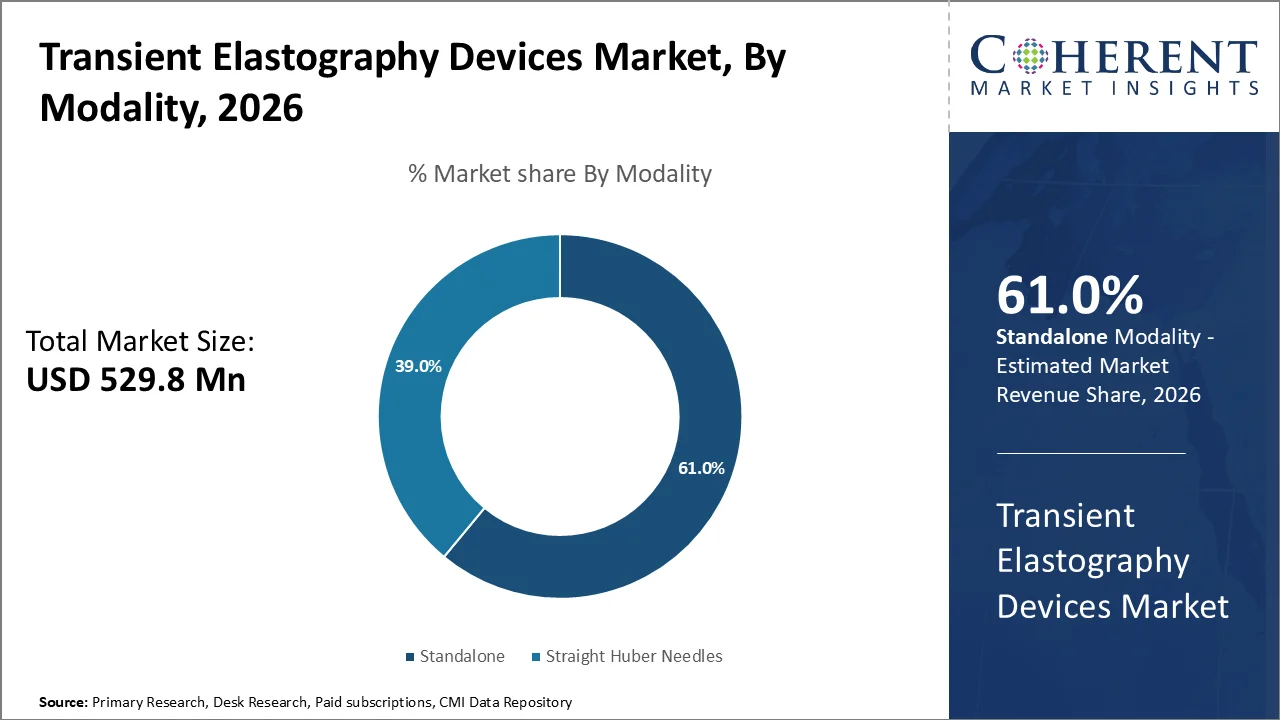
- Standalone is expected to account the largest share of 61% in 2026, they are designed to handle a large number of examinations efficiently, making them the preferred choice for tertiary hospitals and high-volume diagnostic centers. The diagnostic lab industry performed about 125 Mn tests in 2025, showing that hospitals and laboratories are doing a very large number of medical tests every year.
- Vibration Controlled Transient Elastography (VCTE)Inhibitors will dominate with 53% in 2026, VCTE is the most established and clinically validated technique for assessing liver fibrosis non-invasively, making it the preferred choice among hepatologists. Studies show that about 49 Mn adults have significant liver fibrosis, meaning many people already have serious liver damage without knowing it.
- Hospitals segment will dominate with 49% in 2026, Hospitals diagnose and treat the largest number of patients with chronic liver diseases such as hepatitis, liver fibrosis, cirrhosis, and MASLD/NAFLD, resulting in greater use of transient elastography devices. Hepatitis C caused about 240,000 deaths, and this number is 12% lower than before, showing that fewer people are dying from the disease compared to earlier years.
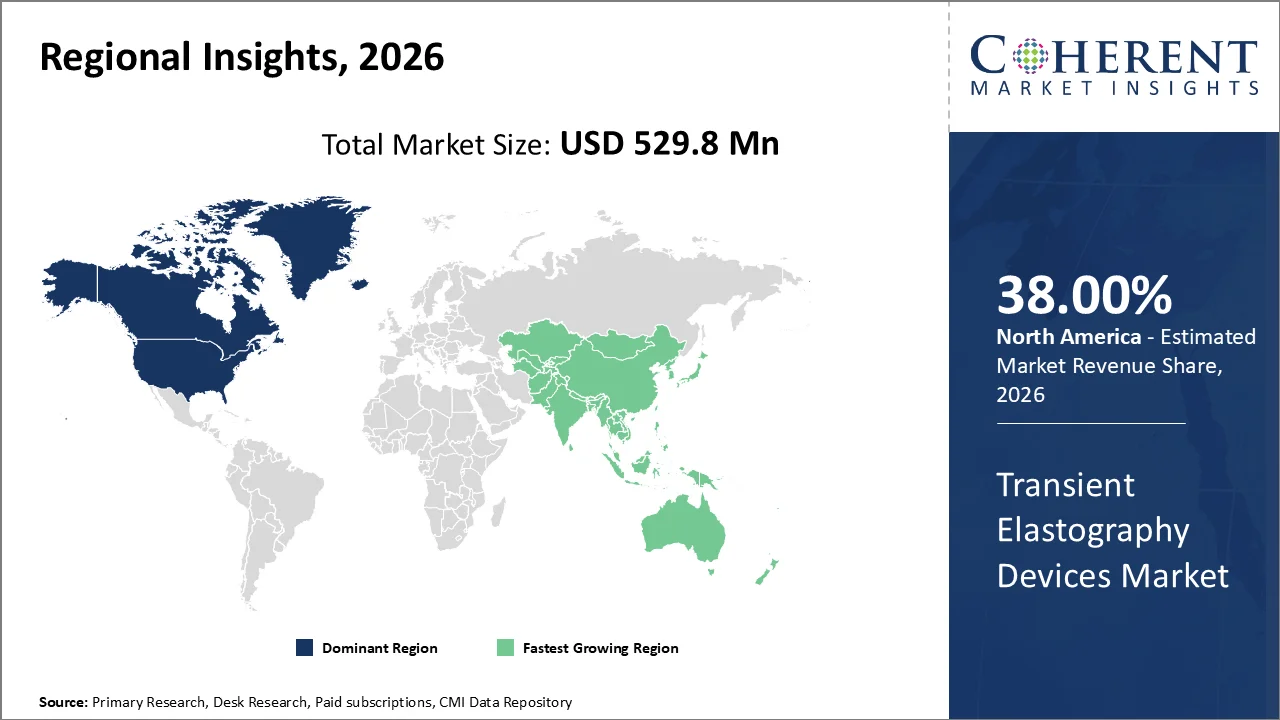
- North America is expected to acquire the dominant share of 38% in 2026, the region has well-equipped hospitals and diagnostic centers that widely use non-invasive liver assessment technologies. In 2026, about 42,340 people in the United States are expected to be diagnosed with liver cancer, and around 30,980 people may die from it.
Segmental Insights
Why is Standalone Segment Acquiring the Largest Market Share?
Standalone is projected to account for the largest share of modality in 2026, representing approximately 61% of the total volume. Owing to its well-established clinical integration, superior diagnostic accuracy, and longstanding adoption across hepatology departments in tertiary care hospitals and specialized liver disease management centers worldwide.
The standalone modality, predominantly represented by the FibroScan system developed by Echosens, has been deeply embedded in clinical workflows for non-invasive liver fibrosis assessment, replacing the traditional and more invasive liver biopsy in routine diagnostic procedures.
These devices are planned to provide a complete, full-featured examination environment with large touchscreen interfaces, advanced result interpretation dashboards, as well as the ability to store and manage extensive patient data over time.
- Current Industry Events of 2026
- Market Size Estimation
- Regional Breakdown
- Competitive Landscape
- Customer Intelligence
- Segmental Analysis
- Pricing Analysis
- Key Market Drivers, Challenges & Future Trends
- Customized Insights Section
Vibration Controlled Transient Elastography (VCTE) holds the Largest Market Share
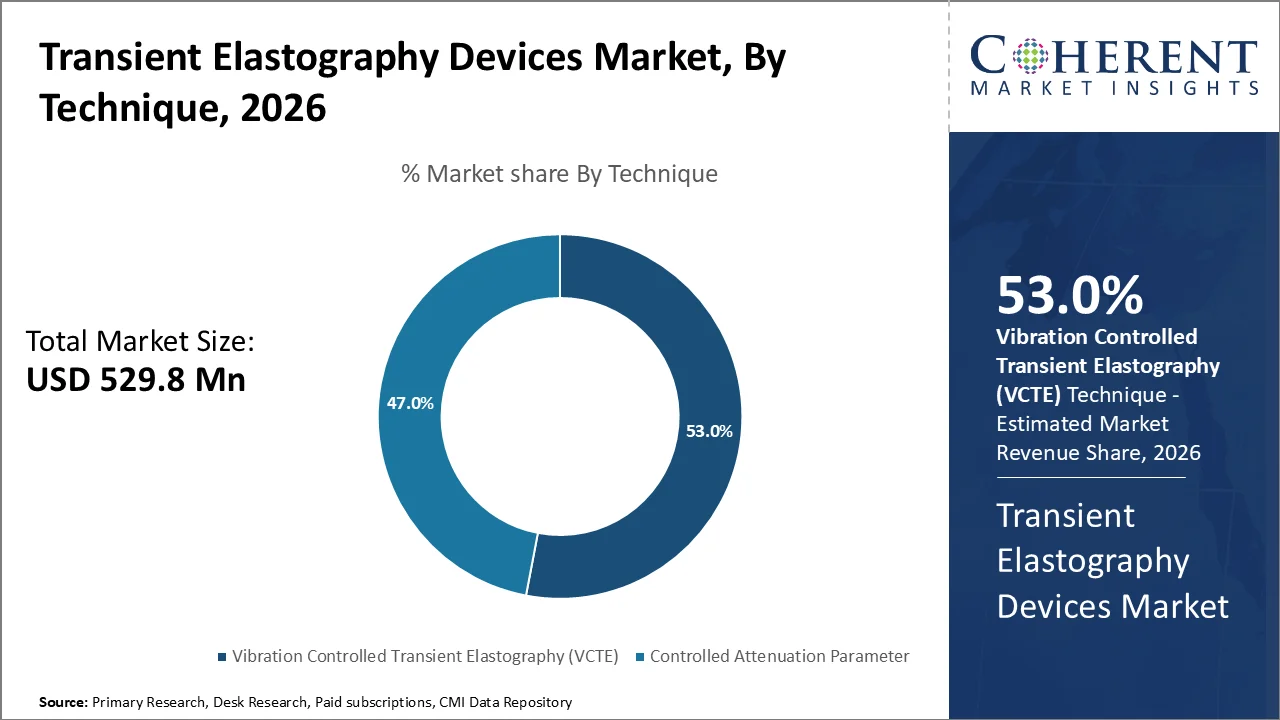
Based on technique, Vibration Controlled Transient Elastography (VCTE) dominates the market, accounting for a significant 53% share in 2026. Its well-established clinical validation, widespread adoption across hepatology practices globally, as well as its status as the gold standard non-invasive technique for liver fibrosis assessment are the factors propelling the growth. According to our research, the number of minimally invasive procedures to increase by about 40% by 2026.
The technique has fundamentally transformed how clinicians analyze liver stiffness without resorting to invasive liver biopsy procedures, which carry inherent risks including bleeding, pain, and rare but serious complications including organ perforation.
VCTE works by generating a low-frequency elastic wave transmitted through liver tissue, measuring the velocity of the wave propagation to analyze tissue stiffness expressed in kilopascals (kPa). This approach has attained better results from major hepatology bodies globally, making it the most preferred technique for routine liver assessment in chronic liver disease patients.
Hospitals holds the Largest Market Share
Based on end user, hospitals dominates the market, accounting for a significant 49% share in 2026, their well-established infrastructure, high patient footfall, comprehensive diagnostic capabilities, as well as the availability of specialized hepatology and gastroenterology departments are the growth inducing factors.
Hospitals are the main place where patients with chronic liver diseases such as hepatitis B, hepatitis C, fatty liver disease, and liver cirrhosis receive treatment and regular monitoring using non-invasive tools like transient elastography. Although new hepatitis B infections have fallen by 32% and hepatitis C deaths have decreased by 12% worldwide, millions of people are still living with chronic liver disease. This keeps the demand for hospital-based diagnosis and regular liver monitoring high.
According to the World Health Organization (WHO), viral hepatitis affects approximately 354 million people globally, with hepatitis B and C being among the leading causes of liver cancer as well as cirrhosis. This enormous disease burden has prompted hospitals across both developed as well as emerging economies to invest in Fibroscan and other transient elastography devices as part of their standard hepatological workup.
For instance, large academic medical centers and teaching hospitals affiliated with government health ministries frequently incorporate these devices into their gastroenterology and hepatology wards, ensuring that liver fibrosis staging is conducted non-invasively without subjecting patients to the risks associated with liver biopsies.
Market Drivers
Core Principle of Transient Elastography is transforming the Transient Elastography Devices Industry
Transient elastography is a simple, non-invasive test that checks how stiff the liver is without using a biopsy. The device sends a low-frequency 50 Hz vibration into the liver and uses ultrasound to measure how fast the wave travels. The results are shown in kilopascals (kPa). A higher kPa value means the liver is stiffer, which usually shows more fibrosis or scarring. The test measures liver stiffness in a range of 2.5 to 75 kPa and aid doctors identify fibrosis stages from F0 (no fibrosis) to F4 (cirrhosis).
The technology is well established as well as broadly used in hospitals and liver clinics. Basic transient elastography, Controlled Attenuation Parameter (CAP), and XL probe technology are mature and widely adopted for routine liver assessment. Newer technologies including AI-assisted interpretation, wireless and portable devices, cloud-based analytics, multiparametric elastography, etc., are still growing, while wearable elastography is currently in the research stage. These innovations are expected to improve accuracy, portability, as well as ease of liver disease diagnosis in the future.
Core Technology Layers: A major breakthrough in Transient Elastography Devices
The M probe is the standard probe used in transient elastography (FibroScan) for adults with a BMI below 30 kg/m². It measures liver stiffness at a depth of 25–65 mm and provides a success rate of about 90% in patients with a normal body size. The M probe has been widely adopted in more than 80 countries and has been used in major liver disease studies and clinical guidelines.
The M probe helped make non-invasive liver testing a routine part of clinical care by reducing the need for liver biopsies. Studies show that its use has reduced liver biopsies by around 40–60% in hepatology clinics while aid doctors diagnose as well as monitor liver diseases such as hepatitis B, hepatitis C, and alcoholic liver disease more easily and safely.
Current Events and Their Impact on the Transient Elastography Devices Market
Current Event | Description and its Impact |
FDA accepts VCTE (FibroScan®) Liver Stiffness Measurement as a Drug Development Tool for MASH clinical trials (2025) |
|
Growing clinical guideline endorsements as well as reimbursement support for non-invasive liver assessment |
|
Transient Elastography Devices Market Trends
- The most defining macro-trend reshaping the transient elastography devices market is the accelerating clinical and regulatory endorsement of non-invasive liver assessment technologies.
- The global NAFLD epidemic estimated to affect approximately 25–32% of the global adult population represents the single most powerful demand driver for transient elastography devices. The condition's strong epidemiological linkage to obesity, type 2 diabetes, metabolic syndrome, and sedentary lifestyle patterns means that disease prevalence continues to climb across both developed and emerging markets.
- The competitive landscape is being actively shaped by relentless innovation. Next-generation transient elastography platforms now integrate controlled attenuation parameter (CAP) measurement enabling simultaneous quantification of hepatic steatosis alongside fibrosis significantly enhancing the clinical utility as well as diagnostic yield of a single examination.
- Transient elastography is evolving beyond its traditional hepatology niche. Growing clinical evidence is supporting its utilization in the assessment of spleen stiffness as a surrogate marker for portal hypertension, in evaluating liver allograft health post-transplantation, and in longitudinal monitoring of patients on hepatotoxic medications.
Regional Insights
North America dominates owing to owing to widespread adoption of non-invasive diagnostic technologies
North America account 38% market share in 2026, owing to its widespread adoption of non-invasive diagnostic technologies, and strong clinical guidelines mandating the use of transient elastography devices for liver fibrosis assessment. In 2026, an estimated 42,340 Americans are expected to be diagnosed with liver cancer, while nearly 30,980 people may die from the disease.
The United States, in particular, has been at the forefront of adopting FibroScan and related transient elastography technologies, highly driven by the escalating burden of non-alcoholic fatty liver disease (NAFLD) and non-alcoholic steatohepatitis (NASH) across the general population. According to the American Liver Foundation, approximately 100 million Americans are estimated to be affected by NAFLD, creating an immense clinical demand for reliable, non-invasive liver stiffness measurement tools.
Furthermore, the U.S. Food and Drug Administration's regulatory clearances for multiple transient elastography platforms have fueled device penetration across academic medical centers, community hospitals, as well as outpatient gastroenterology clinics.
Asia Pacific Transient Elastography Devices Market Trends
The Asia Pacific region is poised to be the fastest-growing region through 2026-2033, expanding at a CAGR of approximately 6.8%. Propelled by an exceptionally high and rapidly expanding burden of viral hepatitis, metabolic liver disease, as well as alcohol-related liver conditions across densely populated nations including China, India, Japan, South Korea, Australia, etc. The number of people with alcohol-related liver cirrhosis in China was about 328.4 per 100,000 people. This was lower than Russia (709.7 per 100,000) but higher than Japan (313.1 per 100,000) and Singapore (267 per 100,000). Because China has a very large population, there were about 6.4 million people living with alcohol-related cirrhosis.
The World Health Organization (WHO) estimates that the Western Pacific Region alone accounts for approximately 62 million people living with chronic hepatitis B, representing nearly half of the global burden, making an enormous and urgent clinical demand for scalable, non-invasive liver fibrosis diagnostic solutions.
China's National Health Commission has been actively implementing hepatitis B elimination programs that include mass screening protocols, many of which are increasingly incorporating elastography-based assessments as a preferred alternative to liver biopsy.
High Prevalence of Chronic Liver Diseases is Accelerating the Transient Elastography Devices Market Demand in United States
The U.S. contributes the highest share in the transient elastography devices market in North America, owing to its well-established healthcare infrastructure, high prevalence of chronic liver diseases, and robust reimbursement frameworks that actively support non-invasive diagnostic procedures.
The United States has one of the highest burdens of nonalcoholic fatty liver disease (NAFLD) globally, with the American Liver Foundation estimating that approximately 100 million Americans are affected by NAFLD, creating substantial clinical demand for accurate and non-invasive liver stiffness assessment tools such as FibroScan-based transient elastography systems.
The Centers for Medicare and Medicaid Services (CMS) has progressively incorporated transient elastography-related procedure codes into reimbursement schedules, significantly lowering the financial barrier for healthcare providers to adopt these devices across hospitals, gastroenterology clinics, and outpatient diagnostic centers.
China Transient Elastography Devices Market Trends
China contributes the highest share in the transient Elastography Devices market in APAC owing to its robust healthcare infrastructure expansion, massive patient pool suffering from chronic liver diseases, and strong government-backed initiatives targeting hepatic disease management.
China bears one of the world's highest burdens of chronic hepatitis B virus (HBV) infection, with the World Health Organization estimating approximately 80 million people living with chronic HBV infection in the country, making non-invasive liver assessment tools such as transient elastography devices critically indispensable in clinical workflows.
The Chinese government's Healthy China 2030 initiative has specifically emphasized early detection and management of liver fibrosis and cirrhosis, directly propelling institutional procurement of FibroScan and equivalent transient elastography platforms across tertiary and secondary hospitals.
Who are the Major Companies in Transient Elastography Devices Industry
Some of the major key players in transient elastography devices market include, Echosens, HISKY Medical Technologies Co., Ltd. and SMEDA Medical Co., Ltd.
Key News
- In June 2026, Echosens hosted global educational webinars on FibroScan Guided VCTE and the management of MASLD/MASH, while in April 2026 it released a new white paper explaining the clinical advantages of Vibration-Controlled Transient Elastography (VCTE).
- In 2026, HISKY continued expanding its iLivTouch transient elastography platform, focusing on imaging-guided liver fibrosis and steatosis assessment for hospitals in Asia and other international markets.
Market Report Scope
Transient Elastography Devices Market Report Coverage
| Report Coverage | Details | ||
|---|---|---|---|
| Base Year: | 2025 | Market Size in 2026: | USD 529.8 Mn |
| Historical Data for: | 2020 To 2024 | Forecast Period: | 2026 To 2033 |
| Forecast Period 2026 to 2033 CAGR: | 7.61% | 2033 Value Projection: | USD 884.9 Mn |
| Geographies covered: |
| ||
| Segments covered: |
| ||
| Companies covered: | Echosens, HISKY Medical Technologies Co., Ltd. and SMEDA Medical Co., Ltd. | ||
| Growth Drivers: |
| ||
| Restraints & Challenges: |
| ||
Analyst Opinion
- The transient elastography devices market is witnessing significant momentum, primarily driven by the escalating global burden of chronic liver diseases, including non-alcoholic fatty liver disease (NAFLD), hepatitis B, and hepatitis C.
- As healthcare providers increasingly prioritize non-invasive diagnostic approaches over conventional liver biopsies, transient elastography has emerged as a clinically preferred methodology for assessing liver fibrosis and steatosis.
- However, the market faces notable restraints, including high device acquisition costs and limited reimbursement policies in several low- and middle-income countries, which continue to hinder widespread penetration.
- On the opportunity front, the integration of artificial intelligence and advanced imaging technologies into transient elastography platforms presents a compelling frontier for next-generation product development.
- Furthermore, growing collaborations between diagnostic companies and pharmaceutical organizations for clinical trial applications are opening new revenue streams.
Speak to the analyst
Want personalized insights?
Take the findings above to one of our principal consultants, or have the report rebuilt around the segments, geographies and competitors you actually track.
Market Segmentation
- By Modality (Revenue, USD Mn, 2021-2033)
- Standalone
- Portable
- By Technique (Revenue, USD Mn, 2021-2033)
- Vibration Controlled Transient Elastography (VCTE)
- Controlled Attenuation Parameter
- By End User (Revenue, USD Mn, 2021-2033)
- Hospitals
- Diagnostic Centers
- Others
- By Region (Revenue, USD Mn, 2021-2033)
- North America
- U.S.
- Canada
- Latin America
- Brazil
- Mexico
- Argentina
- Rest of Latin America
- Europe
- Germany
- U.K.
- France
- Italy
- Spain
- Russia
- Rest of Europe
- Asia Pacific
- China
- India
- Japan
- Australia
- South Korea
- ASEAN
- Rest of Asia Pacific
- Middle East
- GCC
- Israel
- Rest of Middle East
- Africa
- South Africa
- Central Africa
- North Africa
- North America
Sources
Primary Research Interviews
- Hepatologists
- Gastroenterologists
- Medical Device Manufacturers
- Hospital Procurement Managers
- Others
Databases
- GlobalData Healthcare
- IQVIA Medical Device Database
- Clarivate Analytics
- WHO Global Health Observatory
- Others
Magazines
- Medical Device & Diagnostic Industry (MD+DI)
- Diagnostic Imaging Magazine
- Medtech Insight
- Healthcare Technology Magazine
- Others
Journals
- Journal of Hepatology
- Liver International
- Ultrasound in Medicine and Biology
- Journal of Gastroenterology and Hepatology
- Others
Newspapers
- The Financial Times (Healthcare Section)
- Reuters Health News
- Modern Healthcare
- MedCity News
- Others
Associations
- European Association for the Study of the Liver (EASL)
- American Association for the Study of Liver Diseases (AASLD)
- World Gastroenterology Organisation (WGO)
- European Federation of Societies for Ultrasound in Medicine and Biology (EFSUMB)
- Others
Public Domain Sources
- U.S. Food and Drug Administration (FDA) Device Database
- World Health Organization (WHO) Publications
- National Institutes of Health (NIH) – PubMed
- European Medicines Agency (EMA) Reports
- Others
Proprietary Elements
- CMI Data Analytics Tool
- Proprietary CMI Existing Repository of information for last 10 years
Get access to 250+ pages report
Every segment, forecast, competitor profile and data table behind the analysis above — available for instant download.
- ESOMAR Member
- ISO 9001:2015 Certified
- D-U-N-S Registered
- GDPR & CCPA Compliant
Missing comfort of reading report in your local language? Find your preferred language:
Transform your Strategy with Exclusive Trending Reports
Frequently Asked Questions
The transient elastography devices market is expected to reach USD 884.9 Mn in 2033.
Major players operating in the global transient elastography devices market include Echosens, HISKY Medical Technologies Co., Ltd. and SMEDA Medical Co., Ltd.
Technical limitations including inaccuracy in obese patients and those with ascites is one of the major factors that is expected to hamper growth of the market over the forecast period.
High prevalence of chronic liver diseases and significant consumption of alcohol is driving growth of the global transient elastography devices market.
The transient elastography devices market is anticipated to grow at a CAGR of 7.61% between 2026 and 2033.
Among regions, North America is expected to account for a largest market share in the global transient elastography devices market over the forecast period.
Elastography machine prices in India range from ₹15 Lakhs to ₹85 Lakhs, depending on the technology and diagnostic scope. Standard ultrasound systems with elastography software cost between ₹15 Lakhs to ₹45 Lakhs, while dedicated liver elastography systems (like Echosens FibroScan) range from ₹50 Lakhs to ₹80 Lakhs.