

Cryopreservation Equipment Market Size and Trends - 2026 to 2033
The Cryopreservation Equipment Market is estimated to be valued at USD 2.9 Bn in 2026 and is expected to reach USD 4.8 Bn by 2033, growing at a compound annual growth rate (CAGR) of 8.2% from 2026 to 2033.
Key Takeaways
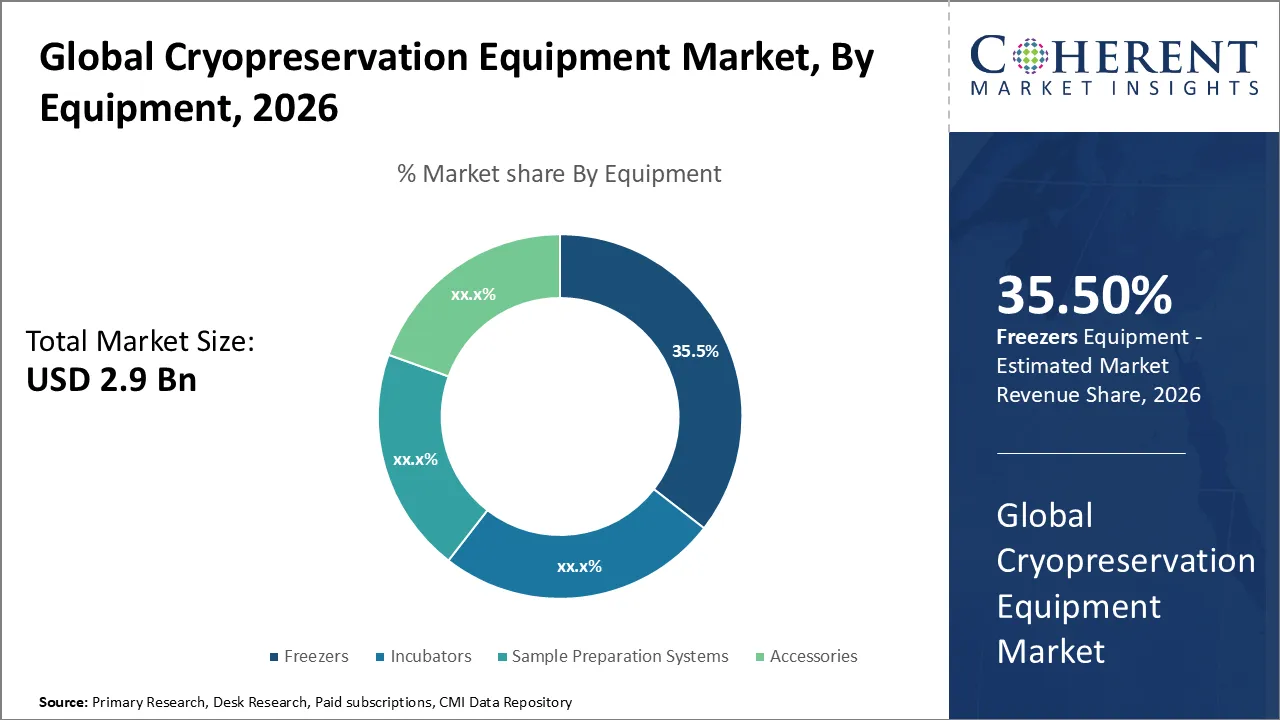
- Based on Equipment, the Freezers segment is expected to lead the market with 35.50% share in 2026, due to high demand for sample storage.
- Based on Cryogen, the Liquid Nitrogen segment is expected to lead the market with 32.60% share in 2026, because of its ultra-low temperature preservation efficiency.
- Based on Application, the Sperms, Semen & Testicular Tissues segment is expected to lead the market with 40.90% share in 2026, due to high demand in assisted reproductive technologies and fertility treatments.
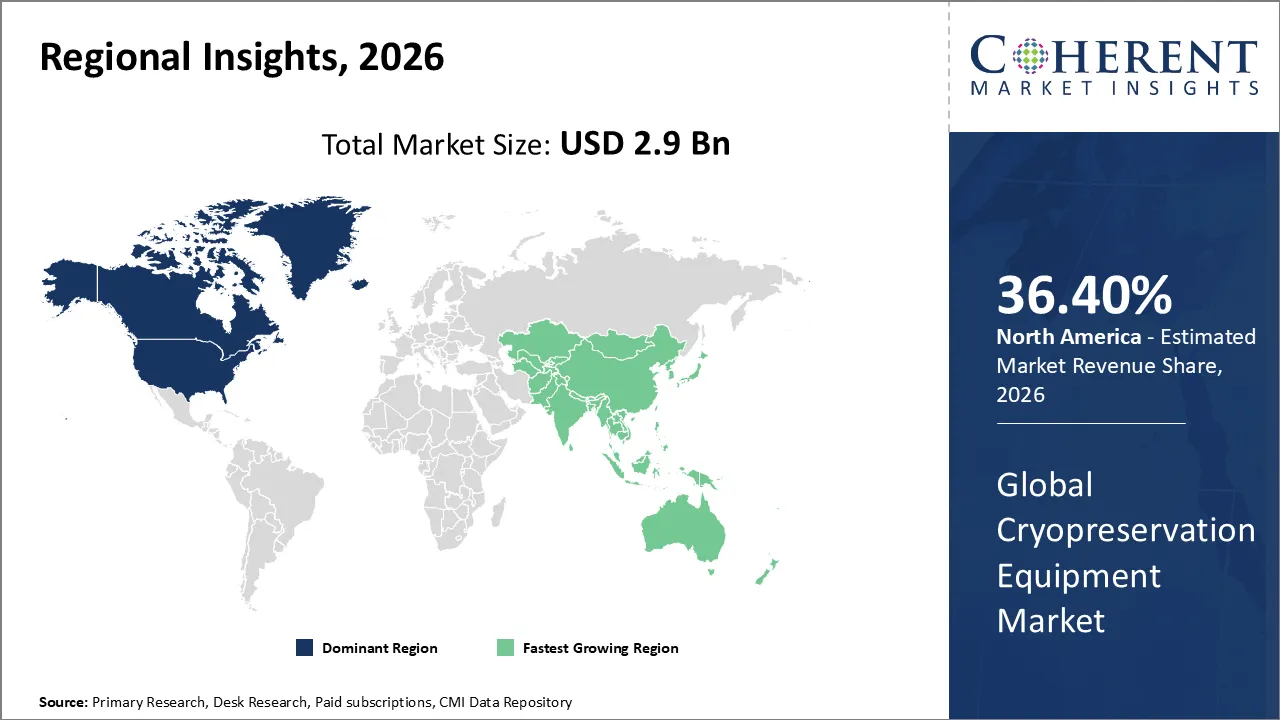
- Based on Region, North America is set to lead the market with 36.40% share in 2026. While, Asia Pacific is anticipated to be the fastest growing region.
Market Overview
The cryopreservation equipment market is advancing significantly driven by its critical role in preserving biological integrity during complex regenerative therapies, biobanking, and the expansion of high-acuity clinical environments. The increasing demand for long-term storage of volatile biologics and tightening clinical safety standards for specimen handling are expected to drive market growth over the forecast period.
Ultra-low-temperature freezers and liquid nitrogen systems are high-intensity technological assets mainly utilized in hospital and laboratory settings to prevent the degradation of cellular materials, delivering a stable thermal response that allows clinicians to manage biological viability with a superior role in long-term procedural control and safety. These technologies play a crucial role in modern healthcare sectors such as oncology, stem cell research, and assisted reproduction. This is owing to their ability to provide precise temperature titration and ensure immediate metabolic stabilization during prolonged or high-risk research interventions.
Current Events and Its Impacts on the Cryopreservation Equipment Market
Current Event | Description and the Impact |
Technological Innovations |
|
Regional Market Dynamics |
|
Scientific Research and Clinical Demand
|
|
Segmental Insights
- Current Industry Events of 2026
- Market Size Estimation
- Regional Breakdown
- Competitive Landscape
- Customer Intelligence
- Segmental Analysis
- Pricing Analysis
- Key Market Drivers, Challenges & Future Trends
- Customized Insights Section
Cryopreservation Equipment Market Insights, By Equipment – Freezers Leads Due to High Demand for Sample Storage
In terms of equipment, the freezers segment contributes the highest share of 35.50% in 2026 of the market. The freezers offer the precise temperature control necessary to ensure long-term viability. The growth of this segment stems from the essential need for precise low-temperature conditions to halt cellular metabolism without harming biological structures. The modern cryogenic freezers, like automated and controlled art systems, are essential tools in biobanking, drug development, and clinical research. Their capacity to provide stable, long-term storage for irreplaceable samples such as stem cells and complex tissues makes them a critical investment for hospitals and pharmaceutical firms. In addition, the adoption of IoT monitoring and dual cooling backup systems has strengthened their role as the industry benchmark for protecting samples from power disruptions or mechanical faults.
For instance, in April 2024, Thermo Fisher Scientific launched its latest line of high-performance, ultra-low temperature (ULT) freezers. The Thermo Scientific™ TSX™ Universal Series ULT Freezers are engineered to seamlessly integrate into scientists’ workflows across diverse laboratory environments.
Cryopreservation Equipment Market Insights, By Cryogen – Liquid Nitrogen Leads Due to Ultra-low Temperature Preservation Efficiency
In terms of cryogen, the liquid nitrogen segment contributes the highest share of 32.60% in 2026 of the market. This growth is owing to its unparalleled cooling efficiency and naturally inert properties. It ensures stable temperatures essential for accurate verification, at which point biological activity effectively halts due to an extremely low boiling point of -196°C. LN2 is preferred over alternatives like argon or helium because it is relatively cost-effective and highly efficient for rapid freezing, which minimizes the formation of lethal intracellular ice crystals. The increasing use of LN2 in dewars, cryogenic tanks, and vapor phase storage systems has made it integral to the global life sciences cold chain.
For instance, in June 2024, Haier Biomedical introduced the wide-neck CryoBio series. It is a new generation of liquid nitrogen containers that provide simple and convenient access to stored samples. This new addition to the CryoBio line includes an advanced, intelligent monitoring system designed to ensure the safe and secure storage of valuable biological samples.
Cryopreservation Equipment Market Insights, By Application – Sperms, Semen & Testicular Tissues Leads Due to High Demand in Assisted Reproductive Technologies and Fertility Treatments
In terms of application, the sperms, semen & testicular tissues segment contributes the highest share of 40.90% in 2026 of the market. The growth can be attributed to the rising global prevalence of infertility and the increasing adoption of assistive reproductive technology. The rising demand for fertility preservation among individuals undergoing gonadotoxic treatments and those choosing to delay parenthood is also constituting to the growth. Its reliance on standardized protocols and consistently high post-thaw viability rates provides a clear advantage over the preservation of more complex organ tissues. The growing numbers of private fertility clinics, alongside government-backed reproductive health initiatives worldwide, are also fueling this growth. As a result, these institutional environments have established this segment as a foundational cornerstone of the modern cryopreservation industry.
For instance, in October 2025, CaseBioscience® is pioneering a new era of innovation in biotechnology by integrating Assisted Reproductive Technology (ART) with advancements in stem cell science. CaseBio™ Culture and CaseBio™ Handling Media have obtained clearance from FDA 510(k) for clinical use. This achievement marks a milestone for CaseBioscience and its ART portfolio.
Regional Insights
North America Cryopreservation Equipment Market Analysis & Trends
North America has remained the dominant region with 36.40% in 2026 of the global Cryopreservation Equipment Market over the past decade. The growth is owing to a robust healthcare infrastructure and aggressive investment in biotechnology. This expansion is primarily fueled by the rising prevalence of infertility and the subsequent demand for In-Vitro Fertilization (IVF) solutions, which require sophisticated preservation for eggs and embryos. In addition, the rapid growth of regenerative medicine, stem cell banking, and personalized therapies has created an urgent need for reliable, long-term storage of biological materials. The technological shifts have emphasized automation and digitalization, incorporating IoT-enabled monitoring and AI-driven predictive maintenance to safeguard sample integrity and minimize human error.
There is also a transition toward eco-friendly, energy-efficient freezers to meet tightening environmental regulations. The US serves as the main regional hub, hosting industry firms like Thermo Fisher Scientific, Azenta US Inc., Chart Industries, and Linde plc. They are at the forefront of developing high-performance cryogenic tanks and specialized storage systems. Continued federal support for biopharmaceutical research and clinical trials enhances the positive long-term outlook for the forecast period.
For instance, in March 2025, Cryoport, Inc. introduced the High-Efficiency 800 C from MVE Biological Solutions. This cryogenic freezer is the latest addition to the next-generation High-Efficiency Series. The HE 800 C incorporates ergonomic design elements and provides reliable performance within a compact size, addressing the changing requirements of fertility clinics, biorepositories, and clinical laboratories.
Asia Pacific Cryopreservation Equipment Market Analysis & Trends
The Asia Pacific region is currently the fastest-growing market for cryopreservation equipment owing to rapid industrialization and a thriving healthcare sector. The growth is mainly driven by increased activities in regenerative medicine, stem cell research, and improved access to assisted reproductive technologies, as illustrated by India's implementation of nationwide at-home egg freezing programs. In addition, government initiatives in China and India are significantly funding advanced biobanking and clinical trial facilities aimed at managing chronic illnesses, which in turn require high-performance freezers and liquid nitrogen supply tanks.
The technological breakthroughs are emphasizing automation and digitalization, particularly via IoT-enabled monitoring and AI-driven predictive maintenance to ensure sample integrity and minimize human error. In the region, China is anticipated to take the lead. India is expected to experience the highest growth owing to substantial pharmaceutical investments and the establishment of new manufacturing facilities like INOXCVA’s recent capacity expansions. The top firms like Thermo Fisher Scientific, Linde plc, Air Liquide, and Chart Industries, are driving innovation in high-integrity storage systems and specialized pumps. These products are the fastest-growing segment of equipment within the industry.
Cryopreservation Equipment Market Outlook Country-Wise
The US Cryopreservation Equipment Market Trends
The US has emerged to become a leader in the global industry. The expansion is owing to the rapid growth of regenerative medicine and cell-based therapies, especially CAR-T and stem cell treatments. The increasing infertility rates have led to a greater demand for In-Vitro Fertilization (IVF) solutions, which require specialized tanks and freezers for the storage of oocytes and embryos. The technological trends demonstrate a shift towards automation and digitalization, thus emphasizing IoT-enabled monitoring and AI-driven predictive maintenance to maintain sample integrity and ensure regulatory compliance. The leading firms like Thermo Fisher Scientific, Chart Industries, and Azenta Life Sciences continue to prosper through strategic mergers and the introduction of innovative products, including the CryoStore FLEX Freezing Bag.
For instance, in February 2023, Azenta, Inc. has introduced the Cryo Store Pico™, a cutting edge automated cryogenic storage system intended for high-value biological samples. This system is utilized in various stages of life sciences, from discovery to clinical applications.
China Cryopreservation Equipment Market Trends
China’s cryopreservation equipment market is a primary engine of global growth. This surge is heavily supported by the Chinese government’s strategic push for biomedical sovereignty which includes massive investments in biobanking and regenerative medicine. In addition, the National Medical Products Administration (NMPA) has implemented regulatory reforms that have halved clinical trial review timelines to 30 working days, thus speeding up the demand for sophisticated storage of cell-based therapies and oncology samples. A distinctive feature of the Chinese market is the dominance of local manufacturers that have integrated advanced digital capabilities. Companies such as Haier Biomedical, Aucma, Zhongke Meiling, and Coolingway have transitioned from being low-cost hardware providers to leaders in IoT-enabled smart biobanking.
Market Report Scope
Cryopreservation Equipment Market Report Coverage
| Report Coverage | Details | ||
|---|---|---|---|
| Base Year: | 2025 | Market Size in 2026: | USD 2.9 Bn |
| Historical Data for: | 2020 To 2024 | Forecast Period: | 2026 To 2033 |
| Forecast Period 2026 to 2033 CAGR: | 8.2% | 2033 Value Projection: | USD 4.8 Bn |
| Geographies covered: |
| ||
| Segments covered: |
| ||
| Companies covered: | Thermo Fisher Scientific, Inc., Custom Biogenic Systems, Chart Biomedical Co. Ltd., Merck KGaA, Barber-Nichols Inc., Praxair Technology, Inc., Linde LLC, Planer PLC, Cryologic Pty. Ltd., Charter Medicals, Nikkiso Cryo Inc., Cryogenic Control, and Haimen United Laboratory Equipment Development Co., Ltd. | ||
| Growth Drivers: |
| ||
| Restraints & Challenges: |
| ||
Cryopreservation Equipment Market Drivers
Increasing demand for biobanking and regenerative medicine
The demand for biobanking and regenerative medicine is a primary driver of growth for the Cryopreservation Equipment Market. The growth is owing to the rapid expansion of personalized therapies like CAR-T cell and gene editing treatments, which necessitates extremely stable ultra-low temperature environments for maintaining cellular fusion. The biobanks have evolved into critical infrastructure for pharmaceutical research. As a result, they necessitate high-capacity liquid nitrogen tanks and automated robotic storage solutions to manage diverse genomics specimens. Furthermore, the increasing prevalence of chronic diseases has intensified the global reliance on preserved stem cells for tissue engineering and clinical trials. Cryopreservation technology provides the essential hardware needed to halt metabolic activity without damaging delicate biological structures. The increasing volume of biological assets in both public and private biorepositories continues to propel significant investments in advanced cryogenic technologies.
For instance, in June 2024, a biotechnology start-up based in Toronto, Acorn Biolabs, which assists customers in freezing their stem cells for future cell-based regenerative medicine treatments, has announced that it has secured approximately USD 8 million in Series A funding through multiple closings.
Analyst Opinion (Expert Opinion)
The Cryopreservation Equipment Market demonstrates consistent growth across multiple industry segments, driven by increasing demand for reliable, long-term biological storage solutions. Key drivers include expanding biobanking operations, rising stem cell and regenerative medicine research, and growing adoption in pharmaceutical and biotechnology R&D laboratories.
Within the product landscape, consumables and accessories account for a significant portion of market activity due to frequent replacement cycles, while ultra-low temperature freezers, liquid nitrogen storage systems, and controlled-rate freezers remain central to maintaining specimen integrity. End-use adoption is strongest among biopharmaceutical and pharmaceutical companies, complemented by academic research institutions, fertility clinics, and dedicated biobanks.
Regionally, North America continues to lead the market, supported by advanced research facilities, regulatory frameworks, and high R&D investment. Asia Pacific is emerging as a fast-growing region, fueled by expanding biotech infrastructure, government and private sector investment, and growth in stem cell and fertility preservation services.
Technological innovation is enhancing operational efficiency and reliability through automation, digital monitoring, and energy-efficient designs, while maintaining sample quality across diverse biological materials. The competitive landscape features both large equipment manufacturers and specialized cryogenic technology providers focusing on portfolio expansion, regional distribution, and service support.
Overall, the market’s growth is underpinned by technological advancements, diversified end-use adoption, and strategic regional expansion, positioning it for sustained industry development.
Speak to the analyst
Want personalized insights?
Take the findings above to one of our principal consultants, or have the report rebuilt around the segments, geographies and competitors you actually track.
Cryopreservation Equipment Industry News
- In October 2025, Cryoport, Inc. has introduced MVE Biological Solutions' integrated Condition Monitoring Solutions for the MVE SC 4/2 V and 4/3 V series dewars. Tec4Med, a subsidiary of Cryoport, powers these solutions. This launch underscores MVE's dedication to the life sciences sector by providing intelligent, connected assets that are designed to protect essential commodities.
- In April 2025, BioLife Solutions, Inc. acquired PanTHERA CryoSolutions, Inc., a privately-held company that develops innovative cryopreservation solutions utilizing proprietary Ice Recrystallization Inhibitor technology. This acquisition bolsters BioLife's status as a leader in biopreservation, enhances its portfolio of consumable solutions, and adds scientific expertise to its management team.
- In March 2025, BioIVT has unveiled VivoSTART™ Cryopreserved GMP Leukopaks. These GMP-compliant leukopaks guarantee the quality, safety, and traceability of cellular starting materials. They are crucial for facilitating the development of cell and gene therapy (CGT) platforms and are necessary for the execution of clinical trials.
- In October 2024, Cryoport, Inc., the global pioneer in life sciences supply chain solutions, has announced the availability of its IntegriCell cryopreservation services offering, which Cryoport Systems will provide. This announcement coincides with the launch of a new facility at Cryoport's integrated supply chain complex in Houston, Texas.
- In June 2022, Inception Fertility has expanded its ecosystem with the introduction of HavenCryo™, a solution that offers long-term reproductive tissue and cryopreservation storage. This service caters to every stage of the fertility life cycle and aims to provide a distinctive experience for both fertility providers and patients.
Market Segmentation
- Equipment Insights (Revenue, USD Bn, 2026 - 2033)
- Freezers
- Cryopreservation Freezers
- Drystore Freezers
- Incubators
- Sample Preparation Systems
- Accessories
- Cryopreservation Vials
- Freezer Box
- Cryocart
- Cryogenic Vaporizer
- Other Accessories
- Freezers
- Cryogen Insights (Revenue, USD Bn, 2026 - 2033)
- Liquid Nitrogen
- Oxygen
- Argon
- Liquid Helium
- Application Insights (Revenue, USD Bn, 2026 - 2033)
- Cord Blood Stem Cells
- Sperms, Semen & Testicular Tissues
- Embryos & Oocytes
- Other Application
- End User Insights (Revenue, USD Bn, 2026 - 2033)
- Stem Cells Banks
- Biotechnology and Pharmaceutical organizations
- Contract Research Organizations
- Stem Cell Research Laboratories
- Research and Academic Institutes
- Regional Insights (Revenue, USD Bn, 2026 - 2033)
- North America
- U.S.
- Canada
- Latin America
- Brazil
- Argentina
- Mexico
- Rest of Latin America
- Europe
- Germany
- U.K.
- France
- Italy
- Russia
- Rest of Europe
- Asia Pacific
- China
- India
- Japan
- Australia
- South Korea
- ASEAN
- Rest of Asia Pacific
- Middle East
- GCC
- Israel
- Rest of Middle East
- Africa
- North Africa
- Central Africa
- South Africa
- North America
- Key Players Insights
- Thermo Fisher Scientific, Inc.
- Custom Biogenic Systems
- Chart Biomedical Co. Ltd.
- Merck KGaA
- Barber-Nichols Inc.
- Praxair Technology, Inc.
- Linde LLC
- Planer PLC
- Cryologic Pty. Ltd.
- Charter Medicals
- Nikkiso Cryo Inc.
- Cryogenic Control
- Haimen United Laboratory Equipment Development Co., Ltd.
Sources
Primary Research Interviews
- Cryopreservation Equipment Manufacturers
- Laboratory Equipment Distributors & Integrators
- Biobanking Facility Managers
- Stem Cell & Reproductive Medicine Experts
- Biotechnology & Pharmaceutical R&D Labs
- Others
Databases
- Bloomberg Terminal
- Thomson Reuters Eikon
- Others
Magazines
- Genetic Engineering & Biotechnology News (GEN)
- Lab Manager Magazine
- BioTechniques
- Laboratory Equipment Magazine
- Others
Journals
- Cryobiology Journal
- Journal of Assisted Reproduction and Genetics
- Stem Cell Research & Therapy
- Biopreservation and Biobanking
- Others
Newspapers
- Financial Times
- The Wall Street Journal
- Reuters
- Bloomberg News
- Others
Associations
- International Society for Biological and Environmental Repositories (ISBER)
- American Association of Tissue Banks (AATB)
- European Biobanking and BioMolecular Resources Research Infrastructure (BBMRI-ERIC)
- International Federation for Adipose Therapeutics and Science (IFATS)
- Others
Public Domain Sources
- U.S. Food and Drug Administration (FDA) – Biologics & Tissue Guidelines
- World Health Organization (WHO) – Stem Cell & Biobanking Reports
- European Medicines Agency (EMA) – Regulatory Publications
- National Institutes of Health (NIH) – Stem Cell Research Data
- Others
Proprietary Elements
- CMI Data Analytics Tool
- Proprietary CMI Existing Repository of Information for the Last 8 Years
Definition: The cryopreservation equipment market includes the global trade of specialized devices and consumables designed to preserve biological materials at extreme subzero temperatures. The industry focuses on maintaining the viability of sensitive samples like stem cells, tissues, and organs by halting all cellular metabolic activity via deep freezing. The high-tech storage solutions like liquid nitrogen tanks, automated ultra-low-temperature freezers, and specialized containers are central to the expanding regenerative medicine and gene therapy sectors. The growing demand for personalized therapeutics is driving investments in reliable, ultra-low-temperature storage infrastructure, thus ensuring the safety and efficacy of sensitive biological materials. Medical researchers and pharmaceutical companies rely on this equipment to protect the integrity of volatile vaccines and complex biologics during storage and transport. In addition, the rising demand for assisted reproductive technologies has made cryopreservation a standard requirement for fertility clinics in managing embryos and oocytes. Multiple organizations are integrating smart monitoring systems to ensure the continuous safety and security of these critical biological assets.
Get access to 250+ pages report
Every segment, forecast, competitor profile and data table behind the analysis above — available for instant download.
- ESOMAR Member
- ISO 9001:2015 Certified
- D-U-N-S Registered
- GDPR & CCPA Compliant
Missing comfort of reading report in your local language? Find your preferred language:
Transform your Strategy with Exclusive Trending Reports
Frequently Asked Questions
The Cryopreservation Equipment Market is estimated to be valued at USD 2.9 Bn in 2026, and is expected to reach USD 4.8 Bn by 2033.
The CAGR of the Cryopreservation Equipment Market is projected to be 8.2% from 2026 to 2033.
Factors such as increasing number of government initiatives for preservation of stem cells and increasing funding initiatives for cryopreservation equipment are the major factors driving the growth of the Cryopreservation Equipment Market.
The low awareness about the benefits of preserving umbilical cord banking (UCB) are the major factors hampering the growth of the Cryopreservation Equipment Market.
In terms of equipment, the freezers segment is estimated to dominate the market revenue share in 2026.
Thermo Fisher Scientific, Inc., Custom Biogenic Systems, Chart Biomedical Co. Ltd., Merck KGaA, Barber-Nichols Inc., Praxair Technology, Inc., Linde LLC, Planer PLC, Cryologic Pty. Ltd., Charter Medicals, Nikkiso Cryo Inc., Cryogenic Control, and Haimen United Laboratory Equipment Development Co., Ltd. are the major players.
North America is expected to lead the Cryopreservation Equipment Market in 2026.