

Enteral Syringe Market Size and Share Analysis - 2026 To 2033
The enteral syringe market is anticipated to grow at a CAGR of 4.59% with USD 1.15 Bn in 2026 and is expected to reach USD 1.56 Bn in 2033. Increasing number of critical care (Each year, about 5 million patients are admitted to intensive care units in India) and neonatal intensive care unit admissions is expected to drive growth of the global enteral syringes market. This is owing to inability of patients admitted to critical care and newborns admitted to neonatal intensive care (due to premature birth or other complications) to swallow medicine or take nutrition.
Key Takeaways
- Single use enteral syringes is expected to account the largest share of 40% in 2026, single-use syringes reduce the risk of infection and contamination, which is critical in hospitals and clinics. In 2024, an estimated 1.3 million people died from viral hepatitis B and C -related cirrhosis and liver cancer. Chronic HBV infection caused about 1.1 million deaths, an increase of 17% since 2025. Hepatitis C infection caused about 240000 deaths, a 12% reduction since 2015.
- Cancer will dominate with 35% in 2026, mainly due to high long-term feeding needs in oncology patients. In 2026, approximately 2,114,850 new cancer cases and 626,140 cancer deaths are projected to occur in the United States.
- Adults will dominate with 55% in 2026, adults are more likely to suffer from cancer, neurological diseases, gastrointestinal diseases, or malnutrition that require tube feeding. In 2026, disease-related malnutrition affects a massive proportion of adult patients. Approximately 88% of gastrointestinal (GI) cancer patients, 40-62% of general cancer patients, and 43-50% of adults with neurological or GI diseases suffer from baseline malnutrition.
- Hospitals and ambulatory care centers will dominate with 60% in 2026, people with cancer, neurological issues, or post-surgery feeding needs are mostly treated in hospitals first. There are 6,100 hospitals in the United States. As the national voice and advocate for the nation’s hospitals and health systems, the American Hospital Association is committed to providing hospital statistics like this and data to support the field, including its annual survey of hospitals in the United States.
- North America is expected to acquire the dominant share of 40% in 2026, the U.S. and Canada have well-funded healthcare systems, allowing for widespread use of high-quality medical devices, including enteral syringes. Nearly USD18B Total US investment in healthcare AI in 2025.
Segmental Insights
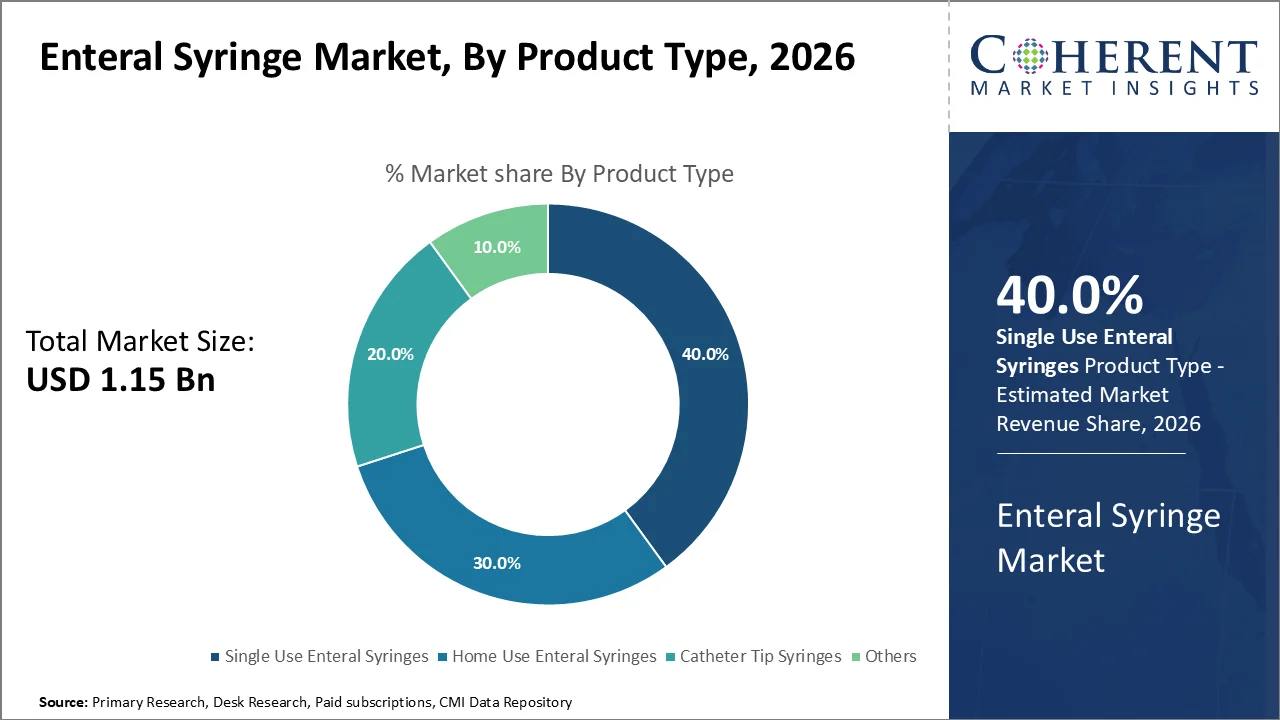
Why is Single Use Enteral Syringes Acquiring the Largest Market Share?
Single use enteral syringes is projected to account for the largest share of product type in 2026, representing approximately 40% of the total volume. The paramount importance of infection control protocols in healthcare institutions and the growing emphasis on patient safety standards worldwide are the factors influencing the market growth. Around 1 in every 10 patients is harmed in health care and more than 3 million deaths occur annually due to unsafe care.
Ensuring patient safety during medical care remains a pressing issue with substantial social and economic costs. It is estimated that up to 13% of healthcare spending across OECD countries are contributed to the treatment of patients who are harmed during care.
The World Health Organization's guidelines on infection prevention as well as control have significantly reinforced the adoption of single-use medical devices, particularly in enteral feeding applications where the risk of cross-contamination can lead to severe healthcare-associated infections.
Major healthcare systems across developed nations have implemented strict policies mandating the utilization of single-use enteral syringes to prevent the transmission of pathogens between patients, especially in intensive care units as well as pediatric wards where vulnerable populations are at heightened risk.
- Current Industry Events of 2026
- Market Size Estimation
- Regional Breakdown
- Competitive Landscape
- Customer Intelligence
- Segmental Analysis
- Pricing Analysis
- Key Market Drivers, Challenges & Future Trends
- Customized Insights Section
Cancer holds the Largest Market Share
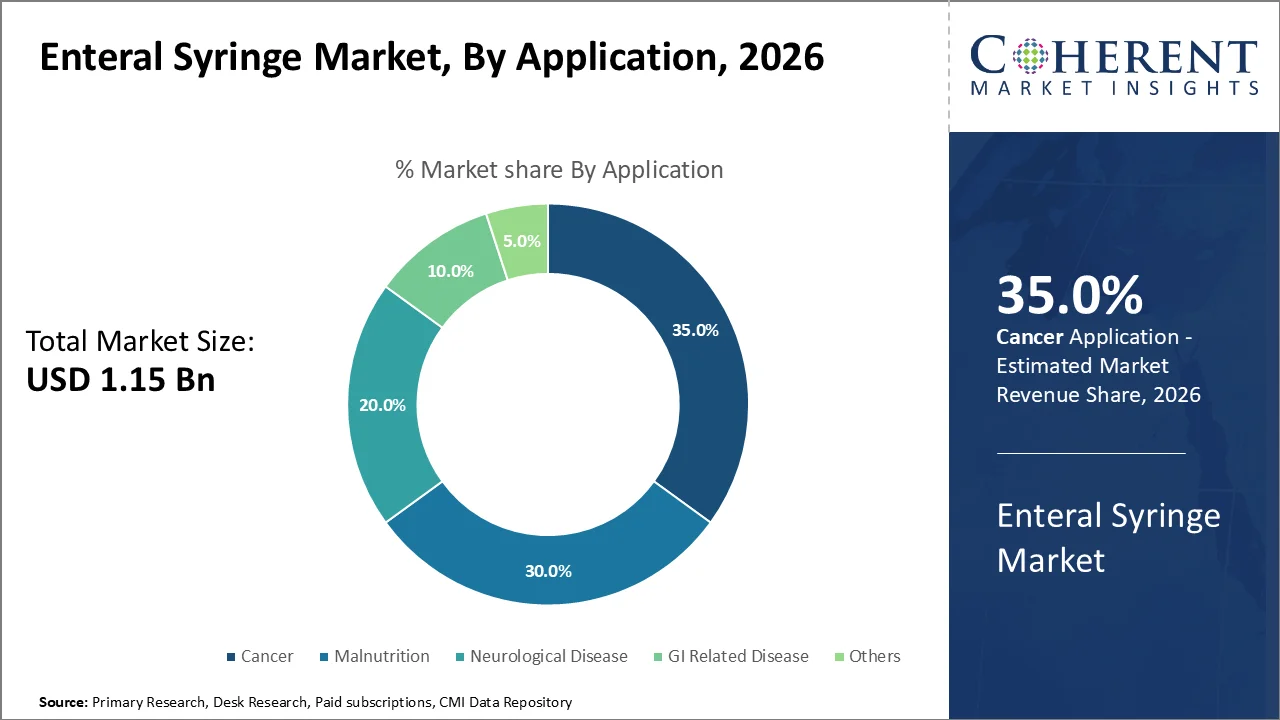
Based on application, cancer dominates the market, accounting for a significant 35% share in 2026, the substantial global cancer burden and the critical need for nutritional support throughout cancer treatment protocols is one of the factors propelling the segment. In 2026, approximately 2,114,850 new cancer cases and 626,140 cancer deaths are projected to occur in the United States.
According to the World Health Organization, cancer remains one of the leading causes of death worldwide, with approximately 10 million deaths recorded in 2020 alone. The segment is further augmented by the complex nutritional challenges that cancer patients face during their treatment journey.
Chemotherapy, radiation therapy, as well as surgical interventions usually result in major side effects including nausea, vomiting, mucositis, gastrointestinal, etc., complications that significantly impair patients' ability to maintain adequate oral nutrition.
Adults holds the Largest Market Share
Based on patient group, adults dominates the market, accounting for a significant 55% share in 2026, the substantial demographic representation as well as diverse clinical applications requiring enteral nutrition support is one of the factors fueling the market growth.
The adult population encompasses the largest patient cohort globally, including elderly patients with swallowing disorders, critically ill patients in intensive care units, patients with neurological conditions such as stroke and dementia, and those suffering from chronic diseases like cancer, Crohn's disease, and other gastrointestinal disorders. According to a study published by the World Health Organization, the lifetime risk of stroke has increased by 50% over the past 20 years, with 1 in 4 adults predicted to experience a stroke in their lifetime.
According to the World Health Organization, the global population aged 60 years as well as older is expected to increase majorly in the coming decades, with this matrix being particularly susceptible to conditions requiring enteral feeding support.
The high occurance of dysphagia alone affects approximately 15% of elderly adults, as reported by various healthcare institutions, creating a substantial demand for enteral feeding solutions including specialized syringes for medication administration and nutritional support.
Hospitals holds the Largest Market Share
Based on end user, hospitals dominates the market, accounting for a significant 60% share in 2026, their extensive infrastructure, high patient volumes, as well as overall enteral nutrition programs that require substantial quantities of enteral syringes for various medical procedures. The unmet need for surgery has continued to grow, reaching at least 160 million operations per year. Ensuring high-quality surgical care remains a crucial global challenge
Hospitals serve as the primary healthcare delivery points where critically ill patients, post-operative cases, as well as individuals with severe swallowing disorders receive enteral nutrition support through feeding tubes. The dominance of hospitals in this market can be attributed to several key factors that establish them as the largest consumers of enteral syringes globally.
Market Drivers
ENFit (Enteral Feeding) Connector Technology is transforming the Enteral Syringe Industry
ENFit connector technology is a key component in safety improvement in enteral feeding systems. Made with the Global Enteral Device Supplier Association (GEDSA), ENFit connectors have an exquisite design that prevents accidental connections with IV lines, respiratory devices, or other medical equipment. They are easily recognized by their purple color, feature a male/female design incompatible with other systems, comply with ISO 80369-3 standards, as well as allow faster flow with less priming volume.
The technology has been widely adopted in the market. Cardinal Health, for example, transitioned its entire Monoject enteral syringe line to ENFit, provided extensive training to healthcare facilities, and achieved 95% customer satisfaction for improved safety.
Current Events and Their Impact on the Enteral Syringe Market
Current Event | Description and its Impact |
Mandatory ENFit Connector Adoption |
|
Stricter FDA and ISO 80369-3 Compliance Rules |
|
Enteral Syringe Market Trends
- High adoption of smart enteral syringes with integrated safety features as well as dose accuracy mechanisms. In January 2026, ENvue Medical announced on January 14, 2026 the launch of over-the-counter ENFit syringes for enteral feeding and medication.
- Escalating focus on ENFit connectors and anti-reflux systems to prevent misconnections as well as reduce infection risks. The ENFit enteral feeding connector features a unique design to reduce the risk of enteral feeding tube misconnections and improve patient safety.
- Rising demand for eco-friendly, recyclable materials in syringe manufacturing. Up to 40,000 pounds of medical waste has been recycled and diverted from disposal since the program began in February of this year, BD announced this week.
- Upcoming of IoT-enabled devices for remote monitoring and automated feeding protocols
Regional Insights
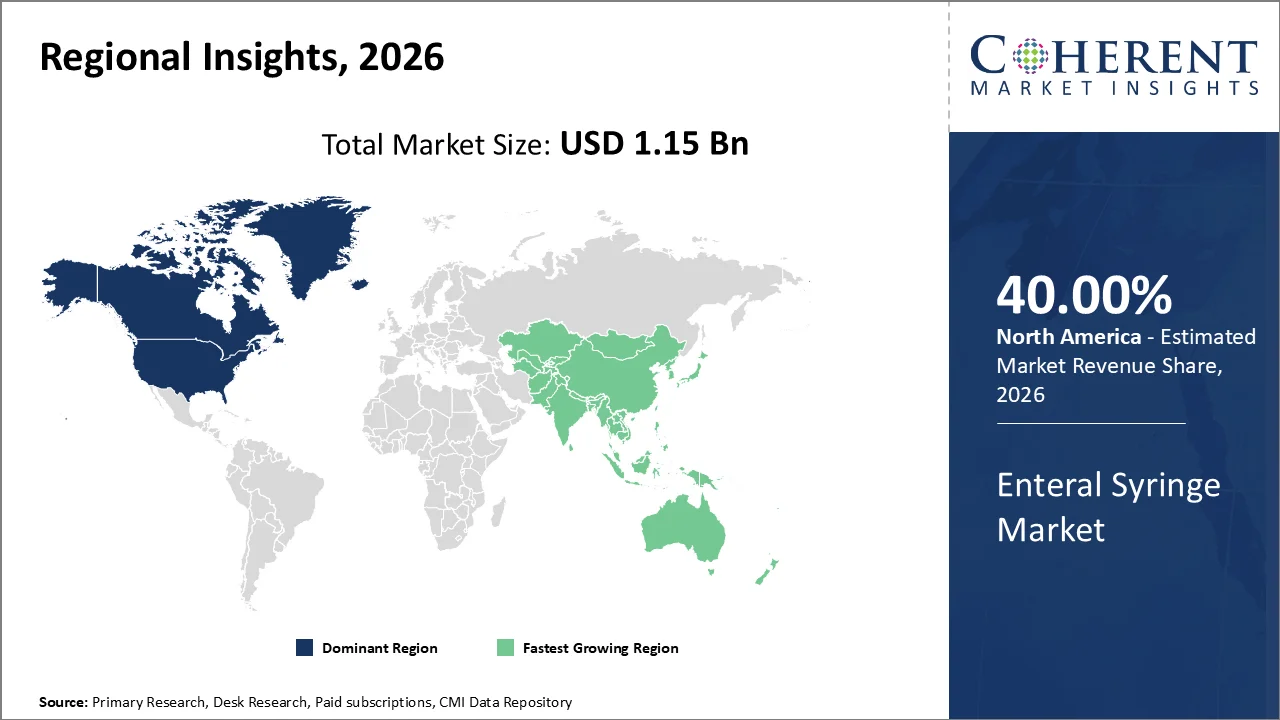
North America dominates owing to advanced healthcare infrastructure
North America account 40% market share in 2026, owing to its robust healthcare infrastructure, advanced medical device manufacturing capabilities, and stringent regulatory frameworks that ensure product quality and safety standards. There is 879 Medical Device Manufacturing in the US businesses as of 2026, an increase of 0.9% from 2025.
The presence of world-class medical facilities, including renowned healthcare systems like Mayo Clinic, Cleveland Clinic, Johns Hopkins Hospital, etc., which consistently adopt innovative medical devices and maintain high standards for enteral feeding procedures is propelling the market growth. There are 2.7 practising doctors per 1 000 population in the United States (OECD average 3.9); and 12.4 practising nurses (OECD average 9.2).
The United States Food and Drug Administration (FDA) has established comprehensive guidelines for enteral feeding devices, including specific requirements for enteral syringes under 21 CFR Part 820, which has made a conducive environment for manufacturers to develop high-quality products that meet rigorous safety standards.
Asia Pacific Enteral Syringe Market Trends
The Asia Pacific region is poised to be the fastest-growing region through 2026-2033, expanding at a CAGR of approximately 7.5%. Driven by rapidly expanding healthcare infrastructure, increasing prevalence of chronic diseases, as well as growing awareness about enteral nutrition benefits across developing economies are the growth-inducing factors. This growth outlook was strongly reinforced by PENSA 2025, the 25th Annual Congress of the Parenteral and Enteral Nutrition Society of Asia, which brought together more than 500 healthcare professionals from across the region to advance clinical knowledge as well as best practices in nutrition therapy.
China's healthcare modernization initiative, supported by substantial investment by government authorities in medical infrastructure, has led to the establishment of thousands of new hospitals and care facilities, each having standardized enteral feeding equipment.
The demographic transition occurring across Asia Pacific, characterized by aging populations in developed markets including South Korea, Japan, etc., combined with improving healthcare standards in emerging markets like Vietnam and Thailand, creates a unique dual-demand scenario.
The Robust Healthcare Infrastructure is Accelerating the Enteral Syringe Market Demand in United States
The U.S. contributes the highest share in the enteral syringe market in North America owing to its robust healthcare infrastructure, extensive hospital network, and advanced medical device regulatory framework.
The U.S. healthcare system's focus on home healthcare services has majorly driven demand for enteral syringes, particularly as the aging population continues to grow as well as require long-term nutritional support.
According to the U.S. Census Bureau, the population aged 65 and older is projected to reach 95 million by 2060, making major demand for enteral feeding solutions. The prevalence of chronic diseases including dysphagia, neurological disorders, cancer, etc., in the U.S. has necessitated increased utilization of enteral nutrition therapy.
China Enteral Syringe Market Trends
China contributes the highest share in the enteral syringe market in APAC owing to its robust healthcare infrastructure development and substantial government investments in medical device manufacturing capabilities.
Its well-established medical device production ecosystem, which has been significantly enhanced through the "Made in China 2025" initiative is one of the factors propelling the growth of the country.
China's leading position is exemplified by the rapid expansion of enteral nutrition programs across its healthcare facilities, particularly following the COVID-19 pandemic when the importance of nutritional support for critically ill patients became paramount.
The Chinese government authorities implementation of the Healthy China 2030 blueprint has accelerated the adoption of standardized enteral feeding protocols in hospitals nationwide, creating substantial demand for specialized syringes designed for enteral administration.
Who are the Major Companies in Enteral Syringe Industry
Some of the major key players in Enteral Syringe market include, B. Braun Melsungen AG, GBUK Enteral Ltd., Thermo Fischer, Inc., Koninklijke Philips N.V., Miktell Ltd., Baxter International, Inc., Cardinal Health, Inc., Terumo Corporation, Kentec Medical, Inc., Vygon S.A.
Key News
- In January 2026, ENvue Medical announced that it launched a line of over-the-counter (OTC) ENFit syringes. The FDA-cleared, commercially available feeding tube placement system provides real-time anatomical navigation to guide enteral tube placements.
- In February 2025, Cardinal Health’s innovative new Kangaroo OMNI Enteral Feeding Pump was launched in Europe, Australia and New Zealand in from February 2025, followed by Asia later in the year.
Market Report Scope
Enteral Syringe Market Report Coverage
| Report Coverage | Details | ||
|---|---|---|---|
| Base Year: | 2025 | Market Size in 2026: | USD 1.15 Bn |
| Historical Data for: | 2020 To 2024 | Forecast Period: | 2026 To 2033 |
| Forecast Period 2026 to 2033 CAGR: | 4.59% | 2033 Value Projection: | USD 1.56 Bn |
| Geographies covered: |
| ||
| Segments covered: |
| ||
| Companies covered: | B. Braun Melsungen AG, GBUK Enteral Ltd., Thermo Fischer, Inc., Koninklijke Philips N.V., Miktell Ltd., Baxter International, Inc., Cardinal Health, Inc., Terumo Corporation, Kentec Medical, Inc., Vygon S.A. | ||
| Growth Drivers: |
| ||
| Restraints & Challenges: |
| ||
Analyst Opinion
- The enteral syringe market demonstrates robust momentum driven by the escalating prevalence of chronic diseases requiring long-term nutritional support, including cancer, neurological disorders, and gastrointestinal conditions. The percentage of people with chronic disease increased from 28% to 36%, while multimorbidity saw a major rise, reaching 19% of the population.
- The aging global population majorly amplifies demand, as elderly patients frequently require enteral feeding interventions due to swallowing difficulties as well as compromised digestive functions. There are about 39.5 million people in the United States over the age of 65, including 5.6 million people over 85.
- Healthcare infrastructure modernization, particularly in emerging economies, creates substantial growth opportunities as hospitals increasingly adopt standardized enteral feeding protocols. India's healthcare industry aims for a USD 1.5 trillion valuation by 2030 amid calls for enhanced infrastructure and workforce expansion.
- Safety concerns regarding medication errors as well as cross-contamination risks serve as primary market drivers, pushing healthcare providers toward specialized enteral syringes with enhanced safety features.
- North America maintains market dominance through advanced healthcare infrastructure, high chronic disease prevalence, and strong regulatory frameworks promoting safe enteral feeding practices.
Speak to the analyst
Want personalized insights?
Take the findings above to one of our principal consultants, or have the report rebuilt around the segments, geographies and competitors you actually track.
Market Segmentation
- By Product Type (Revenue, USD Bn, 2021-2033)
- Single Use Enteral Syringes
- Home Use Enteral Syringes
- Catheter Tip Syringes
- Others
- By Application (Revenue, USD Bn, 2021-2033)
- Cancer
- Malnutrition
- Neurological Disease
- GI Related Disease
- Others
- By Patient Group (Revenue, USD Bn, 2021-2033)
- Neonates and Pediatrics
- Adults
- By End User (Revenue, USD Bn, 2021-2033)
- Hospitals and Ambulatory Care Centers
- Home-based User
- By Region (Revenue, USD Bn, 2021-2033)
- North America
- U.S.
- Canada
- Latin America
- Brazil
- Mexico
- Argentina
- Rest of Latin America
- Europe
- Germany
- U.K.
- France
- Italy
- Spain
- Russia
- Rest of Europe
- Asia Pacific
- China
- India
- Japan
- Australia
- South Korea
- ASEAN
- Rest of Asia Pacific
- Middle East
- GCC
- Israel
- Rest of Middle East
- Africa
- South Africa
- Central Africa
- North Africa
- North America
Sources
Primary Research Interviews
- Medical Device Manufacturers
- Hospital Procurement Managers
- Healthcare Professionals/Nurses
- Distributors and Suppliers
- Others
Databases
- Global Trade Atlas
- Medical Device Database (MDD)
- Healthcare Market Research Database
- FDA Medical Device Database
- Others
Magazines
- Medical Device and Diagnostic Industry (MD+DI)
- Healthcare Purchasing News
- Materials Management in Health Care
- Infection Control Today
- Others
Journals
- Journal of Parenteral and Enteral Nutrition
- American Journal of Nursing
- Clinical Nutrition Journal
- Others
Newspapers
- Healthcare Finance News
- Modern Healthcare
- Healthcare Dive
- FierceBiotech
- Others
Associations
- Association for the Advancement of Medical Instrumentation (AAMI)
- American Society for Parenteral and Enteral Nutrition (ASPEN)
- Healthcare Financial Management Association (HFMA)
- International Association for Healthcare Central Service Materiel Management (IAHCSMM)
- Others
Public Domain Sources
- FDA Publications and Guidelines
- WHO Healthcare Guidelines
- CDC Healthcare Infection Control Guidelines
- NIH Medical Research Publications
- Others
Proprietary Elements
- CMI Data Analytics Tool
- Proprietary CMI Existing Repository of information for last 10 years
Get access to 250+ pages report
Every segment, forecast, competitor profile and data table behind the analysis above — available for instant download.
- ESOMAR Member
- ISO 9001:2015 Certified
- D-U-N-S Registered
- GDPR & CCPA Compliant
Missing comfort of reading report in your local language? Find your preferred language:
Transform your Strategy with Exclusive Trending Reports
Frequently Asked Questions
The enteral syringe market is expected to reach USD 1.56 Bn in 2033.
Major players operating in the global enteral syringe market include B. Braun Melsungen AG, GBUK Enteral Ltd., Thermo Fischer, Inc., Koninklijke Philips N.V., Miktell Ltd., Baxter International, Inc., Cardinal Health, Inc., Terumo Corporation, Kentec Medical, Inc., Vygon S.A. and others.
Cost pressures in healthcare systems and stringent regulatory requirements pose notable restraints is expected to restrain the enteral syringe market growth over the forecast period.
Rapidly growing aging populations are driving growth of the global enteral syringe market.
The enteral syringe market is anticipated to grow at a CAGR of 4.59% between 2026 and 2033.
Among regions, North America is expected to account for a largest market share in the global enteral syringe market over the forecast period.
The patient must be able to accept oral drugs. Overall, parenteral administration is used when there needs to be immediate relief or a bypass of the digestive system, while enteral administration is employed when the digestive tract is functioning and able to absorb nutrients and medications.