

Blood Pressure Monitoring Testing Market Size and Forecast – 2026 to 2033
The Blood Pressure Monitoring Testing Market is anticipated to grow at a CAGR of 5.6% with USD 6.1 Bn share in 2026 and is expected to reach USD 7.8 Bn in 2033. The rising prevalence of hypertension drives the blood pressure monitoring testing market, while increasing awareness of cardiovascular health encourages more people to monitor their blood pressure regularly. According to the CDC (June 2026), nearly half of U.S. adults (48.1%, about 119.9 million) have high blood pressure.
Key Takeaways
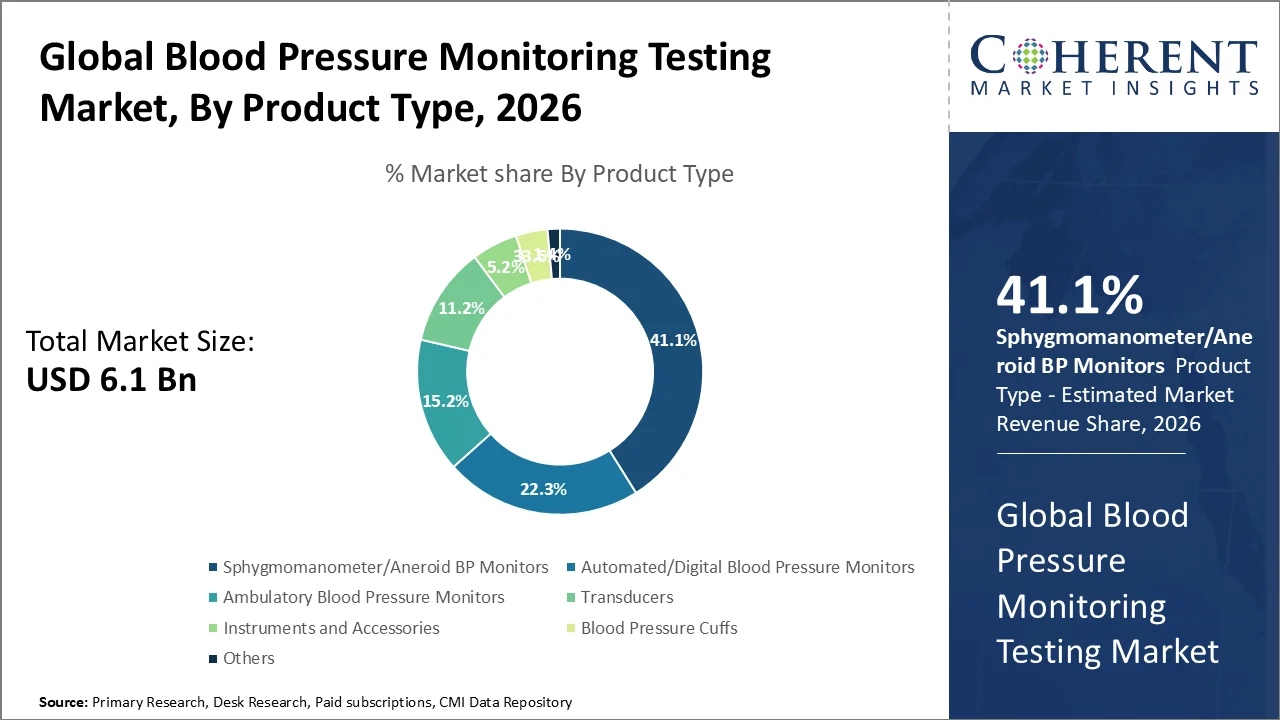
- Sphygmomanometer/Aneroid BP Monitors hold the largest market share of 41.1% in 2026 owing to its rising prevalence of hypertension.
- Hospitals expected to hold largest market share of 43.6% in 2026 owing to the increasing hospital admissions. Hypertension accounted for 23.7% of total hospital admissions.
- North America is expected to acquire the dominant share of 39.2% in 2026 owing to its high prevalence of hypertension and cardiovascular diseases. Cardiovascular diseases were the second leading cause of death in Canada in 2023, responsible for about 17.7% of all deaths.
Current Events and Their Impact on the Blood Pressure Monitoring Testing Market
Current Event | Description and its Impact |
Expansion of Medicare Coverage for Remote Patient Monitoring (United States, ongoing through 2025–2026 CMS policy updates) |
|
U.S. Surgeon General Call to Action on Hypertension Control (2025 federal initiative reinforcement) |
|
Segmental Insights
- Current Industry Events of 2026
- Market Size Estimation
- Regional Breakdown
- Competitive Landscape
- Customer Intelligence
- Segmental Analysis
- Pricing Analysis
- Key Market Drivers, Challenges & Future Trends
- Customized Insights Section
Why is Sphygmomanometer/Aneroid BP Monitors Acquiring the Largest Market Share?
Sphygmomanometer/Aneroid BP Monitors hold the largest market share of 41.1% in 2026. Healthcare providers continue to drive demand for sphygmomanometer and aneroid blood pressure monitors by valuing their affordability, reliability, and broad applicability across hospitals, clinics, ambulatory care centers, and community healthcare settings. Medical professionals rely on these devices in remote areas, emergency situations, and mobile health services because they operate without electricity or batteries. Rising awareness of hypertension, expanding routine health screening programs, and ongoing healthcare infrastructure development further strengthen adoption. Medical institutions also use these monitors for training, while clinicians prefer them for accurate manual blood pressure assessment and their convenient portability.
Which End User segment dominates the market?
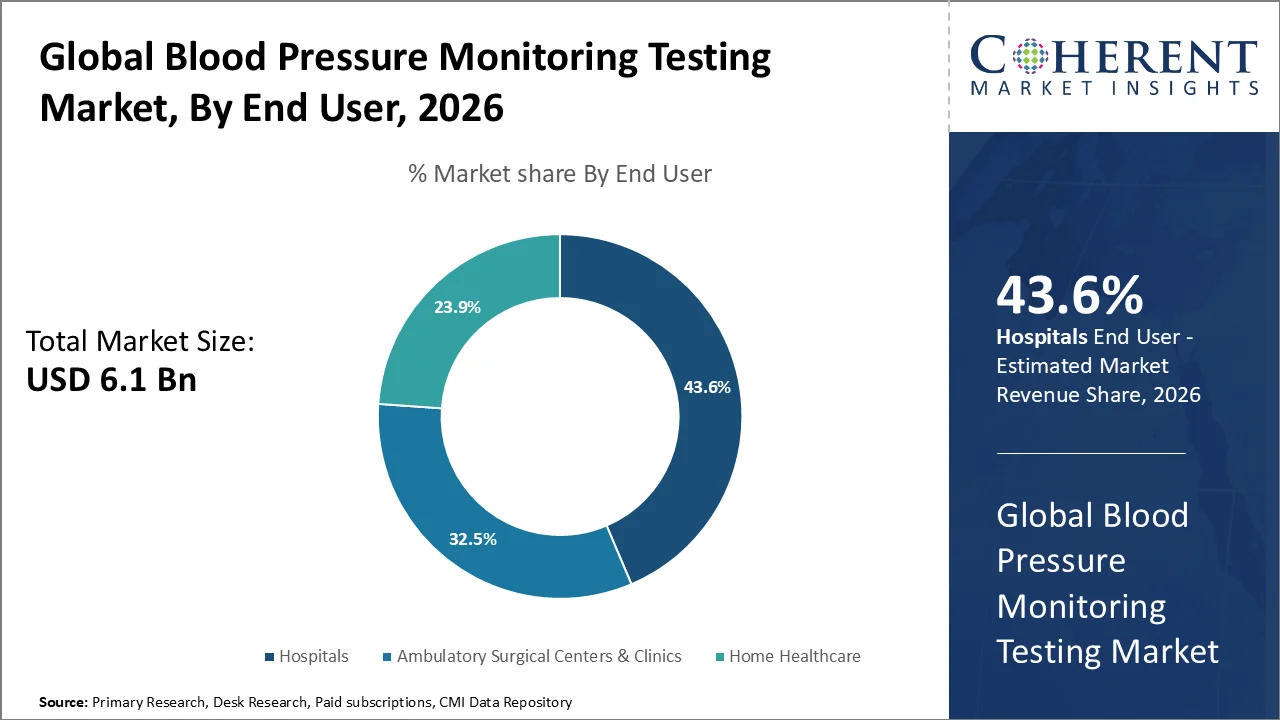
Hospitals expected to hold largest market share of 43.6% in 2026. Hospitals fuel the blood pressure monitoring testing market by prioritizing accurate and continuous patient monitoring across emergency departments, intensive care units, operating rooms, and general wards. Healthcare professionals perform frequent blood pressure assessments for patients with hypertension, cardiovascular diseases, diabetes, and other chronic conditions, driving demand for reliable monitoring devices. Hospital administrators invest in advanced patient monitoring systems to enhance clinical efficiency and patient safety. They also expand healthcare infrastructure, increase surgical capacity, and adopt integrated monitoring technologies, further strengthening market growth.
Blood Pressure Monitoring Testing Market Trends
- The growing use of Bluetooth- and Wi-Fi-enabled blood pressure monitors supports remote patient monitoring (RPM), real-time data sharing, and telehealth. CMS continues to reimburse RPM services through CPT codes 99453, 99454, 99457, and 99458, encouraging the adoption of connected BP monitoring devices for chronic disease management.
- Home BP monitoring is increasingly recommended for hypertension diagnosis and management. According to the CDC, nearly half of U.S. adults (48.1%, or about 119.9 million people) have hypertension, highlighting the need for routine home monitoring.
- Growing burden of hypertension and aging populations: Increasing prevalence of hypertension, cardiovascular disease, diabetes, obesity, and chronic kidney disease continues to drive demand for routine BP monitoring. According to the World Health Organization, an estimated 1.28 billion adults aged 30–79 years worldwide have hypertension, and most live in low- and middle-income countries.
- Government support for hypertension screening and remote monitoring continues to improve access to BP monitoring technologies. In the U.S., the Million Hearts initiative, led by the CDC and CMS, aims to prevent cardiovascular events by improving hypertension control and promoting self-measured blood pressure (SMBP) monitoring.
Regional Insights
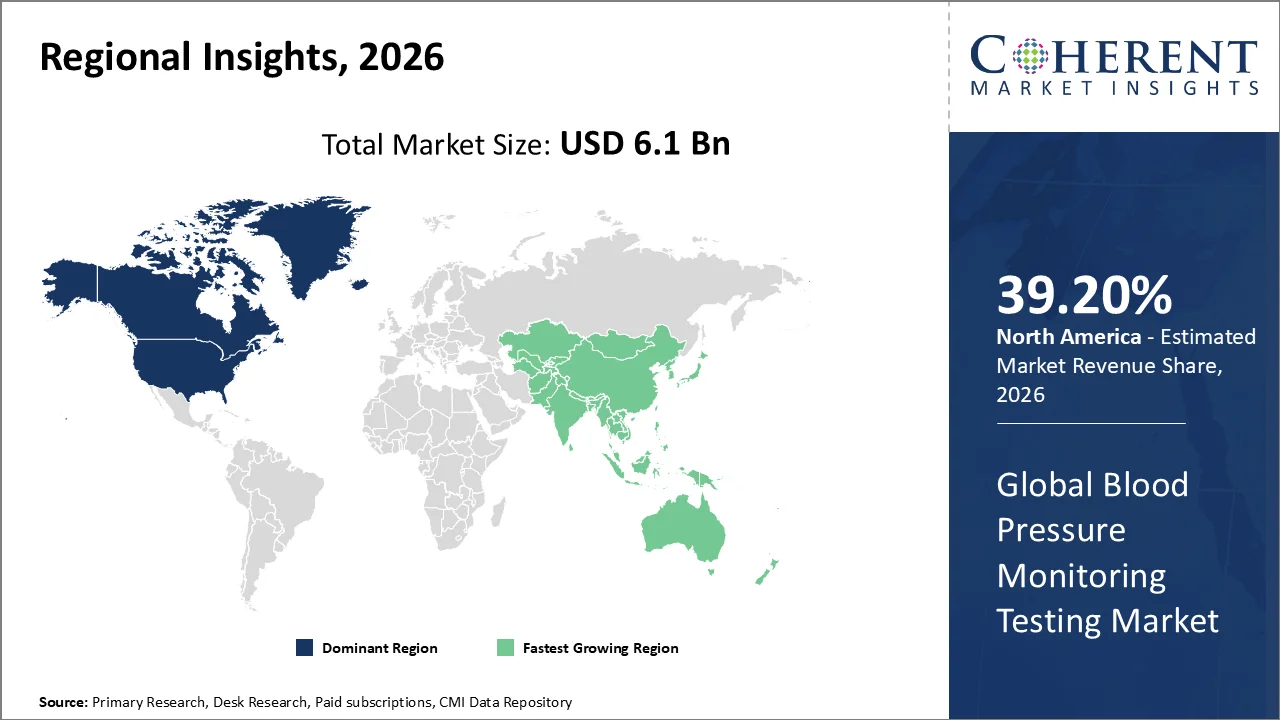
North America dominates owing to strong digital health and remote patient monitoring adoption
North America is expected to acquire the dominant share of 39.20% in 2026. North America propels the blood pressure monitoring testing market as healthcare systems manage a high burden of hypertension, cardiovascular diseases, and other lifestyle-related disorders that require continuous monitoring and early diagnosis. Hypertension affected 49.5% of the U.S. population before the pandemic and 47.7% after the pandemic. Healthcare providers leverage advanced infrastructure to deploy digital, connected, and home-based monitoring devices across hospitals and households. Patients and clinicians actively adopt telehealth and remote patient monitoring solutions, further increasing demand. A growing geriatric population, high healthcare spending, and a strong focus on preventive care reinforce market expansion. Ongoing technological advancements and established clinical practices continue to support widespread device adoption. For instance, the Pan American Health Organization (PAHO) launched the HEARTS Quality Framework, published in The Lancet Regional Health, Americas, to help countries improve hypertension and cardiovascular risk management, prevent heart attacks and strokes, and strengthen primary healthcare delivery in communities.
Asia Pacific Blood Pressure Monitoring Testing Market Trends
Rising hypertension rates, a growing elderly population, and heightened awareness of cardiovascular diseases drive the Asia Pacific blood pressure monitoring testing market. Healthcare providers expand infrastructure, improve access to diagnostic services, and adopt digital health technologies to strengthen monitoring capabilities. Governments promote early disease detection and preventive care, encouraging regular blood pressure checks. Urbanization, lifestyle changes, and increasing healthcare spending in emerging economies also boost demand for accurate and convenient blood pressure testing solutions. For instance, Paramount Surgimed Ltd. launched the Digital Blood Pressure Monitor, one of the best ways to now check your blood pressure with no tension of measuring the zigzag turns of the stick instead getting best and the accurate results on your blood pressure levels.
United States Blood Pressure Monitoring Testing Market Trends
Rising hypertension and cardiovascular disease cases drive the U.S. blood pressure monitoring market. Consumers prioritize preventive care and seek early diagnosis. In the United States, a heart attack occurs every 40 seconds, with approximately 805,000 cases reported annually. Advances in digital and wearable devices improve accuracy and ease of use, increasing adoption. An aging population with higher chronic disease risk boosts demand. Growth in home healthcare and routine screening programs by providers further supports consistent demand for blood pressure monitoring testing solutions. For instance, in April 2026, Omron Healthcare unveiled a randomized controlled trial with the University of California San Francisco (UCSF) to test a new approach for early detection of atrial fibrillation (AF) in hypertensive patients using at-home blood pressure monitoring.
China Blood Pressure Monitoring Testing Market Trends
Rising hypertension rates and a rapidly growing elderly population drive demand in China’s blood pressure monitoring testing market. Approximately 274 million adults in China have hypertension, with nearly 240 million having uncontrolled blood pressure. People increasingly recognize the importance of cardiovascular health, which boosts awareness and testing uptake. Consumers actively adopt home-based monitoring devices, while advancements in digital health technologies strengthen market expansion.
Key News
- In January 2024, Samsung, India’s largest electronics brand, has launched blood pressure and ECG tracking features for the Galaxy Watch6 series in India for the first time through an over-the-air (OTA) update.
Market Report Scope
Blood Pressure Monitoring Testing Market Report Coverage
| Report Coverage | Details | ||
|---|---|---|---|
| Base Year: | 2025 | Market Size in 2026: | USD 6.1 Bn |
| Historical Data for: | 2020 To 2024 | Forecast Period: | 2026 To 2033 |
| Forecast Period 2026 to 2033 CAGR: | 5.6% | 2033 Value Projection: | USD 7.8 Bn |
| Geographies covered: |
| ||
| Segments covered: |
| ||
| Companies covered: | A&D Medical, Inc., Contec Medical Systems Co., Ltd., Covidien Plc, GE Healthcare, Masimo Corporation, Shenzhen Mindray Bio-Medical Electronics Co., Ltd., SunTech Medical, Inc., Nihon Kohden Corporation, Philips Healthcare, Spacelabs Healthcare, Omron Healthcare, Inc., Withings sas, and Welch Allyn, Inc. (Hill-Rom, Inc.) | ||
Analyst Opinion
- Blood pressure monitoring testing demand is being driven by a clear clinical burden rather than incremental market trends. Hypertension affects more than 1.28 billion adults globally, and a significant portion remain undiagnosed or inadequately controlled, creating sustained demand for routine monitoring and diagnostic testing. In China alone, large-scale epidemiological studies indicate that over 270 million adults live with hypertension, reinforcing the need for continuous screening at both primary care and home settings.
- Clinical practice is also shifting toward earlier detection and long-term monitoring, with ambulatory blood pressure monitoring increasingly recommended for accurate diagnosis of white-coat and masked hypertension, conditions that conventional office readings often miss.
- Home-based blood pressure monitoring is gaining strong clinical acceptance, as validated studies show that it provides readings more closely aligned with cardiovascular outcomes than single clinic measurements. This is accelerating adoption across both aging populations and high-risk patients requiring long-term disease management, reinforcing sustained reliance on digital and automated monitoring systems.
Speak to the analyst
Want personalized insights?
Take the findings above to one of our principal consultants, or have the report rebuilt around the segments, geographies and competitors you actually track.
Market Segmentation
- By Product Type (Revenue, USD Bn, 2021-2033)
- Sphygmomanometer/Aneroid BP Monitors
- Automated/Digital Blood Pressure Monitors (Arm, Wrist, Finger)
- Ambulatory Blood Pressure Monitors
- Transducers (Disposable, Reusable)
- Instruments and Accessories
- Blood Pressure Cuffs (Disposable, Reusable)
- Others
- By End User (Revenue, USD Bn, 2021-2033)
- Hospitals
- Ambulatory Surgical Centers & Clinics
- Home Healthcare
- By Region (Revenue, USD Bn, 2021-2033)
- North America
- U.S.
- Canada
- Latin America
- Brazil
- Mexico
- Argentina
- Rest of Latin America
- Europe
- Germany
- U.K.
- France
- Italy
- Spain
- Russia
- Rest of Europe
- Asia Pacific
- China
- India
- Japan
- Australia
- South Korea
- ASEAN
- Rest of Asia Pacific
- Middle East
- GCC
- Israel
- Rest of Middle East
- Africa
- South Africa
- Central Africa
- North Africa
- North America
Sources
Primary Research interviews
- Cardiologists and hypertension specialists
- Hospital procurement managers
- Biomedical engineers in diagnostic device companies
- Nursing staff in critical care and outpatient departments
- Home healthcare service providers
- Patients using digital and ambulatory BP monitoring devices
Databases
- National health statistics repositories (government health portals)
- Clinical trial registries related to cardiovascular monitoring
- Medical device regulatory databases
- Hospital equipment procurement databases
- Academic medical university databases
Magazines
- Healthcare technology magazines
- Medical devices and diagnostics trade magazines
- Clinical practice update magazines
- Biomedical engineering industry magazines
- Nursing and primary care magazines
Journals
- Cardiology and cardiovascular medicine journals
- Hypertension research journals
- Biomedical instrumentation and sensor technology journals
- Clinical diagnostics and laboratory medicine journals
- Public health and epidemiology journals
Newspapers
- National and regional newspapers covering healthcare developments
- Business newspapers reporting medical device market trends
- Health and science news sections of major dailies
Associations
- Cardiological societies and hypertension associations
- Medical device regulatory and standards organizations
- Public health associations
- Biomedical engineering professional bodies
- Nursing and allied healthcare associations
Public Domain sources
- Government health ministry publications and reports
- World health statistics and non-commercial public health datasets
- WHO and other international public health organization reports
- National survey data on hypertension prevalence
- Hospital public annual reports and disclosures
Proprietary Elements
- CMI Data Analytics Tool
- Proprietary CMI Existing Repository of information for last 10 years
Get access to 250+ pages report
Every segment, forecast, competitor profile and data table behind the analysis above — available for instant download.
- ESOMAR Member
- ISO 9001:2015 Certified
- D-U-N-S Registered
- GDPR & CCPA Compliant
Missing comfort of reading report in your local language? Find your preferred language:
Transform your Strategy with Exclusive Trending Reports
Frequently Asked Questions
The Blood Pressure Monitoring Testing Market is anticipated to grow at a CAGR of 5.6% with USD 6.1 Billion share in 2026 and is expected to reach USD 7.8 Billion in 2033.
Increasing prevalence of hypertension and increasing geriatric population are the factors fueling growth of market.
The sphygmomanometer/Aneroid BP Monitors segment is the leading component segment in the market.
Unfavorable reimbursement policies and under-diagnosis of lifestyle diseases are expected to hinder growth of the market.
Major players operating in the market include, A&D Medical, Inc., Contec Medical Systems Co., Ltd., Covidien Plc, GE Healthcare, Masimo Corporation, Shenzhen Mindray Bio-Medical Electronics Co., Ltd., SunTech Medical, Inc., Nihon Kohden Corporation, Philips Healthcare, Spacelabs Healthcare, Omron Healthcare, Inc., Withings sas, and Welch Allyn, Inc. (Hill-Rom, Inc.)
North America region is expected to hold dominant position in the market over the forecast period. The growth of the market in the region is driven by early adoption of technologically advanced products, rising cases of hypertension, and launch of new products in recent years.