

Medical Cyclotron Market Size and Trends - 2026 to 2033
The Medical Cyclotron Market is estimated to be valued at USD 235 Mn in 2026 and is expected to reach USD 357 Mn by 2033, growing at a compound annual growth rate (CAGR) of 6.1% from 2026 to 2033.
Key Takeaways
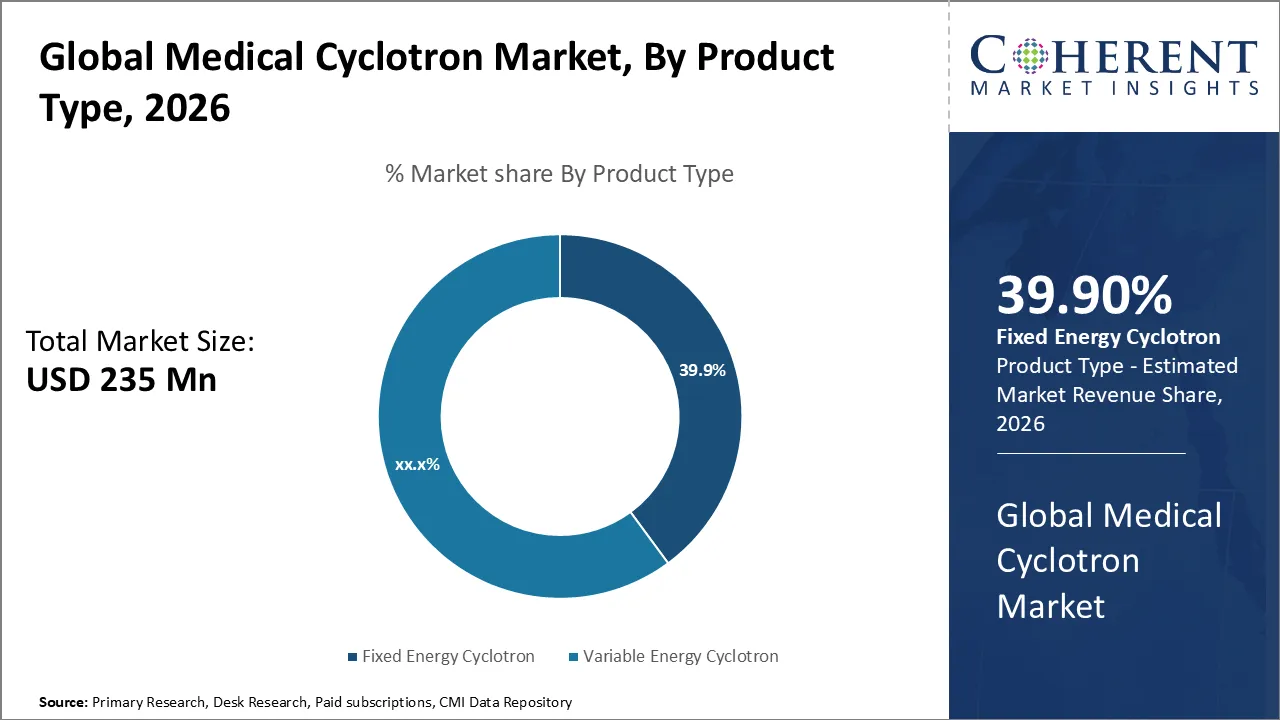
- Based on Product Type, the Fixed Energy Cyclotron segment is expected to lead the market with 39.90% share in 2026, because it is cost-effective, compact, and ideal for routine isotope production.
- Based on Application, the Diagnostic and Treatment segment is expected to lead the market with 77.20% share in 2026, due to high demand for PET scans.
- Based on End User, the Hospitals segment is expected to lead the market with 34.10% share in 2026, owing to integrated nuclear medicine facilities.
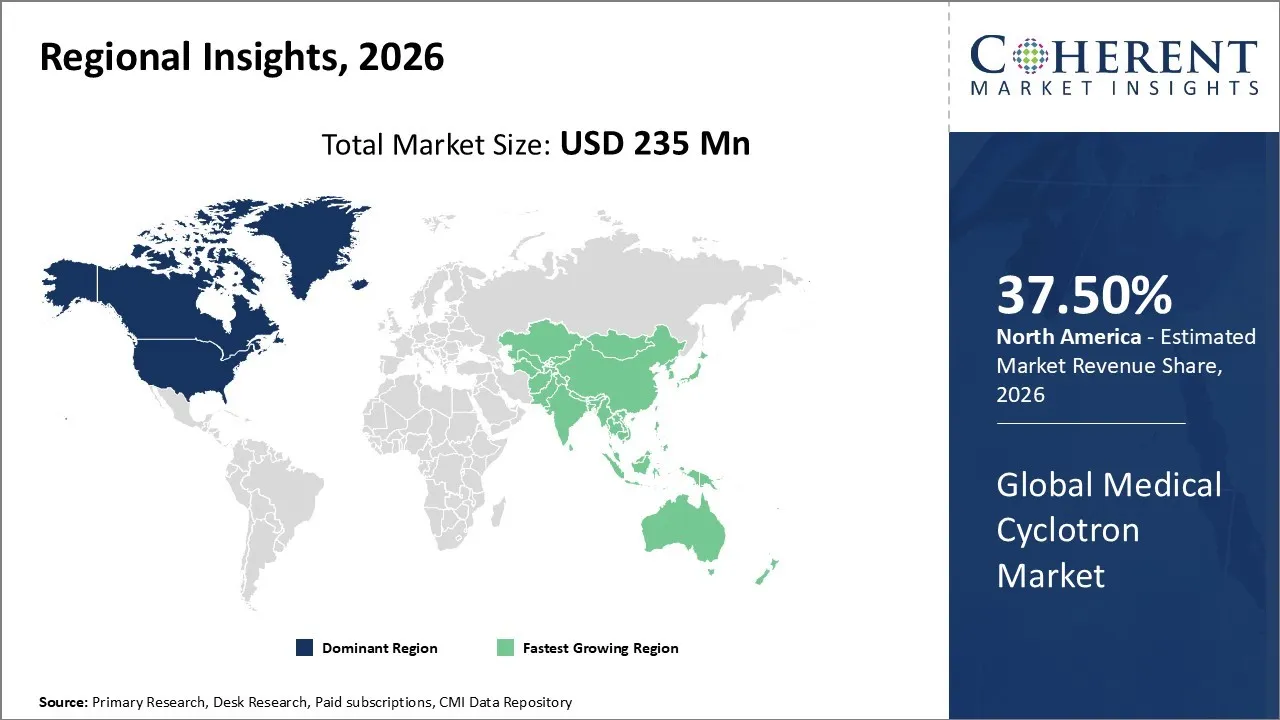
- Based on Region, North America is set to lead the market with 37.50% share in 2026. While, Asia Pacific is anticipated to be the fastest growing region.
Market Overview
The medical cyclotron market is advancing significantly with the rising applications in nuclear medicine, oncology, and personalized diagnostics. Moreover, expanding radiopharmaceutical research and tightening regulatory standards for isotope production are expected to drive market growth over the forecast period. The medical cyclotrons are specialized particle accelerators that use electromagnetic fields to propel charged particles, primarily protons, at high speeds. This technology is a cornerstone of modern molecular imaging, facilitating the on-site production of short-lived radioisotopes.
Current Events and Its Impacts on the Medical Cyclotron Market
Current Event | Description and the Impact |
Technological Innovations and Advancements |
|
Public Health and Disease Burden Trends |
|
Economic and Healthcare Infrastructure Trends |
|
Segmental Insights
- Current Industry Events of 2026
- Market Size Estimation
- Regional Breakdown
- Competitive Landscape
- Customer Intelligence
- Segmental Analysis
- Pricing Analysis
- Key Market Drivers, Challenges & Future Trends
- Customized Insights Section
Medical Cyclotron Market Insights, By Product Type – Fixed Energy Cyclotron Leads Due to its Cost-effectiveness and Compact.
In terms of product type, the fixed energy cyclotron segment contributes the highest share of 39.90% in 2026 of the market. The growth is owing to its specialized efficiency in producing standard positron emitting isotopes like Fluorine-18. Unlike variable energy models, fixed energy systems offer simplified operational protocols and lower maintenance requirements along with a more compact footprint. These characteristics make them ideal for the burgeoning network of regional radiopharmacies. These cyclotrons act as the primary workhorses of the industry by providing the yield stability necessary for the mass production of FDG. The operational stability and comparatively lower capital outlay associated with fixed energy systems make them the dominant choice among commercial suppliers and large-scale medical facilities focused on strengthening diagnostic isotope supply chain resilience.
Medical Cyclotron Market Insights, By Application – Diagnostic and Treatment Leads Due to High Global Demand for PET Scans in Clinical Diagnostics
In terms of application, the diagnostic and treatment segment contributes the highest share of 77.20% in 2026 of the market. The segment is growing as nuclear medicine becomes central to oncology and cardiology. The growth is owing to the rising prevalence of chronic diseases and the subsequent need for high-resolution molecular imaging. The medical cyclotrons are indispensable for the creation of radiotracers used in PET and SPECT scans. They allow for earlier and more accurate disease detection than traditional imaging methods. In addition, the treatment aspect is gaining momentum via theranostics, which is a dual approach where cyclotrons produce both diagnostic and therapeutic isotopes. This shift toward personalized medicine ensures that the diagnostic and treatment segment remains the primary revenue engine for the medical cyclotron market.
For instance, in October 2024, The African Medical Centre of Excellence (AMCE) has begun constructing a modern medical facility equipped with state-of-the-art imaging technology vital for diagnosing and treating diseases like cancer, cardiovascular issues, and neurological disorders. The center's facilities will include a Cyclotron, which will improve both diagnostic and therapeutic capabilities.
Medical Cyclotron Market Insights By, End User – Hospitals Leads Due to Integrated Nuclear Medicine Facilities and High Patient Volumes
In terms of end user, the hospitals segment contributes the highest share of 34.10% in 2026 of the market. The growth is owing to a strategic shift toward decentralized radiopharmaceutical production, where large hospital networks install in-house cyclotrons in order to ensure a steady supply of short-lived isotopes. The hospitals can offer more flexible patient scheduling and reduce procedural expenses by bypassing the logistical challenges of transporting isotopes with rapid decay rates. In addition, the integration of cyclotron facilities within comprehensive cancer centers allows for a seamless transition between diagnosis and specialized treatments like proton therapy. The increasing public and private investment in cutting-edge hospital infrastructure ensures that this segment is at the forefront of the market growth.
For instance, in November 2025, Precious Medical Group has announced the opening of the Tunku Laksamana Johor Cancer Centre and Hospital. It will also feature a nuclear medicine facility that includes Malaysia's first cyclotron outside the Klang Valley, allowing for the on-site production of medical radioisotopes used in cancer imaging and therapy.
Regional Insights
North America Medical Cyclotron Market Analysis & Trends
North America has emerged as the leader in the global market and accounts for a higher share of 37.50% in 2026. The growth is due to the increasing prevalence of chronic diseases, particularly cancer, which has created a demand for more precise diagnostic imaging and targeted therapies. The region currently possesses the largest market share. The increase is owing to by its advanced healthcare infrastructure and a high concentration of specialized medical facilities. There are over 250 installed cyclotrons in North America.
The market is evolving due to the emergence of theranostics, which combines diagnostic imaging with targeted therapeutic isotopes like Lutetium-177 and Actinium-225. This advancement necessitates the use of higher-energy machines. The major global firms such as GE HealthCare, Siemens Healthineers, and IBA Radiopharma Solutions lead the competitive landscape. They are placing a greater emphasis on integrating AI and automation into their systems to enhance isotope yields and minimize operational downtime.
For instance, in May 2023, Advanced Cyclotron Systems, Inc. (ACSI) has announced the initial sale of its new TR-ALPHA. This new cyclotron was designed, developed, and manufactured in Canada. This innovative technology provides healthcare and research organizations with an opportunity to save space and reduce costs.
Asia Pacific Medical Cyclotron Market Analysis & Trends
The Asia Pacific region is the fastest growing region in the global Medical Cyclotron Market. The growth is owing to the rising prevalence of cancer and neurological disorders in the region. This rise has resulted in a higher demand for Positron Emission Tomography (PET) and Single-Photon Emission Computed Tomography (SPECT) imaging. In addition, there is a notable shift toward on site isotope production. This is because hospitals are seeking to reduce their dependence on external supply chains and minimize logistical delays associated with short-lived isotopes.
China is operating more than 120 cyclotrons and has a national plan to double its isotope services by 2035. India is experiencing fast growth in the region owing to substantial investments in oncology infrastructure. The firms like IBA, GE HealthCare, and Siemens Healthineers are implementing AI-driven automation and IoT-enabled monitoring in their systems to improve isotope yields and reduce operational downtime.
For instance, in November 2025, Telix has announced that its TMS (Telix Manufacturing Solutions) facility in Yokohama, Japan, has officially opened. This facility marks the Company’s first cyclotron site in the Asia Pacific region.
Medical Cyclotron Market Outlook Country-Wise
The US Medical Cyclotron Market Trends
The U.S. remains the most profitable market for Medical Cyclotron globally. The growth is owing to the high volume of diagnostic imaging procedures. The rising cancer incidences are creating an increased demand for cyclotron-produced tracers like Fluorine-18. The new technology is making hospitals choose smaller, self-shielded 10-12 MeV cyclotrons for producing isotopes on-site. This shift aims to ensure isotope sovereignty and lessen reliance on external supply chains. At the same time, the growing field of theranostics is fueling investment in higher-energy systems that can produce therapeutic isotopes like Actinium-225 and Lutetium-177. The competitive landscape is led by firm like GE HealthCare, Siemens Healthineers, and IBA Radiopharma Solutions. They are focusing on AI-driven automation to enhance isotope yields.
For instance, in January 2026, CyGen Alpha Systems LLC has unveiled its new radiopharmaceutical infrastructure platform. It aims to increase domestic capacity for cutting eddge nuclear medicine and precision oncology. The firm is currently assessing potential sites for its inaugural U.S. Medical Cyclotron facility.
China Medical Cyclotron Market Trends
China is the fastest growing market for Medical Cyclotron owing to the aggressive national mandate to decentralize and modernize nuclear medicine services. Under the Medium- and Long-term Development Plan for Medical Isotopes, the Chinese government aims to establish a nuclear medicine department in every county-level hospital, a goal that is projected to at least double the current scale of the industry by 2035. The market continues to expand fueled by a surge in domestic demand for Positron Emission Tomography (PET) and Single-Photon Emission Computed Tomography (SPECT) imaging to address rising cancer and cardiovascular disease rates. High-energy medical cyclotrons (above 24 MeV) have become a strategic focus for China supported by massive investments in world-class research institutions and new large-scale cancer centres.
For instance, in December 2023, GE Healthcare China has introduced its first batch of cyclotrons at Chengdu Tianfu International Bio-Town, located in Chengdu, the capital of Sichuan province. This initiative marks a significant step for GE Healthcare China, a subsidiary of the US-based medical technology company GE Healthcare.
Market Report Scope
Medical Cyclotron Market Report Coverage
| Report Coverage | Details | ||
|---|---|---|---|
| Base Year: | 2025 | Market Size in 2026: | USD 235 Mn |
| Historical Data for: | 2020 To 2024 | Forecast Period: | 2026 To 2033 |
| Forecast Period 2026 to 2033 CAGR: | 6.1% | 2033 Value Projection: | USD 357 Mn |
| Geographies covered: |
| ||
| Segments covered: |
| ||
| Companies covered: | IBA Radiopharma Solutions, Advanced Cyclotron Systems, Best Cyclotron Systems, Inc., Best ABT Molecular Imaging, Inc., Siemens Healthineers, GE Healthcare, IONETIX Corporation, PMB-ALCEN, Sumitomo Heavy Industries, Ltd., and The Japan Steel Works, Ltd. | ||
| Growth Drivers: |
| ||
| Restraints & Challenges: |
| ||
Medical Cyclotron Market Drivers
Rising need for stabilized and localized supply of radioisotopes
The global medical cyclotron market is witnessing a considerable surge in demand owing to the critical need for a stabilized and localized supply of radioisotopes. The rising global prevalence of cancer and neurodegenerative diseases forces healthcare providers to expand their use of advanced diagnostic imaging techniques like Positron Emission Tomography. Many essential isotopes used in these procedures have extremely short half-lives and must be produced near the point of care to remain effective.
This logistical need has led to a move away from traditional nuclear reactors toward cyclotrons, which provide a more efficient and safer way to produce isotopes. In addition, the growth of theranostic, which combines diagnostic imaging with targeted treatment, is encouraging hospitals and pharmaceutical companies to invest in high-energy cyclotrons. These systems can produce new isotopes like Actinium 225, which are important for personalized medicine. As a result, increasing adoption of on-site production is expected to drive stable market expansion while safeguarding patient access. to key radiopharmaceuticals.
Analyst Opinion (Expert Opinion)
The Medical Cyclotron Market is a pivotal segment within nuclear medicine and advanced diagnostic imaging, driven by the essential role of cyclotrons in producing short‑lived isotopes—especially fluorine‑18—for PET imaging. Industry assessments consistently show a robust and sustained growth trajectory, reflecting expanding deployments and rising demand for on‑site radioisotope production.
Analysis of installed units worldwide indicates well over a thousand Medical Cyclotrons currently in operation, with a significant proportion being low‑energy systems optimized for producing common diagnostic isotopes. Diagnostic applications—particularly oncology, cardiology, and neurology PET scans—account for a dominant share of cyclotron usage, with diagnostic procedures representing the vast majority of market activity. Hospitals remain the largest end‑user segment, although diagnostic imaging centers and radiopharmaceutical producers are increasingly investing in cyclotron capacity to ensure reliable supply and support innovation.
Speak to the analyst
Want personalized insights?
Take the findings above to one of our principal consultants, or have the report rebuilt around the segments, geographies and competitors you actually track.
Medical Cyclotron Industry News
- In August 2025, Alliance Medical has entered into a lease agreement to establish its operations at the Wolfson Molecular Imaging Centre (WMIC). This University research facility is located on the grounds of the Christie Hospital in Withington, which serves as a hub for cancer care, research, and education. WMIC features advanced radiochemistry facilities, including a cyclotron.
- In June 2025, IONETIX and AlfaRim have teamed up to work together on selling cyclotron-produced Actinium-225, an important isotope that helps create new targeted alpha therapies (TATs).
- In October 2024, Telix has announced its plans to spin off Rhine Pharma, an organization focused on increasing global access to innovative radiopharmaceuticals for cancer imaging and treatment. This initiative will utilize two generator-produced isotopes named technetium-99m and rhenium-188.
- In January 2022, IBA has introduced a new low-energy, compact cyclotron called the Cyclone KEY. This cutting-edge machine will allow small and medium-sized hospitals to produce their own radiopharmaceutical products in-house, thereby improving global access to oncology, neurology, and cardiology diagnostics.
Market Segmentation
- Product Type Insights (Revenue, USD Mn, 2026 - 2033)
- Fixed Energy Cyclotron
- Variable Energy Cyclotron
- 10-30 MeV
- 30 -70 MeV
- Application Insights (Revenue, USD Mn, 2026 - 2033)
- Diagnostic and Treatment
- Research and Development
- End User Insights (Revenue, USD Mn, 2026 - 2033)
- Hospitals
- Diagnostic Centers
- Commercial Radioisotope Manufacturers
- Research and Academic Institutes
- Regional Insights (Revenue, USD Mn, 2026 - 2033)
- North America
- U.S.
- Canada
- Latin America
- Brazil
- Argentina
- Mexico
- Rest of Latin America
- Europe
- Germany
- U.K.
- France
- Italy
- Russia
- Rest of Europe
- Asia Pacific
- China
- India
- Japan
- Australia
- South Korea
- ASEAN
- Rest of Asia Pacific
- Middle East
- GCC
- Israel
- Rest of Middle East
- Africa
- North Africa
- Central Africa
- South Africa
- North America
- Key Players Insights
- IBA Radiopharma Solutions
- Advanced Cyclotron Systems
- Best Cyclotron Systems, Inc.
- Best ABT Molecular Imaging, Inc.
- Siemens Healthineers
- GE Healthcare
- IONETIX Corporation
- PMB-ALCEN
- Sumitomo Heavy Industries, Ltd.
- The Japan Steel Works, Ltd.
Sources
Primary Research Interviews
- Medical Cyclotron Manufacturers
- Cyclotron System Integrators
- Radiopharmaceutical Producers
- Nuclear Medicine Technology Consultants
- Hospital & Diagnostic Imaging Equipment Engineers
- Others
Databases
- Bloomberg Terminal
- Thomson Reuters Eikon
- Others
Magazines
- Nuclear Medicine Communications
- Medical Imaging & Technology Magazine
- Radiology Today
- Applied Radiation and Isotopes
- Others
Journals
- Journal of Nuclear Medicine
- Applied Radiation and Isotopes
- Physics in Medicine & Biology
- European Journal of Nuclear Medicine and Molecular Imaging
- Others
Newspapers
- Financial Times
- The Wall Street Journal
- Reuters
- Bloomberg News
- Others
Associations
- International Atomic Energy Agency (IAEA) – Nuclear Medicine Section
- Society of Nuclear Medicine & Molecular Imaging (SNMMI)
- European Association of Nuclear Medicine (EANM)
- Others
Public Domain Sources
- U.S. Food & Drug Administration (FDA) – Radiopharmaceutical Guidance
- International Atomic Energy Agency (IAEA) – Cyclotron and Radionuclide Production
- European Commission – Health & Nuclear Safety Directorate
- World Health Organization (WHO) – Radiopharmaceuticals
- Others
Proprietary Elements
- CMI Data Analytics Tool
- Proprietary CMI Existing Repository of Information for the Last 8 Years
Get access to 250+ pages report
Every segment, forecast, competitor profile and data table behind the analysis above — available for instant download.
- ESOMAR Member
- ISO 9001:2015 Certified
- D-U-N-S Registered
- GDPR & CCPA Compliant
Missing comfort of reading report in your local language? Find your preferred language:
Transform your Strategy with Exclusive Trending Reports
Frequently Asked Questions
The Medical Cyclotron Market is estimated to be valued at USD 235 Mn in 2026, and is expected to reach USD 357 Mn by 2033.
The CAGR of the Medical Cyclotron Market is projected to be 6.1% from 2026 to 2033.
The growing incidence and prevalence of chronic diseases such as cancer and others is one of the major factors driving the growth of the Medical Cyclotron Market.
The limitations related to the use of cyclotrons for the production of novel radioisotopes are the major factors hampering the growth of the Medical Cyclotron Market.
In terms of product type, the fixed energy cyclotron segment is estimated to dominate the market revenue share in 2026.
IBA Radiopharma Solutions, Advanced Cyclotron Systems, Best Cyclotron Systems, Inc., Best ABT Molecular Imaging, Inc., Siemens Healthineers, GE Healthcare, IONETIX Corporation, PMB-ALCEN, Sumitomo Heavy Industries, Ltd., and The Japan Steel Works, Ltd. are the major players.
North America is expected to lead the Medical Cyclotron Market in 2026.