

Molecular Imaging Market Size and Forecast – 2026-2033
Global molecular imaging market is estimated to be valued at USD 5.63 Bn in 2026 and is expected to reach USD 8.35 Bn in 2033, exhibiting a compound annual growth rate (CAGR) of 5.8% from 2026 to 2033.
Key Takeaways
- Based on Application, The Oncology Segment is predicted to hold a significant market share. This is due to the rising incidence of cancer and increased use of molecular imaging methods for early detection and treatment monitoring.
- Based on Product Type, The Devices Segment will dominate the market with 56% market share. This is because imaging devices like PET, SPECT, and MRI are used in a broad array of clinical diagnostics as well as research applications.
- Based on the End User, The Hospitals Segment will lead the market during the forecast period. This is because of the large volume of patients, the presence of high-end imaging equipment, and the use of hospitals as the first choice of healthcare institutions for imaging diagnostics.
- North America is likely to dominate the molecular imaging market, accounting for an estimated 33.5% of the market size in 2023. The region is propelled by the availability of major industry players, increased healthcare spending, and the robust uptake of advanced imaging tools in the clinical setting.
Market Overview
The market for molecular imaging is growing steadily as the incidence of chronic diseases including cancer, neurological disorders, and cardiovascular diseases grows. Advances in imaging technology such as PET and MRI are aiding diagnosis and refining treatment monitoring. Nevertheless, there are challenges in the form of high costs and regulatory issues, which can reduce market growth. Regardless of these challenges, emerging markets such as China and India are seeing a rapid demand for advanced imaging technologies. Chinese firms, for example, are developing PET imaging technology, providing higher resolution and quicker scan times to enhance patient outcomes.
Current Events and its impact
Current Events | Description and its impact |
Advancements in Molecular Imaging Technologies |
|
Growing Role of Artificial Intelligence (AI) in Molecular Imaging |
|
Role of Artificial Intelligence in Molecular Imaging Market
Artificial intelligence (AI) plays a transformative role in molecular imaging by enhancing image acquisition, processing, and interpretation. AI algorithms improve image quality, reduce scan times, and enable early and more accurate detection of diseases such as cancer, neurological disorders, and cardiovascular conditions. In nuclear medicine, AI assists in quantifying radiotracer uptake, predicting treatment responses, and personalizing patient care. It also streamlines workflow, supports clinical decision-making, and aids in the development of novel radiopharmaceuticals.
In August 2025, the Society of Nuclear Medicine and Molecular Imaging (SNMMI) introduced the Global Radiopharmaceutical Trial Finder—an innovative, AI-driven platform designed to help researchers, clinicians, and patients quickly identify radiopharmaceutical clinical trials tailored to their specific needs.
- Current Industry Events of 2026
- Market Size Estimation
- Regional Breakdown
- Competitive Landscape
- Customer Intelligence
- Segmental Analysis
- Pricing Analysis
- Key Market Drivers, Challenges & Future Trends
- Customized Insights Section
Molecular Imaging Market Dynamics
Global Molecular Imaging Market– Drivers
Increased inorganic growth initiatives like acquisitions, by major market players, are likely to propel market growth during the forecast period. In August 2024, Siemens Healthineers made a binding offer to buy Novartis's Advanced Accelerator Applications (AAA) business for more than €200 million. The deal fortifies Siemens's market position in the positron emission tomography (PET) radiopharmaceutical market, especially in Europe. The acquisition is scheduled to be completed during the fourth quarter of 2024.
Increasing incidence of cancer globally
Techniques of molecular imaging are broadly applied for diagnosing and assessing prognosis of cancer; therefore, the growing incidence of cancer across the globe will propel the expansion of the market for global molecular imaging during the forecast period. In 2024, the World Health Organization (WHO) and the International Agency for Research on Cancer (IARC) published updated global cancer data. The statistics indicate the following:
- New cancer cases in 2022: Approximately 20 million new cases globally.
- Cancer deaths in 2022: Around 9.7 million cancer-related deaths worldwide.
Global Molecular Imaging Market: Key Trends
Government allocations for precision medicine programs
Government funding for precision medicine platforms is another key enabler. Quibim raised $50 million in a Series A funding round in January 2025 to take its AI-powered imaging biomarker technology to the next level. The funding is to enhance Quibim's international market presence and step up the growth of precision medicine technologies. The $50 million Series A investment will help Quibim expand its AI-powered imaging biomarker technology, taking precision medicine forward. The funding will also drive international expansion, extending access to innovative healthcare solutions. It speeds up the creation of personalized treatments, enhancing patient care. The increase in resources will further solidify Quibim as a market leader in medical imaging innovation. These trends are leading to a paradigm shift toward closed-loop diagnostic-therapeutic systems, in which imaging directly influences treatment protocols.
Segmental Insights
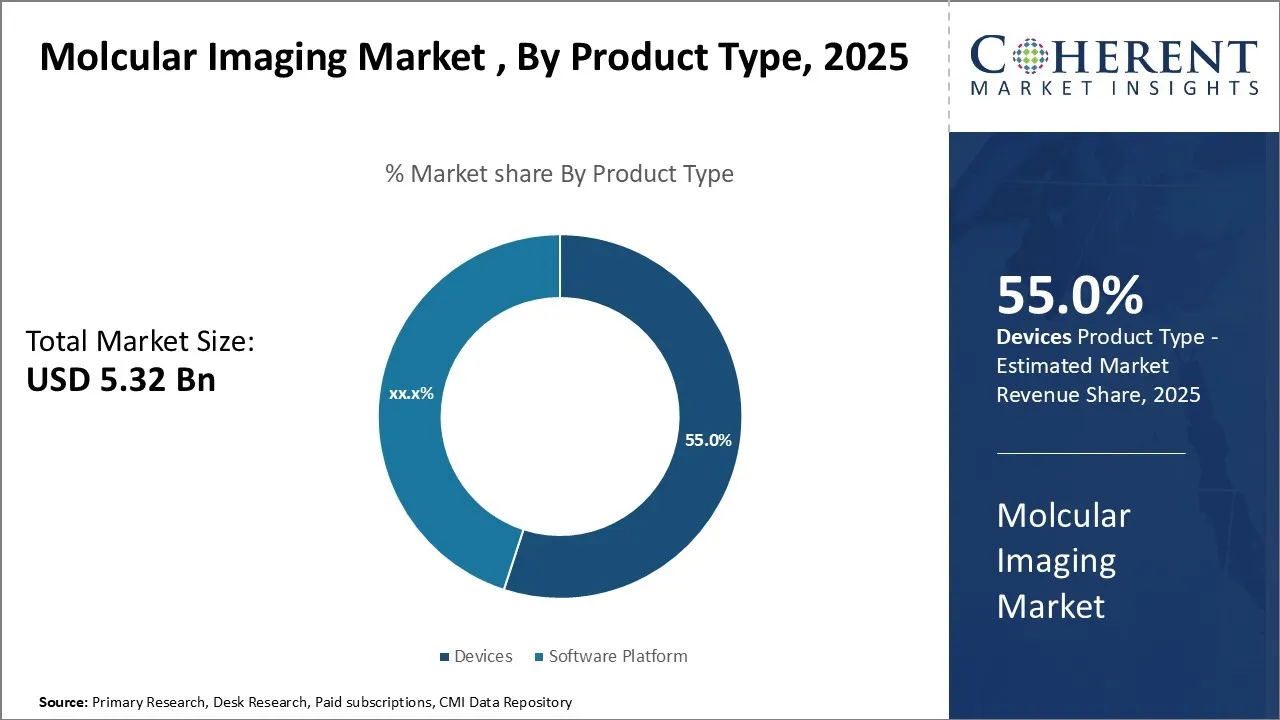
Global Molecular Imaging Market Insights by Product Type: Devices Segment Dominate the Market
By Product Type, Devices Segment is expected to have market dominance in the global molecular imaging market throughout the forecast period and this is on account of the growing demand of molecular imaging devices.
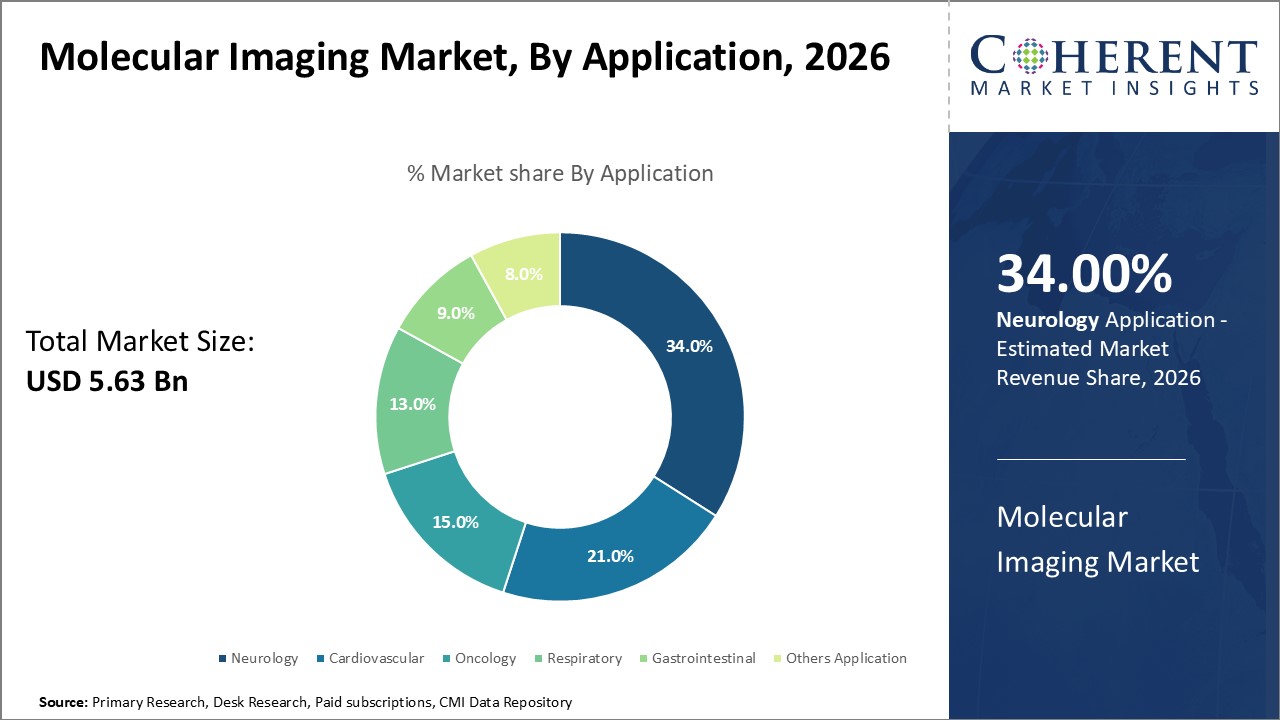
Global Molecular Imaging Market Insights by Application: Neurology Segment Lead the Market
Based on application, the market is divided into cardiovascular, neurology, oncology, respiratory, gastrointestinal, and others applications. Among which, neurology is anticipated to lead the market during the forecast period, and that is due to rising neuro disorders.
Global Molecular Imaging Market Insights by End User: Hospital Segment Dominates the Market
On the basis of end user, the market is bifurcated into ambulatory surgical centres, diagnostic imaging centres, and hospitals. Among all these, the hospital segment is anticipated to reign the market throughout the forecast period, and that is due to the immediate care that may bring about appropriate recuperation.
Regional Analysis
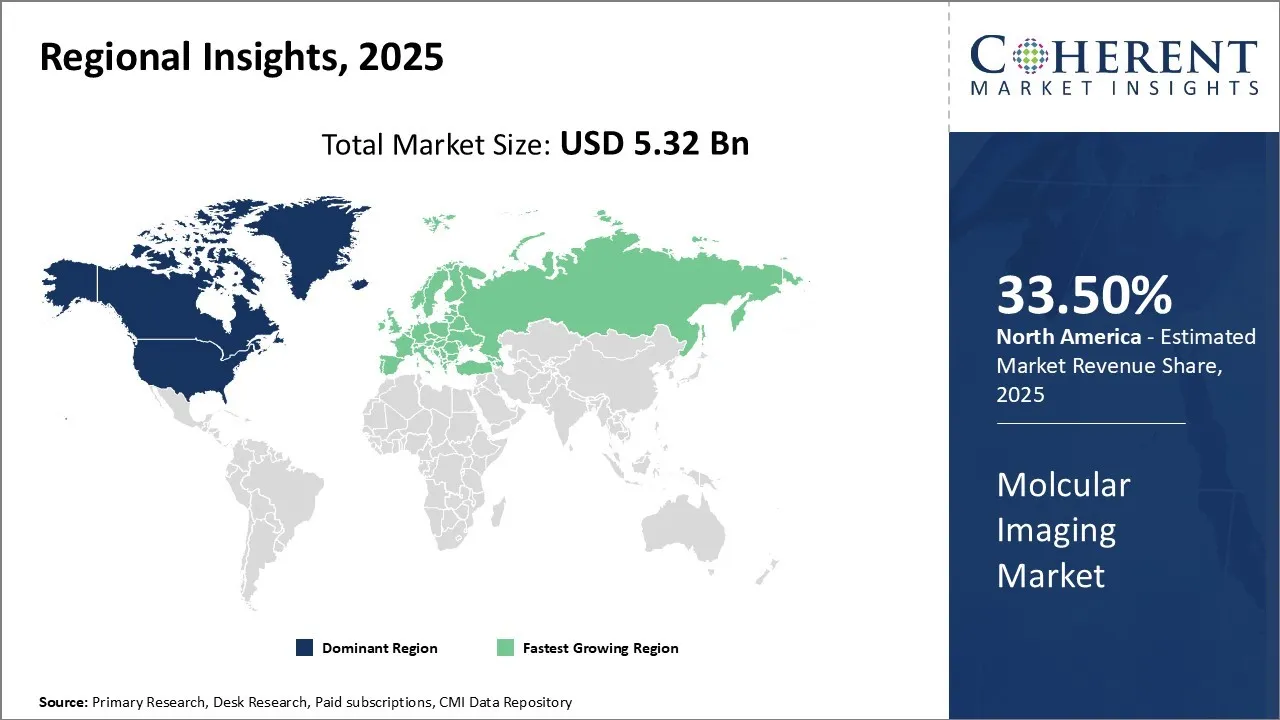
North America Molecular Imaging Market Analysis and Trends
Among the regions, North America is forecasted to be in leading position in global molecular imaging market during the forecasting period. The North American market is forecasted to account for 33.5 % in 2026. The world molecular imaging market is forecasted to grow sizably in forthcoming years, attributable to rising inorganic growth techniques, including takeover deals by industry leaders.
Molecular Imaging Market Dominating Countries
United States Molecular Imaging Market Analysis and Trends
The United States dominates the market for molecular imaging, fuelled by its sophisticated infrastructure of healthcare facilities, high penetrance of state-of-the-art imaging technologies, and heavy expenditure on research and development. Availability of major market players such as GE Healthcare, Siemens Healthineers, and Philips Healthcare augments its dominant position in the market. The increasing incidence of chronic illnesses, especially cancer, drives demand for molecular imaging methods like PET and MRI, adding to the nation's significant market share.
Germany Molecular Imaging Market Analysis and Trends
Germany is among the top nations in Europe for molecular imaging, with its robust healthcare system and highly developed medical technology sector. German companies such as Siemens Healthineers are pioneering the development of advanced molecular imaging equipment. Germany also has a key role in research and development, with various academic and medical centres spearheading innovations in molecular imaging technologies, especially in oncology and neurology.
China Molecular Imaging Market Analysis and Trends
China is fast becoming a significant player in the molecular imaging industry, driven by its huge population and growing investments in healthcare. The need for sophisticated diagnostic technologies, particularly in oncology and cardiovascular diseases, is on the rise. Chinese firms are also making tremendous contributions to PET and SPECT technology development, enhancing the availability and affordability of molecular imaging in both urban and rural regions. The emphasis on increasing healthcare access by the government also contributes to the growth of the market.
Japan Molecular I maging Market Analysis and Trends
Japan is a leading market for molecular imaging in Asia due to its aging population and high rate of demand for early diagnosis of chronic diseases. Japan is famous for its medical imaging technology innovation, especially in PET and MRI systems. Due to the rising incidence of diseases such as cancer and neurological disorders, Japan will continue to lead the way in molecular imaging with the support of strong government healthcare policies and an established healthcare infrastructure.
Market Report Scope
Molecular Imaging Market Report Coverage
| Report Coverage | Details | ||
|---|---|---|---|
| Base Year: | 2025 | Market Size in 2026: | USD 5.63 Bn |
| Historical Data for: | 2020 To 2024 | Forecast Period: | 2026 To 2033 |
| Forecast Period 2026 to 2033 CAGR: | 5.8% | 2033 Value Projection: | USD 8.35 Bn |
| Geographies covered: |
| ||
| Segments covered: |
| ||
| Companies covered: | GE Healthcare, Bruker Corporation, Fujifilm Holdings Corp., Siemens Healthineers, Koninklijke Philips N.V., Canon Medical Systems Corporation, United Imaging Healthcare Co., Ltd., Mediso Kft., Positron Corporation, Esaote SpA, Carestream Health, Mirada Medical Limited, and Hermes Medical Solutions | ||
| Growth Drivers: |
| ||
| Restraints & Challenges: |
| ||
Global Molecular Imaging Market: Key Developments
- In September 2024, The FDA approved Flurpiridaz (^18F), a positron emission tomography (PET) myocardial perfusion imaging radioactive diagnostic agent. It is marketed as Flyrcado and brought to the medical field a new imaging tool to assess myocardial ischemia.
- In 2024, Telix Pharmaceuticals in Victoria, Australia, developed Zircaix, an advanced imaging agent that uses an antibody conjugated with a radioactive probe to locate cancer cells in clear cell renal carcinoma with accuracy. In phase three trials, it was highly accurate at detecting kidney tumors through PET scans, minimizing the necessity of invasive biopsies and unnecessary surgeries.
Analyst View
- The market for molecular imaging is fueled by technological advances in diagnostics and growing need for precision medicine. Advances in PET, SPECT, and hybrid imaging systems improve the accuracy of disease detection, especially in oncology and neurology, and AI integration simplifies workflow and enhances image analysis. Government programs, like the U.S. Cancer Moonshot program, as well as augmented R&D investment, further drive innovation and adoption. Nevertheless, high capital expense for imaging devices, regulatory hurdles, and reimbursement issues continue to be major challenges, especially in resource-constrained environments.
- North America continues to lead because of strong healthcare infrastructure, strategic partnerships between academia and industry stakeholders, and good regulatory support for new imaging modalities. In contrast, the Asia-Pacific market is a high-growth market, driven by increasing healthcare access, increased investments in sophisticated diagnostics, and an increasing chronic disease burden.
Market Segmentation
- Global Molecular Imaging Market, By Product Type (Revenue, USD Bn, 2021 - 2033)
- Devices
- Molecular Ultrasound Imaging
- Positron Emission Tomography (PET)
- Single Photon Emission Computed Tomography (SPECT)
- Nuclear Magnetic Resonance (NMR) Spectrometer
- Hybrid Products
- Positron Emission Tomography- Computed Tomography (PET-CT)
- Positron Emission Tomography- Magnetic Resonance (PET-MR)
- Single Photon Emission Computed Tomography - Computed Tomography (SPECT-CT)
- Single Photon Emission Computed Tomography - Magnetic Resonance (SPECT-MR)
- Software Platforms
- On Premises Solutions
- Cloud Based Solutions
- Devices
- Global Molecular Imaging Market, By Application (Revenue, USD Bn, 2021 - 2033)
- Cardiovascular
- Neurology
- Oncology
- Respiratory
- Gastrointestinal
- Other Applications
- Global Molecular Imaging Market, By End User (Revenue, USD Bn, 2021 - 2033)
- Hospitals
- Diagnostic Imaging Centers
- Ambulatory Surgical Centers
- Global Molecular Imaging Market, By Region (Revenue, USD Bn, 2021 - 2033)
- North America
- U.S.
- Canada
- Latin America
- Brazil
- Argentina
- Mexico
- Rest of Latin America
- Europe
- Germany
- U.K.
- Spain
- France
- Italy
- Russia
- Rest of Europe
- Asia Pacific
- China
- India
- Japan
- Australia
- South Korea
- ASEAN
- Rest of Asia Pacific
- Middle East
- GCC Countries
- Israel
- Rest of Middle East
- Africa
- South Africa
- North Africa
- Central Africa
- North America
- Company Profiles
- GE Healthcare
- Bruker Corporation
- Fujifilm Holdings Corp.
- Siemens Healthineers
- Koninklijke Philips N.V.
- Canon Medical Systems Corporation
- UNITED IMAGING HEALTHCARE CO., LTD.
- Mediso kft.
- Positron Corporation
- ESAOTE S.P.A.
- Carestream Health
- Mirada Medical Limited
- Hermes Medical Solutions
Sources
Primary Research Interviews
- GE Healthcare (Imaging Division)
- Siemens Healthineers (Molecular Imaging Solutions)
- Philips Healthcare (Diagnostic Imaging Executives)
- Academic Researchers from Johns Hopkins Radiology
- Others
Databases
- IBISWorld (Diagnostic Imaging Industry Data)
- Others
Magazines
- Radiology Today (Imaging Technology Focus)
- Medical Imaging Magazine (Advanced Diagnostic Trends)
- Healthcare Business Review (Innovation in Radiology)
- Others
Journals
- Journal of Nuclear Medicine (Molecular Imaging Studies)
- European Journal of Radiology (Clinical Imaging Research)
- Cancer Research (NIH-funded Studies) [1][5]
- Others
Newspapers
- The Wall Street Journal (Healthcare Market Trends)
- Bloomberg (Imaging Technology Investments)
- Financial Times (Global Medical Device Analysis)
- Others
Associations
- National Institutes of Health (NIH) [1][5]
- National Cancer Institute (NCI) [5]
- American College of Radiology (Imaging Guidelines) [5]
- World Health Organization (Chronic Disease Statistics)
- Others
Public Domain Sources
- NIH Cancer Moonshot Initiative Reports [5]
- Centers for Disease Control and Prevention (CDC) Health Data
- ClinicalTrials.gov (Imaging Clinical Trials)
- Others
Proprietary Elements
- CMI Data Analytics Tool
- Proprietary CMI Existing Repository of Information for Last 8 Years
Definition: Molecular imaging is a field of biomedical study that makes it possible to observe, characterize, and quantify biological processes occurring at the cellular and subcellular levels in healthy live beings, including patients. The cellular and molecular illness pathways and mechanisms visible in the context of the living patient are depicted in MI pictures. MI goes beyond the prerequisites and constraints of in vitro or ex vivo biopsy or cell culture laboratory procedures, enabling the study of biologic processes in their own physiologically realistic environment.
Get access to 250+ pages report
Every segment, forecast, competitor profile and data table behind the analysis above — available for instant download.
- ESOMAR Member
- ISO 9001:2015 Certified
- D-U-N-S Registered
- GDPR & CCPA Compliant
Missing comfort of reading report in your local language? Find your preferred language:
Transform your Strategy with Exclusive Trending Reports
Frequently Asked Questions
The Molecular Imaging Market is estimated to be valued at USD 5.63 Bn in 2026, and is expected to reach USD 8.35 Bn by 2033.
The CAGR of the Molecular Imaging Market is projected to be 5.8% from 2026 to 2033.
Increasing product launches by key market players are expected to drive the market growth.
Devices is the leading product type segment in the market.
Product recalls by key market players are expected to hinder the market over the forecast period.
Major players operating in the market are GE Healthcare, Bruker Corporation, Fujifilm Holdings Corp., Siemens Healthineers, Koninklijke Philips N.V., Canon Medical Systems Corporation, United Imaging Healthcare Co., Ltd., Mediso Kft., Positron Corporation, Esaote SpA, Carestream Health, Mirada Medical Limited, and Hermes Medical Solutions.