

Veterinary Diagnostic Imaging Market Analysis & Forecast
Veterinary Diagnostic Imaging Market is estimated to be valued at USD 1,192.6 Mn in 2026 and is expected to reach USD 1,981.2 Mn in 2033, exhibiting a compound annual growth rate (CAGR) of 7.5% from 2026 to 2033.
Key Takeaways
- By Equipment, Radiography (X-Ray) Systems are expected to lead the global veterinary diagnostic imaging market, capturing approximately 33.5% in 2026 of the market shares, due to their widespread use and diagnostic versatility.
- By Region, North America is projected to dominate the market with an estimated 42.4% share in 2026, supported by advanced veterinary healthcare infrastructure and high adoption of diagnostic imaging technologies.
Market Overview
The Global Veterinary Diagnostic Imaging Market is experiencing strong growth due to the rise in burden of zoonotic/chronic diseases and rise in companion animal population around the world. Moreover, rise in demand for veterinary diagnostics and rise in animal health expenditure is expected to boost growth of the market. However, factors such as high cost of veterinary diagnostic imaging devices and lack of skilled or trained personnel or lack of veterinarians are expected to hamper growth of the global veterinary diagnostic imaging market.
Current Events and Its Impact on the Global Veterinary Diagnostic Imaging Market
Event | Description and Impact |
Global Disease Outbreaks Driving Imaging Demand |
|
Technological Disruptions Reshaping Capabilities |
|
Supply Chain Constraints Impacting Equipment Availability |
|
Veterinary Diagnostic Imaging Pipeline Analysis
The veterinary diagnostic imaging pipeline primarily focuses on advanced medical devices and contrast agents designed to improve imaging accuracy and safety in animals.
Phase III candidates include gadolinium-based contrast agents like VetContrast-Pro (Zoetis Inc.), CanineMRI-Enhanced Solution (Boehringer Ingelheim), and EchoVet Ultrasound Enhancer (Merck Animal Health), which aim to enhance diagnostic clarity for complex conditions.
In Phase II, innovations such as iodinated contrast VET-CT-201 (Elanco Animal Health) and molecular probes like VetScan (IDEXX Laboratories) are under development, expanding imaging capabilities across multiple modalities.
Phase I features novel agents like NanoVet Particles (Heska Corporation) and SmartContrast Vet Formula (Mars Petcare), focusing on improving molecular-level imaging with better safety profiles.
The preclinical stage highlights emerging technologies including AI-enhanced contrast agents (Dechra Pharmaceuticals) and quantum dot markers (Vetoquinol), indicating a trend towards integrating cutting-edge nanotechnology and artificial intelligence.
Key regulatory pathways involve FDA-CVM designations such as Minor Use/Minor Species (MUMS) and conditional approvals, while challenges include species-specific safety testing and cost-effectiveness demands.
Overall, this pipeline reflects a dynamic landscape driven by growing demand for sophisticated veterinary imaging tools, supported by increasing pet ownership and advancing veterinary care standards.
- Current Industry Events of 2026
- Market Size Estimation
- Regional Breakdown
- Competitive Landscape
- Customer Intelligence
- Segmental Analysis
- Pricing Analysis
- Key Market Drivers, Challenges & Future Trends
- Customized Insights Section
Patent Landscape
The patent landscape in the veterinary diagnostic imaging market reflects robust innovation activity focused on enhancing imaging accuracy, safety, and device integration. Key players including Zoetis Inc., IDEXX Laboratories, Merck Animal Health, and Boehringer Ingelheim hold a significant share of patents related to contrast agents, imaging enhancers, and novel diagnostic compounds specifically designed for veterinary applications.
Recent patent filings emphasize advancements in non-invasive imaging technologies such as ultrasound and magnetic resonance imaging (MRI), along with the development of species-specific contrast agents to improve diagnostic precision. Additionally, there is a growing number of patents related to the integration of artificial intelligence (AI) and machine learning algorithms to enhance image processing, interpretation, and diagnostic decision-making.
Emerging trends include the protection of novel nanotechnology-based imaging agents and portable imaging devices aimed at increasing accessibility in veterinary practice. The competitive patent environment encourages ongoing research and development, fostering collaboration between pharmaceutical companies, veterinary device manufacturers, and technology firms.
However, patent challenges persist due to the complexity of veterinary regulatory requirements and the need for cross-compatibility with human imaging technologies. Overall, the patent landscape underscores a vibrant innovation pipeline critical to advancing veterinary diagnostic imaging capabilities.
Veterinary Diagnostic Imaging Reimbursement Scenario
The global veterinary diagnostic imaging market’s growth is closely linked to evolving reimbursement frameworks that vary significantly by region. North America leads with the highest pet insurance adoption, facilitating greater utilization of imaging diagnostics. Insured pets undergo 2.3 times more diagnostic procedures than uninsured ones, driving demand for reimbursable imaging services.
In the United States, reimbursement is governed by the Current Veterinary Terminology (CVT) coding system, covering modalities like radiography, CT, MRI, and ultrasound. Major pet insurers—such as Trupanion, Pets Best, and ASPCA Pet Health Insurance—reimburse 75-90% of eligible imaging expenses, with annual limits ranging from $5,000 to $25,000 per condition. Radiography and ultrasound receive the highest reimbursement rates, typically around 85-90%.
Europe utilizes the European Veterinary Procedure Classification (EVPC), while Asia-Pacific reimbursement varies widely by country, each with distinct veterinary associations managing coding and coverage.
Accident-only insurance plans, covering trauma-related imaging, represent about 25% of the market but have lower reimbursement rates (70-80%). Wellness plans provide preventive imaging allowances but with limited coverage.
Despite regulatory and coding complexities, expanding pet insurance penetration and increasing veterinary care spending continue to bolster reimbursement support, fueling market growth worldwide.
Prescribers’ Preference in Veterinary Diagnostic Imaging
Veterinary practitioners show clear preferences in imaging modalities based on diagnostic needs, cost, and patient safety. Digital radiography (X-ray) remains the predominant first-line imaging choice, favored by 78% of vets for its cost-effectiveness, accessibility, and diagnostic reliability. Key equipment brands preferred include Sedecal Yada (34%), IDEXX Digital Radiography (28%), and portable MinXray units (15%), particularly in rural or mobile practices.
When initial imaging is inconclusive, 67% of veterinarians advance to ultrasound, valuing its non-invasive nature. Leading ultrasound systems include GE LOGIQ V2 (41%) for versatility, Sonosite Edge II (29%) for portability, and Mindray DC-70 (22%) for affordability. Sedation protocols during ultrasound often use dexmedetomidine, midazolam, or butorphanol for patient comfort.
For complex diagnostics, 45% of practitioners prefer CT imaging, while 35% utilize MRI. Popular CT systems are Canon Aquilion Lightning and GE Revolution EVO; MRI choices include the dedicated Hallmarq Vet-MR Grande (52%) and cost-effective Esaote Vet-MR (31%). Advanced imaging frequently requires general anesthesia with agents like propofol.
Overall, prescribers balance diagnostic accuracy, patient welfare, and operational practicality, shaping modality selection in veterinary imaging.
Segmental Insights
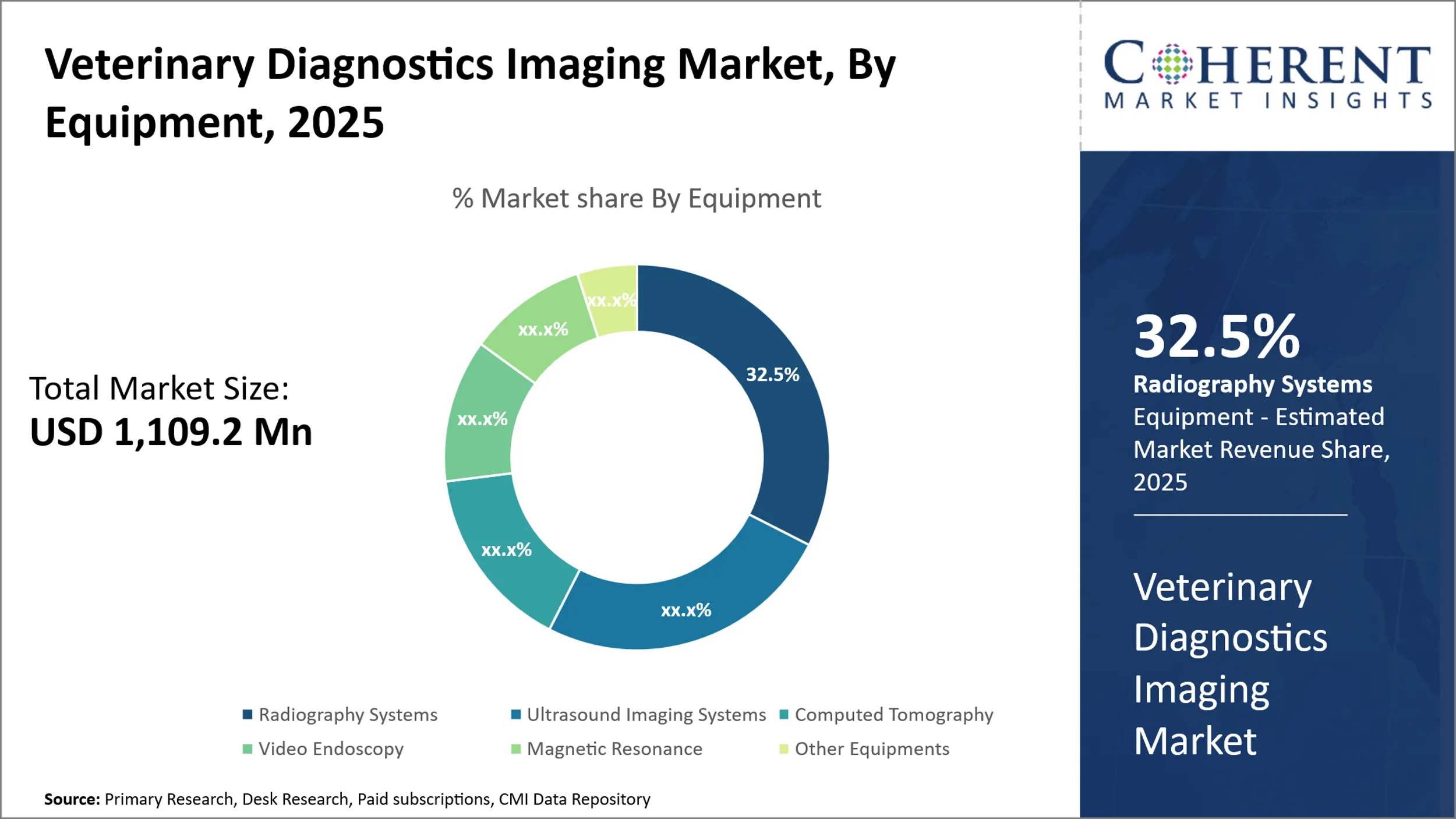
Veterinary Diagnostic Imaging Market Insights, By Equipment
In terms of equipment, the radiography (X-ray) systems segment is expected to dominate with 33.5% share of the global veterinary diagnostic imaging market in 2026, accounting for the largest share. The strong demand for radiography stems from its critical role in delivering accurate diagnostic insights into complex animal health conditions. Veterinarians rely heavily on X-ray imaging to detect fractures, respiratory issues, and other internal abnormalities, making it a fundamental diagnostic tool across animal care settings.
Ultrasound imaging systems are also poised for significant growth due to increasing demand for non-invasive and painless diagnostic solutions. Ultrasound offers a safe and user-friendly option for veterinarians to assess soft tissue structures, pregnancies, and cardiac health in animals, boosting its adoption in clinical practice.
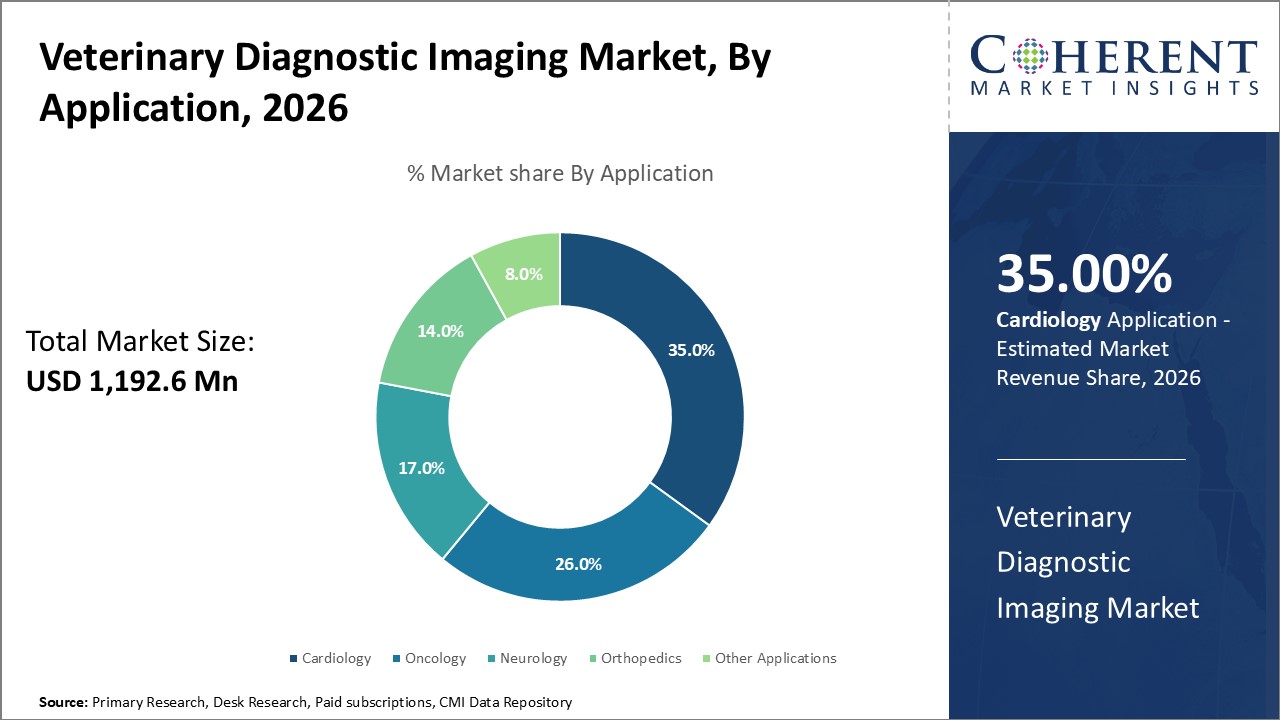
Veterinary Diagnostic Imaging Market Insights, By Application
The cardiology segment is set to lead the market in terms of application, driven by a rising prevalence of cardiovascular diseases in companion animals. Advanced imaging technologies enable veterinarians to identify and monitor heart conditions with greater precision, improving treatment outcomes.
Meanwhile, the oncology segment is expected to experience rapid growth, fueled by the increasing burden of cancer among pets, especially dogs and cats. As cancer remains a leading cause of mortality in companion animals, enhanced imaging techniques are becoming indispensable for early detection and effective management.
Veterinary Diagnostic Imaging Market Insights, By Animal Type
The small animal’s segment is projected to dominate the market, reflecting the surge in pet adoption and the growing population of companion animals worldwide. Increased pet ownership is prompting greater demand for sophisticated diagnostic imaging to support preventive care and treatment.
Large animals represent a smaller but steady market segment, primarily driven by the need for diagnostic solutions in livestock and equine care. Veterinary imaging in this segment focuses on orthopedic, reproductive, and internal health monitoring to optimize animal welfare and productivity.
Regional Insights
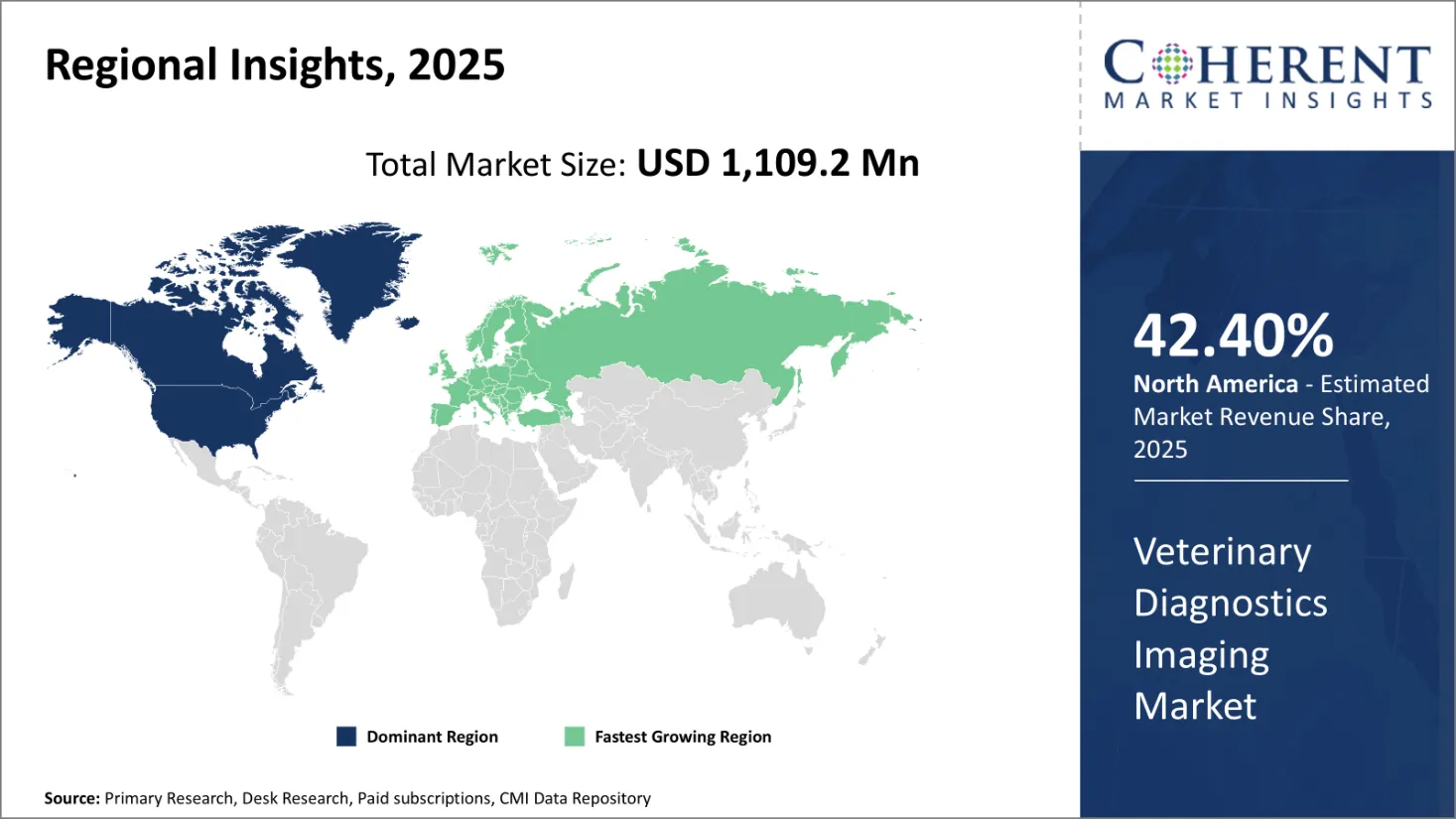
North America Veterinary Diagnostic Imaging Market Analysis and Trends
North America is expected to hold the largest share of 42.40% in 2026 of the global veterinary diagnostic imaging market. This dominance is driven by the increasing population of companion animals, rising prevalence of animal diseases and injuries, and growing expenditure on animal healthcare.
The region has witnessed significant growth in pet ownership; for example, the 2021-22 National Pet Owners Survey reports that 70% of U.S. households have companion animals. Additionally, data from the American Veterinary Medical Association (AVMA) shows that approximately 45% of households owned dogs and 26% owned cats in 2020, reflecting an upward trend compared to previous years. These factors contribute to heightened demand for advanced veterinary imaging technologies to improve diagnosis and treatment.
Asia Pacific Veterinary Diagnostic Imaging Market Analysis and Trends
Asia Pacific is anticipated to experience robust growth in the veterinary diagnostic imaging market, supported by rising awareness of animal health, increasing companion animal populations, and a growing prevalence of animal diseases. Efforts by organizations such as the Federation of Indian Animal Protection Organisation (FIAPO) highlight increasing attention towards animal welfare through advocacy, awareness campaigns, and policy engagement.
These developments are driving demand for safe and effective veterinary medical care, which in turn is fueling investment in diagnostic imaging technologies across the region. The expanding livestock sector and urbanization further boost market prospects in key countries like India and China.
Dominating Countries in the Veterinary Diagnostic Imaging Market
United States Veterinary Diagnostic Imaging Market Analysis and Trends
The United States leads the North American market, bolstered by a well-established companion animal care industry and high pet ownership rates. Advanced veterinary healthcare infrastructure and widespread adoption of diagnostic imaging modalities such as digital radiography and ultrasound support market growth. The U.S. also benefits from substantial veterinary research investments and a strong regulatory framework that promotes innovation in animal diagnostics.
India Veterinary Diagnostic Imaging Market Analysis and Trends
India is a prominent market within Asia Pacific, propelled by increased pet adoption and growing government and NGO initiatives focused on animal welfare. Organizations like FIAPO actively promote animal protection and healthcare awareness, contributing to greater demand for veterinary diagnostic services. Rising disposable incomes and expanding veterinary infrastructure in urban centers are also key drivers.
China Veterinary Diagnostic Imaging Market Analysis and Trends
China’s veterinary diagnostic imaging market is expanding rapidly due to the rising demand for livestock health management and companion animal care. Government policies supporting modern veterinary practices, increasing investment in rural veterinary clinics, and growing awareness about animal health are accelerating market development. The country is also becoming a manufacturing hub for veterinary diagnostic equipment.
Market Report Scope
Veterinary Diagnostic Imaging Market Report Coverage
| Report Coverage | Details | ||
|---|---|---|---|
| Base Year: | 2025 | Market Size in 2026: | USD 1,192.6 Mn |
| Historical Data for: | 2020 To 2024 | Forecast Period: | 2026 To 2033 |
| Forecast Period 2026 to 2033 CAGR: | 7.5% | 2033 Value Projection: | USD 1,981.2 Mn |
| Geographies covered: |
| ||
| Segments covered: |
| ||
| Companies covered: | Esaote SPA, Epica Animal Health, IDEXX Laboratories, Carestream Health, IMV Imaging, Fujifilm Holdings Corp., Hallmarq Veterinary Imaging, and Canon Medical Systems Corporation, among others. | ||
| Growth Drivers: |
| ||
| Restraints & Challenges: |
| ||
Global Veterinary Diagnostic Imaging Market Drivers
- Rise in prevalence of zoonotic diseases to augment market growth
One of the key factors expected to augment the growth of the global veterinary diagnostic imaging market during the forecast period is the increasing incidence of zoonotic and chronic diseases. For instance, according to the U.S. Centers for Disease Control & Prevention (CDC), zoonotic diseases are very common, both in the U.S. and worldwide.
More than six out of every ten known infectious diseases in people can be spread from animals, and three out of every four new and/or emerging infectious diseases in people come from animals. Hence, CDC works 24/7 to protect people from zoonotic diseases in the United States and around the world.
- Rise in companion animal population to underpin market growth
Another factor which is driving the growth of the global veterinary diagnostic imaging market is the rise in companion animal population around the world. For instance, with the rise in companion animal population, the demand for safe & effective veterinary diagnostic imaging is also increasing with a rapid pace.
According to healthforanimals.org, families in the U.S., European Union, Brazil, and China alone account for over half a billion dogs and cats, while more than half the world is estimated to have a pet at home. Moreover, pet ownership increased 113% between 2014 and 2019, and by 2024, experts estimate China will have the most pets in the world.
Global Veterinary Diagnostic Imaging Market Opportunities
Rise in demand for veterinary diagnostics across the globe is expected to offer significant growth opportunities for players in the global veterinary diagnostic imaging market. For instance, with the increasing prevalence of zoonotic and chronic diseases, the demand for safe & effective veterinary diagnostics is also increasing.
Thus, market players are focusing on developing & launching novel products in the market. In February 2022, Aycan Medical Systems added Softneta's MedDream VET DICOM Viewer to its expanding portfolio of veterinary imaging. It is a natural extension of Aycan’s other solutions and developed on the same DICOM standard.
Rise in animal health expenditure is expected to offer lucrative growth opportunities for players in the global veterinary diagnostic imaging market. For instance, the health of animals is inextricably linked to the wellbeing of people and planet. According to the National Pet Owners Survey 2021-2022, the annual expenditure on routine visits for dogs is USD 242, whereas it is USD 178 for cats in the United States.
Moreover, according to the American Pet Products Association, in 2021, over USD 123.6 billion were spent on the pets in the U.S. Such increasing focus on animal healthcare is driving the veterinary diagnostic imaging market growth.
Global Veterinary Diagnostic Imaging Market Trends
- Increasing demand for veterinary services is a recent trend
Owing to the increasing focus on veterinary healthcare, the demand for veterinary services is also increasing around the world. For instance, veterinary imaging devices are easy to use and provide veterinarians with the information they need to make quick decisions and diagnose animals faster compared to other devices.
In February 2021, DCC (Dogs, Cats, & Companions) Animal Hospital launched multi-speciality animal hospitals in India to offer cutting-edge medical technologies for animals. This trend is expected to continue over the forecast period.
- Technological advancements is another trend
Advancements in the field of veterinary healthcare is expected to flourish the veterinary diagnostic imaging market during the forecast period owing to respective benefits. Artificial intelligence (AI), virtual reality, 3D imaging, and wearable medical imaging devices are few of the technologies that are expected to pave the way for future advancements in the field of veterinary diagnostic imaging around the world. This trend is also expected to continue during the forecast period.
Analyst Viewpoint
- The veterinary diagnostic imaging market is experiencing strong growth fueled by rising pet ownership and increased healthcare spending on companion animals, especially in developed economies.
- Growing awareness of preventive care and the humanization of pets are driving demand for advanced imaging technologies that enable early and accurate disease diagnosis. Innovations such as portable ultrasound devices and digital radiography are improving diagnostic precision while lowering costs and examination times.
- However, market expansion is challenged by the high costs of imaging equipment and limited access in rural areas where veterinary clinics often operate with budget constraints.
- Additionally, a shortage of trained veterinary radiologists and technicians—particularly in emerging markets with underdeveloped educational infrastructure—restricts broader adoption.
- North America leads the market due to its mature veterinary healthcare ecosystem, higher disposable incomes, and supportive regulatory frameworks that promote animal welfare. The region’s well-established pet insurance coverage and cutting-edge veterinary research further accelerate technology adoption.
- Significant growth opportunities lie in telemedicine integration and AI-powered diagnostic tools, which can help mitigate the specialist shortage. The livestock segment, especially in Asia-Pacific, presents untapped potential as agricultural modernization boosts demand for animal health monitoring solutions.
- Collaborations between equipment manufacturers and veterinary service providers, along with subscription-based models, could enhance market penetration in cost-sensitive segments by making advanced imaging more accessible to smaller veterinary practices.
Global Veterinary Diagnostic Imaging Market: Key Developments
- In April 2025, IDEXX Laboratories launched an AI-integrated radiology platform for companion animals, enabling faster and more accurate image interpretation to improve diagnostic workflows in veterinary clinics.
- In March 2025, Esaote introduced its MyLab™X90 ultrasound system, designed specifically for multi-species veterinary diagnostics, enhancing imaging precision and ease of use.
- In February 2025, VCA Animal Hospitals partnered with GE HealthCare to equip over 500 veterinary facilities across the U.S. with advanced CT and MRI systems, expanding access to high-end imaging services.
- In January 2025, Heska Corporation expanded its distribution network throughout Southeast Asia to increase availability of portable veterinary imaging solutions in emerging markets.
Market Segmentation
- Global Veterinary Diagnostic Imaging Market, By Equipment (Revenue, USD Mn, 2021 - 2033)
- Radiography (X-ray) Systems
- Ultrasound Imaging Systems
- Computed Tomography Imaging Systems
- Magnetic Resonance Imaging Systems
- Video Endoscopy Imaging Systems
- Other Equipment
- Global Veterinary Diagnostic Imaging Market, By Application (Revenue, USD Mn, 2021 - 2033)
- Cardiology
- Oncology
- Neurology
- Orthopedics
- Other Applications
- Global Veterinary Diagnostic Imaging Market, By Animal Type (Revenue, USD Mn, 2021 - 2033)
- Small Animals
- Large Animals
- Global Veterinary Diagnostic Imaging Market, By Geography (Revenue, USD Mn, 2021 - 2033)
- North America
- U.S.
- Canada
- Latin America
- Brazil
- Argentina
- Mexico
- Rest of Latin America
- Europe
- Germany
- U.K.
- Spain
- France
- Italy
- Russia
- Rest of Europe
- Asia Pacific
- China
- India
- Japan
- Australia
- South Korea
- ASEAN
- Rest of Asia Pacific
- Middle East
- GCC Countries
- Israel
- Rest of Middle East
- Africa
- South Africa
- North Africa
- Central Africa
- North America
- Company Profiles
- Esaote SPA
- Epica Animal Health
- IDEXX Laboratories
- Carestream Health
- IMV Imaging
- Fujifilm Holdings Corp.
- Hallmarq Veterinary Imaging
- Canon Medical Systems Corporation
Sources
Primary Research Interviews
- Veterinary diagnostic imaging equipment manufacturers
- Veterinary radiologists and imaging specialists
- Veterinary hospital administrators and practice owners
- Telemedicine platform providers in veterinary care
- Others
Databases
- IBISWorld Industry Research Database
- Euromonitor International Market Research Database
- Others
Magazines
- Veterinary Practice News
- DVM360 Magazine
- Veterinary Economics Magazine
- Today's Veterinary Practice
- Others
Journals
- Veterinary Radiology & Ultrasound Journal
- Journal of Veterinary Medical Science
- American Journal of Veterinary Research
- Others
Newspapers
- The Wall Street Journal
- Financial Times
- Reuters Business News
- Bloomberg Business News
- Others
Associations
- American College of Veterinary Radiology (ACVR)
- European Association of Veterinary Diagnostic Imaging (EAVDI)
- American Veterinary Medical Association (AVMA)
- World Small Animal Veterinary Association (WSAVA)
- Others
Public Domain Sources
- U.S. Food and Drug Administration (FDA) veterinary device databases
- European Medicines Agency (EMA) veterinary regulatory documents
- World Health Organization (WHO) animal health reports
- National Institute of Health (NIH) veterinary research publications
- Others
Proprietary Elements
- CMI Data Analytics Tool
- Proprietary CMI Existing Repository of information for last 8 years
*Definition: Veterinary imaging is field of veterinary medicine that involves collection of medical images of animals to prevent, manage, diagnose, and treat a wide variety of diseases, disorders, and injuries in animals. Diagnostic imaging provides imaging services for all species of animals, including companion, large, and exotic animals.
Get access to 250+ pages report
Every segment, forecast, competitor profile and data table behind the analysis above — available for instant download.
- ESOMAR Member
- ISO 9001:2015 Certified
- D-U-N-S Registered
- GDPR & CCPA Compliant
Missing comfort of reading report in your local language? Find your preferred language:
Transform your Strategy with Exclusive Trending Reports
Frequently Asked Questions
The Veterinary Diagnostic Imaging Market size is estimated to be valued at USD 1,192.6 Mn in 2026, and is expected to reach USD 1,981.2 Mn by 2033.
The CAGR of the global Market is projected to be 7.5% from 2026 to 2033.
Increasing incidence of zoonotic and chronic diseases and rise in companion animal population around the world is fueling the market.
The radiography systems segment is the leading equipment segment in the market.
High cost of veterinary diagnostic imaging devices and lack of skilled or trained personnel or lack of veterinarians are major factors restraining growth of the market.
Major players operating in the market are Esaote SPA, Epica Animal Health, IDEXX Laboratories, Carestream Health, IMV Imaging, Fujifilm Holdings Corp., Hallmarq Veterinary Imaging, and Canon Medical Systems Corporation, among others.