

Inhalation Anesthesia Market Analysis & Forecast: 2026-2033
Inhalation Anesthesia Market size is estimated to be valued at USD 1,565.2 Mn in 2026 and is expected to reach USD 2,276.9 Mn in 2033, exhibiting a compound annual growth rate (CAGR) of 5.5% from 2026 to 2033.
Key Takeaways
- By Product, the Sevoflurane segment is projected to dominate the inhalation anesthesia market with a 57.4% share in 2026. This dominance is driven by the rising number of surgical procedures globally, where Sevoflurane is favored due to its rapid onset and recovery characteristics.
- By Region, North America is anticipated to command the largest share of 44.9% in 2026, supported by the high volume of surgeries, frequent emergency cases and road accidents, and an aging population more prone to chronic conditions requiring surgical intervention.
Market Overview
The global Inhalation Anesthesia Market Demand is experiencing strong growth due to the increasing prevalence of chronic disease and growing geriatric (aging) population around the world. However, factors such as side-effects of inhaler anesthesia drugs and increase in demand or adoption of generics are expected to hamper the market growth.
Current Events and Its Impact on the Inhalation Anesthesia Market
Event | Description and Impact |
Global Healthcare Supply Chain Disruptions |
|
Technological Developments and Innovations in Anesthesia Delivery Systems |
|
Heightened Environmental and Regulatory Focus on Greenhouse Gas Emissions in Healthcare |
|
Prescribers’ Preference in Inhalation Anesthesia Market
Prescribers’ choices for inhalation anesthetics are influenced by clinical efficacy, patient profiles, safety, cost, institutional protocols, and environmental considerations. Usage spans three key treatment phases: induction, maintenance, and emergence, each with distinct anesthetic requirements.
- Induction: Rapid onset and minimal airway irritation are prioritized. Sevoflurane (Ultane®, Sevorane®) is favored for its pleasant odor and fast induction, especially in pediatrics. Nitrous Oxide (Entonox®, Nitronox®) is commonly combined to enhance induction speed and reduce dosages.
- Maintenance: Stability, ease of titration, and cardiovascular safety guide preferences. Isoflurane (Forane®, Terrell®) remains popular for cost-effectiveness and safety during prolonged surgeries. Desflurane (Suprane®) gains traction for rapid onset/offset and better recovery control. Sevoflurane is preferred for delicate cases needing cardiovascular stability.
- Emergence: Rapid recovery and minimal cognitive impairment are critical. Desflurane’s low blood-gas solubility enables quick emergence, favored in outpatient surgeries. Sevoflurane offers smoother recovery with less agitation, especially in pediatrics.
- Current Industry Events of 2026
- Market Size Estimation
- Regional Breakdown
- Competitive Landscape
- Customer Intelligence
- Segmental Analysis
- Pricing Analysis
- Key Market Drivers, Challenges & Future Trends
- Customized Insights Section
Segmental Insights
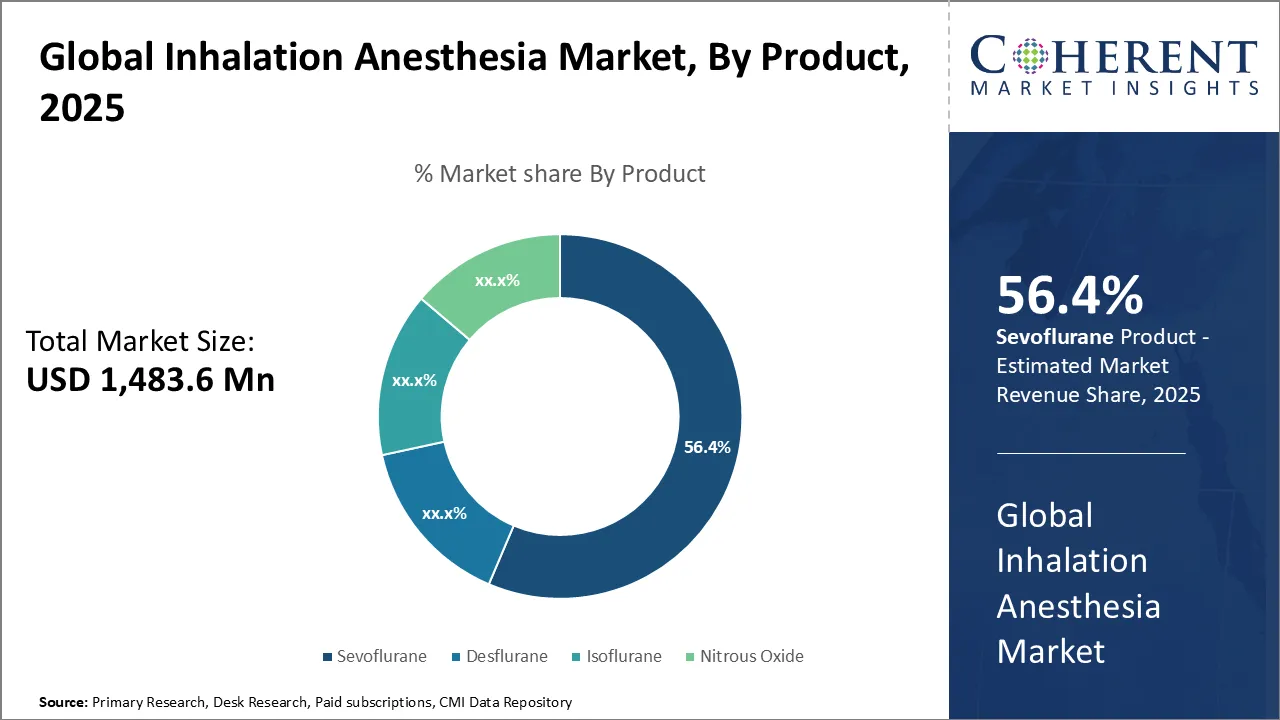
Inhalation Anesthesia Market Insights, by Product
By product, Sevoflurane is expected to account for major share of 57.4% in the global inhalation anesthesia market value over the forecast period, driven primarily by the increasing number of surgeries worldwide.
Sevoflurane is widely used for the induction and maintenance of anesthesia in pediatric patients, making it a preferred choice in hospitals and surgical centers. Its rapid onset, minimal airway irritation, and favorable recovery profile make it particularly effective in pediatric and outpatient settings.
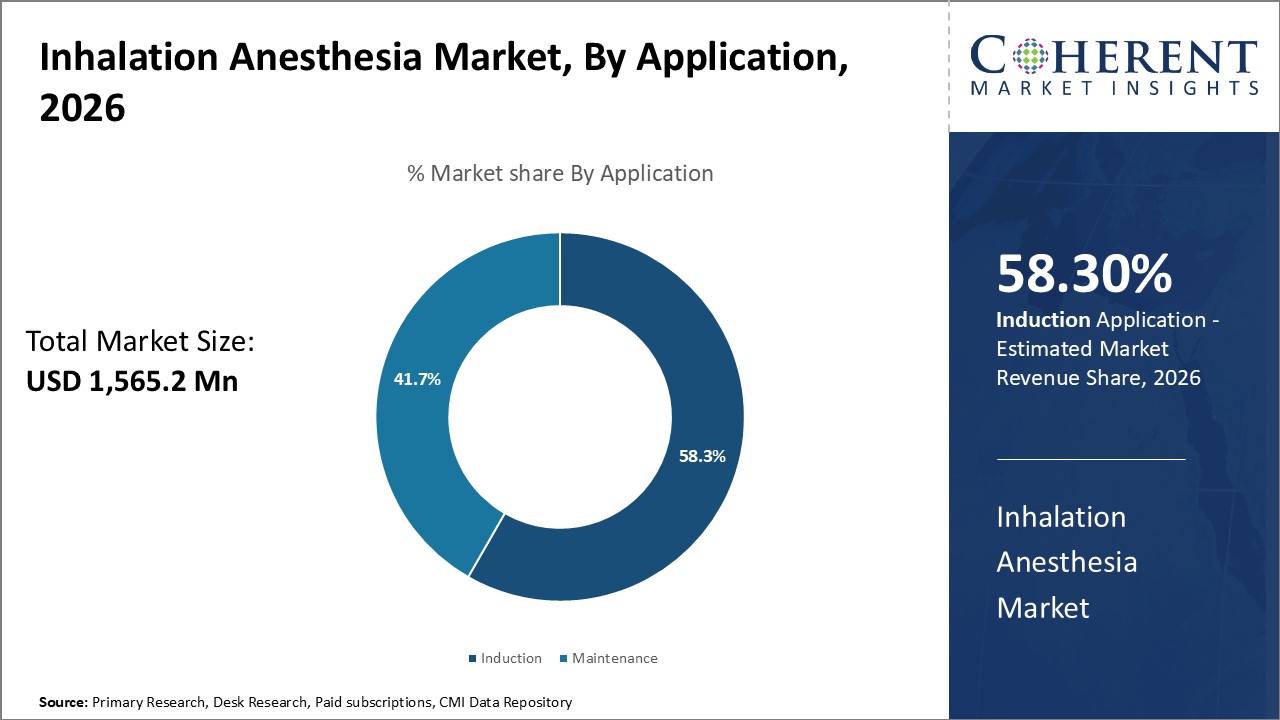
Inhalation Anesthesia Market Insights, by Application
By application, the Induction segment is anticipated to lead the inhalation anesthesia market during the forecast period. This growth is fueled by the rising demand for fast-acting inhalation anesthetics that offer effective onset during the initial phase of surgery. Inhaled anesthetics like Sevoflurane and Desflurane are increasingly being used for their ability to deliver smooth and rapid induction, especially in pediatric and ambulatory settings where IV access may be limited or delayed.
Inhalation Anesthesia Market Insights, by End User
From the perspective of end user, Hospitals are expected to capture the largest the Inhalation Anesthesia Market Share throughout the forecast period. The rise in chronic illnesses such as cardiovascular, respiratory, and neurological disorders has led to a surge in surgeries, particularly among the growing elderly population. Hospitals, being the primary centers for major surgical procedures, continue to demand high volumes of inhalation anesthetics to manage surgical caseloads efficiently.
Global Inhalation Anesthesia Market: Regional Insights
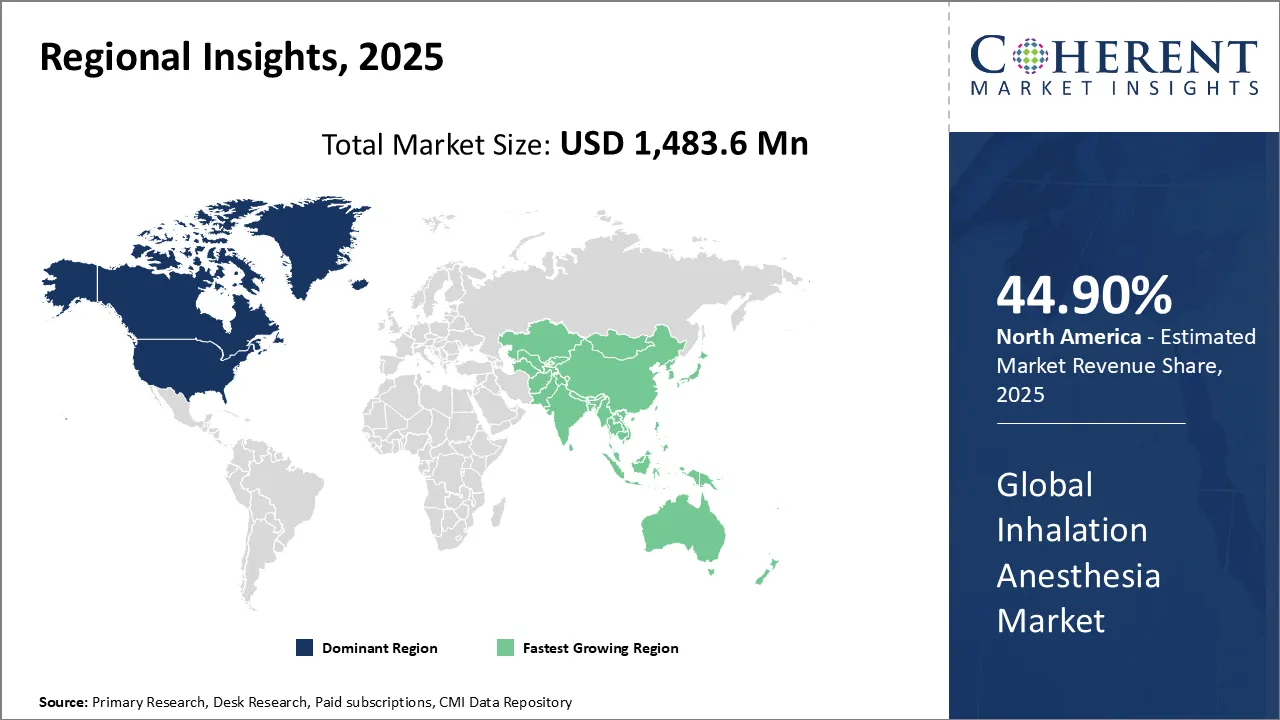
North America Inhalation Anesthesia Market Analysis and Trends
North America is projected to dominate the global Inhalation Anesthesia Market outlook, accounting for 44.9% share during the forecast period. This leadership is driven by the increasing number of surgeries, a rise in emergency incidents and road accidents, and a growing geriatric population highly susceptible to chronic diseases. Aging is a significant risk factor for many chronic conditions, including heart disease, cancer, and diabetes.
According to the Centers for Disease Control and Prevention (CDC), these chronic diseases are the leading causes of death and disability in the U.S., with 6 in 10 Americans living with at least one chronic disease. The presence of strong healthcare infrastructure and rising surgical procedures in the region further boost the demand for inhalation anesthetics.
Asia Pacific Inhalation Anesthesia Market Analysis and Trends
Asia Pacific is expected to witness substantial growth in the Inhalation Anesthesia Market forecast period. This growth is fueled by the increasing burden of chronic diseases, expanding geriatric populations, a rise in road accidents, and a surge in surgical procedures. For instance, according to Peertechz Publications, over 18.8 million surgeries were performed in public health facilities in India during 2019-20, including around 4.85 million major surgeries and 14 million minor surgeries.
Dominating Countries in the Inhalation Anesthesia Market
United States Inhalation Anesthesia Market Analysis and Trends
The U.S. continues to lead the North American inhalation anesthesia market, driven by a high volume of surgical procedures and a large aging population prone to chronic diseases. Investments in healthcare infrastructure and rising emergency cases also contribute to the demand for efficient anesthetic agents. Continued focus on improving surgical outcomes and patient safety is expected to fuel the adoption of advanced inhalation anesthesia products.
India Inhalation Anesthesia Market Analysis and Trends
India is emerging as a key growth market within the Asia Pacific region, propelled by increasing surgical volumes and a rising incidence of chronic diseases. Government initiatives to improve healthcare infrastructure and expand access to surgical care are accelerating the use of inhalation anesthetics.
Market Report Scope
Inhalation Anesthesia Market Report Report Coverage
| Report Coverage | Details | ||
|---|---|---|---|
| Base Year: | 2025 | Market Size in 2026: | USD 1,565.2 Mn |
| Historical Data for: | 2020 To 2024 | Forecast Period: | 2026 To 2033 |
| Forecast Period 2026 to 2033 CAGR: | 5.5% | 2033 Value Projection: | USD 2,276.9 Mn |
| Geographies covered: |
| ||
| Segments covered: |
| ||
| Companies covered: | Abbvie Inc., Novartis AG, Piramal Enterprises Ltd., Hikma Pharmaceuticals Plc, Fresenius SE & CO. KGaA, Baxter International Inc., Troikaa Pharmaceuticals, Ltd., Halocarbon Products Corporation, Jiangsu Hengrui Medicine Co., Ltd., Lunan Pharmaceutical Group Co. Ltd., among others. | ||
| Growth Drivers: |
| ||
| Restraints & Challenges: |
| ||
Global Inhalation Anesthesia Market Trends
- Increase in demand for Sevoflurane is a recent trend
Sevoflurane is the most widely used inhalation anesthetic, owing to its therapeutic advantages and low cost. It is useful in children and adults for induction and maintenance of anesthesia in inpatient surgery and outpatient surgery, and is given before surgery to make induction of general anesthesia drugs substantially easier. It is administered without the use of intravenous route and is ideal for people with asthma and sensitized air passages. Thus, there is an increase in demand for Sevoflurane, and this trend is expected to continue over the forecast period.
- Introduction of novel products is another trend
Players in the market are focusing on developing and launching novel products to meet increasing demand for inhalation anesthesia worldwide. In January 2019, Sandoz International announced the launch of Desflurane liquid as an inhalation agent for the induction and maintenance of anesthesia, required for inpatient and outpatient surgery in adults and pediatric patients in the U.S. It was the first generic of Suprane in the U.S.
Global Inhalation Anesthesia Market Drivers
- Rise in burden of chronic diseases to drive market growth
One of the key factors expected to augment the growth of the global inhalation anesthesia market over the forecast period is the increasing prevalence of chronic disease, such as heart disease and cancer across the world. Such a high burden of chronic diseases leads to an increase in the number of surgeries and is expected to fuel the market growth.
According to the World Health Organization (WHO), cardiovascular diseases (CVDs) are the leading cause of death across the globe, taking an estimated 17.9 million lives each year, driving the growth of the market.
- Growing geriatric population to propel market growth
Another factor which is driving growth of the global inhalation anesthesia market is the growing geriatric (aging) population around the world. For instance, the ageing population tends to have a higher prevalence of chronic diseases. People age 65 and older are more likely than younger people to suffer from chronic disease. According to the World Health Organization (WHO), by 2030, one in six people in the world will be aged 60 years or over, and by 2050, the world’s population of people aged 60 years and older will double (2.1 billion).
Global Inhalation Anesthesia Market Opportunities
Increase in demand or consumption of inhalation anesthesia is expected to offer significant growth opportunities for players in the global inhalation anesthesia market. For instance, with the increase in burden of chronic disease and increasing number of surgical procedures, the demand or the use of inhalation anesthesia is also increasing with the rapid pace. In February 2022, Sedana Medical AB announced the launch of Sedaconda (isoflurane) in Germany. Sedaconda has received national approvals in around 15 countries, and is also expected to receive national approvals in Switzerland, Poland, Italy, and the United Kingdom.
Analyst Viewpoint
- The Inhalation Anesthesia Market is positioned for robust growth, propelled by the rising incidence of chronic diseases and an increasing volume of surgical procedures globally. Innovations in anesthetic agents and delivery technologies are enhancing patient safety and clinical outcomes, further stimulating market expansion.
- Nonetheless, the market faces challenges such as the high cost of anesthesia equipment, potential side effects of anesthetic agents, and stringent regulatory frameworks. Additionally, the demand for skilled anesthesia professionals may limit adoption in certain regions.
- Opportunities lie in the growing preference for minimally invasive surgeries and the expanding use of inhalation anesthesia in ambulatory surgical centers. Emerging markets with improving healthcare infrastructure and increased spending offer significant growth potential.
- Regionally, North America is expected to maintain a dominant market share due to its advanced healthcare infrastructure, widespread adoption of cutting-edge anesthesia technologies, and established industry presence. Meanwhile, the Asia-Pacific region is projected to achieve the fastest growth, driven by rapid economic development, increased healthcare investments, and a rising patient base.
Global Inhalation Anesthesia Market: Key Developments
- In February 2025, Baxter International launched an advanced Sevoflurane delivery system in North America designed to optimize anesthetic dosing and enhance patient recovery times during surgeries.
- In April 2025, AbbVie obtained FDA approval for its new generic Desflurane inhalation anesthetic, aiming to reduce treatment costs and increase accessibility in the U.S. surgical market.
- In April 2025, GE Healthcare introduced a smart inhalation anesthesia device integrated with AI-based monitoring to improve anesthesia precision and safety in operating rooms globally.
Market Segmentation
- Global Inhalation Anesthesia Market, By Product (Revenue, USD Mn, 2021 - 2033)
- Sevoflurane
- Desflurane
- Isoflurane
- Nitrous Oxide
- Global Inhalation Anesthesia Market, By Application (Revenue, USD Mn, 2021 - 2033)
- Induction
- Maintenance
- Global Inhalation Anesthesia Market, By End User (Revenue, USD Mn, 2021 - 2033)
- Hospitals
- Ambulatory Surgical Centers
- Global Inhalation Anesthesia Market, By Geography (Revenue, USD Mn, 2021 - 2033)
- North America
- U.S.
- Canada
- Latin America
- Brazil
- Argentina
- Mexico
- Rest of Latin America
- Europe
- Germany
- U.K.
- Spain
- France
- Italy
- Russia
- Rest of Europe
- Asia Pacific
- China
- India
- Japan
- Australia
- South Korea
- ASEAN
- Rest of Asia Pacific
- Middle East
- GCC Countries
- Israel
- Rest of Middle East
- Africa
- South Africa
- North Africa
- Central Africa
- Company Profiles
- Abbvie Inc.
- Novartis AG
- Piramal Enterprises Ltd.
- Hikma Pharmaceuticals Plc
- Fresenius SE & CO. KgaA
- Baxter International Inc.
- Troikaa Pharmaceuticals, Ltd.
- Halocarbon Products Corporation
- Jiangsu Hengrui Medicine Co., Ltd.
- Lunan Pharmaceutical Group Co. Ltd.
Sources
Primary Research interviews
- Industry Experts from Inhalation Anesthetics Manufacturers
- Healthcare Directors from Hospitals & Ambulatory Surgical Centers
- Pharmaceutical Distributors and Suppliers
- Regulatory Experts from Healthcare Regulatory Bodies
- Others
Databases
- ScienceDirect
- ClinicalTrials.gov
- Others
Magazines
- Anesthesiology News
- PharmaTimes Magazine
- Healthcare Global Magazine
- Others
Journals
- British Journal of Anaesthesia
- Journal of Clinical Anesthesia
- Anesthesiology Journal
- Others
Newspapers
- The Guardian
- The Economic Times
- The New York Times
- Others
Associations
- World Federation of Societies of Anesthesiologists (WFSA)
- American Society of Anesthesiologists (ASA)
- European Society of Anaesthesiology and Intensive Care (ESAIC)
- International Anesthesia Research Society (IARS)
- Others
Public Domain sources
- World Health Organization (WHO)
- Food and Drug Administration (FDA)
- National Institutes of Health (NIH)
- Centers for Disease Control and Prevention (CDC)
- Others
Proprietary Elements
- CMI Data Analytics Tool, Proprietary CMI Existing Repository of information for last 8 years
*Definition: Inhalation anesthetics (nitrous oxide, halothane, isoflurane, desflurane, sevoflurane, most commonly used agents in practice today) are used for induction and maintenance of general anesthesia in the operating room.
Get access to 250+ pages report
Every segment, forecast, competitor profile and data table behind the analysis above — available for instant download.
- ESOMAR Member
- ISO 9001:2015 Certified
- D-U-N-S Registered
- GDPR & CCPA Compliant
Missing comfort of reading report in your local language? Find your preferred language:
Transform your Strategy with Exclusive Trending Reports
Frequently Asked Questions
The Inhalation Anesthesia Market is estimated to be valued at USD 1,565.2 Mn in 2026, and is expected to reach USD 2,276.9 Mn by 2033.
The CAGR of the Inhalation Anesthesia Market is projected to be 5.5% from 2026 to 2033.
Increasing prevalence of chronic disease and growing geriatric population worldwide is fueling the market.
The Sevoflurane segment is the leading product segment in the market.
Side-effects of inhaler anesthesia drugs and rise in demand for or adoption of generic inhalation anesthetic drugs are major factors restraining growth of the market.
Major players operating in the global industry are Abbvie Inc., Novartis AG, Piramal Enterprises Ltd., Hikma Pharmaceuticals Plc, Fresenius SE & CO. KGaA, Baxter International Inc., Troikaa Pharmaceuticals, Ltd., Halocarbon Products Corporation, Jiangsu Hengrui Medicine Co., Ltd., Lunan Pharmaceutical Group Co. Ltd., among others.