

Cyber Knife Market Size and Forecast — 2026 - 2033
The Global Cyber Knife Market size is estimated to be valued at USD 1.2 billion in 2026 and is expected to reach USD 2.15 billion by 2033, exhibiting a compound annual growth rate (CAGR) of 9.8% from 2026 to 2033.
Overview
The Cyber Knife market comprises advanced robotic radiosurgery systems designed for precise, non-invasive tumor treatment. Key products include the CyberKnife M6 System, which offers enhanced targeting accuracy and flexible treatment for complex tumor sites, and the CyberKnife VSI System, widely used for conventional stereotactic radiosurgery procedures. Accessories and software solutions, such as treatment planning software and image-guided radiation delivery tools, complement these systems by enabling real-time tumor tracking and adaptive therapy. Continuous upgrades in imaging technology, robotic arm precision, and treatment planning algorithms enhance clinical outcomes. Collectively, these products provide high accuracy, reduced treatment time, and minimal damage to surrounding healthy tissues.
Key Takeaways
The Robotic Radiosurgery Systems segment dominates the Cyber Knife market, holding over 58% of the market share and driving advancements in technology-led treatment precision.
Oncology applications account for the largest market presence, representing 72% of the industry share, highlighting the essential role of Cyber Knife in cancer care.
North America leads regional growth, supported by high healthcare expenditure, advanced clinical infrastructure, and early adoption of cutting-edge radiosurgery technologies.
Asia Pacific is the fastest-growing region, with a CAGR exceeding 12%, driven by expanding healthcare infrastructure, increasing access to advanced treatment centers, and growing government support for cancer care initiatives.
Cyber Knife Market Segmentation Analysis
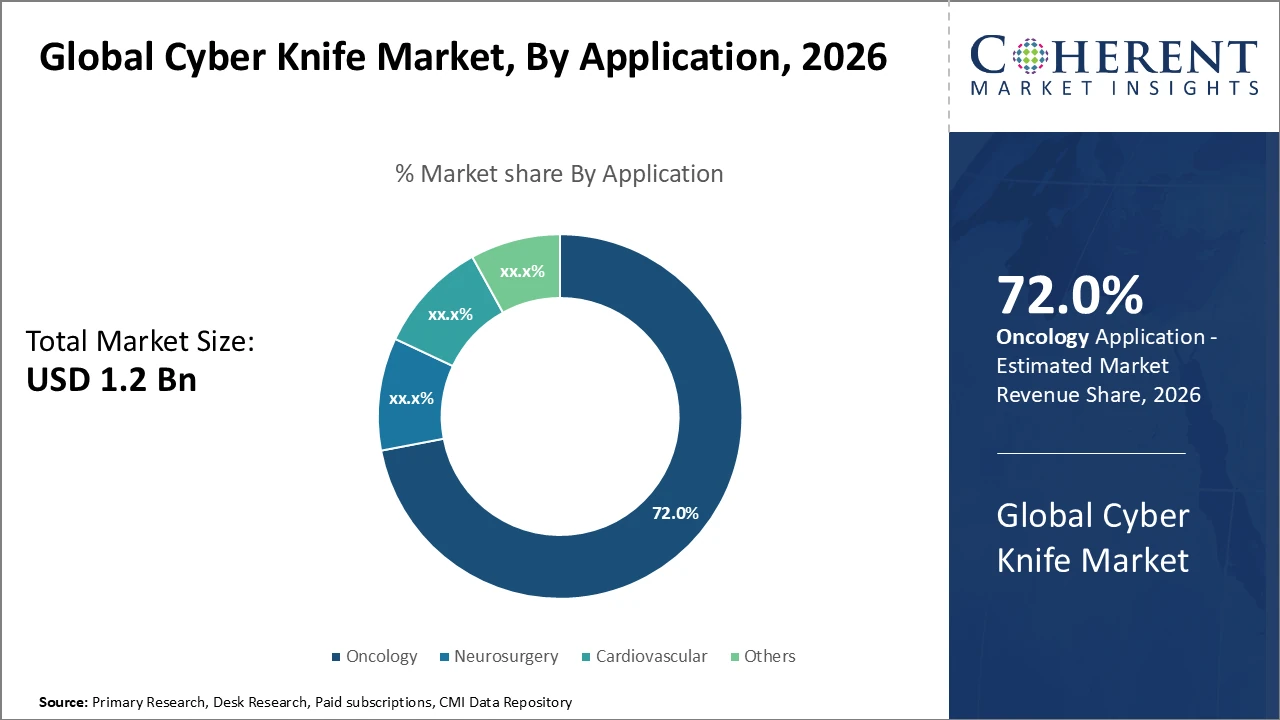
Cyber Knife Market Insights, By Application
Oncology dominates the Cyber Knife market due to the rising incidence of cancer and the system’s proven efficacy in malignant tumor ablation. Within this category, Neurosurgery is the fastest-growing subsegment, driven by increasing diagnoses of neurological disorders and brain tumors, where non-invasive treatment is essential. Cardiovascular applications are emerging, with Cyber Knife increasingly used for targeted radiosurgery to treat cardiac arrhythmias.
Cyber Knife Market Insights, By Technology
Robotic Radiosurgery Systems dominate the Cyber Knife market due to their superior precision, flexible patient positioning, and versatility in treating a wide range of tumors. The fastest-growing subsegment, Adaptive Radiotherapy Systems, is gaining traction by offering real-time lesion tracking and dynamic dose adjustments, making them increasingly preferred for complex cases such as brain and lung tumors. These systems enable personalized treatment, improving efficacy and operational efficiency. Image-Guided Systems complement this by providing accurate tumor localization before and during therapy.
Cyber Knife Market Insights, By End User
Hospitals and clinics dominate the Cyber Knife market due to their comprehensive treatment infrastructure and high patient volumes, which support larger system deployments. The fastest-growing end-user subsegment is Ambulatory Surgical Centers, driven by the shift toward outpatient care models that reduce costs and enhance patient convenience. Cancer research institutes also play a key role by facilitating clinical trials that support advanced treatment adoption.
Cyber Knife Market Trends
Integration of AI and robotic automation is enhancing treatment precision and operational efficiency in the Cyber Knife market.
Collaborations between technology providers and cancer care centers in 2026 highlight a shift from conventional radiotherapy to adaptive, personalized treatment solutions.
Hybrid therapies combining Cyber Knife with immunotherapy are gaining traction, expanding clinical applications and patient outcomes.
Clinical studies in 2025 have validated improved survival rates with combined Cyber Knife and immunotherapy approaches, boosting market adoption.
The trend toward personalized, adaptive treatment solutions is driving revenue growth and shaping future product development strategies.
Cyber Knife Market Insights, By Geography
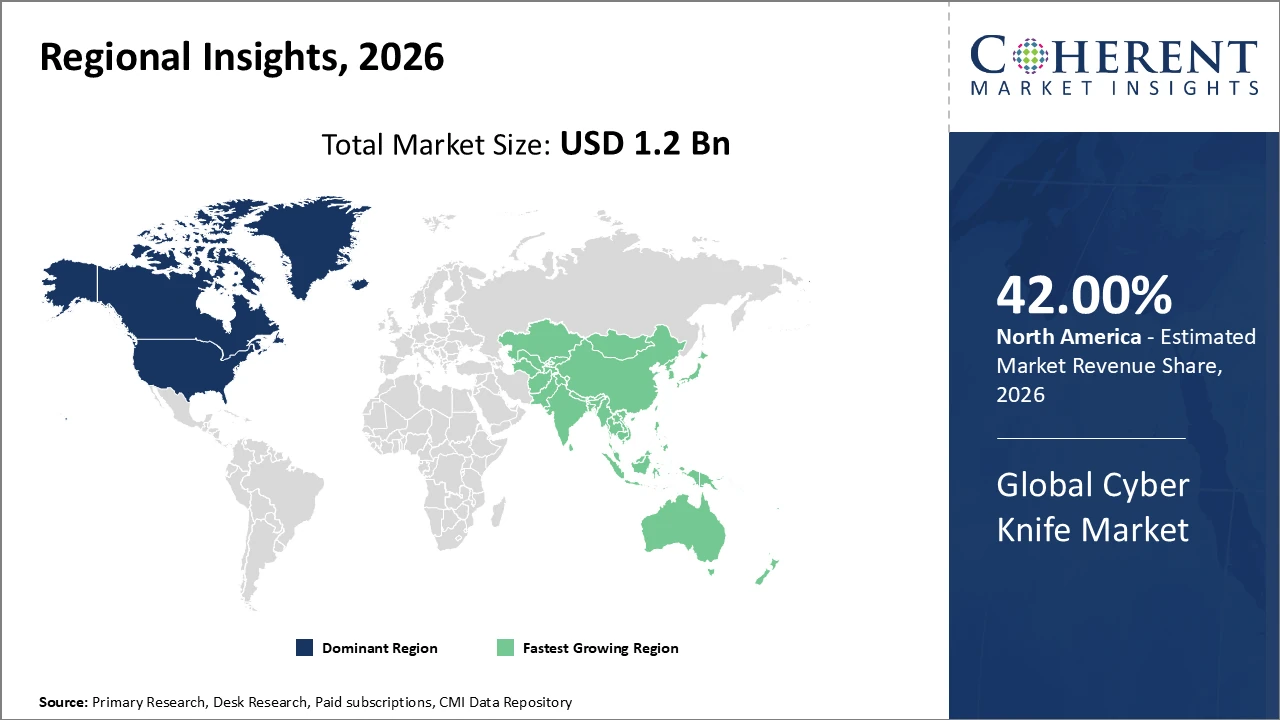
North America Cyber Knife Market Analysis and Trends
In North America, the Cyber Knife market is dominated by high healthcare expenditure, advanced technological adoption, and the presence of leading manufacturers. The region accounts for approximately 42% of the global market share, with the U.S. leading due to its extensive healthcare infrastructure and access to specialized cancer treatment centers. Strong regulatory frameworks and government investments further support the adoption of Cyber Knife systems. Widespread awareness of non-invasive radiosurgery benefits, coupled with rising cancer incidence, drives demand for precision treatment solutions. Overall, North America remains a critical market, setting standards for technological innovation and clinical application in Cyber Knife therapies.
Asia Pacific Cyber Knife Market Analysis and Trends
The Asia Pacific region is experiencing the fastest growth in the Cyber Knife market, with an estimated CAGR exceeding 12%. This expansion is driven by rapidly developing healthcare infrastructure, rising cancer incidence, and government initiatives aimed at improving access to advanced radiotherapy services. Key countries, including China and India, lead this growth due to increased private healthcare investments and a booming medical tourism sector, which raises demand for cutting-edge treatment options. Additionally, growing awareness of non-invasive radiosurgery benefits and expanding oncology centers further support market adoption, positioning the Asia Pacific as a high-potential region for Cyber Knife system deployment and revenue growth.
Cyber Knife Market Outlook for Key Countries
USA Cyber Knife Market Analysis and Trends
The U.S. Cyber Knife market leads globally due to a mature healthcare ecosystem and substantial R&D investments driving technological innovation. In 2025, the country accounted for over 35% of global Cyber Knife installations. Leading companies, such as Varian, maintain R&D centers in the U.S., advancing AI-driven treatment protocols and adaptive radiosurgery solutions. The extensive network of specialized cancer centers ensures wide adoption of these systems, while favorable reimbursement policies further support market growth. High patient awareness, advanced clinical infrastructure, and continuous investment in non-invasive oncology treatments collectively reinforce the U.S. as a dominant and revenue-generating market for Cyber Knife systems.
Germany Cyber Knife Market Analysis and Trends
Germany’s Cyber Knife market is advancing steadily, supported by robust healthcare infrastructure and a growing focus on precision radiosurgery. The country leads Europe in the number of Cyber Knife installations, with cancer treatment as the largest application segment, reflecting strong clinical demand for non‑invasive oncology solutions. Germany’s statutory health insurance framework and advanced cancer care programs facilitate technology adoption, making cutting‑edge treatment accessible across hospitals and specialized centers. Rigorous regulatory standards ensure patient safety while encouraging innovation in robotic radiosurgery. Additionally, increasing awareness of Cyber Knife efficacy and rising neurological and vascular cases contribute to broader market expansion within the region.
Analyst Opinion
The increasing installation of Cyber Knife systems in emerging economies is a key driver, with India and Southeast Asia seeing a 22% rise in 2025, reflecting expanding healthcare infrastructure and supporting broader market presence.
Competitive pricing dynamics, including the introduction of modular Cyber Knife units priced 15% lower in 2024, have improved accessibility for mid-tier hospitals and expanded market share.
Multidisciplinary cancer treatment centers are boosting demand, with over 30% of new North American Cyber Knife units in 2026 linked to integrated cancer care facilities.
Advances in real-time tumor tracking software and AI algorithms have enhanced treatment efficacy and patient throughput.
European oncology centers reported a 12% increase in procedural efficiency in 2025 due to AI-enhanced Cyber Knife systems, positively impacting market growth strategies.
- Current Industry Events of 2026
- Market Size Estimation
- Regional Breakdown
- Competitive Landscape
- Customer Intelligence
- Segmental Analysis
- Pricing Analysis
- Key Market Drivers, Challenges & Future Trends
- Customized Insights Section
Market Scope
| Report Coverage | Details | ||
|---|---|---|---|
| Base Year: | 2025 | Market Size in 2026: | USD 1.2 billion |
| Historical Data for: | 2020 To 2024 | Forecast Period: | 2026 To 2033 |
| Forecast Period 2026 to 2033 CAGR: | 9.8% | 2033 Value Projection: | USD 2.15 billion |
| Geographies covered: |
| ||
| Segments covered: |
| ||
| Companies covered: | Brainlab AG, Philips Healthcare, Siemens Healthcare, ViewRay Inc., Hitachi Medical Corporation, Elekta AB, Accuray Incorporated, Varian Medical Systems, Mevion Medical Systems, Shimadzu Corporation | ||
| Growth Drivers: |
| ||
Cyber Knife Market Growth Factors
The global rise in oncology cases, particularly among aging populations, continues to drive Cyber Knife market growth. WHO data from 2024 indicated a 6.3% increase in cancer incidences worldwide, highlighting the need for advanced, non-invasive treatment options. Technological innovations enabling sub-millimeter precision improve patient outcomes and procedural safety, boosting adoption. Expanding healthcare infrastructure in APAC and the Middle East, supported by government investments, further fuels market revenue. Additionally, patient preference for non-invasive therapies over traditional surgery contributes to growth, exemplified by a 14% increase in Cyber Knife procedures reported by U.S. cancer treatment centers in 2025.
Cyber Knife Market Development
In November 2025, the Mexican Social Security Institute (IMSS) installed a CyberKnife robotic radiotherapy system at the Oncology Hospital of the National Medical Center (CMN) Siglo XXI, improving access to highly precise, timely, and high-quality cancer treatment with millimetric accuracy.
Key Players
Leading Companies of the Market
Brainlab AG
Siemens Healthcare
Philips Healthcare
Accuray Incorporated
Varian Medical Systems
Elekta AB
Mevion Medical Systems
ViewRay Inc.
Hitachi Medical Corporation
Shimadzu Corporation
Leading Cyber Knife market players have pursued strategic initiatives such as mergers and acquisitions to strengthen their regional presence and technology offerings. In 2025, Accuray acquired advanced imaging startups, enabling enhancements in real-time motion tracking that led to a 20% improvement in global device efficacy ratings. Similarly, in 2026, Varian introduced cloud-connected Cyber Knife systems, facilitating remote treatment planning and streamlining clinical workflows. These initiatives not only optimized operational efficiency but also reinforced their competitive positioning, expanded market reach, and supported the adoption of advanced, personalized radiosurgery solutions across hospitals and specialized cancer treatment centers worldwide.
Cyber Knife Market Future Outlook
The Cyber Knife market is expected to witness robust growth in the coming years, driven by increasing cancer prevalence, technological advancements, and rising demand for non-invasive treatment options. Future developments will focus on AI-integrated systems, real-time tumor tracking, and adaptive radiotherapy solutions, enabling personalized and highly precise treatments. Expansion into emerging markets, supported by healthcare infrastructure development and government initiatives, will further accelerate adoption. Hybrid therapies combining Cyber Knife with immunotherapy and proton therapy are anticipated to broaden clinical applications. Overall, the market outlook remains positive, with continued innovation and growing patient preference for minimally invasive oncology treatments driving sustained revenue growth.
Cyber Knife Market Historical Analysis
The Cyber Knife market has experienced steady growth over the past decade, driven by increasing demand for non-invasive cancer treatment and advancements in robotic radiosurgery technology. Early adoption in North America and Europe established the region as a market leader, supported by well-developed healthcare infrastructure and high patient awareness. Initial system deployments focused on oncology applications, particularly brain and spinal tumors, with gradual expansion into cardiovascular and neurological treatments. Technological innovations, including improved imaging, real-time tumor tracking, and precision beam delivery, enhanced clinical outcomes and operational efficiency. Rising government support, reimbursement frameworks, and investments in cancer care further contributed to the market’s historical expansion and adoption trends.
Sources
Primary Research Interviews:
Executives, product managers, and operations heads at hospitals, cancer treatment centers, and radiotherapy service providers
Regulatory affairs specialists, clinical trial coordinators, and quality assurance managers in medical device and oncology companies
Technology providers offering robotic radiosurgery systems, AI-driven treatment planning software, and image-guided radiotherapy solutions
Magazines:
Oncology Times – Innovations in radiosurgery and cancer treatment technologies
Medical Device Network – Trends in robotic and image-guided surgical systems
HealthTech Magazine – Advances in AI and automation for radiotherapy
Cancer Therapy Advisor – Developments in non-invasive oncology solutions
Journals:
International Journal of Radiation Oncology – Research on radiosurgery techniques and efficacy
Journal of Medical Imaging and Radiation Sciences – Technological advancements in Cyber Knife and image-guided therapy
European Journal of Cancer Care – Clinical applications of robotic radiosurgery systems
Newspapers:
The Wall Street Journal – Healthcare technology trends and device innovations
Financial Times – Global oncology market and medical device developments
Business Standard – Expansion of cancer care infrastructure in emerging markets
Business Insider – Updates on robotic surgery and precision oncology technologies
Associations:
American Society for Radiation Oncology (ASTRO) – Guidelines and best practices in radiosurgery
International Society of Radiology – Standards for medical imaging and radiation therapy compliance
European Society for Radiotherapy and Oncology (ESTRO) – Industry insights on advanced oncology treatment systems
Society of Robotic Surgery – Advancements in robotic radiosurgery technologies and clinical adoption
Get access to 250+ pages report
Every segment, forecast, competitor profile and data table behind the analysis above — available for instant download.
- ESOMAR Member
- ISO 9001:2015 Certified
- D-U-N-S Registered
- GDPR & CCPA Compliant
Missing comfort of reading report in your local language? Find your preferred language:
Transform your Strategy with Exclusive Trending Reports
Frequently Asked Questions
Leading companies include Accuray Incorporated, Varian Medical Systems, Brainlab AG, and Elekta AB, collectively driving the majority of market revenue through technological innovation and regional expansion.
The market size is forecasted to grow from USD 1.2 billion in 2026 to approximately USD 2.15 billion by 2033, with a CAGR of 9.8%, reflecting robust growth driven by increasing oncology cases and technological advancements.
Hospitals and clinics dominate the end-user segment, accounting for 65% of the market share, driven by adoption of Cyber Knife systems for non-invasive treatments and expansion of multidisciplinary treatment centers.
Trends such as AI-enabled treatment planning, integration with immunotherapies, and telemedicine adoption will continue to transform the Cyber Knife market, enhancing treatment efficacy and operational efficiency.
The market is characterized by highly competitive players focusing on technology innovation and strategic partnerships. Challenges include high equipment costs and regulatory complexities.
Strategies include mergers and acquisitions, technology licensing, and regional partnerships to expand product portfolios and market reach, as exemplified by Accuray’s acquisition of imaging startups in 2025.