

Radiotherapy Market Size and Trends
The global radiotherapy market is estimated to be valued at USD 9.19 Bn in 2026 and is expected to reach USD 15.25 Bn by 2033, exhibiting a compound annual growth rate (CAGR) of 7.5% from 2026 to 2033.
Key Takeaways
- Based on Product Type, the External Beam Radiation segment is leading the market with 62.8%, owing to advancements in therapy modalities.
- Based on Therapy Type, the External Beam Radiation Therapy segment is dominating with 48.7%, owing to the expansion in its applications.
- Based on End User, the Hospitals’ segment is dominating with 52.8% in 2026, owing to the crucial role it plays in cancer care.
- Based on Region, North America is dominating the market with 40.1% in 2026. The growth is attributed to the well-established healthcare infrastructure in the region.
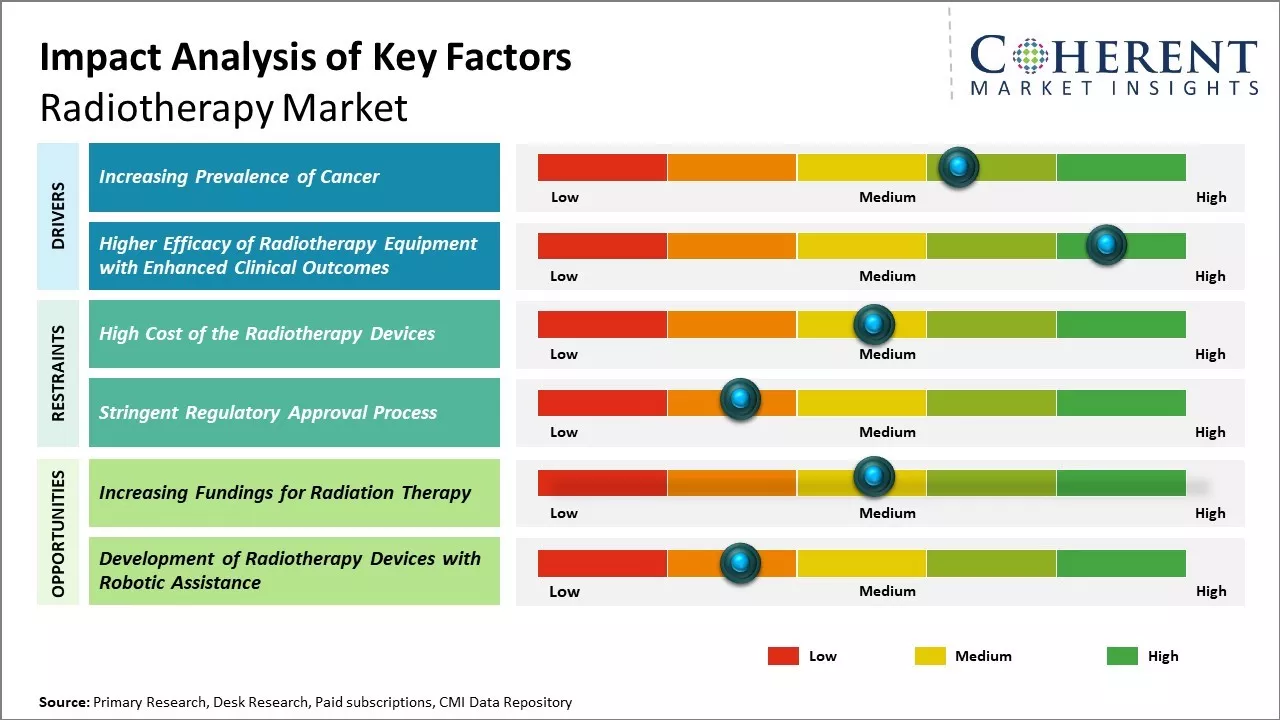
Market Overview
The increasing prevalence of cancer around the world is the key factor driving the radiotherapy market demand. Additionally, the rising adoption of advanced treatment techniques, such as intensity-modulated radiation therapy (IMRT) and stereotactic body radiation therapy (SBRT), is also boosting the growth of the industry. Furthermore, the growing awareness about the therapeutic advantages of radiotherapy compared to other cancer treatment options is augmenting the market expansion.
Current Events and Their Impacts
Current Events | Description and its impact |
Technological Innovations |
|
Market Expansion Initiatives |
|
Role of Artificial Intelligence (AI) in Radiotherapy Market
Artificial Intelligence (AI) is rapidly transforming radiotherapy from a largely protocol-driven process into a highly personalized and adaptive treatment modality. At its core, AI enhances every stage of the radiotherapy workflow—ranging from treatment planning and dose calculation to real-time tumor tracking and adaptive response—thereby addressing long-standing challenges related to precision, efficiency, and patient outcomes.
For instance, HCG Cancer Hospital in Bengaluru, one of the nation’s premier dedicated cancer centers, launched Varian Ethos therapy system. This platform exemplifies the integration of AI in radiotherapy by offering a holistic solution designed to elevate the capability, flexibility, and operational efficiency of treatment delivery.
- Current Industry Events of 2026
- Market Size Estimation
- Regional Breakdown
- Competitive Landscape
- Customer Intelligence
- Segmental Analysis
- Pricing Analysis
- Key Market Drivers, Challenges & Future Trends
- Customized Insights Section
Reimbursement Scenario in the Radiotherapy Market
The reimbursement landscape for radiotherapy is at a pivotal juncture, as policymakers increasingly recognize the need to move beyond traditional fee-for-service models that incentivize volume over value. In March 2025, bipartisan legislation was reintroduced in Congress aiming to overhaul Medicare’s reimbursement framework for radiation oncology services. This legislation, known as the Radiation Oncology Case Rate (ROCR) Value Based Payment Program Act, represents a strategic shift from quantity-based to episode-based payments.
According to the American Society for Radiation Oncology (ASTRO), this legislation has the potential to “transform” Medicare reimbursement for radiotherapy by stabilizing the declining reimbursement rates that have long challenged providers in this field.
Segmental Insights
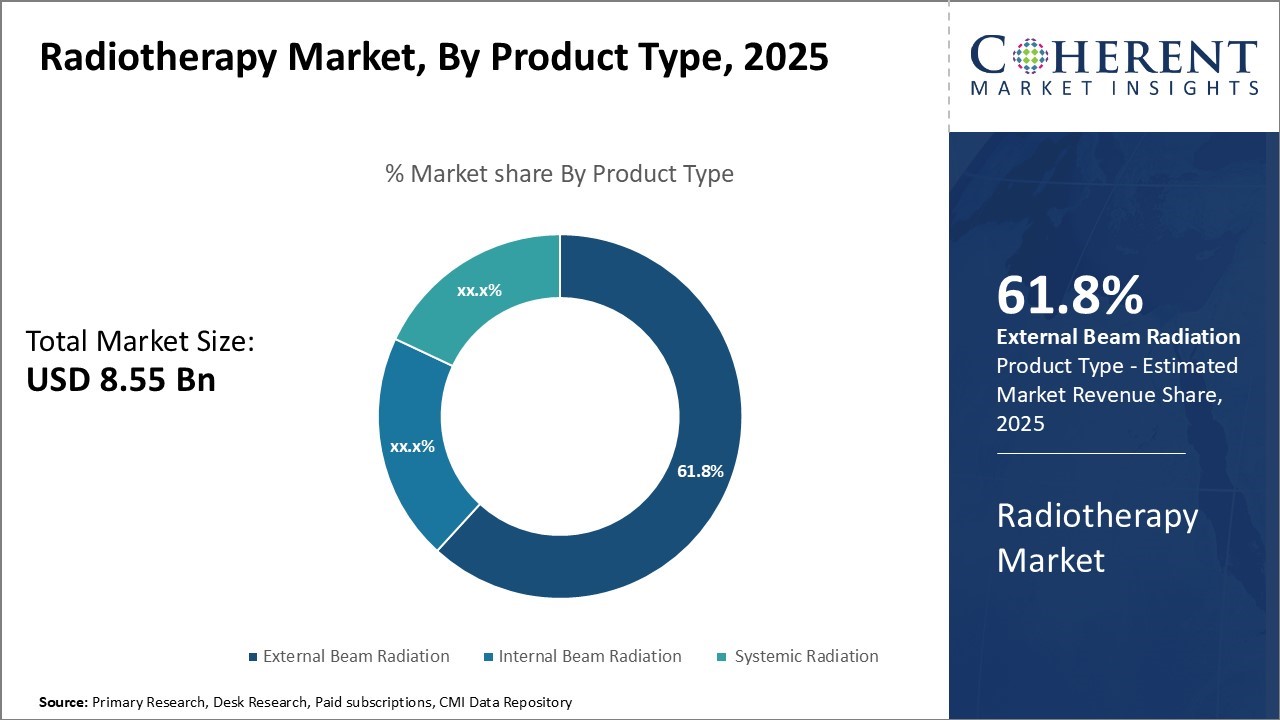
Radiotherapy Market Insights, By Product Type
External Beam Radiation Dominates the Overall Market
The product type segment includes external beam radiation, internal beam radiation, and systemic radiation. The external beam radiation sub-segment is estimated to hold 62.8% of the market share in 2026, owing to continuous refinement and the development of external beam radiation therapy modalities over the past few decades. The advent of sophisticated image-guided radiation therapy systems that leverage technologies, such as computed tomography (CT), magnetic resonance imaging (MRI), Positron emission tomography (PET) scanning, and linear accelerators, has improved precision and targeting capabilities for external beam treatments. Additionally, the emergence of highly conformal modalities such as intensity-modulated radiation therapy (IMRT) and volumetric modulated arc therapy (VMAT) allows for better dose distribution and sparing of surrounding healthy tissues. Advancements have also made it possible to deliver higher radiation doses in fewer treatment sessions through techniques like stereotactic body radiation therapy (SBRT). This has translated to better treatment outcomes and patient convenience.
For example, according to an artice published by Radiology Info, delivering External Beam Therapy (EBT) involves a collaborative team that includes a radiation oncologist, medical physicist, dosimetrist, and radiation therapist. The radiation oncologist is responsible for assessing the patient and selecting the most suitable treatment. They also identify the specific areas to be targeted and determine the total radiation dose to be administered.
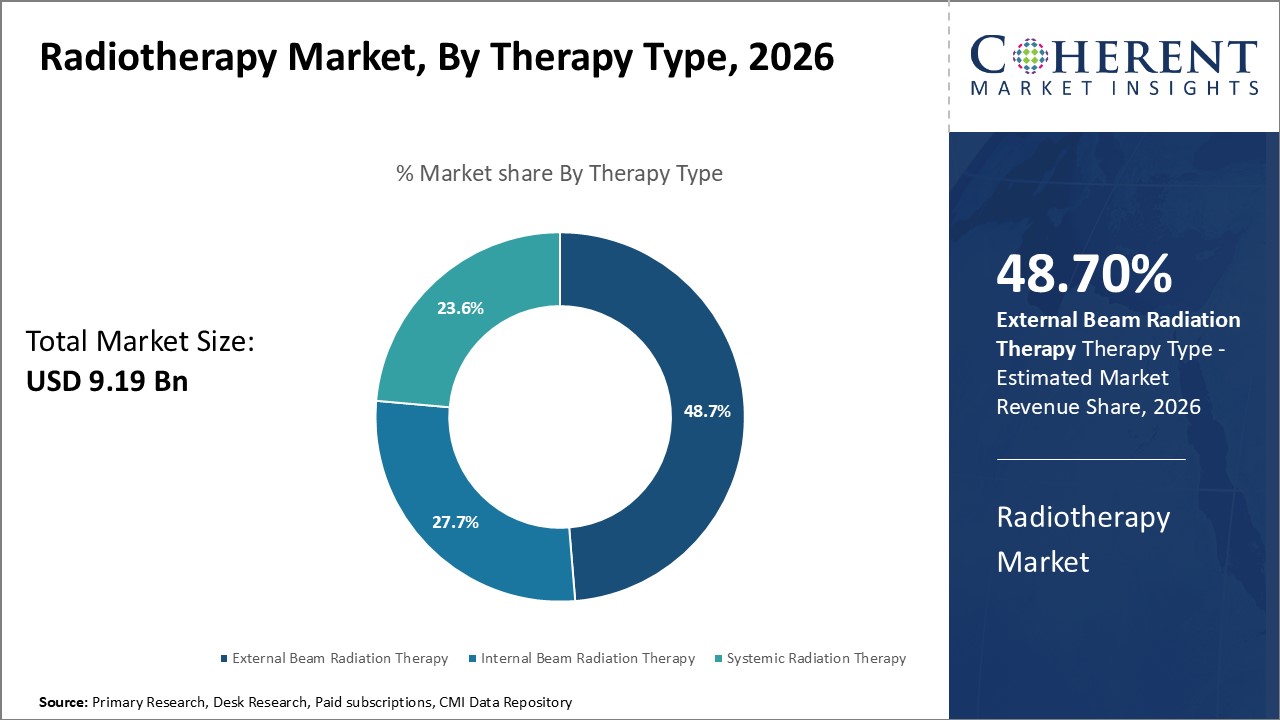
Radiotherapy Market Insights, By Therapy Type
Expanding Applications of Radiation Therapy Are Driving the External Beam Radiation Therapy Segment’s Growth
The therapy type segment includes external beam radiation therapy, internal beam radiation therapy, and systemic radiation therapy. The external beam radiation therapy sub-segment is estimated to hold 48.7% of the market share in 2026 due to its diverse applicability across cancer sites. Traditionally used to treat primary tumors, external beam radiation is increasingly being leveraged in adjuvant, neoadjuvant, and salvage settings. It is often combined with chemotherapy to achieve enhanced locoregional control. Additionally, advancements in delivery techniques now allow safer delivery of ablative radiation doses through hypofractionated regimens for oligometastatic diseases. Emerging data also indicates the potential of post-operative radiation to further reduce the risk of recurrence in high-risk cancer types. These expanding indications across the cancer care continuum have continued to drive the demand for external beam radiation therapy solutions and services.
Radiotherapy Market Insights, By End User
Central Role of Hospitals in Cancer Care is Driving the Hospital Segments growth
The end user segment includes hospitals, oncology clinics, and ambulatory radiotherapy centers. The hospital's sub-segment is estimated to hold 52.8% of the market share in 2026, owing to their central role in comprehensive cancer care. Most hospitals are equipped with advanced radiology departments housing the latest external beam radiation therapy systems. They also boast well-staffed teams of radiation oncologists, medical physicists, dosimetrists, and nursing personnel with clinical expertise to handle the complexities of radiation treatment planning and delivery. Moreover, the colocation of radiotherapy within hospitals facilitates crucial multidisciplinary collaboration with surgical oncologists, medical oncologists, and other specialists to arrive at optimal coordinated treatment strategies. Apart from this, hospitals provide a one-stop shop for cancer patients requiring additional services under one roof, such as PDT, chemotherapy, palliative care, etc. These attributes cement the position of hospitals as the preferred setting for radiotherapy procedures. For instance, in June 2025, a Cancer Care Facility was inaugurated at ILS Hospital in Agartala, India. It aims to enhance the regional access to radiotherapy.
Regional Insights
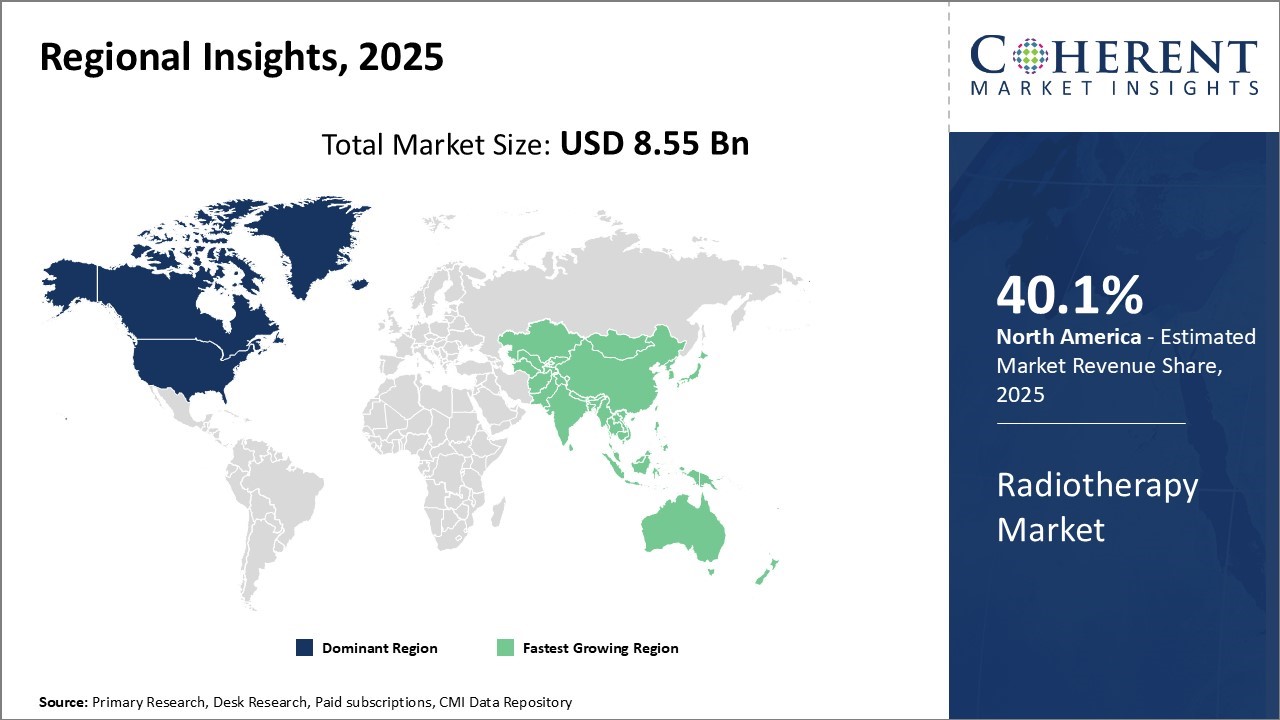
North America Radiotherapy Market Trends
North America remains the dominant region is estimated to hold 40.1% of the radiotherapy market share in 2026, owing to a well-established healthcare infrastructure and strong presence of industry players in the region. The growth in the U.S. market share due to high adoption of advanced treatment devices such as proton therapy systems and brachytherapy products among other hospitals and cancer care centers. Moreover, favorable reimbursement policies for diagnostic imaging and cancer treatment procedures have further driven the market growth. For instance, in March 2026, Actinium Pharmaceuticals launched the ATNM-400. It is a novel alpha-emitting radiotherapy for prostate cancer. Canada also follows closely with strong investments in public healthcare and adoption of advanced technologies in the early stages.
Asia Pacific Radiotherapy Market Trends
The Asia Pacific region has emerged as the fastest-growing market. Countries like China, India, Japan, and South Korea are witnessing rapid economic development, which is improving access to advanced healthcare facilities. Rising healthcare expenditure, growing public awareness about cancer treatment options, increasing geriatric population base are some of the key factors fueling the Asia Pacific radiotherapy market. The market is witnessing higher imports from global majors to meet the domestic demand. Many global original equipment manufacturers (OEMs) have also set up manufacturing bases or entered into partnerships with local players in high-potential countries. This has ensured a steady supply of devices and made them more affordable. As the availability of technologically sophisticated products increases in the region, more patients are opting for advanced radiation therapy procedures. China and India are the best performing countries in the Asia Pacific radiotherapy market. China dominates the market with support from the government for healthcare reforms, there are also rising incidences of cancer cases, etc. Whereas in India, there is a rapid expansion in cancer care centers, rise in awareness, etc.
For instance, in December 2024, the new TrueBeam STx 3.0 linear accelerator was inaugurated at the KIMSHEALTH Cancer Centre in Thiruvananthapuram, India. It is an advanced radiotherapy system that integrates Surface-guided radiotherapy which enables high-precision treatment for lung, breast, and prostate cancer, etc.
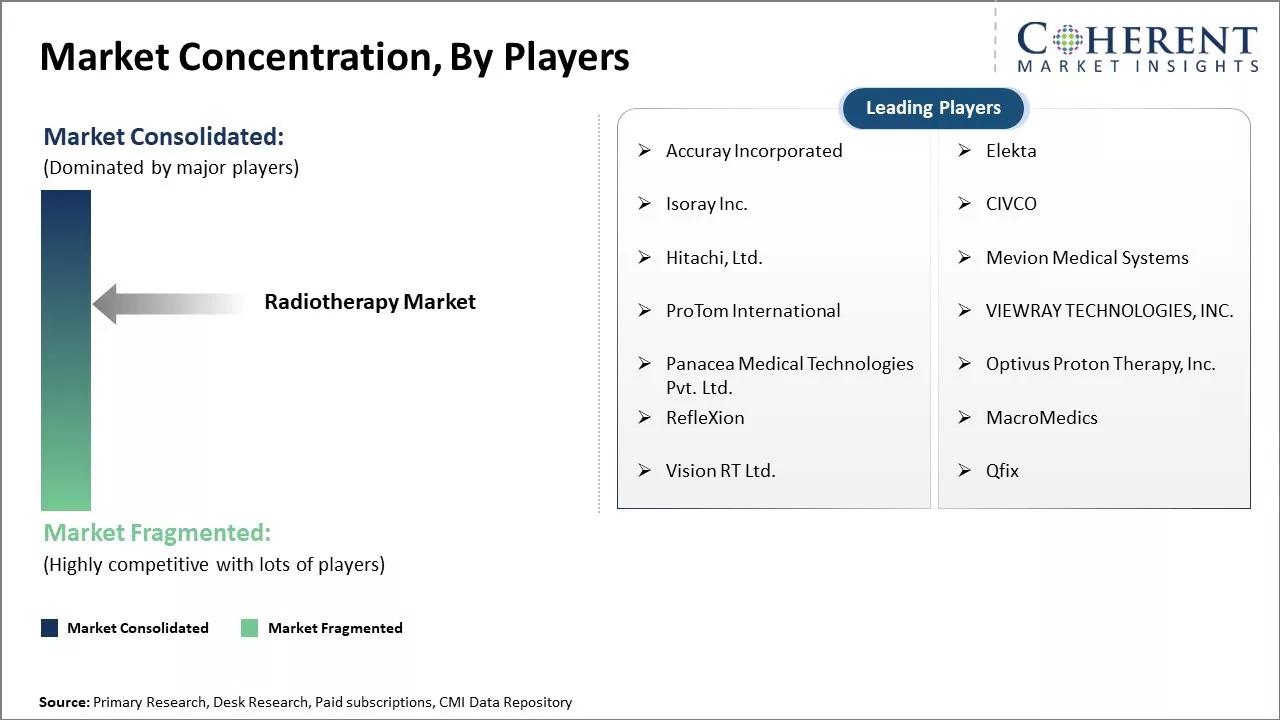
Market Concentration and Competitive Landscape
Key Developments
- In 2025, RaySearch launched RayStation® v2025. It is an updated treatment planning system. It integrates machine learning tools like ECHO to provide an automated plan. Such innovations streamline workflows and provide a personalized experience for radiotherapy plans.
- In February 2024, the National Institutes of Healt, granted USD 7.8 million to Washington University School of Medicine to support a radiation oncology center that is part of a select national network of centers aimed at understanding the biologic effects of radiation therapy in cancer treatment.
- In May 2022, Elekta, a medical technology company, introduced Elekta Espr, which offers significantly faster automated treatment planning for clinicians, more personalized and patient-friendly treatments, and a degree of precision able to protect the mind and the person.
- In April 2022, Elekta, and GE Healthcare, a manufacturer and distributor of diagnostic imaging agents and radiopharmaceuticals for imaging modalities used in medical imaging procedures, entered into a global commercial collaboration agreement in the field of radiation oncology, enabling them to provide hospitals a comprehensive offering across imaging and treatment for cancer patients requiring radiation therapy.
- In February 2022, the Department of Radiation Oncology at Max Institute of Cancer Care (MICC), Saket, India, launched the Radixact X9 Tomotherapy, which is combined with the second-generation synchronization respiratory motion management system. This radiation therapy treatment for cancer patients employs Artificial Intelligence (AI)-based real-time tracking and treatment delivery to ensure that the tumor is not missed due to chest or abdominal breathing movement during radiation.
Market Report Scope
Radiotherapy Market Report Coverage
| Report Coverage | Details | ||
|---|---|---|---|
| Base Year: | 2025 | Market Size in 2026: | USD 9.19 Bn |
| Historical Data for: | 2020 To 2024 | Forecast Period: | 2026 To 2033 |
| Forecast Period 2026 to 2033 CAGR: | 7.5% | 2033 Value Projection: | USD 15.25 Bn |
| Geographies covered: |
| ||
| Segments covered: |
| ||
| Companies covered: | Accuray Incorporated, Elekt, Isoray Inc., CIVCO, Hitachi, Ltd., Mevion Medical System, ProTom International, VIEWRAY TECHNOLOGIES, INC., Panacea Medical Technologies Pvt. Ltd., Optivus Proton Therapy, Inc., RefleXion, MacroMedics, Vision RT Ltd., and Qfix | ||
| Growth Drivers: |
| ||
| Restraints & Challenges: |
| ||
Radiotherapy Market Trends
Higher Efficacy of Radiotherapy Equipment with Enhanced Clinical Outcomes
Higher Efficacy of Radiotherapy Equipment with Enhanced Clinical Outcomes is an emerging trend in the radiotherapy market. New technology is replacing the traditional and age-old machines and models. With machines like MR-Linacs, proton therapy systems, and SGRT it could be better for focusing on tumors and avoiding healthy tissues at the same time. This would also lead to better results such as a lower chance of the cancer cell regenerating and coming back. The high-energy radiation used during radiotherapy permanently damages the DNA of cancer cells, causing them to die. According to the data provided by Mayo Foundation for Medical Education and Research (MFMER), in July 2020, almost half of all people with cancer have radiotherapy as part of their treatment plan. Moreover, according to the data published by NHS inform, in November 2021, four out of every 10 cancer cures include radiotherapy as part of the treatment plan.
Radiotherapy Market Driver – Increasing Prevalence of Cancer
The rising prevalence of oncology diseases, such as prostate cancer, lung cancer, and breast cancer, globally is increasing the demand for timely management to reduce mortality associated with such conditions. This, in turn, is a major factor augmenting the growth of the radiotherapy market. For instance, according to data provided by Breastcancer.org, in March 2022, an estimated 287,850 new cases of invasive breast cancer were expected to be diagnosed in women in the U.S., along with 51,400 new cases of non-invasive (in situ) breast cancer 2022. This is further positively influencing the radiotherapy market forecast.
Radiotherapy Market Opportunities – Increasing Funding for Radiation Therapy
Increasing adoption of inorganic growth strategies such as fundings is expected to offer lucrative growth opportunities in the market. For instance, the National Institutes of Health (NIH) granted a funding of USD 12 million to the Abramson Cancer Center at the University of Pennsylvania, U.S. to study ultra-fast, high-dose FLASH radiation therapy for cancer. This is further propelling the radiotherapy market share.
Analyst Viewpoint
- The radiotherapy market is undergoing a structural evolution driven not by incremental innovation, but by a fundamental redefinition of care pathways and value delivery in oncology. While the modality has long been a cornerstone in cancer treatment, the convergence of technological precision, AI integration, and reimbursement realignment is shifting the competitive dynamics and clinical relevance of radiotherapy.
- A critical inflection point is the shift from conventional linear accelerators (linacs) to adaptive radiotherapy platforms. Varian’s Ethos and Elekta’s Unity MR-Linac are emblematic of this transition. Adaptive systems leverage real-time imaging and AI-powered dose modulation to respond to anatomical changes, a capability that has demonstrated improved local control in complex cases such as pancreatic and head-and-neck cancers. For instance, a recent study published in Radiotherapy & Oncology (2024) showed that daily adaptive planning in MR-guided therapy reduced toxicities by 35% compared to standard IGRT, reinforcing the clinical superiority of personalized dosing.
- Moreover, reimbursement models are subtly, yet significantly, favoring these advanced modalities. The U.S. CMS’s decision in 2023 to extend coverage for hypofractionated regimens under the Radiation Oncology Model (RO Model) underscores a broader policy trend: incentivizing higher-value, shorter-duration therapies that align with adaptive platforms. This has led to an observable uptick in installations of adaptive-capable systems, particularly in NCI-designated centers and high-throughput clinics seeking both efficiency and outcome-driven differentiation.
- Geographically, we are witnessing a bifurcation in market maturity. In Western Europe and Japan, saturation of linac infrastructure is pushing toward replacement cycles focused on AI-driven automation and workflow orchestration. Elekta’s partnership with GE HealthCare in Europe to integrate MRI and radiation planning workflows is illustrative of this movement. Conversely, in high-incidence but under-resourced geographies such as India and sub-Saharan Africa, deployment of mobile or modular radiotherapy units is becoming more viable, as demonstrated by Tata Trusts’ collaboration with Siemens Healthineers to scale access in rural India.
Market Segmentation
- Product Type Insights (Revenue, USD Bn, 2021 - 2033)
- External Beam Radiation
- Compact Advanced Radiotherapy Systems
- Proton Therapy Systems
- High Energy Linear Accelerators (LINAC)
- Internal Beam Radiation
- Systemic Radiation
- External Beam Radiation
- Therapy Type Insights (Revenue, USD Bn, 2021 - 2033)
- External Beam Radiation Therapy
- Internal Beam Radiation Therapy
- Systemic Radiation Therapy
- Application Insights (Revenue, USD Bn, 2021 - 2033)
- Prostate Cancer
- Breast Cancer
- Lung Cancer
- Colorectal Cancer
- Cervical Cancer
- Others
- End User Insights (Revenue, USD Bn, 2021 - 2033)
- Hospitals
- Oncology Clinics
- Ambulatory Radiotherapy Centers
- Regional Insights (Revenue, USD Bn, 2021 - 2033)
- North America
- U.S.
- Canada
- Latin America
- Brazil
- Argentina
- Mexico
- Rest of Latin America
- Europe
- Germany
- U.K.
- Spain
- France
- Italy
- Russia
- Rest of Europe
- Asia Pacific
- China
- India
- Japan
- Australia
- South Korea
- ASEAN
- Rest of Asia Pacific
- Middle East
- GCC Countries
- Israel
- Rest of Middle East
- Africa
- South Africa
- North Africa
- Central Africa
- North America
- Key Players Insights
- Accuray Incorporated
- Elekta
- Isoray Inc.
- CIVCO
- Hitachi, Ltd.
- Mevion Medical Systems
- ProTom International
- VIEWRAY TECHNOLOGIES, INC.
- Panacea Medical Technologies Pvt. Ltd.
- Optivus Proton Therapy, Inc.
- RefleXion
Sources
Primary Research Interviews
- Oncologists, radiologists, and medical physicists
- Hospital procurement managers
- Radiotherapy device manufacturers and distributors
Databases
- WHO Cancer Database
- SEER (Surveillance, Epidemiology, and End Results Program)
Magazines
- Medical Device & Diagnostic Industry (MD+DI)
- Imaging Technology News
- DOTmed Healthcare Business News
Journals
- Radiotherapy and Oncology (Elsevier)
- International Journal of Radiation Oncology, Biology, Physics
- Journal of Applied Clinical Medical Physics
Newspapers
- The New York Times (Healthcare section)
- The Economic Times – Healthcare
- Business Standard – Life Sciences
Associations
- American Society for Radiation Oncology (ASTRO)
- European Society for Radiotherapy and Oncology (ESTRO)
- Association of Medical Physicists of India (AMPI)
- International Atomic Energy Agency (IAEA – Human Health Division)
Public Domain Sources
- WHO reports and publications
- Government health department portals (e.g., NHS, CDC, MoHFW India)
- FDA and CE approval databases
- ClinicalTrials.gov
- World Bank health infrastructure statistics
*Definition: Radiotherapy, also known as radiation therapy, uses ionizing radiations that deliver targeted beams of radiation to kill and destroy cancer cells. The advanced technology used in radiotherapy works by bombarding cancerous cells with radiation to kill them, while minimizing damage to the healthy cells around them. Radiotherapy is the most potent and cost-effective treatment for cancer, and when integrated with advanced technologies, such as image-guided therapy, it leads to enhanced control over the tumor and toxicity.
Get access to 250+ pages report
Every segment, forecast, competitor profile and data table behind the analysis above — available for instant download.
- ESOMAR Member
- ISO 9001:2015 Certified
- D-U-N-S Registered
- GDPR & CCPA Compliant
Missing comfort of reading report in your local language? Find your preferred language:
Transform your Strategy with Exclusive Trending Reports
Frequently Asked Questions
The Radiotherapy Market is estimated to be valued at USD 9.19 Bn in 2026, and is expected to reach USD 15.25 Bn by 2033.
The CAGR of the Radiotherapy Market is projected to be 7.5% from 2026 to 2033.
Increasing prevalence of cancer and higher efficacy of radiotherapy equipment with enhanced clinical outcomes are the major factors driving the growth of the radiotherapy market.
High cost of the radiotherapy devices and stringent regulatory approval process are the major factors hampering the growth of the radiotherapy market.
In terms of product type, external beam radiation is estimated to dominate the market revenue share in 2026.
Accuray Incorporated, Elekta, Isoray Inc., CIVCO, Hitachi, Ltd., Mevion Medical Systems, ProTom International, VIEWRAY TECHNOLOGIES, INC., Panacea Medical Technologies Pvt. Ltd., Optivus Proton Therapy, Inc., RefleXion, MacroMedics, Vision RT Ltd., and Qfix are the major players.
North America is expected to lead the radiotherapy market.