

Therapeutic Drug Monitoring Market Size and Forecast – 2026 to 2033
The Therapeutic Drug Monitoring Market is anticipated to grow at a CAGR of 4.1% with USD 2.1 Bn share in 2026 and is expected to reach USD 3.2 Bn in 2033. The rising prevalence of chronic diseases, expanding adoption of precision medicine, increasing use of biologics and narrow therapeutic index drugs, and growing focus on personalized treatment continue to drive the Therapeutic Drug Monitoring (TDM) market by enhancing drug efficacy, and improving patient outcomes. Chronic diseases are the leading cause of death and disability worldwide, accounting for 43 million deaths annually.
Key Takeaways
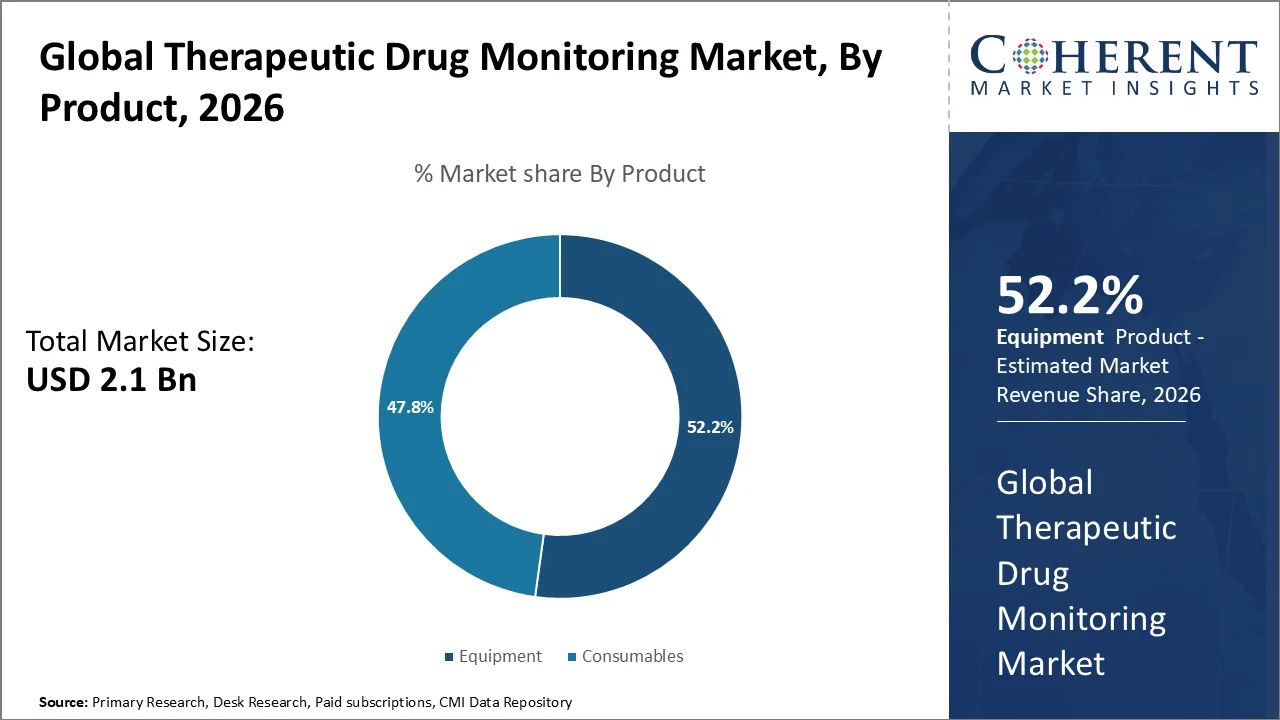
- Equipment holds the largest market share of 52.2% in 2026 owing to its rising prevalence of chronic diseases.
- Enzyme Immunoassay expected to hold largest market share of 38.8% in 2026 owing to the widespread adoption in clinical laboratories. Enzyme immunoassays (EIAs) detect and quantify antigens using enzyme-linked antibodies that bind specifically to target antigens.
- Hospitals acquired the prominent market share of 42.2% in 2026 owing to the growing burden of chronic and complex diseases.
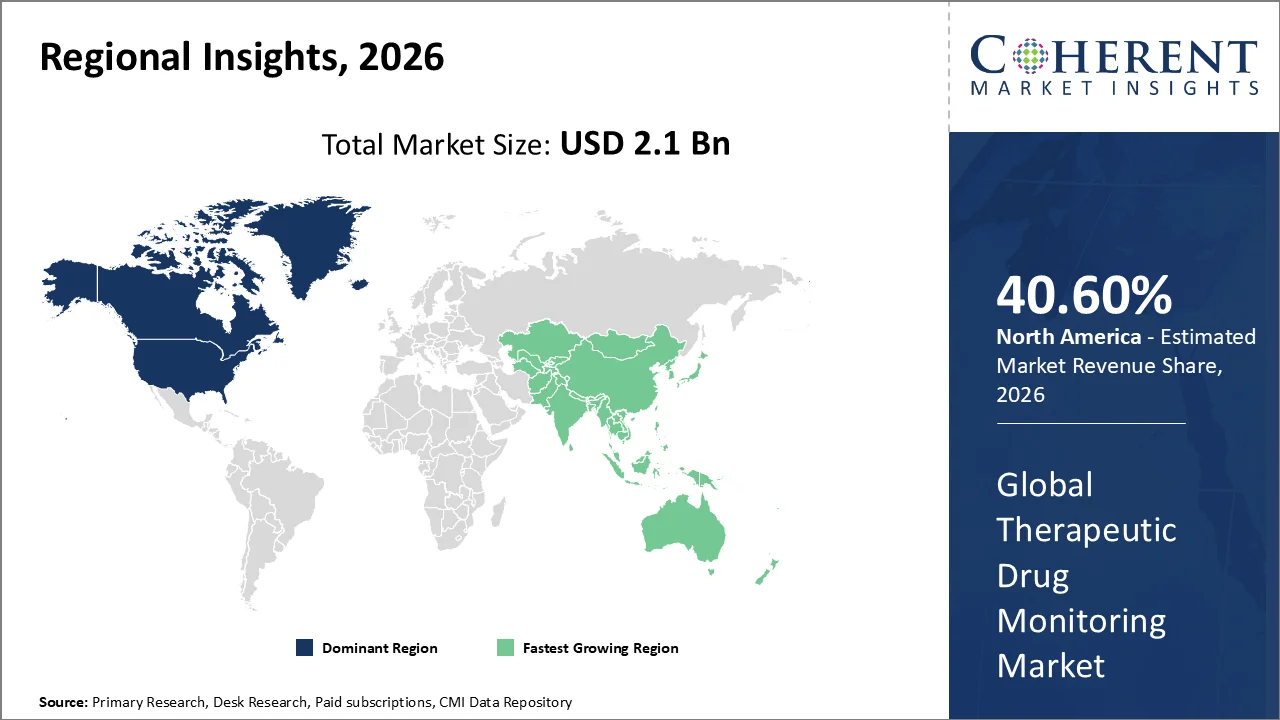
- North America is expected to acquire the dominant share of 40.6% in 2026 owing to its rising organ transplant procedures. In 2025, the United States recorded its fifth consecutive annual record for organ transplants, with 49,064 procedures performed nationwide.
Current Events and Their Impact on the Therapeutic Drug Monitoring Market
Current Event | Description and its Impact |
FDA Advances Precision Medicine and Biomarker-Based Drug Development |
|
EU In Vitro Diagnostic Regulation (IVDR) Implementation |
|
Segmental Insights
- Current Industry Events of 2026
- Market Size Estimation
- Regional Breakdown
- Competitive Landscape
- Customer Intelligence
- Segmental Analysis
- Pricing Analysis
- Key Market Drivers, Challenges & Future Trends
- Customized Insights Section
Why is Equipment Acquiring the Largest Market Share?
Equipment holds the largest market share of 52.2% in 2026. Healthcare providers are driving the equipment segment of the Therapeutic Drug Monitoring market by increasing the demand for accurate and timely drug concentration analysis in hospitals and diagnostic laboratories. The rising prevalence of chronic diseases, growing number of organ transplant procedures, and expanded use of drugs with narrow therapeutic windows encourage laboratories to adopt advanced analytical instruments such as immunoassay analyzers and LC-MS/MS systems. Manufacturers continue to enhance laboratory automation and analytical performance, while healthcare systems expand infrastructure and prioritize personalized medicine and patient safety, further accelerating demand for modern therapeutic drug monitoring equipment. In February 2026, Sharda University’s School of Medical Sciences & Research and School of Pharmacy launched India’s first Centre for Drug Quantification and Therapeutic Drug Monitoring (CDQ-TDM) to improve MDR-TB treatment outcomes. The centre uses advanced UPLC-based analytical systems to enable accurate drug quantification and support accessible care in resource-limited settings.
Enzyme Immunoassay expected to hold largest market share
Enzyme Immunoassay expected to hold largest market share of 38.8% in 2026 owing to the expansion of hospital automation. Hospitals and diagnostic laboratories drive the Enzyme Immunoassay segment in the Therapeutic Drug Monitoring market by adopting rapid, reliable, and cost-effective solutions for routine drug concentration testing. They integrate enzyme immunoassays with automated analyzers to handle high testing volumes efficiently. The rising prevalence of chronic diseases, increasing organ transplant procedures, and growing focus on personalized medicine encourage broader adoption. Manufacturers continue to improve assay sensitivity, specificity, and automation, while expanding healthcare infrastructure and laboratory capabilities further accelerate the demand for enzyme immunoassay-based therapeutic drug monitoring.
Which End User segment dominates the market?
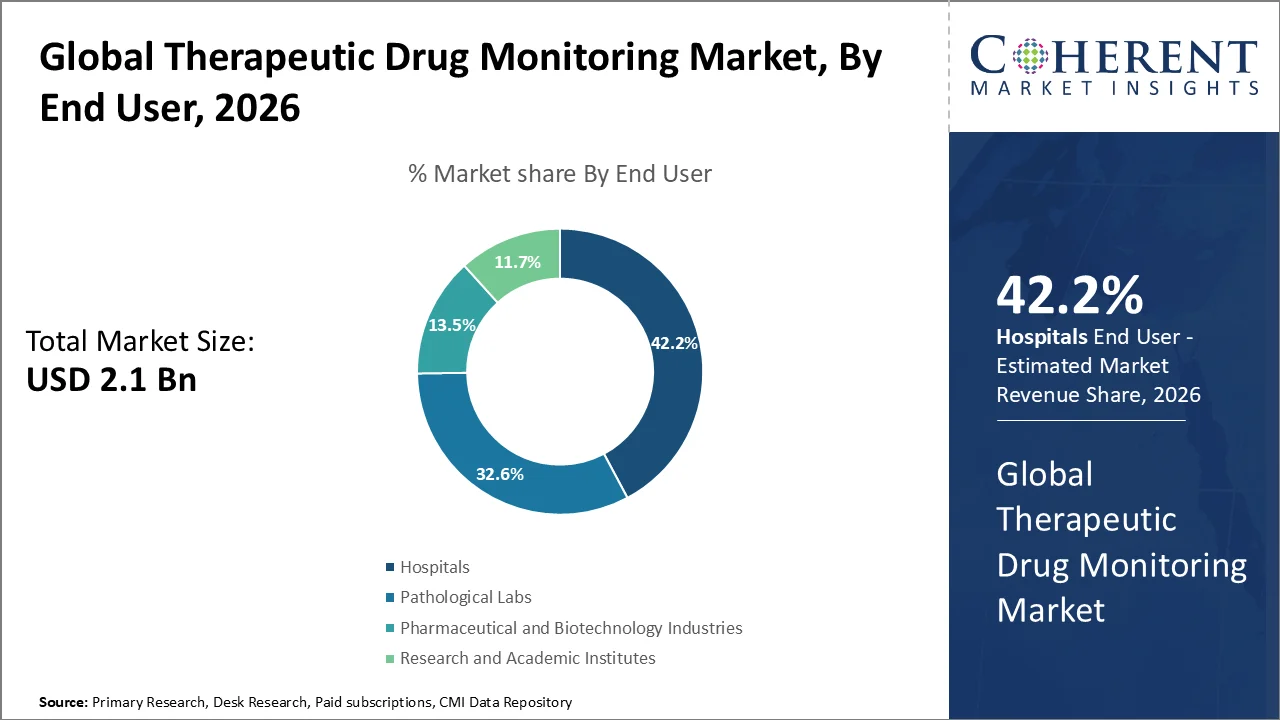
Hospitals acquired the prominent market share of 42.2% in 2026. Hospitals propel the Therapeutic Drug Monitoring market by leveraging drug concentration testing to improve treatment outcomes and enhance patient safety. Healthcare professionals monitor medication levels more frequently as chronic diseases, cancer, infectious diseases, and organ transplant procedures become more prevalent. Hospitals deploy advanced TDM systems to optimize the use of drugs with narrow therapeutic ranges, prevent adverse reactions, and support individualized treatment plans. The growth of intensive care facilities, increased use of laboratory automation, and ongoing healthcare infrastructure investments further drive hospitals to adopt therapeutic drug monitoring solutions.
Therapeutic Drug Monitoring Market Trends
- Growing use of advanced analytical technologies, including immunoassays, liquid chromatography–mass spectrometry (LC-MS/MS), and automated laboratory systems, improves testing accuracy, efficiency, and drug concentration assessment. LC-MS/MS is widely used as a reference analytical technique in clinical laboratories because of its high sensitivity and specificity, particularly for monitoring drugs present at low concentrations or requiring highly accurate measurement.
- Increasing prevalence of chronic diseases such as epilepsy, cancer, cardiovascular disorders, autoimmune diseases, and infectious diseases drives demand for monitoring medications with narrow therapeutic windows. According to the World Health Organization (WHO), noncommunicable diseases (NCDs) account for approximately 74% of all deaths globally, highlighting the growing burden of long-term medication management and the need for safe and effective drug therapy optimization.
- Expansion of organ transplantation procedures worldwide increases demand for TDM solutions, as monitoring immunosuppressive drug concentrations helps prevent rejection and reduce toxicity risks. According to the Global Observatory on Donation and Transplantation (GODT), more than 150,000 solid organ transplants are performed globally each year, creating continued demand for monitoring immunosuppressive therapies such as tacrolimus and cyclosporine.
- Expansion of healthcare infrastructure and reimbursement support improves access to TDM testing. In developed healthcare systems, clinically necessary laboratory testing is supported through established reimbursement frameworks, while emerging economies continue investing in diagnostic capacity. For example, the World Health Organization’s Essential Diagnostics List (EDL) promotes access to essential diagnostic services as part of strengthening healthcare systems, supporting broader availability of laboratory-based testing.
Regional Insights
North America dominates owing to increasing use of biologics and specialty pharmaceuticals
North America is expected to acquire the dominant share of 40.6% in 2026. North America strengthens the Therapeutic Drug Monitoring market by leveraging advanced healthcare infrastructure, adopting precision medicine practices, and increasing demand for optimized drug management. Healthcare providers monitor drug levels more frequently as chronic diseases, cancer, neurological disorders, and transplant procedures become more prevalent. Hospitals and diagnostic laboratories implement advanced TDM technologies to enhance p atient safety and improve therapeutic outcomes. Leading healthcare companies, expanding laboratory automation, growing utilization of specialty drugs, and continuous investments in medical research further accelerate the adoption of therapeutic drug monitoring solutions across the region. Thermo Fisher Scientific launched the TacroType Pharmacogenetic Test, a laboratory-developed test that helps clinicians optimize tacrolimus dosing in transplant recipients by analyzing genetic factors affecting drug metabolism.
Asia Pacific Therapeutic Drug Monitoring Market Trends
Healthcare providers and organizations across Asia Pacific are driving the therapeutic drug monitoring market by addressing the rising burden of chronic diseases and adopting personalized medicine approaches. They are increasingly seeking effective drug management solutions to improve treatment outcomes. Expanding healthcare infrastructure, advancing diagnostic technologies, and growing awareness among medical professionals are accelerating market adoption. Healthcare systems are also using therapeutic drug monitoring more widely for complex therapies that require accurate dosage adjustments, while the aging population and emphasis on patient safety continue to strengthen demand across the region.
United States Therapeutic Drug Monitoring Market Trends
The United States therapeutic drug monitoring market is expanding as healthcare providers increasingly focus on accurate medication management for chronic conditions. The adoption of personalized medicine and the demand for optimized treatment outcomes are encouraging the use of therapeutic drug monitoring solutions. Healthcare organizations are leveraging advanced diagnostic tools and enhanced laboratory technologies to improve drug safety and effectiveness. Furthermore, the growth of biologic and specialty therapies, strong healthcare infrastructure, rising clinical awareness, and efforts to minimize adverse drug reactions continue to drive market development. For instance, in February 2026, Cipla USA launched Liraglutide Injection 18 mg/3 mL prefilled pens, a generic equivalent of Saxenda (liraglutide injection), to expand treatment options for patients.
Japan Therapeutic Drug Monitoring Market Trends
Japan’s Therapeutic Drug Monitoring (TDM) market grows as healthcare providers increasingly adopt personalized medicine, manage chronic diseases, and seek accurate drug dosage optimization. Japan’s advanced healthcare system, rapid adoption of innovative diagnostic technologies, and emphasis on patient safety drive the expansion of TDM solutions. Healthcare professionals increasingly use TDM to improve treatment outcomes, supported by the rising demand for complex therapies, an aging population, and greater awareness of precision-based medication management across hospitals and research institutions. Japan's health insurance system reimburses therapeutic drug monitoring (TDM) for eligible medicines that meet specified coverage criteria.
Who are the Major Companies in Therapeutic Drug Monitoring Industry
Some of the major key players in Therapeutic Drug Monitoring are Roche Diagnostics, Thermo Fisher Scientific, Bio Rad Laboratories, Siemens Healthcare Diagnostics, Beckmann Coulter, and Abbott Diagnostics.
Key News
- In May 2026, Samsung Electronics and Massachusetts General Hospital launched a study to evaluate how Galaxy Watch data can help monitor and manage muscle loss in adults starting GLP-1RA therapy by tracking body composition and activity levels.
Market Report Scope
Therapeutic Drug Monitoring Market Report Coverage
| Report Coverage | Details | ||
|---|---|---|---|
| Base Year: | 2025 | Market Size in 2026: | USD 2.1 Bn |
| Historical Data for: | 2020 To 2024 | Forecast Period: | 2026 To 2033 |
| Forecast Period 2026 to 2033 CAGR: | 4.1% | 2033 Value Projection: | USD 3.2 Bn |
| Geographies covered: |
| ||
| Segments covered: |
| ||
| Companies covered: | Roche Diagnostics, Thermo Fisher Scientific, Bio Rad Laboratories, Siemens Healthcare Diagnostics, Beckmann Coulter, and Abbott Diagnostics. | ||
Analyst Opinion
- Therapeutic Drug Monitoring (TDM) is shifting from a niche laboratory service to a critical component of precision medicine, driven by the increasing complexity of drug therapies rather than market trends alone. The clinical need is strongest in treatments with narrow therapeutic windows, where small changes in drug concentration can determine efficacy or toxicity. For example, immunosuppressants used after organ transplantation require close monitoring because maintaining the correct drug exposure directly impacts graft survival and reduces rejection risks. Similarly, therapies involving antibiotics such as vancomycin and anti-epileptic drugs rely on TDM to achieve optimal patient outcomes.
- The rising burden of chronic diseases and the expansion of high-risk therapies are creating a stronger clinical case for TDM adoption. In Japan, where the population aged 65 years and above represents nearly 30% of the population, medication management has become increasingly complex due to polypharmacy and age-related changes in drug metabolism. Elderly patients often require individualized dosing strategies, particularly for drugs with variable pharmacokinetics, making TDM an important tool for improving treatment safety and reducing adverse drug reactions.
- Advanced biologics and personalized therapies are expected to accelerate the adoption of TDM as healthcare moves toward patient-specific treatment decisions. For example, therapeutic monitoring of biologic drugs used in autoimmune diseases, including anti-TNF therapies for rheumatoid arthritis and inflammatory bowel disease, helps physicians assess drug response and adjust treatment plans. Clinical studies have shown that proactive drug level monitoring can support better disease control and reduce unnecessary treatment changes, strengthening the role of TDM in precision healthcare.
- Japan’s strong pharmaceutical research ecosystem and emphasis on evidence-based medicine position TDM as an essential technology for optimizing next-generation therapies. The country’s hospitals and research institutions increasingly integrate advanced analytical techniques, including mass spectrometry-based assays, to measure drug concentrations with higher accuracy. As treatments become more targeted and expensive, healthcare providers are placing greater importance on maximizing therapeutic effectiveness while minimizing toxicity, reinforcing the long-term clinical value of TDM solutions.
Speak to the analyst
Want personalized insights?
Take the findings above to one of our principal consultants, or have the report rebuilt around the segments, geographies and competitors you actually track.
Market Segmentation
- By Product (Revenue, USD Bn, 2021-2033)
- Equipment
- Consumables
- By Technology (Revenue, USD Bn, 2021-2033)
- Enzyme Immunoassay
- HPLC LC/MS
- GC/MS
- Fluorescence Polarization Immunoassay
- Mass Spectrometry
- By End User (Revenue, USD Bn, 2021-2033)
- Hospitals
- Pathological Labs
- Pharmaceutical and Biotechnology Industries
- Research and Academic Institutes
- By Region (Revenue, USD Bn, 2021-2033)
- North America
- U.S.
- Canada
- Latin America
- Brazil
- Mexico
- Argentina
- Rest of Latin America
- Europe
- Germany
- U.K.
- France
- Italy
- Spain
- Russia
- Rest of Europe
- Asia Pacific
- China
- India
- Japan
- Australia
- South Korea
- ASEAN
- Rest of Asia Pacific
- Middle East
- GCC
- Israel
- Rest of Middle East
- Africa
- South Africa
- Central Africa
- North Africa
- North America
Sources
Primary Research Interviews
- Interviews with pharmaceutical industry professionals, laboratory directors, clinical pharmacologists, healthcare providers, and hospital administrators involved in therapeutic drug monitoring practices.
- Discussions with researchers, diagnostic laboratory experts, and key opinion leaders (KOLs) specializing in precision medicine, pharmacokinetics, and personalized therapy.
- Inputs from professionals involved in drug development, clinical trials, and therapeutic monitoring programs.
Databases
- U.S. Food and Drug Administration (FDA) databases and drug approval resources.
- European Medicines Agency (EMA) databases.
- National Institutes of Health (NIH) and PubMed biomedical literature databases.
- World Health Organization (WHO) healthcare and medicine databases.
- National healthcare statistics and regulatory databases.
- Clinical trial registries including ClinicalTrials.gov and other regional clinical research databases.
- National health system databases and publicly available healthcare datasets.
Magazines
- Pharmaceutical and biotechnology industry publications.
- Clinical laboratory and diagnostics industry magazines.
- Healthcare technology and medical innovation publications.
- Precision medicine and personalized healthcare magazines.
- Life sciences and biotechnology news publications.
Journals
- Clinical Pharmacology & Therapeutics.
- Therapeutic Drug Monitoring.
- Journal of Clinical Pharmacology.
- Clinical Chemistry.
- The Lancet.
- Journal of Pharmaceutical and Biomedical Analysis.
- Pharmacotherapy.
- International Journal of Clinical Pharmacy.
- Frontiers in Pharmacology.
- Pharmacological Research.
Newspapers
- Healthcare and life sciences sections of leading global newspapers.
- Medical technology and pharmaceutical industry news coverage.
- Regulatory updates and healthcare policy reports from recognized news sources.
- Science and innovation news publications.
Associations
- American Society for Clinical Pharmacology and Therapeutics (ASCPT).
- American Association for Clinical Chemistry (AACC).
- European Association of Hospital Pharmacists (EAHP).
- International Pharmaceutical Federation (FIP).
- International Society of Pharmacoeconomics and Outcomes Research (ISPOR).
- American Society of Health-System Pharmacists (ASHP).
- National and regional clinical laboratory associations.
Public Domain Sources
- Government healthcare portals and regulatory agency publications.
- Publicly available drug safety reports and pharmacovigilance databases.
- Clinical guidelines and treatment recommendations.
- Open-access scientific publications and research articles.
- Hospital and healthcare system reports.
- Government statistics on healthcare expenditure, disease prevalence, and laboratory testing trends.
- Academic institution research publications.
- Open clinical trial data repositories.
Proprietary Elements
- CMI Data Analytics Tool
- Proprietary CMI Existing Repository of information for last 10 years.
Get access to 250+ pages report
Every segment, forecast, competitor profile and data table behind the analysis above — available for instant download.
- ESOMAR Member
- ISO 9001:2015 Certified
- D-U-N-S Registered
- GDPR & CCPA Compliant
Missing comfort of reading report in your local language? Find your preferred language:
Transform your Strategy with Exclusive Trending Reports
Frequently Asked Questions
The Therapeutic Drug Monitoring Market is anticipated to grow at a CAGR of 4.1% with USD 2.1 Bn share in 2026 and is expected to reach USD 3.2 Bn in 2033.
Therapeutic Drug Monitoring (TDM) is a clinical practice that measures drug concentrations in a patient’s blood or other biological samples to ensure medication levels remain within the optimal therapeutic range.
The TDM market is driven by the growing adoption of personalized medicine, increasing use of drugs with narrow therapeutic windows, expansion of complex therapies, and the need to improve medication safety through precise dosing.
TDM plays an important role in areas such as oncology, infectious diseases, transplantation medicine, neurology, psychiatry, and autoimmune disorders.
TDM supports personalized treatment by allowing physicians to tailor drug doses according to individual patient responses, metabolism, and clinical conditions.
Innovations in analytical technologies, including liquid chromatography–mass spectrometry (LC-MS), and rapid diagnostic methods, are improving the accuracy, speed, and accessibility of drug monitoring.