

Coagulation Analyzers Market Size and Forecast – 2026 to 2033
The Coagulation Analyzers Market is anticipated to grow at a CAGR of 7.2% with USD 11.8 Bn in 2026 and is expected to reach USD 17.4 Bn in 2033. The rising prevalence of blood disorders, increasing demand for rapid diagnostic testing, growing aging populations, and expanding number of surgical procedures worldwide drive the coagulation analyzers market. Blood disorders, from anemia to cancers, impact millions worldwide, including around 900,000 Americans who develop blood clots each year, causing roughly 100,000 deaths.
Key Takeaways
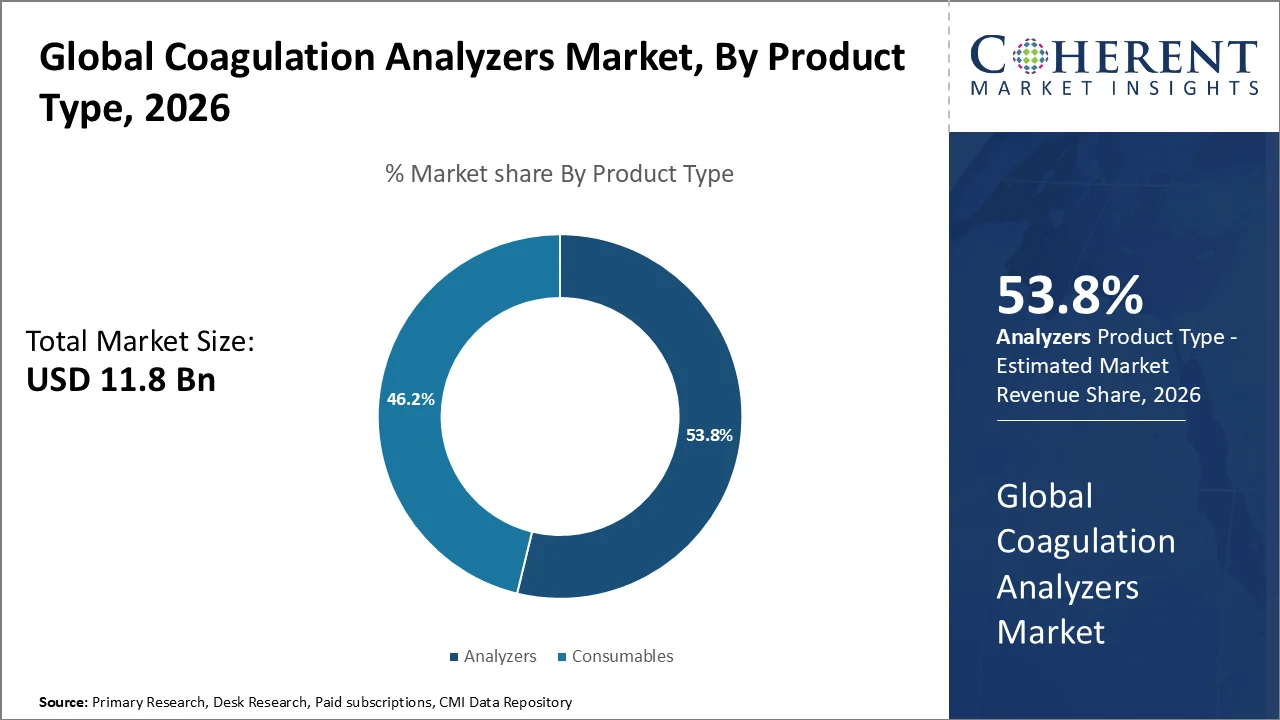
- Analyzers hold the largest market share of 53.8% in 2026 owing to its rising prevalence of blood disorders and cardiovascular diseases. Cardiovascular diseases (CVDs) are the top global killer, claiming approximately 17.9 million lives annually, according to the WHO.
- Prothrombin Time Test expected to hold largest market share of 43.2% in 2026 owing to the growing use of anticoagulant therapy monitoring.
- Hospitals acquired the prominent market share of 38.7% in 2026 owing to its high volume of coagulation testing in hospitals.
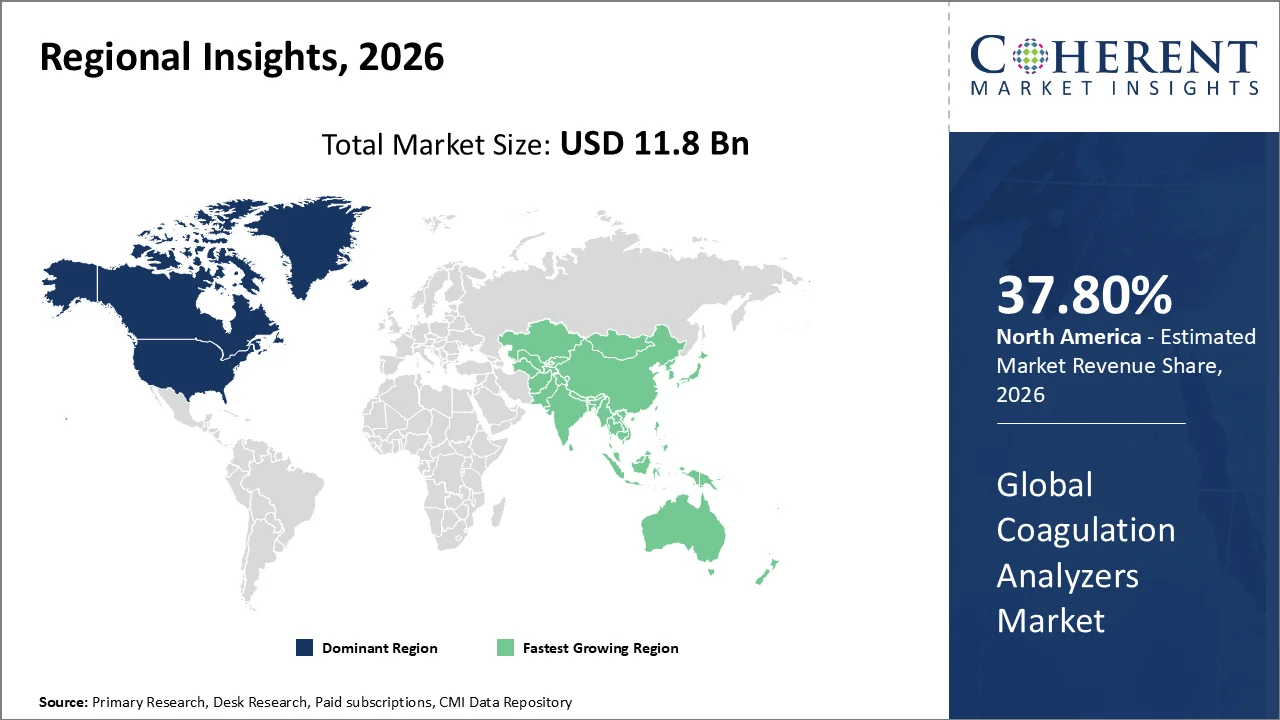
- By Region, North America is expected to acquire the dominant share of 37.80% in 2026 owing to the increasing adoption of automated and point-of-care analyzers.
Current Events and Their Impact on the Coagulation Analyzers Market
Current Event | Description and its Impact |
Western Trade Policies and Tariffs |
|
Geopolitical Tensions in the Middle East |
|
Segmental Insights
- Current Industry Events of 2026
- Market Size Estimation
- Regional Breakdown
- Competitive Landscape
- Customer Intelligence
- Segmental Analysis
- Pricing Analysis
- Key Market Drivers, Challenges & Future Trends
- Customized Insights Section
Why is Analyzers Acquiring the Largest Market Share?
Analyzers hold the largest market share of 53.8% in 2026. Rising cases of blood clotting disorders, cardiovascular diseases, and surgical procedures are driving demand for coagulation analyzers for effective coagulation monitoring. Healthcare providers are increasingly adopting anticoagulant therapies, which is boosting the need for rapid and accurate diagnostic testing. Manufacturers are introducing advanced technologies such as automation, high-throughput systems, and point-of-care testing solutions to improve laboratory efficiency and diagnostic precision. Governments and healthcare organizations are expanding healthcare infrastructure, increasing healthcare spending, and promoting early diagnosis and preventive healthcare, which further supports the global adoption of coagulation analyzers. For instance, ABB launched an ultra-accurate water quality analyzer and an advanced multi-input transmitter, setting new standards for precision, reliability, efficiency, and digital connectivity in water monitoring. The integrated digital solution helps customers improve operational efficiency, sustainability, and safety.
Prothrombin Time Test expected to hold largest market share
Prothrombin Time Test expected to hold largest market share of 43.2% in 2026 owing to the Increasing geriatric population. Increasing cases of cardiovascular diseases, bleeding disorders, and thrombotic conditions are driving the demand for Prothrombin Time (PT) testing for regular coagulation monitoring. Healthcare providers are increasingly using anticoagulant therapies, which is boosting the need for accurate PT and INR testing in hospitals and diagnostic laboratories. Medical facilities are adopting automated and point-of-care coagulation analyzers to enhance testing speed, efficiency, and accuracy. Rising surgical procedures, growing aging populations, expanding healthcare infrastructure, and increasing awareness about early disease diagnosis are further accelerating the growth of the PT test segment. For instance, Roche launched a home-use Bluetooth self-test device that lets patients measure blood clotting levels and automatically send results to doctors. The device, available in CE-mark–accepting countries, uses the CoaguChek INRange system to measure PT/INR and monitor response to vitamin K antagonist (VKA) therapy.
Which End User segment dominates the market?
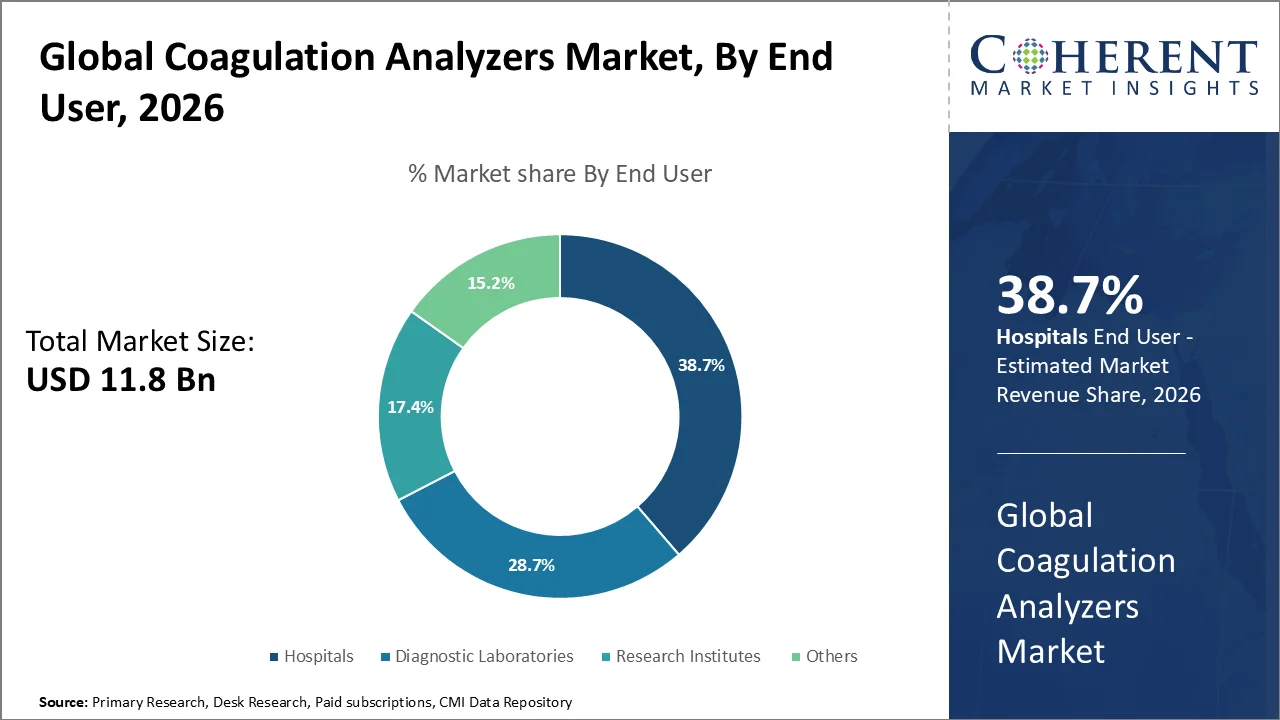
Hospitals acquired the prominent market share of 38.7% in 2026. Hospitals generate strong demand for coagulation analyzers as they handle high volumes of diagnostic testing for surgical, emergency, and chronic disease patients. Healthcare professionals use these systems for preoperative screening, trauma management, and anticoagulant therapy monitoring. Rising cases of cardiovascular disorders, bleeding conditions, and thrombotic diseases are increasing hospital testing requirements. Hospitals actively adopt automated and high-throughput analyzers to enhance efficiency and reduce turnaround time. Expanding healthcare infrastructure, growing patient admissions, and an increasing focus on accurate and timely diagnosis further drive market growth.
Coagulation Analyzers Market Trends
- Rising adoption of automated and high‑throughput coagulation analyzers improves testing efficiency, reduces manual errors, and supports faster turnaround times in clinical labs and hospitals. Fully automated systems accounted for over 71% of the global coagulation analyzer market in 2025, reflecting strong uptake by high‑volume labs seeking efficiency and accuracy. Fully automated platforms processed millions of tests annually and can run 100–400 samples per hour, reducing staff workload significantly.
- Expanding healthcare infrastructure and laboratory networks in emerging economies improve access to advanced diagnostic technologies, supporting wider adoption of coagulation analyzers globally. Rapid testing expansion in Asia‑Pacific saw over 94 million coagulation tests conducted in 2024, with China and India among the fastest‑growing markets as hospitals and clinics equip new diagnostic labs and POCT units.
Regional Insights
North America dominates owing to rising number of surgical procedures
North America is expected to acquire the dominant share of 37.80% in 2026. High prevalence of cardiovascular diseases, bleeding disorders, and thrombotic conditions drives strong demand for coagulation analyzers in North America, as healthcare providers continuously monitor patients for accurate diagnosis. Medical professionals widely use advanced coagulation testing to manage anticoagulant therapy and support surgical procedures. The region leverages advanced healthcare infrastructure, strong laboratory automation, and rapid adoption of point-of-care testing solutions to improve diagnostic efficiency. Rising healthcare expenditure, an increasing geriatric population, and the strong presence of key market players further promote technological innovation and expand the use of coagulation analyzers across hospitals and diagnostic centers. For instance, in January 2026, Sysmex America launched the CN-9000 Automated Hemostasis Solution to expand its CN-Series for high-volume laboratories. The modular system supports up to three CN-3000 or CN-6000 coagulation analyzers and includes an optional TS-10 tube sorter and archiver.
Asia Pacific Coagulation Analyzers Market Trends
Rising cardiovascular disease burden, expanding diagnostic infrastructure, and growing adoption of automated and point-of-care testing systems are driving the Asia Pacific coagulation analyzers market. In India, cardiovascular diseases (CVDs) cause about 25% of all deaths and 45% of non‑communicable disease deaths, with a mortality rate of ~272 per 100,000—exceeding the global average of 235—and half of these deaths occur before age 50. Healthcare providers prioritize faster and more accurate blood clotting diagnostics to enhance treatment outcomes. Laboratories integrate advanced digital technologies and information systems to improve workflow efficiency. Hospitals invest in modernization, while clinical laboratories expand their capabilities. Increasing demand for early disease detection continues to support market growth across developed and emerging economies in the region. For instance, Sysmex Corporation unveiled Revohem FIX Chromogenic, a blood coagulation factor IX measurement kit for the hemostasis segment. The kit works with Sysmex CS-Series automated blood coagulation analyzers, including CS-5100, CS-2500, CS-2400, CS-2100i, CS-2000i, and CS-1600.
United States Coagulation Analyzers Market Trends
The coagulation analyzers market in the United States is expanding steadily due to the increasing incidence of cardiovascular conditions, hemophilia, and other disorders related to blood clotting that require regular monitoring. Hospitals and laboratories are increasingly using automated and point-of-care testing systems, which enhance speed, precision, and operational efficiency. Advancements in technology, including connected digital platforms, are improving data handling and patient outcomes. Rising surgical volumes and a growing elderly population are also contributing to demand, alongside a stronger focus on early detection and anticoagulant management.
Japan Coagulation Analyzers Market Trends
Rising demand for automated laboratory diagnostics and the increasing prevalence of cardiovascular and thrombotic disorders are driving steady growth in Japan’s coagulation analyzers market. Hospitals and diagnostic centers are actively adopting advanced analyzers that deliver higher accuracy, faster results, and integrated laboratory systems. Preference for point-of-care testing and wider use of anticoagulant therapy monitoring are boosting adoption. Ongoing technological innovations, replacement of outdated systems, and continuous modernization of hospital infrastructure are shaping trends across clinical laboratories and research facilities.
Who are the Major Companies in Coagulation Analyzers Industry
Some of the major key players in Coagulation Analyzers are Siemens AG, Thermo Fisher Scientific Inc., Hoffmann-La Roche Ltd., Instrumentation Laboratory, Sysmex Corporation, Beckman Coulter, Inc. (Danaher), Diamond Diagnostics, International Technidyne Corporation, Nihon Kohden Corporation, and Alere Inc.
Key News
- In November 2025, Hitachi High-Tech Science developed the NEXTA STA Series thermal analyzers, offering high-sensitivity measurement with advanced baseline performance. The company launches the series in both Japanese and international markets.
Market Report Scope
Coagulation Analyzers Market Report Coverage
| Report Coverage | Details | ||
|---|---|---|---|
| Base Year: | 2025 | Market Size in 2026: | USD 11.8 Bn |
| Historical Data for: | 2020 To 2024 | Forecast Period: | 2026 To 2033 |
| Forecast Period 2026 to 2033 CAGR: | 7.2% | 2033 Value Projection: | USD 17.4 Bn |
| Geographies covered: |
| ||
| Segments covered: |
| ||
| Companies covered: | Siemens AG, Thermo Fisher Scientific Inc., Hoffmann-La Roche Ltd., Instrumentation Laboratory, Sysmex Corporation, Beckman Coulter, Inc. (Danaher), Diamond Diagnostics, International Technidyne Corporation, Nihon Kohden Corporation, and Alere Inc. | ||
Analyst Opinion
- The coagulation analyzers market is fundamentally driven by clinical necessity rather than discretionary adoption. Cardiovascular diseases remain the leading cause of global mortality, accounting for an estimated 17.9 million deaths annually, and thrombotic complications are a major contributor to hospital admissions, particularly in intensive care and post-surgical settings where coagulation monitoring is critical.
- Anticoagulant therapy management is a key driver of consistent utilization, especially with widespread use of drugs such as warfarin and heparin that require routine monitoring of PT/INR and APTT values. Clinical studies indicate that patients on warfarin therapy require regular coagulation testing, with some high-risk groups undergoing monitoring multiple times per month, reinforcing repeat diagnostic demand and high instrument utilization rates in clinical laboratories.
- Surgical volume further strengthens market dependence on coagulation diagnostics. Globally, over 300 million major surgical procedures are performed annually, and perioperative bleeding complications remain a significant risk factor in complex surgeries such as cardiac and orthopedic interventions.
- Technological advancement is also reshaping laboratory dependence on coagulation analyzers, particularly with the integration of high-throughput platforms and point-of-care coagulation testing systems. Studies in critical care settings show that rapid thromboelastography (TEG)-guided transfusion strategies can reduce blood product usage by up to 20–30% in trauma and surgical patients, demonstrating how advanced coagulation diagnostics are directly influencing clinical decision-making and hospital resource optimization.
Speak to the analyst
Want personalized insights?
Take the findings above to one of our principal consultants, or have the report rebuilt around the segments, geographies and competitors you actually track.
Market Segmentation
- By Product Type (Revenue, USD Bn, 2021-2033)
- Analyzers
- Clinical Laboratory Analyzers
- Point of Care Analyzers
- Consumables
- Reagents & Kits
- Point-of-care strips
- By Test Type (Revenue, USD Bn, 2021-2033)
- Activated Partial Thromboplastin Time Test
- Prothrombin Time Test
- D-Dimer Test
- Fibrinogen Test
- Other Coagulation Tests
- By End User (Revenue, USD Bn, 2021-2033)
- Hospitals
- Diagnostic Laboratories
- Research Institutes
- Others
- By Region (Revenue, USD Bn, 2021-2033)
- North America
- U.S.
- Canada
- Latin America
- Brazil
- Mexico
- Argentina
- Rest of Latin America
- Europe
- Germany
- U.K.
- France
- Italy
- Spain
- Russia
- Rest of Europe
- Asia Pacific
- China
- India
- Japan
- Australia
- South Korea
- ASEAN
- Rest of Asia Pacific
- Middle East
- GCC
- Israel
- Rest of Middle East
- Africa
- South Africa
- Central Africa
- North Africa
- North America
Sources
Primary Research interviews
- Interviews with hospital laboratory managers and clinical pathologists using coagulation analyzers
- Discussions with diagnostic laboratory technicians and biomedical engineers
- Inputs from procurement heads of hospitals and diagnostic chains
- Feedback from hematology department specialists in tertiary care centers
- Insights from distributors and equipment service providers in the in-vitro diagnostics space
Databases
- National health statistics databases and hospital procurement records
- Biomedical and clinical diagnostics equipment usage datasets
- Government healthcare expenditure and laboratory infrastructure databases
- Clinical laboratory utilization and test volume databases
- Medical device import/export statistical databases
Magazines
- Clinical diagnostics and laboratory medicine trade magazines
- Healthcare technology and hospital management publications
- Biomedical instrumentation and medical devices industry magazines
- Laboratory science and hematology-focused periodicals
- Hospital procurement and healthcare operations magazines
Journals
- Peer-reviewed hematology and coagulation science journals
- Clinical pathology and laboratory medicine journals
- Biomedical engineering and medical instrumentation journals
- Journals covering diagnostic innovations in in-vitro diagnostics
- Pharmacology and thrombosis/hemostasis research journals
Newspapers
- National and regional business newspapers covering healthcare developments
- Financial newspapers reporting on medical device adoption trends
- Healthcare-focused news sections of mainstream newspapers
- Economic newspapers covering hospital infrastructure expansion
- Technology and innovation news coverage in healthcare segments
Associations
- Hematology and clinical laboratory science professional associations
- Hospital and healthcare provider associations
- Medical laboratory technologist associations
- Biomedical engineering and medical device user associations
- Public health and diagnostic services professional bodies
Public Domain sources
- Ministry of Health and Family Welfare publications and reports
- World Health Organization (WHO) health system and diagnostics data
- National disease control program reports related to bleeding disorders
- Public hospital annual reports and tender documents
- Open-access clinical research repositories and government health portals
Proprietary Elements
- CMI Data Analytics Tool
- Proprietary CMI Existing Repository of information for last 10 years
Get access to 250+ pages report
Every segment, forecast, competitor profile and data table behind the analysis above — available for instant download.
- ESOMAR Member
- ISO 9001:2015 Certified
- D-U-N-S Registered
- GDPR & CCPA Compliant
Missing comfort of reading report in your local language? Find your preferred language:
Transform your Strategy with Exclusive Trending Reports
Frequently Asked Questions
The global coagulation analyzers market is estimated to surpass USD 17.4 Bn by 2033.
Major players operating in the global coagulation analyzers market include Siemens AG, Thermo Fisher Scientific Inc., Hoffmann-La Roche Ltd., Instrumentation Laboratory, Sysmex Corporation, Beckman Coulter, Inc. (Danaher), Diamond Diagnostics, International Technidyne Corporation, Nihon Kohden Corporation, and Alere Inc.
Optimization of few tests may differ from one device to another and there may be variation in the data obtained through the use of different devices. This is one of the major factors that is expected to hamper growth of the market over the forecast period
Rising prevalence of heart diseases such as atrial fibrillation and blood disorders is one of the major factors that is expected to propel growth of the market over the forecast period.
The global coagulation analyzers market is estimated to exhibit a CAGR of 7.2% over the forecast period.
Among product type, analyzers segment is expected to account for the largest share in the global coagulation analyzers market over the forecast period.