

Shock Wave Therapy Devices Market Size and Share Analysis- 2026 To 2033
The Shock Wave Therapy Devices Market size is anticipated to grow at a CAGR of 5.1%, from USD 123.6 Mn in 2026 to approximately USD 175.1 Mn by 2033. The primary drivers are largely defined by the increasing adoption of non-invasive and minimally invasive treatment approaches, rising prevalence of musculoskeletal and orthopedic disorders, growing use of extracorporeal shock wave therapy for pain management and rehabilitation, and expanding applications across sports medicine, physiotherapy, urology, and wound care. In May 2026, SonoMotion announced FDA 510(k) clearance for its next-generation Break Wave device, featuring therapy probes with a 31% smaller footprint, reduced weight, and easier handling.
Key Takeaways
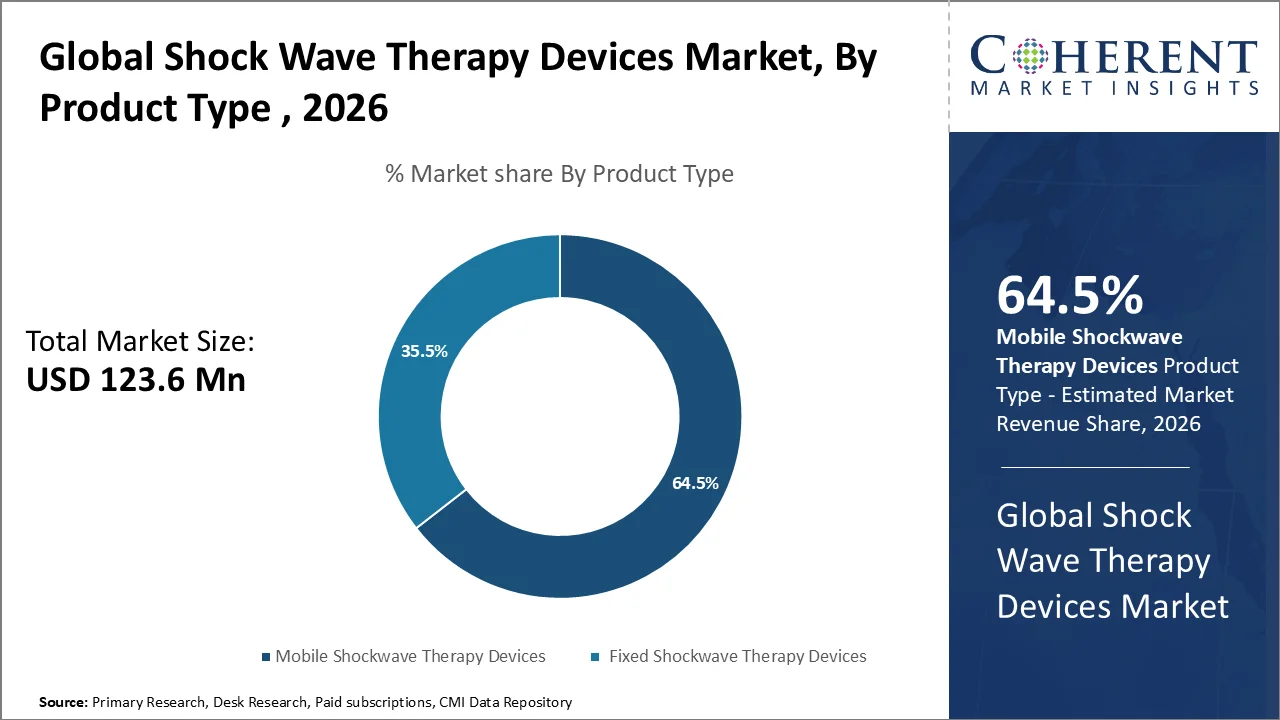
- The mobile shock wave therapy devices segment is likely to dominate the market with 64.5% in 2026. The segment’s growth is owing to portability, ease of movement across treatment rooms, expanding use in outpatient physiotherapy and sports rehabilitation, and increasing preference for flexible point-of-care treatment systems. In 2025, STORZ MEDICAL expanded its MASTERPULS R-SW portfolio with compact and portable radial shock wave therapy systems designed to improve mobility and clinical workflow, highlighting continued product development toward portable treatment platforms.
- The radial technique segment is expected to lead the market with 41.5% in 2026. The segment’s growth is owing to its broad application across tendinopathies, plantar fasciitis, myofascial pain and other musculoskeletal conditions, along with relatively wide treatment coverage and integration into physiotherapy practices. A February 6, 2026 systematic review and meta-analysis published in Scientific Reports evaluated 9 studies involving 530 patients and found that radial shock wave therapy significantly improved wrist extensor strength versus focused shock wave therapy in tennis elbow, with a mean difference of 1.81 and p<0.001.
- The hospitals segment is set to dominate the market with 40.5% in 2026. The segment’s growth is owing to the availability of specialized orthopedic, wound-care and urology departments, greater access to advanced shock wave systems, and increasing integration of non-invasive therapies into multidisciplinary treatment pathways. In August 2025, the U.S. FDA granted 510(k) clearance to EMS Electro Medical Systems' DOLORCLAST Focused Shock Waves system for treatment of chronic full-thickness diabetic foot ulcers, demonstrating continued regulatory expansion of shock wave technology into hospital-based wound management.
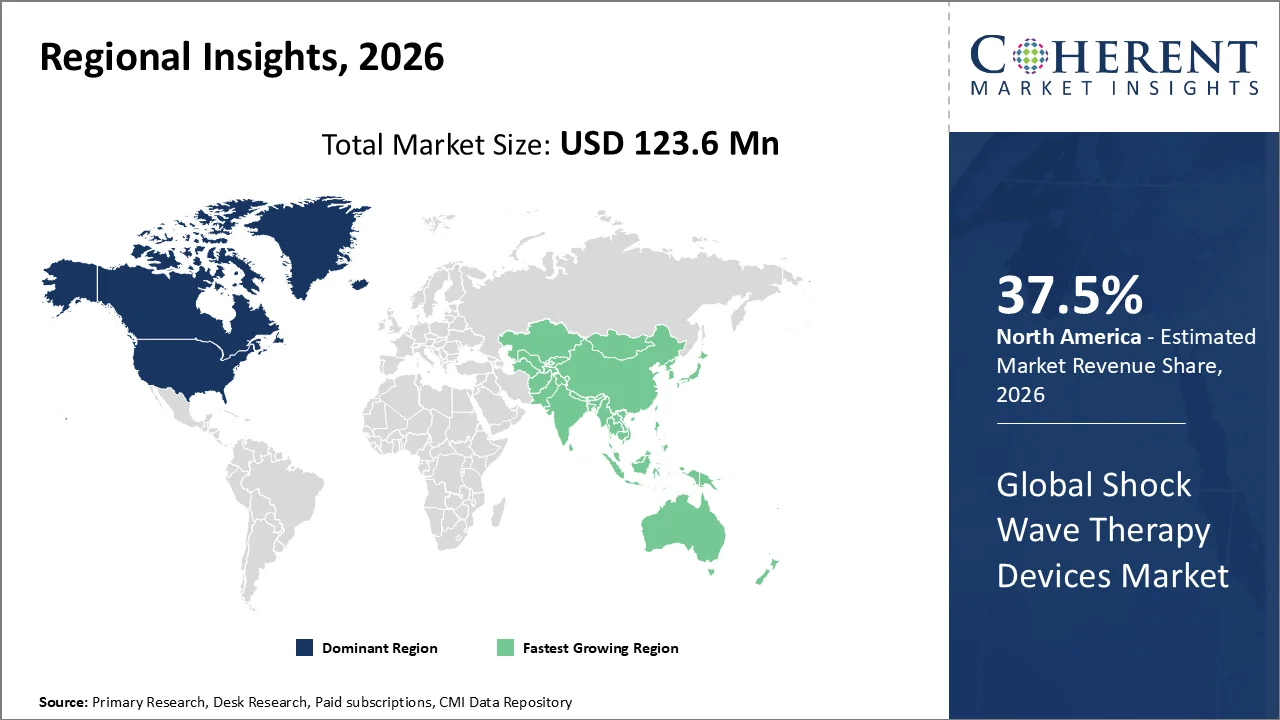
- North America will continue to dominate the market with 37.5% in 2026. The region’s growth is driven by the high prevalence of musculoskeletal diseases, high adoption of non-invasive orthopedic technologies, presence of established rehabilitation infrastructure and continuous regulatory approvals for innovative shock wave devices. According to the U.S. Centers for Disease Control and Prevention, 21.3% of U.S. adults aged 18 years and above had diagnosed arthritis in 2024, creating a substantial patient population requiring pain management and musculoskeletal rehabilitation.
Market Drivers
Rising Musculoskeletal Disease Burden and Demand for Non-Invasive Pain Management are Driving Shock Wave Therapy Adoption
The Shock Wave Therapy Devices Market is driven by the high prevalence of arthritis, chronic tendon disorders, plantar fasciitis, and other musculoskeletal conditions that require pain management and physical rehabilitation. Extracorporeal shock wave therapy is a non-invasive treatment option that is increasingly used in the orthopedic, sports medicine and physiotherapy practices for patients looking for an alternative to surgery, injections and prolonged pharmaceutical treatment.
In April 2025, the efficacy of extracorporeal shock wave therapy and laser therapies for musculoskeletal disorders was compared by systematic review and meta-analysis of 28 randomized controlled trials and 1,460 patients. The study showed similar results in pain, strength, range of motion and quality of life, but ESWT had a statistically significant functional advantage compared to low-level laser therapy in the data measured.
Rapidly Aging Population is Expanding the Patient Pool for Musculoskeletal Rehabilitation
The increasing elderly population is contributing to a large addressable patient population for shock wave therapy devices. Older adults are more likely to have chronic tendon diseases, degenerative musculoskeletal diseases, impaired mobility and persistent soft tissue pain. Demand for non-invasive rehabilitation and pain-management technologies is rising across hospitals and physiotherapy centers due to these conditions.
According to the U.S. Census Bureau projects the U.S. population age 65 years and older to be 61.2 million in 2024, an increase of 3.1% from 2023. In 2024, 18.0% of the U.S. population was aged 65 years and over, compared with just 12.4% in 2004. The continued expansion of the elderly population is strengthening long-term demand for orthopedic rehabilitation and non-surgical treatment modalities.
Current Events and Their Impact on the Shock Wave Therapy Devices Market
Current Event | Description and its Impact |
U.S. FDA Implements New Quality Management System Regulation for Medical Devices (2026) |
|
CMS Permanently Recognizes Low-Intensity ESWT as Predominantly Office-Based for CY 2026 |
|
- Current Industry Events of 2026
- Market Size Estimation
- Regional Breakdown
- Competitive Landscape
- Customer Intelligence
- Segmental Analysis
- Pricing Analysis
- Key Market Drivers, Challenges & Future Trends
- Customized Insights Section
Segmental Insights
Why are Mobile Shock Wave Therapy Devices Acquiring the Largest Share?
On the basis of product type, the mobile shock wave therapy devices segment is projected to account for the largest market share of 64.5% in 2026. The segment’s growth is owing to ease of transportation between treatment rooms, smaller equipment footprint, growing adoption across physiotherapy and sports medicine practices, and increasing demand for flexible treatment systems that can be deployed across outpatient settings.
In May 2025, Richmar introduced its first radial pressure wave device, the TheraTouch SW1, specifically designed as a portable shock wave therapy system. The device weighs only 4.63 lbs, provides a three-hour rechargeable battery life, operates at 1–22 Hz, and offers 11 preset body-part treatment protocols.
Why is the Radial Technique Acquiring the Largest Market Share?
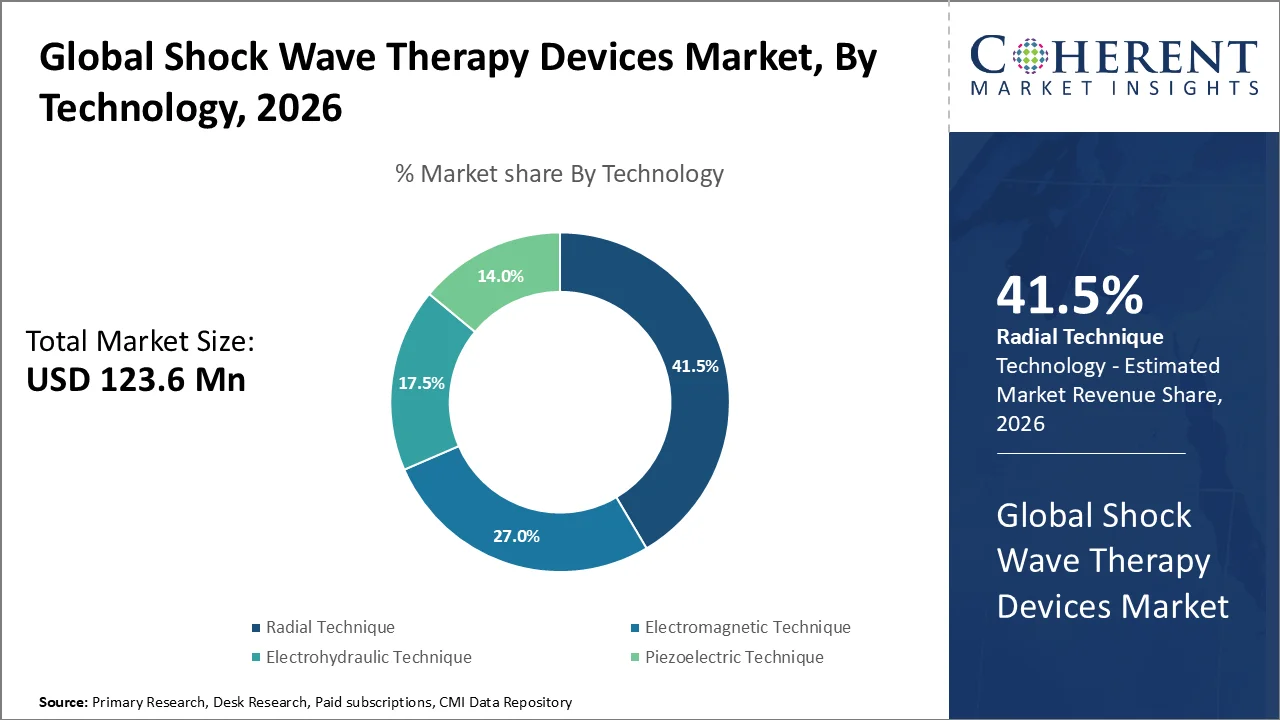
On the basis of technology, the radial technique segment is expected to lead the Shock Wave Therapy Devices Market with 41.5% in 2026. The segment’s growth is owing to its broad use across superficial musculoskeletal disorders, relatively large treatment area, easier clinical application, and suitability for common conditions such as plantar fasciitis, tendinopathy, heel pain, and myofascial disorders.
Recent clinical research continues to reinforce utilization of radial extracorporeal shock wave therapy. On October 8, 2025, a randomized controlled trial published in BMC Musculoskeletal Disorders evaluated 129 patients with plantar fasciitis, including 66 patients receiving radial ESWT and 63 receiving physiotherapy combined with ultrasound.
In June 2026, at the International Society for Medical Shockwave Treatment (ISMST) Congress 2026, Medispec officially launched the redesigned Radialspec Neo. The next generation radial wave therapy platform is dedicated to use in musculoskeletal therapy, physiotherapy and sports medicine.
Why do Hospitals Hold the Largest Market Share?
On the basis of end user, the hospitals segment is projected to dominate the Shock Wave Therapy Devices Market with 40.5% in 2026. The segment’s growth is owing to the concentration of orthopedic, rehabilitation, sports medicine, urology, and pain-management departments within hospitals, along with greater access to specialized clinicians and advanced treatment equipment.
In February 2026, the American Hospital Association estimated there were approximately 6,100 hospitals in the United States, including 5,121 community hospitals, with more than 907,000 staffed hospital beds. This includes 35.7 million admissions in these hospitals, which indicates the scale of hospital-based healthcare infrastructure available for adoption of advanced therapeutic technologies.
In June 2026, Xiangyu Medical announced that its piezoelectric shock wave therapy system has been adopted by Hunan Provincial People's Hospital in China. The installation will upgrade the clinical rehabilitation capabilities of the hospital and show the growing acceptance of both radial and focused shock wave technologies in large hospital rehabilitation departments.
Shock Wave Therapy Devices Market Trends
- The technology is expanding beyond the usual tendon and soft-tissue applications with the increasing use of shock wave therapy in bone regeneration and joint-preservation treatments. A meta-analysis of 26 studies including 1584 patients and 2241 hips published April 15, 2026, found that ESWT was associated with significant pain reduction and improved hip function in patients with osteonecrosis of the femoral head.
- Shock wave therapy is increasingly being incorporated into multimodal rehabilitation programs and this is encouraging its use as part of a multimodal approach rather than as a stand alone treatment. In March 2026, a systematic review and meta-analysis of 15 randomized controlled trials (RCTs) with 907 patients suggested that ESWT may have a medium-term advantage over Kinesio taping for pain and functional outcomes. The authors graded certainty of the evidence as very low.
- The expanding clinical investigation of low-intensity shock wave therapy in men’s health and vascular applications is expanding the potential addressable market beyond musculoskeletal care. An April 2026 randomized controlled trial involving 90 men with type 2 diabetes and arteriogenic erectile dysfunction found that low-intensity ESWT combined with sildenafil improved penile blood-flow measurements and erectile-function scores compared with sildenafil alone.
Regional Insights
North America Dominates Owing to Advanced Musculoskeletal Care Infrastructure and High Adoption of Non-Invasive Therapies
North America is anticipated to hold the dominant position in the Shock Wave Therapy Devices Market with 37.5% of the market share in 2026. The region’s growth is owing to its advanced orthopedic and rehabilitation infrastructure, high treatment volumes for musculoskeletal disorders, strong availability of sports medicine and physiotherapy services, and early adoption of non-invasive therapeutic technologies.
According to the U.S. National Center for Health Statistics, in 2023, 24.3% of U.S. adults experienced chronic pain, and 8.5% had high-impact chronic pain that often restricted their life or work activities. Among adults aged ≥65 years, the prevalence of chronic pain was 36.0%, which reflects a substantial population that may benefit from non-pharmacological pain-management and rehabilitation therapies.
In February 2026, Zimmer MedizinSystems introduced the DualWave FX focused extracorporeal shock wave therapy system in the U.S. The system uses focused piezoelectric technology, operates across 1–12 Hz, and provides seven interchangeable gel-pad options for rapid focal-depth adjustment.
Asia Pacific Shock Wave Therapy Devices Market Trends
Asia Pacific is expected to be the fastest-growing region in the Shock Wave Therapy Devices Market during 2026–2033. Regional growth is owing to the rapidly aging population, expanding rehabilitation infrastructure, increasing domestic medical-device manufacturing, and rising adoption of shock wave therapy across orthopedic, physiotherapy, and sports medicine facilities.
China alone had 323.38 million people aged 60 years and above at the end of 2025, accounting for 23.0% of its population, while 223.65 million people were aged 65 years and above. The population aged 60 years and above increased by approximately 13.07 million during 2025, creating a rapidly expanding population requiring musculoskeletal rehabilitation, chronic-pain management, and mobility-preservation services.
In February 2026, Initia Medical expanded its shock wave therapy presence across Asia Pacific through new collaborations in Thailand, Taiwan, Hong Kong, and Macau. The company entered into a strategic partnership with Ching Feng International Co. Ltd. to distribute its MoreNova shockwave system across Taiwan, Hong Kong, and Macau.
Expanding FDA Clearances and Broader Musculoskeletal Applications are Strengthening the Shock Wave Therapy Devices Market in the United States
The U.S. Shock Wave Therapy Devices market continues to grow at a steady pace, supported by ongoing FDA approvals, increasing adoption of non-invasive treatment technologies, and an expanding range of applications in musculoskeletal rehabilitation, wound care, sports medicine and specialty clinics.
In July 2025, the U.S. FDA granted 510(k) clearance to Indiana-based Curative Sound Therapeutics for the CS-Pro MED, an extracorporeal shock wave device indicated for chronic diabetic foot ulcers. The handheld focused ESWT system weighs approximately 14.5 ounces, provides energy settings ranging from 0.02 to 0.22 mJ/mm², and can deliver up to 100,000 pulses per battery charge and approximately 5 million pulses over its device lifetime.
In October 2025, GAINSWave for Recovery was launched, the U.S. based GAINSWave’s standardized shock wave treatment protocols for musculoskeletal conditions of the knee, shoulder, elbow, back, neck, muscle strains, tendinopathies and joint-related pain.
China Shock Wave Therapy Devices Market Trends
China is estimated to witness robust growth in the Shock Wave Therapy Devices Market in the forecast period. Growth in the market can be attributed to the growing hospital and rehabilitation infrastructure in the country, increasing adoption of domestic physiotherapy equipment, development of portable treatment technologies, and rising focus on non-invasive musculoskeletal rehabilitation.
According to China's National Bureau of Statistics said the number of hospitals in the country reached about 38,000 and the number of medical and health institutions totaled 1.107 million by the end of 2025. Chinese healthcare institutions received nearly 10.58 billion patient visits and 300 million hospital discharges in 2025.
In April 2025, Shenzhen-based Nu-Tek showcased its Portable Shockwave Therapy Device at the 91st China International Medical Equipment Fair (CMEF) in Shanghai alongside other advanced physiotherapy systems.
Who are the Major Companies in Shock Wave Therapy Devices Industry
Some of the major key players in Shock Wave Therapy Devices Market are C.R. Bard Inc., Boston Scientific Corporation, Lumenis Ltd., Dornier MedTech GmbH, Olympus Corporation, Medtrue Enterprise Co. Ltd., Edaptms TMS, Cook Group Inc., Karl Storz GmbH, Siemens AG.
Key News
- In August 2026, Zomedica Corp., an animal-health company specializing in point-of-care diagnostic and therapeutic solutions for equine and companion animals, announced the launch of the PulseVet Acoustic Muffler. The accessory is designed to substantially reduce the noise generated during shock wave therapy while maintaining the treatment’s clinical performance.
- In May 2026, Johnson & Johnson announced the global launch of the Shockwave C2 Aero Coronary IVL Catheter, a next-generation device designed to improve deliverability and lesion crossing while providing repositioning capabilities for the treatment of calcified coronary artery disease (CAD). The catheter builds on the established mechanism of action and clinical profile of Shockwave intravascular lithotripsy (IVL) technology, further expanding the company’s coronary IVL portfolio.
Market Report Scope
Shock Wave Therapy Devices Market Report Coverage
| Report Coverage | Details | ||
|---|---|---|---|
| Base Year: | 2025 | Market Size in 2026: | USD 123.6 Mn |
| Historical Data for: | 2020 To 2024 | Forecast Period: | 2026 To 2033 |
| Forecast Period 2026 to 2033 CAGR: | 5.1% | 2033 Value Projection: | USD 175.1 Mn |
| Geographies covered: |
| ||
| Segments covered: |
| ||
| Companies covered: | C.R. Bard Inc., Boston Scientific Corporation, Lumenis Ltd., Dornier MedTech GmbH, Olympus Corporation, Medtrue Enterprise Co. Ltd., Edaptms TMS, Cook Group Inc., Karl Storz GmbH, Siemens AG. | ||
| Growth Drivers: |
| ||
| Restraints & Challenges: |
| ||
Analyst Opinion
- The Shock Wave Therapy Devices Market is increasingly shifting from broad pain-management positioning toward evidence-based, indication-specific treatment protocols. A June 2025 network meta-analysis of 33 randomized controlled trials of 26 treatment approaches for rotator cuff calcific tendinitis found that high-energy ESWT combined with physical therapy was the second-ranked non-surgical treatment in terms of functional improvement.
- Manufacturers are entering a more mature environment for adoption as clinical guidelines become increasingly selective. The 2025 rotator cuff tendinopathy clinical practice guideline was published by the Journal of Orthopedic & Sports Physical Therapy which states that clinicians may use ESWT for calcific rotator cuff tendinopathy and recommends against its use for non-calcific rotator cuff tendinopathy.
- The addressable market is expanding beyond conventional tendon disorders into bone and joint-preservation applications. A 2026 systematic review evaluated 53 studies involving 1,835 adults receiving ESWT for bone pathologies including fractures, osteonecrosis, bone stress injuries, medial tibial stress syndrome, and bone marrow edema syndrome. The growing research base across bone-healing applications is likely to encourage further development of focused shock wave systems for orthopedic and sports-medicine settings.
Speak to the analyst
Want personalized insights?
Take the findings above to one of our principal consultants, or have the report rebuilt around the segments, geographies and competitors you actually track.
Market Segmentation
- By Product Type (Revenue, USD Mn, 2021-2033)
- Mobile Shockwave Therapy Devices
- Fixed Shockwave Therapy Devices
- By Technology (Revenue, USD Mn, 2021-2033)
- Electromagnetic Technique
- Electrohydraulic Technique
- Piezoelectric Technique
- Radial Technique
- By End User (Revenue, USD Mn, 2021-2033)
- Hospitals
- Physiotherapy Clinics
- Ambulatory Care
- Radiology Labs
- Others
- By Region (Revenue, USD Mn, 2021-2033)
- North America
- U.S.
- Canada
- Latin America
- Brazil
- Mexico
- Argentina
- Rest of Latin America
- Europe
- Germany
- U.K.
- France
- Italy
- Spain
- Russia
- Rest of Europe
- Asia Pacific
- China
- India
- Japan
- Australia
- South Korea
- ASEAN
- Rest of Asia Pacific
- Middle East
- GCC
- Israel
- Rest of Middle East
- Africa
- South Africa
- Central Africa
- North Africa
- North America
Sources
Primary Research Interviews
- Orthopedic surgeons
- Physiotherapists and rehabilitation specialists
- Sports medicine physicians
- Urologists
- Pain management specialists
- Hospital procurement managers
- Shock wave therapy device manufacturers and distributors
- Key opinion leaders (KOLs) in extracorporeal shock wave therapy
Databases
- U.S. Food and Drug Administration (FDA)
- Centers for Medicare & Medicaid Services (CMS)
- U.S. Centers for Disease Control and Prevention (CDC)
- World Health Organization (WHO)
- Eurostat
- OECD Health Statistics
- ClinicalTrials.gov
- PubMed
Magazines
- Medical Device Network
- MedTech Dive
- Medical Product Outsourcing
- Orthopedic Design & Technology
- Medical Design & Outsourcing
- Today’s Medical Developments
Journals
- Journal of Orthopaedic Research
- Journal of Orthopaedic & Sports Physical Therapy
- BMC Musculoskeletal Disorders
- American Journal of Sports Medicine
- Journal of Clinical Medicine
- International Orthopaedics
- Urolithiasis
Newspapers
- The Wall Street Journal
- Financial Times
- Reuters
- The New York Times
- The Economic Times
Associations
- International Society for Medical Shockwave Treatment (ISMST)
- American Physical Therapy Association (APTA)
- American Academy of Orthopaedic Surgeons (AAOS)
- American Urological Association (AUA)
- European Society for Sports Traumatology, Knee Surgery and Arthroscopy (ESSKA)
- European Association of Urology (EAU)
- American College of Sports Medicine (ACSM)
Public Domain Sources
- Company Annual Reports and Investor Presentations
- Company Product Portfolios and Technical Specifications
- FDA 510(k) Clearance and Regulatory Databases
- Clinical Trial Registries
- Government Healthcare and Epidemiology Publications
- Hospital and Rehabilitation Infrastructure Statistics
- Peer-Reviewed Clinical Studies and Meta-Analyses
- Patent Databases such as USPTO, WIPO, and Google Patents
- Publicly Available Reimbursement and Procedure Coding Documents
Proprietary Elements
- CMI Data Analytics Tool
- Proprietary CMI Existing Repository of Information for the Last 10 Years
Get access to 250+ pages report
Every segment, forecast, competitor profile and data table behind the analysis above — available for instant download.
- ESOMAR Member
- ISO 9001:2015 Certified
- D-U-N-S Registered
- GDPR & CCPA Compliant
Missing comfort of reading report in your local language? Find your preferred language:
Transform your Strategy with Exclusive Trending Reports
Frequently Asked Questions
The Shock Wave Therapy Devices Market is expected to reach USD 175.1 Mn in 2033.
Major players operating in the global Shock Wave Therapy Devices Market include C.R. Bard Inc., Boston Scientific Corporation, Lumenis Ltd., Dornier MedTech GmbH, Olympus Corporation, Medtrue Enterprise Co. Ltd., EDAP TMS, Cook Group Inc., Karl Storz GmbH, and Siemens AG.
The high equipment and maintenance cost and limited reimbursement for certain indications are among the key factors hampering growth of the market.
The increasing adoption of non-invasive shock wave therapy for musculoskeletal pain management and the rising prevalence of orthopedic, tendon, and soft-tissue disorders are driving growth of the Shock Wave Therapy Devices Market.
The Shock Wave Therapy Devices Market is anticipated to grow at a CAGR of 5.1% between 2026 and 2033.
Among regions, North America is expected to account for the largest market share in the global Shock Wave Therapy Devices Market over the forecast period, with an estimated 37.5% share in 2026.
Shock wave therapy is a non-invasive treatment approach that uses acoustic pressure waves to target affected tissues. It is used across musculoskeletal rehabilitation, pain management, sports medicine, physiotherapy, urology, and wound-care applications.