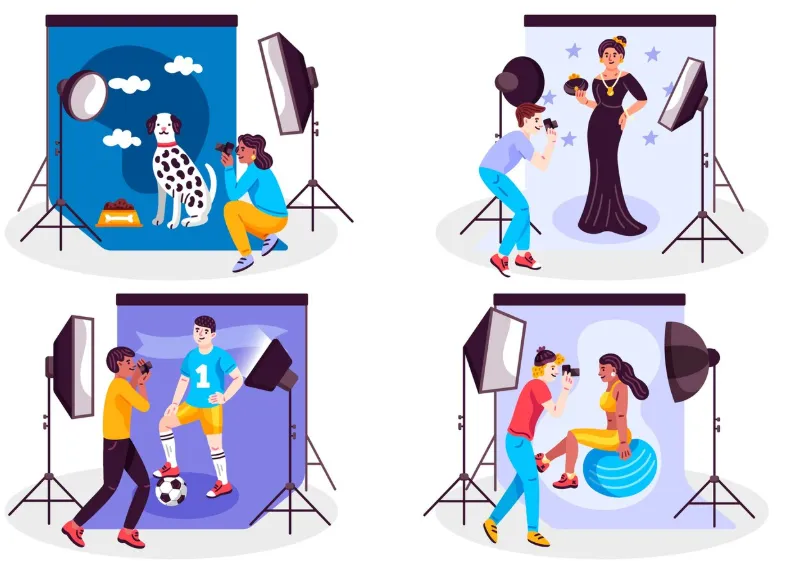
Introduction: Why Professional Photography Still Drives Physical Print Relevance
There’s a quiet assumption most of us carry into big life moments. A wedding, a milestone birthday, a corporate launch, a child’s first studio portrait. We expect the photos to last. Not just as files buried in a phone gallery or a cloud folder, we’ll forget the password to, but as something physical we can return to years later. That expectation is one of the least discussed forces shaping the photo printing market today. While casual consumer printing has thinned out, professional photography has continued to drive print demand, often in ways that look very different behind the scenes than the industry presents itself.
Overview of Print Demand in Event and Professional Photography: Weddings, Corporate Events, and Studio Work
On the surface, professional photography looks fully digital. Online galleries, instant previews, cloud delivery, social media sharing. But when you step into a wedding consultation, a corporate boardroom, or a studio sales session, print is still sitting at the center. Wedding albums, framed enlargements, premium photobooks, exhibition-quality prints, these remain core revenue drivers. In many studios, digital files are no longer the main product; they’re a gateway.
A real-world example of this can be seen in how CEWE-powered professional photo book services offered through Boots Photo emphasise wedding albums as premium, durable keepsakes, with lay-flat binding and high-quality finishes, positioning print as a central part of the offering rather than an optional add-on.
The industry markets print as emotion made tangible. And that part is largely true. A wedding album on a coffee table does something a Google Drive link never will. Prints slow people down. They invite touch, conversation, and memory in a way screens rarely do.
What’s less discussed is how client expectations have been shaped over time. Couples are often shown albums during consultations before pricing ever comes up. Corporate clients expect framed prints in offices because that’s how professionalism has been visually coded for decades. Studio clients are guided toward wall art because “that’s what everyone chooses.” Print demand is sustained not just by emotion, but by carefully designed sales environments that normalize physical products as the default outcome.
Professional Photo Prints as the Foundation of Premium Photography Offerings: Tangibility, Longevity, and Brand Value
Behind the premium language, archival paper, museum-grade inks, and lifetime albums lies a strategic reality. Prints anchor perceived value. A photographer charging USD 1,500 for a wedding album faces less resistance than one charging the same for “digital coverage only.” Tangibility justifies pricing.
Longevity is also part of the promise, but not always the full truth. At the same time, professional prints do last longer than consumer prints; not all “archival” claims mean the same thing. Paper quality, storage conditions, and lab processes vary widely. Yet the premium narrative rarely makes those distinctions clear. The brand value of print often matters more than its technical lifespan.
Industry Landscape: Role of Photographers, Print Labs, and Album Manufacturers
From the outside, this ecosystem looks artisanal. In reality, it’s increasingly centralized. Many photographers outsource printing to a small number of large labs. Album manufacturers operate at scale, offering customization that feels bespoke but runs on standardized production lines.
Cost pressures play a major role here. As photographers compete on price, margins shift toward upselling print products. Labs, in turn, optimize for volume and efficiency. This doesn’t automatically mean low quality, but it does mean the romantic image of hand-crafted uniqueness often masks industrial-scale workflows designed to protect profitability more than artistry.
Future Outlook: How Hybrid Digital-Print Models Will Shape Professional Photography Services
The future isn’t print versus digital. It’s hybrid by design. Digital delivery satisfies immediacy. Print satisfies permanence. What’s changing is how explicitly this is being packaged. More professionals are unbundling services, charging separately for prints, albums, and wall art while keeping digital files lean.
We’ll likely see smarter print offerings, fewer products, higher margins, clearer value articulation. At the same time, consumers are becoming more aware, asking where albums are made, what materials are used, and how long they’ll realistically last. Transparency will matter more, even if it challenges long-standing sales scripts.
Conclusion
Professional photography continues to support print demand, not because print is nostalgic, but because it’s strategically useful. It stabilizes pricing, reinforces trust, and gives form to experiences that feel too important to live only on screens. The gap between promise and practice isn’t about deception; it’s about incentives. Understanding those incentives allows consumers to engage more consciously and professionals to build trust without leaning on myths. Print isn’t disappearing. It’s evolving, quietly, behind the album covers.
FAQs
How can clients tell if a “premium” print is actually high quality?
Ask specific questions about paper type, ink process, and where the print is produced. Vague terms like “archival” should be backed by material details.
Are digital-only photography packages a red flag?
Not necessarily. Some professionals specialize in digital delivery. What matters is whether the pricing and usage rights are clearly explained.
Do all professional labs use the same production standards?
No. Labs differ significantly in materials, quality control, and longevity testing. Reputable photographers usually disclose their lab partners if asked.
is an Associate Content Writer with 3.5 years of experience specializing in research, content writing, SEO optimization, and market analysis, primarily within the consumer goods, packaging, semiconductor, and aerospace & defense domains. He has a proven track record of crafting insightful and engaging content that enhances digital visibility and provides valuable industry perspectives. Nayan’s expertise lies in producing content that is not only informative but also strategically optimized to reach target audiences effectively. His ability to blend market analysis with SEO strategies ensures that his work is both relevant and highly discoverable.
With an MBA in Systems (IT), Nayan brings a strong foundation in market strategies, business analytics, and research methodologies to his writing. This unique blend of skills allows him to offer in-depth analysis and thought leadership across a variety of content formats, including blogs, news articles, and editorial pieces. Passionate about delivering quality, Nayan is dedicated to providing readers with content that not only informs but also adds depth to ongoing industry conversations. His work reflects a commitment to excellence, and he continues to refine his approach as he keeps pace with evolving market trends.