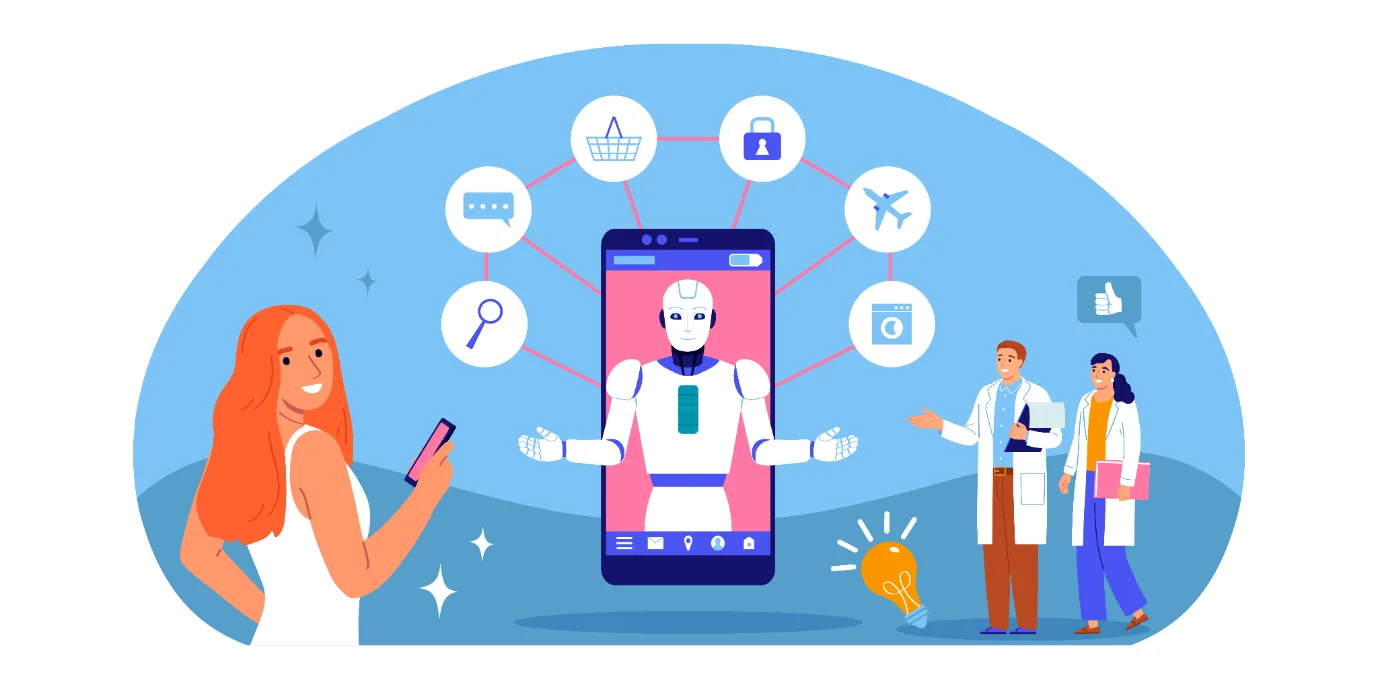
Introduction: Why AI and IoT are Revolutionizing Medical Alert Technologies
There is a moment most of us have lived through. A parent stops answering calls. A grandparent is found on the floor hours after a fall. These quiet gaps in our awareness of the people we love are exactly what technology is now trying to close. The medical alert systems are no longer about a button you press in a crisis. It has grown into something far more layered, driven by artificial intelligence and the Internet of Things working together. For families stretched thin by distance and the real limits of human attention, this shift feels less like innovation and more like relief.
Overview of AI and IoT in Healthcare Monitoring: Connected Devices, Smart Sensors, and Intelligent Data Processing
What makes this genuinely different from past health tech is how devices now share information with each other, not just with a person checking a screen. Sensors in wristbands, mattress pads, clothing, and home monitors collect small readings constantly. Movement; heart rhythm; sleep patterns. On their own, these mean very little. But when AI processes them together, it picks up on things a human caregiver would miss. A slight change in overnight movement. A gradual drift in resting heart rate across two weeks. The system learns what normal looks like for that specific person, then pays attention to what departs from it.
Role of AI and IoT in Medical Alert Systems: Real-Time Monitoring, Predictive Alerts, and Automated Emergency Response
Old-school medical alert devices were reactive by design. Something bad happened, you pressed a button, and someone responded. The newer generation works the opposite way. It tries to catch problems while they are still small. Real-time monitoring tracks vitals and movement continuously without asking anything of the user. When AI flags something, an alert reaches a caregiver or clinical team, often before the person wearing the device even realizes something is wrong.
For example, what Mayo Clinic documented through their COVID-19 remote patient monitoring program. Patients at home used cellular tablets and Bluetooth medical devices to send vitals to a nursing team multiple times each day. Alerts were generated automatically when readings shifted, and clinical staff responded around the clock. Patients who actively used the system had a noticeably lower mortality rate than those who did not. Some systems now also escalate directly to emergency services if a person is unresponsive, removing the need for any action from the patient at all.
Key Drivers Accelerating Adoption: Rising Demand for Remote Patient Care, Aging Population, and Advancements in Connected Healthcare
Several things are pushing adoption forward at once. Populations in many countries are getting older, and families want options that let elderly relatives stay home safely rather than moving into care facilities before it is necessary. Healthcare systems are under real resource pressure, and remote monitoring extends clinical reach without requiring staff to be physically present everywhere. Sensors have gotten smaller and cheaper, and cellular coverage now reaches places that once would have been off-limits for connected devices. None of these trends is new, but together they are making adoption practical for ordinary households, not just hospitals.
Industry Landscape: Role of Healthcare Providers, Medical Device Manufacturers, Technology Companies, and Monitoring Service Providers
This space is not a single industry. It is a collaboration, sometimes uneasy, between groups with different priorities. Hospitals want tools that reduce readmissions. Device makers want hardware that patients actually wear. Technology companies build the AI layers that make devices intelligent rather than simply connected. Monitoring service providers sit between the device and the family, staffing response teams and managing alerts. Each group brings something necessary, but misaligned incentives can create gaps in what actually reaches the person who needs the system most.
Implementation Challenges: Data Privacy Concerns, Connectivity Reliability, and Integration with Healthcare Systems
None of this works smoothly yet. Privacy is a genuine concern. When a device tracks your sleep, location, and daily routine and sends that data to a cloud platform, there are real questions about who can access it and what happens if the company changes hands. Connectivity is another weak point. A system dependent on home broadband is only as reliable as that connection, and rural households often have the least stable access. Getting these devices to communicate with hospital record systems that were built decades ago is also a real challenge. These problems need investment, regulation, and genuine cooperation across sectors, not just enthusiasm.
Future Outlook: Expansion of Predictive Healthcare Analytics, Wearable Medical Technologies, and AI-Driven Personalized Monitoring
Where things are heading is worth paying attention to. Predictive analytics will move beyond flagging immediate risks and start building longer-term pictures of a person's health. Wearables will shrink further, with more biomarkers measurable through skin contact alone. Personalized AI models will stop relying on population averages and instead build baselines specific to each user, making alerts far more accurate. The goal is a monitoring experience that feels less like surveillance and more like having a quietly attentive presence that knows your health the way a good doctor might after years of care.
Conclusion
AI and IoT are changing what it means to keep someone safe when you cannot be there in person. This is not about better gadgets. It is about rethinking the relationship between distance, care, and trust. The technology is promising, but it still has real gaps that families and health systems are navigating every day. For anyone who has sat awake wondering if a loved one is okay across town or across the country, the direction this is heading offers something that matters more than any feature list. It offers a reasonable chance at peace of mind.
FAQs
How can I verify whether a medical alert device actually uses real AI or just markets itself that way?
Ask the vendor for published clinical validation or independent test results. Real AI systems have documented training data and accuracy benchmarks. If a company cannot point you to either, treat the claim skeptically.
Are there medical alert systems that work reliably in areas with poor internet connectivity?
Yes. Devices on dedicated cellular networks tend to be more reliable than those using home Wi-Fi. Before buying, confirm which network the device uses and check coverage for your specific location.
Is my health data shared with insurance companies or third parties when I use these devices?
It varies by provider and country. Read the privacy policy carefully, especially sections about data-sharing partners. Look for clear opt-out options for any sharing beyond direct care.
is a seasoned content writer with over 3.5 years of hands-on experience across various writing formats, including news articles, blog posts, press releases, and informational content. Her expertise lies in producing high-quality, informative content tailored to meet the specific needs of diverse industries, such as Biotechnology, Clinical Diagnostic, Healthcare IT, advanced material, and Medical Devices. She has a deep understanding of how to craft engaging narratives that align with industry trends, helping businesses enhance their online presence and communicate effectively with their audiences.
What sets Ravina apart is her keen eye for detail and her passion for storytelling. She approaches every piece of content with the intent to make it not just informative but also impactful, ensuring that it resonates with the audience on a deeper level. With a reputation for producing timely and relevant articles, she has made significant contributions to the field by helping companies effectively communicate their brand message through engaging, clear, and creative writing. As an advocate for clarity in communication, she continues to explore new ways of refining her craft while remaining at the forefront of content trends.