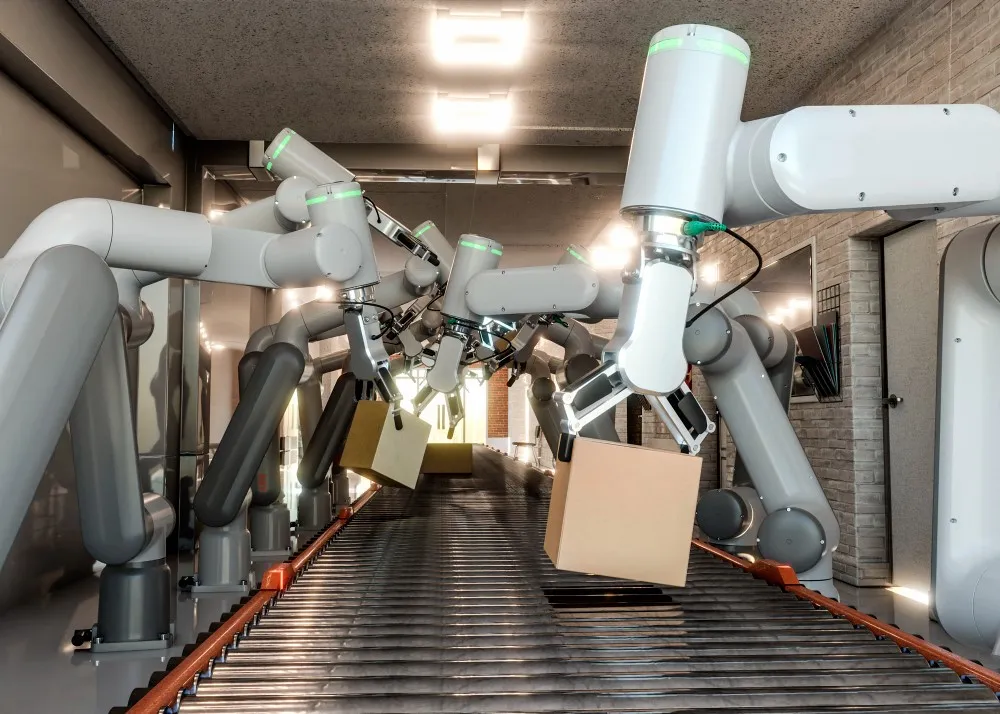
Robots are cool. But let’s be real—they’re not magic. They need “eyes” to see what they’re doing. That’s exactly where machine vision steps in. Machine vision gives robots the power to see, understand, and act fast. And when it comes to pick-and-place operations, this combo is a total game-changer.
From factories making smartphones to warehouses packing your online orders, machine vision is making robots smarter, faster, and more accurate.
What is Machine Vision in Robotics?
Machine vision is a system that enables robots to perceive their surroundings through the use of cameras and dedicated software. The choice of camera interface directly affects how reliably that visual data reaches the processing system. A GigE camera uses standard Gigabit Ethernet to transmit high-resolution image data at the throughput and cable distances that production-floor deployments require, making it one of the most widely adopted interfaces in industrial machine vision systems today.
The system operates by capturing visual data which it processes to generate instructions for the robot's subsequent actions.
A robot without vision is like someone trying to pack a box while blindfolded. The machine vision system functions as a solution that allows users to see their surroundings without any visual limitations. The system enables users to extract necessary visual information needed for their tasks.
It helps robots:
- Identify objects
- Find the exact position
- Check size and shape
- Pick the right item
Why Pick-and-Place Needs Machine Vision
Pick-and-place operation appears straightforward because it requires only two steps, which people must execute to complete their tasks. The actual operation of factories presents challenges that make it difficult to implement this system.
Objects can be:
- Mixed up
- Moving fast on conveyors
- Placed randomly
- Different in size
Machine vision helps robots adjust in real time.
Example: Electronics Manufacturing
Robots in a smartphone factory use their capabilities to install miniature parts onto circuit boards. The components used in this project have a size that can be considered extremely small. The product will be destroyed by even the smallest error.
Machine vision helps the robot:
- Locate the exact position
- Pick the component carefully
- Place it perfectly
This improves quality and reduces waste.
Faster Speed, Better Accuracy
Production processes require fast working rates because speed constitutes a crucial element of their operations. Companies want to increase their production output while decreasing the time needed to complete their work.
The robots perform their tasks at higher speeds because machine vision technology enables them to operate without needing human assistance.
They can:
- Detect objects instantly
- Adjust movement quickly
- Work non-stop
Example: Food Packaging
In a biscuit factory, robots pick biscuits and place them into trays.
Machine vision checks:
- The system detects whether the biscuit is broken.
- The system verifies its correct placement.
- The robot only picks good ones.
This system maintains high product quality.