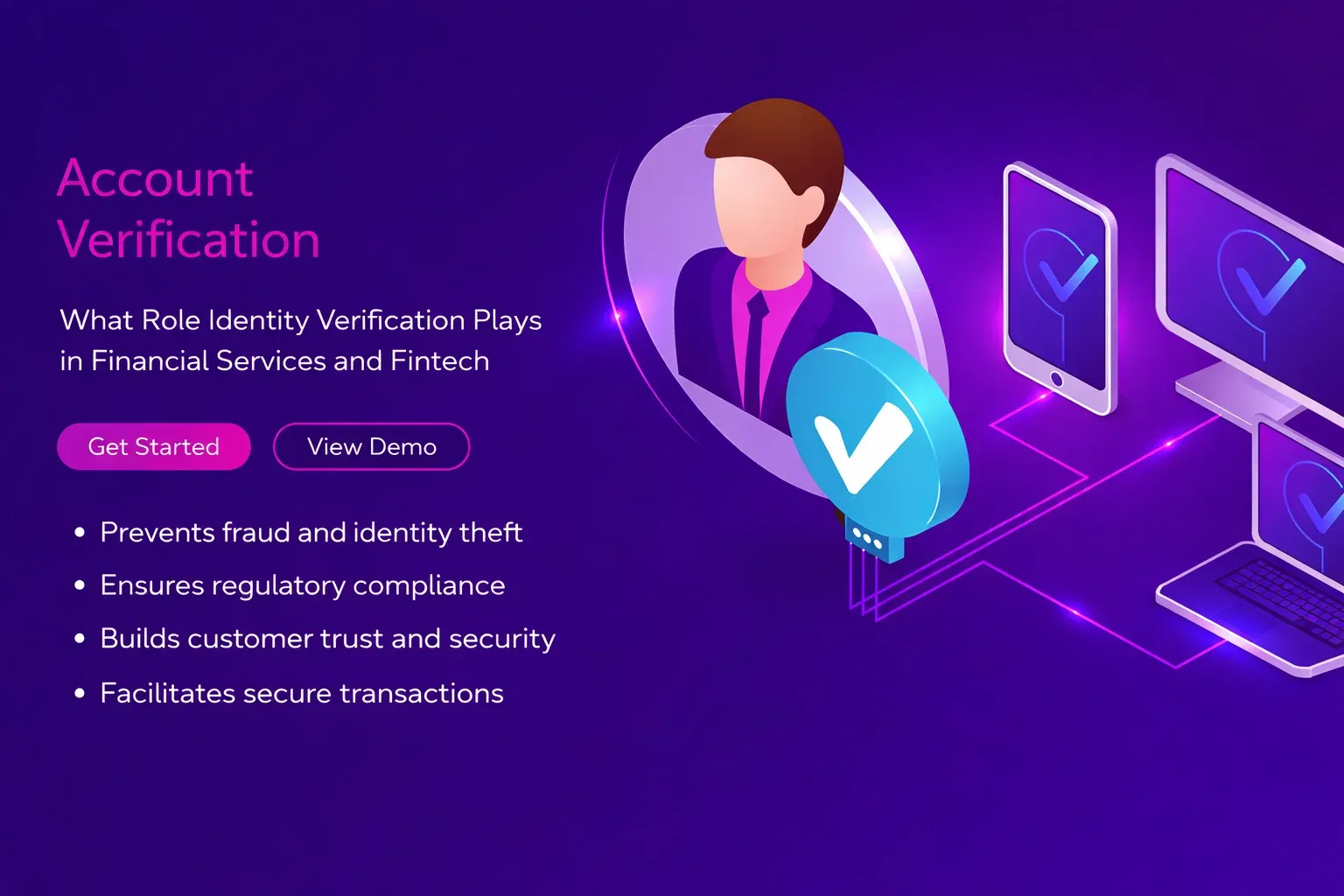
According to industry reports, the global fintech market will surpass USD 300 billion by 2030. In such a crowded financial service market where transactions are occurring in billions, trust is the most powerful currency, and identity verification plays a crucial role in maintaining this trust.
Identity verification is no longer a compliance but a core differentiator and strategic catalyst in building trust and credibility across the financial services and fintech market.
Evolution of Identity Verification in Financial Services and Fintech
In an escalating era of digitalization and AI, financial services have also become digital and mobile-first. The identity verification has evolved from manual and in-person document checks to seamless digital and biometric integrated onboarding.
The introduction of e-KYC, video KYC, and AI-powered authentication has accelerated the standardized verification process. A mobile-first neobank reported a 75% reduction in manual review times and a 40% increase in completed applications after integrating an automated ID verification solution.
Why Identity Verification is Crucial?
Each year, the U.S loses 1.7% of its total revenue to fraud, which accounts for a loss of USD 51 million per firm on average. The small firms lose about 2.2% of the total revenue to fraud, mid-sized firms lose about 1.6%, and large firms' revenue loss due to fraud accounts for 1.4%. Such frauds make identity verification a crucial part of financial services and fintech.
In the era of growing cyber threats and security breaches, identity verification provides security, customer confidence, customer onboarding acceleration, and customer acquisition and retention impacts beyond compliance.
Standardized practice of regulatory identity verification in financial services and fintech helps in preventing identity theft and fraud impersonation, protects customer data and funds, and enhances digital security and infrastructure. Moreover, beyond security and protection, proper practice of identity verification increases customer trust to engage in high-value transactions with financial services and fintech.
Identity verification is the basis of trust, security, and compliance in financial services and fintech ecosystems, enabling institutions to ensure customer approval before granting access to banking, payment, lending, and investment platforms. It helps financial institutions to prevent unauthorized access, limit financial crime, and record clear audits.
Additionally, verification enhances the image since customers are confident that their data and transactions are safe. This boosts platform trust, purchasing resistance, and user trust within a market that optimises conversion and interaction in the long run.
Benefits of Identity Verification in Financial Services and Fintech
Confident identity authentication builds a sense of trust among the users, and they engage easily in online payments, loans, and investments, and enhances retention and referral rates on trusted sites. Fraud loss can be reduced through verification software to detect forged papers, counterfeit identities, and impersonation.
Identity checking assists in the adherence to KYC, AML, and data protection laws. This lessens legal fines and enhances institutional integrity. Such benefits combined optimize the effectiveness of acquisition, brand positioning strength, monetization growth, and scalable expansion.
Challenges of Identity Verification in Financial Services and Fintech
Among many persisting challenges, major challenges are balancing security with user experience, high cost of implementation and management, data privacy and security risks, verification errors, and regulatory complexity.
Long verification can create abandonment of the users and forfeit conversions. Biometrics and AI-related high-tech verification systems require enormous infrastructural, software, and compliance control expenses. AI systems might either falsely identify genuine users or fail to capture more sophisticated fraud, and information leaks can be harmful to brand reputation.
These challenges can worsen churn, decrease the level of trust, and lower the competitive niche in case of improper management.
Future Trends in Identity Verification
In the near future, behavioral biometrics will be the standard checking method and provide greater security and ease of use. Machine learning and AI would be more accurate in the detection of sophisticated fraud, and identity checks user experiences will become less hostile to the surface, but equally secure in the future.
These trends will allow quicker onboarding, enhanced security, reduced operational expenses, and improved personalized services, making identity verification one of the most vital innovations in fintech.
Conclusion
Identity verification is not a backend task for a modern fintech marketer but a strategic asset. Through branding and customer experience objectives, it is a potent engine of sustainable digital growth.
FAQs
How does identity verification benefit fintech companies in finding more customers?
Identity verification fosters trust by convincing users that their information and money are safe. When people are assured in the safety of a platform, they tend to register themselves, transact, and even market the brand. This itself enhances customer acquisition and conversion.
Does identity verification marketing ROI in financial services work?
Yes. This keeps the promotional money directed to real users and results in higher lead quality, reduced customer acquisition cost, and increased ROI.
How can fintech brands encourage the process of identity verification without influencing the user experience?
Simple language, visual trust badges, and a transparent privacy policy allow Fintech to present security features in a positive and easily accessible manner. It provides a clear and highly engaging user experience by providing fast AI-assisted verification during onboarding.
is a passionate content writer with a flair for creating engaging and informative articles that resonate with readers. Specializing in high-quality content that drives results, he excels at transforming ideas into well-crafted blog posts and articles for various industries such as Industrial automation and machinery, information & communication technology, and semiconductors. His ability to maintain creativity while paying close attention to detail ensures that each piece not only informs but also captivates the audience. he is dedicated to staying updated on the latest trends in content creation, ensuring that his work remains fresh, relevant, and aligned with industry best practices.
Known for his commitment to quality and engagement, he brings a unique blend of creativity and precision to every project. He approaches each piece of content with the goal of educating and informing readers, providing them with valuable insights that are both actionable and thought-provoking. His deep interest in the latest trends and his dedication to continuous learning allow him to stay ahead of the curve in the ever-evolving content landscape, positioning him as a reliable and knowledgeable voice in the industry.