
The security environment is becoming increasingly complex, and the traditional standalone security solution is no longer adequate to deal with the risks in the security market. Organizations operating in commercial buildings, transportation hubs, retail, healthcare, and critical infrastructure are increasingly turning to integrated security solutions that bring together video surveillance, access control, alarms, analytics, and cybersecurity into a single platform.
Limitations of Standalone Security Systems
Standalone security solutions were created with a less complex threat environment in mind. CCTV cameras, access cards, motion detectors, and alarm systems worked in isolation, creating data silos and disjointed surveillance. Although these systems could identify isolated events, they were not effective at providing context. For instance, a motion detection alert without video validation or access card data often leads to false alarms and delayed reactions.
The Security Industry Association verifies that systems operating within compliance standards can decrease false alarm dispatches by as much as 90 percent.
(Source: SIA)
Integrated Systems Deliver Context, Not Just Alerts
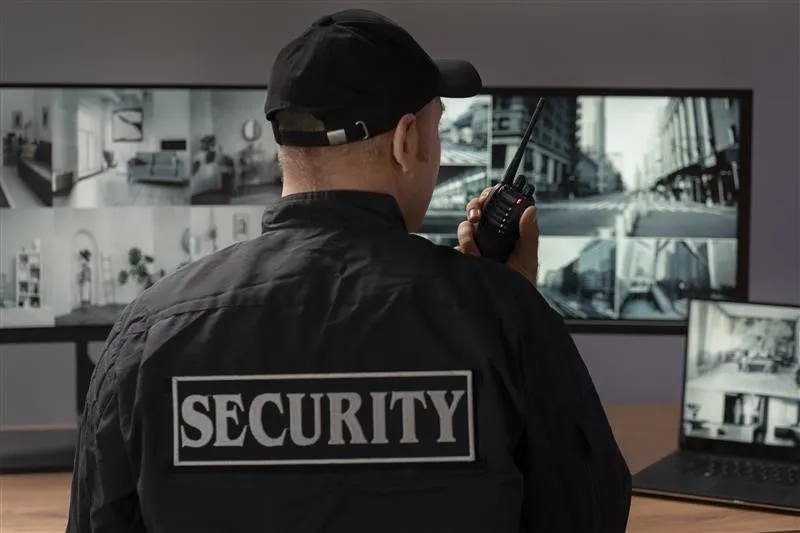
Integrated security solutions combine various technologies into a unified operational picture. Video surveillance is integrated with access control, intrusion detection, audio sensors, and analytics, enabling security operators to confirm threats in real-time. When data is shared across systems, notifications are no longer isolated events but confirmed incidents.
Real-World Example: Airports Adopting Integrated Security
One such case study is the “modernization of airport security.” London Heathrow Airport increased its use of Genetec Security Center by four times by 2024 (from 2,000 cameras in 2016 to 9,000+), which combined video surveillance, access control, LiDAR, analytics, and license plate recognition in 110 control rooms to monitor 150km of baggage belts and 150,000 vehicles per day, supporting 90 different groups of stakeholders.
The integrated solution allowed security operators to monitor real-time activity, detect anomalies, and take appropriate action from a single screen. Heathrow Airport reported that it had observed improved operational efficiency and a reduction in congestion-related security incidents.
(Source: Benchmarkmagazine)
Operational Efficiency and Cost Reduction
Integrated systems also make it easier to operate. Instead of having to work with various vendors, interfaces, and maintenance contracts, an organization can take care of their security issues in one platform.
Industry analysis shows that with fewer platforms, the response time is improved by 40-60% and the maintenance costs by 20-30% due to automation and redundancy despite the increased integration costs.
Cost-effectiveness is also improved in the long run. Although the integration cost will be higher, the organization will enjoy lower maintenance costs, redundancy, and downtime due to rapid problem resolution.
(Source: Securitypartnerstx)
Smarter Threat Detection Through Analytics
The use of AI-powered analytics in integrated security solutions is becoming more common. Video analytics, access logs, and behavior analytics enable the detection of suspicious patterns of behavior rather than reacting to individual incidents. For instance, frequent attempts to access a location coupled with unusual patterns of movement can generate high-priority alerts.
Such a feature is very useful in settings such as retail environments, where preventing theft requires understanding behavior patterns over time rather than merely sounding an alarm.
Cybersecurity and Physical Security are Converging
Another major factor that has contributed to the adoption of integrated security solutions is the integration of physical and cyber security. Today, access control solutions are network-based, cloud-based, and software-driven, which makes them susceptible to cyber threats. Integrated security solutions make it possible to centrally manage physical and cyber security.
For instance, “IBM’s 2025 report showed that integrated security with AI lowers breach costs by USD 1.9M with faster detection (241 days avg.), proving centralized platforms beat siloed controls.”
(Source: IBM)
Why Standalone Systems are Being Phased Out
Standalone systems are not scalable or adaptable. As businesses expand their operations or open new locations, standalone systems become more and more difficult to coordinate. It is much easier to monitor all locations from a central point and add new features such as AI analytics or biometric entry with integrated systems.
Conclusion
The phasing in of the integrated security solutions is currently underway as a replacement for the conventional standalone security solutions since they are capable of providing what the current security environment requires – context, accuracy, efficiency, and adaptability. By combining video surveillance, access control, alarms, analytics, and cybersecurity, businesses are able to eliminate false alarms, enhance threat detection, simplify operations, and enhance compliance. With the increasing complexity and dynamism of threats, integrated security solutions are no longer a luxury but a necessity in the current security market.
FAQs
- What is an integrated security system?
Ans: It is an integrated platform that brings together various security solutions such as cameras, access control, alarms, and analytics into a single system. - Why are standalone security systems less effective today?
Ans: They operate in isolation, generate more false alarms, and do not provide the context necessary for effective threat detection. - Do integrated systems reduce false alarms?
Ans: Yes. The integration of multiple sensors helps minimize false alarms by confirming alarms from multiple sources. - Are integrated security systems more expensive?
Ans: Yes. They are more expensive upfront, but the total cost of ownership is lower due to centralized management.
