

Global Adeno Associated Virus (AAV) Vector Manufacturing Market Size and Forecast – 2026 To 2033
The global adeno associated virus (AAV) vector manufacturing market is expected to grow from USD 3.18 Bn in 2026 to USD 7.11 Bn by 2033, registering a compound annual growth rate (CAGR) of 12.2% from 2026 to 2033. The market for global adeno associated virus (AAV) vector manufacturing is poised for significant expansion, fueled by the accelerating development of advanced gene therapies.
According to the U.S. Food and Drug Administration (FDA), 91 Regenerative Medicine Advanced Therapy (RMAT) designation requests were received in 2025, compared with 59 in 2024, representing a 54.2% year-on-year increase. The sharp rise in advanced-therapy development is expected to strengthen demand for scalable AAV vector manufacturing capabilities.
Key Takeaways of the Global Adeno Associated Virus (AAV) Vector Manufacturing Market
- Single-Stranded AAV (ssAAV) is projected to hold 72.4 % of the global adeno associated virus (AAV) vector manufacturing market share in 2026, making it dominant vector type segment, across North America due to strong government-backed investment in AAV production research and gene therapy development. In 2026, the U.S. National Institute of Biomedical Imaging and Bioengineering (NIBIB) awarded USD 491,773 to Duke University for research on engineering AAV secretion and production, directly supporting improvements in AAV manufacturing efficiency and scalability.
- Transient transfection is projected to hold 52.8 % of the global adeno associated virus (AAV) vector manufacturing market share in 2026, making it dominant production method segment, across Europe supported by the region’s active advanced-therapy regulatory ecosystem and growing development activity. EMA recommended authorization for 4 advanced therapy medicinal products (ATMPs) among 104 positive opinions in 2025, demonstrating continued regulatory progression of advanced therapies requiring specialized manufacturing capabilities.
- Gene therapy is projected to hold 78.6 % of the global adeno associated virus (AAV) vector manufacturing market share in 2026, making it dominant application segment, across Asia Pacific due to expanding regulatory acceptance and clinical development of gene therapies. For instance, Japan’s PMDA reported 26 approved regenerative medicine products through FY2026, including 6 in-vivo gene therapies, highlighting the region’s expanding regulatory experience with gene therapy platforms.
- North America market maintains dominance with an expected share of 43.8 % in 2026, bolstered by its established AAV manufacturing infrastructure, advanced analytical capabilities, and government-backed efforts to improve viral-vector manufacturing consistency. In July 2026, the U.S. National Institute of Standards and Technology (NIST), through the NIIMBL Viral Vector Program, selected eight teams for an interlaboratory study to improve the accuracy and precision of AAV9 capsid titer measurements, directly addressing manufacturing quality and process comparability.
- Asia Pacific is expected to exhibit the fastest growth in the global adeno associated virus (AAV) vector manufacturing market, registering an estimated CAGR of 16.8% during 2026–2033, driven by expanding domestic gene-therapy manufacturing capabilities and government investment in vector production technologies. For instance, Japan’s AMED Project for Regenerative Medicine and Cell and Gene Therapies supports the development of domestic AAV vector producer cell lines, manufacturing platforms, CDMO capabilities, and automated manufacturing and quality-control technologies, strengthening the region’s AAV manufacturing ecosystem.
Segmental Insights
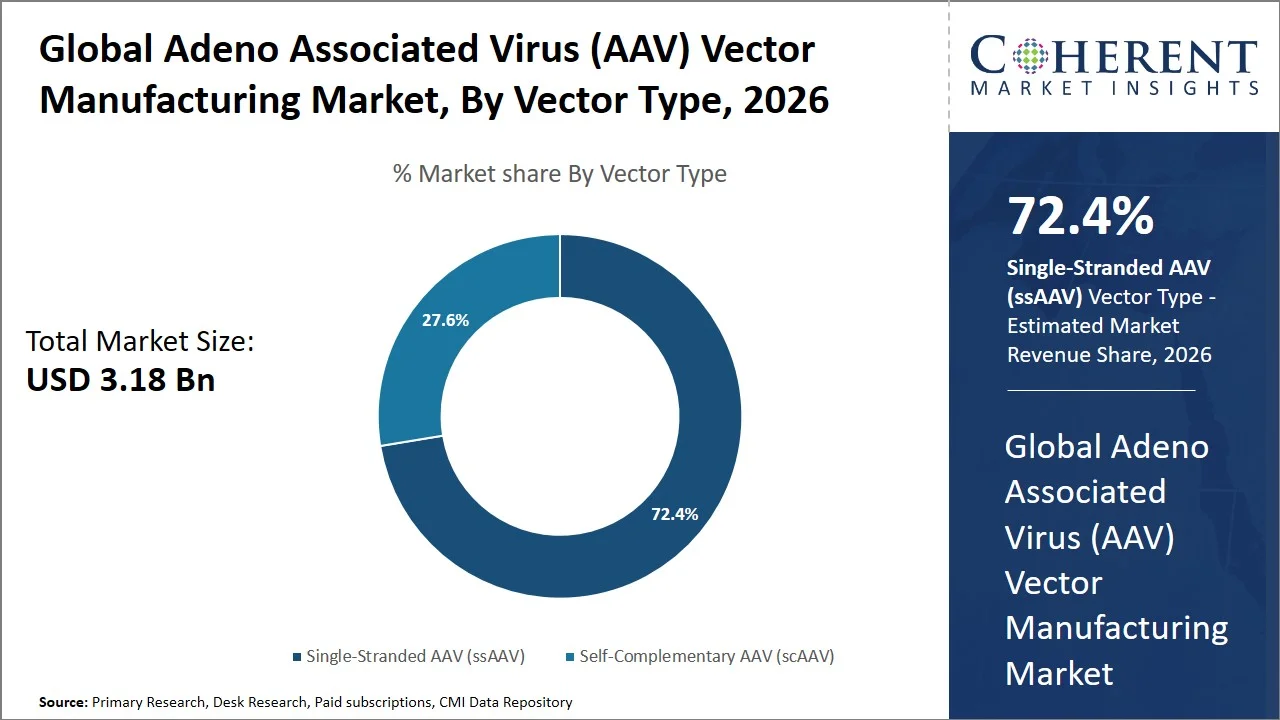
Why Do Single-Stranded AAV (ssAAV) Dominate the Global Adeno Associated Virus (AAV) Vector Manufacturing Market?
Single-Stranded AAV (ssAAV) are projected to hold the market share of 72.4% in 2026, because of its proven clinical experience and broader packaging capability, and wide-ranging applications in gene therapy field. Wider packaging capacity accommodates various types of therapeutic gene structure, thus used extensively in the field of genetic disease program. The established manufacturing ecosystem and developer knowledge further reinforce its commercial adoption. In April 2026, U.S. Food and Drug Administration (FDA) approved Otarmeni, the first U.S. FDA approved AAV gene therapy delivering treatment via two AAV1 vectors, for the treatment of OTOF-associated hearing loss. This represents a growing adoption and successful demonstration of this AAV-based gene therapy platform.
- Current Industry Events of 2026
- Market Size Estimation
- Regional Breakdown
- Competitive Landscape
- Customer Intelligence
- Segmental Analysis
- Pricing Analysis
- Key Market Drivers, Challenges & Future Trends
- Customized Insights Section
Why Does Transient Transfection Represent the Largest Production Method Segment in the Adeno Associated Virus (AAV) Vector Manufacturing Market?
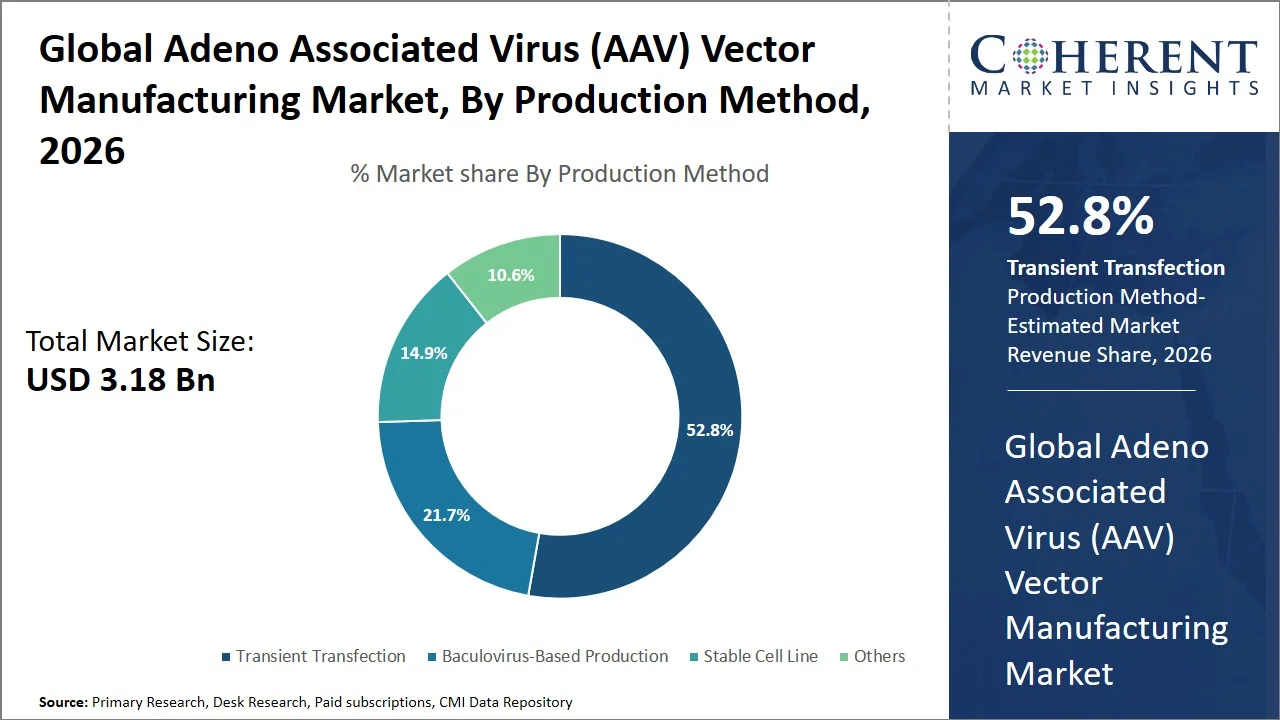
Transient transfection is projected to hold a market share of 52.8% in 2026, due to its ease of implementation, fast process development time and the familiarity with the commonly used HEK293-based production systems. This process enables producers to efficiently manufacture various AAV constructs on demand without the high cost and extended timelines associated with the development of stable producer-cell lines. Workflows for transient transfection remain largely the same from process development through manufacturing. In June 2025, research published by National Library of Medicine reported a boosted transient-transfection method using high-cell-density perfusion bioreactors to efficiently scale rAAV production in a bioreactor demonstrating capability of significantly enhancing manufacturing capabilities.
Gene Therapy Segment Dominates the Global Adeno Associated Virus (AAV) Vector Manufacturing Market
The gene therapy segment is projected to hold a market share of 78.6% in 2026, driven by the robust pipeline of AAV-based therapies, high need for targeted gene delivery, and the rising development of rare and inherited disorder therapies. AAV vectors provide multi-tissue distribution and long-term gene expression of therapeutic genes and, therefore, lend themselves to gene-replacement and gene-modification therapeutics. Furthermore, ongoing clinical trials and commercialization will necessitate the increase of customized manufacturing capacity for these AAV-based therapies. In August 2026, the U.S Food and Drug Administration (FDA) approved the first-in-class gene therapy Genglycos - an AAV8 gene-based treatment developed for glycogen storage disease Ia (GSDIa), an ultra-rare genetic disease. This new one-time treatment works in the liver to add a working G6PC gene, highlighting the expanding application of AAV vectors in treating genetic diseases.
Current Events and their Impact
Current Events | Description and its Impact |
U.S. National Cancer Institute Seeks Clinical-Grade AAV9 Manufacturing Support (September 2026) |
|
Canada’s NRC Reports Advances in AAV Vector Development (June 2026) |
|
UK Opens Consultation on Gene Therapy Medicinal Product Regulation (May 2026) |
|
Adeno Associated Virus (AAV) Vector Manufacturing Market Dynamics
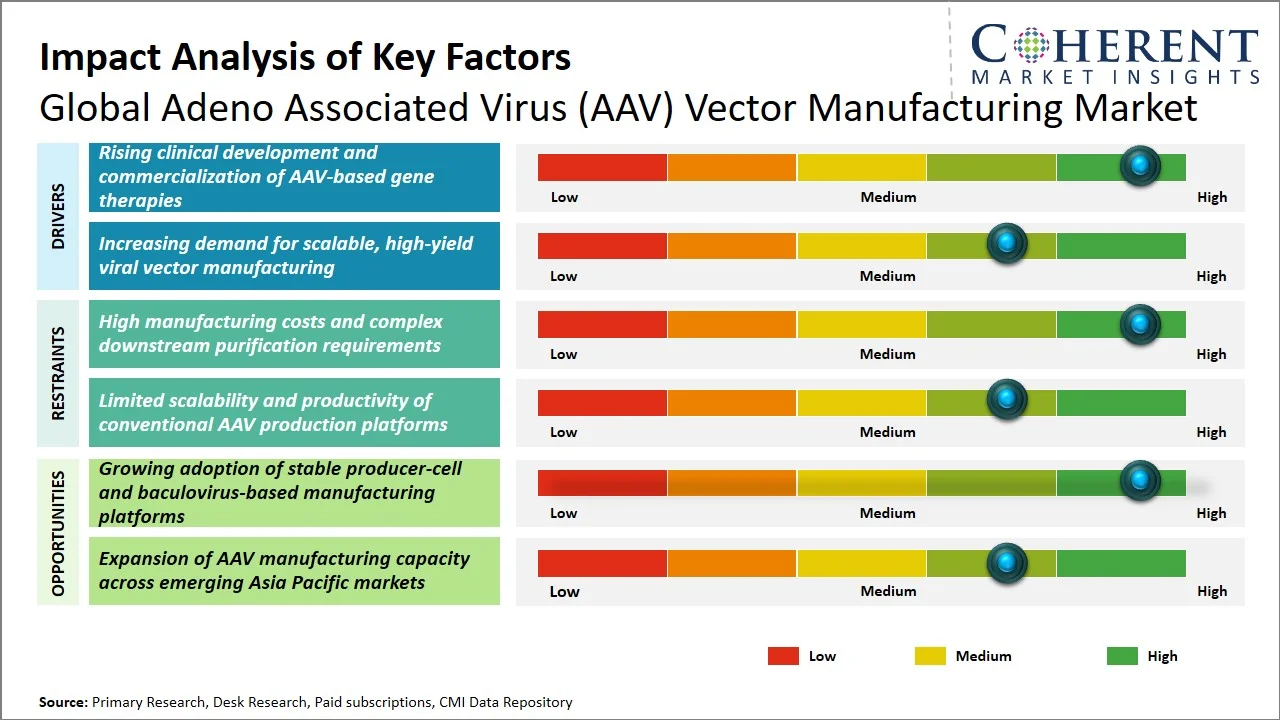
Market Drivers
- Rising clinical development and commercialization of AAV-based gene therapies: The expanding pipeline of AAV-based therapies is increasing demand for scalable, clinical-grade vector manufacturing and reliable production capacity. As therapies progress from clinical trials toward commercialization, manufacturers are investing in process development, scale-up, and quality-controlled production capabilities. For instance, in February 2026, the NIH’s PaVe-GT program advanced AAV-based gene therapy development for rare diseases by standardizing vector manufacturing and supporting progression toward clinical testing
- Increasing demand for scalable, high-yield viral vector manufacturing: The need to produce larger quantities of AAV vectors at consistent quality is driving adoption of intensified and optimized bioprocessing platforms. Improving vector yield is critical for increasing production capacity while reducing manufacturing costs and supporting clinical and commercial supply. In November 2025, researchers at the GROW Research Laboratory, Narayana Netralaya Foundation, Bengaluru, demonstrated a 7.6-fold increase in AAV9 viral yield through multivariate optimization of a fixed-bed bioreactor process, achieving an average total vector yield of 2.3 × 10¹⁴ vg per batch.
- Increasing adoption of AAV-based gene therapy for rare diseases: The growing use of AAV vectors to address rare genetic disorders is expanding the requirement for specialized vector manufacturing and clinical-grade production capacity. Increasing government-supported translation of AAV therapies is also encouraging standardized and reproducible manufacturing approaches. For instance, in May 2026, the U.S. FDA approved an investigational new drug (IND) for MMA-101, an AAV-based gene therapy developed through an NIH-led program, allowing the candidate to advance into a Phase I/II clinical trial for methylmalonic acidemia.
Emerging Trends
- Shift toward stable producer cell lines: Manufacturers are moving beyond conventional transient transfection toward stable and inducible producer-cell platforms that reduce plasmid dependency, improve batch consistency, and support scalable production.
- Adoption of continuous manufacturing: Continuous upstream and downstream processing is gaining attention as manufacturers seek higher productivity, reduced processing time, and more consistent AAV product quality while lowering manufacturing costs.
- Advancement of AAV process and genetic engineering: Optimization of plasmids, viral vector production components, capsids, and host-cell systems is becoming increasingly important for improving vector yield, full-to-empty capsid ratios, product quality, and scalability.
Regional Insights
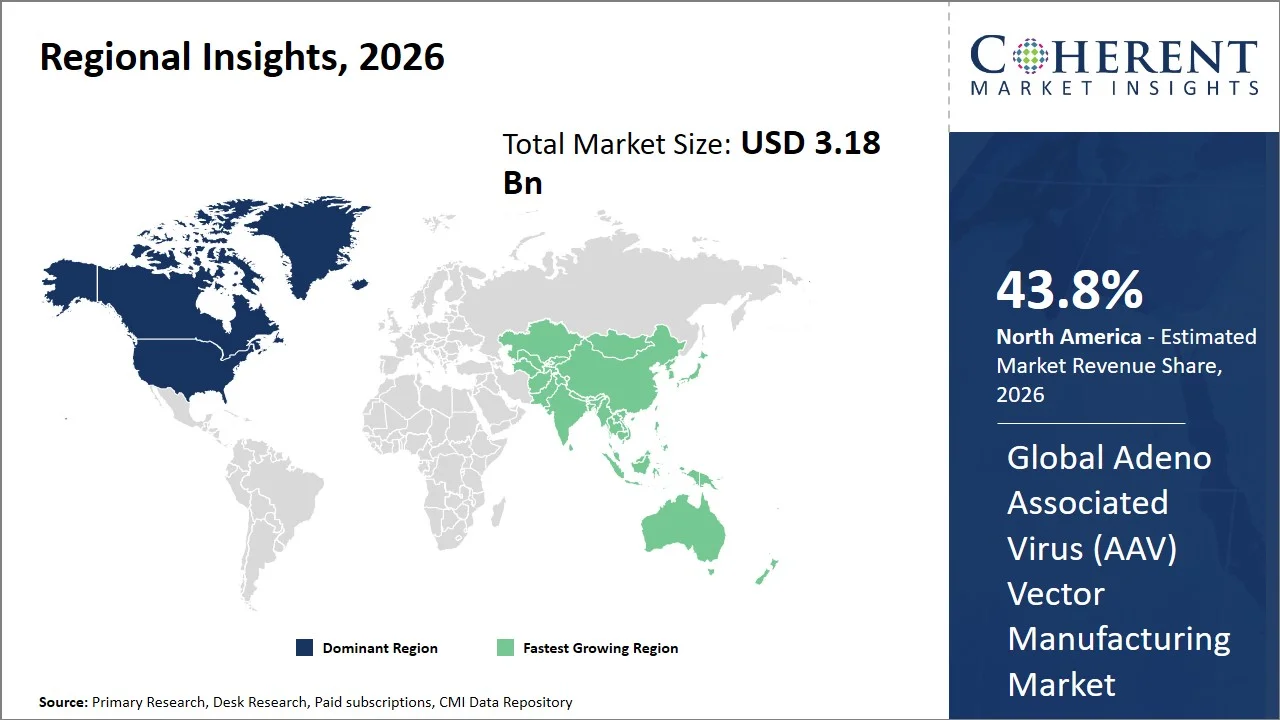
Why is North America a Strong Market for Adeno Associated Virus (AAV) Vector Manufacturing?
North America leads the global adeno associated virus (AAV) vector manufacturing market, accounting for an estimated 43.8% share in 2026, due to substantial government support for gene therapy, comprehensive gene therapy infrastructure, and a sophisticated biopharmaceutical ecosystem. In particular, the U.S. possesses high capabilities in all stages from AAV vector process development to scale-up and clinical-grade development to regulatory development.
High synergy between research funded by the government, academic organizations and biopharmaceutical sponsors is an advantage that facilitates innovation in, and commercialization of AAV products. In July 2026, National Institutes of Health (NIH) entered into a Cooperative Research and Development Agreement with Apertura Gene Therapy to investigate the company’s CapX adeno-associated virus delivery platform in the development of a novel gene therapy for Niemann-Pick C1 disease.
Why Does Asia Pacific Adeno Associated Virus (AAV) Vector Manufacturing Market Exhibit High Growth?
Asia Pacific is expected to exhibit the fastest growth in the global adeno associated virus (AAV) vector manufacturing market, registering an estimated CAGR of 16.8% during 2026–2033. The region is projected to account for approximately 21.4% of the global market in 2026, due to rising government investment, expanding biotech hubs as well as burgeoning healthcare and biomanufacturing infrastructure in the region. Supportive regulatory framework and government programs initiated by countries like China, South Korea, and Japan to push forward research on gene therapy has enabled to reinforce the ecosystem development of the region.
For instance, in July 2026, South Korea's Second Advanced Regenerative Medicine and Advanced Biopharmaceuticals Basic Plan (2026-2030) was approved targeting to secure over 150 total clinical trial/treatment approval and 5 indigenous advanced biopharmaceuticals by 2030. (Source: Korea Biomedical Review) Furthermore, higher enrollment rate in clinical research and developing manufacturing capabilities along with growing tendency toward localization are further propelling the demand for AAV vector manufacturing within Asia Pacific.
Global Adeno Associated Virus (AAV) Vector Manufacturing Market Outlook for Key Countries
Why is the U.S. Leading Innovation and Adoption in the Adeno Associated Virus (AAV) Vector Manufacturing Market?
The U.S. has been in the forefront of leading innovation and adoption in the adeno associated virus (AAV) vector manufacturing market owing to its focus on developing AAV gene therapies, an abundance of specialized manufacturing research and expertise within the field of viral-vector products. The country is working on new manufacturing techniques to tackle key AAV challenges, such as increasing yield, expanding output, improving process robustness and lowering costs, with regulators like the FDA and NIH advocating these new technology platforms to simplify the manufacturing and development processes.
Is Japan a Favorable Market for Adeno Associated Virus (AAV) Vector Manufacturing Market?
Japan is an attractive marketplace for domestically developed AAV manufacturing technologies and the large-scale manufacturing of gene therapies. The country has been working to create domestic AAV producer-cell lines and overall viral-vector manufacturing technologies, to lower the costs of manufacturing and support local production. Furthermore, Japan is encouraging the cooperation of the three parties (government-industry-academia) as well as CDMO driven process development initiatives that provide avenues for AAV manufacturers.
Is China Emerging as a Key Growth Hub for the Adeno Associated Virus (AAV) Vector Manufacturing Market?
China represents an emerging rather than a developed opportunity driven by domestic AAV manufacturing capacity and further capital investment in the gene therapy manufacturing infrastructure in China. These manufacturing capabilities range from vector design to process optimization to cGMP manufacturing through to down-stream capabilities needed for both clinical and commercial stage AAV programs. The country has become an increasing important manufacturing node in the wider Asia-Pacific AAV ecosystem.
Why Does Germany Top the European Adeno Associated Virus (AAV) Vector Manufacturing Market?
Germany leads the European adeno associated virus (AAV) vector manufacturing market owing to its well-established bioprocessing expertise, its GMP process development expertise within AAV field, and ready infrastructure of scaled virus-vector manufacturing. Additionally, well developed research infrastructure targeting at AAV yield, purification and automated analytics makes possible for companies to shift from development to clinical manufacturing.
Is Adeno Associated Virus (AAV) Vector Manufacturing Market Developing in India?
India is building capabilities to support AAV vector manufacturing through country’s growing cGMP infrastructure along with process development capability and local manufacturing capacity of clinical-stage gene therapy. This is likely to establish a well-integrated domestic manufacturing ecosystem that further builds capacities to offer affordable and efficiently manufactured AAV-based therapeutic product and for its use in its own domestic and in other regions' gene therapy program as well
AAV Vector Manufacturing Platform Comparison
Production Platform | Typical Production Scale | Key Advantage | Primary Limitation | Commercial Manufacturing Relevance |
Transient Transfection | Laboratory to commercial scale | High flexibility; rapid generation of different constructs | High plasmid requirement and scalability constraints | High |
Baculovirus-Based Production | Large-scale suspension/bioreactor | High cell density and scalable production | Process complexity and optimization requirements | High |
Stable Cell Line | Large-scale suspension/bioreactor | Reduced plasmid dependence and improved scalability | Longer cell-line development and characterization | Increasing |
Other Production Platforms | Emerging/variable | Potential for higher productivity and process intensification | Limited commercial validation | Emerging |
How is the growing adoption of stable producer-cell and baculovirus-based manufacturing platforms creating new growth opportunities in the adeno associated virus (AAV) vector manufacturing market?
Producer-cell lines being stably transfected and baculovirus-derived systems represent promising platforms for large-scale production that can enhance the productivity and cost-effectiveness of AAV manufacturing. Such platforms can diminish the reliance on transient transfection and facilitate large-scale production upon further development of gene therapy programs towards commercialization. For instance, in May 2026, Lonza launched Xcite, a stable cell-line system which offers better process robustness, scalability as well as reduced cost-of-goods in comparison to transient transfection. The platform demonstrated a 10–15-fold increase in titer compared with transient transfection, supporting scalable and cost-efficient AAV manufacturing.
Market Players, Key Development, and Competitive Landscape
Key Developments
- On September 1, 2026, Andelyn Biosciences was selected by Genprex to support the scale-up manufacturing of its AAV-based diabetes gene therapy candidate. The collaboration covers process optimization, scale-up, analytical development, potency testing, and cGMP manufacturing for IND-enabling studies and future clinical trials. The development highlights growing demand for scalable AAV manufacturing capabilities as gene therapy programs advance toward clinical development.
- In October 2025, Asimov, Inc. launched its AAV Edge Stable Producer System, featuring stable HEK293 producer cell lines designed for scalable AAV vector manufacturing. The platform integrates essential viral genes and transgenes into the cell line, reducing reliance on GMP plasmids and improving batch-to-batch consistency. The launch highlights the growing shift toward stable cell-line platforms to achieve more scalable and cost-efficient AAV production.
- In August 2025, ProBio launched end-to-end AAV production capabilities at its New Jersey manufacturing site, expanding its services across AAV process development and manufacturing. The launch strengthens local manufacturing capacity and supports the growing demand for integrated AAV vector production for gene therapy programs. It also reflects the increasing role of CDMOs in providing scalable manufacturing solutions for AAV-based therapies.
Competitive Landscape
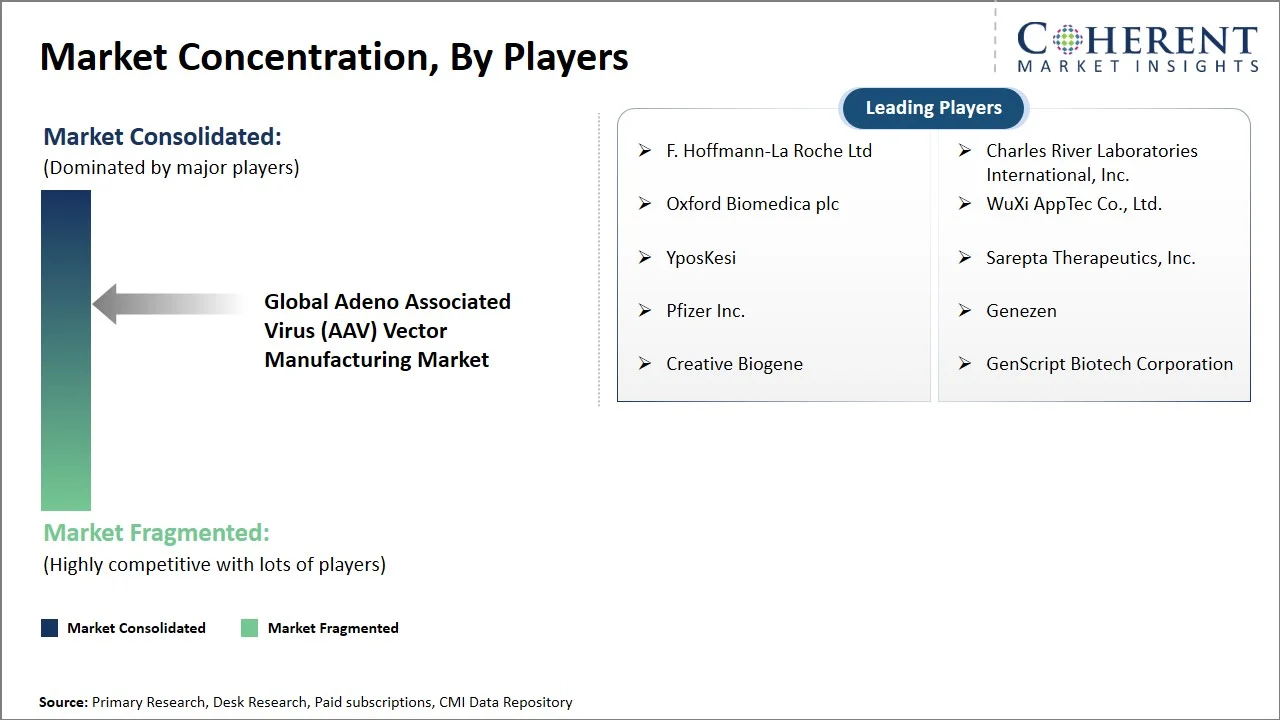
The global adeno associated virus (AAV) vector manufacturing market is moderately competitive, with market dynamics shaped by the increasing adoption of scalable production platforms, advancements in vector yield and productivity, expansion of gene therapy pipelines, and growing demand for commercial-scale manufacturing. Market participants are increasingly focusing on improving manufacturing scalability, process consistency, vector quality, and cost efficiency while expanding production capabilities for clinical and commercial applications. Key focus areas include:
- Optimization of transient transfection processes for improved AAV yield and batch consistency
- Advancement of baculovirus-based production systems for scalable vector manufacturing
- Development of stable producer-cell lines to reduce plasmid dependence and manufacturing costs
- Improvement of upstream process productivity and bioreactor scalability
- Advancement of downstream purification and full-to-empty capsid separation technologies
- Integration of process analytical technologies and quality-control approaches for consistent AAV production
Market Report Scope
Adeno Associated Virus (AAV) Vector Manufacturing Market Report Coverage
| Report Coverage | Details | ||
|---|---|---|---|
| Base Year: | 2025 | Market Size in 2026: | USD 3.18 Bn |
| Historical Data for: | 2020 To 2024 | Forecast Period: | 2026 To 2033 |
| Forecast Period 2026 to 2033 CAGR: | 12.2% | 2033 Value Projection: | USD 7.11 Bn |
| Geographies covered: |
| ||
| Segments covered: |
| ||
| Companies covered: | F. Hoffmann-La Roche Ltd, Charles River Laboratories International, Inc., Oxford Biomedica plc, WuXi AppTec Co., Ltd., YposKesi, Sarepta Therapeutics, Inc., Pfizer Inc., Genezen, Creative Biogene, GenScript Biotech Corporation | ||
| Growth Drivers: |
| ||
| Restraints & Challenges: |
| ||
Analyst Opinion (Expert Opinion)
- In the coming years, global adeno associated virus (AAV) vector manufacturing market is expected to shift from flexible but resource-intensive transient transfection toward highly scalable, productive, and cost-efficient manufacturing platforms, particularly stable producer-cell lines and baculovirus-based systems. Manufacturing will increasingly emphasize higher vector yield, improved full-to-empty capsid profiles, process consistency, automation, and platform standardization as AAV therapies move from early clinical development toward commercial-scale production.
- The maximum opportunities are foreseen within stable cell line for gene therapy in the U.S., where the combination of expanding AAV-based therapeutic pipelines and the need for large-scale, cost-efficient manufacturing creates significant demand for next-generation production platforms. Within applications, gene therapy should remain the primary commercial opportunity, while stable producer-cell technology offers the greatest potential to address scalability and manufacturing-cost constraints.
- In order to gain a competitive advantage, market players should prioritize proprietary high-yield production platforms, scalable manufacturing capacity, and integrated upstream-to-downstream capabilities rather than competing primarily on manufacturing capacity. Building strong process-development and analytical capabilities, reducing dependence on plasmid-intensive processes, shortening technology-transfer timelines, and offering flexible CDMO models for both clinical and commercial programs can provide a meaningful competitive edge.
Speak to the analyst
Want personalized insights?
Take the findings above to one of our principal consultants, or have the report rebuilt around the segments, geographies and competitors you actually track.
Market Segmentation
- Vector Type Insights (Revenue, USD Bn, 2021 - 2033)
- Single-Stranded AAV (ssAAV)
- Self-Complementary AAV (scAAV)
- Production Method Insights (Revenue, USD Bn, 2021 - 2033)
- Transient Transfection
- Baculovirus-Based Production
- Stable Cell Line
- Others
- Application Insights (Revenue, USD Bn, 2021 - 2033)
- Gene Therapy
- Cell Therapy
- Vaccine Development
- Research Applications
- Others
- End User Insights (Revenue, USD Bn, 2021 - 2033)
- Pharmaceutical and Biotechnology Companies
- Contract Development and Manufacturing Organizations (CDMOs)
- Academic and Research Institutions
- Others
- Regional Insights (Revenue, USD Bn, 2021 - 2033)
- North America
- U.S.
- Canada
- Latin America
- Brazil
- Argentina
- Mexico
- Rest of Latin America
- Europe
- Germany
- U.K.
- Spain
- France
- Italy
- Russia
- Rest of Europe
- Asia Pacific
- China
- India
- Japan
- Australia
- South Korea
- ASEAN
- Rest of Asia Pacific
- Middle East
- GCC Countries
- Israel
- Rest of Middle East
- Africa
- South Africa
- North Africa
- Central Africa
- North America
- Key Players Insights
- F. Hoffmann-La Roche Ltd
- Charles River Laboratories International, Inc.
- Oxford Biomedica plc
- WuXi AppTec Co., Ltd.
- YposKesi
- Sarepta Therapeutics, Inc.
- Pfizer Inc.
- Genezen
- Creative Biogene
- GenScript Biotech Corporation
Sources
Primary Research Interviews
- AAV vector manufacturing and process-development specialists
- Biopharmaceutical R&D scientists involved in viral-vector manufacturing and gene therapy
- Clinical researchers involved in AAV-based gene therapy development
- Pharmaceutical and biotechnology companies developing AAV-based gene therapies and manufacturing platforms
Stakeholders
- Pharmaceutical and biotechnology companies developing AAV-based gene therapies
- Contract development and manufacturing organizations (CDMOs) involved in AAV vector production
- Academic research institutions specializing in viral-vector development and gene therapy
- AAV vector manufacturing and process-development technology providers
- End-use Sectors
- Pharmaceutical and biotechnology companies
- Contract development and manufacturing organizations (CDMOs)
- Academic and research institutions
- Hospitals and specialized treatment centers
- Gene therapy and cell therapy research laboratories
- Regulatory & Health Bodies
- U.S. Food and Drug Administration (FDA) – Center for Biologics Evaluation and Research (CBER)
- European Medicines Agency (EMA)
- Medicines and Healthcare products Regulatory Agency (MHRA), U.K.
- Pharmaceuticals and Medical Devices Agency (PMDA), Japan
- National Medical Products Administration (NMPA), China
Databases
- ClinicalTrials.gov
- European Union Clinical Trials Information System (CTIS)
- World Health Organization International Clinical Trials Registry Platform (WHO ICTRP)
- International Standard Randomised Controlled Trial Number (ISRCTN) Registry
- NIH RePORTER – publicly funded AAV manufacturing and gene therapy research
Journals
- Molecular Therapy
- Human Gene Therapy
- Human Gene Therapy Methods
- Frontiers in Molecular Medicine
Associations
- Alliance for Regenerative Medicine (ARM)
- American Society of Gene & Cell Therapy (ASGCT)
- International Society for Cell & Gene Therapy (ISCT)
- International Society for Pharmaceutical Engineering (ISPE)
- Biotechnology Innovation Organization (BIO)
Public Domain Sources
- U.S. Food and Drug Administration (FDA) – AAV vector manufacturing, gene therapy, and CMC guidance
- European Medicines Agency (EMA) – advanced therapy medicinal products and gene therapy regulatory information
- National Institutes of Health (NIH) – AAV vector manufacturing and gene therapy research programs
- National Center for Biotechnology Information (NCBI) – AAV vector and gene therapy literature
- National Library of Medicine (NLM) – AAV manufacturing and clinical research literature
- NIH RePORTER – publicly funded AAV vector manufacturing research and technology development
Proprietary Elements
- CMI Data Analytics Tool, Proprietary CMI Existing Repository of information for last 10 years.
Get access to 250+ pages report
Every segment, forecast, competitor profile and data table behind the analysis above — available for instant download.
- ESOMAR Member
- ISO 9001:2015 Certified
- D-U-N-S Registered
- GDPR & CCPA Compliant
Missing comfort of reading report in your local language? Find your preferred language:
Frequently Asked Questions
The global adeno associated virus (AAV) vector manufacturing market is estimated to be valued at USD 3.18 Bn in 2026 and is expected to reach USD 7.11 Bn by 2033.
Single-Stranded AAV (ssAAV) dominates due to its established use across a broad range of gene therapy applications and extensive clinical development experience.
AAV vector manufacturing is the process of producing, purifying, and formulating recombinant AAV vectors carrying therapeutic genetic material for use in gene therapy and related applications.
AAV manufacturing typically involves vector production, harvesting, purification, concentration, formulation, and quality control testing.
ssAAV contains a single-stranded DNA genome, while scAAV contains a self-complementary genome that enables faster intracellular gene expression.
Stable producer-cell lines can reduce plasmid requirements, improve process consistency, and support scalable and cost-efficient AAV production.
Downstream purification is essential for removing process impurities and separating desired AAV vectors to achieve the required product quality.