

Global AAV Gene Therapy Market Size and Forecast – 2026 to 2033
The Global AAV Gene Therapy Market is estimated to be valued at USD 4.35 Bn in 2026 and is expected to reach USD 21.57 Bn by 2033, reflecting a compound annual growth rate (CAGR) of 25.7% from 2026 to 2033. This robust growth is driven by increasing research investments, advancements in gene editing technologies, and rising prevalence of genetic disorders that are amenable to gene therapy solutions.
Key Takeaways of the Global AAV Gene Therapy Market
- AAV9 segment is expected to account for 28.4 % of the global AAV gene therapy market share in 2026.
- Neurological disorders segment is projected to capture 36.6 % of the AAV gene therapy market in 2026.
- The central nervous system segment is expected to command 33.1 % of the market share in 2026.
- North America is expected to lead the market, holding a share of 39.5 % in 2026. Asia Pacific is anticipated to be the fastest-growing region, with 23.5% share in 2026.
Market Overview
- Current market trends highlight a surge in collaborations between biotechnology firms and academic institutions to accelerate product development.
- Additionally, regulatory approvals for novel AAV-based therapies are increasing, facilitating faster market penetration.
- The emphasis on personalized medicine and enhanced vector efficiency is further propelling market expansion, while innovations in delivery mechanisms continue to improve treatment safety and efficacy, positioning AAV gene therapy as a cornerstone in next-generation therapeutic interventions.
Current Events and Its Impact
Current Events | Description and its Impact |
U.S. FDA requests Sarepta to suspend Elevidys distribution and places multiple gene therapy programs on clinical hold |
|
First EU Approval of an AAV Gene Therapy for Alzheimer’s Disease |
|
Segmental Insights
- Current Industry Events of 2026
- Market Size Estimation
- Regional Breakdown
- Competitive Landscape
- Customer Intelligence
- Segmental Analysis
- Pricing Analysis
- Key Market Drivers, Challenges & Future Trends
- Customized Insights Section
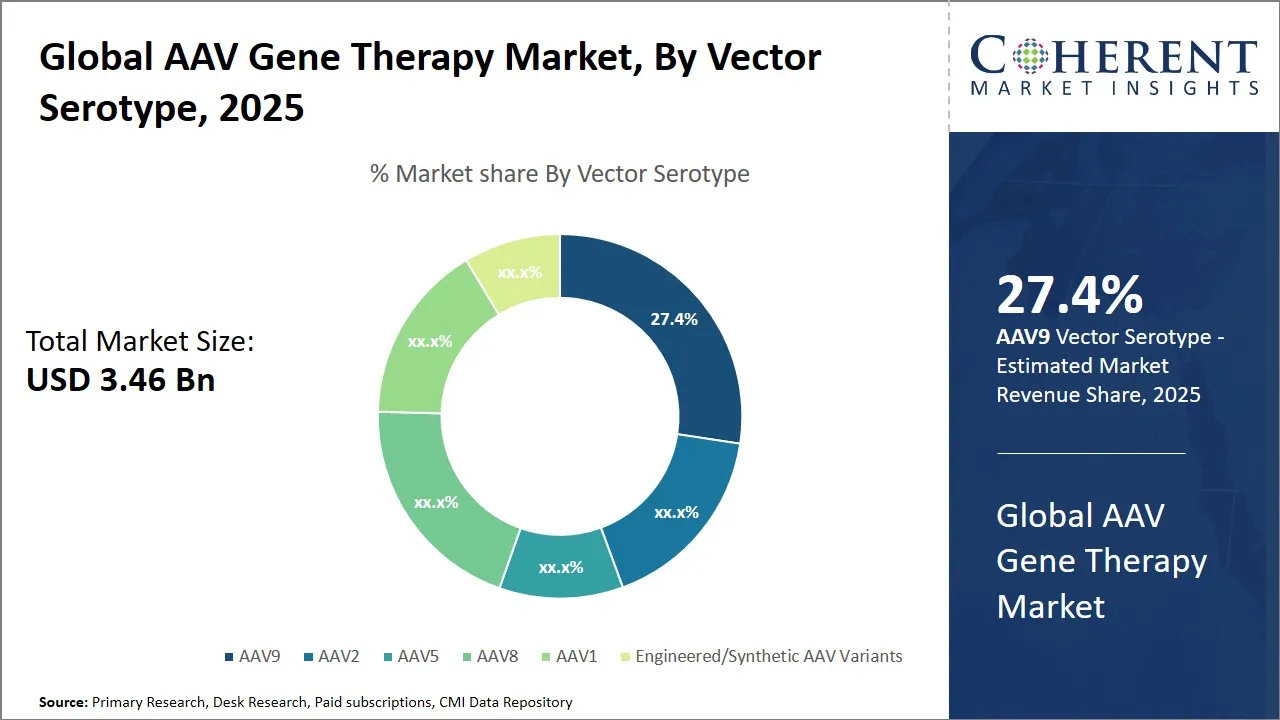
Why does AAV9 Contribute the Highest Share in the AAV Gene Therapy Market in 2026?
AAV9 segment is expected to capture 28.4% of the global AAV gene therapy market share in 2026, because of its superiority in terms of transducing a large variety of tissues, especially when used systemically.
The essential factor in the choice of AAV9 is that it possesses the natural tropism to both the central nervous system (CNS) and peripheral organs, which facilitates the effective delivery of genes across the blood-brain barrier (BBB). This characteristic renders AAV9 especially an apt agent in treating neurological diseases, where, in most cases, the disease may need to be treated with a gene therapy that can penetrate the CNS with therapeutic effects.
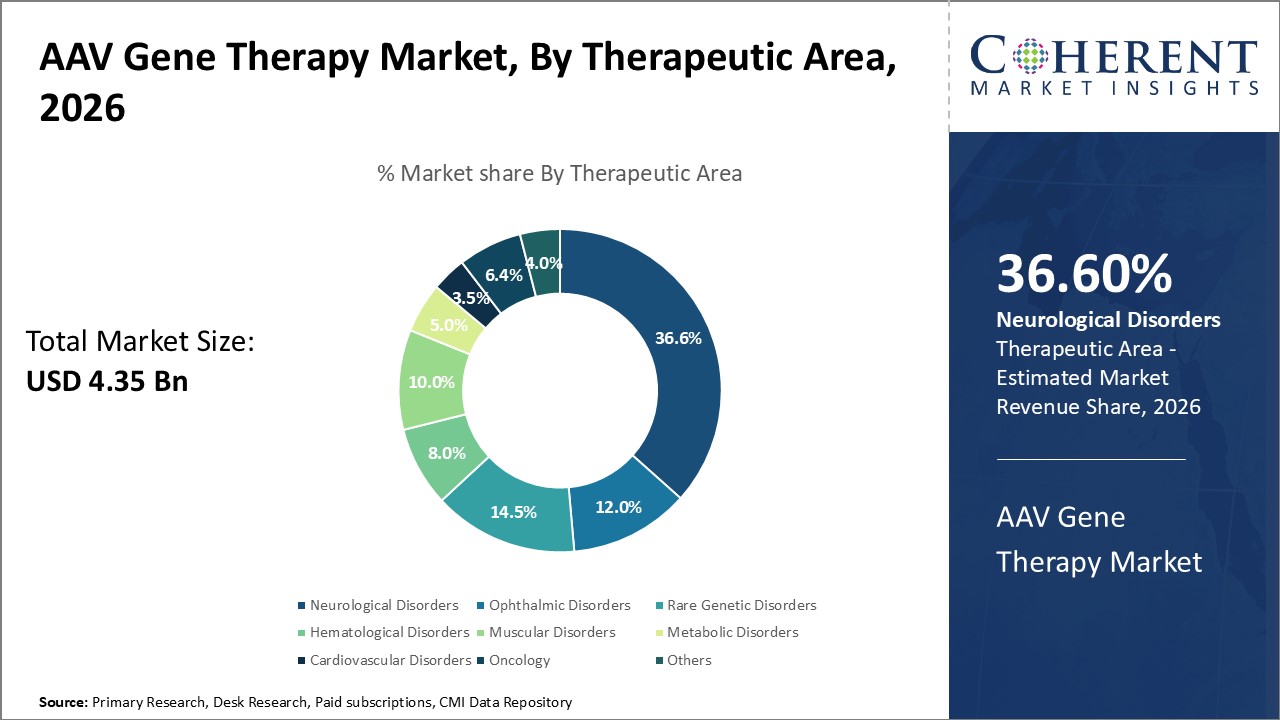
Neurological Disorders Dominate the AAV Gene Therapy Market
The neurological disorders segment will hold the largest share of the global AAV gene therapy market at 36.6% in 2026, driven by significant unmet medical needs and the strong therapeutic potential of gene therapy technologies.
There are numerous neurological diseases like spinal muscular atrophy, Parkinson disease, or some inherited neurodegenerative diseases that do not have curative therapies, and thus gene therapy is a revolutionary treatment to change the course of the disease at the genetic level.
Why does the Central Nervous System Dominate the AAV Gene Therapy Market?
The central nervous system is projected to hold 33.1% of the market share in 2026, because central nervous system (CNS) disorders are complex and critical and may need innovative treatment solutions. The CNS consists of specific target organs such as the brain and spinal cord where drug penetration is limited and access to the target is hindered by the nature of the pharmacological treatments.
In August 2025, Apertura Gene Therapy, a New York–based AAV gene therapy company, licensed its TfR1 CapX capsid. Apertura develops non-invasive AAV gene therapy platforms for central nervous system disorders. Galibra Neuroscience, a pediatric CNS gene therapy startup, will use the capsid for GABA-related neurological diseases. Emugen Therapeutics, focused on neurodevelopmental and neurodegenerative conditions, licensed the platform for brain-targeted gene delivery.
Manufacturing Capacity and CMO Readiness in the Global AAV Gene Therapy Market
- Manufacturing capacity and CMO readiness have become critical success factors in the global AAV gene therapy market as clinical pipelines rapidly expand. Limited availability of GMP-grade viral vector capacity continues to create bottlenecks, particularly for late-stage and commercial programs. In response, leading CMOs are investing heavily in dedicated AAV suites, scalable suspension platforms, and multi-site manufacturing networks to support faster tech transfer and reliable supply.
- At the same time, CMO readiness is being defined by advanced quality systems, regulatory track records, and the ability to support end-to-end services from plasmid production to fill-finish. CMOs with validated platforms, standardized processes, and global regulatory experience are increasingly preferred partners, as developers prioritize speed, consistency, and risk mitigation in moving AAV therapies toward commercialization.
Regional Insights
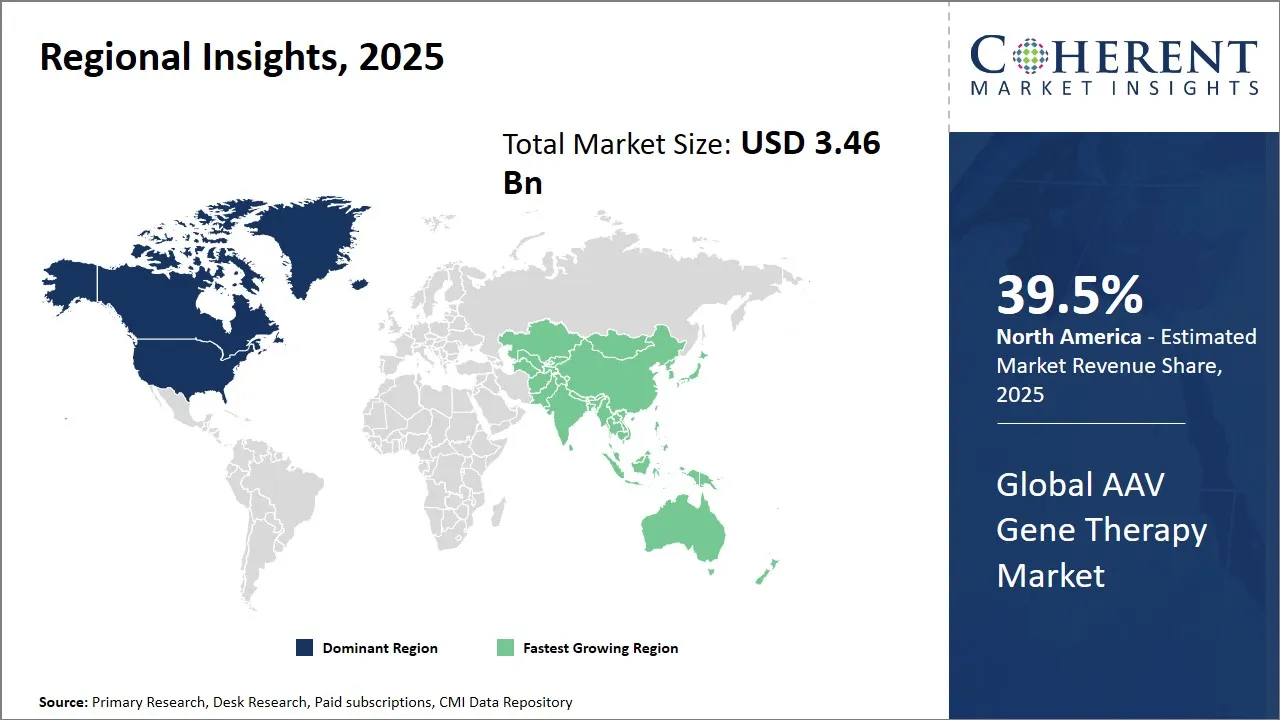
North America AAV Gene Therapy Market Analysis and Trends
The North America region is projected to lead the market with a 39.5% share in 2026, mainly spearheaded by strong healthcare infrastructure, vast research and development and a massive investment by the private and government sectors. As a key player in this region, the U.S. enjoys the established biopharmaceutical centers in the area, especially in California, Massachusetts, and the Northeast Corridor, which drive innovation and cooperation between universities, biotech companies, and healthcare institutions.
The main stakeholders such as Novartis (via its acquisition of AveXis), Spark Therapeutics (Roche subsidiary) and Bluebird Bio have played a critical role in AAV-based gene therapies development and launch, which strengthened the leadership of the region.
In May 2026, Azenta Life Sciences, a U.S.-based multiomics and synthetic solutions provider, partnered with Form Bio. Form Bio, a U.S.-based AI life sciences technology company, will integrate analytics into AAV Gene Therapy development. The partnership combines GENEWIZ sequencing expertise with AI driven genome integrity analysis. This integrated workflow improves AAV vector safety, efficacy, and manufacturability.
Asia Pacific AAV Gene Therapy Market Analysis and Trends
The Asia Pacific region is expected to exhibit the fastest growth in the market contributing 23.5% share in 2026, due to the contribution of ever-growing healthcare systems, the growing awareness about genetic diseases, and increasing governmental pressure on the biotechnology innovation. Countries such as China, Japan, and South Korea have greatly boosted the public and private investment in gene therapy research facilitated by liberal regulatory structures as well as through the government supported biotech programs.
Interestingly, the strategy of Made in China 2026 by China and other agendas based on innovations encourage the creation of gene treatments in the country, eliminating dependency on imports. Technology transfer and clinical progress are facilitated by the growing number of biotech startups, as well as established pharmaceutical businesses and corporations in Shanghai, Jiangsu, and Takeda Pharmaceutical (Japan).
AAV Gene Therapy Market Outlook for Key Countries
Why the U.S. is Setting the Pace for AAV Gene Therapy Innovation?
The U.S. is leading the AAV gene therapy scene, and it is supported by a robust regulatory climate, as well as, rich financial investments in gene therapy development. Key biopharma companies such as Novartis, Spark Therapeutics and uniQure have provided groundbreaking gene therapy products in such conditions as spinal muscular atrophy and inherited retinal diseases.
Additionally, government bodies like the NIH alongside private foundations provide substantial grant funding. The established clinical trial infrastructure also fosters rapid development and patient recruitment, further consolidating the U.S. leadership in this domain.
Why Germany is Emerging as Europe’s AAV Clinical Powerhouse?
The AAV gene therapy market in Germany has an advantage of an established healthcare and a robust pharmaceutical industry, including BioNTech, which is expanding its portfolio with gene therapy-based products. Such regulatory organizations as the European medicines agency (EMA), which is based nearby, make approvals in the region easier, giving preference to the market integration of Germany.
Research institutions and universities in cities like Munich and Heidelberg contribute significantly to innovative gene therapy research. Furthermore, supportive reimbursement policies and government initiatives aimed at enhancing personalized medicine accelerate Germany’s market maturation.
China AAV Gene Therapy Market Trends
AAV gene therapy market in China has witnessed fast growth due to innovation activities sponsored by the government, high patient population and growing local production capacity. There have been incremental reforms in the regulatory environment of the country in which clinical trial approvals and product registration have been expedited.
There are other companies like Shanghai RAAS Blood Products and 3SBio developing the AAV gene therapy candidates, which are specific to local epidemiology. Technology transfer/capacity building is based on collaborative ventures with international biopharma companies. Moreover, the emerging biotech investment environment and increasing clinical infrastructure in China allow AAV therapies to be adopted faster.
Japan AAV Gene Therapy Market Trends
The culture of innovation in gene therapy is at the forefront in Asia Pacific because of the high level of technological power and favorable healthcare policies of Japan. The novel gene therapies are brought to the fore faster by the government Act on Safety of Regenerative Medicine and Pharmaceuticals. The key actors that drive gene therapies with AAV vectors in rare genetic diseases are Takeda Pharmaceutical and Mitsubishi Tanabe Pharma. It has a high demand in the clinical aspect due to the aging population and a rise in the incidence of genetic diseases in Japan.
In June 2026, JCR Pharmaceuticals, a Japan-based specialty biopharmaceutical company focused on rare and genetic diseases, launched a new global website marking 50 years of innovation. The launch reflects JCR Pharmaceuticals’ expanded presence across Japan, the U.S., Europe, and Latin America. The website highlights the company’s patient-centric approach and growing global ambitions.
Cost Reduction and Process Efficiency Impact on the Global AAV Gene Therapy Market
- Cost reduction and process efficiency are emerging as critical drivers in the global AAV gene therapy market as programs transition from clinical to commercial scale. Improvements in upstream processes, including high-productivity cell lines, optimized transfection systems, and scalable suspension bioreactors, are significantly reducing cost per batch and minimizing production variability.
- At the same time, downstream process innovations such as continuous purification, higher-resolution chromatography, and advanced analytical quality controls are shortening manufacturing cycles and improving batch success rates. These efficiencies are enabling more predictable supply, faster time-to-market, and improved commercial sustainability for AAV-based gene therapies.
Market Players, Key Developments, and Competitive Intelligence
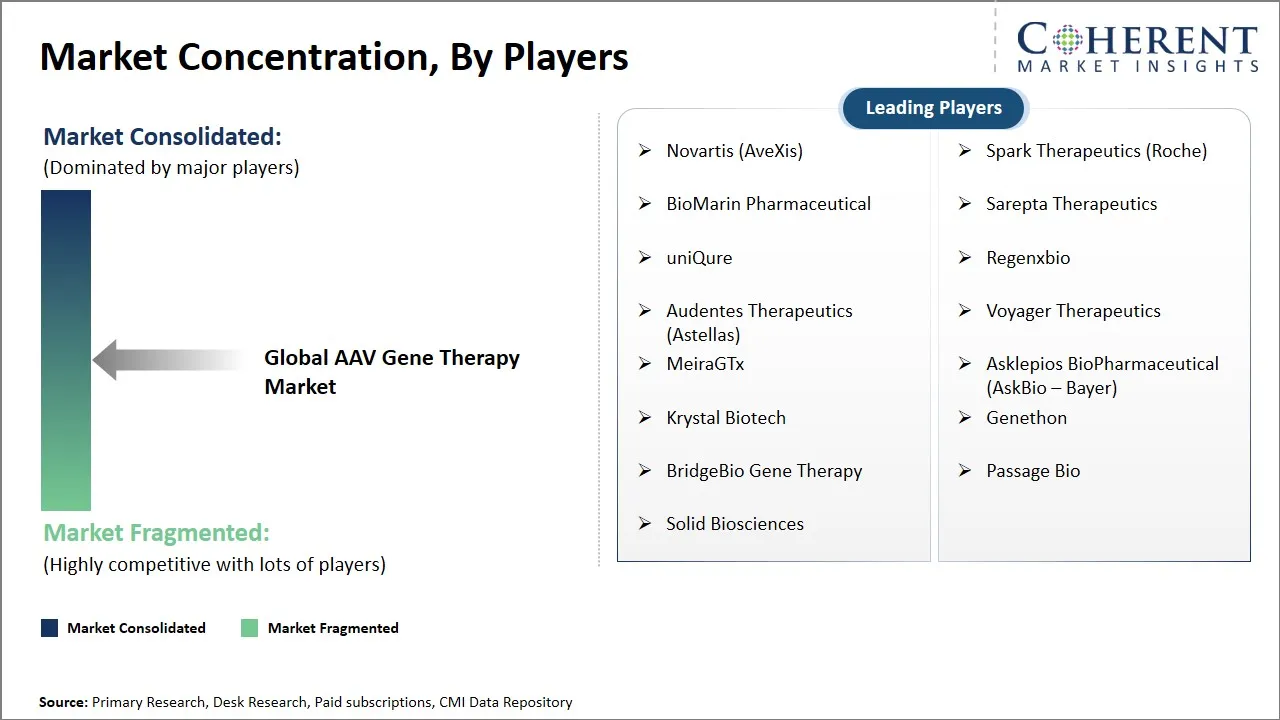
Key Developments
- On December 12, 2025, Ajinomoto CELLiST Korea, a cell culture media specialist, launched a new AAV supplement. The product was co-developed with Forge Biologics, a U.S. based AAV manufacturing CDMO. Internal studies showed up to two times higher viral vector productivity versus conventional methods. The launch supports AAV Gene Therapy scale up by improving efficiency, cost control, and consistency.
- In October 2025, Lonza Group AG, a global life sciences manufacturing company, expanded its cell and gene therapy portfolio. The company launched GMP grade AmpliCell Cytokines and 293 GT Medium supporting AAV Gene Therapy production. The new medium improves AAV yields and capsid quality in HEK293 suspension systems. The launch strengthens scalable and consistent manufacturing for clinical and commercial gene therapy programs.
- In August 2025, ProBio, a gene and cell therapy focused CDMO, launched end to end AAV manufacturing. The Hopewell New Jersey facility supports AAV Gene Therapy programs from early to late stages. It offers integrated plasmid production, vector manufacturing, and fill finish under one GMP site. The launch strengthens domestic viral vector capacity and shortens development timelines for gene therapy developers.
- In June 2025, 64x Bio, a gene therapy manufacturing technology company, launched the AAV Apex suite. The product improves AAV Gene Therapy yields using optimized HEK293 cell lines and production processes. At the same event, Fauna Bio, an AI driven drug discovery company, introduced its Fauna Brain platform. The launch highlighted parallel advances in AAV manufacturing efficiency and AI enabled target discovery.
Top Strategies Followed by Global AAV Gene Therapy Market Players
Player Type | Strategic Focus | Examples |
Established Market Leaders | Advanced R&D in high-performance AAV vectors and delivery platforms; strategic alliances with large pharmaceutical and biotech companies; global expansion across regulated and emerging markets | Novartis is advancing systemic AAV therapies for neuromuscular and CNS disorders; Roche is expanding its AAV gene therapy pipeline through Spark Therapeutics and global clinical networks |
Mid-Level Players | Cost-efficient AAV development and manufacturing; focus on rare and niche indications; licensing and co-development partnerships to scale platforms | uniQure is optimizing AAV platforms for hemophilia and neurological disorders; REGENXBIO is leveraging NAV technology licensing to broaden pipeline reach |
Small-Scale Players | Niche innovation in capsid engineering and targeted delivery; rapid adoption of AI and synthetic biology; academic and regional collaborations | 4D Molecular Therapeutics is developing engineered AAV capsids with enhanced tissue specificity; MeiraGTx is advancing ocular and CNS gene therapies via academic partnerships |
Market Report Scope
AAV Gene Therapy Market Report Coverage
| Report Coverage | Details | ||
|---|---|---|---|
| Base Year: | 2025 | Market Size in 2026: | USD 4.35 Bn |
| Historical Data for: | 2020 To 2024 | Forecast Period: | 2026 To 2033 |
| Forecast Period 2026 to 2033 CAGR: | 25.7% | 2033 Value Projection: | USD 21.57 Bn |
| Geographies covered: |
| ||
| Segments covered: |
| ||
| Companies covered: | Novartis (AveXis), Spark Therapeutics (Roche), BioMarin Pharmaceutical, Sarepta Therapeutics, uniQure, Regenxbio, Audentes Therapeutics (Astellas), Voyager Therapeutics, MeiraGTx, Asklepios BioPharmaceutical (AskBio – Bayer), Krystal Biotech, Genethon, BridgeBio Gene Therapy, Passage Bio, and Solid Biosciences | ||
| Growth Drivers: |
| ||
| Restraints & Challenges: |
| ||
AAV Gene Therapy Market Dynamics
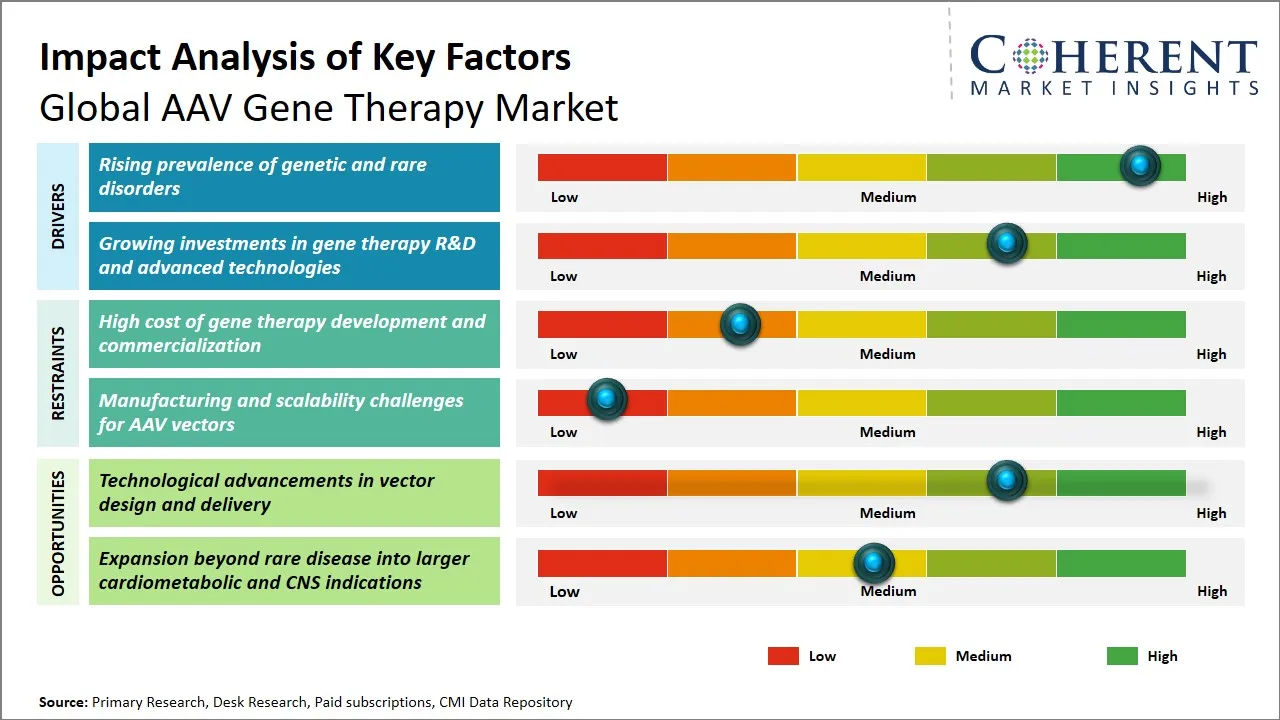
AAV Gene Therapy Market Driver - Rising Prevalence of Genetic and Rare Disorders
The rising cases of genetic and rare diseases globally are one of the main reasons behind the current interest in adeno-associated virus (AAV) gene therapy as a new term of potential treatment. A significant number of them are caused by certain gene mutations and these are poorly or non-treatable in general, but could be, potentially, treated with such a treatment system as AAV vectors. The increasing development of diagnostic technology has increased the possibilities to identify and diagnose rare genetic disorders, resulting in more patients with whom potential gene therapies can be applied. In addition, these disorders are chronic and debilitating, which means that there are significant unmet medical needs that are not dealt with satisfactorily by conventional treatments.
In February 2024, National Institutes of Health reported 275 million newly identified genetic variants. Nearly 4 million variants showed potential links to disease prevalence. About 50 percent of data came from non-European ancestry populations. Over 90 percent of earlier genomics data lacked such diversity. This improved prevalence mapping strengthens target identification for rare diseases addressed by AAV gene therapy.
In June 2025, World Health Organization, the global public health body, reaffirmed ICD-11 rare disease coverage. ICD-11 now classifies around 5,500 rare diseases worldwide. Rare diseases collectively affect over 300 million people globally. Improved coding strengthens prevalence tracking and diagnosis accuracy.
(Source: https://www.who.int/standards/classifications/frequently-asked-questions/rare-diseases)
AAV Gene Therapy Market Opportunity - Technological Advancements in Vector Design and Delivery
The current technological progress in the development of vectors and delivery systems is set to contribute to the successful development of the global AAV gene therapy market. The development of technologies to improve the specificity, efficiency, and safety of AAV vectors are fast moving to allow more specific gene delivery with less immunogenicity. The best solution to this is to create AAV serotypes with superior tissue tropism and the capacity to escape neutralizing antibodies that have already been generated against the virus, which is one of the biggest challenges in gene therapy because of novel capsid engineering methods, e.g., directed evolution and rational design.
In June 2025, Dyno, an AI-driven gene delivery technology company, announced a strategic manufacturing partnership. Trisk Bio, a specialized AAV manufacturing organization, joined Dyno’s expanded Frontiers Program. The partnership provides immediate manufacturing access for next-generation AAV capsids. It reduces tech transfer risk and accelerates preclinical readiness for AAV gene therapy developers.
(Source:https://www.pharmaceutical-technology.com/news/dyno-trisk-strategic-manufacturing-partnership/)
Analyst Opinion (Expert Opinion)
- The market of the AAV gene therapy is evolving away towards early innovation and execution/scale. The advancements in capsid engineering, AI-assisted design of vectors, and more efficient manufacturing platforms are enhancing the precision of deliveries and reducing the risk of development. The U.S. and Europe have provided regulatory assistance in accelerated pathways which has enhanced investor and developer confidence, particularly on rare neurological, ophthalmic and metabolic disorders. Meanwhile, the actual limits of the market include immune response, redosing, and manufacturing capacity at commercial scale, which are currently determining the competitive edge rather than novelty of scientific interest.
- Industry alignment has been strengthened by forums like the ASGCT Annual Meeting, ESGCT Congress, BIO International Convention, Advanced Therapies Week, and Phacilitate Gene Therapy Summit and has formed consensus on clinical, regulatory, and CMC strategies. New collaborations such as Dyno Therapeutics with Trisk Bio, increased investments in CDMO by multinational pharma and government-sponsored programs in the U.S., U.K. and Japan to manufacture gene therapies are all having a direct effect on market preparedness. Such initiatives signify a market transitioning towards a discipline driven stage, wherein execution efficacy, reliability of supply and durability safety are going to be the drivers of sustainable development.
Speak to the analyst
Want personalized insights?
Take the findings above to one of our principal consultants, or have the report rebuilt around the segments, geographies and competitors you actually track.
Market Segmentation
- Vector Serotype Insights (Revenue, USD Bn, 2021 - 2033)
- AAV9
- AAV2
- AAV5
- AAV8
- AAV1
- Engineered/Synthetic AAV Variants
- Therapeutic Area Insights (Revenue, USD Bn, 2021 - 2033)
- Neurological Disorders
- Ophthalmic Disorders
- Rare Genetic Disorders
- Hematological Disorders
- Muscular Disorders
- Metabolic Disorders
- Cardiovascular Disorders
- Oncology
- Others
- Target Tissue Insights (Revenue, USD Bn, 2021 - 2033)
- Central Nervous System
- Eye/Retina
- Liver
- Muscle
- Lung
- Heart
- Blood/Bone Marrow
- Route of Administration Insights (Revenue, USD Bn, 2021 - 2033)
- Intravenous
- Intrathecal
- Intracerebral
- Subretinal
- Intravitreal
- Intramuscular
- Intracardiac
- Indication Type Insights (Revenue, USD Bn, 2021 - 2033)
- Monogenic Disorders
- Polygenic Disorders
- Gene Payload Type Insights (Revenue, USD Bn, 2021 - 2033)
- Gene Replacement
- Gene Silencing
- Gene Augmentation
- Development Stage Insights (Revenue, USD Bn, 2021 - 2033)
- Preclinical
- Phase I
- Phase II
- Phase III
- Manufacturing Type Insights (Revenue, USD Bn, 2021 - 2033)
- In-house Manufacturing
- Contract Manufacturing (CDMO/CMO)
- End User Insights (Revenue, USD Bn, 2021 - 2033)
- Biopharmaceutical Companies
- Research Institutes and Academic Centers
- Hospitals and Specialty Clinics
- Others (CROs)
- Regional Insights (Revenue, USD Bn, 2021 - 2033)
- North America
- U.S.
- Canada
- Latin America
- Brazil
- Argentina
- Mexico
- Rest of Latin America
- Europe
- Germany
- U.K.
- Spain
- France
- Italy
- Russia
- Rest of Europe
- Asia Pacific
- China
- India
- Japan
- Australia
- South Korea
- ASEAN
- Rest of Asia Pacific
- Middle East
- GCC Countries
- Israel
- Rest of Middle East
- Africa
- South Africa
- North Africa
- Central Africa
- North America
- Key Players Insights
- Novartis (AveXis)
- Spark Therapeutics (Roche)
- BioMarin Pharmaceutical
- Sarepta Therapeutics
- uniQure
- Regenxbio
- Audentes Therapeutics (Astellas)
- Voyager Therapeutics
- MeiraGTx
- Asklepios BioPharmaceutical (AskBio – Bayer)
- Krystal Biotech
- Genethon
- BridgeBio Gene Therapy
- Passage Bio
- Solid Biosciences
Sources
Primary Research Interviews
Industry Stakeholders List
- Gene therapy clinical researchers
- Viral vector manufacturing heads
- Cell and gene therapy CDMO executives
- Regulatory affairs specialists
- Bioprocess development scientists
- Gene therapy startup founders
End Users List
- Hospital-based gene therapy clinicians
- Academic medical center researchers
- Rare disease treatment centers
- Pediatric neurology specialists
- Ophthalmology gene therapy clinics
- Translational medicine institutes
Government and International Databases
- U.S. Food and Drug Administration
- European Medicines Agency
- National Institutes of Health
- ClinicalTrials.gov
- World Health Organization
- U.K. Medicines and Healthcare products Regulatory Agency
Trade Publications
- Nature Biotechnology
- Science Translational Medicine
- Cell & Gene Therapy Insights
- BioProcess International
- Genetic Engineering & Biotechnology News
- The Scientist
Academic Journals
- Nature Medicine
- Molecular Therapy
- Human Gene Therapy
- The New England Journal of Medicine
- The Lancet
- Science
Reputable Newspapers
- The New York Times
- The Wall Street Journal
- Financial Times
- The Guardian
- The Washington Post
- Reuters
Industry Associations
- American Society of Gene & Cell Therapy
- European Society of Gene and Cell Therapy
- International Society for Cell & Gene Therapy
- Alliance for Regenerative Medicine
- BioIndustry Association
- Japan Society of Gene Therapy
Public Domain Resources
- NIH RePORTER
- European Union Open Data Portal
- OECD Health Statistics
- U.S. Government Accountability Office
- UK National Audit Office
Proprietary Elements
- CMI Data Analytics Tool: Proprietary analytics tool to analyze real-time market trends, consumer behavior, and technology adoption in market
- Proprietary CMI Existing Repository of Information for Last 8 Years
Get access to 250+ pages report
Every segment, forecast, competitor profile and data table behind the analysis above — available for instant download.
- ESOMAR Member
- ISO 9001:2015 Certified
- D-U-N-S Registered
- GDPR & CCPA Compliant
Missing comfort of reading report in your local language? Find your preferred language:
Transform your Strategy with Exclusive Trending Reports
Frequently Asked Questions
The global AAV gene therapy market is estimated to be valued at USD 4.35 Bn in 2026 and is expected to reach USD 21.57 Bn by 2033.
The CAGR of global AAV gene therapy market is projected to be 25.7% from 2026 to 2033.
Rising prevalence of genetic and rare disorders and growing investments in gene therapy R&D and advanced technologies are the major factors driving the growth of the global AAV gene therapy market.
High cost of gene therapy development and commercialization and manufacturing and scalability challenges for AAV vectors are the major factors hampering the growth of the global AAV gene therapy market.
In terms of vector serotype, AAV9 is estimated to dominate the market revenue share in 2026.
Suspension cell cultures, continuous purification, and advanced analytics are improving AAV production efficiency.
The market will shift toward scalable manufacturing and broader disease indications.