

Peptide Cancer Vaccine Market Size and Share Analysis - 2026 To 2033
The Peptide Cancer Vaccine Market size is anticipated to grow at a CAGR of 24.3% with USD 1.8 Bn in 2026 and is expected to reach USD 8.2 Bn in 2033. The primary drivers are defined by the rising global cancer burden, increasing adoption of personalized immunotherapy, expanding neoantigen vaccine pipelines, and wider advances in peptide synthesis technologies. According to IARC, cancer accounted for 20.6 million new cases and 9.8 million deaths worldwide in 2024, thereby supporting sustained demand for targeted cancer vaccines. This is also strengthening demand for synthetic peptide vaccines, biomarker-guided therapies, immune-response monitoring, combination treatments, and precision oncology solutions across breast, lung, prostate, colorectal, pancreatic, gastric, and other cancer applications globally.
Key Takeaways
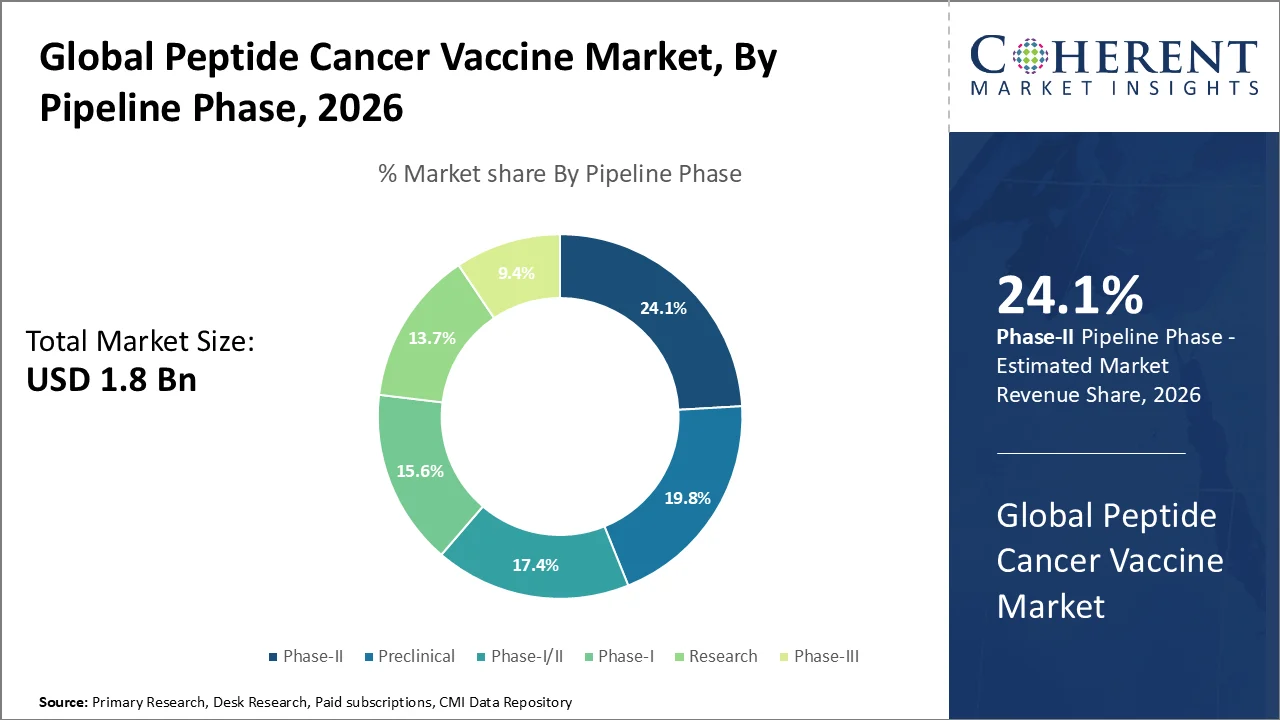
- The Phase-II segment is likely to dominate the market with 24.1% in 2026. The segment’s growth is owing to the efficacy-focused studies, larger patient cohorts, and evaluation of peptide vaccines with immune checkpoint inhibitors.
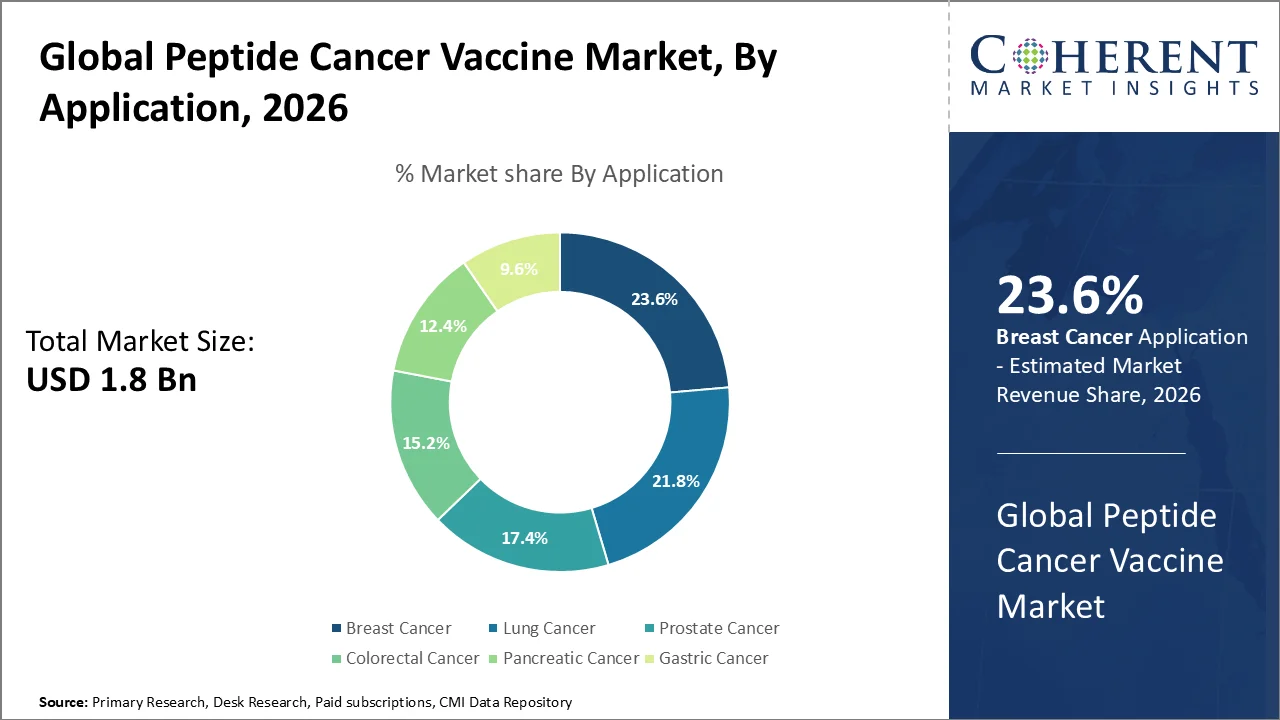
- The breast cancer segment is set to lead with 23.6% in 2026. The segment’s growth is owing to the disease burden, improved identification of tumor-associated antigens, and growing development of personalized neoantigen vaccines. According to the WHO, breast cancer caused around 694,000 deaths in 2024.
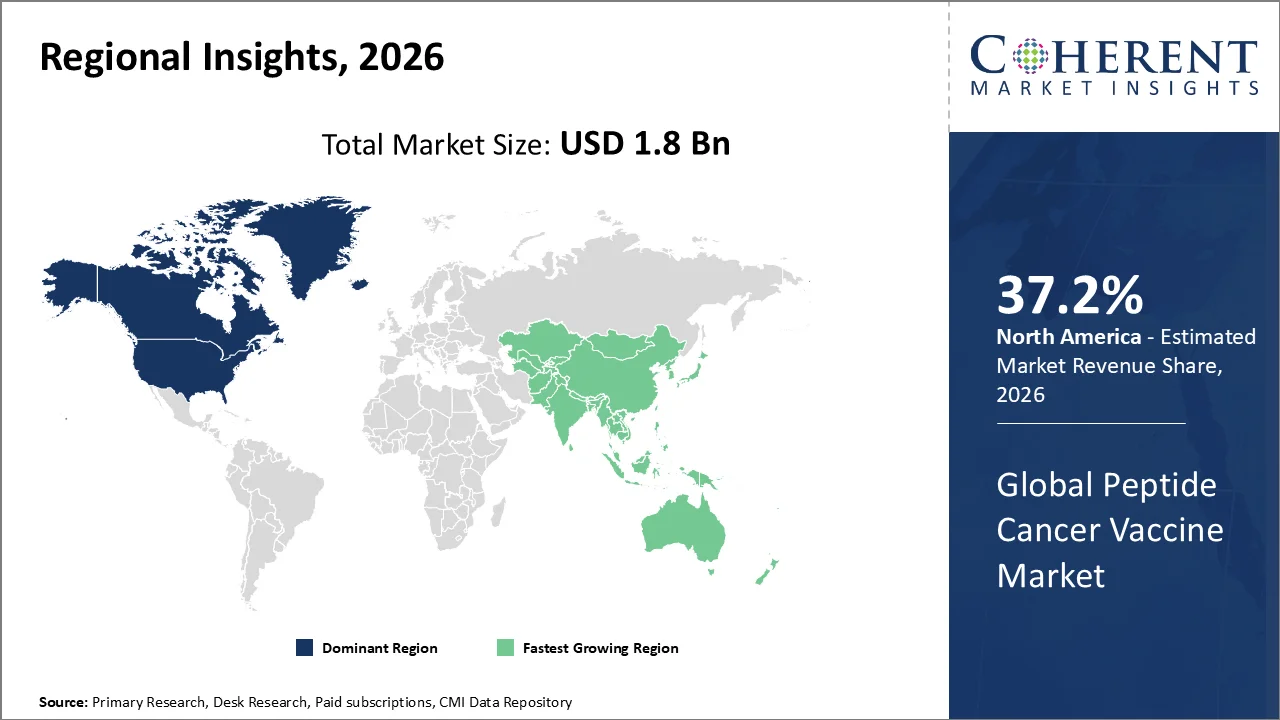
- North America is expected to acquire the prominent share of 37.2% in 2026. The region’s growth is owing to the strong cancer research infrastructure, clinical trial activity, genomic sequencing capabilities, and substantial investment in immuno-oncology. The U.S. National Cancer Institute had USD 7.2 Bn available in fiscal year 2025 to support cancer research, grants, centers, training, and national initiatives.
Segmental Insights
Why is Phase-II Segment Acquiring the Largest Share?
On the basis of pipeline phase, the Phase-II segment is projected to account for the largest Peptide Cancer Vaccine Market share of 24.1% in 2026. The segment’s growth is owing to the increasing number of peptide-vaccine candidates progressing beyond preliminary safety studies and entering trials that assess immunogenicity, recurrence, progression-free survival, disease-free survival, objective response, and combination-treatment outcomes.
Phase II studies generally enroll more patients than Phase I programs and require larger quantities of clinical-grade peptide material. They also generate demand for tumor sequencing, HLA typing, immune-response assays, trial-site management, pharmacovigilance, central laboratory services, data analysis, and regulatory consulting. These factors increase the commercial value associated with Phase II development.
In April 2026, Evaxion reported that nearly 86% of the vaccine targets selected for its Phase II personalized cancer vaccine EVX-01 generated tumor-specific immune responses. The firm stated that the findings supported the precision of its AI-Immunology antigen-selection platform. These company-reported immunogenicity findings require confirmation through mature clinical outcomes but demonstrate the importance of Phase II programs in validating antigen-selection technologies.
- Current Industry Events of 2026
- Market Size Estimation
- Regional Breakdown
- Competitive Landscape
- Customer Intelligence
- Segmental Analysis
- Pricing Analysis
- Key Market Drivers, Challenges & Future Trends
- Customized Insights Section
Breast Cancer hold the Largest Market Share
On the basis of application, the breast cancer segment lead with a major 23.6% share in 2026. The growth is owing to the high incidence of breast cancer, substantial molecular heterogeneity among tumors, increasing recurrence risk in advanced disease, and growing demand for personalized immunotherapies. Peptide vaccines can be designed to target breast cancer-associated antigens or patient-specific neoantigens identified through tumor sequencing.
According to the U.S. National Cancer Institute’s SEER program, an estimated 321,910 new female breast cancer cases and 42,140 related deaths are expected in the U.S. in 2026. SEER also estimated that approximately 4.24 million women were living with female breast cancer in the U.S. in 2023. This large diagnosed and survivor population supports demand for treatments intended to control residual disease, prevent recurrence, and generate durable tumor-specific immune responses.
A Phase I study sponsored by the Fred Hutchinson Cancer Center is evaluating a personalized neoantigen peptide vaccine in patients with refractory hormone-receptor-positive, HER2-negative metastatic breast cancer. The vaccine is being administered with poly-ICLC and nivolumab to assess safety, manufacturing feasibility, and neoantigen-specific T-cell responses. The ClinicalTrials.gov record was updated in March 2026, thereby reflecting the continued investigation of peptide-based personalized immunotherapy in advanced breast cancer.
Market Drivers
Rising Innovations in Lymph-Node-Targeted Immunotherapy are Transforming the Peptide Cancer Vaccine Market in the U.S.
The U.S. peptide cancer-vaccine ecosystem is focused on overcoming weak antigen presentation, tumor immune suppression, and insufficient T-cell trafficking. Conventional soluble peptides may be rapidly dispersed or degraded following administration, thereby limiting their delivery to lymph nodes and antigen-presenting cells. Newer platforms attach peptides and immune stimulants to molecular carriers designed to improve transport into lymphatic tissue. This can increase contact with dendritic cells, improve antigen presentation, as well as generate broader CD4-positive and CD8-positive T-cell responses.
In September 2025, Elicio Therapeutics announced an investigator-initiated Phase I study of ELI-002 7P at Memorial Sloan Kettering Cancer Center, supported by the Lustgarten Foundation. The study was designed to evaluate the vaccine with chemotherapy and an anti-PD-1 checkpoint inhibitor in the neoadjuvant treatment of resectable and borderline-resectable pancreatic ductal adenocarcinoma, with enrollment anticipated during the first half of 2026.
AI-driven Neoantigen Design: A Major Breakthrough in the Peptide Cancer Vaccine Market
AI-driven neoantigen design is emerging as a major breakthrough in the Peptide Cancer Vaccine Market by improving the speed and precision with which tumor-specific vaccine targets are identified. Personalized peptide-vaccine development requires genomic sequencing of tumor and healthy tissue, analysis of expressed mutations, HLA-binding prediction, as well as assessment of potential immunogenicity. Artificial intelligence platforms can integrate genomic, transcriptomic, and immunological data to rank numerous candidate neoantigens and select those most likely to be presented by a patient’s immune cells and generate tumor-specific T-cell responses.
This approach can reduce dependence on manual target selection and improve the probability that manufactured peptides will produce a measurable immune response. AI platforms may also evaluate mutation expression, antigen processing, HLA compatibility, clonality, and similarity to healthy proteins. The selected neoantigens are subsequently manufactured as patient-specific peptides and administered with immune adjuvants or checkpoint inhibitors. Such capabilities are strengthening demand for bioinformatics platforms, tumor sequencing, rapid peptide synthesis, immune-response assays, and integrated personalized-vaccine manufacturing.
In July 2025, Biogenea Pharmaceuticals initiated an early Phase I clinical study of TAMAVAQ, an AI-designed personalized neoantigen peptide vaccine for patients with newly diagnosed glioma. The platform uses tumor genetic and transcriptomic sequencing, machine-learning-based antigen prediction, molecular modelling, and peptide–HLA interaction analysis to select patient-specific immunodominant peptides.
Current Events and Their Impact on the Peptide Cancer Vaccine Market
Current Event | Description and its Impact |
EU Health Technology Assessment Regulation for Oncology Medicines
|
|
FDA Guidance on Overall Survival in Oncology Clinical Trials |
|
Peptide Cancer Vaccine Market Trends
- The rising adoption of personalized neoantigen peptide vaccines is allowing for tumor-specific immune targeting and supporting the precision oncology treatment strategies worldwide.
- The integration with checkpoint inhibitors like nivolumab and pembrolizumab is strengthening T-cell activity and may improve durable antitumor responses in advanced cancers.
- Advances in synthetic long peptides, computational epitope prediction, immune adjuvants, and nanoparticle delivery is improving the vaccine design, stability, and immunogenicity.
- The growing global cancer incidence is expanding the potential patient pool for therapeutic vaccines across breast, lung, colorectal, pancreatic, prostate, and gastric cancers. According to WHO and IARC estimates available in 2026, nearly 20 million new cancer cases occurred in 2022. The annual cases are projected to exceed 35 million by 2050, representing a 77% increase.
- The expanding early-stage clinical research is supporting the market development, partnership activity, as well as future commercialization. An active Phase I study evaluates a personalized vaccine containing up to 20 peptides with poly-ICLC in patients with molecular residual disease. Separate trials combine personalized neoantigen peptide vaccines with nivolumab or pembrolizumab, thereby highlighting the growing preference for combination immunotherapy approaches and broader evaluation across multiple solid tumors within modern precision-oncology treatment pathways globally.
Regional Insights
North America Dominates Owing to the Strong Oncology Burden and Advanced Clinical Research
The North America region accounts for 37.2% of the market share in 2026. The region’s growth is owing to the high cancer burden, established genomic testing infrastructure, major oncology research centers, and extensive early-stage immunotherapy activity.
The U.S. National Cancer Institute’s SEER program estimates 333,830 new prostate cancer cases in 2026, representing 15.8% of all new U.S. cancer diagnoses. SEER also projects 158,850 new colorectal cancer cases in 2026, thereby highlighting the sizeable patient populations for antigen-specific and personalized vaccine research.
In a key pipeline development, ClinicalTrials.gov listed an active, recruiting Phase I study led by Washington University School of Medicine and updated on July 17, 2026. The trial evaluates synthetic long-peptide personalized cancer vaccines with poly-ICLC in patients with molecular residual disease after treatment for bladder, gastroesophageal, melanoma, and non-small cell lung cancers.
Asia Pacific Peptide Cancer Vaccine Market Trends
Asia Pacificis expected to witness strong growth in market over the forecast period. The region’s growth is owing to the substantial cancer burden, expanding precision-oncology infrastructure, and increasing participation in personalized neoantigen studies.
The World Health Organization estimated 2.4 million new cancer cases in its South-East Asia Region in 2022, creating a sizeable patient population for therapeutic vaccines targeting tumour-specific peptides. It also recorded approximately 1.5 million cancer deaths, highlighting the need for treatments capable of reducing recurrence and generating durable immune control.
In another regional development, ClinicalTrials.gov lists the Phase II iNATURE study (NCT06314087), sponsored by the University of Hong Kong–Shenzhen Hospital. The study evaluates an individualized tumour neoantigen peptide vaccine combined with precision
Personalized Vaccine Trials is Accelerating the Peptide Cancer Vaccine Market in United States
In the United States, the Peptide Cancer Vaccine Market is influenced by the the national cancer burden increases demand for more precise immunotherapies. The National Cancer Institute’s SEER page reports that roughly 2.1 million people will be diagnosed with cancer in 2026, expanding the potential population for tumor-specific vaccine research.
A recent ClinicalTrials.gov development is Phase I study NCT07300475, which evaluates a personalized peptide-based cancer vaccine strategy, with or without a CD8-selective IL-2 fusion protein, in patients with newly diagnosed triple-negative breast cancer receiving neoadjuvant chemoimmunotherapy. This program strengthens the clinical validation of individualized peptide vaccines and supports the U.S. pipeline investment.
China Peptide Cancer Vaccine Market Trends
China is expected to experience strong market growth owing to substantial cancer burden and expanding personalized immunotherapy pipeline. The IARC estimated that China had around 10,968,974 five-year prevalent cancer cases in 2022, thereby representing a substantial population requiring recurrence monitoring and additional therapeutic options.
In 2026, ClinicalTrials.gov registered a China-based study evaluating iNeo-Vac-P01, a personalized neoantigen peptide vaccine, as consolidation therapy after standard adjuvant treatment in resectable stage III colorectal cancer or non-small cell lung cancer. This development strengthens the domestic clinical evidence and also supports the future adoption of individualized peptide-based cancer immunotherapies in China.
Who are the Major Companies in Peptide Cancer Vaccine Industry
Some of the major key players in Peptide Cancer Vaccine Market are Marker Therapeutics, Inc., Agenus, Merck, BrightPath Biotherapeutics, Boston Biomedical, VAXON Biotech, Nouscom, Lytix Biopharma, ISA Pharmaceuticals, Generex Biotechnology, OncoTherapy Science, Enzo Life Science, Immatics Biotechnologies, SELLAS Life Sciences Group, Ultimovacs, Celldex therapeutics, Immunomic Therapeutics, Inc.
Key News
- In May 2026, researchers at Dana-Farber reported that personalized neoantigen peptide vaccine NeoVax combined with pembrolizumab generated durable antitumor immune activity in newly diagnosed glioblastoma. Median overall survival reached 36.9 months in MGMT-methylated patients and 19.0 months in MGMT-unmethylated patients.
- In March 2025, researchers at the Icahn School of Medicine at Mount Sinai reported that personalized multi-peptide neoantigen vaccine PGV001 was safe and generated strong immune responses across cancers. At five-year follow-up, six patients survived, including three who remained tumor-free.
Market Report Scope
Peptide Cancer Vaccine Market Report Coverage
| Report Coverage | Details | ||
|---|---|---|---|
| Base Year: | 2025 | Market Size in 2026: | USD 1.8 Bn |
| Historical Data for: | 2020 To 2024 | Forecast Period: | 2026 To 2033 |
| Forecast Period 2026 to 2033 CAGR: | 24.3% | 2033 Value Projection: | USD 8.2 Bn |
| Geographies covered: |
| ||
| Segments covered: |
| ||
| Companies covered: | Marker Therapeutics, Inc., Agenus, Merck, BrightPath Biotherapeutics, Boston Biomedical, VAXON Biotech, Nouscom, Lytix Biopharma, ISA Pharmaceuticals, Generex Biotechnology, OncoTherapy Science, Enzo Life Science, Immatics Biotechnologies, SELLAS Life Sciences Group, Ultimovacs, Celldex therapeutics, Immunomic Therapeutics, Inc. | ||
| Growth Drivers: |
| ||
| Restraints & Challenges: |
| ||
Analyst Opinion
- Peptide cancer vaccines market growth is supported by the burden of mutation-rich solid tumors. Lung cancer represented almost 2.5 million new cases, or 12.4% of cancers, in 2022, while breast cancer accounted for 11.6%, creating substantial demand for antigen-specific and personalized vaccine strategies worldwide.
- Personalized peptide vaccines are becoming an important immunotherapy approach. Active Phase I/II studies are evaluating neoantigen peptides alone and alongside checkpoint inhibitors across advanced solid tumors worldwide today.
- Clinical evidence is strengthening confidence in peptide-based vaccination, with ELI-002 2P generating KRAS-specific T-cell responses in 84% of evaluable patients with pancreatic or colorectal cancer. These encouraging results support continued investment in lymph-node-targeted delivery, off-the-shelf peptide formulations, broader mutation coverage, and combination immunotherapy, potentially improving recurrence prevention, manufacturing scalability, treatment accessibility, and adoption across difficult-to-treat solid tumors globally, although larger randomized trials remain essential.
Speak to the analyst
Want personalized insights?
Take the findings above to one of our principal consultants, or have the report rebuilt around the segments, geographies and competitors you actually track.
Market Segmentation
- By Pipeline Phase (Revenue, USD Bn, 2021-2033)
- Research
- Preclinical
- Phase-I
- Phase-I/II
- Phase-II
- Phase-III
- By Application (Revenue, USD Bn, 2021-2033)
- Colorectal Cancer
- Lung Cancer
- Pancreatic Cancer
- Gastric Cancer
- Prostate Cancer
- Breast Cancer
- By Region (Revenue, USD Bn, 2021-2033)
- North America
- U.S.
- Canada
- Latin America
- Brazil
- Mexico
- Argentina
- Rest of Latin America
- Europe
- Germany
- U.K.
- France
- Italy
- Spain
- Russia
- Rest of Europe
- Asia Pacific
- China
- India
- Japan
- Australia
- South Korea
- ASEAN
- Rest of Asia Pacific
- Middle East
- GCC
- Israel
- Rest of Middle East
- Africa
- South Africa
- Central Africa
- North Africa
- North America
Sources
Primary Research Interviews
- Medical oncologists
- Cancer immunologists
- Clinical trial investigators
- Vaccine development researchers
- Hospital administrators
- Biotechnology and pharmaceutical company executives
- Oncology drug distributors
- Key opinion leaders (KOLs) in cancer immunotherapy
Databases
- World Health Organization (WHO)
- National Institutes of Health (NIH)
- National Cancer Institute (NCI)
- U.S. Food and Drug Administration (FDA)
- European Medicines Agency (EMA)
- ClinicalTrials.gov
Magazines
- Oncology Times
- The ASCO Post
- CancerNetwork
- The Cancer Letter
Journals
- Cancer Immunology Research
- Journal for ImmunoTherapy of Cancer
- Clinical Cancer Research
- Journal of Clinical Oncology
- Nature Cancer
Newspapers
- The New York Times
- The Guardian
- The Wall Street Journal
Associations
- American Society of Clinical Oncology
- American Association for Cancer Research
- Society for Immunotherapy of Cancer
- European Society for Medical Oncology
- Association for Cancer Immunotherapy
Public Domain Sources
- Company Annual Reports and Investor Presentations
- Government Health Ministry Publications
- Regulatory Agency Publications and Approval Databases
- Clinical Trial Registries such as ClinicalTrials.gov
- Cancer Incidence and Mortality Databases
- Peer-reviewed Research Publications
Proprietary Elements
- CMI Data Analytics Tool
- Proprietary CMI Existing Repository of Information for Last 10 Years
Get access to 250+ pages report
Every segment, forecast, competitor profile and data table behind the analysis above — available for instant download.
- ESOMAR Member
- ISO 9001:2015 Certified
- D-U-N-S Registered
- GDPR & CCPA Compliant
Missing comfort of reading report in your local language? Find your preferred language:
Transform your Strategy with Exclusive Trending Reports
Frequently Asked Questions
The Peptide Cancer Vaccine Market is expected to reach USD 8.2 Bn in 2033.
Major players operating in the global Peptide Cancer Vaccine Market include Marker Therapeutics, Inc., Agenus, Merck, BrightPath Biotherapeutics, Boston Biomedical, VAXON Biotech, Nouscom, Lytix Biopharma, ISA Pharmaceuticals, Generex Biotechnology, OncoTherapy Science, Enzo Life Science, Immatics Biotechnologies, SELLAS Life Sciences Group, Ultimovacs, Celldex therapeutics, Immunomic Therapeutics, Inc.
The low immunogenicity of standalone peptides, complex manufacturing and scale-up barriers, high R&D costs, and the immunosuppressive nature of the tumor microenvironment (TME) are the key factors hampering growth of the market.
The escalating cancer rates, surging immuno-oncology investments, and advancements in genomic sequencing. Additionally, strong clinical momentum in personalized neoantigen development and combination therapies with checkpoint inhibitors is boosting the demand for Peptide Cancer Vaccine.
The Peptide Cancer Vaccine Market is anticipated to grow at a CAGR of 24.3% between 2026 and 2033.
Among regions, North America is expected to account for a largest market share in the global Peptide Cancer Vaccine Market over the forecast period.
The market outlook remains positive due to rising cancer rates and advancements in artificial intelligence-guided neoantigen discovery.