

Blood Based Biomarker Market Size and Share Analysis: 2026 - 2033
The blood based biomarker market was valued at USD 8.5 Bn in 2026 and is forecast to reach a value of USD 16.5 Bn by 2033 at a CAGR of 7% between 2026 and 2033.
Key Takeaways
- Based on type, the diagnostic biomarker segment is expected to hold 35.2% share of the market in 2026.
- Based on disease, the cancer segment is projected to account for 55.5% share of the market in 2026.
- Based on application, the drug discovery segment is expected to lead the market with 46.4% share in 2026.
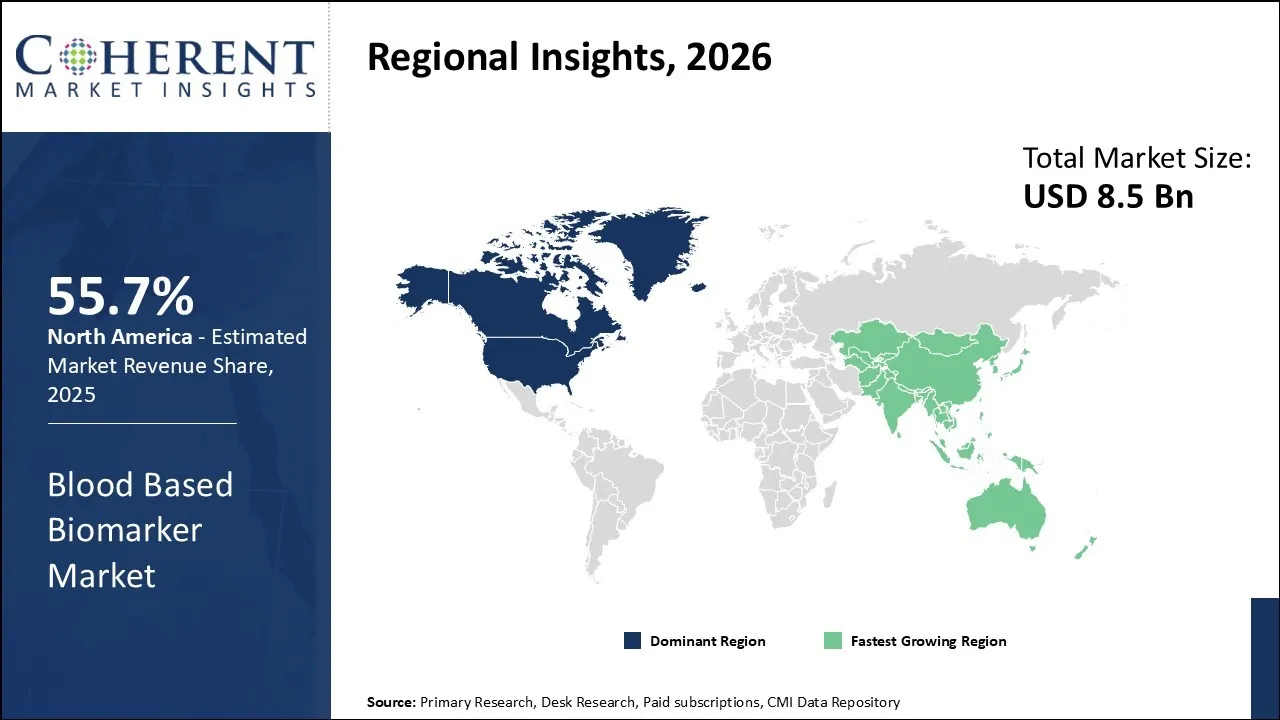
- Based on Region, North America is set to lead the blood based biomarker market with 42.78% share in 2026. While, Asia Pacific is anticipated to have fastest growing region.
Market Overview
The blood-based biomarker market is rapidly expanding, driven by several key factors that reflect broader shifts in healthcare and diagnostics. A major growth driver is the increasing prevalence of chronic and complex diseases such as cancer, cardiovascular disorders, and neurological conditions, which create demand for earlier, more precise detection methods that blood biomarkers can provide. Early disease detection and monitoring through minimally invasive blood tests is now a priority in clinical care, pushing adoption across hospitals, clinics, and research settings.
Current Events and their Impacts on the Blood Based Biomarker Market
Current Event | Description and its Impact |
Precision Medicine Initiatives and collaborations |
|
Regional Expansion in Alzheimer’s Disease Diagnostics |
|
Segmental Insights
- Current Industry Events of 2026
- Market Size Estimation
- Regional Breakdown
- Competitive Landscape
- Customer Intelligence
- Segmental Analysis
- Pricing Analysis
- Key Market Drivers, Challenges & Future Trends
- Customized Insights Section
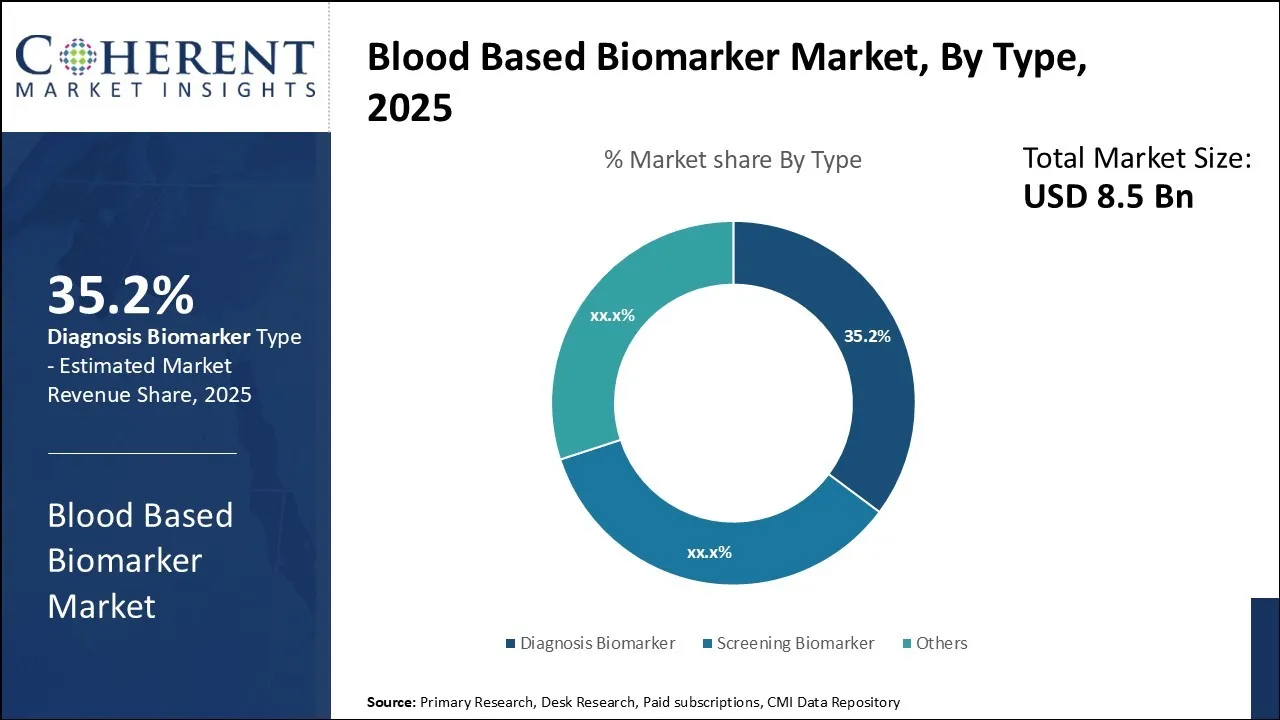
Blood Based Biomarker Market Insights, By Type - Diagnosis Biomarker represent the largest blood Based Biomarker base.
In terms of type, the diagnosis biomarker segment is expected to lead the market with 35.2% share in 2026. These biomarkers are widely used for early disease detection, particularly for serious conditions such as cancer, cardiovascular disorders, and neurological diseases. Early detection significantly improves treatment outcomes, guides clinical decision-making, and enhances overall patient care.
The strong clinical importance of diagnostic biomarkers, combined with rising global chronic disease prevalence and advancements in diagnostic technologies, continues to drive high demand in this segment.
For instance, according to the World Health Organization (WHO), approximately 70% of healthcare decisions are based on diagnostic test results, yet only 3–5% of healthcare budgets are allocated to diagnostic services. This imbalance highlights the critical role diagnostics play in healthcare systems worldwide. In many countries, clinicians lack access to basic diagnostic tools and laboratory tests necessary to support patients. Even where such services are available, vast geographic distances and isolated communities often make testing difficult, limiting timely diagnosis and treatment.
Blood Based Biomarker Market Insights, By Disease - Cancer dominate Blood Based Biomarker Because Of Its High Global Prevalence
In terms of disease, the cancer segment is expected to hold 55.5% share of the market in 2026. Reflecting the critical role of biomarkers in early detection, monitoring, and treatment guidance. Blood-based biomarkers, such as circulating tumor DNA and tumor-associated proteins, allow non-invasive detection and real-time tracking of tumor progression, making them indispensable in oncology.
For instance, as per the National Library of Medicine, late-stage diagnosis remains a major challenge in lung cancer, with only 20–30% of cases detected early. Liquid biopsy technologies can complement imaging by identifying molecular changes indicative of malignancy, enabling earlier diagnosis and more effective treatment interventions. The adoption of these advanced diagnostic tools underscores the dominance of cancer in the blood-based biomarker market and highlights both the clinical importance and commercial demand for precise, minimally invasive testing.
Blood Based Biomarker Market Insights, By Application - Drug Discovery leads because biomarkers are increasingly critical for identifying therapeutic targets
In terms of application, the drug discovery segment is projected to account for 46.4% share of the market in 2026. Blood-based biomarkers allow pharmaceutical and biotechnology companies to monitor disease progression, treatment response, and patient stratification in a minimally invasive way, reducing the time and cost of developing new therapies.
Regional Insights
North America Blood Based Biomarker Market Analysis & Trends
North America is expected to dominate the Blood Based Biomarker market with 55.7% share in 2026, driven by its concentration of major pharmaceutical and biotechnology companies, diagnostic laboratories, and research institutions that foster continuous innovation in biomarker discovery and validation. The presence of world-class medical centers across the United States and Canada has established sophisticated clinical pathways for integrating biomarkers into personalized medicine protocols, particularly in oncology and precision therapeutics.
For instance, according to a WIPO report published in 2025, North America, historically the global R&D leader, now accounts for around 28% of global research and development activity, followed by Europe (20%) and Central and Southern Asia (3.25%), highlighting the region’s continued strength in scientific innovation.
Asia Pacific Blood Based Biomarker Market Analysis & Trends
Asia Pacific is expected to exhibit the fastest growth, rising cancer incidence rates linked to aging populations, urbanization, lifestyle changes, and increased environmental exposures have created urgent demand for earlier detection and monitoring capabilities that blood-based biomarkers uniquely provide. Countries including China, India, and Japan are experiencing accelerated healthcare modernization, with government investments in diagnostic infrastructure and laboratory capabilities expanding access to advanced biomarker testing technologies.
For instance, in March 2025, Eisai, a pharmaceutical company based in Tokyo, Japan, announced that it will share its latest research on lecanemab (LEQEMBI), a treatment for Alzheimer’s disease, at the 2025 AD/PD™ International Conference in Vienna, Austria, and online from April 1–5. The company will present 16 research updates, including 6 oral presentations, covering lecanemab and other Alzheimer’s research. This highlights Asia’s contribution, as Eisai’s work in Japan is driving important developments in biomarkers and treatments for neurological diseases.
Blood Based Biomarker Market Outlook Country-Wise
The U.S. Blood Based Biomarker Market Trends
the US contributes the highest share in the blood-based biomarker market in the region owing to its advanced healthcare infrastructure, extensive research funding, and a well-established biotechnology and pharmaceutical industry. The US has a robust ecosystem that fosters innovation in molecular diagnostics, particularly in blood-based biomarker research, which is increasingly used for early disease detection, personalized medicine, and monitoring therapeutic responses.
For instance, initiatives such as the Cancer Biomarker Awareness Day hosted by the ACCC and the LUNGevity Foundation in November 2025 aim to educate clinicians and patients about the importance of cancer biomarkers. This highlights ongoing efforts in the US to increase biomarker adoption and awareness, supporting the country’s leading position in the blood-based biomarker market.
South Korea Blood Based Biomarker Market Trends
South Korea contributes the highest share in the blood-based biomarker market owing to its well-established healthcare infrastructure, strong emphasis on biotechnology innovation, and government-backed initiatives that promote precision medicine and early disease detection. South Korea’s robust investment in R&D, particularly in the genomics and diagnostics fields, has positioned it as a regional leader. partnerships and distribution agreements are helping expand access to advanced blood-based biomarker technologies.
For instance, in December 2025, Quanterix and Emocog entered an exclusive agreement in Korea to distribute the Simoa platform for blood-based Alzheimer’s diagnostics, enabling wider use of highly sensitive biomarker testing in clinical and research settings. This move highlights how collaboration between technology developers and local distributors is driving adoption, improving diagnostic capabilities, and supporting market growth in the region.
Market Report Scope
Blood Based Biomarker Market Report Coverage
| Report Coverage | Details | ||
|---|---|---|---|
| Base Year: | 2025 | Market Size in 2026: | USD 8.5 Bn |
| Historical Data for: | 2020 To 2024 | Forecast Period: | 2026 To 2033 |
| Forecast Period 2026 to 2033 CAGR: | 7% | 2033 Value Projection: | USD 16.5 Bn |
| Geographies covered: |
| ||
| Segments covered: |
| ||
| Companies covered: | Diadem srl., Proteomedix, Cleveland Diagnostics, F. Hoffmann-La Roche Ltd, GENFIT, Nutech Cancer Biomarkers India Pvt Ltd, SysmOex Corporation, Minomic, Creative Diagnostics, Eisai Co., Ltd., and C2N Diagnostics | ||
| Growth Drivers: |
| ||
| Restraints & Challenges: |
| ||
Blood Based Biomarker Market Driver
The rising prevalence of chronic diseases and cancer
The rising prevalence of chronic diseases and cancer is a primary driver fueling the expansion of the blood-based biomarker market. Chronic ailments such as diabetes, cardiovascular diseases, and neurodegenerative disorders have seen a marked increase globally, largely due to aging populations, lifestyle changes, and environmental factors. Blood-based biomarkers offer a minimally invasive, cost-effective, and rapid diagnostic tool to detect and monitor these conditions early, enabling timely intervention and personalized treatment approaches.
The growing demand for early disease detection and diagnosis
The growing demand for early disease detection and diagnosis is significantly propelling the expansion of the blood-based biomarker market. Early detection of diseases such as cancer, cardiovascular ailments, and neurodegenerative disorders is critical in improving patient outcomes by enabling timely intervention. Blood-based biomarkers offer a minimally invasive, cost-effective, and accessible approach to detect biochemical changes in the body long before symptoms manifest, revolutionizing traditional diagnostic paradigms.
Blood Based Biomarker Market Opportunity
Integration of AI and machine learning in biomarker discovery
The integration of artificial intelligence (AI) and machine learning (ML) in biomarker discovery represents a transformative opportunity within the blood-based biomarker market by significantly accelerating the identification and validation process of novel biomarkers. Blood-based biomarkers offer a minimally invasive and cost-effective solution for early diagnosis, prognosis, and therapeutic monitoring across numerous diseases, including cancer, cardiovascular disorders, and neurodegenerative diseases.
Analyst Opinion (Expert Opinion)
- The blood-based biomarker market is shaped by the growing demand for early disease detection, personalized medicine, and real-time monitoring of therapeutic response. According to the World Health Organization, chronic diseases such as cancer, cardiovascular disorders, and neurological conditions are rising globally, creating a sustained need for reliable diagnostic tools. In North America alone, an estimated 1.9 million new cancer cases are diagnosed annually, highlighting the importance of biomarkers in early detection and treatment guidance. This demonstrates that blood-based biomarkers are becoming essential components of modern healthcare.
- The market spans both clinical diagnostics and drug discovery applications. Blood-based biomarkers are increasingly used to stratify patients, monitor disease progression, and evaluate treatment efficacy, which supports precision medicine initiatives and enhances clinical decision-making. The Asia-Pacific region is also witnessing rising demand due to aging populations, lifestyle changes, and greater awareness of biomarker testing, leading to higher adoption rates in oncology and neurodegenerative disease diagnostics.
- Pipeline and regulatory dynamics continue to shape the market. For example, FDA approvals of companion diagnostics and biomarker-guided therapies in recent years highlight both the opportunities and challenges in validating new biomarkers for clinical use. Similarly, partnerships between technology developers and regional distributors, such as Quanterix and Emocog in Korea for the Simoa platform, demonstrate how commercial strategies are expanding access and adoption.
- Increasingly, innovation and technology are driving growth. Advances in liquid biopsy, high-sensitivity assays, and multiplex platforms are enabling minimally invasive testing and scalable biomarker integration into clinical workflows. Market differentiation will increasingly depend on assay accuracy, clinical validation, ease of use, and integration with digital health solutions, ensuring biomarkers provide actionable insights for patient management and therapeutic monitoring.
Speak to the analyst
Want personalized insights?
Take the findings above to one of our principal consultants, or have the report rebuilt around the segments, geographies and competitors you actually track.
Global Blood Based Biomarker Market: Key Developments
- In July 2025, The Alzheimer’s Association released its first guideline for using blood-based biomarker (BBM) tests to help diagnose Alzheimer’s disease in specialty care. The guideline was shared at the Alzheimer’s Association International Conference (AAIC®) 2025 in Toronto and online, and published in Alzheimer’s & Dementia: The Journal of the Alzheimer’s Association.
- In September 2025, Exact Sciences Corp., a leading company in cancer diagnostics, announced the launch of Cancerguard, a new blood test that can detect multiple types of cancer early. The test is now available in the United States as a laboratory-developed test (LDT). Cancerguard is the first commercially available test that looks at several types of biomarkers to help find cancers that are often diagnosed too late for effective treatment.
- In October 2025, Roche announced that the U.S. FDA has approved its Elecsys pTau181 test, a blood test that helps doctors in the initial assessment of Alzheimer’s disease and other cognitive problems in primary care. The test is for patients 55 and older who show signs of memory or thinking problems. It measures the pTau181 protein in blood, which is an important biomarker for Alzheimer’s disease.
- In September 2025, Onconetix, Inc., a biotechnology company working on men’s health and cancer treatments, announced that its subsidiary Proteomedix AG has signed a licensing agreement with Immunovia AB, a company in Lund, Sweden that develops tests for pancreatic cancer.
Market Segmentation
- By Type
- Screening Biomarker
- Diagnosis Biomarker
- Others
- By Disease
- Cancer
- Neurological Disorders
- Others
- By Application
- Diagnostics
- Drug Discovery
- Personalized Medicine
- By Region
- North America
- U.S.
- Canada
- Latin America
- Brazil
- Argentina
- Mexico
- Rest of Latin America
- Europe
- Germany
- U.K.
- Spain
- France
- Italy
- Russia
- Rest of Europe
- Asia Pacific
- China
- India
- Japan
- Australia
- South Korea
- ASEAN
- Rest of Asia Pacific
- Middle East & Africa
- GCC Countries
- Israel
- Rest of Middle East & Africa
- North America
- Key Players
- Diadem srl
- Proteomedix
- Cleveland Diagnostics
- Hoffmann-La Roche Ltd
- GENFIT
- Nutech Cancer Biomarkers India Pvt Ltd
- SysmOex Corporation
- Minomic, Creative Diagnostics, Eisai Co., Ltd.
- C2N Diagnostics
Sources
Primary Research Interviews
- Biotech Company Executives
- Clinical Laboratory Directors
- Healthcare Providers/Oncologists
- Diagnostic Equipment Manufacturers
- Others
Databases
- ClinicalTrials.gov
- PubMed Central
- Others
Magazines
- BioTechniques
- Clinical Laboratory News
- The Scientist
- Others
Journals
- Journal of Molecular Diagnostics
- Biomarkers in Medicine
- Clinical Chemistry
- Others
Newspapers
- The Wall Street Journal (Health Section)
- Financial Times (Healthcare Section)
- The New York Times (Science Section)
- Others
Associations
- The Biomarkers Consortium
- American Association for Clinical Chemistry (AACC)
- European Society for Medical Oncology (ESMO)
- Others
Public Domain Sources
- World Health Organization (WHO) Reports
- U.S. Food and Drug Administration (FDA) Publications
- Centers for Disease Control and Prevention (CDC) Data
- Others
Proprietary Elements
- CMI Data Analytics Tool
- Proprietary CMI Existing Repository of Information for the Last 8 Years
Get access to 250+ pages report
Every segment, forecast, competitor profile and data table behind the analysis above — available for instant download.
- ESOMAR Member
- ISO 9001:2015 Certified
- D-U-N-S Registered
- GDPR & CCPA Compliant
Missing comfort of reading report in your local language? Find your preferred language:
Transform your Strategy with Exclusive Trending Reports
Frequently Asked Questions
The global Blood Based Biomarker Market size was valued at USD 8.5 Bn in 2026 and is expected to reach USD 16.5 Bn in 2033.
Major players operating in the market include Diadem srl., Proteomedix, Cleveland Diagnostics, F. Hoffmann-La Roche Ltd, GENFIT, Nutech Cancer Biomarkers India Pvt Ltd, SysmOex Corporation, Minomic, Creative Diagnostics, Eisai Co., Ltd., and C2N Diagnostics
Among disease, the cancer segment estimated significant revenue in 2026.
Factors such as increasing prevalence of cancer and neurological diseases and rising research and development for blood based biomarker are expected to drive the market growth over forecast period.
The market is estimated to exhibit a CAGR of 7% till 2033.
Among region, North America is expected to witness significant growth over the forecast period.