
Flat 45% off this market research report
Nov 26 – 29 · Direct purchase only · Not applicable to customized reports
Global Affinity Chromatography Market Size and Forecast – 2026 To 2033
The global affinity chromatography market is expected to grow from USD 3,860.0 Mn in 2026 to USD 6,400.0 Mn by 2033, registering a compound annual growth rate (CAGR) of 7.5% from 2026 to 2033. The global market for affinity chromatography is projected to grow substantially throughout the forecast period attributed to the rising demand for monoclonal antibodies and different biologic medicine which required extremely selective purification within the downstream processing.
U.S. Food and Drug Administration (FDA) biologics license application (BLA) approvals rose from 18 in FY2016 to 38 in FY2025. Globally, biologics approval growth has outpaced all other drug and biologics categories, up more than twofold from FY2016 to FY2025. This increases the use of affinity-based purification, especially for Protein A affinity resins to purify antibodies.
Key Takeaways of the Global Affinity Chromatography Market
- Resins are projected to hold 63.4% of the global affinity chromatography market share in 2026, making it dominant product type segment. North America is a dominant region owing to high number of biopharmaceutical manufacturing capacity as well as rising demand for specialty affinity media to facilitate the purification of plasma protein & therapeutic proteins. In 2024, the U.S. National Institutes of Health (NIH) awarded USD 275,000 SBIR grant to research on the development of customized nanoCLAMP affinity chromatography resins to enhance the purification of plasma-derived therapeutic proteins.
- Protein A is projected to hold 46.3% of the global affinity chromatography market share in 2026, making it dominant ligand type segment. Europe is the leader in antibody purification research and innovation in downstream bioprocessing. The AIMS project, supported by the European Union, showed that Fracto Aims chromatography resin could outperform Protein A technology and reported that an optimized purification process could lower monoclonal antibody total purification costs by a factor of three.
- Monoclonal antibody purification is projected to hold 64.2% of the global affinity chromatography market share in 2026, making it dominant application segment. Asia-pacific is predicted to have high growth potential owing to the increasing manufacturing of biologics and biosimilars in China, India, and South Korea. In February 2026, Government of India in the Union Budget announced the investment in Biopharma SHAKTI initiative in India with an investment of USD 1,360 million (INR 10,000 crore) for five years for domestic manufacturing of biologics and biosimilars. The budget also included 3 new NIPERs and augmenting clinical research infrastructure in leading institutes to help carry out advanced trials for a new biologic molecule, thereby expected to provide growth opportunity for downstream purification of affinity chromatography.
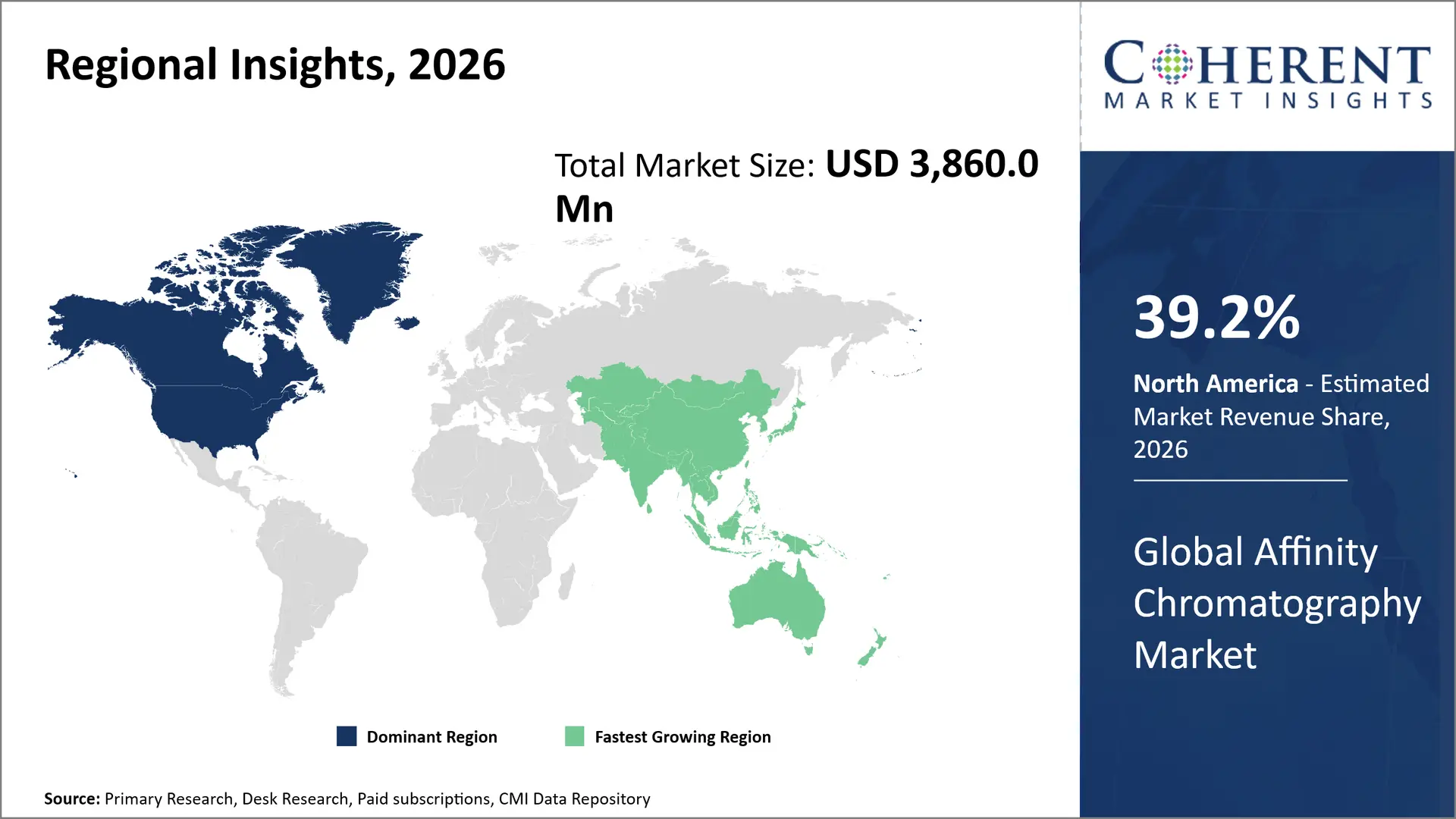
- North America market maintains dominance with an expected share of 39.2% in 2026. The expanding base of bio manufacturing in the U.S., the high concentration of monoclonal antibody (mAb) manufacturers, and significant investments in research & development of downstream purification are driving the regional market. In January 2026, a publication was made by Pennsylvania State University and University of Arkansas researchers for high-throughput adeno-associated virus (AAV) purification by affinity chromatography coupled with single-pass tangential flow filtration.
- Asia Pacific is expected to exhibit the fastest growth in the global affinity chromatography market, registering an estimated CAGR of 12.1% during 2026–2033. This growth can be attributed to the rising biologics manufacturing, biosimilar production, and government initiatives on innovator biomanufacturing in China, India, and South Korea. The government of India in July 2026 announced that over 270 projects have been sanctioned for funding under the BioE3 Policy, further including projects related to high-performance biomanufacturing and precision biotherapeutics. The need for affinity-based downstream purification approaches will grow.
Segmental Insights
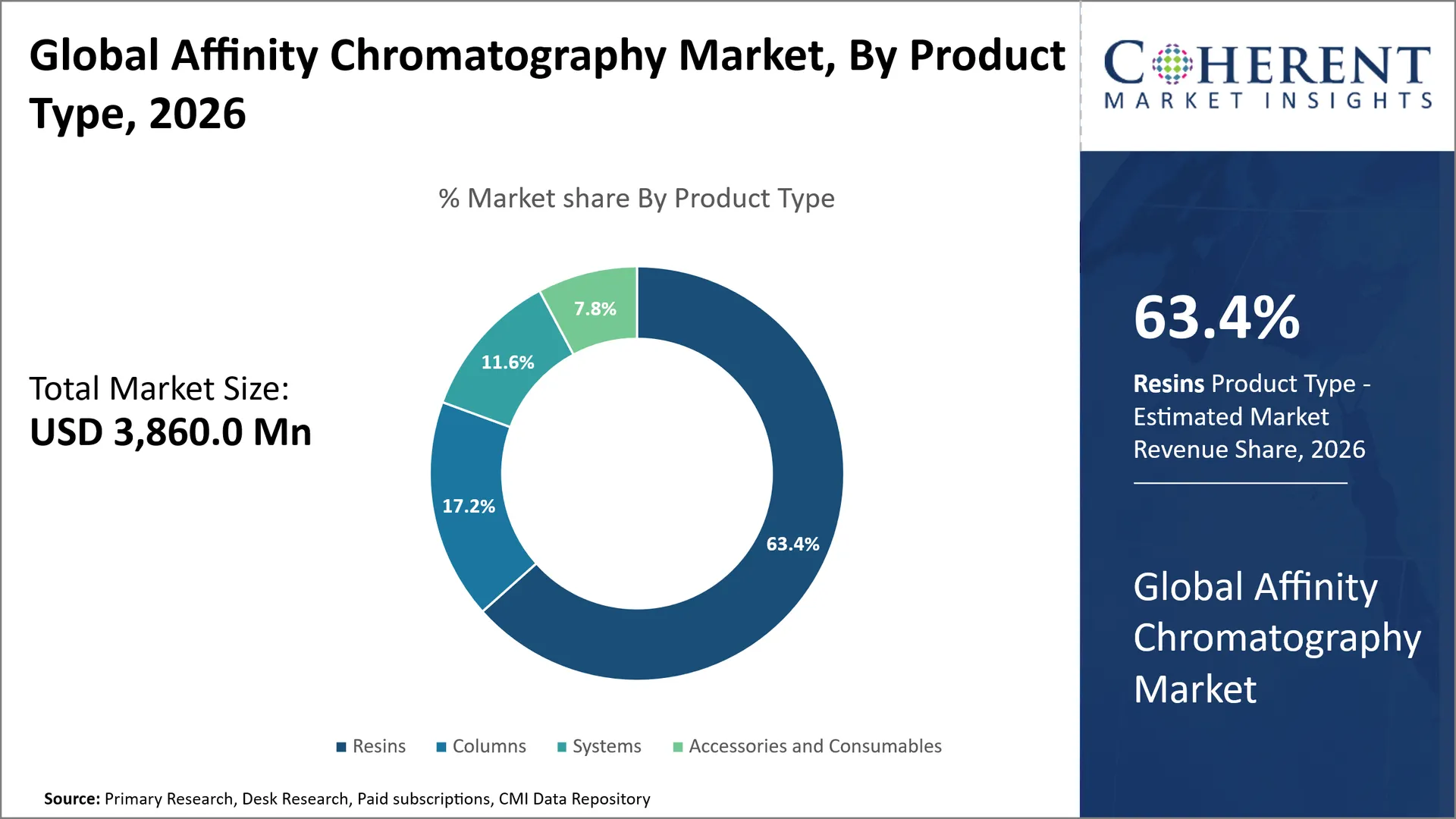
Why Do Resins Dominate the Global Affinity Chromatography Market?
Resins are projected to hold the market share of 63.4% in 2026, owing to the applications of these resins in capturing and purifying specific biomolecules. Growing need of monoclonal antibodies and recombinant proteins is boosting the research in high capacity, stable and re-usable affinity resins in order to enhance purification yield and process. For instance, in April 2024, researchers announced the publication of a paper reporting the manufacture of an affinity chromatography resin based on a photosynthetically generated Protein A ligand, thereby enabling the purification of functional monoclonal antibodies in a one-step process. (Source: Springer Nature Limited)
- Current Industry Events of 2026
- Market Size Estimation
- Regional Breakdown
- Competitive Landscape
- Customer Intelligence
- Segmental Analysis
- Pricing Analysis
- Key Market Drivers, Challenges & Future Trends
- Customized Insights Section
Why Do Protein A Represent the Largest Ligand Type Segment in the Affinity Chromatography Market?
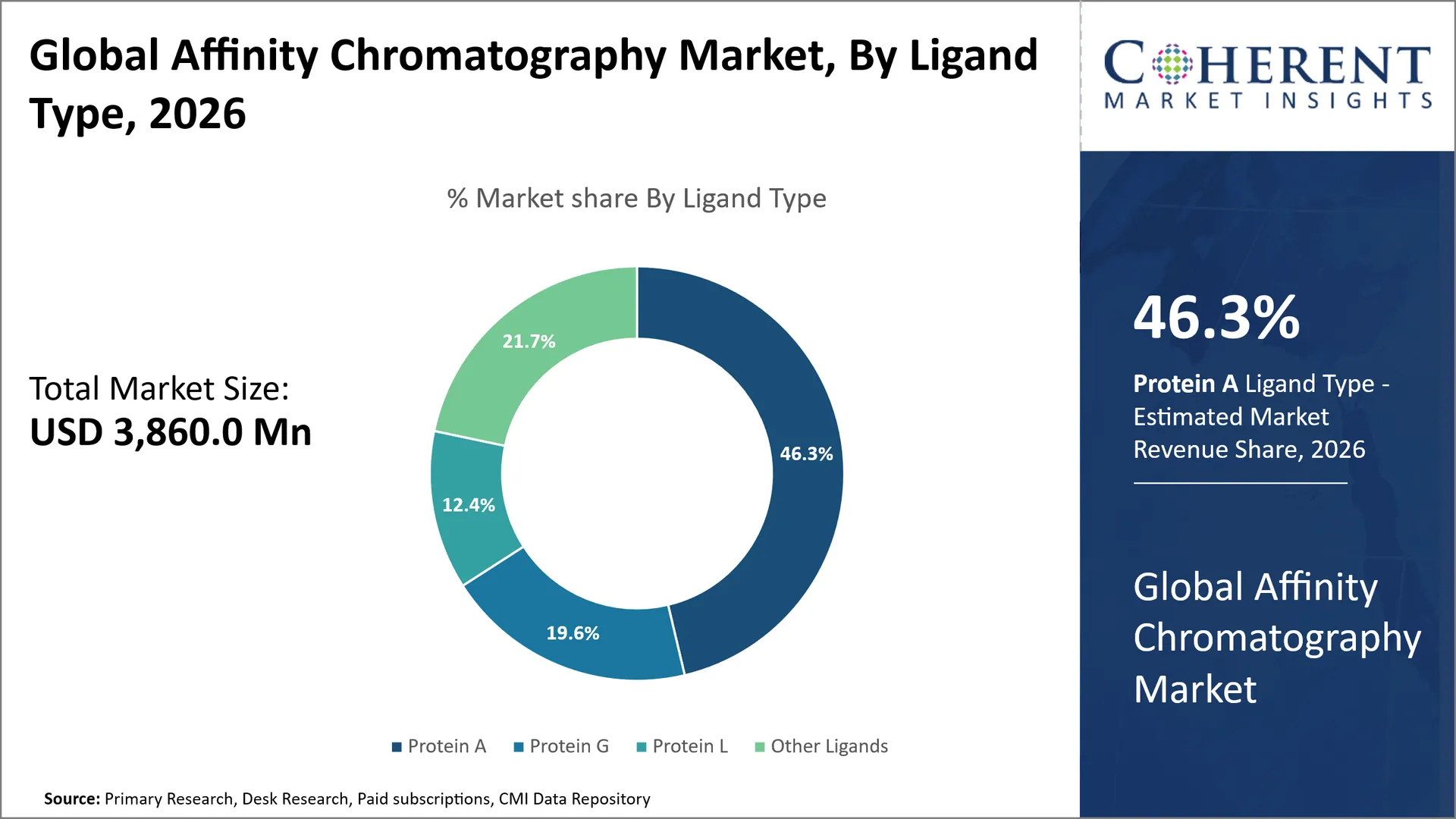
Protein A is projected to hold a market share of 46.3% in 2026, as it exhibits highest specificity for IgG antibodies and is widely used for purification of monoclonal antibodies. Protein A also provides superior binding performance and can be used for multiple purification cycles in commercial biopharmaceutical manufacturing further strengthening the segment’s dominance. For instance, in July 2024. a research study published by the MDPI, demonstrated a new affinity resin based on a mutant Protein A ligand with a dynamic binding capacity of up to 50 mg IgG/mL and a triple cycle life of 100 binding, elution and sanitization cycles.
Monoclonal Antibody Purification Segment Dominates the Global Affinity Chromatography Market
The monoclonal antibody purification segment is projected to hold a market share of 64.2% in 2026, due to high growth rate of monoclonal antibodies production, as well as an enhanced focus on scalable, high-purity downstream purification. Affinity chromatography permits the specific capture of monoclonal antibodies and the rapid removal of impurities supporting consistent product quality during biopharmaceutical manufacturing. For instance, in August 2025, a study published by the John Wiley & Sons, Inc. demonstrated that Protein A membrane chromatography decreased the monoclonal antibody purification time by 96% – from 190 minutes to 7.5 minutes, without compromising the recovery of the product (>90%)
Current Events and their Impact
Current Events | Description and its Impact |
FDA Introduced PreCheck Pilot Program to Strengthen Domestic Biologics Manufacturing (June 2026) |
|
Government Establishment of GMP Facility for Biologics and Cell-Based Therapies (March 2026) |
|
Affinity Chromatography Market Dynamics
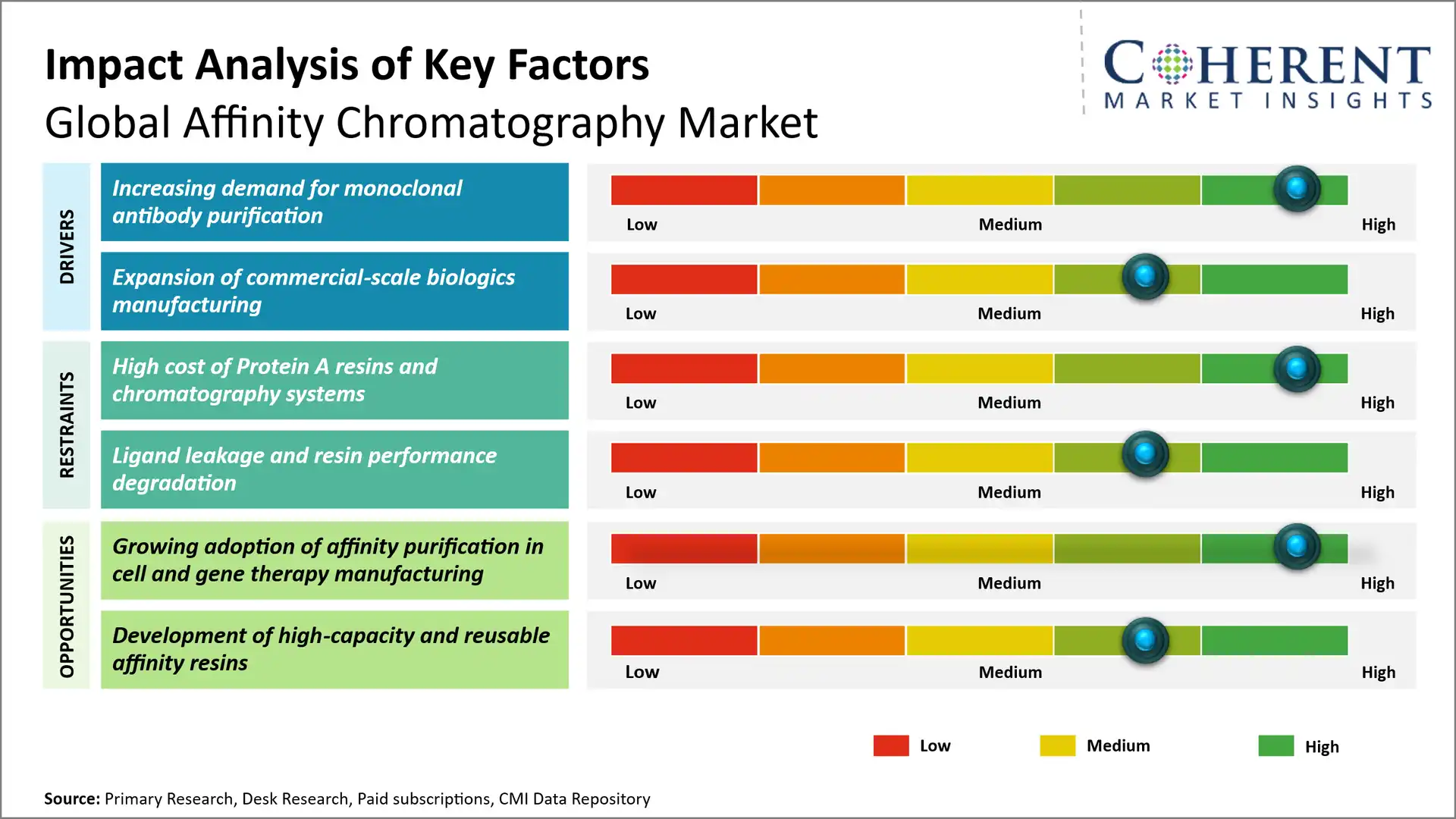
Market Drivers
- Increasing demand for monoclonal antibody purification: The ongoing growth and commercialization of monoclonal antibody (mAb) drugs for the treatment of cancers, autoimmune disorders and rare diseases is forecasted to further drive the need for a high-yield, high-purity downstream purification. Affinity chromatography is widely applied for high-capacity capture of all immunoglobulin groups and for ensuring product consistency. In 2024, 13 monoclonal antibodies were approved by the US. FDA, signifying the persistent growth of the class of therapeutic and the demand for purification technologies.
- Expansion of commercial-scale biologics manufacturing: Rising investment in large biopharma and manufacturing facilities is driving production volumes for biologics and biosimilars, and increasing the need for scalable downstream purification solutions. Affinity chromatography allows for the reliable recovery of therapeutic proteins in high purity enabling commercial manufacturing. In September 2025, Government of India announced an investment of USD 4.37 billion (INR 40,294 crore) for high value products including biopharmaceuticals under its PLI Scheme for Pharmaceuticals in more than 350 manufacturing units including 28 greenfield sites.
- Growth in biosimilar development and manufacturing: As biosimilars continue to develop, the need for more cost-effective and scalable purification processes is growing to obtain the desired product purity and a lot of consistency. In this case, affinity chromatography is a useful technique because it can specifically capture the protein of interest, and efficiently remove impurities. In 2025, U.S. FDA approved 18 biosimilars, among them four products that referenced authorized biosimilars for which there had been no approved biosimilar products yet.
Emerging Trends
- Development of high-capacity and alkali-resistant affinity resins: Manufacturers are working on designing engineered Protein A ligands as well as high-performance matrix materials with enhanced binding capacity and chemical stability.
- Impact: They lead to cost reductions in daily reuse, lower replacement rates and the purification process.
- Market Relevance: This trend is driving increasing demand for next-generation affinity resins for large-scale monoclonal antibody production.
- Increasing adoption of membrane-based affinity chromatography: Biopharmaceutical manufacturers are evaluating affinity membrane technologies as potential replacements for traditional packed-bed resin systems for some purification processes.
- Impact: They can accelerate processes, accelerate purification and allow higher manufacturing throughput.
- Market Relevance: The trend broadens the uses for affinity chromatography in rapid antibody purification and continuous bioprocessing.
Regional Insights
Why is North America a Strong Market for Affinity Chromatography?
North America leads the global affinity chromatography market, accounting for an estimated 39.2% share in 2026, because of the higher spending in the healthcare sector, presence of advanced research facilities, and well-established biotech and pharma industries in the region. The U.S. is positively supported by strong government funding for life sciences, laboratories that follow rigid regulatory norms for high purity, and optimized intellectual property and regulatory laws for restriction of adverse effects of new molecular drugs, which stimulates innovation and adoption of refined purification techniques.
For instance, in August 2024, the U.S. National Science Foundation provided USD 1.0 million in funding through its SBIR Phase II programme to develop a bioprocessing system for direct isolation and purification of therapeutic antibodies from cell culture. This grant incentivizes work to enhance process efficiency, time reduction and cost minimization for the Protein A media. (Source: America's Seed Fund)
Why Does Asia Pacific Affinity Chromatography Market Exhibit High Growth?
Asia Pacific is expected to exhibit the fastest growth in the global affinity chromatography market, registering an estimated CAGR of 12.1% during 2026–2033. The region is projected to account for 25.1% of the global market in 2026, due to the continual emergence of pharmaceutical and biotechnology organizations along with the rising research and development activities in various fields of biosciences in the region especially in countries such as China, India, Japan, and South Korea.
Additionally, implementation of policies promoting biotechnological innovations through special economic zones, attraction of tax advantages in research-intensive sectors, biopharmaceuticals manufacturing are key factors driving affinity chromatography market. For instance, Singapore's Enterprise Innovation Scheme offers a 400% tax deduction for innovative companies' approved R&D expenses – such as research conducted in Singapore for Years of Assessment (YA) 2024-2028. This initiative is good for R&D intensive sectors like biotech and biopharma and will help to invigorate Singapore’s ecosystem for advanced purification technologies such as affinity chromatography. (Source: Government of Singapore)
Global Affinity Chromatography Market Outlook for Key Countries
Why is the U.S. Leading Innovation and Adoption in the Affinity Chromatography Market?
The U.S. is the major player in the affinity chromatography market due to the presence of high number of monoclonal antibody developers, biologics manufacturers, and bioprocessing facilities. The country has a well-developed landscape of Protein A-based capture platform, constant downstream processing, and affinity resins with higher binding capacity for the purification of antibodies at the commercial scale. Moreover, the U.S. is significant in the affinity chromatography market due to the need for affinity materials and automation in the manufacturing of more complex biologics.
Is Japan a Favorable Market for Affinity Chromatography Market?
Japan is an emerging affinity chromatography market owing to its biopharmaceutical industry and high-quality biologics manufacturing. The market for affinity chromatography is essential in the country for the purification of monoclonal antibodies and recombinant proteins, for which the required antibody can be captured selectively by Protein A-based affinity chromatography resins. There is a demand for high affinity, affinity ligands, high-capacity resins, automated purification processes, and high throughput systems.
Is China Emerging as a Key Growth Hub for the Affinity Chromatography Market?
China is poised to be a major growth market in affinity chromatography due to rising production of monoclonal antibodies, biosimilars, and recombinant proteins. Rising investments in biopharmaceuticals manufacturing and rising in-house CDMO capacity are fueling demand for large-scale downstream purification products. The growing use of Protein A resins, advanced affinity ligands and auto-chromatography systems and will likely grow as biologics manufacturing accelerates.
Why Does Germany Top the European Affinity Chromatography Market?
Germany accounts for the largest share of the European affinity chromatography market owing to the presence of a robust biopharmaceutical manufacturing industry in the country and also because of its rich experience in biologics and therapeutic protein manufacturing. The presence of numerous antibody developers and biologics manufacturing facilities in the country implies significant requirement for Protein A resins and other selective purification media.
Is Affinity Chromatography Market Developing in UK?
The UK is emerging as a strong and attractive market for affinity chromatography, primarily due to its expanding biologics research base and advanced therapy manufacturing base. Demand is mainly driven by an increasing pipeline of monoclonal antibodies, recombinant proteins and cell and gene therapies, all of which require easy, selective and robust downstream purification steps. Opportunities are developing for Protein A-based resins, affinity ligands and chromatography processes for process development and biomanufacturing.
Application of Affinity Chromatography in Viral Vector Purification
Target biomolecule | Affinity ligand / matrix | Recovery (%) | Key purification relevance |
Adenovirus | Zn²⁺ / cellulose | 87% | Selective viral particle capture |
Hepatitis C virus | Sulfated cellulose | 50% | Viral particle purification |
Influenza A virus | Sulfated cellulose | 73–94% | Viral recovery and impurity removal |
Influenza A virus | Zn²⁺ / cellulose | 64% | Metal-affinity-based purification |
How is the growing adoption of affinity purification in cell and gene therapy manufacturing creating new growth opportunities in the affinity chromatography market?
The growth of cell and gene therapy sector is providing new opportunities for affinity chromatography, owing to high purity demand of viral vectors, plasmid DNA and other therapeutic molecules. Affinity chromatography is well suited for selective capture for better recovery and impurity removal, and now peptide ligands and affinity resins are helping to broaden its uses in viral vector purification. For instance, in April 2025, researchers published a protocol for adenovirus purification using peptide-functionalized affinity resins that recovered ~50% of infective viral particles and significantly reduced host-cell contaminants. The study was partially funded by an FDA grant (R01FD007481). (Source: John Wiley & Sons, Inc.)
Market Players, Key Development, and Competitive Landscape
Key Developments
- In June 2025, Ecolab Life Sciences launched Purolite AP+50, a 50-micron affinity chromatography resin for monoclonal antibody capture. The 50-micron affinity resin provides high dynamic binding capacity, increased resin lifetime and reliable bead manufacturing to improve antibody purification and lower manufacturing costs. The product introduction demonstrates ongoing advances in affinity resins for large-volume biopharmaceutical manufacturing and contract development and manufacturing organizations (CDMOs).
- In May 2025, Waters Corporation introduced Bio Resolve Protein A Affinity Columns with Max Peak Premier Technology allowing the measurement of antibody titer from sample to answer for bioprocess monitoring. With up to 7-fold higher sensitivity it enables identification of high producing clones two days earlier. This speeds up downstream development through rapid monitoring of bioprocess and faster process optimization, highlighting the innovative advances in the technology of Protein A affinity chromatography for mAbs manufacturing.
Competitive Landscape
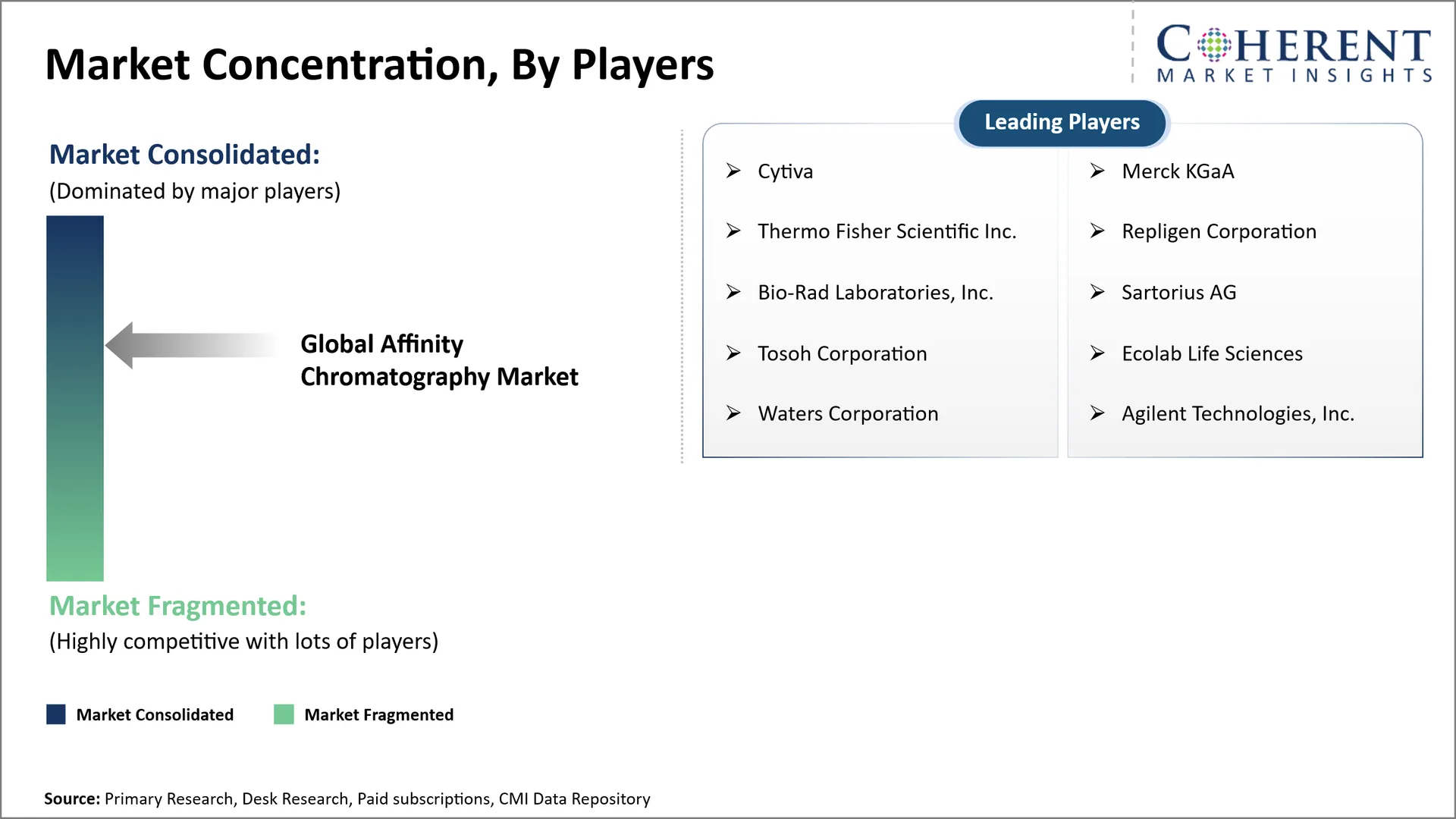
The global affinity chromatography market is moderately competitive with companies competing with their resin quality, ligands, product purity, process scale up and performance. The market players are consistently innovating the chromatography processes as well as technologies to meet the growing purifications demands of biopharmaceutical manufacturing. Key focus areas include:
- Development of high-capacity affinity resins for rapid purification of monoclonal antibody and recombinant protein.
- Improvement of ligand stability and binding specificities in order to optimize purification performance and the re-use of resin.
- De novo design of affinity ligands for the purification of different biomolecules.
- Growth of affinity chromatography applications for production of viral vectors, plasmid DNA and cell and gene therapies.
- Development of pre-packed chromatography columns and automated systems to further enhance consistency and scale-up of process.
- Optimization of resin activity and impurity removal to minimize purification time and downstream manufacturing costs.
Market Report Scope
Affinity Chromatography Market | |||
Report Coverage | Details | ||
Base Year | 2025 | Market Size in 2026: | USD 3,860.0 Mn |
Historical Data For: | 2020 To 2024 | Forecast Period: | 2026 To 2033 |
Forecast Period 2026 To 2033 CAGR: | 7.5% | 2033 Value Projection: | USD 6,400.0 Mn |
Geographies covered: |
| ||
Segments covered: |
| ||
Companies covered: | Cytiva, Merck KGaA, Thermo Fisher Scientific Inc., Repligen Corporation, Bio-Rad Laboratories, Inc., Sartorius AG, Tosoh Corporation, Ecolab Life Sciences, Waters Corporation, Agilent Technologies, Inc. | ||
Growth Drivers: |
| ||
Restraints & Challenges: |
| ||
Analyst Opinion (Expert Opinion)
- In the future, affinity chromatography will continue to evolve as part of the trend to more high-performance, application specific approaches to the separation of complex products. Protein A chromatography will retain its importance in monoclonal antibody purification. Other ligand types and resins will become more relevant for the purification of other complex biomolecules. Integration with automated and continuous bioprocessing will enhance the manufacturing process.
- The major opportunities are expected in the availability of high-capacity Protein A resins used for monoclonal antibody purification in the U.S. As antibody manufacturing demands become more complex, there will be a need for resins with higher binding capacity, greater alkaline stability, and extended working lifespans. A smaller opportunity will be in peptide-based affinity ligands for viral vector purification, especially in China, driven by its growing cell and gene therapy manufacturing industry.
- In order to gain a competitive advantage market players should focus on ligand engineering and resin development to improve binding specificity, recovery, chemical stability, and reuse capacity. Industry players should develop more application focused purification products for mAbs, viral vectors, and recombinant proteins to meet previously unmet manufacturing needs. More robust process validation solutions; larger size pre-packed columns and auto spray columns; and technical collaborations with biopharma manufacturers are also key to supporting adoption to the commercial manufacturing stage.
Speak to the analyst
Want personalized insights?
Take the findings above to one of our principal consultants, or have the report rebuilt around the segments, geographies and competitors you actually track.
Market Segmentation
- Product Type Insights (Revenue, USD Mn, 2021 - 2033)
- Resins
- Columns
- Systems
- Accessories and Consumables
- Ligand Type Insights (Revenue, USD Mn, 2021 - 2033)
- Protein A
- Protein G
- Protein L
- Other Ligands
- Application Insights (Revenue, USD Mn, 2021 - 2033)
- Monoclonal Antibody Purification
- Recombinant Protein Purification
- Vaccine Purification
- Others
- End User Insights (Revenue, USD Mn, 2021 - 2033)
- Pharmaceutical and Biotechnology Companies
- Contract Research and Manufacturing Organizations (CROs and CDMOs)
- Academic and Research Institutes
- Others
- Regional Insights (Revenue, USD Mn, 2021 - 2033)
- North America
- U.S.
- Canada
- Latin America
- Brazil
- Argentina
- Mexico
- Rest of Latin America
- Europe
- Germany
- U.K.
- Spain
- France
- Italy
- Russia
- Rest of Europe
- Asia Pacific
- China
- India
- Japan
- Australia
- South Korea
- ASEAN
- Rest of Asia Pacific
- Middle East
- GCC Countries
- Israel
- Rest of Middle East
- Africa
- South Africa
- North Africa
- Central Africa
- North America
- Key Players Insights
- Cytiva
- Merck KGaA
- Thermo Fisher Scientific Inc.
- Repligen Corporation
- Bio-Rad Laboratories, Inc.
- Sartorius AG
- Tosoh Corporation
- Ecolab Life Sciences
- Waters Corporation
- Agilent Technologies, Inc.
Sources
Primary Research Interviews
- U.S. Food and Drug Administration (FDA)
- National Institute of Allergy and Infectious Diseases (NIAID)
- European Commission
- Department of Biotechnology, Government of India
Stakeholders
- Pharmaceutical and Biotechnology Companies
- Contract Research Organizations (CROs)
- Contract Development and Manufacturing Organizations (CDMOs)
- Academic and Research Institutes
- End-use Sectors
- Biopharmaceutical Manufacturing
- Monoclonal Antibody Production
- Recombinant Protein Manufacturing
- Vaccine and Advanced Therapy Manufacturing
- Regulatory & Health Bodies
- U.S. Food and Drug Administration (FDA)
- National Institute of Allergy and Infectious Diseases (NIAID)
- European Commission
- Inland Revenue Authority of Singapore (IRAS)
Databases
- FDA Novel Drug Approvals Database
- National Science Foundation (NSF) Award Database
Public Domain Sources
- U.S. Food and Drug Administration – PreCheck Pilot Program
- National Science Foundation – SBIR Phase II Award Database
- National Institute of Allergy and Infectious Diseases – Generic Preclinical Development Plan for Human Monoclonal Antibodies
- European Commission – Building the Future with Nature: Boosting Biotechnology and Biomanufacturing in the EU
- Inland Revenue Authority of Singapore – Enterprise Innovation Scheme
- Press Information Bureau, Government of India – Biopharmaceutical and Biomanufacturing Initiatives
Proprietary Elements
- CMI Data Analytics Tool, Proprietary CMI Existing Repository of information for last 10 years.
Get access to 250+ pages report
Every segment, forecast, competitor profile and data table behind the analysis above — available for instant download.
- ESOMAR Member
- ISO 9001:2015 Certified
- D-U-N-S Registered
- GDPR & CCPA Compliant
Frequently Asked Questions
The global affinity chromatography market is estimated to be valued at USD 3,860.0 Mn in 2026 and is expected to reach USD 6,400.0 Mn by 2033.
Resins dominate because they are indispensable for the preferential capture of biomolecules, as well as the high binding capacity and widespread application in monoclonal antibody and recombinant protein purification.
Affinity chromatography is a highly selective separation technique which utilizes selective biological interactions between a target molecule and an immobilized ligand to isolate and purify biomolecules.
The CAGR of global affinity chromatography market is projected to be 7.5% from 2026 to 2033.
Increasing demand for monoclonal antibody purification, and expansion of commercial-scale biologics manufacturing are the major factors driving the growth of the global affinity chromatography market.
High cost of Protein A resins and chromatography systems, and ligand leakage and resin performance degradation are the major factors hampering the growth of the global affinity chromatography market.
In terms of ligand type, Protein A is estimated to dominate the market revenue share in 2026.