

Global Agentic AI Market and Forecast - 2026 to 2033
The Global Agentic AI Market is estimated to be valued at USD 9.87 Bn in 2026 and is expected to reach USD 114.89 Bn by 2033, exhibiting a compound annual growth rate (CAGR) of 42.0% from 2026 to 2033.
Key Takeaways of the Global Agentic AI Market
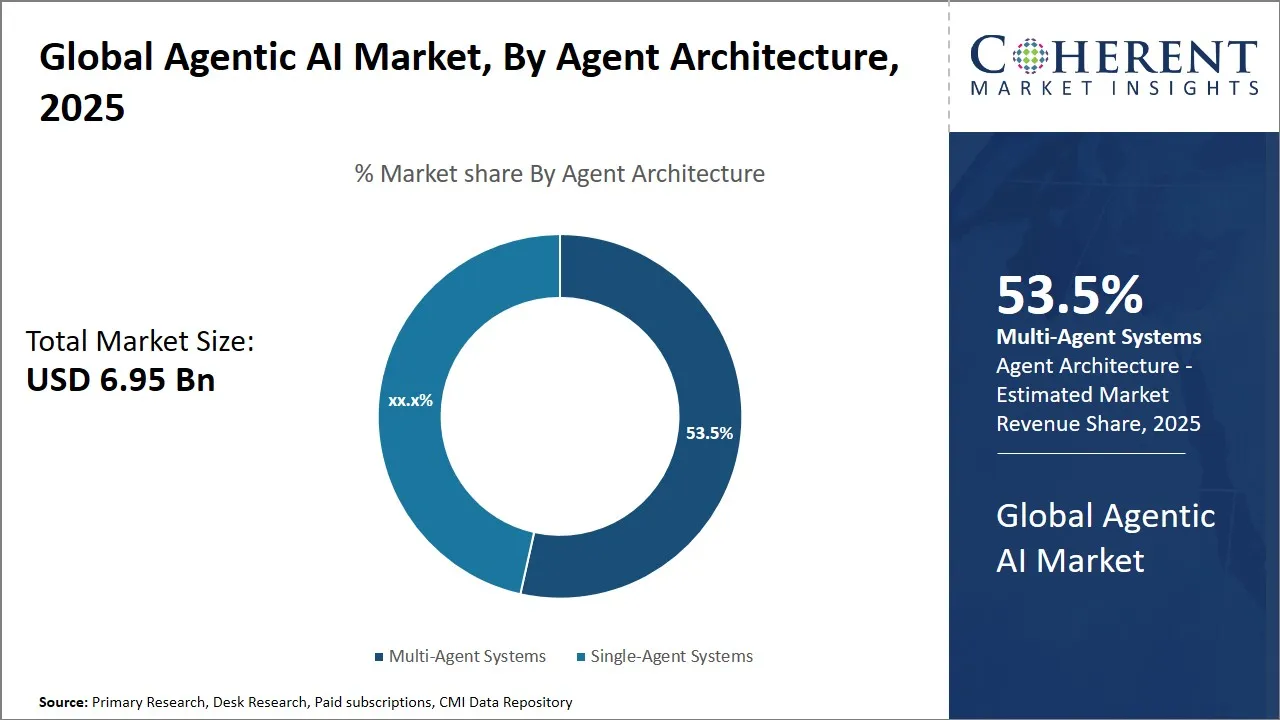
- The multi-agent systems segment is expected to lead the market holding a share of 54.5% in 2026.
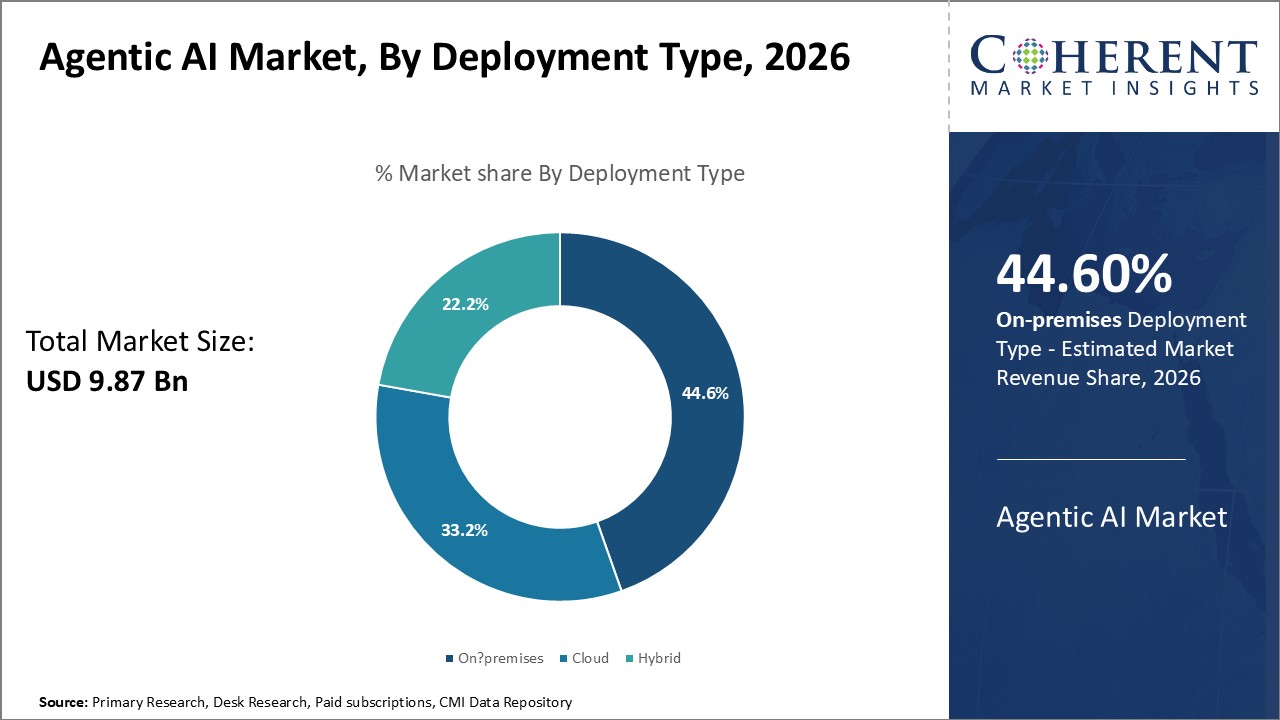
- The on-premises segment is projected to hold a prominent market share of 44.6% in 2026.
- The autonomous process automation segment is expected to lead the market holding a share of 25.3% in 2026.
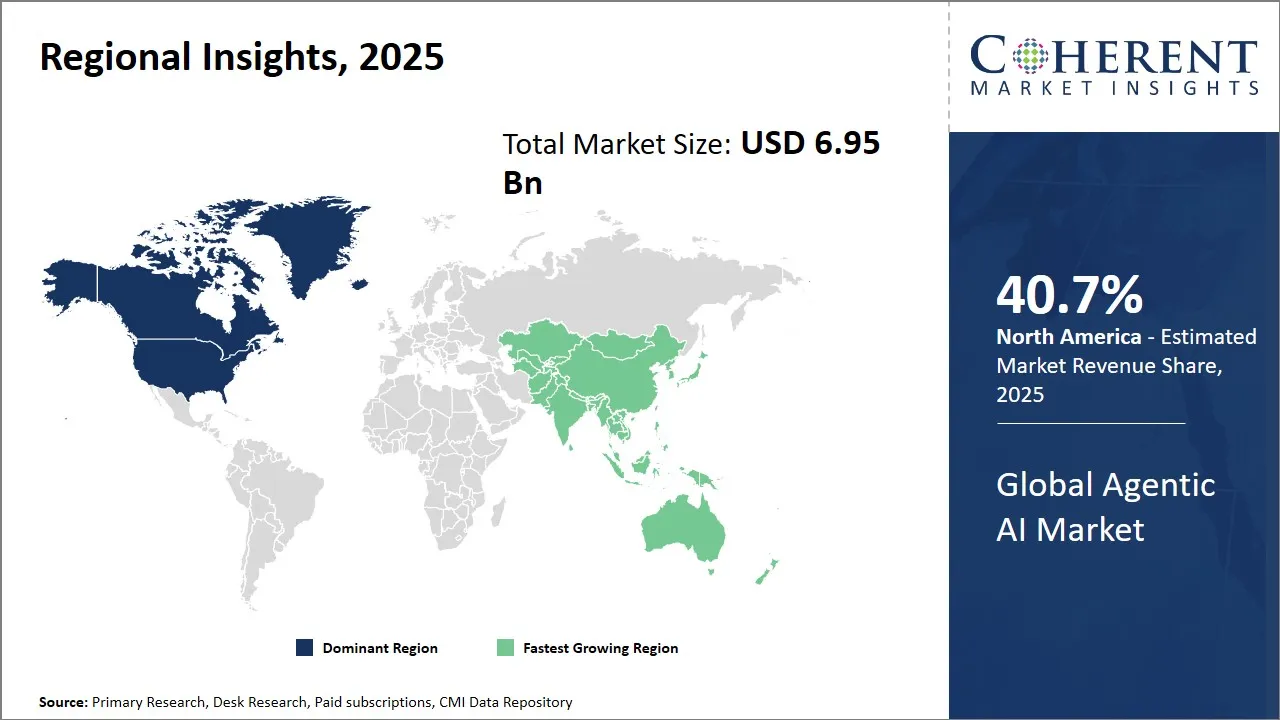
- North America, expected to hold a share of 40.7% in 2026, dominates the market.
- Asia Pacific is expected to be the fastest growing regional market with a share of 26.8% in 2026.
Market Overview
The fast growth of the global agentic AI market reflects broader use of self-operating AI in many fields, fueled by progress in machine learning, natural language processing, or smarter decision algorithms that boost performance and insight.
Nowadays, market movements show a clear move toward using self-directed AI across areas like health services, financial systems, and production lines. Automated decision-making combined with forecasting tools are changing standard operations. A rising focus on custom-built AI assistants combined with smart automation is boosting interest, along with funding poured into AI innovation efforts. At the same time, new rules and standards for fair AI use are influencing progress, supporting long-term, accountable rollout of these independent AI systems globally.
Current Events and Its Impacts
Current Events | Description and Its Impact |
New AI agent startup funding |
|
Product/Platform Launch |
|
Segmental Insights
- Current Industry Events of 2026
- Market Size Estimation
- Regional Breakdown
- Competitive Landscape
- Customer Intelligence
- Segmental Analysis
- Pricing Analysis
- Key Market Drivers, Challenges & Future Trends
- Customized Insights Section
Global Agentic AI Market Insights, By Agent Architecture – Multi-Agent Systems Drive Market Growth through Enhanced Collaboration and Scalability
In terms of agent architecture, multi-agent systems are expected to lead the global market with a share of 54.5% in 2026. This dominance comes mostly from growing needs in various sectors for teamwork-focused, expandable, flexible thinking tools. Instead of single units, these systems use several smart components that operate together - linked by shared goals - to handle tough tasks, similar to how groups make choices apart but aligned. Because this setup brings useful benefits like smoother scaling or better fault handling, it’s being used more often.
Central to the rise of multi-agent systems is their ability to handle complex environments effectively. These setups don't work alone like single agents do. Instead, reliance is placed on coordination among separate components acting together - this simplifies adjustments while supporting adaptable results. Such setups work well in areas such as transport networks, energy systems, or self-driving machines, where cooperation across units increases effectiveness. Moreover, due to inherent modular design, businesses may deploy agents step by step or in groups, adjusting scale based on shifting needs.
For instance, on January 16, 2025, Cognizant launched a tool named Neuro AI Multi-Agent Accelerator, together with assistance services. The rollout helps firms build and apply AI agents faster. Through intelligent automation across departments, units update their workflows. Using this platform, organizations adapt swiftly by adjusting routines instantly. People gain from tailored interactions using live-updated data. The system supports technical monitoring, budgeting, client messaging - also promotional efforts - by linking them via one intelligent framework.
Global Agentic AI Market Insights, By Deployment Type – On-Premises Deployment Commands Market Preference Due to Security and Control
Based on deployment type, the on-premises segment is expected to contribute the highest share in the global agentic AI market with 44.6% in 2026. The growth of the segment stems largely from how firms now focus more on data protection, safety, and oversight. Particularly in controlled fields - like banking, medicine, or public administration - businesses favor local setups for their AI agents, choosing them over cloud options so they keep full authority over vital systems and information.
Organizations keep full control over hardware and software with on-premises setups and important for handling confidential data or meeting strict regulatory standards. Since operations stay within internal networks, risks tied to public cloud services or web-based threats are lowered. Some companies prioritize tailored security settings and real-time oversight of data flow when deciding between deployment models. As a result, local infrastructure often becomes the go-to option for running agentic AI in vital applications where uptime and consistency matter most.
Global Agentic AI Market Insights, By Application – Autonomous Process Automation Leads Growth by Transforming Business Efficiency
In terms of application, autonomous process automation is projected to contribute the highest share of 25.3% in the global agentic AI market in 2026, driven by the urgent need for businesses to streamline operations, improve accuracy, and reduce manual workload. APA uses smart agents that handle simple and advanced tasks automatically. This helps companies become more flexible in operations while reducing expenses because systems work independently.
The growing need for digital change in various sectors drives the uptake of autonomous process automation. Because businesses quickly spot tasks that follow set patterns, they apply agentic AI to boost speed and output. In banking, systems handle payments while spotting suspicious activity; meanwhile, logistics networks rely on autonomous process automation for stock control and delivery routes. Customer support teams also deploy smart bots so issues get solved faster. As a result, its use across fields makes APA key to rolling out agentic AI.
For instance, on March 3, 2025, Panaya, known for cloud-based testing solutions, introduced an autonomous self-fixing automation tool that reduces manual updates, improves system reliability, while speeding up deployment in business software environments.
Regional Insights
North America Agentic AI Market Analysis and Trends
North America is the leader in the global Agentic AI Market with an estimated share of 40.7% in 2026. In North America, leadership in the global agentic AI market comes from a developed tech environment, heavy R&D spending, coupled with active public backing for new solutions.
Major players like IBM, Google, Microsoft, or NVIDIA push progress forward, spurring both invention and real-world use of independent AI systems. Strategic state efforts to boost AI skills, combined with large-scale financing for military and medical uses, strengthen this edge. Alongside, a thriving startup scene paired with ready venture funds speeds up building smart agents that act on their own. Strong IP rules plus reliable digital frameworks shape a trading climate drawing international experts and alliances, reinforcing regional strength in the sector.
Asia Pacific Agentic AI Market Analysis and Trends
Asia Pacific agentic AI market is expected to exhibit the fastest growth and hold a market share of 26.8% in 2026. The surge stems from rising digital shifts, wider AI use in various sectors alongside active government backing that encourages artificial intelligence innovation in developing nations including China, India, Japan, and South Korea. Notably, China’s nationwide AI plan combined with heavy funding in AI studies has driven fast market growth, aided by vast data access plus an expanding network of tech firms such as Baidu, Alibaba, and Tencent.
Meanwhile, India's thriving IT industry paired with state programs like Digital India boosts market traction. Increasing applications in manufacturing, urban development, and medical fields throughout Asia Pacific widen the need for autonomous AI tools. Commerce trends including supportive trade rules together with regional partnerships such as ASEAN-led AI projects help foster international collaboration and deeper market reach.
Global Agentic AI Market Outlook for Key Countries
U.S. Agentic AI Market Analysis and Trends
The U.S. holds strong influence in the agentic AI sector, thanks to major tech companies, top research centers, and heavy funding from venture capitalists. Firms like Google DeepMind, Microsoft Azure AI, or IBM Watson lead efforts in building systems that act independently when solving issues or making choices. Strong technical foundations along with federal initiatives focused on ethical use and safety help foster trustworthy progress, making America a key force setting worldwide benchmarks in this field.
China Agentic AI Market Analysis and Trends
China's fast-expanding agentic AI sector grows through official policies plus widespread availability of trained professionals. Firms such as Baidu, Alibaba, or Tencent push forward with intelligent systems in areas like self-driving vehicles, automated production, and online financial services. State-backed funding combined with an extensive digital infrastructure allows quick rollout of artificial intelligence tools. Close coordination among public institutions, universities, and private companies drives faster development while boosting regional reach along with global influence.
Japan Agentic AI Market Analysis and Trends
Japan stays ahead in the agentic AI market by combining industrial robotics with automated processes, using intelligent agents to boost efficiency across factories and medical services. Companies like Sony, alongside Hitachi and Fujitsu, deliver cutting-edge AI tools capable of independent choices in demanding settings. With support from national policy, innovation hubs explore artificial intelligence responses to social shifts, especially those tied to older demographics through assistive robotic care devices paired with real-time wellness tracking tech, strengthening Japan’s role in functional, everyday AI use.
India Agentic AI Market Analysis and Trends
India's agentic AI market grows fast due to strong IT services and wider use of AI in banking, farming, and government work. Firms such as TCS, Infosys, and Wipro now apply agentic AI into automated tools and smart assistance systems, improving performance while boosting user interaction. Initiatives including Digital India plus the national AI plan help build tech centers that support new ventures working on autonomous AI solutions. With many English speakers alongside affordable tech development setups, the country becomes an attractive hub for scaling up AI-driven innovations.
Germany Agentic AI Market Analysis and Trends
Germany’s market for agentic AI is strongly influenced by its advanced manufacturing sector and automotive industry, where companies like Siemens, Bosch, and Daimler utilize agentic AI to drive smart factory automation and autonomous vehicle technology. The government’s Industry 4.0 policies actively promote AI innovation, particularly targeting improvements in process optimization and supply chain management through intelligent agents capable of proactive decision-making. Germany’s established engineering expertise and emphasis on data privacy build a trustworthy market environment that supports sustained adoption of agentic AI technologies.
Market Share of Leading Agentic AI Platforms
Market Player | Market Share on Ai Models & Platforms | Market Share on Agents/Enterprise Co-Pilots |
Microsoft | 39% | 10% |
Open AI | 9% | 13% |
15% | 8% | |
Amazon Web Services | 19% | 11% |
Anthropic | 4% | 7% |
Cost Savings & Productivity Impacts from Agentic AI Implementation
| Before AI | After AI | Reduction (%) |
Standard Task Duration | 27 hours/week | 11 hours/week | 59% |
Cost | USD 260/Workflow | USD 120/Workflow | 54% |
Major KPI Impact from Agentic AI Implementation
KPI | Before AI | After AI | Increase (%) |
Task Accuracy | 7.0 | 9.1 | 30% |
Productivity index | 4.5 | 8.2 | 82% |
SLA Compliance | 6.4 | 9.0 | 41% |
Employee Augmentation | 3.5 | 8.0 | 128% |
Market Players, Key Development, and Competitive Intelligence
Key Developments
- On April 30, 2025, UiPath, known for advanced automation tools, introduced a new version of its platform focused on agent-based processes. This updated system connects artificial intelligence agents, software bots, and human workers within one integrated environment. Built around open, safe coordination methods, it improves task handling across organizations. Users can develop, launch, and oversee automated systems efficiently. The design supports strong performance under changing demands while maintaining strict regulatory alignment.
- On March 31, 2025, Open AI announced an investment of USD 40 Billion at a post valuation of USD 300 Billion. This investment enables Open AI to push the frontiers of AGI research even further.
Top Strategies Followed by Agentic AI Market Players
- The agentic AI sector is fast-moving, with firms using different tactics based on size and goals. Big names lead by spending heavily on R&D, focusing on breakthroughs to offer strong, dependable systems that adapt to changing needs. Instead of going solo, they team up with key businesses, OEMs, or tech frontrunners aiming to improve products and lock in lasting deals. These joint efforts strengthen technical advantages while increasing reach into various industries.
- On November 19, 2025, during Microsoft Ignite 2025, Microsoft unveiled specialized agents for Word, Excel, and PowerPoint inside Microsoft 365 Copilot. As a result, people can now generate docs, sheets, or slides straight from Copilot Chat. Instead of switching apps, they’ll handle tasks right where they’re working.
- Mid-tier firms in the agentic AI space prioritize value without overspending, aiming for practical tools that offer solid performance at lower prices. Instead of chasing premium markets, they serve budget-focused customers and SMEs wanting reliable but affordable tech. Through partnerships or shared projects, these companies expand output while speeding up innovation - this boosts productivity and cuts expenses over time.
- On August 5, 2025, Aisera, a leading provider of agentic AI for enterprise, announced the launch of Aisera Unify, the first open standards-based communication backbone and underlying architecture that enables multi-agent orchestration across disparate apps, systems, and platforms to truly deliver autonomous outcomes manageable and observable from a single agent interface.
- Smaller firms in the global agentic AI sector stand out by targeting narrow areas with focused improvements. Instead of broad approaches, they build tools fine-tuned to particular business demands or user habits - giving them an edge where bigger rivals miss opportunities. By using advanced methods like on-device processing, instant data interpretation, or custom learning systems, these organizations adapt quickly and respond with precision.
- On August 28, 2025, Maisa, known for building hallucination-resistant AI agents, announced a USD 25 Million funding round. The lead investor is Creandum with additional backing from Forgepoint Capital’s EU partnership with Banco Santander.
Market Report Scope
Agentic AI Market Report Coverage
| Report Coverage | Details | ||
|---|---|---|---|
| Base Year: | 2025 | Market Size in 2026: | USD 9.87 Bn |
| Historical Data for: | 2020 To 2024 | Forecast Period: | 2026 To 2033 |
| Forecast Period 2026 to 2033 CAGR: | 42.0% | 2033 Value Projection: | USD 114.89 Bn |
| Geographies covered: |
| ||
| Segments covered: |
| ||
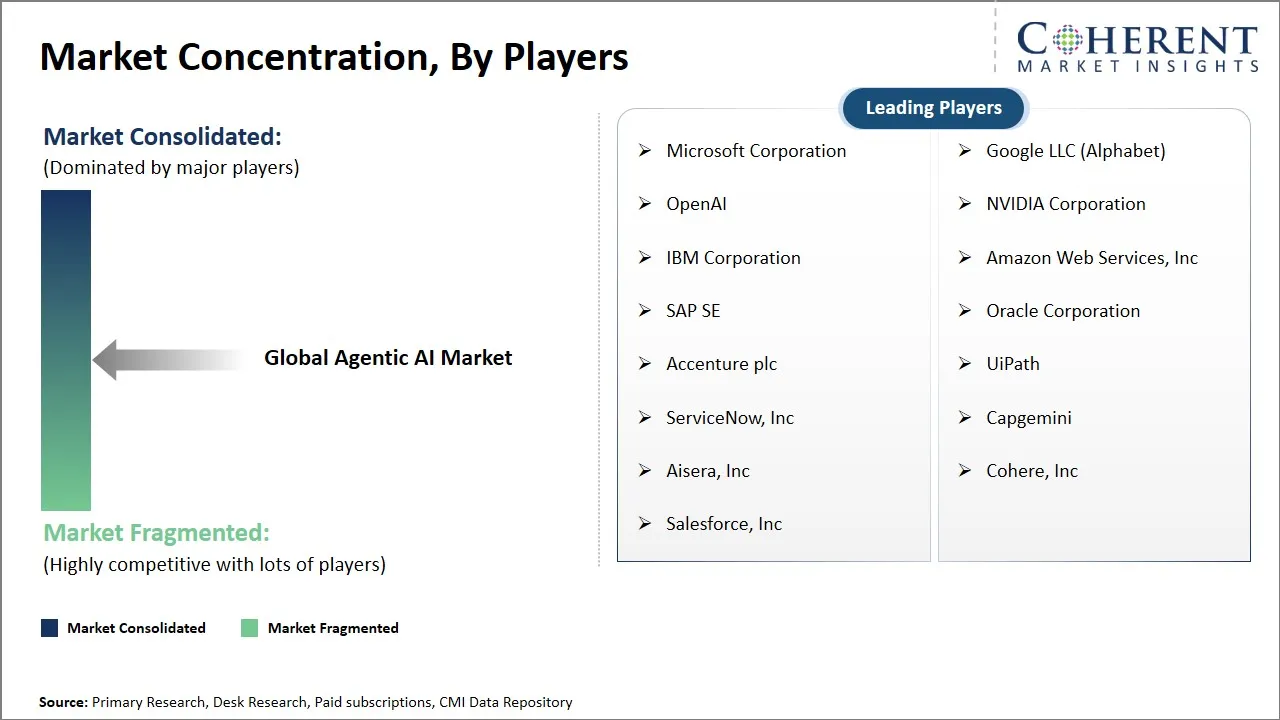
| Companies covered: | Microsoft Corporation, Google LLC (Alphabet), OpenAI, NVIDIA Corporation, IBM Corporation, Amazon Web Services, Inc, SAP SE, Oracle Corporation, Accenture plc, UiPath, ServiceNow, Inc, Capgemini, AIsera, Inc, Cohere, Inc, and Salesforce, Inc | ||
| Growth Drivers: |
| ||
| Restraints & Challenges: |
| ||
Market Dynamics
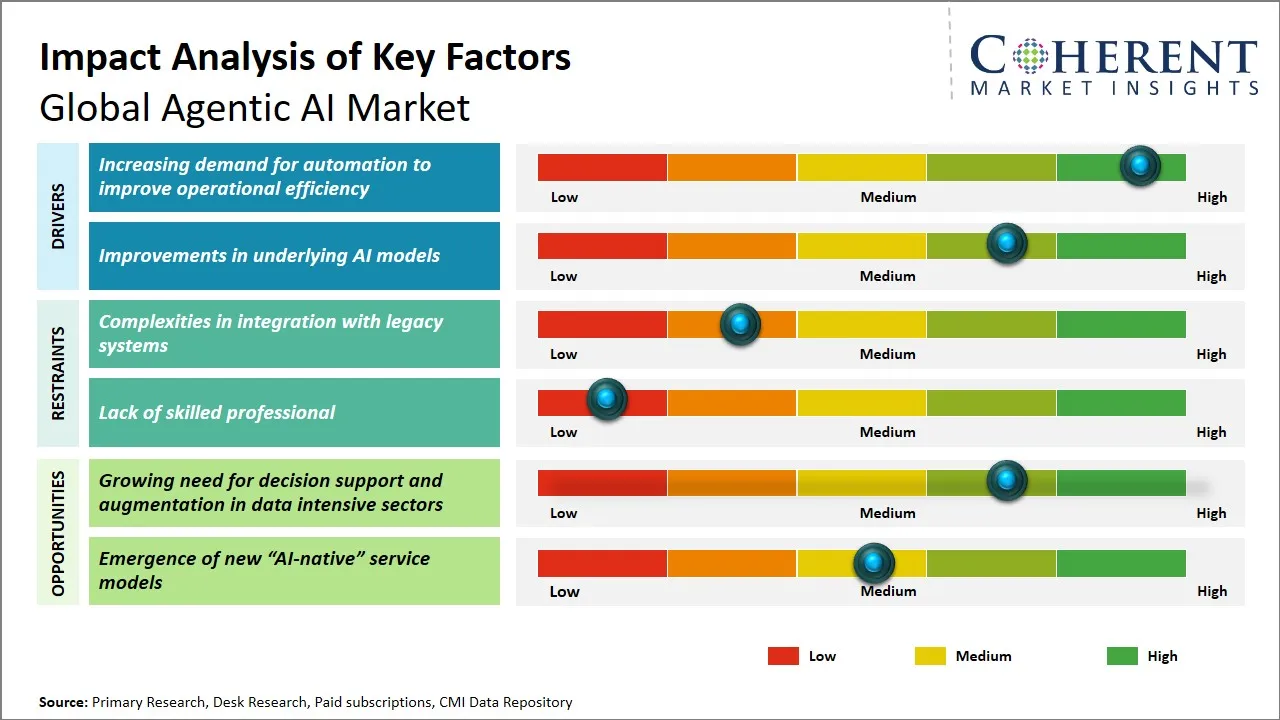
Global Agentic AI Market Driver – Increasing demand for automation to improve operational efficiency
The rising demand for automated solutions in different fields is pushing forward the use of agentic AI. Because businesses aim to simplify processes, cut mistakes, or boost employee output, smart self-operating tools are becoming more essential. These systems work on their own - handling tough jobs while needing little oversight, which improves choices and speeds up results.
In areas like production, delivery services, or support roles, such technology helps handle vast amounts of information along with routine tasks quickly. Moreover, agentic AI’s skill in adjusting and picking up insights from surroundings helps firms move faster and react better which is key to staying ahead amid shifting market conditions. Consequently, rising demands to lower expenses while improving performance are pushing steady interest in agentic AI tools capable of scaling automated tasks.
Global Agentic AI Market Opportunity – Growing need for decision support and augmentation in data intensive sectors
The global agentic AI market is seeing strong growth due to rising needs for smart decision tools in fields like finance, healthcare, manufacturing, or telecom. Such areas produce vast amounts of complicated information every day - this calls for powerful analysis methods to uncover useful findings quickly. Because they work independently when studying, understanding, and responding to big data sets, agentic AI models offer critical help by improving choices people make while easing mental strain. Take finance: instant risk checks and spotting fraud depend largely on clever platforms able to handle layered data flows, an area where agentic AI fits perfectly.
Healthcare workers now use active AI systems to help spot illnesses, design custom care plans - also improve daily operations by combining health records with research findings. In factories, such tools boost supply networks alongside preventive repairs and product checks using constant data flow plus self-driven choices. As smart gadgets multiply and companies push digital upgrades, the flood of information grows harder to manage, pushing businesses toward stronger AI models able to decide quickly yet accurately. That widens market reach, encourages new solutions focused on enhancing decisions, sparking major expansion across different areas of the industry.
For instance, on October 15, 2025, Oracle introduced advanced AI agents inside its Oracle Fusion Cloud Applications to boost speed, cut expenses and facilitate smart decisions.
Analyst Opinion (Expert Opinion)
- Agentic AI marks a significant shift forward in facilitating business workflows from start to finish. Rather than simply introducing new chatbot versions, it enables independent choices, manages workflows, along with streamlining operations within companies. Possibilities reflect businesses may achieve notable improvements in speed, scalability, and flexibility. These intelligent agents aim to handle intricate sequences like organizing deliveries, guiding client interactions, handling information flows in a certain manner that regular automated tools or fixed scripts fail to match.
- Success in technical tests often fails to bring benefits when used by companies, since most assessments only look at performance numbers while ignoring user needs, practical conditions, risk factors, or cost impacts. Consequently, widespread use across organizations could stay limited unless regulations, oversight, system compatibility, and field testing improve.
Speak to the analyst
Want personalized insights?
Take the findings above to one of our principal consultants, or have the report rebuilt around the segments, geographies and competitors you actually track.
Market Segmentation
- Agent Architecture Insights (Revenue, USD Bn, 2021 - 2033)
- Multi-Agent Systems
- Single-Agent Systems
- Deployment Type Insights (Revenue, USD Bn, 2021 - 2033)
- On‑premises
- Cloud
- Hybrid
- Application Insights (Revenue, USD Bn, 2021 - 2033)
- Autonomous Process Automation
- Predictive Analytics
- Intelligent virtual Assistants
- RPA Integration
- Smart Manufacturing
- Others
- Industry Verticals Insights (Revenue, USD Bn, 2021 - 2033)
- BFSI
- Healthcare
- IT and Telecom
- Manufacturing
- Government and Public Sector
- Automotive
- Retail and E-commerce
- Others
- Regional Insights (Revenue, USD Bn, 2021 - 2033)
- North America
- U.S.
- Canada
- Latin America
- Brazil
- Argentina
- Mexico
- Rest of Latin America
- Europe
- Germany
- U.K.
- Spain
- France
- Italy
- Russia
- Rest of Europe
- Asia Pacific
- China
- India
- Japan
- Australia
- South Korea
- ASEAN
- Rest of Asia Pacific
- Middle East
- GCC Countries
- Israel
- Rest of Middle East
- Africa
- South Africa
- North Africa
- Central Africa
- North America
- Key Players Insights
- Microsoft Corporation
- Google LLC (Alphabet)
- OpenAI
- NVIDIA Corporation
- IBM Corporation
- Amazon Web Services, Inc
- SAP SE
- Oracle Corporation
- Accenture plc
- UiPath
- ServiceNow, Inc
- Capgemini
- AIsera, Inc
- Cohere, Inc
- Salesforce, Inc
Sources
Primary Research Interviews
- AI Technology Solution Providers
- Enterprise Software Vendors
- AI Platform Developers
- End-user Organizations (Fortune 500 Companies)
Databases
- Crunchbase (AI Startup and Investment Database)
- PitchBook (Private Market Intelligence)
- IDC MarketScape Database
- Gartner Research Database
Magazines
- AI Magazine
- MIT Technology Review
- Wired Magazine
- IEEE Computer Society Magazine
Journals
- Journal of Artificial Intelligence Research (JAIR)
- AI Communications Journal
- IEEE Transactions on Artificial Intelligence
Newspapers
- The Wall Street Journal
- Financial Times
- Reuters Technology News
- Bloomberg Technology
- The Information
Associations
- Association for the Advancement of Artificial Intelligence (AAAI)
- IEEE Computer Society
- Partnership on AI
- AI Ethics Global Partnership
Public Domain Sources
- U.S. Patent and Trademark Office (USPTO)
- European Patent Office (EPO)
- GitHub AI Project Repositories
- ArXiv AI Research Papers
Proprietary Elements
- CMI Data Analytics Tool
- Proprietary CMI Existing Repository of information for last 8 years
Get access to 250+ pages report
Every segment, forecast, competitor profile and data table behind the analysis above — available for instant download.
- ESOMAR Member
- ISO 9001:2015 Certified
- D-U-N-S Registered
- GDPR & CCPA Compliant
Missing comfort of reading report in your local language? Find your preferred language:
Transform your Strategy with Exclusive Trending Reports
Frequently Asked Questions
The global agentic AI market is estimated to be valued at USD 9.87 Bn in 2026 and is expected to reach USD 114.89 Bn by 2033.
The CAGR of global agentic AI market is projected to be 42.0% from 2026 to 2033.
Increasing demand for automation to improve operational efficiency and improvements in underlying AI models are the major factors driving the growth of the global agentic AI market.
Complexities in integration with legacy systems and lack of skilled professional are the major factors hampering the growth of the global agentic AI market.
In terms of agent architecture, multi-agent systems are estimated to dominate the market revenue share in 2026.
Microsoft Corporation, Google LLC (Alphabet), OpenAI, NVIDIA Corporation, IBM Corporation, Amazon Web Services, Inc, SAP SE, Oracle Corporation, Accenture plc, UiPath, ServiceNow, Inc, Capgemini, AIsera, Inc, Cohere, Inc, and Salesforce, Inc are the major players.
North America is expected to lead the global agentic AI market in 2026.