
Global AI-Enabled Organoid Drug Screening Market Size and Forecast – 2026 To 2033
The global AI-enabled organoid drug screening market is expected to grow from USD 286.4 Mn in 2026 to USD 1,019.6 Mn by 2033, registering a compound annual growth rate (CAGR) of 19.9% from 2026 to 2033. The AI-enabled organoid drug screening market is expected to show a high growth rate over the forecast years, owing to the growing government support for human relevant drug testing technology.
In September 2025, the U.S. National Institutes of Health (NIH) provided contracts totaling USD 87 million for three years to establish the Standardized Organoid Modeling Center that would back up reproducible organoid models and algorithmic protocols by artificial intelligence (AI). It is expected that these efforts would support organoid-based screening platform use and accelerate the development of more predictive preclinical drug testing models.
Key Takeaways of the Global AI-Enabled Organoid Drug Screening Market
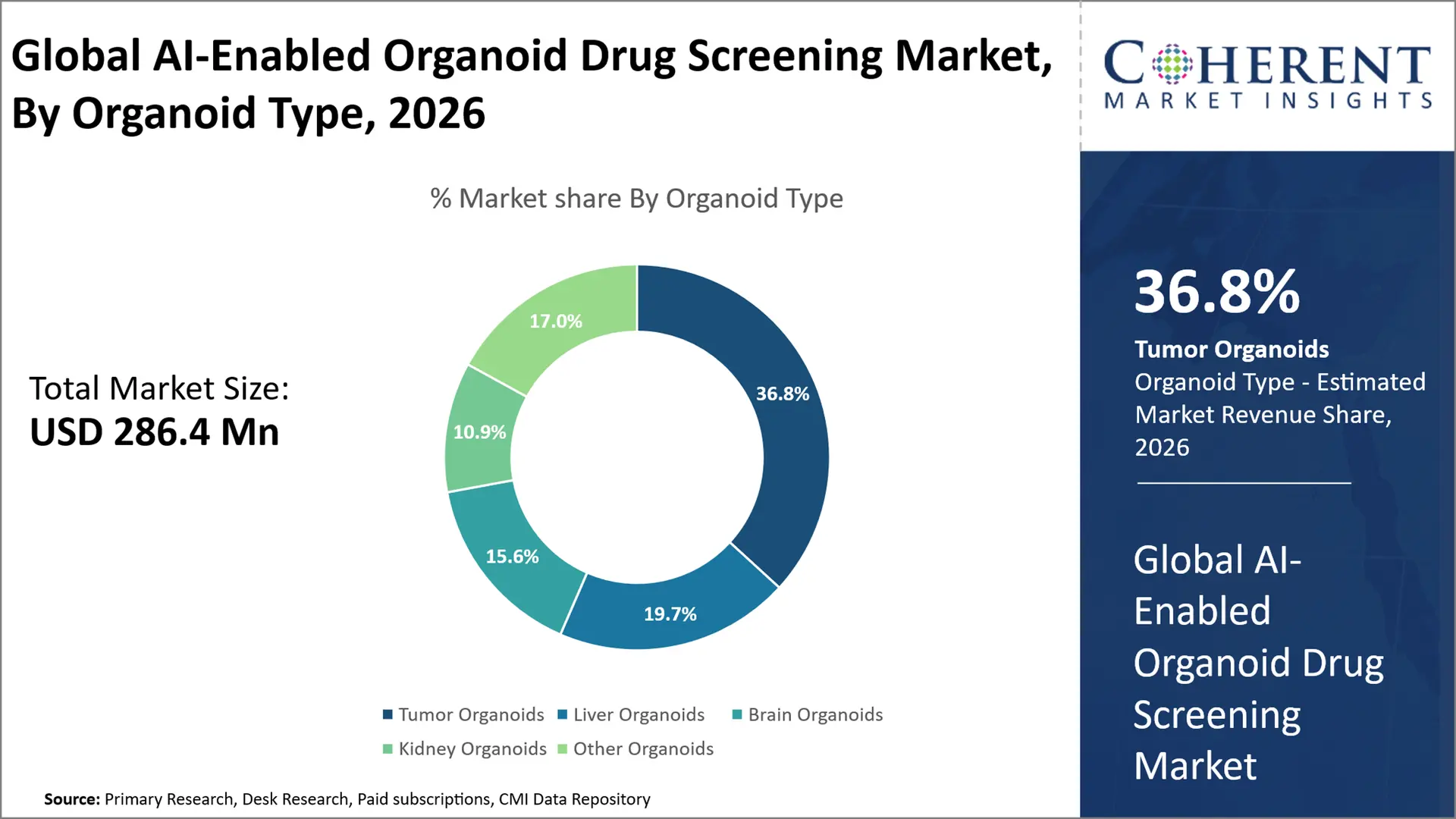
- Tumor organoids are projected to hold 36.8% of the global AI-enabled organoid drug screening market share in 2026, making it dominant organoid type segment, across North America due to robust research infrastructure for oncology and pharmaceutical R&D ecosystem. For instance, the United States National Center for Advancing Translational Sciences is funding the DROIDp platform combining human brain organoids with sensors and AI analytics for drug and chemical screening.
- AI-based image analysis and phenotypic profiling is projected to account for 34.6% of the global AI-enabled organoid drug screening market share in 2026, thus becoming the dominating technology segment, driven by Europe's spending on automated, data-enabled organoid screening. For instance, in April 2026, ZEISS teamed up with University of Oxford for the evolution of next-generation light-sheet microscopy technology for measuring drug activity within organoids and other 3D biological systems.
- Drug efficacy screening is expected to hold the largest share of 31.8% of the global AI-enabled organoid drug screening market by 2026, becoming the leading application segment, across Asia Pacific due to government initiatives on human-based testing for new drugs. For instance, the Department of Biotechnology and its associated research organizations have endorsed 109 projects with non-animal-based testing including 3D tissue constructs, 3D reconstructed skin models, as well as organ-on-chip.
- North America market maintains dominance with an expected share of 38.6% in 2026, owing to strong pharmaceutical R&D and biotech infrastructure and proactive government initiatives towards drug testing related to human health. In September 2026, the U.S. National Institutes of Health launched a new laboratory with innovative ideas of using standardized human organoids, artificial intelligence, and robotics in reproducible biomedical research.
- Asia Pacific is projected to register the fastest growth in the global AI-enabled organoid drug screening market with an estimated CAGR of 23.8% during 2026-2033, due to improvement in biomedical research capacity and government intervention to adopt next-generation drug-screening technologies. For instance, the biomedical innovation program 2026 in Shanghai funds research involving digestive-system & brain organoid models and intelligent organ-on-chip analysis platform for the research to assist adoption of next-generation screening technologies in the region.
Segmental Insights
Why Do Tumor Organoids Dominate the Global AI-Enabled Organoid Drug Screening Market?
Tumor organoids are projected to hold the market share of 36.8% in 2026, attributable to their ability to model cancer features of individual patients, thus enabling targeted testing of responses. In June 2026, researchers at UCLA Health created a platform that uses 3-D bioprinting, state-of-the-art imaging and artificial intelligence to test drug responses of tumor organoids from cancer patients to speed up personalized cancer drug screening.
- Current Industry Events of 2026
- Market Size Estimation
- Regional Breakdown
- Competitive Landscape
- Customer Intelligence
- Segmental Analysis
- Pricing Analysis
- Key Market Drivers, Challenges & Future Trends
- Customized Insights Section
Why Do AI-Based Image Analysis and Phenotypic Profiling Represent the Largest Technology Segment in the AI-Enabled Organoid Drug Screening Market?
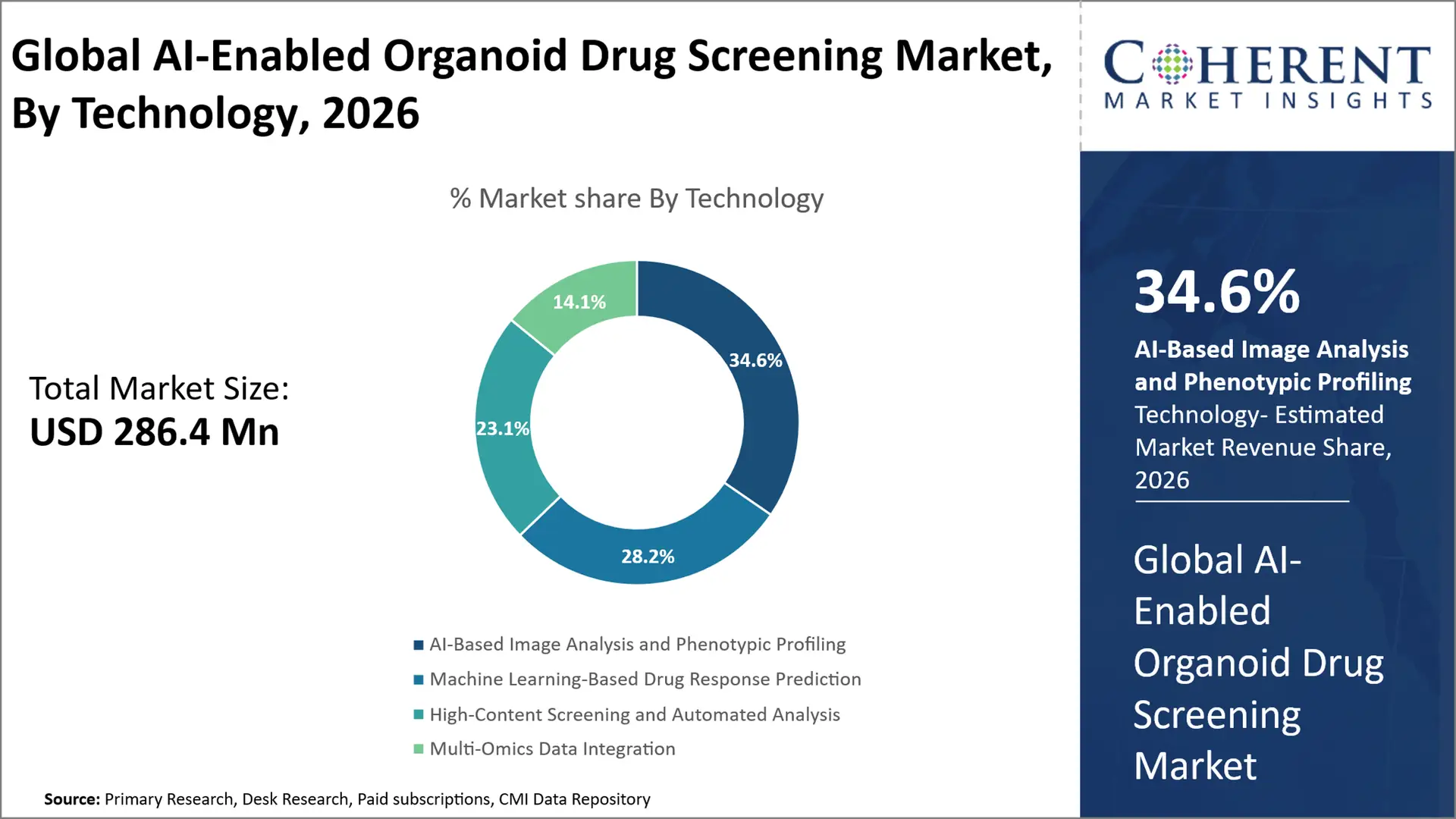
AI-based image analysis and phenotypic profiling is projected to hold a market share of 34.6% in 2026, owing to its wide use in quantifying the organoid morphology, viability and drug-induced phenotypic changes in a faster and more consistent manner. For instance, Drug Vision.AI, created by the University of Antwerp together with Antwerp University Hospital, combines robotic organoid screening with intelligent image and data analysis to deliver scalable phenotypic data for drug discovery.
Drug Efficacy Screening Segment Dominates the Global AI-Enabled Organoid Drug Screening Market
The drug efficacy screening segment is projected to hold a market share of 31.8% in 2026, attributed to the increased use of drug screening, which requires accurate assessment of the drug's potency, dose response and treatment efficiency. For instance, TRiCBIO's organoid efficacy screening platform performs single agent evaluation, dose response analysis and drug combination in patient-derived organoid models, including providing a utility for researchers to identify candidate drugs of interest. This platform can guide preclinical development of drugs.
Current Events and their Impact
Current Events | Description and its Impact |
NIH Expands Investment in Human-Based Research and Organoid Technologies (September 2026) |
|
India Reinforces Continued Funding for Organoid Testing & Non-Animal Drug Development (August 2026) |
|
AI-Enabled Organoid Drug Screening Market Dynamics
Market Drivers
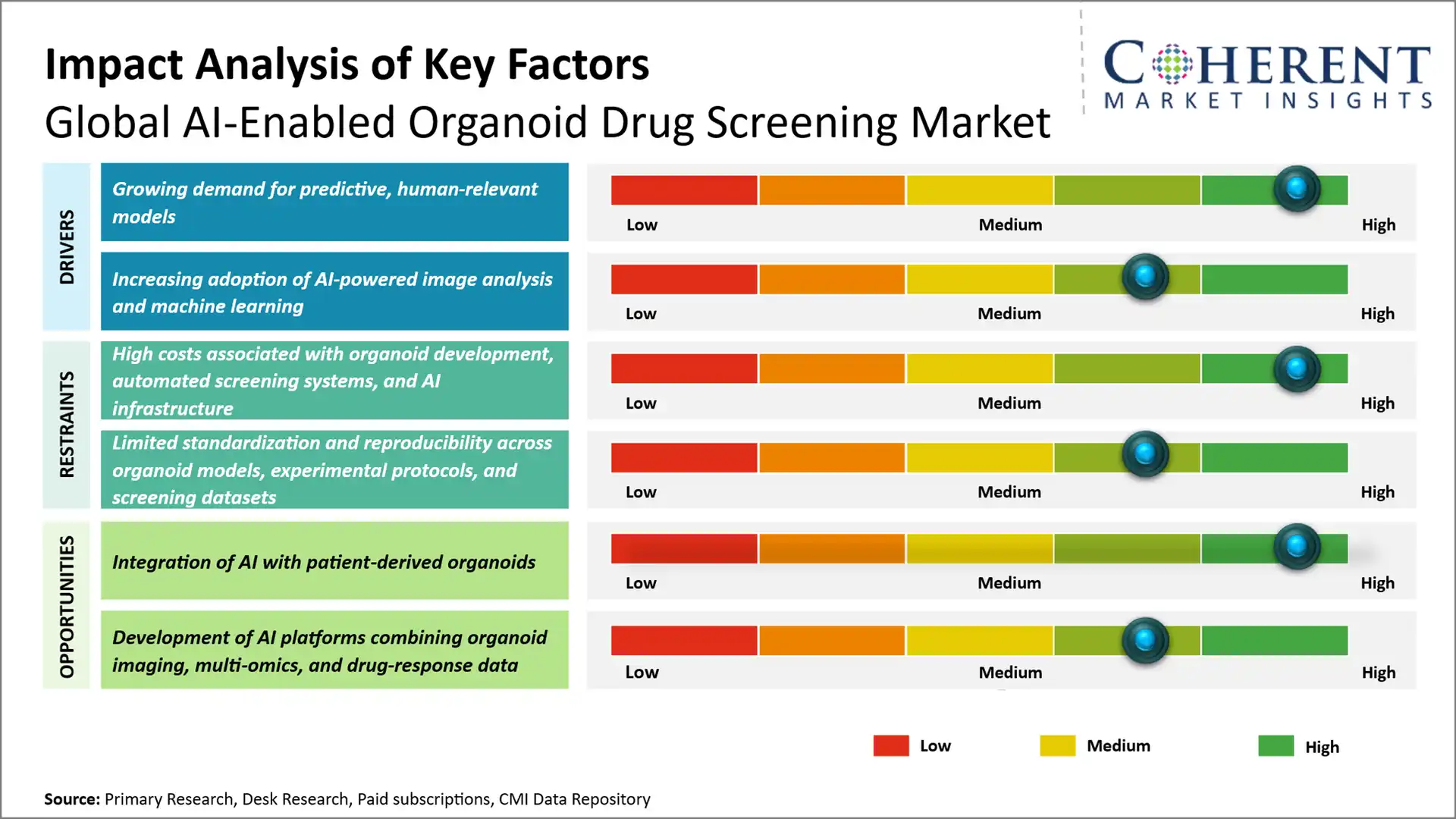
- Growing demand for predictive, human-relevant models: The development of predictive preclinical models that mimic biology will always be in demand, since current approaches are poorly predictive of drug effect on humans. For instance, in August 2026, India's Department of Science and Technology announced government funding for its organoid, 3D tissue and computing techniques to identify drug candidates and test their toxicity.
- Increasing adoption of AI-powered image analysis and machine learning: AI-enabled image analysis supports quantitative assessment of organoid morphology, viability and phenotypic responses of large screening datasets. For instance, Genedata Screener, offered by Danaher, uses AI-enabled image analysis to automate organoid image analysis and normalize high-throughput assay results. The tool is intended to improve the consistency of screening and to speed up the evaluation of drug candidates. Thus, there is an increasing demand for AI-enabled image analysis and data processing solutions.
- Rising investment in precision medicine and personalized drug discovery: The growing use of targeted therapies in patient-centered research is driving the use of organoid models to evaluate drug response in several different biological contexts. For instance, the Horizon Europe program of the European Commission funds research in personalized medicine and advanced biomedical applications, and is driving innovation in drug screening and related fields. This creates opportunities for artificial intelligence-enabled organoid platforms combining patient-derived models with predictive analytics.
Emerging Trends
- AI-driven high-content phenotypic screening– AI-based algorithms are being used increasingly for analyzing images of organoids and quantify the morphologic changes, viability and responses of the organoids to drugs.
- Impact: Automated phenotypic analysis increases the throughput of screens, reduces the dependency on human interpretation, and enables identification of more nuanced drug-response trends. It also enables more standardized evaluation of compound response when working with complex three-dimensional models of tissue.
- Market Relevance: This trend is generating an increased demand for imaging software powered by artificial intelligence, high-content screening platforms, and automated data-analysis tools within pharmaceutical research and development.
- Integration of patient-derived organoids with predictive AI: Patient derived organoids and machine learning are being used to predict responses to treatment based on biology, molecular and experimental screening data.
- Impact: This approach allows comparing drug candidates across patient-specific models and helps in the detection of possible responders. It also helps researchers select the lead compounds and study the resistance mechanisms early in the pre-clinical phase.
- Market Relevance: It can be exploited for personalized drug screening platforms, cancer research, and the convergence of organoid biobanks, AI analytics, and drug-response prediction.
Regional Insights
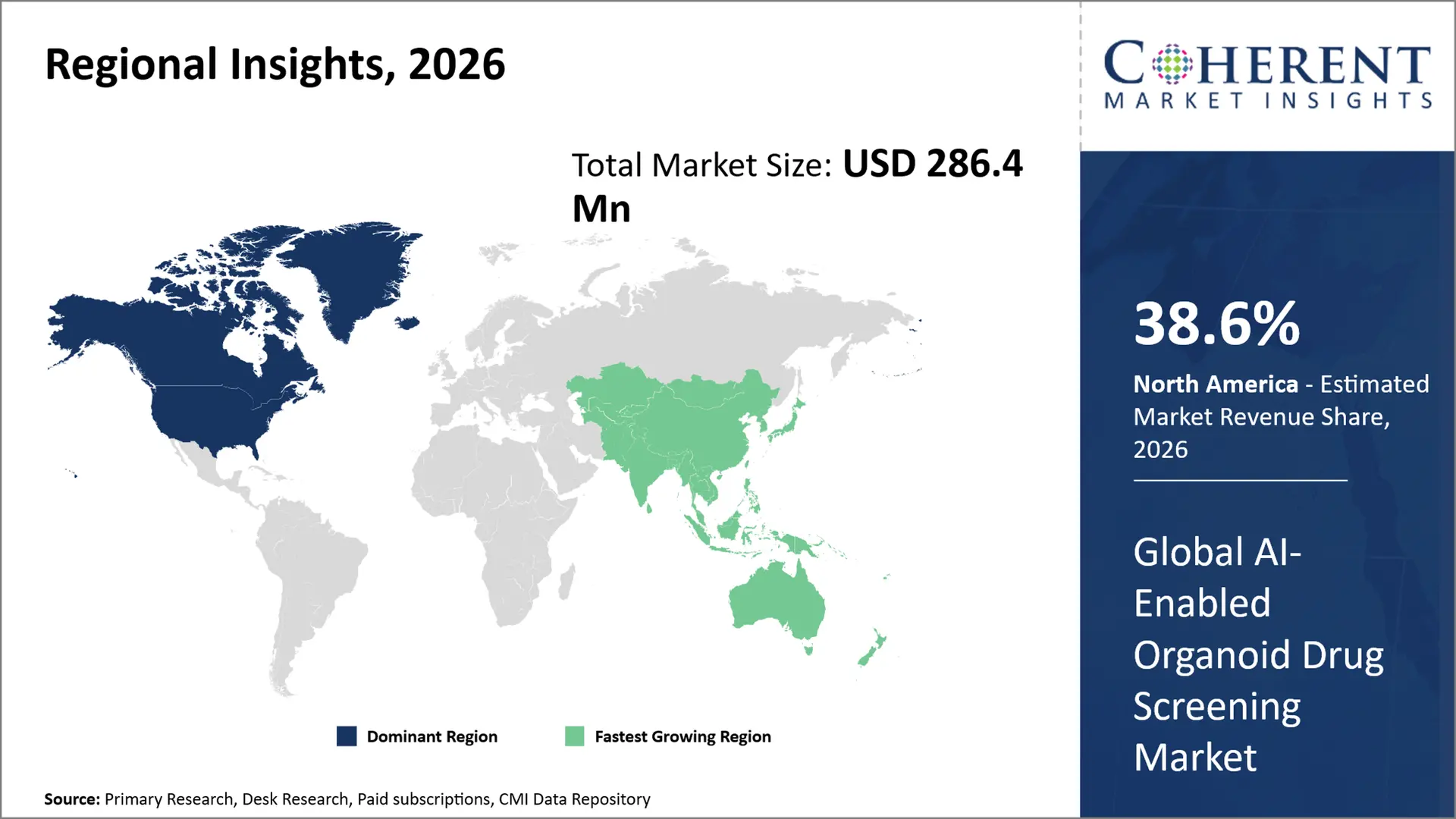
Why is North America a Strong Market for AI-Enabled Organoid Drug Screening?
North America leads the global AI-enabled organoid drug screening market, accounting for an estimated 38.6% share in 2026, owing to its mature biomedical research sector, advanced artificial intelligence/ machine learning capabilities and the existence of collaboration amongst academic research centers and pharmaceutical industry. The government funding towards organoid research coupled with AI enabled drug discovery may be favoring innovation in the region.
For instance, in March 2026, the U.S. National Institutes of Health announced its first round of awards in excess of USD 150 million through their Complement-ARIE program. Their goal is to design, validate, and standardize cutting edge lab and computational models that are better representations of human biology, and, in turn, reduce reliance on animal testing. Additionally, suitable legislation and intellectual property rights in the region are likely to support investments of multi-national pharma players for commercialization of advanced organoid screening systems.
Why Does Asia Pacific AI-Enabled Organoid Drug Screening Market Exhibit High Growth?
Asia Pacific is expected to exhibit the fastest growth in the global AI-enabled organoid drug screening market, registering an estimated CAGR of 23.8% during 2026–2033. The region is projected to account for 24.1% of the global market in 2026. Growing artificial intelligence adoption in drug discovery and various factors leading to the rise in biomedical research infrastructure, pharmaceutical research and development expenditure, and increasing use of technologies are likely to propel the regional market growth. The countries such as China, Japan, and South Korea are enhancing their biotech profile using government innovation initiatives.
For instance, the National Natural Science Foundation of China launched a research funding program for organ tissue regeneration in August 2025. The program proposes promoting artificial intelligence, big data analysis and biological model research and predictive function, in support of technology for organoid drug screening enabled by AI. Furthermore, strong public-private incentive programs are likely to contribute to the growth of both existing companies and startups that focus on organoid drug screening and accelerating it faster by adopting the new advanced platforms, including AI.
Global AI-Enabled Organoid Drug Screening Market Outlook for Key Countries
Why is the U.S. Leading Innovation and Adoption in the AI-Enabled Organoid Drug Screening Market?
The U.S. is expected to lead innovation and adoption in the AI-enabled organoid drug screening market, with its healthy convergence of pharma R&D, AI-led drug discovery, and advanced life science agglomeration and infrastructure. U.S. research ecosystem is likely to back up the adoption of machine learning, automation imaging, and robotic organoid production to improve screening throughput and reproducibility. Furthermore, U.S. government funding for standardized organoids and AI-enabled laboratory workflows seems to bloster the growth of scalable testing platforms for drug efficacy and toxicity.
Is China a Favorable Market for AI-Enabled Organoid Drug Screening Market?
China is an ideal market for AI-organoid drug screening platforms due to the rapid growth of biotech industry and biotechnology capabilities, R&D investment on pharma, and the growing of AI used in preclinical research. China's organoid platform developers have significant growth opportunities created from demand for fully automated compound screening, human-derived disease models and AI-related drug response prediction. The rapid developments in lab automation and organoid-on-a-chip are anticipated to accelerate the adoption of these platforms by large pharmaceutical companies, biotech companies and research institutes.
Is UK Emerging as a Key Growth Hub for the AI-Enabled Organoid Drug Screening Market?
The UK is positioned to be a high growth hub for the AI-enabled organoid drug screening market driven by the growing adoption of human-specific preclinical models, AI-driven drug discovery, and lab infrastructure. The preclinical ecosystem seems to incorporate human variations of plasma cell, biorepositories, and other animal-free models with computational biology and bioengineering to not only improve drug response prediction but also limit animal experiments. These capabilities could pave the way for developers of screening platforms, and pharma research partners.
Why Does Germany Top the European AI-Enabled Organoid Drug Screening Market?
Germany leads the European AI-enabled organoid drug screening market driven by its strong biomedical research and the high level of collaboration between academia, research institutions and biotech companies. Its expertise may range from patient-derived organoid models, high-throughput drug screening and automatic microscopy to AI analysis of complex biology data. The capability might underpin oncology and neurological disease applications, while the existing dedicated organoid research infrastructure could promote reproducibility and translation into preclinical drug development.
Is AI-Enabled Organoid Drug Screening Market Developing in Japan?
Japan is emerging as an emerging new market for AI-enabled organoid drug screening through the intersection of stem cell knowledge, functional organoid creation and next-generation drug discovery platforms. The strength of its research and development ecosystem indicates that screen-driven drug development will combine AI analysis of compounds with more human-sensitive biological models, likely improving the ability to measure both efficacy and toxicity. An emphasis on regenerative medicine and regenerative screen technology is providing opportunities for pharma, biotech and organoid technology companies alike.
Key Publicly Available Datasets for AI-Enabled Organoid Drug Screening
Dataset | Key data available | Relevance to the market |
Organoid Drug-Response Dataset (Dryad, 2025) | Organoid and spheroid viability data across drug combinations, doses, and treatment sequences | Aids in drug efficacy screening with AI and combination therapy optimization. |
Brain Organoid Image Dataset (Scientific Data, 2024) | More than 1,400 images of 64 brain organoids, with annotated boundaries and growth information | Provides support for the analysis of AI images, phenotypic profiling, and benchmarking of the automated analysis of organoids. |
OrganoID Dataset | Open-source image datasets and code for tracking organoid morphology, size, and drug responses | It enables automated high-throughput screening and machine-learning based response evaluation. |
How is the integration of AI with patient-derived organoids creating new growth opportunities in the AI-enabled organoid drug screening market?
Artificial intelligence in combination with patient-derived organoid indicates a potential growth opportunity in the global AI-enabled organoid drug screening market as it allows prediction of drug-response in a personalized manner and provide more physiologically relevant pre-clinical testing. For instance, Orakl Oncology combines patient-derived tumor organoids, artificial intelligence, and molecular information to evaluate drug responses in multiple cancer models and promote therapeutic discovery and development.
Market Players, Key Development, and Competitive Landscape
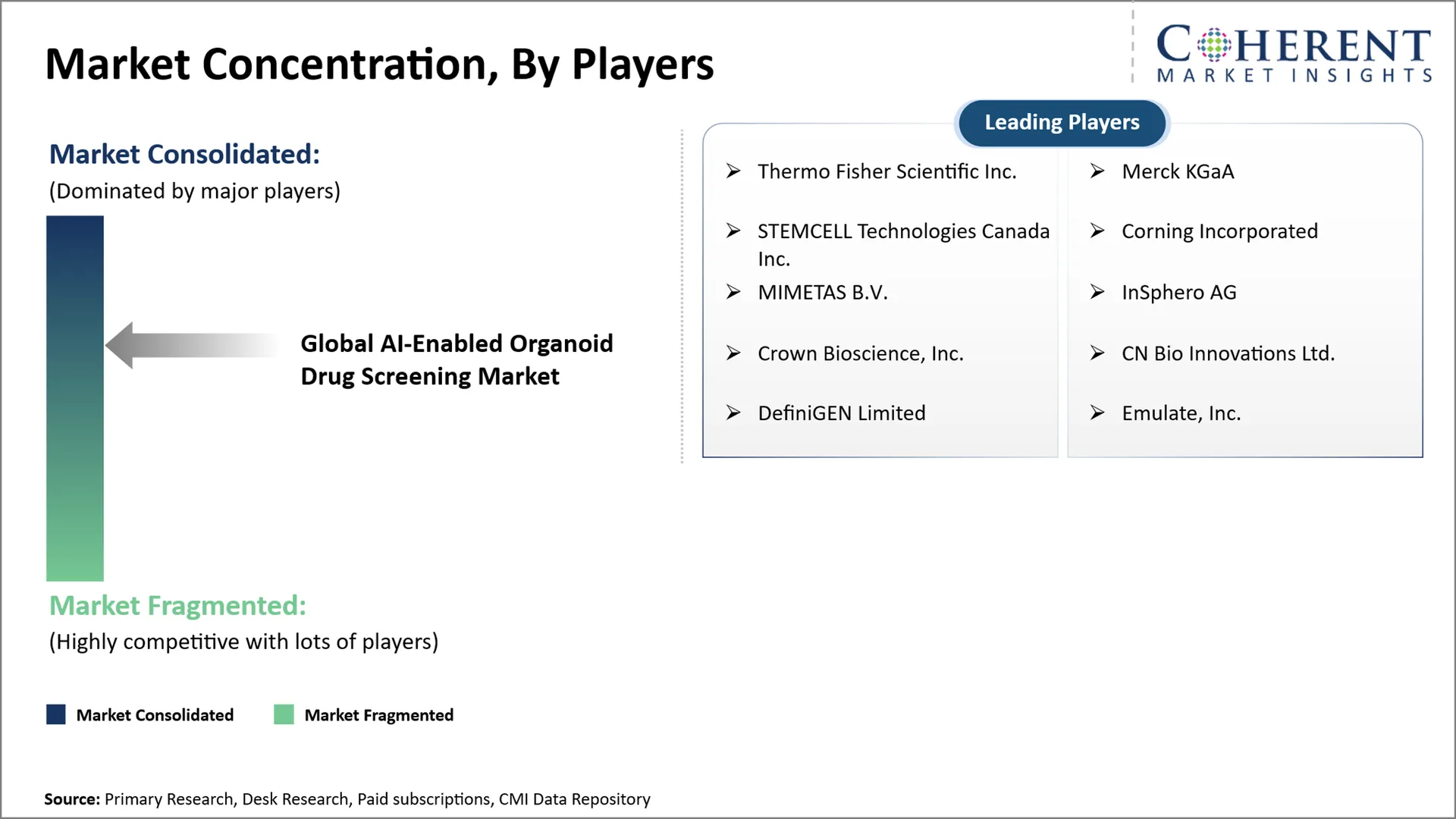
Key Developments
- In September 2026, the Liverpool Accelerate Laboratory in the UK launched the first-ever AI robotic organoid laboratory in the country. The laboratory that combines robotics and artificial intelligence with human organoid models is expected to enable the research of infectious diseases. The laboratory is also expected to lead to high-throughput drug screening, more consistent experiments, and reduced time for drug screening tests to create a significant opportunity in the AI-enabled organoid drug screening market.
- In May 2026, The University of Arizona startup Proxy Bio raises USD 3.5M to scale its AI organoid platform for forecasting cancer drug response. Proxy Bio's platform uses patient-derived organoids and AI to enable drug screening and response assessment, reinforcing rising investment in AI-enabled organoid technologies for pharmaceutical research.
Competitive Landscape
The AI-enabled organoid drug screening market is maturing as pharma, biotech, and research organizations adopt artificial intelligence integrated 3D organoid models for drug discovery and preclinical screening. Competition in the global AI-enabled organoid drug screening market is based on screening accuracy, model accuracy, automations and prediction, and the ability to generate reproducible results on drug response. Key focus areas include:
- AI-based phenotypic analysis and organoid image interpretation
- Automated high-throughput screening of samples in conjunction with robotics
- Screening of patient-derived organoids for personalized medicine
- Patient-derived organoid screening for personalized medicine
- Standardization of organoid models with rigorous quality control and reproducibility
Market Report Scope
AI-Enabled Organoid Drug Screening Market Report Coverage | |||
Report Coverage | Details | ||
Base Year | 2025 | Market Size in 2026: | USD 286.4 Mn |
Historical Data For: | 2020 To 2024 | Forecast Period: | 2026 To 2033 |
Forecast Period 2026 To 2033 CAGR: | 19.9% | 2033 Value Projection: | USD 1,019.6 Mn |
Geographies covered: |
| ||
Segments covered: |
| ||
Companies covered: | Thermo Fisher Scientific Inc., Merck KGaA, STEMCELL Technologies Canada Inc., Corning Incorporated, MIMETAS B.V., InSphero AG, Crown Bioscience, Inc., CN Bio Innovations Ltd., DefiniGEN Limited, Emulate, Inc. | ||
Growth Drivers: |
| ||
Restraints & Challenges: |
| ||
Analyst Opinion (Expert Opinion)
- The market for AI-enabled organoid drug screening is expected to move towards high throughput, automated screening enabled by predictive AI analytics and models based on patient organoids. Data from imaging, multi-omics, and functional assays is expected to improve prediction of drug responses and drug prioritization. The increasing interest in personalized healthcare and human pre-clinical testing will drive use in oncology and other complex disease areas.
- The best opportunity is expected to be the application of tumor organoids for drug efficacy screening in the U.S. Oncology research requires the integration of more representative models for evaluation of drug sensitivity, resistance and combinations for different tumor types. AI-enabled analysis of patient derived tumor organoids helps pharma companies to identify potential compounds to accelerate and design individualized treatments.
- The market players should promote the establishment of single integrated platform including organoid standardized model, automated screening, high-content imaging and explainable AI system. They should build reproducible workflows and demonstrate that the prediction is consistent with the experimental result to win customers' trust. Collaborations with pharmaceutical companies, organoid companies and academic research organizations should be made to enhance data, platform and customer acceptance.
Speak to the analyst
Want personalized insights?
Take the findings above to one of our principal consultants, or have the report rebuilt around the segments, geographies and competitors you actually track.
Market Segmentation
- Organoid Type Insights (Revenue, USD Mn, 2021 - 2033)
- Tumor Organoids
- Liver Organoids
- Brain Organoids
- Kidney Organoids
- Other Organoids
- Technology Insights (Revenue, USD Mn, 2021 - 2033)
- AI-Based Image Analysis and Phenotypic Profiling
- Machine Learning-Based Drug Response Prediction
- High-Content Screening and Automated Analysis
- Multi-Omics Data Integration
- Application Insights (Revenue, USD Mn, 2021 - 2033)
- Drug Efficacy Screening
- Drug Toxicity and Safety Assessment
- Drug Discovery and Lead Optimization
- Personalized Drug Response Prediction
- Therapeutic Area Insights (Revenue, USD Mn, 2021 - 2033)
- Oncology
- Neurological Disorders
- Gastrointestinal Diseases
- Liver and Metabolic Diseases
- Infectious Diseases
- Others
- End User Insights (Revenue, USD Mn, 2021 - 2033)
- Pharmaceutical and Biotechnology Companies
- Contract Research Organizations (CROs)
- Academic and Research Institutes
- Others
- Regional Insights (Revenue, USD Mn, 2021 - 2033)
- North America
- U.S.
- Canada
- Latin America
- Brazil
- Argentina
- Mexico
- Rest of Latin America
- Europe
- Germany
- U.K.
- Spain
- France
- Italy
- Russia
- Rest of Europe
- Asia Pacific
- China
- India
- Japan
- Australia
- South Korea
- ASEAN
- Rest of Asia Pacific
- Middle East
- GCC Countries
- Israel
- Rest of Middle East
- Africa
- South Africa
- North Africa
- Central Africa
- North America
- Key Players Insights
- Thermo Fisher Scientific Inc.
- Merck KGaA
- STEMCELL Technologies Canada Inc.
- Corning Incorporated
- MIMETAS B.V.
- InSphero AG
- Crown Bioscience, Inc.
- CN Bio Innovations Ltd.
- DefiniGEN Limited
- Emulate, Inc.
Sources
Primary Research Interviews
- Organoid Platform Developers and Screening Technology Providers
- Pharmaceutical and Biotechnology Drug Discovery Executives
- AI/ML Specialists in Biomedical Imaging and Phenotypic Analysis
- Organoid Research Scientists and Preclinical Toxicology Experts
Stakeholders
- Pharmaceutical and Biotechnology Companies
- AI Drug Discovery and Screening Platform Developers
- Organoid Model and Biobanking Providers
- Contract Research Organizations (CROs)
- End-use Sectors
- Pharmaceutical and Biotechnology Companies
- Contract Research Organizations
- Academic and Research Institutions
- Hospitals and Precision Medicine Centers
- AI Technology and Laboratory Automation Providers
- Other Life Sciences Research Organizations
- Regulatory & Health Bodies
- U.S. Food and Drug Administration (FDA)
- National Institutes of Health (NIH)
- European Medicines Agency (EMA)
- European Commission
- Medicines and Healthcare products Regulatory Agency (MHRA)
Databases
- ClinicalTrials.gov
- NIH RePORTER
- National Center for Advancing Translational Sciences (NCATS) Tissue Chip Database
- European Union Clinical Trials Information System (CTIS)
- WHO International Clinical Trials Registry Platform (ICTRP)
Associations
- International Society for Stem Cell Research (ISSCR)
- Society for Laboratory Automation and Screening (SLAS)
- American Association for Cancer Research (AACR)
- European Society for Animal Cell Technology (ESACT)
Public Domain Sources
- National Institutes of Health (NIH)
- U.S. Food and Drug Administration (FDA)
- National Center for Advancing Translational Sciences (NCATS)
- European Medicines Agency (EMA)
- World Health Organization (WHO)
Proprietary Elements
- CMI Data Analytics Tool, Proprietary CMI Existing Repository of information for last 10 years.
Get access to 250+ pages report
Every segment, forecast, competitor profile and data table behind the analysis above — available for instant download.
- ESOMAR Member
- ISO 9001:2015 Certified
- D-U-N-S Registered
- GDPR & CCPA Compliant
Frequently Asked Questions
The global AI-enabled organoid drug screening market is estimated to be valued at USD 286.4 Mn in 2026 and is expected to reach USD 1,019.6 Mn by 2033.
Tumor organoids dominate owing to their potential ability to reproduce the attributes of an individual's tumor, recapitulate the heterogeneity of cancer, and use for testing drug responses, studying resistance mechanisms, and for personalized cancer medicine studies.
Organoid drug screening enabled by artificial intelligence integrates artificial intelligence and machine learning with three-dimensional organoid models to assess drug responses, predict the efficacy and toxicity of compounds, and expedite preclinical drug discovery.
The CAGR of global AI-enabled organoid drug screening market is projected to be 19.9% from 2026 to 2033.
Growing demand for predictive, human-relevant models, and increasing adoption of AI-powered image analysis and machine learning are the major factors driving the growth of the global AI-enabled organoid drug screening market.
High costs associated with organoid development, automated screening systems, and AI infrastructure, and limited standardization and reproducibility across organoid models, experimental protocols, and screening datasets are the major factors hampering the growth of the global AI-enabled organoid drug screening market.
In terms of technology, AI-based image analysis and phenotypic profiling is estimated to dominate the market revenue share in 2026.