

Global AI Imaging Diagnostics Market Size and Forecast – 2026 To 2033
The global AI imaging diagnostics market is expected to grow from USD 3.18 Bn in 2026 to USD 17.32 Bn by 2033, registering a compound annual growth rate (CAGR) of 27.4% from 2026 to 2033. The market for global AI imaging diagnostics is poised for significant expansion, fueled by the rising adoption of AI-assisted medical imaging across healthcare systems.
In June 2026, the UK Department of Health and Social Care reported that AI-powered X-ray tools had already helped more than 4 million patients receive faster lung cancer diagnoses or an all-clear. The government committed USD 26.42 million (£20 million) to expand these AI imaging tools to every NHS trust in England by 2029. This accelerating public-sector deployment is expected to support wider adoption of AI-based image analysis and diagnostic decision-support solutions.
Key Takeaways of the Global AI Imaging Diagnostics Market
- Software is projected to hold 56.4% of the global AI imaging diagnostics market share in 2026, making it dominant component segment across North America due to the region’s established regulatory pathway for AI-enabled medical-device software and strong clinical adoption. For instance, the U.S. FDA had authorized more than 1,600 AI-enabled medical devices by September 2026, with numerous radiology AI software products cleared through its regulatory framework.
- Computed Tomography (CT) is projected to hold 30.8% of the global AI imaging diagnostics market share in 2026, making it dominant imaging modality segment across Asia Pacific due to increasing integration of AI with CT-based diagnostic and treatment-planning workflows. For instance, China’s National Medical Products Administration (NMPA) has established regulatory pathways for AI-enabled medical devices, supporting the registration and adoption of AI-based medical imaging technologies in the country.
- Radiology is projected to hold 37.8% of the global AI imaging diagnostics market share in 2026, making it dominant application segment across Europe due to government-led programs supporting real-world validation and deployment of AI in diagnostic imaging. For instance, the European Commission launched the European Network of AI-Powered Advanced Screening Centres in 2026 to accelerate the clinical validation and deployment of AI solutions for cancer and cardiovascular imaging across EU healthcare systems.
- North America market maintains dominance with an expected share of 45.2% in 2026, bolstered by advanced healthcare IT infrastructure, high AI adoption, and regulatory efforts to improve diagnostic-imaging interoperability. For instance, in 2026, the U.S. Office of the National Coordinator for Health Information Technology (ONC) released a Diagnostic Imaging Request for Information to inform proposals for modernizing the interoperability of diagnostic imaging across health IT systems.
- Asia Pacific is expected to exhibit the fastest growth in the global AI imaging diagnostics market, registering an estimated CAGR of 8.9% during 2026–2033, driven by expanding digital-health infrastructure, AI adoption, and government support for evidence-based healthcare AI. For instance, in March 2026, the Government of India launched the Strategy for AI in Healthcare (SAHI) and Benchmarking Open Data Platform for Health AI (BODH) to support safe, evidence-based AI deployment and validation of healthcare AI solutions.
Segmental Insights
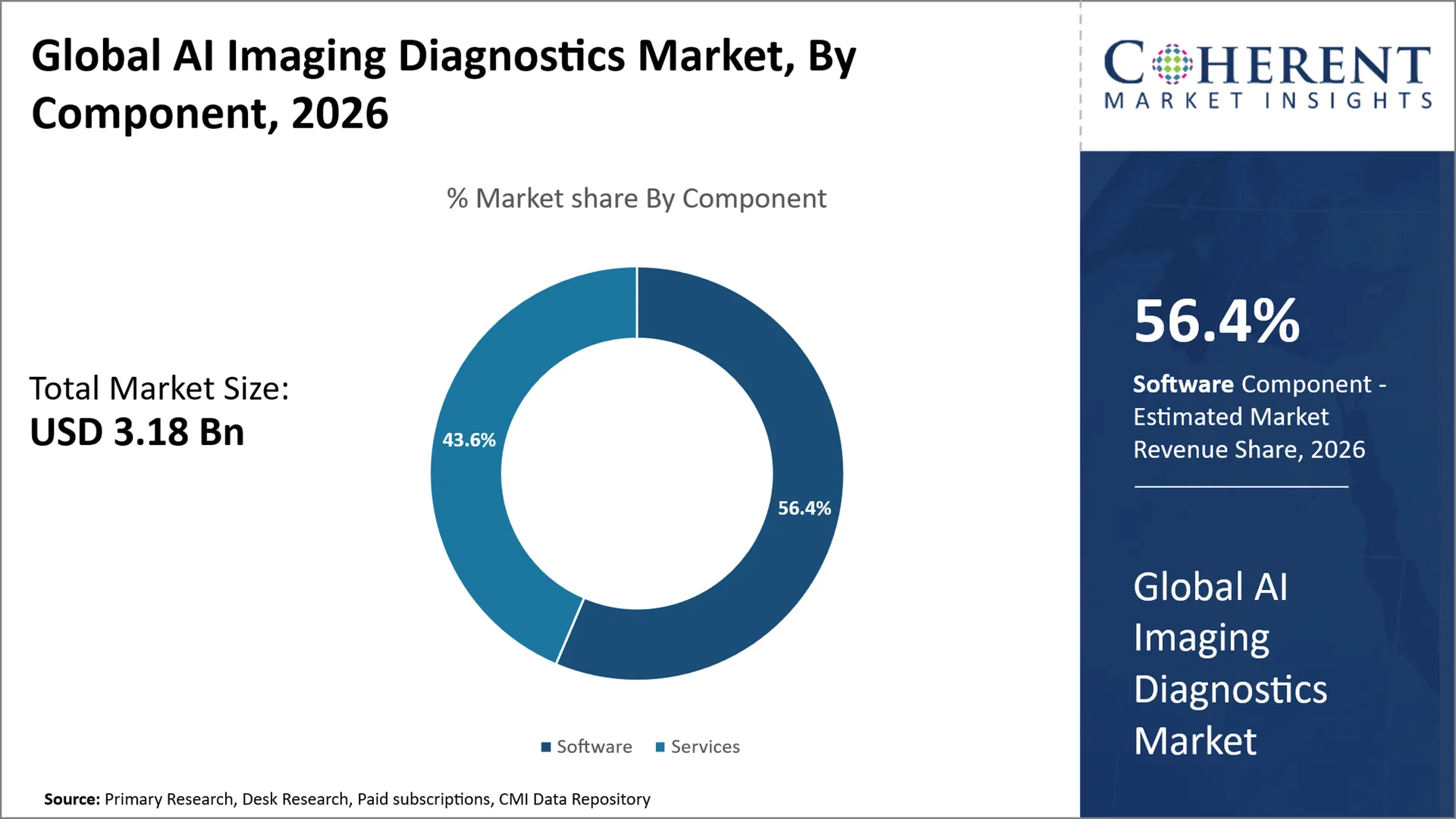
Why Do Software Dominate the Global AI Imaging Diagnostics Market?
Software is projected to hold the market share of 56.4% in 2026, attributed to its high scalability, constant improvements in algorithm sophistication and its compatibility with the current medical imaging workflows and PACS. Software-based AI solutions have the potential to automate image analysis, abnormality detection, and clinical decision support without significant investment in hardware. For instance, in September 2026, U.S. Food and Drug Administration (FDA) approved qCT Lung (v1.0): radiology computer-assisted detection and diagnosis software for use in identifying and characterizing abnormal (suspicious) lung lesions on medical images.
- Current Industry Events of 2026
- Market Size Estimation
- Regional Breakdown
- Competitive Landscape
- Customer Intelligence
- Segmental Analysis
- Pricing Analysis
- Key Market Drivers, Challenges & Future Trends
- Customized Insights Section
Why Do Computed Tomography (CT) Represent the Largest Imaging Modality Segment in the AI Imaging Diagnostics Market?
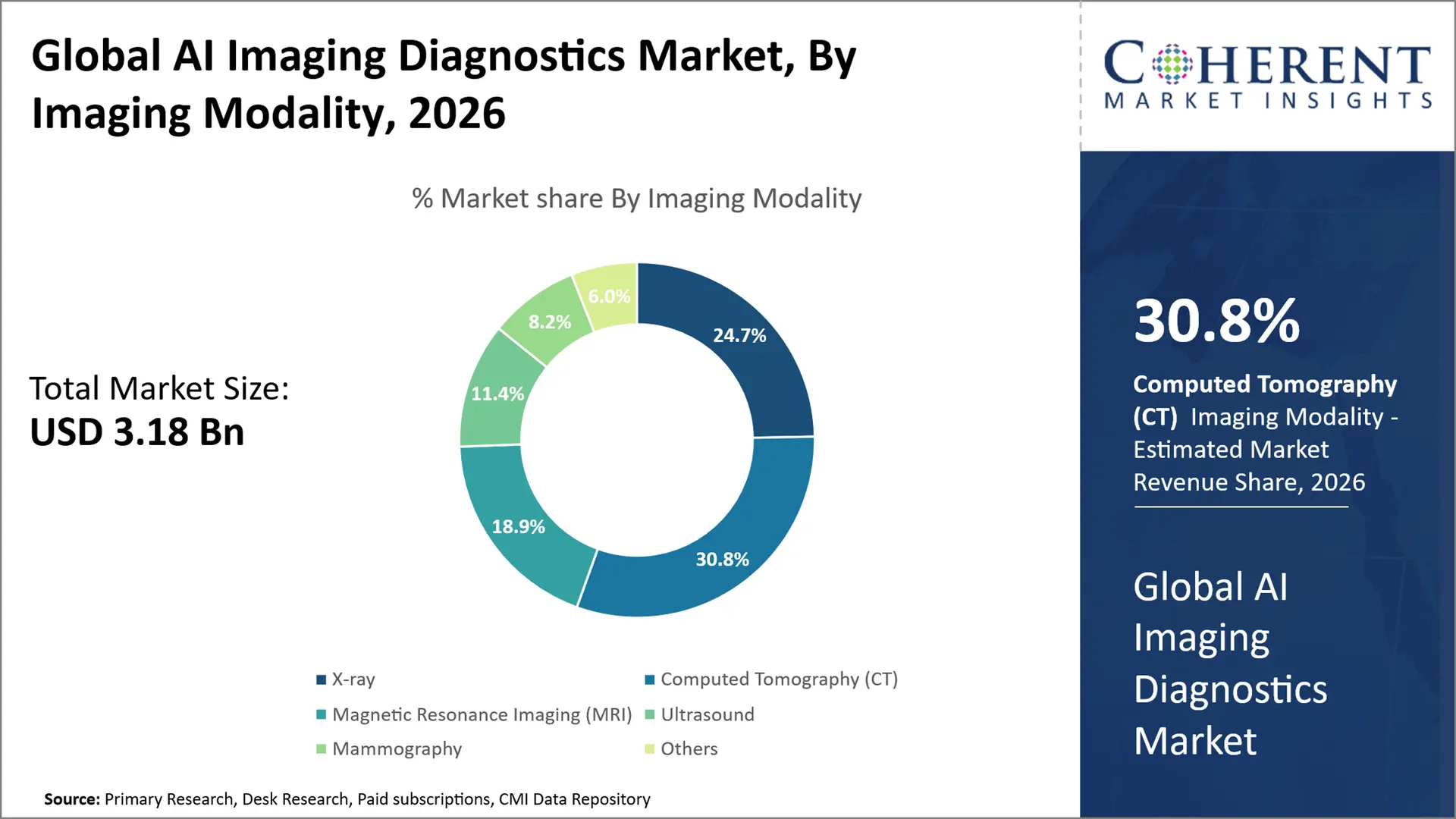
Computed Tomography (CT) is projected to hold a market share of 30.8% in 2026, owing to its imaging capabilities in the areas of oncology, cardiology, trauma, and pulmonary imaging. In addition to this, the computed tomography technology is highly compatible with AI-based image analysis. The high number of CT scans in the clinical setting is expected to encourage automated detection and decision-making. For instance, in May 2026, the U.S. Food and Drug Administration (FDA) approved Synapse Lung Nodule AI, a computer-aided detection system to detect lung nodules on CT images, demonstrating increasing integration of AI with CT-based diagnostics.
Radiology Segment Dominates the Global AI Imaging Diagnostics Market
The radiology segment is projected to hold a market share of 37.8% in 2026, driven by growing imaging volume, radiologist workload constraints and the ability of AI to automate detection, triage and image interpretation in computed tomography, magnetic resonance imaging and X-ray imaging. Moreover, AI allow prioritization of exam cases and may be likely to shorten the diagnostic turnaround time, speeding up incorporation into radiology workflow. For instance, in September 2026, the United Kingdom's Medicines and Healthcare products Regulatory Agency's National Commission on Artificial Intelligence in Healthcare approved a regulatory pathway for the safe and scalable use of AI-enabled diagnostics, including those currently used to diagnose life-threatening health conditions.
Current Events and their Impact
Current Events | Description and its Impact |
China Launches National AI Medical-Image Recognition Competition (July 2026) |
|
UK Launches AI Medical-Device Regulatory Sandbox (June 2026) |
|
UK Invests USD 26.7 Million (£20 Million) to Expand AI-Powered Cancer Diagnosis Across NHS (June 2026) |
|
AI Imaging Diagnostics Market Dynamics
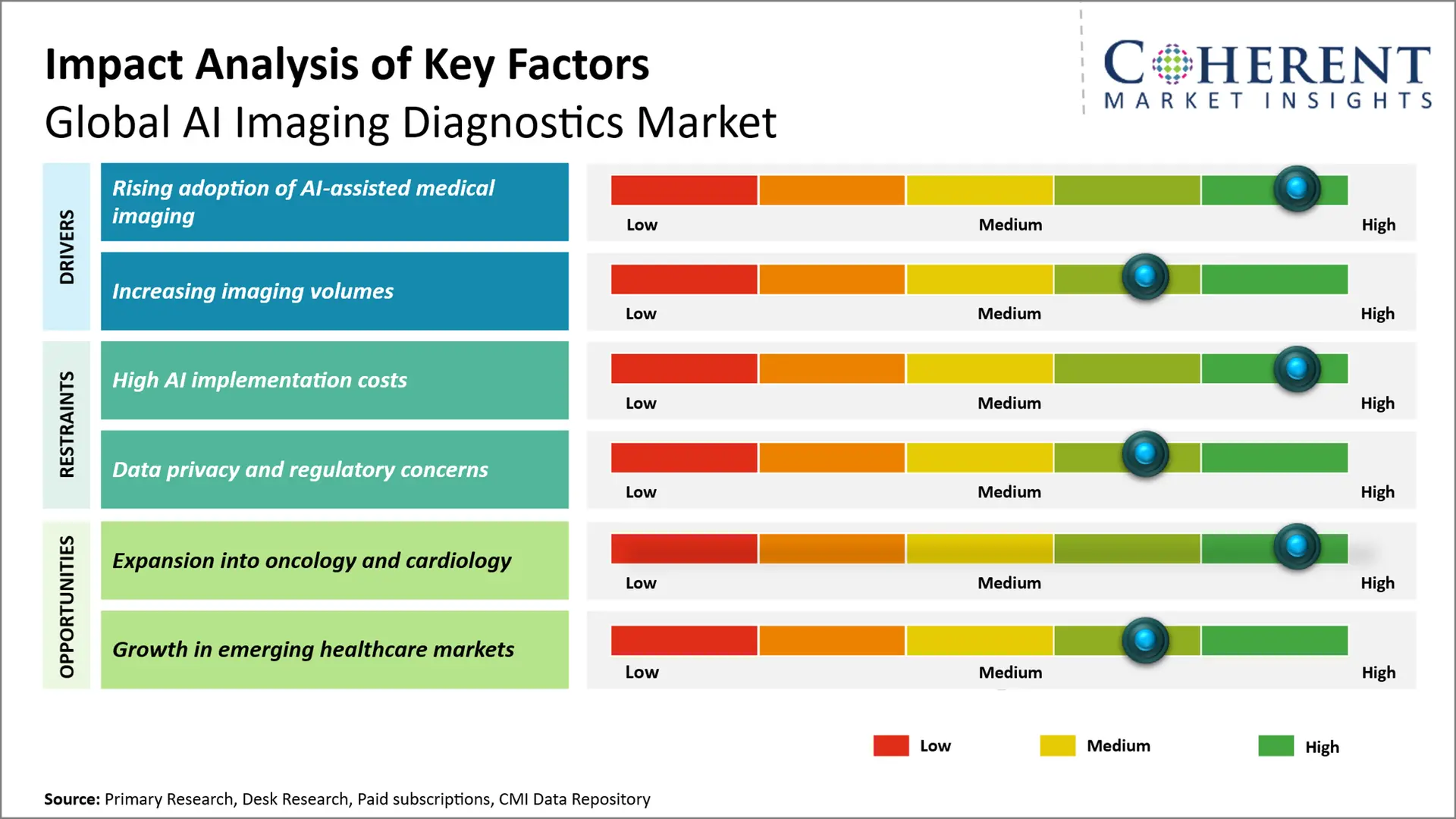
Market Drivers
- Rising adoption of AI-assisted medical imaging: The adoption of AI-assisted medical imaging is increasing as healthcare providers seek faster image interpretation, automated detection, and improved diagnostic consistency. The U.S. FDA’s AI-enabled medical device list recorded multiple new radiology-related authorizations in 2026, including AI solutions for CT, MRI, ultrasound, mammography, and image analysis. This expanding pipeline indicates growing integration of AI across medical imaging workflows.
- Increasing imaging volumes: Increasing imaging volumes are creating greater demand for AI-enabled tools that can support image interpretation and manage growing diagnostic workloads. For instance, NHS England reported 49.9 million imaging tests in England in 2024/25, up 5.9% from the previous year, with CT scans increasing 8.7% and MRI scans increasing 10.1%. The rising volume of imaging examinations is expected to strengthen the need for automated and AI-assisted diagnostic workflows.
- Rising prevalence of chronic diseases: The increasing burden of cancer, cardiovascular diseases, and neurological disorders is driving demand for early and accurate imaging-based diagnosis. For instance, the International Agency for Research on Cancer (IARC) estimated that 20.6 million new cancer cases occurred globally in 2024, highlighting the growing need for advanced diagnostic imaging and AI-assisted disease detection.
- Emerging Trends
Emerging Trends
- Generative AI in medical imaging: Generative AI is increasingly being used to support image interpretation, report generation, and clinical decision-making. Its integration with radiology workflows is expected to improve efficiency and reduce reporting workloads.
- Multimodal AI for diagnostic imaging: AI systems are increasingly combining medical images with clinical, genomic, and patient-record data to provide more comprehensive diagnostic insights. This trend is supporting personalized and data-driven diagnosis.
- Cloud-based AI imaging platforms: Cloud deployment is gaining traction as healthcare providers seek scalable AI solutions that can integrate with PACS and EHR systems. These platforms enable centralized image analysis, remote access, and easier deployment across healthcare facilities.
Regional Insights
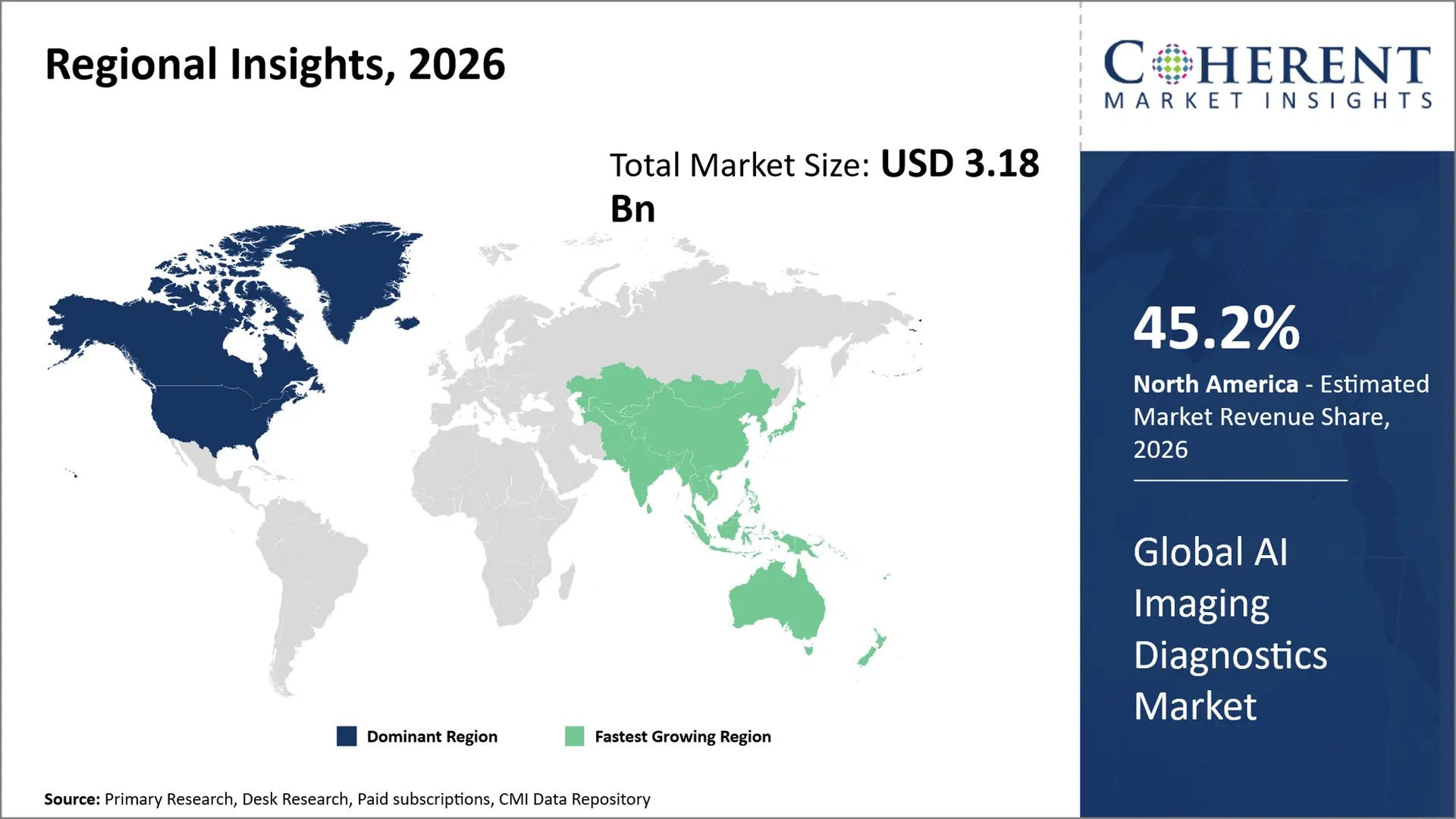
Why is North America a Strong Market for AI Imaging Diagnostics?
North America leads the global AI imaging diagnostics market, accounting for an estimated 45.2% share in 2026, owing to the availability of developed healthcare infrastructure and stronger AI research capabilities. The early adoption of digital health technology into clinical workflow contributes to the region’s dominance. In addition, the presence of enabling government policies such as the federal funding of healthcare AI and digital health program, and a pre-existing regulatory pathway for FDA-approved AI enabled device in healthcare benefit the regional growth. For instance, in February 2026, the National Institute of Biomedical Imaging and Bioengineering (NIBIB) received a USD 440.6 million FY2026 budget, with nearly 85% allocated to extramural research across universities, hospitals, industry, and research institutions.
Why Does Asia Pacific AI Imaging Diagnostics Market Exhibit High Growth?
Asia Pacific is expected to exhibit the fastest growth in the global AI imaging diagnostics market, registering an estimated CAGR of 8.9% during 2026–2033. The region is projected to account for 22.7% of the global market in 2026, due to rising developments in healthcare infrastructure, increase in healthcare expenditure, and high adoption of advanced diagnostic imaging modality in the region. In addition, rising awareness regarding use of artificial intelligence imaging diagnostics, rising adoption of artificial intelligence imaging diagnostics to reduce diseases burden, rising digital health programs, and healthy adoption of digitization and AI-optimized screening programs are the factors expected to drive Asia Pacific market.
For instance, in March 2026, China’s National Healthcare Security Administration and the Guangxi regional government launched a national AI medical-imaging recognition competition covering eight diagnostic tasks, including lung cancer detection using CT, brain tumors using MRI, and breast cancer detection using mammography.
Global AI Imaging Diagnostics Market Outlook for Key Countries
Why is the U.S. Leading Innovation and Adoption in the AI Imaging Diagnostics Market?
The U.S, is expected to be at the forefront of innovation and uptake due to its leading healthcare IT infrastructure, high integration of AI in imaging workflows, and rich clinical data sets. Additionally, a mature ecosystem that includes AI developers, healthcare providers, imaging-device manufacturers, and research institutions facilitate the adoption of imaging AI in the country. Furthermore, its mature regulatory and reimbursement ecosystem further accelerate the adoption of imaging AI.
Is Japan a Favorable Market for AI Imaging Diagnostics Market?
Japan is one of the largest markets for AI imaging diagnostics owing to ongoing digitalization in medicine, strong digital health data platform and increasing use of AI in clinical practice. The county’s government is actively supporting cloud-based medical information system and countrywide healthcare-data sharing infrastructure to facilitate AI-based image diagnosis use cases. Additionally, the country is developing a strategy to support the use of AI medical devices and solutions in hospital care settings.
Is China Emerging as a Key Growth Hub for the AI Imaging Diagnostics Market?
China is gradually emerging as the newest growth driver for the AI imaging diagnostics market driven by strong government-initiated programs incorporating AI for medical imaging and healthcare infrastructure. The targets laid down by China's National Health Commission reveal that AI-assisted medical imaging is expected to be widely utilized in secondary and higher-grade hospitals by 2030. Moreover, widespread promotion of AI-supported image diagnosis, report production and image quality evaluation could pose sizable prospects for AI image diagnostics in hospitals and regional healthcare systems.
Why Does Germany Top the European AI Imaging Diagnostics Market?
Germany leads the European AI imaging diagnostics market owing to well-developed digital health infrastructure and clinical AI research foundation, and high utilization rate of AI technology in diagnostic radiology. Additionally, the country seems to be taking advantage of the efforts to offer valuable health data for AI development, validation and clinical use, while a conducive regulatory and testing system might speed up AI imaging adoption from research to practice.
Is AI Imaging Diagnostics Market Developing in the UK?
The UK represents an emerging AI imaging diagnostics market driven by active deployments of AI in the National Health Service focused on radiology (chest X-ray and CT-based diagnostics). The market is moving from pilots towards broader clinical adoption and deployment, with AI used increasingly in diagnostic workflows, integrated with clinical practice. The UK's national strategy for AI evaluation, deployment and digital imaging infrastructure is expected to further support the market.
AI Imaging Diagnostics Adoption by Key Application
Application | Key AI Use Cases | Primary Imaging Modalities | Market Relevance |
Radiology | Image interpretation, abnormality detection, triage | X-ray, CT, MRI | Very High |
Oncology | Tumor detection, segmentation, staging, treatment monitoring | CT, MRI, PET, Mammography | Very High |
Cardiology | Cardiac imaging analysis, risk assessment, functional measurement | Echocardiography, CT, MRI | High |
Neurology | Stroke detection, brain lesion analysis, neurological assessment | CT, MRI | High |
Other Applications | Disease screening, image classification, clinical decision support | Ultrasound, X-ray, MRI, Other | Moderate |
How is the expansion into oncology and cardiology creating new growth opportunities in the AI imaging diagnostics market?
Artificial Intelligence-based imaging in oncology and cardiology is promising for the initial detection, image analysis, and monitoring. AI can improve tumor evaluation in oncology and enable the automation of advanced analysis of echocardiography in cardiology. For instance, in June 2026, the U.S. National Institutes of Health (NIH) launched the PRIMED-AI funding scheme. The initiative will create and test AI-based tools that combine medical images with other health data to advance personalized care for a range of chronic and other health conditions.
Market Players, Key Development, and Competitive Landscape
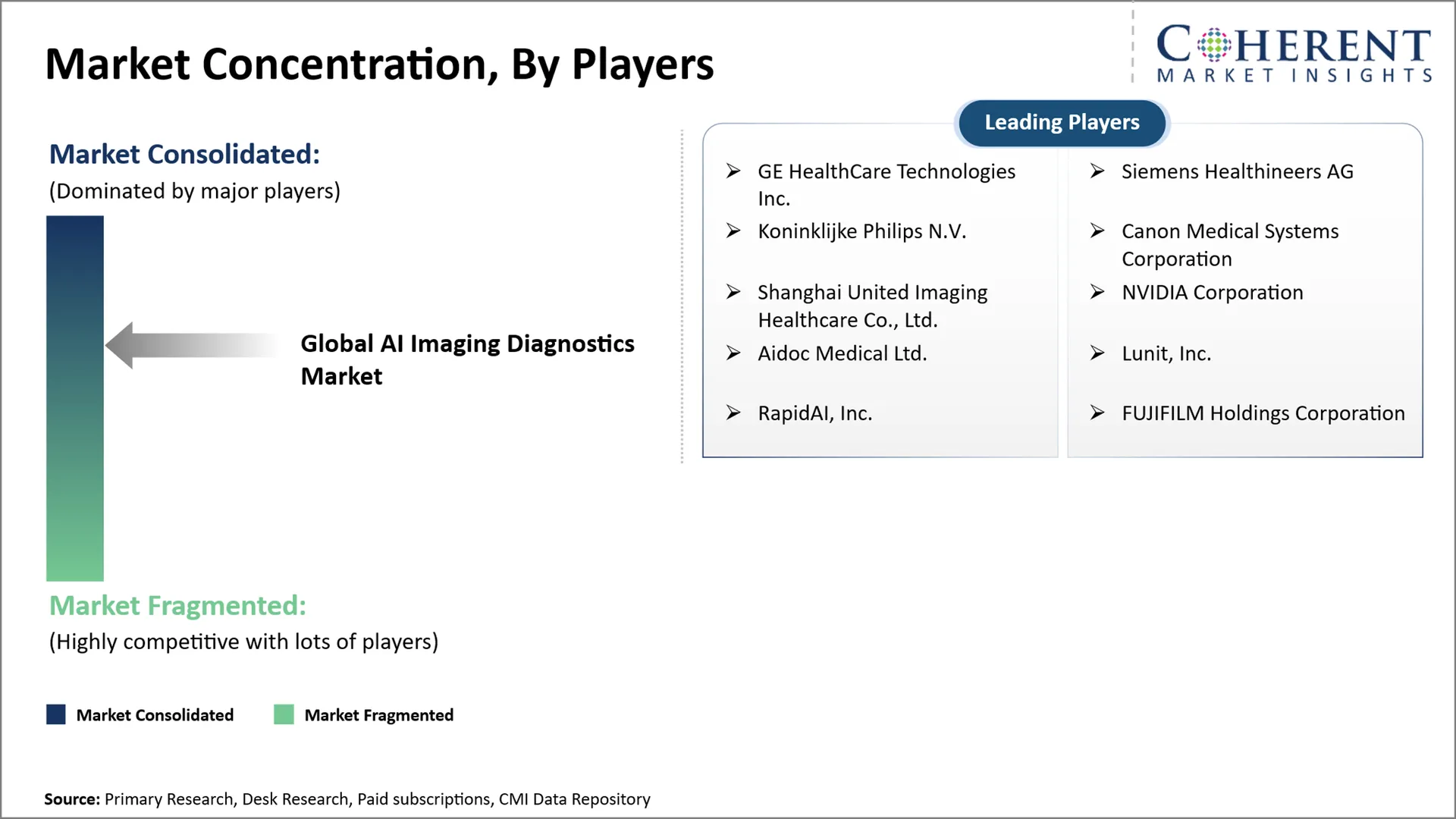
Key Developments
- In June 2026, the U.S. FDA awarded a USD 1.29 million research contract to Cognita Imaging, Inc., a wholly owned subsidiary of Mosaic Clinical Technologies, Inc. to develop and test a framework for evaluating AI-generated radiology reports. The 18-month project will assess whether multiple large language models can evaluate radiology reports, with radiologists reviewing clinically significant discrepancies. The initiative is intended to support the FDA’s regulatory science efforts for generative AI-enabled radiology technologies.
- In May 2026, F. Hoffmann-La Roche Ltd. announced a definitive agreement to acquire PathAI, strengthening its digital pathology and AI-driven diagnostics capabilities. PathAI’s Image Management System and AI-based image analysis technologies will complement Roche’s digital pathology portfolio and support more automated diagnostic workflows. The transaction is expected to expand AI applications in precision diagnostics, particularly in oncology and pathology. roche.com
- In December 2025, GE HealthCare launched an AI-enhanced version of its cloud-based Imaging 360 platform to improve radiology operational efficiency. The solution uses AI-driven insights to optimize imaging equipment utilization, scheduling, staffing, and protocol standardization. The platform is designed to streamline radiology workflows and help healthcare providers improve productivity and patient care.
Competitive Landscape
The global AI imaging diagnostics market is moderately competitive, with market dynamics shaped by advances in AI-powered image analysis, automated detection, clinical decision support, and imaging workflow optimization. Market participants are increasingly focusing on improving diagnostic accuracy, expanding clinical applications, and integrating AI into existing imaging workflows. Key focus areas include:
- Development of AI-powered image analysis and diagnostic solutions
- Integration of AI with CT, MRI, X-ray, ultrasound, and mammography
- Expansion of AI applications across oncology, cardiology, and neurology
- Advancement of automated detection, triage, and clinical decision support
- Integration with PACS, EHRs, and cloud-based imaging platforms
- Enhancement of AI model validation, interoperability, and clinical performance
Market Report Scope
Market Report Scope
AI Imaging Diagnostics Market Report Coverage | |||
Report Coverage | Details | ||
Base Year | 2025 | Market Size in 2026: | USD 3.18 Bn |
Historical Data For: | 2020 To 2024 | Forecast Period: | 2026 To 2033 |
Forecast Period 2026 To 2033 CAGR: | 27.4% | 2033 Value Projection: | USD 17.32 Bn |
Geographies covered: |
| ||
Segments covered: |
| ||
Companies covered: | GE HealthCare Technologies Inc., Siemens Healthineers AG, Koninklijke Philips N.V., Canon Medical Systems Corporation, Shanghai United Imaging Healthcare Co., Ltd., NVIDIA Corporation, Aidoc Medical Ltd., Lunit, Inc., RapidAI, Inc., FUJIFILM Holdings Corporation | ||
Growth Drivers: |
| ||
Restraints & Challenges: |
| ||
Analyst Opinion (Expert Opinion)
- In the coming years, global AI imaging diagnostics market is expected to shift toward automated, multimodal, and workflow-integrated diagnostic solutions, with AI increasingly supporting image interpretation, disease detection, triage, and clinical decision-making. Integration with PACS, EHRs, and cloud platforms is expected to further strengthen adoption.
- The maximum opportunities are foreseen within AI imaging software for oncology in China, where increasing cancer screening and diagnostic imaging volumes can support demand for AI-assisted detection, classification, and treatment monitoring. Opportunities are also expected to expand across other high-volume applications such as cardiology and neurology.
- In order to gain a competitive advantage market players should prioritize clinically validated, interoperable, and scalable AI solutions that integrate seamlessly with existing imaging workflows. Developing multimodal platforms, strengthening clinical evidence, improving model performance across diverse patient populations, and offering flexible cloud-based deployment can help players gain a competitive edge.
Speak to the analyst
Want personalized insights?
Take the findings above to one of our principal consultants, or have the report rebuilt around the segments, geographies and competitors you actually track.
Market Segmentation
- Component Insights (Revenue, USD Bn, 2021 - 2033)
- Software
- Services
- Imaging Modality Insights (Revenue, USD Bn, 2021 - 2033)
- X-ray
- Computed Tomography (CT)
- Magnetic Resonance Imaging (MRI)
- Ultrasound
- Mammography
- Others
- Application Insights (Revenue, USD Bn, 2021 - 2033)
- Radiology
- Cardiology
- Oncology
- Neurology
- Others
- End User Insights (Revenue, USD Bn, 2021 - 2033)
- Hospitals and Healthcare Systems
- Diagnostic Imaging Centers
- Specialty Clinics
- Others
- Regional Insights (Revenue, USD Bn, 2021 - 2033)
- North America
- U.S.
- Canada
- Latin America
- Brazil
- Argentina
- Mexico
- Rest of Latin America
- Europe
- Germany
- U.K.
- Spain
- France
- Italy
- Russia
- Rest of Europe
- Asia Pacific
- China
- India
- Japan
- Australia
- South Korea
- ASEAN
- Rest of Asia Pacific
- Middle East
- GCC Countries
- Israel
- Rest of Middle East
- Africa
- South Africa
- North Africa
- Central Africa
- North America
- Key Players Insights
- GE HealthCare Technologies Inc.
- Siemens Healthineers AG
- Koninklijke Philips N.V.
- Canon Medical Systems Corporation
- Shanghai United Imaging Healthcare Co., Ltd.
- NVIDIA Corporation
- Aidoc Medical Ltd.
- Lunit, Inc.
- RapidAI, Inc.
- FUJIFILM Holdings Corporation
Sources
Primary Research Interviews
- Radiologists and diagnostic imaging specialists – AI-assisted image interpretation, workflow integration, and clinical adoption
- Radiology department heads and imaging administrators – AI implementation, procurement, and operational requirements
- Medical imaging technologists and technicians – AI-enabled imaging workflows and system usability
- Clinical AI and medical-imaging researchers – algorithm development, validation, and emerging applications
- Healthcare IT and PACS administrators – interoperability, data integration, and AI deployment requirements
Stakeholders
- AI imaging software developers and medical-device manufacturers
- Medical imaging equipment and modality providers
- Hospitals and healthcare systems
- Diagnostic imaging centers and specialty clinics
- Healthcare IT, PACS, EHR, and cloud-platform providers
- End-use Sectors
- Hospitals & Healthcare Systems
- Diagnostic Imaging Centers
- Specialty Clinics
- Research & Academic Institutions
- Other Healthcare Facilities
- Regulatory & Health Bodies
- U.S. Food and Drug Administration (FDA) – AI-enabled medical-device clearances and regulatory requirements
- European Medicines Agency (EMA) – medical-device and AI-related regulatory information
- Medicines and Healthcare products Regulatory Agency (MHRA), UK – medical-device regulation and AI technologies
- Pharmaceuticals and Medical Devices Agency (PMDA), Japan – medical-device approvals and regulatory guidance
- National Medical Products Administration (NMPA), China – medical-device registration and regulatory requirements
- Central Drugs Standard Control Organisation (CDSCO), India – medical-device regulation and approvals
Databases
- FDA AI-Enabled Medical Devices List – authorized AI-enabled medical devices and regulatory information
- FDA 510(k) Premarket Notification Database – cleared AI-enabled medical devices
- FDA De Novo Database – novel AI-enabled medical-device classifications
- FDA Premarket Approval (PMA) Database – approved high-risk AI-enabled medical devices
- ClinicalTrials.gov – clinical trials involving AI-enabled imaging and diagnostic technologies
- WHO International Clinical Trials Registry Platform (ICTRP) – global clinical-trial information
Associations
- Radiological Society of North America (RSNA)
- American College of Radiology (ACR)
- European Society of Radiology (ESR)
- Society for Imaging Informatics in Medicine (SIIM)
- European Association of Nuclear Medicine (EANM)
- American Medical Informatics Association (AMIA)
Public Domain Sources
- U.S. Food and Drug Administration (FDA) – AI-enabled medical devices, regulatory information, and device clearances U.S. Food and Drug Administration
- National Institutes of Health (NIH) – medical imaging and AI research
- National Library of Medicine (NLM) – biomedical and AI-imaging literature
- Centers for Disease Control and Prevention (CDC) – disease burden and health statistics
- World Health Organization (WHO) – global health, disease, and healthcare-system data
- National Cancer Institute (NCI) – cancer imaging, diagnosis, and AI-related research
- U.S. National Institute of Biomedical Imaging and Bioengineering (NIBIB) – medical imaging and imaging technology research
- FDA Artificial Intelligence Program – AI/ML medical-device research, evaluation, and regulatory science
Proprietary Elements
- CMI Data Analytics Tool, Proprietary CMI Existing Repository of information for last 10 years.
Get access to 250+ pages report
Every segment, forecast, competitor profile and data table behind the analysis above — available for instant download.
- ESOMAR Member
- ISO 9001:2015 Certified
- D-U-N-S Registered
- GDPR & CCPA Compliant
Frequently Asked Questions
The global AI imaging diagnostics market is estimated to be valued at USD 3.18 Bn in 2026 and is expected to reach USD 17.32 Bn by 2033.
Software dominates due to its broad clinical applications, scalability, and integration with imaging workflows and healthcare IT systems.
AI imaging diagnostics uses AI algorithms to analyze medical images and support faster, more accurate disease detection and diagnosis.
The CAGR of global AI imaging diagnostics market is projected to be 27.4% from 2026 to 2033.
Rising adoption of AI-assisted medical imaging, and increasing imaging volumes are the major factors driving the growth of the global AI imaging diagnostics market.
High AI implementation costs, and data privacy and regulatory concerns are the major factors hampering the growth of the global AI imaging diagnostics market.
In terms of application, radiology is estimated to dominate the market revenue share in 2026.