

Global Antibody Fragments Market Size and Forecast – 2026 To 2033
The global antibody fragments market is expected to grow from USD 8.58 Bn in 2026 to USD 12.89 Bn by 2033, registering a compound annual growth rate (CAGR) of 6.0% from 2026 to 2033. The market for global antibody fragments is poised for significant expansion, fueled by the growing government-backed investment in antibody engineering and next-generation biologics.
The National Institutes of Health (NIH) awarded USD 216,682 in FY2025 for research involving engineered antibody proteins and bispecific T-cell–redirecting therapeutics, highlighting continued public-sector support for advanced antibody engineering.
Key Takeaways of the Global Antibody Fragments Market
- Fab / Fab’ fragments are projected to hold 29.1% of the global antibody fragments market share in 2026, making it dominant type segment, across Europe due to established regulatory requirements specifically covering Fab and F(ab’)₂ sub-fragments. For instance, the European Medicines Agency (EMA) guideline explicitly identifies Fab and F(ab’)₂ as antibody sub-fragments and requires characterization of their molecular and antigenic properties, along with controls for impurities, potency, and immunoreactivity when developed for clinical use.
- Humanized / Recombinant are projected to hold 49.2% of the global antibody fragments market share in 2026, making it dominant source segment, across North America due to established regulatory guidance covering recombinant antibody-fragment production. For instance, the U.S. Food and Drug Administration (FDA) specifically addresses recombinant monoclonal antibodies and their fragments produced using bacterial systems and phage-display technology, including documentation and quality considerations for such materials.
- Therapeutics are projected to hold 40.3% of the global antibody fragments market share in 2026, making it dominant application segment, across North America due to specific regulatory frameworks supporting fragment-containing targeted biologics. For instance, the U.S. FDA's March 2024 guidance on antibody-drug conjugates explicitly defines an ADC as a drug containing an antibody or antibody fragment linked to a payload and provides clinical-pharmacology recommendations for their development, including dosing, exposure-response, immunogenicity, and drug-interaction assessments.
- North America market maintains dominance with an expected share of 39.4% in 2026, bolstered by its mature regulatory and clinical-development ecosystem for engineered antibody formats. For instance, the U.S. FDA’s Orphan Drug Designation database identified pegrizeprument as an anti-CD28 pegylated monoclonal antibody fragment and granted it orphan designation in March 2026, reflecting regulatory support for fragment-based development.
- Asia Pacific is expected to exhibit the fastest growth in the global antibody fragments market, registering an estimated CAGR of 8.3% during 2026–2033, driven by expanding regulatory infrastructure and growing support for advanced biologics across the region. For instance, Singapore’s Health Sciences Authority (HSA) and Japan’s Ministry of Health, Labour and Welfare (MHLW) signed a 2026 cooperation agreement covering health-product regulation, GMP inspection reliance, and information exchange on cutting-edge technologies, strengthening the regulatory environment for advanced biologic development in Asia Pacific.
Segmental Insights
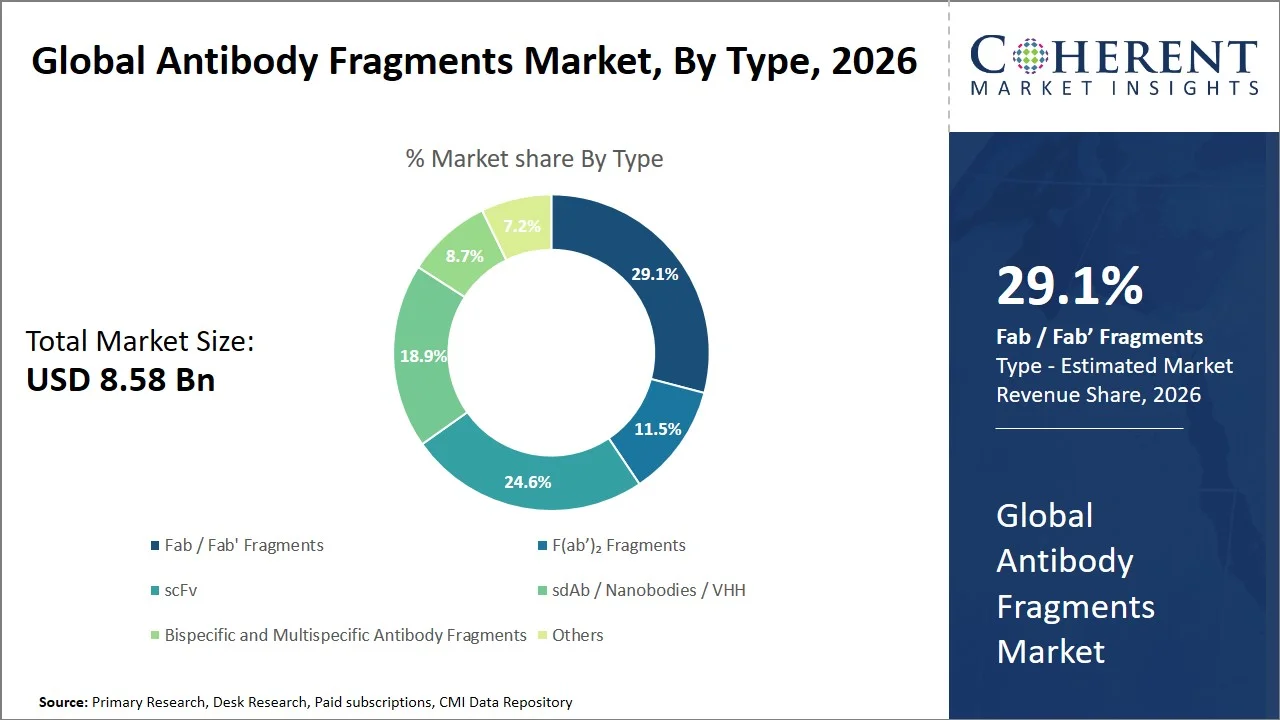
Why Do Fab / Fab’ Fragments Dominate the Global Antibody Fragments Market?
Fab / Fab’ fragments are projected to hold the market share of 29.1% in 2026, due to their smaller size, high specific affinity and ability to serve therapeutic, diagnostic or targeted delivery applications. The absence of the Fc portion of the antibody ensures the inability of these fragments to initiate the functions mediated via this portion of the molecule. Recombination engineering further improves on these characteristics such as stability and pharmacokinetics. For instance, in April 2026, the team of researchers at Health Canada has come up with and innovative and faster NMR-method based on differentially labelled Fab fragments, which increases efficiency of therapeutic antibody structural characterization. This proves that Fab-formats still play an essential role in the high-level development of biologic therapeutics. (Source: American Chemical Society)
- Current Industry Events of 2026
- Market Size Estimation
- Regional Breakdown
- Competitive Landscape
- Customer Intelligence
- Segmental Analysis
- Pricing Analysis
- Key Market Drivers, Challenges & Future Trends
- Customized Insights Section
Why Does Humanized / Recombinant Represent the Largest Source Segment in the Antibody Fragments Market?
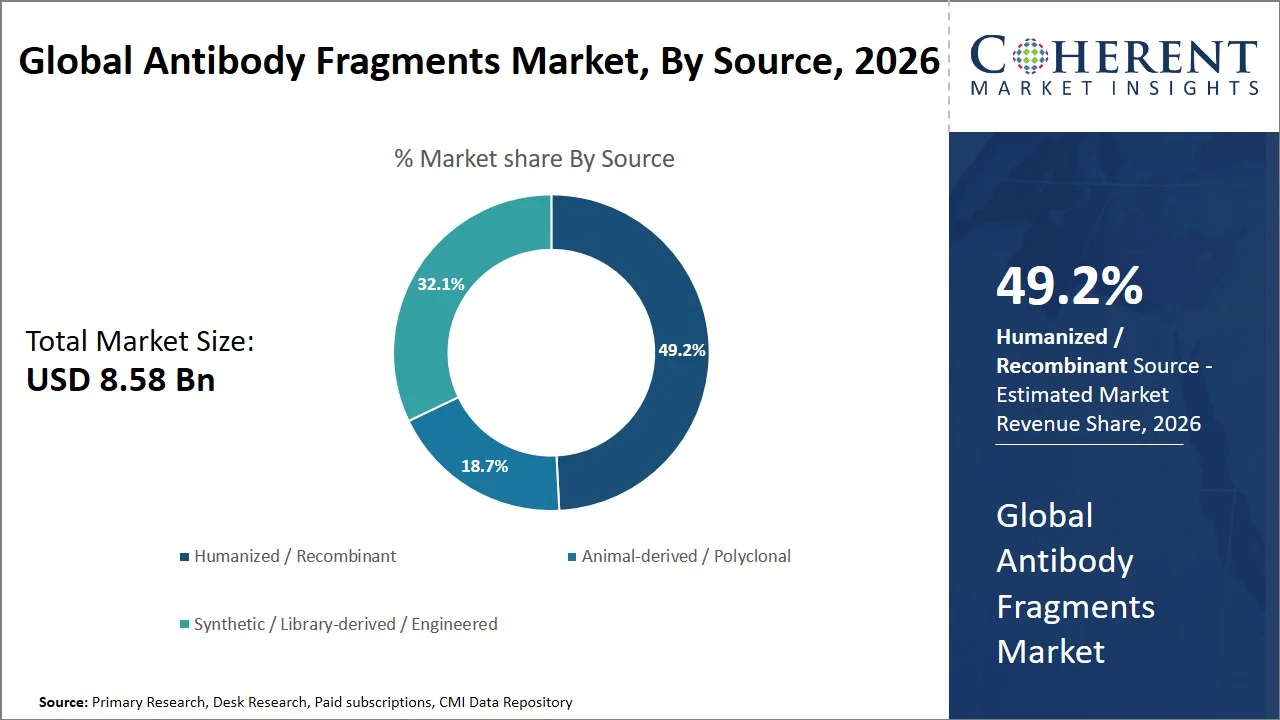
Humanized / Recombinant are projected to hold a market share of 49.2% in 2026, because of their low immunogenicity, targeted and rational designing, the vast scale producing using combinant technology and potential for affinity/stability modification. These properties make them ideal candidates for precision medicine and the next generation of biotherapeutics. For instance, in October 2025, a research team from University of Chinese Academy of Sciences and Chinese Academy of Sciences has constructed diverse semisynthetic humanized scFv phage display library with size over 10¹⁰ and discovered antibodies against the target with high affinity that might be used for therapy and diagnosis. (Source: National Library of Medicine)
Therapeutics Segment Dominates the Global Antibody Fragments Market
The therapeutics segment is projected to hold a market share of 40.3% in 2026, attributed to high target specificity, small molecule size and engineering adaptability of antibody fragments, facilitating tailored therapy approaches across Oncology, Autoimmune and other challenging indications. Their modularity allows combinatorial development of conjugated and multispecific therapies. For instance, in July 2025, a study published by National Library of Medicine investigated an antibody-fragment based agent with a radiolabeled antibody targeting fibroblast activation protein, and suggested promising tumor accretion as well as safety, to be used for cancer imaging on their first-in-human administration, indicating that antibody fragments are translatable to targeted medicine.
Current Events and their Impact
Current Events | Description and its Impact |
Health Canada Implemented ICH Q12 for Biologic Drugs (May 2026) |
|
U.S. FDA Granted Orphan Designation to a Pegylated Antibody Fragment (March 2026) |
|
India Allocated USD 1.05 billion (INR 10,000 Crore) to Biopharma SHAKTI (February 2026) |
|
Antibody Fragments Market Dynamics
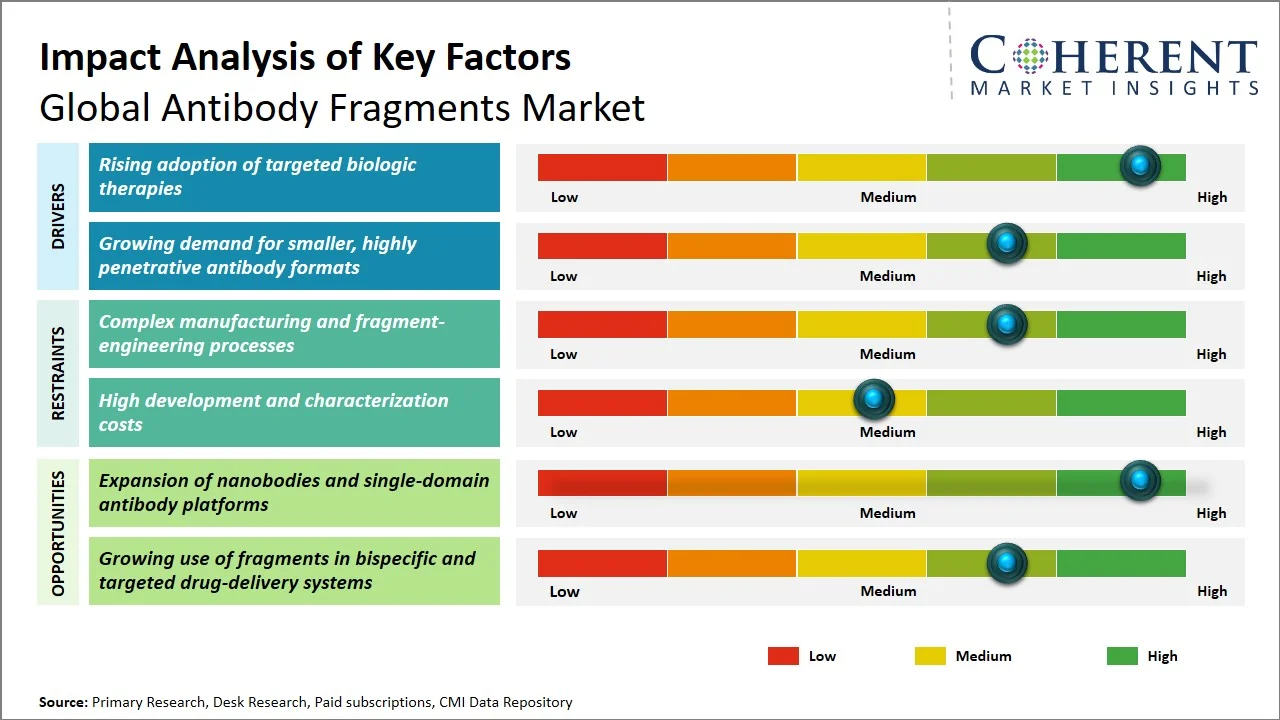
Market Drivers
Rising adoption of targeted biologic therapies
The growing shift toward targeted biologic therapies is increasing demand for antibody fragments, which offer high antigen specificity and improved tissue penetration compared with full-length antibodies. The trend is particularly evident in next-generation immunotherapies, where smaller fragment formats can enable precise target engagement and multispecific designs. For instance, in 2025, the U.S. FDA approved 10 novel antibody-based therapeutics, including multiple targeted biologics, reflecting continued regulatory momentum for precision biologic treatments.
Growing demand for smaller, highly penetrative antibody formats
The increasing demand for smaller antibody formats is driven by their ability to penetrate dense tissues and tumors more effectively while enabling access to targets that may be difficult for conventional antibodies to reach. This is particularly supporting the development of scFv, VHH, and other single-domain antibody fragments for targeted therapeutics and molecular imaging. For instance, in June 2025, researchers from the New Mexico Consortium developed a VHH antibody library optimized for stability, affinity, developability, and purification, supporting the advancement of smaller single-domain antibody formats for therapeutic applications.
Increasing investment in antibody discovery technologies
Growing investment in advanced antibody discovery and engineering platforms is accelerating the identification and optimization of antibody fragments, particularly through AI-enabled design and high-throughput screening. This is improving the speed and efficiency of developing novel binders with enhanced affinity and developability. For instance, in March 2026, Antiverse raised USD 9.3 million in Series A funding to advance its AI-driven antibody design platform and therapeutic antibody pipeline, highlighting increasing capital flows toward computational antibody discovery technologies.
Emerging Trends
Rise of Bispecific and Multispecific Fragment Formats
Antibody fragments such as scFv and VHH are increasingly being engineered into bispecific and multispecific formats to enable simultaneous targeting of multiple antigens. This trend is expanding their use in oncology and immune-cell-engaging therapies.
AI-Driven Antibody Fragment Engineering
AI and computational design are increasingly being integrated with antibody engineering to predict binding, optimize stability, and reduce screening requirements for fragment candidates. This is accelerating the development of optimized scFv and nanobody formats.
Expansion of Nanobodies for Advanced Therapeutics and Diagnostics
Nanobodies/VHHs are gaining attention because of their small size, high stability, rapid tissue penetration, and ability to recognize difficult targets. Their application is expanding into bispecific therapeutics, molecular imaging, intracellular targeting, and precision medicine.
Regional Insights
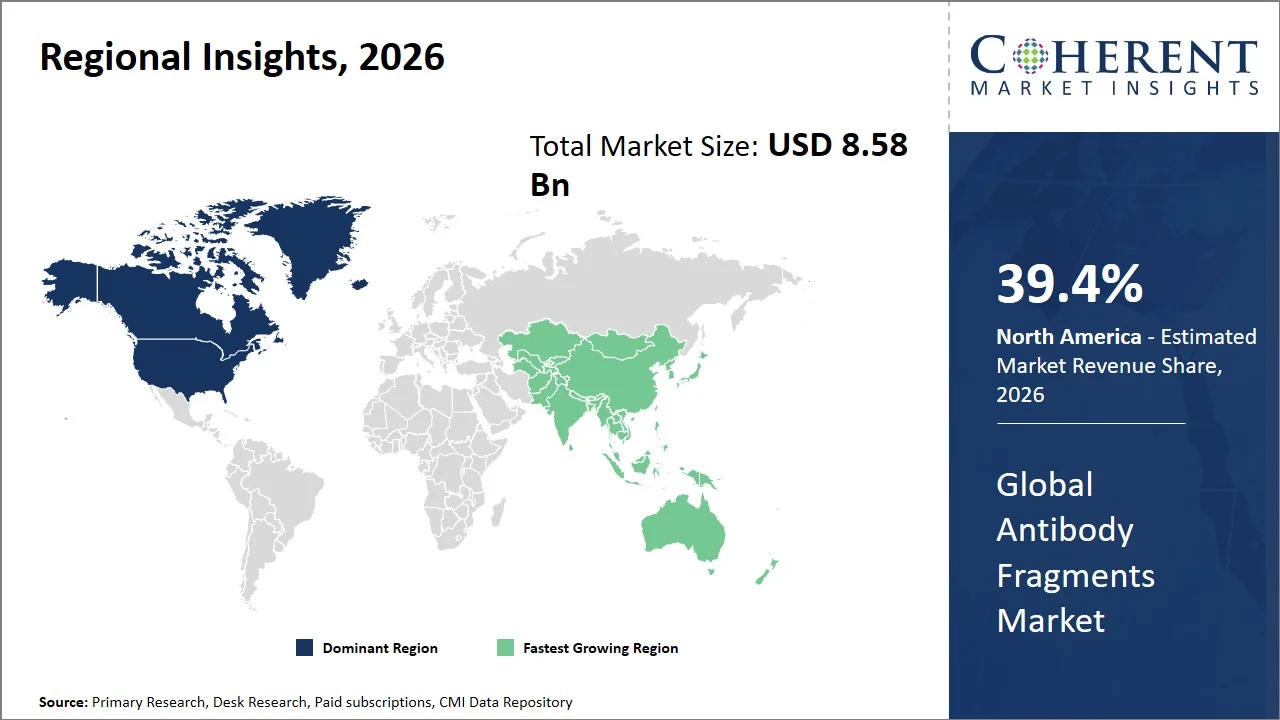
Why is North America a Strong Market for Antibody Fragments?
North America leads the global antibody fragments market, accounting for an estimated 39.4% share in 2026, due to its well-established biotechnology infrastructure, sophisticated clinical research capabilities and the substantial investment in the development of antibody engineering. Abundant government support in research grants and favorable regulatory policies that enable extensive clinical trials and swift product approval also favor the market in the region.
For instance, in March 2024, the U.S. Food and Drug Administration (FDA) issued a guidance document on the clinical pharmacology of antibody-drug conjugates with either an antibody or antibody-fragment as the carrier, with guidance on dosing, bioanalysis, exposure-response relationship and immunogenicity. Furthermore, adequate intellectual property protection rights and well-developed biopharmaceutical manufacturing base drive more of its innovative products toward commercialization for various therapy and diagnostics purposes.
Why Does Asia Pacific Antibody Fragments Market Exhibit High Growth?
Asia Pacific is expected to exhibit the fastest growth in the global antibody fragments market, registering an estimated CAGR of 8.3% during 2026–2033. The region is projected to account for approximately 23.0% of the global market in 2026, due to increasing biopharmaceutical capabilities along with high investment on complex biologics. Increasing government policies for advancing biopharmaceutical research such as, rebates/subsidies and tax incentives along with efficient regulatory processes assist growth in this market.
For instance, in April 2024, Japan Agency for Medical Research and Development (AMED) initiated the five-year Smart Bio Drug Discovery Research Support Program to promote highly-functional bio-pharma techniques, such as antibody-technologies, drug delivery systems, imaging and safety assessment technologies. Furthermore, developing clinical studies and manufacturing infrastructure of countries like China, Japan, India and South Korea is further bolstering the market expansion.
Global Antibody Fragments Market Outlook for Key Countries
Why is the U.S. Leading Innovation and Adoption in the Antibody Fragments Market?
The U.S. has been in the forefront of leading innovation and adoption in the antibody fragments market due to well-established regulatory framework that includes a section on antibody fragments for those that are recombinant in nature, using the methods of phage display and expression systems of bacteria. They are also defined as antibody fragments under their framework on monoclonal antibodies that provide developers with a clear way of making their expressed fragment format a therapy.
Is Japan a Favorable Market for Antibody Fragments Market?
Japan provides a favorable environment for the antibody fragment segment, with a mature biologic review system in place and an increasing interest in advanced antibody technologies. Along with its focus on a proactive regulatory-science program and international regulatory harmonization, the Pharmaceuticals and Medical Devices Agency (PMDA) are conducive to the development and review of advanced next generation antibody approaches.
Is China Emerging as a Key Growth Hub for the Antibody Fragments Market?
China represents an emerging rather than a developed opportunity driven by accelerated review times and an evolving innovation biologics environment. The NMPA accelerated innovative drug clinical trial review times to 30 working days from 60 working days for products that qualify for fast-track approval. The NMPA’s proposed framework set stricter controls for biologic manufacturing and changes to biologic product lifecycle in 2026.
Why Does Germany Top the European Antibody Fragments Market?
Germany constitutes a significant and mature market for antibody fragments based on the availability of the strongest research and development clusters, biologics manufacturing facilities, development infrastructure with robust trial experience, and support of the overall regulatory ecosystem to get biologic drug candidates approved. Germany leads the European region, with a relatively high concentration of pharma players, academic and industrial research and development resources, and biotechnology centers of excellence.
Is Antibody Fragments Market Developing in India?
India is emerging as a market for antibody fragments due to increasing competence in recombinant capabilities and regulatory mechanisms. The National Institute of Biologicals (NIB) provides adequate facilities for quality control testing of both antibody fragments and fusion proteins and is increasing its competencies in domestic production and R&D in biologics.
Key Applications and Market Relevance of Antibody Fragment Types
Antibody Fragment Type | Key Development Applications | Primary Therapeutic Focus | Market Relevance |
Fab / Fab’ | Targeted therapeutics, conjugates | Oncology, immunology | Established fragment format with continued clinical development |
scFv | Bispecifics, CAR-T, targeted delivery | Oncology, hematology | Important building block for engineered biologics |
VHH / Nanobodies | Therapeutics, imaging, diagnostics | Oncology, infectious & inflammatory diseases | High-growth format because of compact size and engineering flexibility |
Bispecific / Multispecific Fragments | Dual-target therapies, immune-cell engagement | Oncology, autoimmune diseases | Supports next-generation biologic development |
F(ab’)₂ / Other Fragments | Diagnostics, targeted delivery, therapeutics | Imaging, immunology | Specialized applications and research demand |
How is the expansion of nanobodies and single-domain antibody platforms creating new growth opportunities in the antibody fragments market?
Nanobody and single-domain antibody (sdAb) platforms have enormous potential in therapeutics, diagnostics, and multivalent biologics due to its small size, relative high stability and modularity. It is also increasingly being used in other application domains due to ease of engineering that provides wider opportunity for future commercialization. For instance, in January 2026, scientists at IIT Roorkee designed ultra-large and high-diversity shark-derived single-domain antibody library in collaboration with IMGENEX India, facilitating the discovery of a nanobody against cancer, infections and immune diseases with high specificity, high avidity, high stability and high efficacy at very low dose.
Market Players, Key Development, and Competitive Intelligence
Key Developments
- On August 31, 2026, Veloxis Pharmaceuticals, Inc. dosed the first participant in the Phase 2 RENGEVITY-201 trial evaluating pegrizeprument (VEL-101), a pegylated antibody fragment targeting CD28, for prevention of organ rejection in kidney transplant recipients. The trial was designed to evaluate its safety, pharmacokinetics, pharmacodynamics, and preliminary efficacy against tacrolimus.
- In May 2026, argenx announced that the U.S. FDA had approved a label expansion for VYVGART (efgartigimod alfa-fcab) and VYVGART Hytrulo for adults with generalized myasthenia gravis (gMG) across all serotypes. VYVGART, a human IgG1 antibody fragment targeting FcRn, demonstrated clinically meaningful improvements across serotypes in the Phase 3 ADAPT SERON study.
- In April 2026, RevolKa Ltd. officially launched RevoAb, an AI-powered online antibody sequence optimization service designed to improve antibody physicochemical properties, particularly expression levels. The service supported variable fragment formats including Fv and VHH. During its pilot phase, one optimized scFv sequence demonstrated 7× higher expression in E. coli without a significant change in affinity.
Competitive Landscape
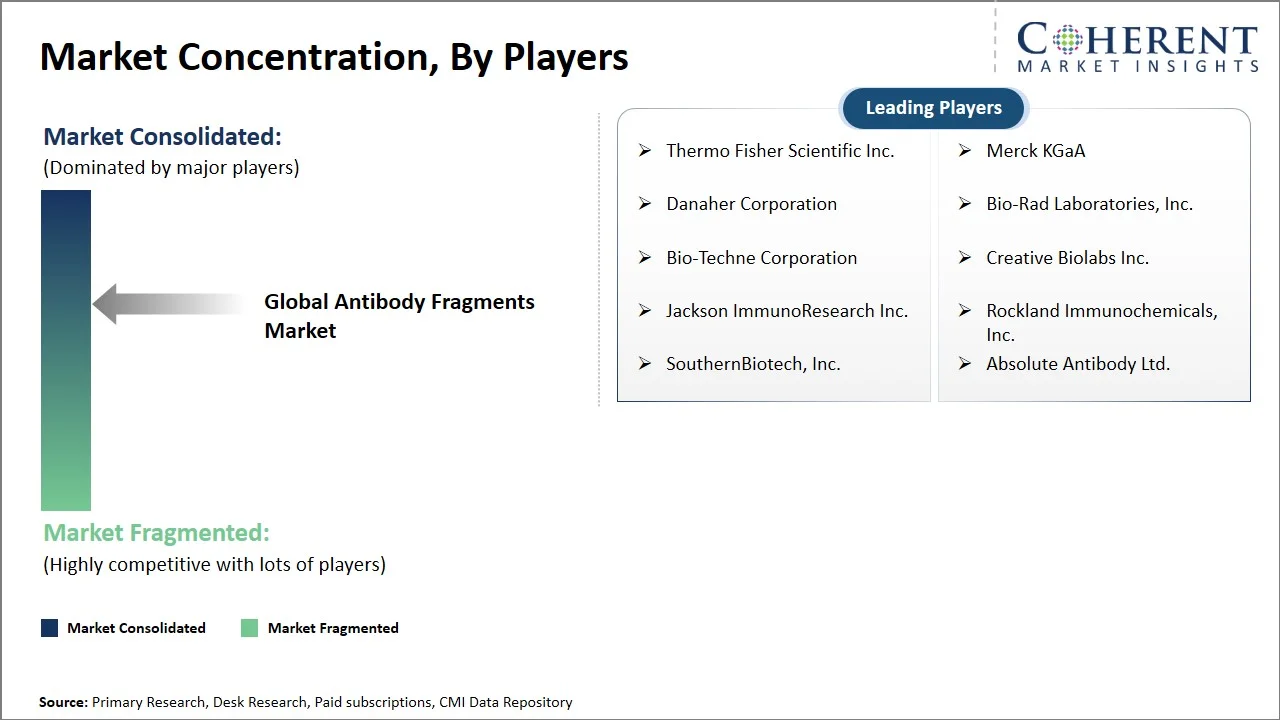
The global antibody fragments market is moderately competitive, with market dynamics shaped by antibody engineering innovation, expansion of fragment-based therapeutic pipelines, development of multispecific formats, and increasing applications in targeted delivery and molecular imaging. Market participants are increasingly focusing on improving fragment stability, tissue penetration, half-life, and target specificity while expanding applications across oncology, autoimmune, infectious, and rare diseases. Key focus areas include:
- Development of novel Fab, Fab’, scFv, and VHH-based therapeutics
- Advancement of bispecific and multispecific antibody-fragment formats
- Improvement of fragment stability, affinity, and pharmacokinetic properties
- Expansion of nanobody and single-domain antibody platforms
- Integration of AI and computational tools into antibody-fragment engineering
- Development of fragment-based targeted drug-delivery and conjugation technologies
- Expansion of antibody fragments in molecular imaging and diagnostic applications
- Strengthening clinical-stage pipelines for next-generation fragment-based biologics
Market Report Scope
Antibody Fragments Market Report Coverage
| Report Coverage | Details | ||
|---|---|---|---|
| Base Year: | 2025 | Market Size in 2026: | USD 8.58 Bn |
| Historical Data for: | 2020 To 2024 | Forecast Period: | 2026 To 2033 |
| Forecast Period 2026 to 2033 CAGR: | 6.0% | 2033 Value Projection: | USD 12.89 Bn |
| Geographies covered: |
| ||
| Segments covered: |
| ||
| Companies covered: | Thermo Fisher Scientific Inc., Merck KGaA, Danaher Corporation, Bio-Rad Laboratories, Inc., Bio-Techne Corporation, Creative Biolabs Inc., Jackson ImmunoResearch Inc., Rockland Immunochemicals, Inc., SouthernBiotech, Inc., Absolute Antibody Ltd. | ||
| Growth Drivers: |
| ||
| Restraints & Challenges: |
| ||
Analyst Opinion (Expert Opinion)
- In the coming years, global antibody fragments market is expected to shift toward next-generation engineered formats, particularly VHH/nanobodies, scFv, and bispecific or multispecific fragments. Future growth will increasingly depend on improving fragment stability and half-life while using AI-enabled engineering to accelerate candidate discovery and optimization. Therapeutic applications are likely to remain the primary commercial opportunity, with diagnostics and molecular imaging providing additional avenues for expansion.
- The maximum opportunities are foreseen within VHH/Nanobodies for therapeutics in China, supported by the rapid expansion of biopharmaceutical R&D, increasing investment in advanced biologic platforms, and the growing need for targeted therapies. Players that establish capabilities in nanobody engineering and therapeutic development in China can position themselves to capture both domestic demand and broader Asia Pacific growth.
- In order to gain a competitive advantage, market players should prioritize proprietary fragment-engineering platforms that simultaneously improve affinity, stability, tissue penetration, and serum half-life rather than competing solely on target selection. Building integrated capabilities spanning discovery, computational engineering, manufacturability, and clinical development can shorten development timelines and create stronger differentiation. Strategic collaborations with research institutions and regional biopharma companies can further accelerate pipeline expansion and market entry.
Speak to the analyst
Want personalized insights?
Take the findings above to one of our principal consultants, or have the report rebuilt around the segments, geographies and competitors you actually track.
Market Segmentation
- Type Insights (Revenue, USD Bn, 2021 - 2033)
- Fab / Fab’ Fragments
- F(ab’)₂ Fragments
- scFv
- sdAb / Nanobodies / VHH
- Bispecific and Multispecific Antibody Fragments
- Others
- Source Insights (Revenue, USD Bn, 2021 - 2033)
- Humanized / Recombinant
- Animal-derived / Polyclonal
- Synthetic / Library-derived / Engineered
- Application Insights (Revenue, USD Bn, 2021 - 2033)
- Therapeutics
- Diagnostics and Imaging
- Research Reagents
- Drug Delivery and Conjugates
- Biosensors
- Others
- End User Insights (Revenue, USD Bn, 2021 - 2033)
- Pharmaceutical and Biotechnology Companies
- Diagnostic Laboratories
- Academic and Research Institutes
- CROs/CDMOs
- Others
- Regional Insights (Revenue, USD Bn, 2021 - 2033)
- North America
- U.S.
- Canada
- Latin America
- Brazil
- Argentina
- Mexico
- Rest of Latin America
- Europe
- Germany
- U.K.
- Spain
- France
- Italy
- Russia
- Rest of Europe
- Asia Pacific
- China
- India
- Japan
- Australia
- South Korea
- ASEAN
- Rest of Asia Pacific
- Middle East
- GCC Countries
- Israel
- Rest of Middle East
- Africa
- South Africa
- North Africa
- Central Africa
- North America
Sources
Primary Research Interviews
- Antibody fragment development and engineering specialists
- Biopharmaceutical R&D scientists involved in recombinant antibody technologies
- Clinical researchers involved in fragment-based therapeutic development
- Pharmaceutical and biotechnology companies developing antibody fragments and multispecific biologics
Stakeholders
- Pharmaceutical and biotechnology companies developing antibody-fragment therapeutics
- Contract research and contract development/manufacturing organizations involved in antibody engineering and production
- Academic research institutes specializing in antibody engineering and protein therapeutics
- Diagnostic and molecular-imaging organizations using antibody fragments
- Biopharmaceutical companies developing nanobody, scFv, Fab, and multispecific platforms
- End-use Sectors
- Pharmaceutical and biotechnology companies
- Contract research and contract development/manufacturing organizations
- Academic and research institutions
- Hospitals and specialized treatment centers
- Diagnostic and molecular-imaging laboratories
- Biotechnology and life-science research laboratories
- Regulatory & Health Bodies
- U.S. Food and Drug Administration (FDA) – Center for Drug Evaluation and Research (CDER) and Center for Biologics Evaluation and Research (CBER)
- European Medicines Agency (EMA)
- Medicines and Healthcare products Regulatory Agency (MHRA), U.K.
- Pharmaceuticals and Medical Devices Agency (PMDA), Japan
- National Medical Products Administration (NMPA), China
Databases
- ClinicalTrials.gov
- European Union Clinical Trials Information System (CTIS)
- World Health Organization International Clinical Trials Registry Platform (WHO ICTRP)
- International Standard Randomised Controlled Trial Number (ISRCTN) Registry
Journals
- Antibody Therapeutics
- Nature Biotechnology
- Journal of Biological Chemistry
- Frontiers in Immunology
- Frontiers in Oncology
Associations
- The Antibody Society
- American Association of Pharmaceutical Scientists (AAPS)
- International Society for Pharmaceutical Engineering (ISPE)
- Biotechnology Innovation Organization (BIO)
Public Domain Sources
- U.S. National Library of Medicine (NLM) –MEDLINE – antibody-fragment research and clinical literature
- National Center for Biotechnology Information (NCBI) – MeSH – antibody-fragment classification and terminology
- U.S. Food and Drug Administration (FDA) – biologics, antibody-fragment and clinical-development guidance
- European Medicines Agency (EMA) – antibody and related-product regulatory guidance
- World Health Organization (WHO) – clinical-trial and biopharmaceutical R&D information
- NIH RePORTER – publicly funded antibody-engineering and biologics research
Proprietary Elements
- CMI Data Analytics Tool
- Proprietary CMI Existing Repository of information for last 10 years.
Get access to 250+ pages report
Every segment, forecast, competitor profile and data table behind the analysis above — available for instant download.
- ESOMAR Member
- ISO 9001:2015 Certified
- D-U-N-S Registered
- GDPR & CCPA Compliant
Missing comfort of reading report in your local language? Find your preferred language:
Frequently Asked Questions
The global antibody fragments market is estimated to be valued at USD 8.58 Bn in 2026 and is expected to reach USD 12.89 Bn by 2033.
Fab / Fab’ fragments dominates due to their established therapeutic use, well-characterized manufacturing processes, and broad applicability in targeted biologic development.
Antibody fragments are smaller portions of antibodies that retain antigen-binding ability and are engineered or derived for targeted therapeutic, diagnostic, and imaging applications.
The CAGR of global antibody fragments market is projected to be 6.0% from 2026 to 2033.
Rising adoption of targeted biologic therapies, and growing demand for smaller, highly penetrative antibody formats are the major factors driving the growth of the global antibody fragments market.
Complex manufacturing and fragment-engineering processes, and high development and characterization costs are the major factors hampering the growth of the global antibody fragments market.
In terms of end user, pharmaceutical and biotechnology companies are estimated to dominate the market revenue share in 2026.