

Automatic Sliding Door Market Size And Share Analysis - 2026 to 2033
The Global Automatic Sliding Door Market is estimated to be valued at USD 2.90 Bn in 2026 and is expected to reach USD 4.21 Bn by 2033, exhibiting a compound annual growth rate (CAGR) of 5.5% from 2026 to 2033.
Key Takeaways
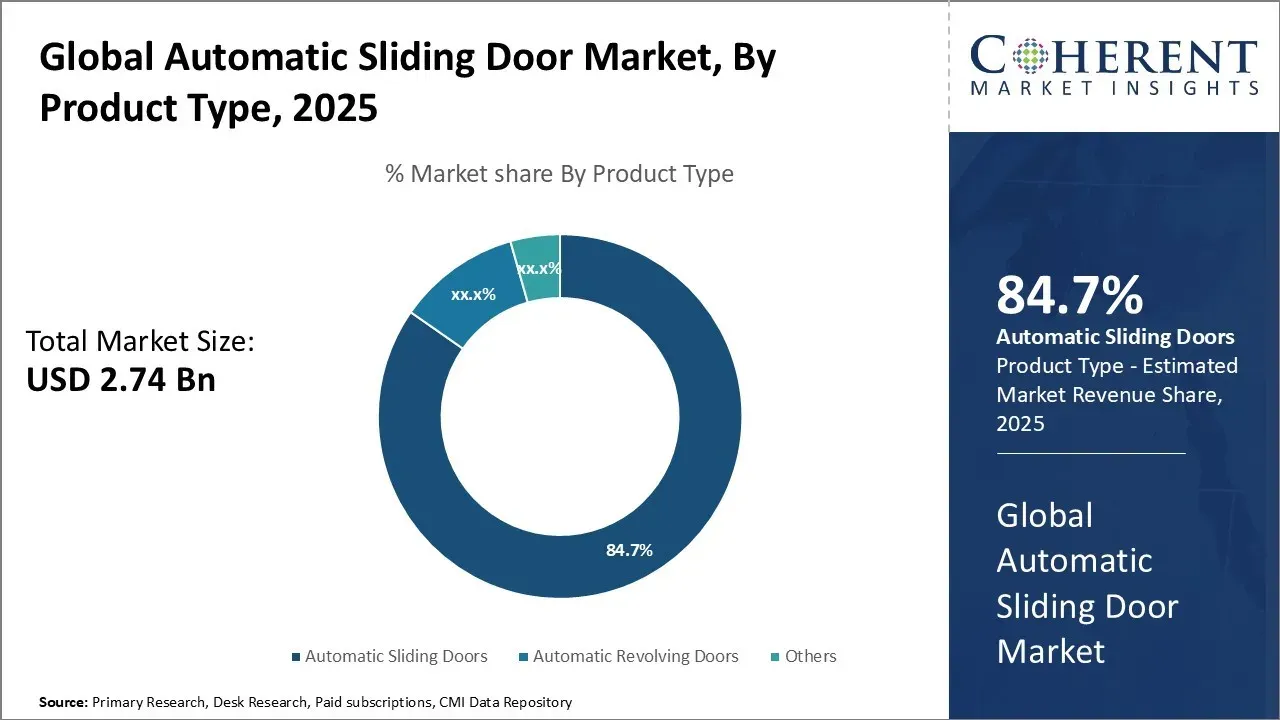
- By Product Type, the automatic sliding doors segment is projected to dominate the global automatic door market with an 85.7% share in 2026.
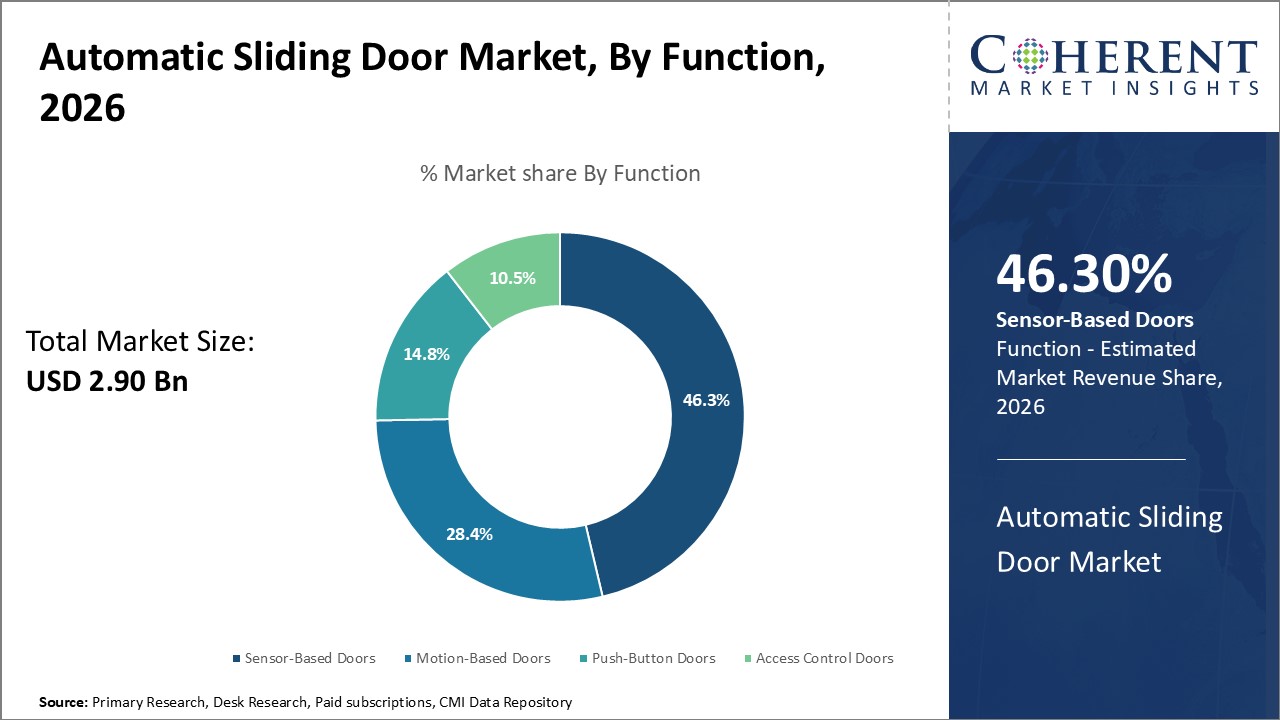
- By Function, the sensor-based doors segment is anticipated to capture a leading 46.3% share of the automatic sliding door market in 2026, driven by the growing demand for intelligent access control systems.
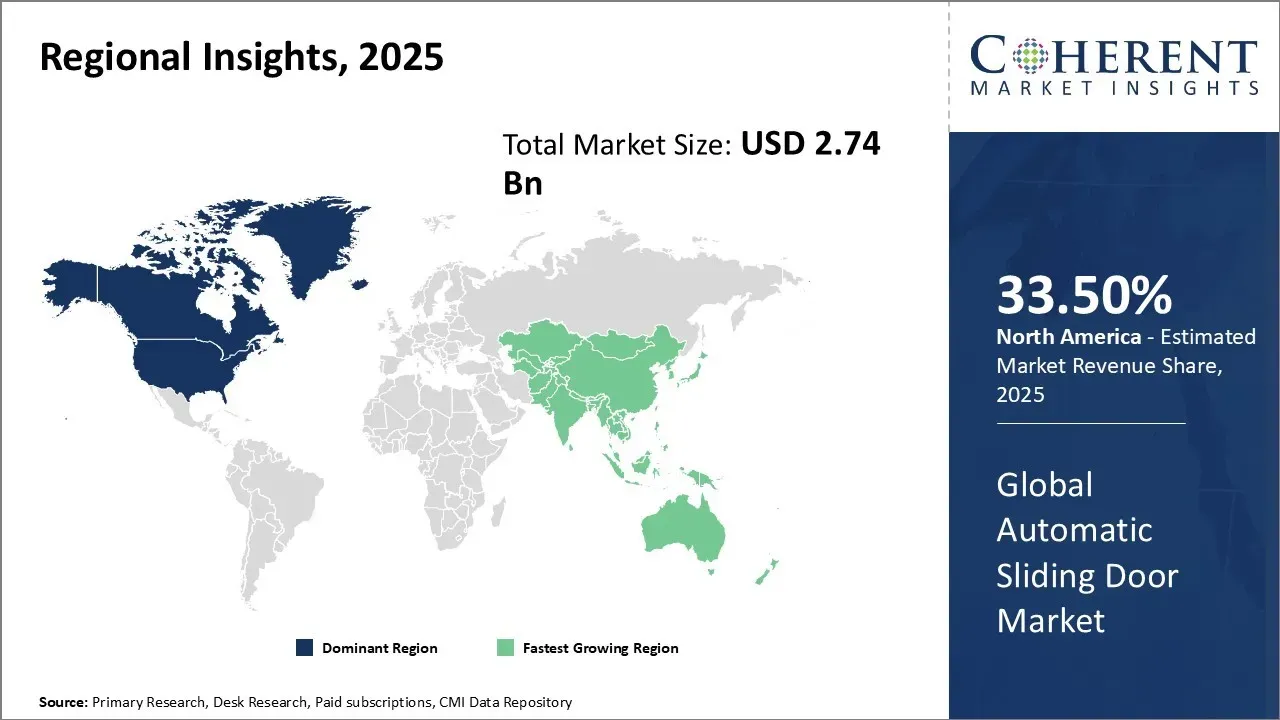
- By Regional Insight North America is expected to lead the global automatic sliding door market, accounting for a 33.5% share in 2026.
- Asia Pacific is set to be the fastest-growing region with a projected 23.4% share in 2026. Rapid urbanization, rising disposable income, and large-scale infrastructure projects in countries like China, India, and Southeast Asian nations are propelling the market.
Market Overview
The global Automatic Sliding Door Market is witnessing robust growth, driven by rising demand for smart, touch less access solutions across commercial, healthcare, and residential sectors. These doors offer convenience, enhanced hygiene, and energy efficiency, making them ideal for high-traffic environments. The sensor-based segment leads with advanced detection technologies, while automatic sliding doors dominate product preferences.
Current Events and Its Impact on the Automatic Sliding Door Market
Current Event | Description and its impact |
Smart Building and IoT Integration |
|
Raw Material Cost Fluctuations and Supply Chain Delays |
|
Role of Technologies like AI and Automation in the Automatic Sliding Door Market
Technologies like Artificial Intelligence (AI) and automation are transforming the automatic sliding door market by enhancing functionality, efficiency, and user experience. AI-powered systems enable doors to adapt to user behaviour, traffic patterns, and environmental conditions, improving energy efficiency and operational safety.
Advanced sensors integrated with AI algorithms allow for real-time monitoring, predictive maintenance, and reduced downtime, making them ideal for high-traffic areas such as airports, hospitals, and commercial centres. Automation facilitates seamless integration with building management systems (BMS), enabling centralized control and improved security.
Facial recognition, motion detection, and voice-activated access are becoming increasingly common, aligning with the growing demand for contactless, smart infrastructure. These technologies also support compliance with accessibility regulations and sustainability goals. As smart city and IoT adoption expands globally, AI and automation are expected to play a pivotal role in driving innovation and long-term growth in the automatic sliding door market.
- Current Industry Events of 2026
- Market Size Estimation
- Regional Breakdown
- Competitive Landscape
- Customer Intelligence
- Segmental Analysis
- Pricing Analysis
- Key Market Drivers, Challenges & Future Trends
- Customized Insights Section
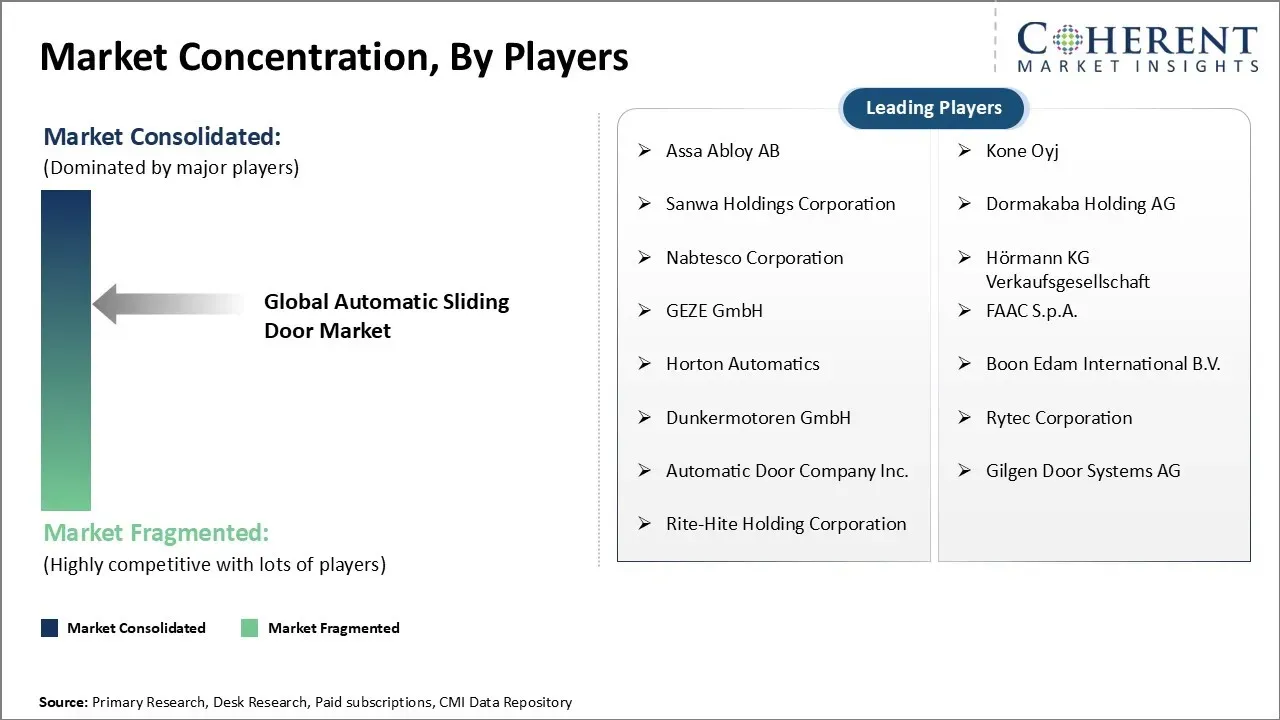
Market Players, Key Development, and Competitive Intelligence
Automatic Sliding Door Market: Key Development
- In November 2023, Anthony, a division of Dover Food Retail, announced a collaboration with Horton Automatics, a home automation business based in the United States, to produce an autonomous Beer Cave Door for Walk-In Cooler Applications.
- In April 2021, ASSA ABLOY Entrance Systems purchased Pioneer Industries in the United States. This acquisition broadens its product portfolio and strengthens its position in the North American automatic door business.
Automatic Sliding Door Market Trends
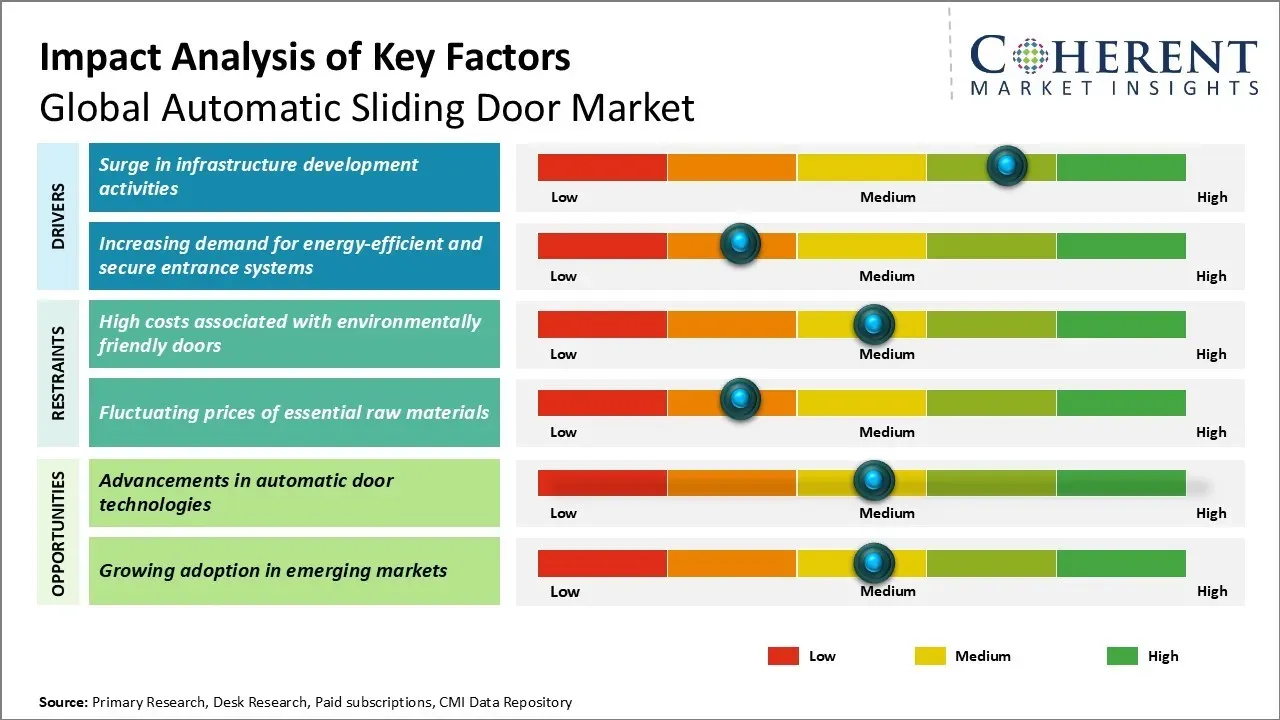
- Surge in Infrastructure Development Activities
The global infrastructure landscape is experiencing unprecedented transformation, driving substantial demand for automatic sliding doors across various sectors. Urban development projects, commercial complexes, healthcare facilities, and transportation hubs are increasingly prioritizing advanced entrance solutions that enhance accessibility, energy efficiency, and user convenience. Modern architectural designs emphasize seamless integration of smart technologies, with automatic sliding doors emerging as critical components in creating sophisticated, user-friendly environments.
Emerging economies are witnessing rapid urbanization and significant investments in infrastructure, further accelerating the adoption of these innovative door systems. Municipalities, commercial developers, and institutional stakeholders are recognizing the multifaceted benefits of automatic sliding doors, including improved traffic flow, enhanced security, reduced energy consumption, and superior accessibility for individuals with mobility challenges.
The growing emphasis on universal design principles and sustainable building practices is compelling architects and developers to incorporate automatic sliding doors as standard architectural elements, reflecting a paradigm shift in infrastructure planning and design strategies worldwide.
In June 2025, Indian Railways announced that all newly manufactured suburban train rakes in Mumbai will be fitted with automatic door‑closing mechanisms. This initiative comes after multiple incidents some fatal of passengers falling from overcrowded local trains. The safety upgrade ensures doors remain closed while trains are in motion, aiming to reduce accidents on one of the world’s busiest commuter networks.
Opportunities in the Automatic Sliding Door Market
- Advancements in Automatic Door Technologies
The global automatic sliding door market is experiencing remarkable opportunities driven by continuous technological advancements and innovative design solutions. Emerging technologies like artificial intelligence, machine learning, and Internet of Things (IoT) integration are revolutionizing automatic door systems, enabling enhanced functionality, intelligent sensing capabilities, and sophisticated user interactions.
Manufacturers are developing smart door technologies with advanced motion sensor, predictive maintenance algorithms, and real-time performance monitoring, creating significant value propositions for commercial and institutional clients.
Touchless entry systems, particularly accelerated by pandemic-induced hygiene concerns, represent a promising market segment with substantial growth potential. Integration of biometric authentication, contactless access control, and adaptive security features are expanding the strategic relevance of automatic sliding doors beyond traditional architectural applications.
Emerging markets in developing economies present substantial growth opportunities, with increasing urbanization, infrastructure development, and rising commercial construction activities driving demand. Furthermore, customizable design options, modular architectural solutions, and seamless integration with building management systems are attracting architects, designers, and facility managers seeking innovative and technologically sophisticated door solutions that enhance aesthetic appeal and operational efficiency.
Segmental Insights
Global Automatic Door Market Insights, By Product Type
The automatic sliding doors segment is projected to dominate the global automatic door market with an 85.7% share in 2026. This leadership reflects their widespread integration across modern infrastructure projects, particularly in commercial, healthcare, and transportation facilities. These doors are valued for their sleek aesthetics, space efficiency, and smooth operation, aligning with the growing preference for user-friendly and accessible building designs.
Additionally, their energy-saving capabilities and seamless compatibility with smart building systems are boosting their adoption. As urban development continues to prioritize automation and hygiene, automatic sliding doors remain the preferred solution for high-traffic environments.
Global Automatic Door Market Insights, By Function
The sensor-based doors segment is anticipated to capture a dominant 46.3% share of the automatic sliding door market in 2026, driven by increasing demand for smart and contactless access solutions. Equipped with motion, infrared, or biometric sensors, these doors offer enhanced user convenience and hygiene, especially in healthcare facilities, retail spaces, and office buildings.
Their integration with building automation and security systems supports efficient crowd management and energy conservation. As digital transformation accelerates across infrastructure sectors, sensor-based doors are positioned as essential components of intelligent and future-ready buildings, contributing significantly to the market’s growth trajectory.
Regional Insights
North America Automatic Sliding Door Market Trends and Analysis
North America is expected to lead the global automatic sliding door market, accounting for a 33.50% share in 2026. This dominance is fuelled by robust investments in infrastructure modernization, particularly in the healthcare, retail, and commercial sectors. The region’s advanced construction standards, coupled with strict regulatory requirements for accessibility in public spaces, have accelerated the integration of automatic sliding doors.
Additionally, the presence of major industry players and widespread adoption of smart building technologies contribute to sustained market growth. Demand is further supported by renovation projects focused on hygiene and energy efficiency.
Asia Pacific Automatic Sliding Door Market Trends and Analysis
Asia Pacific is poised to be the fastest-growing region in the automatic sliding door market, with a projected 23.4% share in 2026. This rapid expansion is driven by accelerated urbanization, increasing disposable incomes, and significant investments in commercial and residential infrastructure.
Countries like China, India, Japan, and emerging Southeast Asian economies are embracing automated access systems as part of smart city and sustainable urban planning initiatives. The growing middle class, rise in commercial real estate development, and government-backed infrastructure programs are all contributing to the heightened adoption of automatic sliding doors in the region.
Automatic Sliding Door Market Dominating Countries
United States and Canada
The United States is a dominant force in the automatic sliding door market, supported by significant investments in healthcare, retail, and commercial infrastructure. The country leads in smart building adoption and accessibility compliance, with government regulations such as the Americans with Disabilities Act (ADA) mandating barrier-free access. Major manufacturers and technology innovators are headquartered in the U.S., further driving product development and market penetration.
Canada complements regional growth through its advanced construction practices and focus on energy-efficient, automated building systems. High demand in public infrastructure and healthcare facilities is propelling market expansion across urban areas.
Market Report Scope
Automatic Sliding Door Market Report Coverage
| Report Coverage | Details | ||
|---|---|---|---|
| Base Year: | 2025 | Market Size in 2026: | USD 2.90 Bn |
| Historical Data for: | 2020 To 2024 | Forecast Period: | 2026 To 2033 |
| Forecast Period 2026 to 2033 CAGR: | 5.5% | 2033 Value Projection: | USD 4.21 Bn |
| Geographies covered: |
| ||
| Segments covered: |
| ||
| Companies covered: | Assa Abloy AB, Kone Oyj, Sanwa Holdings Corporation, Dormakaba Holding AG, Nabtesco Corporation​, Hörmann KG Verkaufsgesellschaft, GEZE GmbH​, FAAC S.p.A., Horton Automatics​, Boon Edam International B.V., Dunkermotoren GmbH, Rytec Corporation​, Automatic Door Company Inc.​, Gilgen Door Systems AG, and Rite-Hite Holding Corporation | ||
| Growth Drivers: |
| ||
| Restraints & Challenges: |
| ||
Analyst Viewpoint – Automatic Sliding Door Market
- The increasing emphasis on hygiene, accessibility, and smart infrastructure, particularly in post-pandemic environments, is seen as a key growth enabler across sectors such as healthcare, retail, and transportation.
- Experts highlight the integration of AI and sensor-based technologies as a major trend transforming the market. These innovations are enhancing door intelligence, improving energy efficiency, and supporting real-time automation. Industry players are increasingly focusing on smart building compatibility and sustainability, which opens opportunities for high-end and customized solutions.
- Regionally, North America leads in terms of technological adoption and infrastructure modernization, while Asia Pacific is identified as the fastest-growing region due to rapid urbanization and government-backed smart city initiatives. Europe continues to perform steadily, driven by stringent energy-efficiency and accessibility regulations.
Market Segmentation
- Product Type Insights (Revenue, USD Bn, 2021 - 2033)
- Automatic Sliding Doors
- Automatic Revolving Doors
- Others
- Function Insights (Revenue, USD Bn, 2021 - 2033)
- Sensor-Based Doors
- Motion-Based Doors
- Push-Button Doors
- Access Control Doors
- Regional Insights (Revenue, USD Bn, 2021 - 2033)
- North America
- U.S.
- Canada
- Latin America
- Brazil
- Argentina
- Mexico
- Rest of Latin America
- Europe
- Germany
- U.K.
- Spain
- France
- Italy
- Russia
- Rest of Europe
- Asia Pacific
- China
- India
- Japan
- Australia
- South Korea
- ASEAN
- Rest of Asia Pacific
- Middle East
- GCC Countries
- Israel
- Rest of Middle East
- Africa
- South Africa
- North Africa
- Central Africa
- Key Players Insights
- Assa Abloy AB
- Kone Oyj
- Sanwa Holdings Corporation
- Dormakaba Holding AG
- Nabtesco Corporation
- Hörmann KG Verkaufsgesellschaft
- GEZE GmbH
- FAAC S.p.A.
- Horton Automatics
- Boon Edam International B.V.
- Dunkermotoren GmbH
- Rytec Corporation
- Automatic Door Company Inc.
- Gilgen Door Systems AG
- Rite-Hite Holding Corporation
Sources
The Stakeholders Consulted
- Project managers and facility engineers from commercial, healthcare, and transportation sectors
- Architects and building automation consultants
- Manufacturers and suppliers of automatic sliding door systems and components (sensors, motors, glass, frames)
- HVAC and smart building system integrators
- Regulatory advisors on building accessibility, fire safety, and energy efficiency
- Urban infrastructure development authorities and contractors
- End-users across sectors such as airports, hospitals, malls, office complexes, and educational institutions
Databases Opened
- U.S. Department of Transportation – Infrastructure and Building Accessibility Reports
- International Energy Agency (IEA) – Smart Infrastructure and Building Efficiency Data
- Ministry of Housing and Urban Affairs (India) – Smart Cities and Building Code Database
- World Bank Open Data – Urbanization, Infrastructure, and Construction Metrics
Magazines & Trade Publications
- Architecture + Design
- Facility Executive Magazine
- Building Design + Construction
- Modern Materials Handling – Automation Section
- Construction Week India – Building Systems & MEP Section
Scientific and Industry Journals
- Journal of Building Performance
- Energy and Buildings (Elsevier)
- Automation in Construction
- Journal of Intelligent & Robotic Systems
- Building Research & Information
Newspapers & Media Outlets
- The Wall Street Journal – Real Estate & Infrastructure
- Bloomberg – Smart Cities & Automation News
- Reuters – Global Construction and Industrial Trends
- The Economic Times – Urban Planning & Smart Infrastructure
- Business Standard – Building Automation & Energy Efficiency
Associations and Regulatory Bodies
- International Association of Automatic Door Manufacturers (AAADM)
- U.S. Green Building Council (USGBC) – LEED and Accessibility Guidelines
- International Code Council (ICC) – Building Safety Codes
- Bureau of Indian Standards (BIS) – Smart Building and Door Specifications
- National Fire Protection Association (NFPA) – Egress and Safety Codes
Public Domain Sources
- U.S. General Services Administration (GSA) – Public Building Design Guidelines
- European Commission – Building and Construction Statistics
- United Nations – Sustainable Infrastructure and Smart City Initiatives
- Indian Green Building Council (IGBC) – Energy-Efficient Design Practices
Proprietary Research Elements
- CMI Building Technologies Market Analytics Tool
- Proprietary CMI Repository of Smart Door and Access System Data (past 8 years)
- CMI Expert Interviews with Facility Managers, Architects, and Urban Developers
- On-ground surveys and technical assessments from institutional and commercial installations
Get access to 250+ pages report
Every segment, forecast, competitor profile and data table behind the analysis above — available for instant download.
- ESOMAR Member
- ISO 9001:2015 Certified
- D-U-N-S Registered
- GDPR & CCPA Compliant
Missing comfort of reading report in your local language? Find your preferred language:
Transform your Strategy with Exclusive Trending Reports
Frequently Asked Questions
The global automatic sliding door market size is estimated to be valued at USD 2.74 Bn in 2025 and is expected to reach USD 3.93 Bn by 2032.
The CAGR of the global automatic sliding door industry is projected to be 5.3% from 2025 to 2032.
Surge in infrastructure development activities and increasing demand for energy-efficient and secure entrance systems are driving the growth of the global automatic sliding door industry.
High costs associated with environmentally friendly doors and fluctuating prices of essential raw materials are the major factors hampering the growth of the global market.
In terms of product type, the automatic sliding doors segment is estimated to dominate the market revenue share in 2025.
Assa Abloy AB, Kone Oyj, Sanwa Holdings Corporation, Dormakaba Holding AG, Nabtesco Corporation, Hörmann KG Verkaufsgesellschaft, GEZE GmbH, FAAC S.p.A., Horton Automatics, Boon Edam International B.V., Dunkermotoren GmbH, Rytec Corporation, Automatic Door Company Inc., Gilgen Door Systems AG, and Rite-Hite Holding Corporation are the major players.
North America is expected to lead the global market in 2025, holding a share of 33.5%.