

Global Base Editing Therapeutics Market Size and Forecast – 2026 To 2033
The global base editing therapeutics market is expected to grow from USD 96.8 Mn in 2026 to USD 301.5 Mn by 2033, registering a compound annual growth rate (CAGR) of 17.6% from 2026 to 2033. The global base editing therapeutics market is projected to witness significant growth over the forecast period owing to the increasing prevalence of genetic disorders and inherited disorders, rising demand for precise gene correction therapeutics, and increasing clinical pipeline of base-editing candidates.
The U.S. National Heart, Lung, and Blood Institute projects over 100,000 people in the U.S. have sickle cell disease and over 8 million around the world, underscoring demand for breakthrough genetic therapies.
Key Takeaways of the Global Base Editing Therapeutics Market
- Cytosine base editing (CBE) is projected to hold 48.6% of the global base editing therapeutics market share in 2026, making it dominant editing technology segment. The markets in Asia-Pacific, especially India, are attractive owing to the existence of research for correction of inherited blood disorder by using base editing techniques. Indian Department of Science and Technology's Serb funded project at the Christian Medical College, Vellore, received USD 72,000 (INR 60.41 lakh) for accurate editing of HbE and beta-thalassemia mutations using base editor during 2023-2026.
- Ex vivo delivery is projected to hold 61.8% of the global base editing therapeutics market share in 2026, making it dominant delivery method segment. North America is growing considerably due to high concentration of research institutes working on ex vivo gene therapy applications. In September 2025, the U.S. NIH granted USD 1.476 million to the University of California, San Francisco, for conducting research on base-editor-mediated multiplex editing of patient-derived stem cells to create better treatments for sickle cell disease.
- Hematological disorders are projected to hold 38.6% of the global base editing therapeutics market share in 2026, making it dominant therapeutic area segment. Europe is investing more heavily into research with specific public funding focused on genetic-based treatments for sickle cell disease. The European Commission invested USD 6.96 million (€6.0 million) through Horizon Europe for the EDITSCD project, which is led by Institut Imagine, to evaluate genome-editing strategies, such as base editing, in hematopoietic stem cells for sickle cell disease.
- North America market maintains dominance with an expected share of 46.3% in 2026. The region comprises developed countries with an established biotechnology ecosystem, advanced research in genome-editing, and federal support and funding for therapeutic development, which is expected to increase the adoption of base editing therapeutics over the forecast period. The government of the U.S. through the National Institutes of Health (NIH), announced USD 6 million Targeted Genome Editor Delivery Challenge in May 2023 to promote the development of delivery technologies for genome editors including base editors.
- Asia Pacific is expected to exhibit the fastest growth in the global base editing therapeutics market, registering an estimated CAGR of 24.6% during 2026–2033. This growth is due to the rapid adoption of precision genetic medicine and therapeutic genome editing. In July 2026, Seoul National University Hospital launched a gene-editing therapy project on hereditary retinal diseases funded by Korean ARPA-H with a government subsidy of up to USD 5.5 million (KRW 8 billion) through 2030 including in vivo preclinical validation of base-editing technology.
Segmental Insights
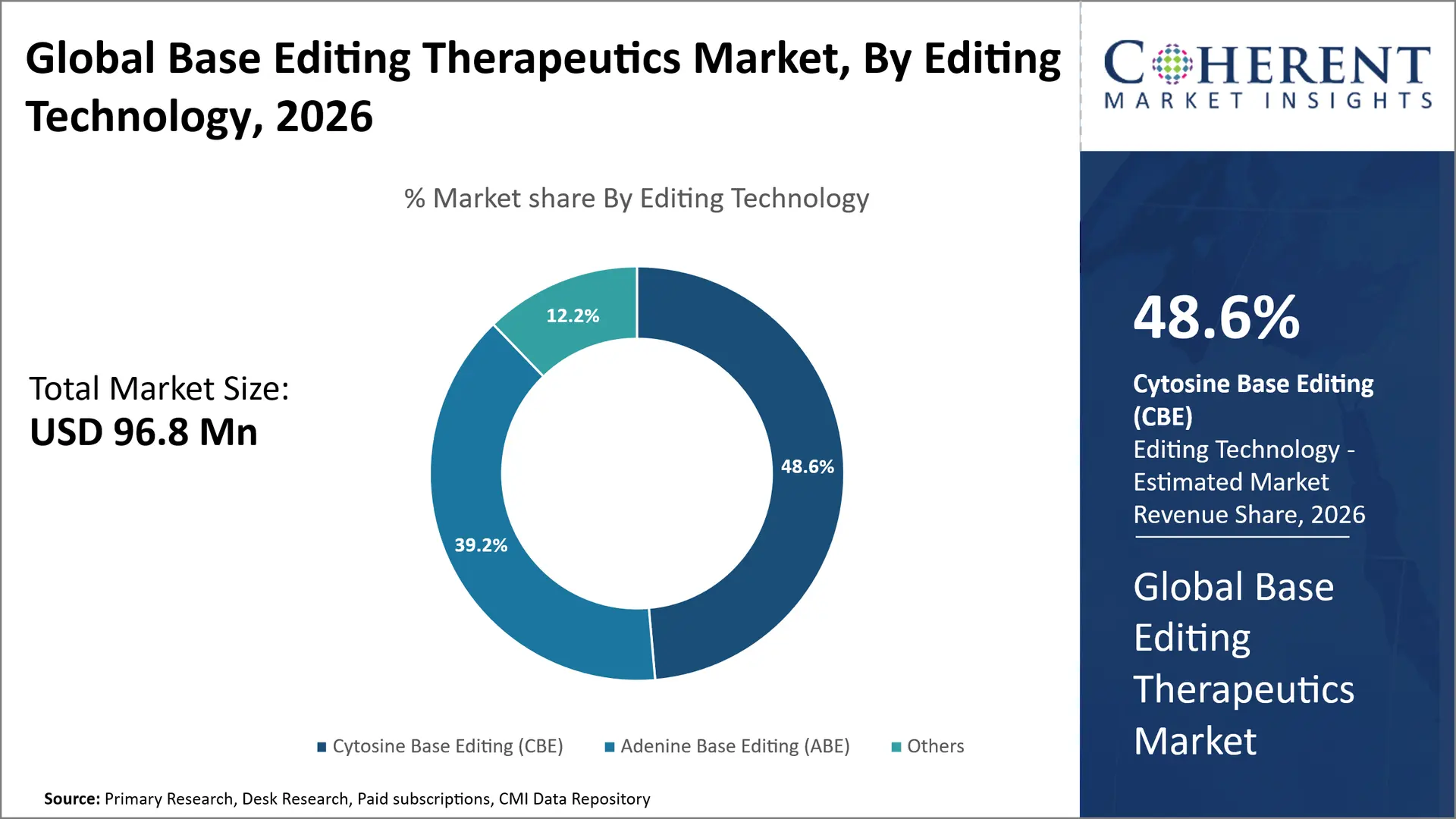
Why Do Cytosine Base Editing (CBE) Dominate the Global Base Editing Therapeutics Market?
Cytosine Base Editing (CBE) is projected to hold the market share of 48.6% in 2026, as it can precisely correct disease-causing C-to-T mutations without DNA double-strand breaks, thus enabling safer programs to reach the clinic. Its generic applicability to many inherited diseases and potential for substantially reducing off target edits make it an attractive therapeutic candidate. For instance, in July 2025, a study published by the Springer Nature Limited demonstrated the engineered Sdd7 cytosine base editors (Sdd7e1 and Sdd7e2) with enhanced editing specificity, narrower editing window, and minimized off-target and bystander editing, while maintaining on-target editing efficiency. The results pave the way for more accurate CBE system for therapeutic applications.
- Current Industry Events of 2026
- Market Size Estimation
- Regional Breakdown
- Competitive Landscape
- Customer Intelligence
- Segmental Analysis
- Pricing Analysis
- Key Market Drivers, Challenges & Future Trends
- Customized Insights Section
Why Do Ex Vivo Delivery Represent the Largest Delivery Method Segment in the Base Editing Therapeutics Market?
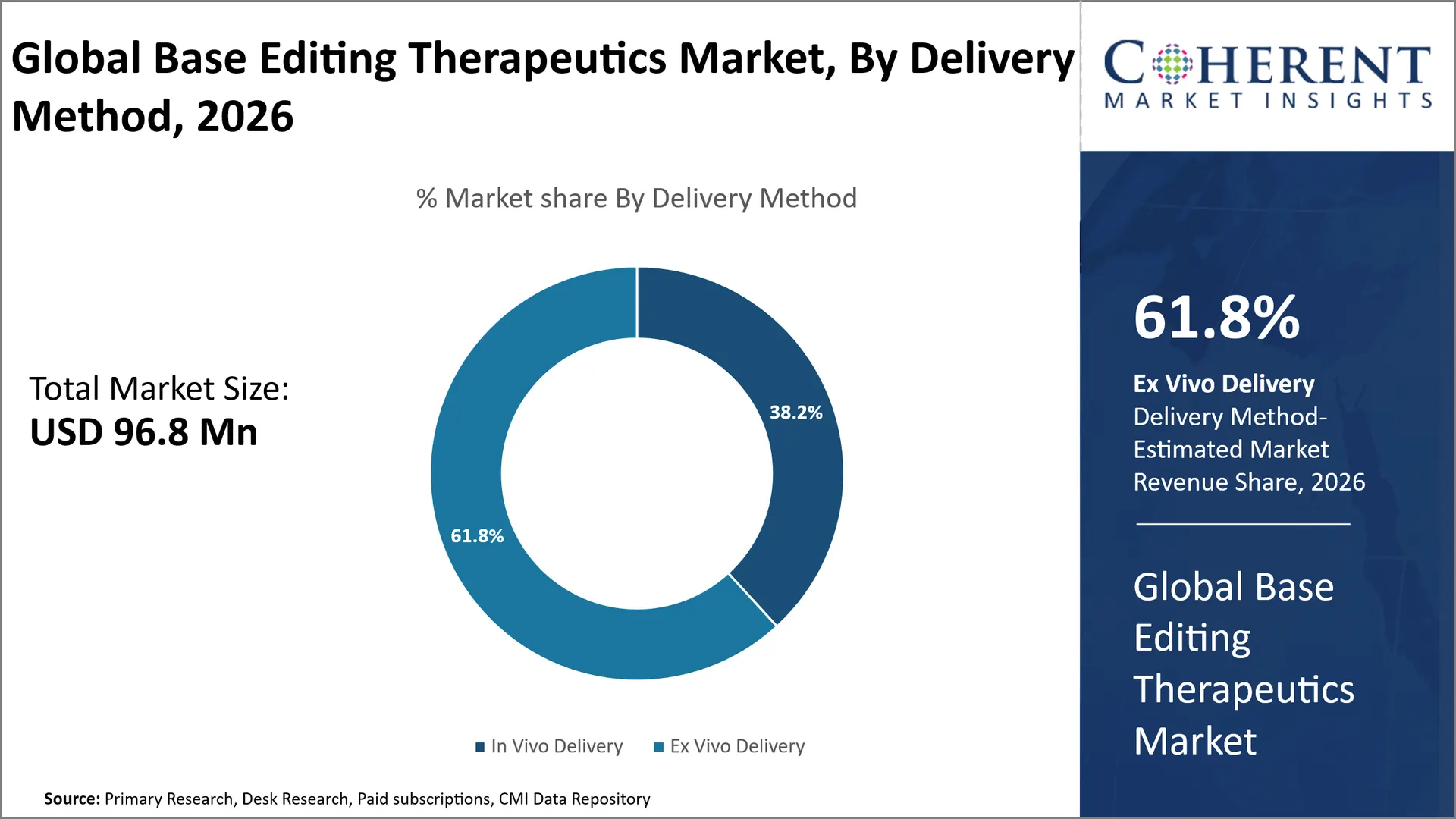
Ex vivo delivery is projected to hold a market share of 61.8% in 2026, as it allows the cells taken from the patient to be genetically edited in a regulated environment in the laboratory before they are re-introduced. This permits to check cell quality and the level of editing before administration, making them ideal for blood conditions involving stem cells. For instance, in April 2025, a study published by the Springer Nature Limited, reported Phase I clinical trial data for CS-101, an autologous CD34+ stem-cell therapy (that employs ex vivo base editing of hematopoietic stem cells) in beta-thalassemia. All five patients treated with CS-101 became transfusion independent and maintained increased fetal hemoglobin levels at follow-up, reinforcing the clinical benefit of ex vivo base editing for this disease.
Hematological Disorders Segment Dominates the Global Base Editing Therapeutics Market
The hematological disorders segment is projected to hold a market share of 38.6% in 2026, owing to the feasibility of blood forming stem cells for ex vivo base editing and the potential to target mutation causing sickle cell disease & beta-thalassemia. Increasing clinical evidence is further supporting the benefit of base editing for inherited blood disorders. For instance, in April 2026, the New England Journal of Medicine reported medium-term phase I-II trial of base-edited stem-cell therapy (risto-cel) for sickle cell disease in 31 patients. The interim results demonstrated maintained long-term fetal hemoglobin levels with no severe vaso-occlusive episodes after a defined period post-transfusion, allowing continued clinical investigation.
Current Events and their Impact
Current Events | Description and its Impact |
U.S. FDA Issues Draft Guidance for Individualized Human Genome-Editing Products (October 2026) |
|
ARPA-H Awards Up to USD 39 Million for Personalized In Vivo Gene-Editing Therapeutics (July 2026) |
|
Base Editing Therapeutics Market Dynamics
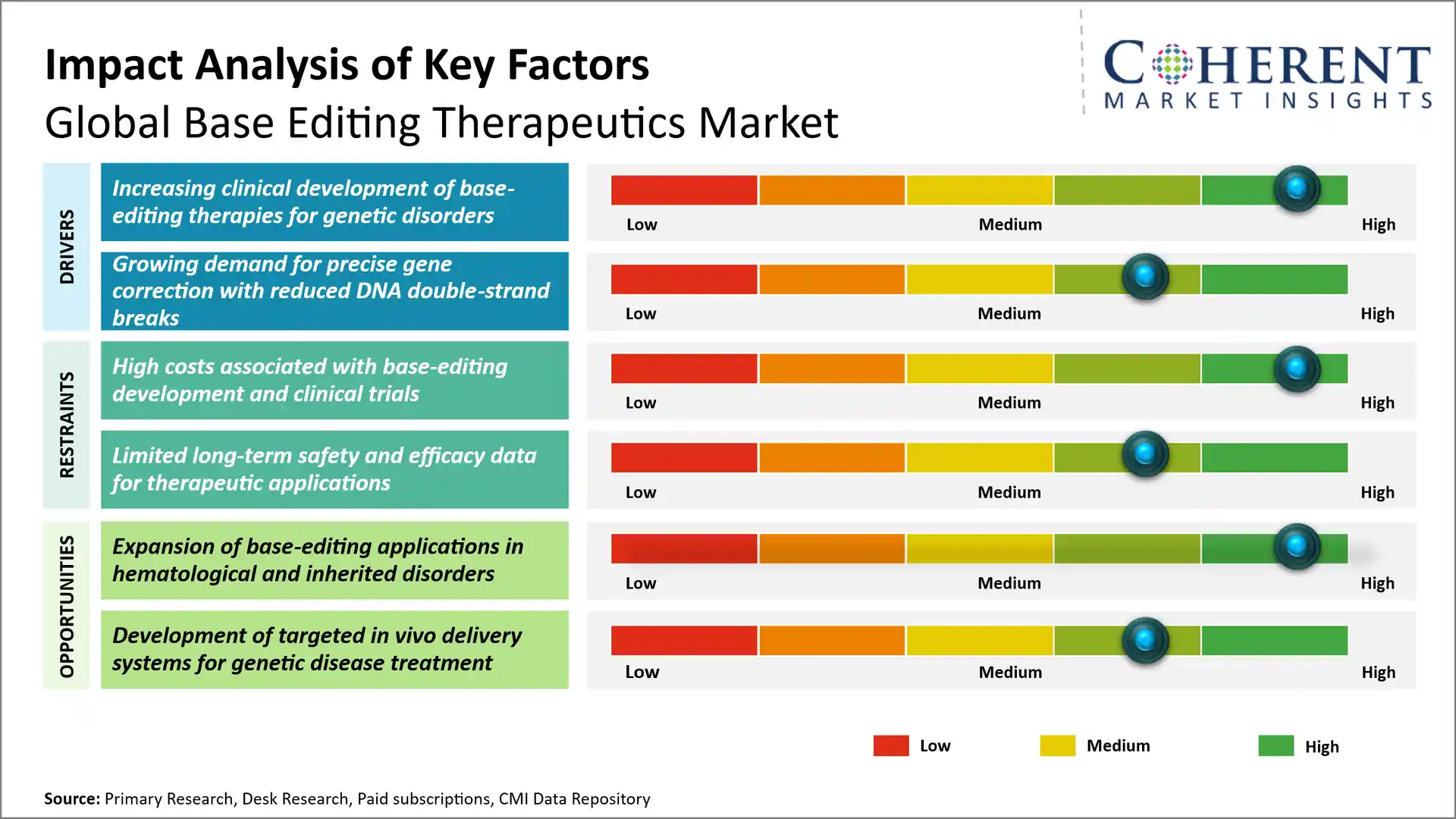
Market Drivers
- Increasing clinical development of base-editing therapies for genetic disorders: The increasing pipeline of base-editing therapies in clinical development to treat genetic illnesses will drive the market growth as researchers will continue to find the precision gene correction approach through research of inherited diseases apart from hematological conditions. A Phase I clinical trial scheduled for March 2026, published in the journal Nature Medicine, reported that an in vivo therapy was developed for treating a PCSK9 gene mutation in heterozygous familial hypercholesterolemia. The pipeline of therapies will help in the expansion of the market.
- Growing demand for precise gene correction with reduced DNA double-strand breaks: Increasing interest for precise gene correction with less DNA double-strand break (DSB) is favoring base editing, as single base changes can be made with less associated DNA DSB compared to classic nuclease-based editing. In November 2024, a study published in Nature Biomedical Engineering reported that base and prime editors enabled large DNA deletions at 20-fold lower frequencies than Cas9 nucleases, highlighting the potential safety features of base and prime editing.
- Rising demand for targeted treatments for rare genetic disorders: With few disease-modifying therapies for most rare genetic disorders, base editing is seen as a promising future treatment because it has the potential to directly target and fix disease-causing mutations, rather than just treat the symptoms. In May 2025, researchers announced a personalized base-editing treatment delivered via lipid nanoparticles for an infant with a severe form of carbamoyl-phosphate synthetase 1 (CPS1) deficiency. Interim findings showed that the lipid nanoparticle-based treatment improved the protein tolerance and reduced the patient’s reliance on the nitrogen-scavenging medication.
Emerging Trends
- Development of next-generation base editors: Research is directed at designing cytosine and adenine base editors with higher specificity, a wider editing window and fewer bystander effects.
- Impact: Improved editing accuracy is likely to lead to greater therapeutic safety and a greater fraction of treatable genetic mutations.
- Market Relevance: The trend will benefit the growth of base-editing candidate drugs for inherited and hematological diseases.
- Advancement of in vivo base editing delivery systems: Developers are testing lipid nanoparticles, modified viral vectors and mRNA delivery systems to target tissues with the base editors.
- Impact: A more efficient delivery system might eliminate the need for cell harvesting and ex vivo modification, allowing treatment of hard-to-reach tissues.
- Market Relevance: The trend is expected to present opportunities for base-editing therapies against cardiovascular, genetic and neurological disorders.
Regional Insights
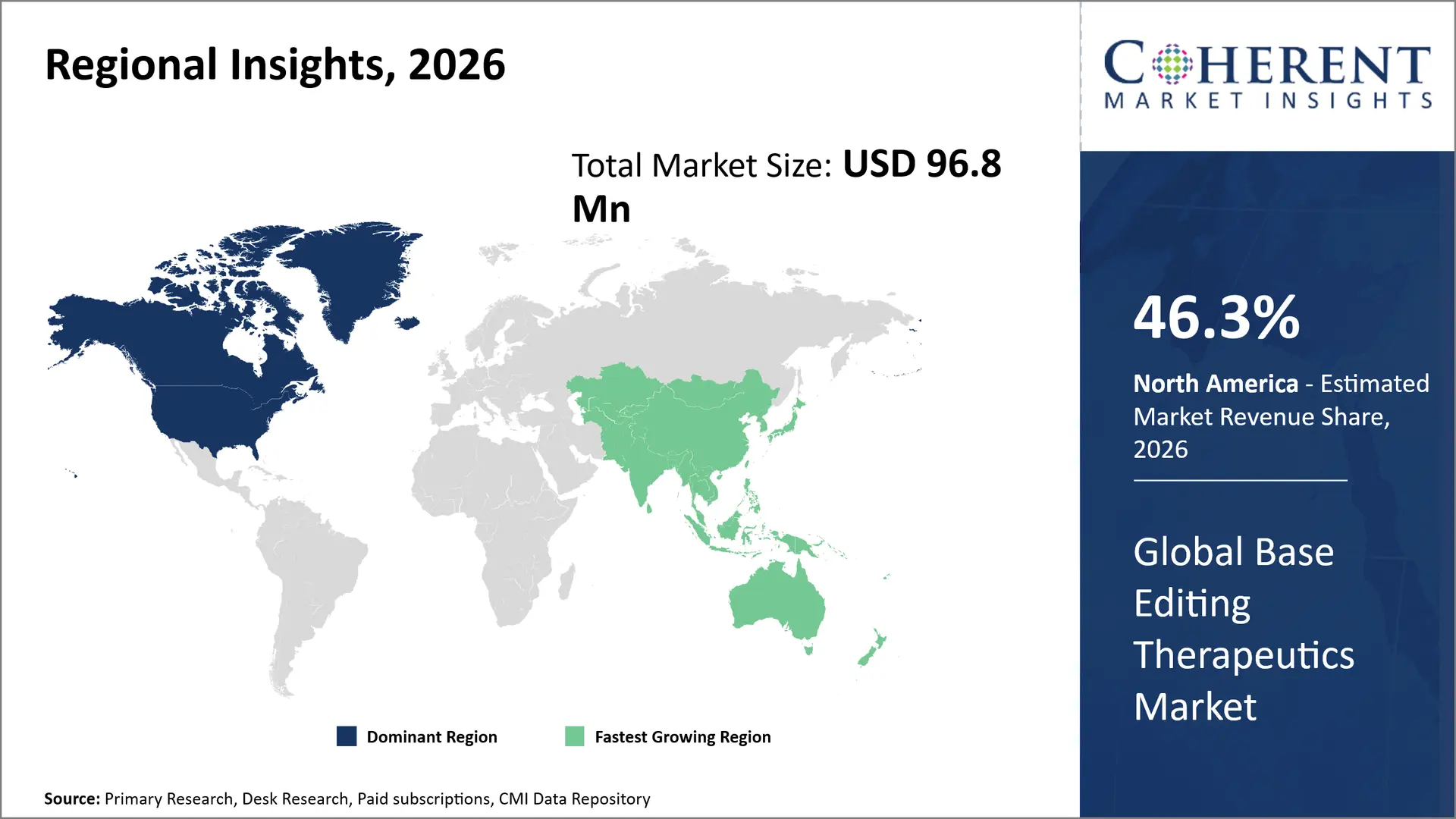
Why is North America a Strong Market for Base Editing Therapeutics?
North America leads the global base editing therapeutics market, accounting for an estimated 46.3% share in 2026, due to its strong biotechnology ecosystem, significant government investment in research, and advanced healthcare infrastructure. The region has world-class research institutions, academic-industry partnerships and friendly regulators, such as the U.S. Food and Drug Administration (FDA) and other agencies, that conduct clinical trials and help to develop treatments.
Additionally, patent rights and venture capital funding provide a base for new base-editing treatments of genetic diseases. For instance, In September 2026, the U.S. National Eye Institute has awarded USD 590,849 to the University of California, Irvine to conduct research in in vivo base editing of MYOC gene for the treatment of glaucoma, utilizing lipid nanoparticles, exemplifying federal backing for creation of base-editing treatments for various diseases. (Source: U.S. Department of Health & Human Services)
Why Does Asia Pacific Base Editing Therapeutics Market Exhibit High Growth?
Asia Pacific is expected to exhibit the fastest growth in the global base editing therapeutics market, registering an estimated CAGR of 24.6% during 2026–2033. The region is projected to account for 22.1% of the global market in 2026, owing to the support from the government for innovations in biotechnology, rising healthcare infrastructure and investments in the research and development activities. China, South Korea, and Japan are focused on strengthening their biopharmaceutical sector along with increasing research activities for the gene editing technologies in the treatment of genetic disorders.
For instance, in September 2026, South Korea's Ministry of Health and Welfare backed a national Korean ARPA-H initiative led by Seoul National University Hospital to build precision gene editing therapies for hereditary retinal diseases. The program also involves a validation of base-editing and prime-editing technology with patient organoids and animal models to bolster the region's research power in therapeutic gene editing. (Source: 3billion, Inc.)
Global Base Editing Therapeutics Market Outlook for Key Countries
Why is the U.S. Leading Innovation and Adoption in the Base Editing Therapeutics Market?
The U.S. has been leading the base editing therapeutics market because of its clinical approach toward mutation-specific therapies for genetic illnesses and inherited disorders. The research landscape has given a boost to ex vivo and in vivo base-editing therapies for hematologic, metabolic and cardiovascular diseases. Advances in editor accuracy and specificity, targeted delivery, and therapeutic development drive the market.
Is Japan a Favorable Market for Base Editing Therapeutics Market?
Japan is a promising and accessible market for base editing therapeutics, supported by government funding for gene and cell therapy research and a strong academic research community. Japanese researchers are applying use cases for base editing that have already been developed for particular diseases, such as adenine base editing in hereditary motor neuron disease, to the treatment of genetic disorders. Furthermore, support from AMED and a strong existing PMDA framework for genome-editing gene therapies will pave the way for additional market growth.
Is China Emerging as a Key Growth Hub for the Base Editing Therapeutics Market?
China is expected to be a major growth driver for base editing therapeutics market owing to its focus on hematological and inherited diseases-based therapies. China has gained clinical traction in ex vivo base editing for beta-thalassemia. Additionally, regulations on clinical research and translational applications of new biomedical technologies in China (effective May 2026) seems to offer a more regulated environment for gene editing therapies in the country.
Why Does Germany Top the European Base Editing Therapeutics Market?
Germany’s robust base-editing research ecosystem is backed by dedicated academic centers and federal research projects. A project at TU Dresden, funded by the Federal Ministry of Research, called Can Correct, aims to engineer optimized adenine base editors to correct tumor-associated mutations, and ultimately to apply the technology to personalized cancer therapy. Meanwhile, Tübingen's Gene and RNA Therapy Center has unique capacity combining the development of base editors and delivery systems with clinical translation, bolstering Germany's presence in Europe.
Is Base Editing Therapeutics Market Developing in UK?
UK is an emerging market for base editing therapies, with a relatively small base editing pipeline aiming to fix mutations that cause blood and immune deficiencies. University College London and Great Ormond Street Hospital are working on base editing for DNA repair disorders, as is Great Ormond Street Hospital for X-linked agammaglobulinaemia. Updates to the regulation of gene therapy in the UK could enable more of the clinical development of base editing therapies.
Global Base Editing Therapeutics Pipeline, by Therapeutic Area, Target Gene, Editing Technology and Delivery Method
Therapeutic area | Candidate | Target gene | Editing technology | Delivery method | Development stage |
Cardiovascular disorders | VERVE-102 | PCSK9 | Adenine Base Editing (ABE) | In vivo – GalNAc-LNP | Phase 1b |
Cardiovascular disorders | YOLT-101 | PCSK9 | Adenine Base Editing (ABE) | In vivo – LNP | Phase 1 |
Hematological disorders | Risto-cel (BEAM-101) | HBG1/HBG2 | Adenine Base Editing (ABE) | Ex vivo – electroporation | Phase 1/2 |
Genetic disorders | BEAM-302 | SERPINA1 | Adenine Base Editing (ABE) | In vivo – LNP | Phase 1/2 |
Metabolic disorders | BEAM-301 | G6PC | Adenine Base Editing (ABE) | In vivo – LNP | Phase 1/2 |
Metabolic disorders | YOLT-201 | TTR | Adenine Base Editing (ABE) | In vivo – LNP | Phase 1 |
Expansion of Base-Editing Applications in Hematological and Inherited Disorders
How is the expansion of base-editing applications in hematological and inherited disorders creating new growth opportunities in the base editing therapeutics market?
New base editing technologies can be used to treat inherited and blood disorders, since they can directly correct disease mutations without making double-stranded DNA breaks. Work on muscular dystrophies and other single-gene diseases is extending these therapeutics to even more diseases. For instance, in November 2026, researchers reported in the Europe PMC that an engineered adenine base editor can restore dystrophin in the heart and skeletal muscle in humanized Duchenne muscular dystrophy (DMD) mice, pushing the editing of genes toward mutation-specific therapies. These advances are broadening the base editing scope, and bolstering its developmental trajectory.
Market Players, Key Development, and Competitive Intelligence
Key Developments
- In August 2026, Broken String Biosciences unveiled Base Map ABE, a follow-on product to the company's INDUCE-seq, offering genome-wide off-target characterization for adenine base-editing workflows. The company intends this platform to enable better characterization of off-target effects in the development of therapeutics.
- In August 2026, MaxCyte, Inc. announced the development of CHANGE-seq-BE and ONE-seq-BE, off-target assessment assays for adenine and cytosine base editors. The assays facilitate the detection of potential off-target editing sites and aid in genomic safety evaluation and precision optimization of base-editor therapeutic candidates.
- In October 2025, Base Therapeutics and KACTUS announced a strategic alliance with Synthego to increase worldwide distribution of the GMP-grade Accu Base cytosine base editor. A combined effort of base-editing technology, GMP manufacturing, and CRISPR services have been formed to make base-editing tools more accessible to those developing cell and gene therapies.
Competitive Landscape
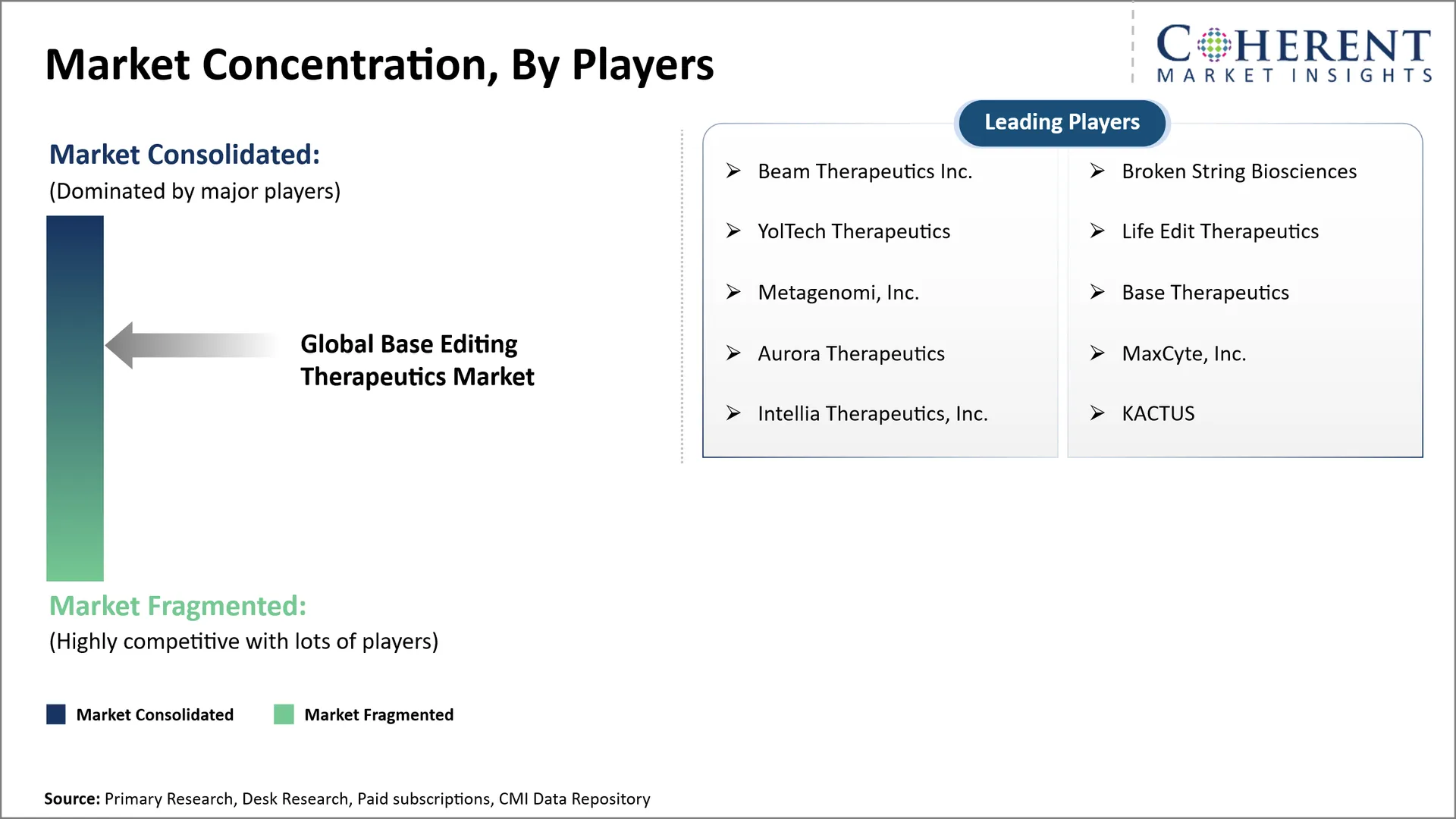
The global base editing therapeutics market is still in its nascent stage and is characterized by a competitive landscape among biotech companies and genetic medicine developers who are mainly focused on developing their proprietary base-editing platforms and therapeutic pipelines. The competitive landscape will be determined by the accuracy of the editor, control of off-target editing, efficiency of the delivery system, clinical progress of programs, intellectual property and ability to develop therapies for specific genetic disorders.
Key focus areas include
- Advanced cytosine and adenine base editors with higher precision of editing and fewer bystander mutations.
- Development of in vivo delivery platforms such as lipid nanoparticle or engineered virus vectors for targeted gene correction.
- Increase ex vivo base-editing indications for hematological conditions, such as sickle cell disease and beta-thalassemia.
- Development of mutation specific therapies for inherited disorders, metabolic disorder, cardiovascular disease and neurological disease.
- Enhanced editing efficiency, target specificity, and longevity for clinical translation.
- Growth of company's existing clinical-stage pipelines via research alliances, licensing arrangements, and license and strategic partnerships.
Market Report Scope
Global Base Editing Therapeutics Market Report Coverage | |||
Report Coverage | Details | ||
Base Year | 2025 | Market Size in 2026: | USD 96.8 Mn |
Historical Data For: | 2020 To 2024 | Forecast Period: | 2026 To 2033 |
Forecast Period 2026 To 2033 CAGR: | 17.6% | 2033 Value Projection: | USD 301.5 Mn |
Geographies covered: |
| ||
Segments covered: |
| ||
Companies covered: | Beam Therapeutics Inc., Broken String Biosciences, YolTech Therapeutics, Life Edit Therapeutics, Metagenomi, Inc., Base Therapeutics, Aurora Therapeutics, MaxCyte, Inc., Intellia Therapeutics, Inc., KACTUS | ||
Growth Drivers: |
| ||
Restraints & Challenges: |
| ||
Analyst Opinion (Expert Opinion)
- The future of the base editing therapeutics market will be driven by a paradigm shift from early clinical development to mutation-specific, genetic disorder-focused treatments for multiple genetic disorders. As editor specificity, delivery efficiency, and safety continue to improve, therapeutic applications of base editing will extend beyond hematological indications and into cardiovascular, metabolic, and neurological indications. In the longer term, in vivo base editing will be an important treatment option for patients with hard-to-treat genetic diseases.
- The most attractive opportunities are likely to be in adenine base editing for cardiovascular disorders in the U.S., especially targeting disease-related genes such as PCSK9; and ex vivo cytosine and adenine base editing for hematological disorders in China, as there is a well-defined mutation target for diseases like beta-thalassemia. Developers targeting these applications could leverage clear mutation targets and high unmet needs.
- In order to gain a competitive advantage market players should focus on creating targeted base editors that have reduced off-target and bystander edits while keeping their high editing efficiencies. Developing proprietary delivery platforms for targeted in vivo use and ensuring scalability of ex vivo manufacturing will be key differentiators from a competitive perspective. Partnering with clinical research partners and strategic investments for robust long-term safety validation will enable quicker clinical development and commercial entry.
Speak to the analyst
Want personalized insights?
Take the findings above to one of our principal consultants, or have the report rebuilt around the segments, geographies and competitors you actually track.
Market Segmentation
- Editing Technology Insights (Revenue, USD Mn, 2021 - 2033)
- Cytosine Base Editing (CBE)
- Adenine Base Editing (ABE)
- Others
- Delivery Method Insights (Revenue, USD Mn, 2021 - 2033)
- In Vivo Delivery
- Ex Vivo Delivery
- Therapeutic Area Insights (Revenue, USD Mn, 2021 - 2033)
- Hematological Disorders
- Genetic and Inherited Disorders
- Oncology
- Others
- End User Insights (Revenue, USD Mn, 2021 - 2033)
- Hospitals and Specialty Clinics
- Academic and Research Institutes
- Pharmaceutical and Biotechnology Companies
- Others
- Regional Insights (Revenue, USD Mn, 2021 - 2033)
- North America
- U.S.
- Canada
- Latin America
- Brazil
- Argentina
- Mexico
- Rest of Latin America
- Europe
- Germany
- U.K.
- Spain
- France
- Italy
- Russia
- Rest of Europe
- Asia Pacific
- China
- India
- Japan
- Australia
- South Korea
- ASEAN
- Rest of Asia Pacific
- Middle East
- GCC Countries
- Israel
- Rest of Middle East
- Africa
- South Africa
- North Africa
- Central Africa
- North America
- Key Players Insights
- Beam Therapeutics Inc.
- Broken String Biosciences
- YolTech Therapeutics
- Life Edit Therapeutics
- Metagenomi, Inc.
- Base Therapeutics
- Aurora Therapeutics
- MaxCyte, Inc.
- Intellia Therapeutics, Inc.
- KACTUS
Sources
Primary Research Interviews
- Gene Editing Research Scientists
- Clinical Trial Investigators in Genetic Medicine
- Biotechnology and Gene Therapy Specialists
- Regulatory Affairs and Clinical Development Experts
Stakeholders
- Biotechnology and Gene Therapy Developers
- Pharmaceutical and Biotechnology Companies
- Academic and Clinical Research Institutions
- Hospitals and Specialized Genetic Treatment Centres
- Clinical Trial Networks and Research Organizations
- Patients and Rare Disease Advocacy Organizations
- End-use Sectors
- Hospitals and Multispecialty Healthcare Systems
- Specialized Genetic Treatment Centres
- Academic and Research Institutes
- Clinical Research Organizations
- Specialty Clinics for Hematological and Inherited Disorders
- Pharmaceutical and Biotechnology Research Facilities
- Regulatory & Health Bodies
- U.S. Food and Drug Administration (FDA)
- National Institutes of Health (NIH)
- Advanced Research Projects Agency for Health (ARPA-H)
- Pharmaceuticals and Medical Devices Agency (PMDA), Japan
Databases
- ClinicalTrials.gov
- NIH Research Portfolio Online Reporting Tools (RePORT)
Associations
- American Society of Gene & Cell Therapy (ASGCT)
- International Society for Cell & Gene Therapy (ISCT)
- European Society of Gene and Cell Therapy (ESGCT)
- Japanese Society for Gene and Cell Therapy (JSGCT)
Public Domain Sources
- NIH Common Fund – Somatic Cell Genome Editing Program
- NIH – TARGETED Genome Editor Delivery Challenge
- FDA – Individualized Human Genome Editing Products Guidance
- Nature – Genome Editing and Base Editing Research Publications
Proprietary Elements
- CMI Data Analytics Tool
- Proprietary CMI Existing Repository of information for last 10 years.
Get access to 250+ pages report
Every segment, forecast, competitor profile and data table behind the analysis above — available for instant download.
- ESOMAR Member
- ISO 9001:2015 Certified
- D-U-N-S Registered
- GDPR & CCPA Compliant
Frequently Asked Questions
The global base editing therapeutics market is estimated to be valued at USD 96.8 Mn in 2026 and is expected to reach USD 301.5 Mn by 2033.
Cytosine Base Editing (CBE) has emerged as the most widely used approach for its capacity to accurately reverse C-to-T mutations underlying many genetic diseases without the introduction of a DNA double strand break.
Base editing therapeutics is a term used for a gene-editing therapy that allows for any clinically relevant mutation to be corrected without the need for a double-strand DNA break.
The CAGR of global base editing therapeutics market is projected to be 17.6% from 2026 to 2033.
Increasing clinical development of base-editing therapies for genetic disorders, and growing demand for precise gene correction with reduced DNA double-strand breaks are the major factors driving the growth of the global base editing therapeutics market.
High costs associated with base-editing development and clinical trials, and limited long-term safety and efficacy data for therapeutic applications are the major factors hampering the growth of the global base editing therapeutics market.
In terms of delivery method, ex vivo delivery is estimated to dominate the market revenue share in 2026.