

Global Biochar Machine Market Size and Forecast – 2026-2033
The Global Biochar Machine Market is estimated to be valued at USD 1.16 Bn in 2026 and is expected to reach USD 2.48 Bn by 2033, exhibiting a compound annual growth rate (CAGR) of 11.5% from 2026 to 2033.
Key Takeaways of the Biochar Machine Market
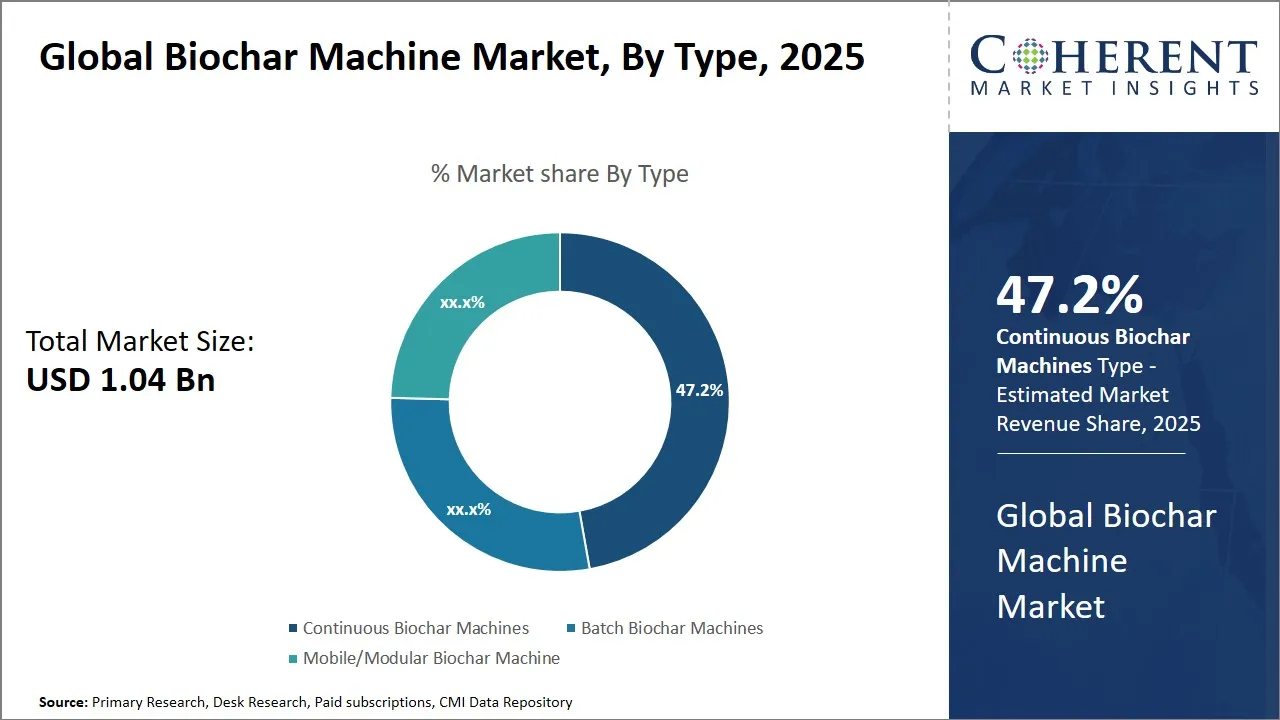
- The continuous biochar machines segment leads the market holding an estimated share of 48.2 % in 2026.
- The low-temperature pyrolysis segment leads the market holding an estimated share of 40.5 % in 2026.
- Asia Pacific is estimated to lead the market with a share of 82.4 % in 2026.
- North America, holding a share of 8.3 % in 2026, is projected to be the fastest growing region.
Market Overview
A key trend in the biochar machine market is the growing emphasis on eco-friendly and carbon-negative solutions to combat climate change. Advancements in machine technology are improving production efficiency and reducing operational costs, making biochar a more attractive option for soil enhancement and waste management. Also, government incentives and increased investments in green technologies are adding to market expansion and innovation in this sector.
Current Events and Its Impact
Current Events | Description and its impact |
Google biochar offtake agreements (Charm Industrial & Varaha) |
|
USDA Fertilizer Expansion/Biochar project awards (2024) |
|
Launch of Nigeria’s first industrial biochar plant (Releaf Earth, May 2025) |
|
Segmental Insights
- Current Industry Events of 2026
- Market Size Estimation
- Regional Breakdown
- Competitive Landscape
- Customer Intelligence
- Segmental Analysis
- Pricing Analysis
- Key Market Drivers, Challenges & Future Trends
- Customized Insights Section
Global Biochar Market Insights, by Type – Continuous biochar machines contribute the highest share of the market owing to their operational efficiency and scalability
Continuous biochar machines, holding a share of 48.2% in 2026, is expected to dominate the global biochar machine market. These machines allow an uninterrupted feed of biomass into the system, which reduces downtime and increases overall throughput compared to batch and mobile/modular variants. Continuous biochar machines help producers meet this demand by providing high-capacity production solutions suitable for different biomass types, such as agricultural waste, forestry residues, and organic municipal waste.
Also, continuous biochar machines have better thermal control and automation features compared to batch machines. These advanced process controls improve product consistency and quality, which is very important for end users who prioritize biochar specifications for optimized soil health or pollution control. Furthermore, the industrial-scale design of continuous systems supports integration with other renewable energy processes, such as bioenergy or syngas capture, offering added economic and environmental benefits to operators. For instance, PYREG GmbH’s PX1500 continuous biochar system has been deployed in agricultural regions of Germany to process large volumes of manure and crop residues.
Environmental regulations and incentives encouraging waste-to-energy initiatives also stimulate the adoption of continuous biochar machines. Many regions are focusing on reducing open burning of agricultural residues and promoting circular economy principles. Continuous systems provide a practical and scalable solution for converting vast amounts of biomass waste into useful biochar and energy, aligning with these environmental targets.
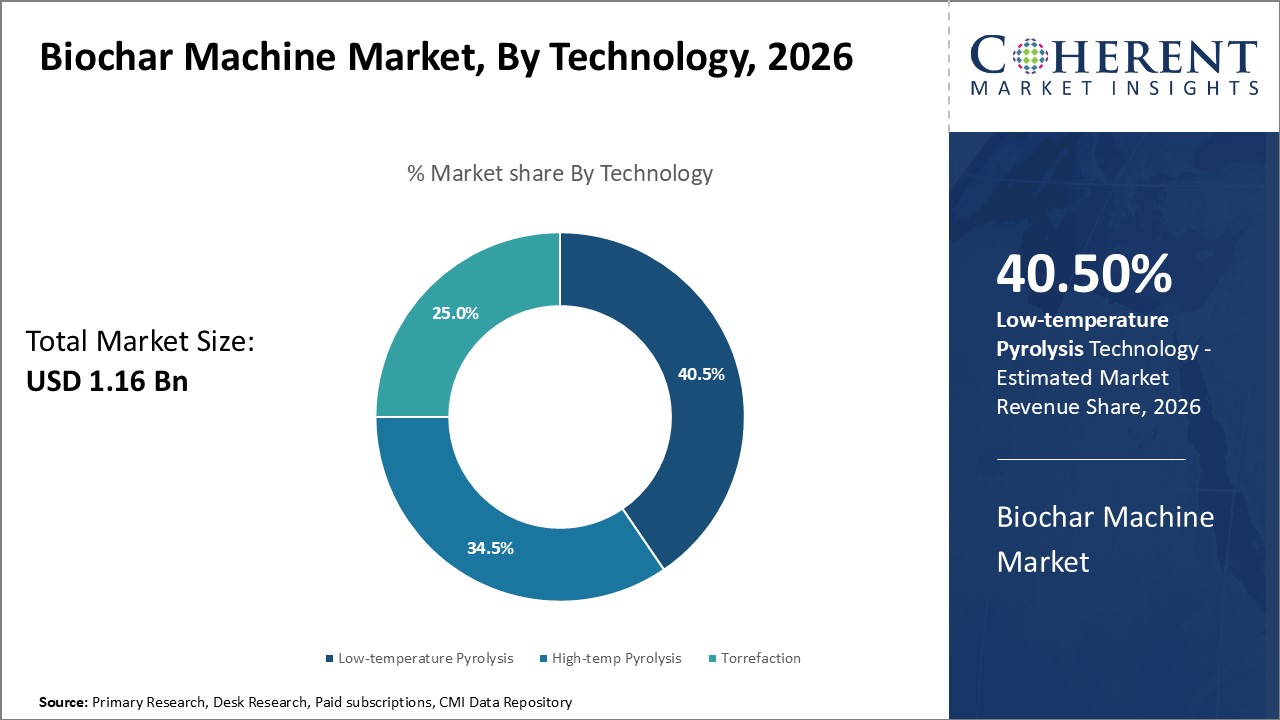
Global Biochar Market Insights, by Technology – Low-temperature Pyrolysis Leads the Market Driven by Enhanced Biochar Quality and Energy Efficiency
Low-temperature pyrolysis is expected to hold the largest share of 40.5% within the biochar machine market in 2026. Operating typically at temperatures ranging from 300 to 500 degrees Celsius, low-temperature pyrolysis is favored for yielding biochar with higher carbon content, greater porosity, and enhanced nutrient retention. These attributes make the biochar more effective for soil conditioning, water retention, and carbon sequestration, driving demand in agricultural and environmental sectors.
One of the critical factors propelling low-temperature pyrolysis is the increasing awareness about sustainable farming practices globally. Biochar derived from this process improves soil fertility by enhancing microbial activity and increasing cation exchange capacity, which in turn boosts crop yields without requiring synthetic fertilizers. As farming communities and agribusinesses prioritize eco-friendly solutions, low-temperature pyrolysis technologies are becoming the preferred method of biochar production.
Furthermore, this pyrolysis technology offers a more energy-efficient process compared to high-temperature pyrolysis or torrefaction. Lower operating temperatures reduce energy consumption and operational costs, which appeals to both small and large-scale producers aiming to optimize profitability. The energy saved during processing can be redirected towards supplementary uses such as generating sustainable bioenergy or heating, reinforcing the economic viability of low-temperature systems.
Environmental considerations also favor low-temperature pyrolysis because it results in lower emissions of harmful gases such as nitrogen oxides and volatile organic compounds. This aligns with stricter environmental regulations and voluntary sustainability commitments by industries utilizing biochar. Additionally, the process is adaptable to various types of biomass feedstock, providing operational flexibility that supports diverse geographic applications.
Impact of AI on the Biochar Machine Market
Artificial intelligence is beginning to transform the biochar machine market by optimizing feedstock processing, machine operation, and carbon accounting. AI-powered control systems can analyze variables such as moisture content, feedstock type, and combustion temperature in real time to adjust pyrolysis parameters for maximum biochar yield and quality. Predictive maintenance algorithms also help reduce downtime by detecting early signs of mechanical issues, lowering operational costs, and extending machine lifespans. In the context of carbon markets, AI-based monitoring and verification tools can automate emissions tracking, making biochar projects more credible and transparent for buyers of carbon removal credits.
A notable example is Charm Industrial, which uses machine learning models to optimize its pyrolysis process and ensure consistency in carbon removal output. By combining AI-driven process control with precise feedstock characterization, Charm can produce biochar that meets strict permanence and quality standards required for corporate buyers like Google.
Regional Insights
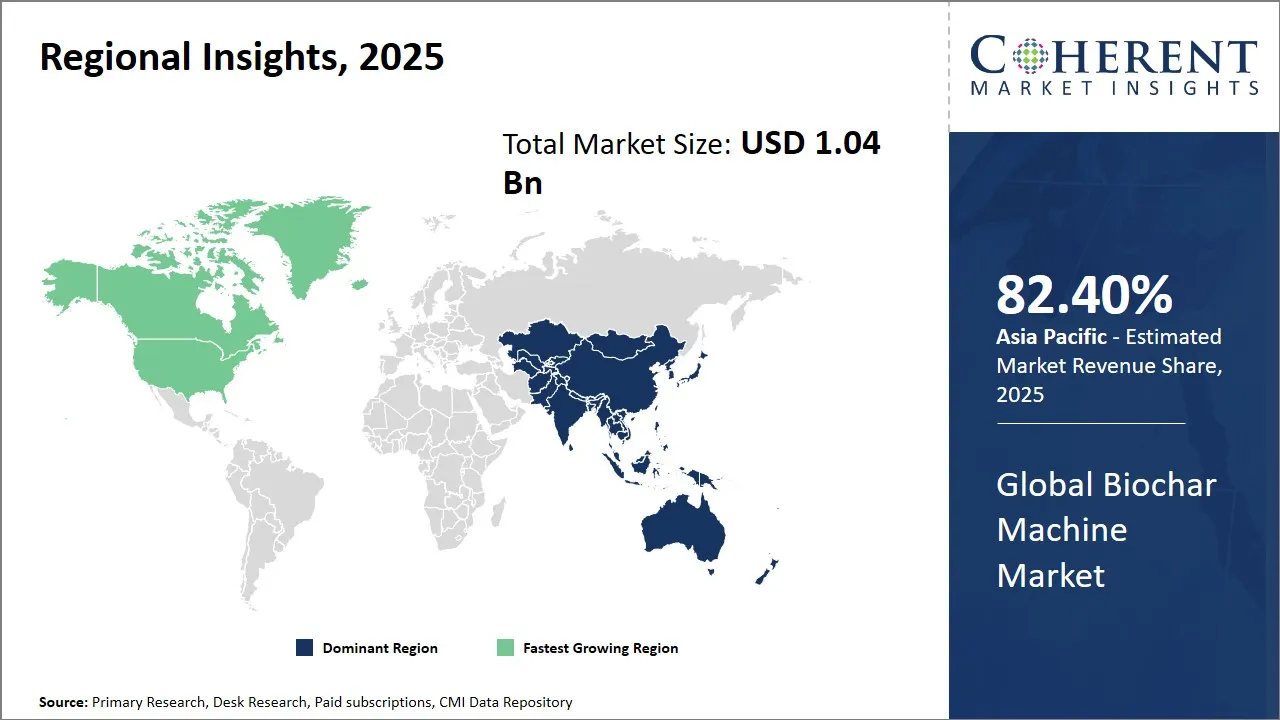
Asia Pacific Biochar Machine Market Analysis and Trends
Asia Pacific, holding an estimated share of 82.4% in 2026, dominates the global biochar machine market, primarily driven by a strong agricultural base combined with increasing environmental awareness and stringent government regulations promoting sustainable farming practices. Countries like China, Japan, and India have well-established agro-industries, which generate substantial biomass feedstock essential for biochar production. Governments in this region actively encourage biochar utilization by offering subsidies and integrating biochar technology into national carbon reduction strategies.
Furthermore, the presence of major biochar machine manufacturers such as Shandong Anyang Machinery and Zhengzhou Sinolinking Import & Export Co., Ltd. bolsters the region’s leadership by providing advanced machinery tailored to local industry needs. Strong trade links within the region and with other parts of the world also amplify Asia Pacific’s market dominance.
North America Biochar Machine Market Analysis and Trends
North America, holding an estimated share of 8.3% in 2026, exhibits the fastest growth in the biochar machine market due to rising investments in renewable energy technologies and sustainable waste management practices. The U.S. and Canada have abundant agro-industrial residues and forestry waste, presenting ample opportunities for biochar production. Government initiatives such as the U.S. EPA’s focus on carbon sequestration and incentives for green technology adoption have catalyzed market expansion.
North America is home to several influential companies, including Biochar Supreme and Pacific Biochar, which are pioneering innovative, energy-efficient biochar machinery. Additionally, robust research and development ecosystems and collaborative partnerships among industry players, academic institutions, and government agencies fuel rapid technological advancements, enabling swift market growth.
Global Biochar Machine Market Outlook for Key Countries
China Biochar Machine Market Analysis and Trends
China is propelled by its vast agricultural sector and the government's commitment to environmental sustainability. The Chinese government’s strong emphasis on reducing air pollution and enhancing soil health supports biochar machine adoption across farming communities. Key manufacturers such as Shandong Anyang Machinery focus on offering scalable, high-capacity biochar machines suited for diverse biomass types, from crop residues to forestry waste. China's active involvement in international trade fosters technology exchange, accelerating innovation and production efficiency within its biochar machine sector.
U.S. Biochar Machine Market Analysis and Trends
The U.S. continues to lead because of its advanced technological developments and environmental policies promoting renewable energy solutions. Companies like Biochar Supreme and Carbonizer Inc. have been very important in developing highly efficient, customizable biochar production equipment that serves both agricultural and industrial waste management markets.
Germany Biochar Machine Market Analysis and Trends
Germany is seeing strict environmental regulations and a strong focus on circular economy principles. The country’s leadership in green technology and mechanical engineering creates demand for precision-engineered biochar machines that support sustainable agriculture and waste recycling initiatives. Firms, such as Kupper Carbon GmbH, play an important role by offering innovative machinery designed for energy efficiency and environmental compliance.
India Biochar Machine Market Analysis and Trends
India biochar machine market is growing fast because of government schemes aimed at agricultural sustainability and biomass waste management. Given the country’s large rural population and prevalent agricultural practices, biochar is increasingly being seen as a valuable soil amendment and carbon sequestration method. Indian manufacturers and suppliers, including Royal Agro Industries, cater to local demand with cost-effective and adaptable machines that can process diverse feedstocks.
India biochar machine market is expanding rapidly, fueled by government schemes aimed at agricultural sustainability and biomass waste management. Given the country’s large rural population and prevalent agricultural practices, biochar is increasingly recognized as a valuable soil amendment and carbon sequestration method. Indian manufacturers and suppliers, including prominent companies like Royal Agro Industries, cater to local demand with cost-effective and adaptable machines capable of processing diverse feedstocks. National programs promoting renewable energy technologies and environmental conservation underpin sustained growth in this sector.
Market Players, Key Development, and Competitive Intelligence
Key Developments
- In January 2025, Google signed the largest-ever biochar-based carbon removal agreement, with two new 100,000 ton deals to buy carbon removal credits from India-based Varaha and U.S.-based Charm Industrial, for a total of 200,000 tons by 2030.
- In November 2024, the U.S. Department of Agriculture (USDA) announced a USD 120 million investment in six biochar projects across the U.S. as part of the Fertilizer Production Expansion Program (FPEP).
- In July 2024, Applied Carbon, a technology company designing automated biochar production machines that convert in-field agricultural crop waste into biochar, raised a USD 21.5 million Series A.
- In March 2024, NetZero, a France-based industrial company specializing in the large-scale rollout of biochar in the tropics, signed an investment agreement of USD 21.1 million (18 million euros) with STOA, a French infrastructure and impact fund specializing in emerging countries. By leveraging biochar in a unique way, NetZero’s model allows to perform high-permanence carbon removal from the atmosphere while providing a scalable solution for regenerative agriculture in the tropics.
Top Strategies Followed by Biochar Machine Market Players
- Established companies in this sector typically invest heavily in research and development (R&D) to drive innovation and develop high-performance biochar machines that address evolving customer needs and environmental standards.
- Charm Industrial is investing significantly in process optimization R&D, including AI-driven pyrolysis control and advanced feedstock pre-treatment methods, to maximize carbon removal efficiency.
- Mid-level companies in the biochar machine market tend to focus on striking a balance between quality and affordability to attract a broad range of buyers, including price-sensitive customers in both developed and developing regions.
- Airex Energy developed the CarbonFX technology, a compact, modular pyrolysis system designed to be more affordable and adaptable for small to mid-scale facilities.
- Small-scale players in the biochar machine market adopt more specialized or niche strategies to remain competitive amidst larger rivals.
- Oregon Biochar Solutions focuses specifically on producing high-quality biochar tailored for stormwater filtration and soil remediation, rather than trying to compete in broad agricultural markets.
Market Report Scope
Biochar Machine Market Report Coverage
| Report Coverage | Details | ||
|---|---|---|---|
| Base Year: | 2025 | Market Size in 2026: | USD 1.16 Bn |
| Historical Data for: | 2020 To 2024 | Forecast Period: | 2026 To 2033 |
| Forecast Period 2026 to 2033 CAGR: | 11.5% | 2033 Value Projection: | USD 2.48 Bn |
| Geographies covered: |
| ||
| Segments covered: |
| ||
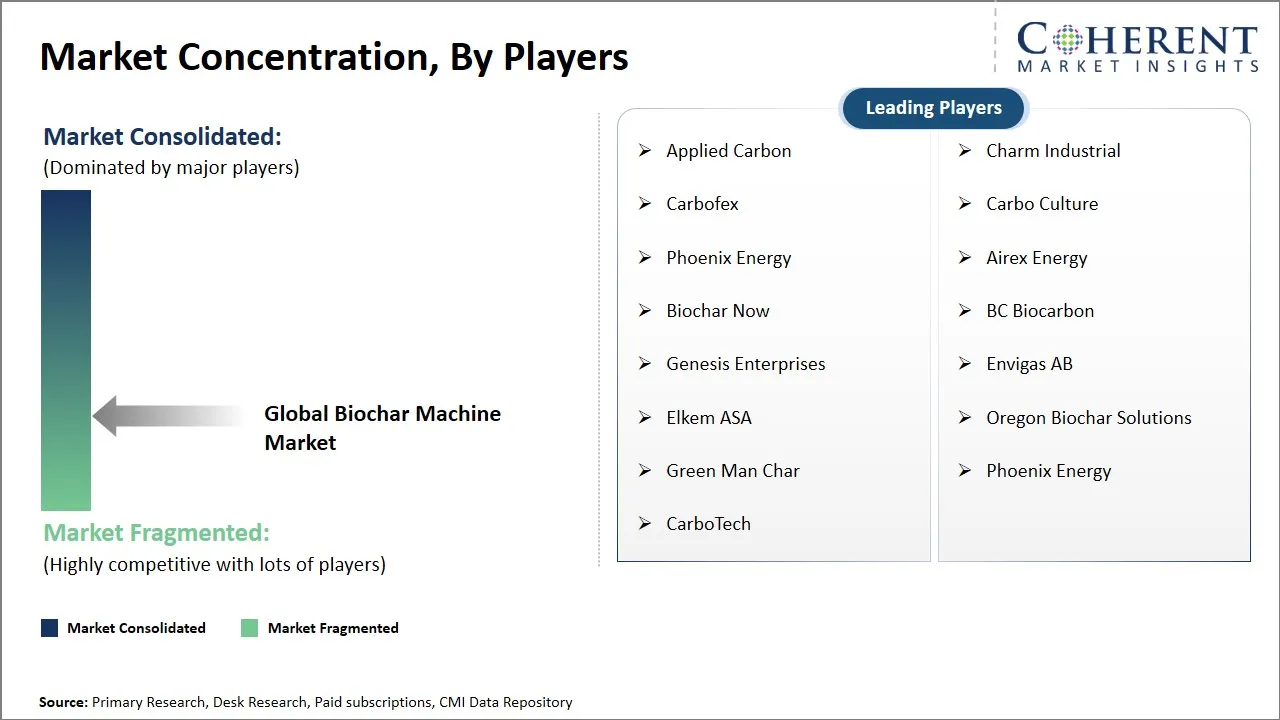
| Companies covered: | Applied Carbon, Charm Industrial, Carbofex, Carbo Culture, Phoenix Energy, Airex Energy, Biochar Now, BC Biocarbon, Genesis Enterprises, Envigas AB, Elkem ASA, Oregon Biochar Solutions, Green Man Char, Phoenix Energy, and CarboTech | ||
| Growth Drivers: |
| ||
| Restraints & Challenges: |
| ||
Market Dynamics
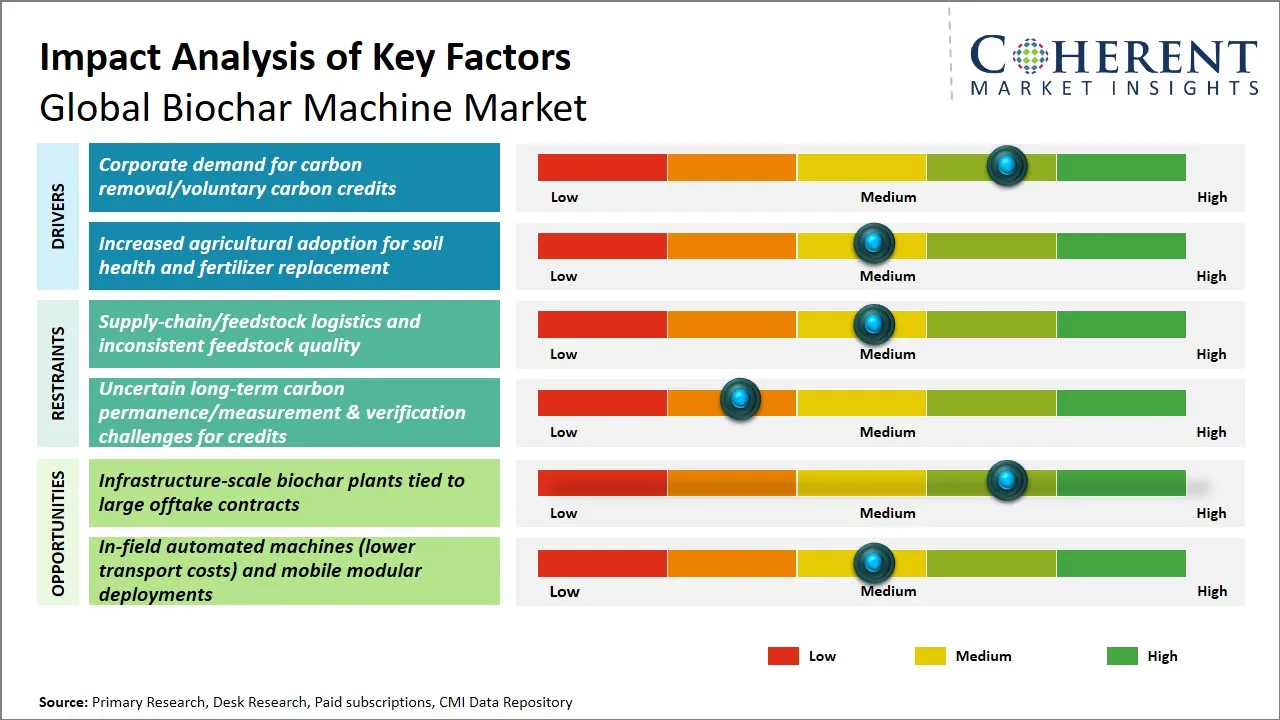
Global Biochar Machine Market Driver – Corporate Demand for Carbon Removal/Voluntary Carbon Credits
An increasing number of corporations worldwide are committing to sustainability goals, with carbon neutrality emerging as a critical objective in their environmental strategies. This shift is significantly driving demand for effective carbon removal technologies, and biochar machines have gained prominence due to their ability to sequester carbon in a stable form while improving soil health. As voluntary carbon markets expand, companies are actively seeking credible solutions to generate and trade carbon credits that demonstrate genuine environmental impact. In January 2025, Google signed a landmark agreement with Charm Industrial to purchase 100,000 tonnes of biochar-based carbon removal credits to be delivered through 2030.
Biochar production aligns well with these needs, offering measurable carbon sequestration that can be quantified and verified for credit issuance. This rising corporate focus on voluntary carbon credit procurement to offset emissions is compelling organizations to invest in biochar technology, either directly or through partnerships.
Global Biochar Machine Market Opportunity – Infrastructure-Scale Biochar Plants Securing Large Offtake Contracts
A significant opportunity in the global biochar machine market lies in the development of infrastructure-scale biochar plants that are directly linked to substantial offtake agreements. These large-scale facilities enable economies of scale that drastically reduce per-unit production costs while enhancing the efficiency and consistency of biochar output. With growing awareness around sustainable agriculture, carbon sequestration, and waste management, numerous industrial and agricultural enterprises are increasingly committing to long-term procurement contracts for biochar as a key input. NetZero (France) secured USD 21.1 million (€18 million) in 2024 from impact investor STOA to build large biochar plants in Brazil and other tropical regions, with part of the funding underpinned by long-term offtake agreements.
Moreover, infrastructure-scale plants can integrate advanced technologies such as automated feedstock handling and process optimization, enabling precise control over biochar quality tailored for specific end-use applications like soil amendment, water purification, or livestock feed supplement.
Analyst Opinion (Expert Opinion)
- Biochar machines are increasingly being deployed as part of structured carbon removal projects, where AI-enabled verification and blockchain tracking ensure credit traceability. This is attracting investment from corporates seeking durable carbon offsets, particularly in regions with abundant biomass.
- Beyond agriculture, biochar production systems are gaining traction in water treatment, stormwater filtration, and remediation of contaminated soils. Machines configured for these niche outputs can command premium pricing and open up diversified revenue streams for manufacturers.
- New-generation pyrolysis systems are designed to recover and utilize bio-oil and syngas alongside biochar. This multi-output approach turns machines into integrated bio-refineries, enhancing project economics and making large-scale deployments more attractive to industrial operators.
Speak to the analyst
Want personalized insights?
Take the findings above to one of our principal consultants, or have the report rebuilt around the segments, geographies and competitors you actually track.
Market Segmentation
- Type Insights (Revenue, USD Bn, 2021 - 2033)
- Continuous Biochar Machines
- Batch Biochar Machines
- Mobile/Modular Biochar Machine
- Technology Insights (Revenue, USD Bn, 2021 - 2033)
- Low-temperature Pyrolysis
- High-temp Pyrolysis
- Torrefaction
- Regional Insights (Revenue, USD Bn, 2021 - 2033)
- North America
- U.S.
- Canada
- Latin America
- Brazil
- Argentina
- Mexico
- Rest of Latin America
- Europe
- Germany
- U.K.
- Spain
- France
- Italy
- Russia
- Rest of Europe
- Asia Pacific
- China
- India
- Japan
- Australia
- South Korea
- ASEAN
- Rest of Asia Pacific
- Middle East
- GCC Countries
- Israel
- Rest of Middle East
- Africa
- South Africa
- North Africa
- Central Africa
- North America
- Key Players Insights
- Applied Carbon
- Charm Industrial
- Carbofex
- Carbo Culture
- Phoenix Energy
- Airex Energy
- Biochar Now
- BC Biocarbon
- Genesis Enterprises
- Envigas AB
- Elkem ASA
- Oregon Biochar Solutions
- Green Man Char
- Phoenix Energy
- CarboTech
Sources
Primary Research Interviews
Stakeholders
- Biochar Machine Manufacturers and Suppliers (e.g., GreenPyro Systems, TerraTherm Industries, PyroTech Solutions)
- Agricultural Cooperatives and Commercial Farms using biochar machines
- Forestry and Biomass Waste Management Companies
- Carbon Credit Project Developers and Brokers
- Renewable Energy Plant Operators integrating pyrolysis systems
- Environmental NGOs and Sustainability Consultants focused on carbon removal technologies
Databases
- Global Biomass Energy Statistics Portal
- U.S. Department of Agriculture (USDA) Agricultural Data Hub
- Asia-Pacific Renewable Energy Data Network (APRED)
- International Energy Agency (IEA) Bioenergy Database
- Carbon Markets & Offsets Registry (CMOR)
Magazines
- Biochar World Review
- Sustainable Agriculture Today
- Carbon Removal Digest
- Pyrolysis & Biomass Processing Journal
- Clean Energy Manufacturing Monthly
Journals
- Journal of Biochar Science and Technology
- Renewable Energy & Biomass Conversion Journal
- Carbon Sequestration and Management Review
- Applied Pyrolysis and Thermal Conversion Research
- Environmental Engineering for Sustainable Agriculture
Newspapers
- The Renewable Energy Gazette
- Global Carbon Market News
- Asia-Pacific Agriculture Daily
- The North America Climate Chronicle
- Sustainable Industry Times
Associations
- International Biochar Initiative (IBI)
- Asia-Pacific Biochar Network (APBN)
- North American Biochar Association (NABA)
- European Biochar Certificate Association (EBC)
- Global Alliance for Carbon Removal Technologies (GACRT)
Public Domain Sources
- U.S. Department of Agriculture (USDA) Reports
- EUROSTAT – Agricultural Production Data
- United Nations Food and Agriculture Organization (FAO)
- World Bank – Climate & Carbon Market Data
- ResearchGate – Open Access Biochar Studies
Proprietary Elements
- CMI Data Analytics Tool, Proprietary CMI Existing Repository of information for last 8 years
Get access to 250+ pages report
Every segment, forecast, competitor profile and data table behind the analysis above — available for instant download.
- ESOMAR Member
- ISO 9001:2015 Certified
- D-U-N-S Registered
- GDPR & CCPA Compliant
Missing comfort of reading report in your local language? Find your preferred language:
Transform your Strategy with Exclusive Trending Reports
Frequently Asked Questions
The global biochar machine market is estimated to be valued at USD 1.16 billion in 2026 and is expected to reach USD 2.48 billion by 2033.
The CAGR of the global biochar machine market is projected to be 11.5% from 2026 to 2033.
Corporate demand for carbon removal/voluntary carbon credits and increased agricultural adoption for soil health and fertilizer replacement are the major factors driving the growth of the global biochar machine market.
Supply-chain/feedstock logistics and inconsistent feedstock quality and uncertain long-term carbon permanence/measurement & verification challenges for credits are the major factors hampering the growth of the global biochar machine market.
In terms of type, the continuous biochar machines segment estimated to dominate the market revenue share in 2026.
A biochar machine is equipment that uses pyrolysis or similar processes to convert biomass into biochar, often with co-products like bio-oil or syngas.
Building infrastructure-scale biochar plants tied to long-term offtake contracts and developing mobile, modular machines for decentralized production are some opportunities for market players.