

Global Bleeding Control Kit Market Size and Forecast – 2026 To 2033
The global bleeding control kit market is expected to grow from USD 4,778.4 Mn in 2026 to USD 6,152.3 Mn by 2033, registering a compound annual growth rate (CAGR) of 3.7% from 2026 to 2033. The market for bleeding control kits is poised for significant expansion, fueled by the rising incidence of traumatic injuries and road traffic accidents globally, which subsequently increase the need for effective prompt hemorrhage-control solutions.
According to the World Health Organization, approximately 1.19 million people die each year as a result of road traffic crashes, while, road traffic injuries are the leading cause of death for children and young adults aged 5–29 years. This rising trauma burden is reinforcing governments, healthcare institutions, and emergency response agencies to strengthen bleeding control preparedness, supporting market expansion.
(Source: World Health Organization)
Key Takeaways of the Global Bleeding Control Kit Market
- Medical gloves are projected to hold 25.7 % of the global bleeding control kit market share in 2026, making it the dominant product type segment across Europe due to stringent infection-control regulations and the routine use of protective equipment in emergency care, trauma management, and first-response applications. For instance, the European Centre for Disease Prevention and Control (ECDC) recommends the use of disposable medical gloves as part of standard precautions for preventing the transmission of infectious agents in healthcare settings, reinforcing the widespread adoption of medical gloves across emergency and trauma care environments.
- Basic is projected to hold 54.5 % of the global bleeding control kit market share in 2026, making it the dominant kit type segment, across North America due to the widespread implementation of Stop the Bleed programs, school safety initiatives, and public-access emergency preparedness measures that prioritize easy-to-use hemorrhage-control solutions. For instance, the U.S. Department of Homeland Security's Cybersecurity and Infrastructure Security Agency (CISA) promotes the placement of publicly accessible bleeding control kits and hemorrhage-control training through the Stop the Bleed initiative in schools, workplaces, and public venues across the U.S. Such efforts have increased the adoption of basic bleeding control kits as part of emergency preparedness programs.
- Gunshot wounds are projected to hold 39.3 % of the global bleeding control kit market share in 2026, making it the dominant injury type segment across North America due to the relatively high incidence of firearm-related trauma cases and the growing deployment of bleeding control kits in public spaces, law enforcement agencies, and emergency response systems. For instance, in August 2024, a review article published by the National Library of Medicine in August 2024, citing data from the U.S. Centers for Disease Control and Prevention (CDC), reported that total gun deaths in the U.S. increased from 39,707 (2019) to 45,222 (2020), an increase per capita from 12.09/100,000 to 13.73/100,000
- North America maintains its dominance with an expected share of 43.5 % in 2026, bolstered by the widespread implementation of bleeding-control programs, a high incidence of traumatic injuries, well-established emergency medical services infrastructure, and increasing deployment of bleeding control kits across schools, workplaces, and public venues. For instance, according to the U.S. Centers for Disease Control and Prevention (CDC), unintentional injuries remained a leading cause of death in the United States in 2024, highlighting the ongoing need for rapid hemorrhage-control interventions and emergency preparedness measures, including the availability of bleeding control kits.
- Asia Pacific is expected to exhibit the fastest growth with an estimated contribution of 20.6 % share in 2026, driven by the rising incidence of road traffic accidents, workplace injuries, and other trauma cases. Increasing healthcare expenditure, expanding emergency care infrastructure, and growing government focus on first-aid preparedness are accelerating market adoption. Furthermore, rising awareness of hemorrhage-control training and improving access to emergency medical supplies across developing countries such as China and India are supporting robust regional growth. For instance, in India, the Active Bleeding Control (ABC) pilot program trained more than 1,000 community volunteers, including police personnel and auto-rickshaw drivers, in hemorrhage-control techniques and distributed low-cost "Stop the Bleed" kits to improve emergency response for road traffic injury victims. The initiative demonstrated the growing emphasis on bleeding-control preparedness and community-based trauma care across the region. (Source: Elsevier Inc.)
- Growing Focus on Trauma Care Preparedness: The increasing emphasis on trauma care preparedness across healthcare systems, public institutions, and emergency response organizations presents a significant opportunity for the bleeding control kit market. Stakeholders are prioritizing rapid hemorrhage management as a critical component of trauma care protocols to reduce preventable deaths from severe bleeding. This is driving greater adoption of bleeding control kits in emergency preparedness programs, first-aid infrastructure, and trauma response initiatives.
- Adoption Across Public Safety Infrastructure: The increasing incorporation of bleeding control kits into public safety infrastructure presents a significant growth opportunity for market participants. Governments, educational institutions, transportation authorities, and commercial establishments are increasingly recognizing hemorrhage control as an essential component of emergency preparedness. As bleeding control kits become more widely accessible in public spaces, demand is expected to rise steadily, creating opportunities for broader market penetration and recurring product replenishment.
Segmental Insights
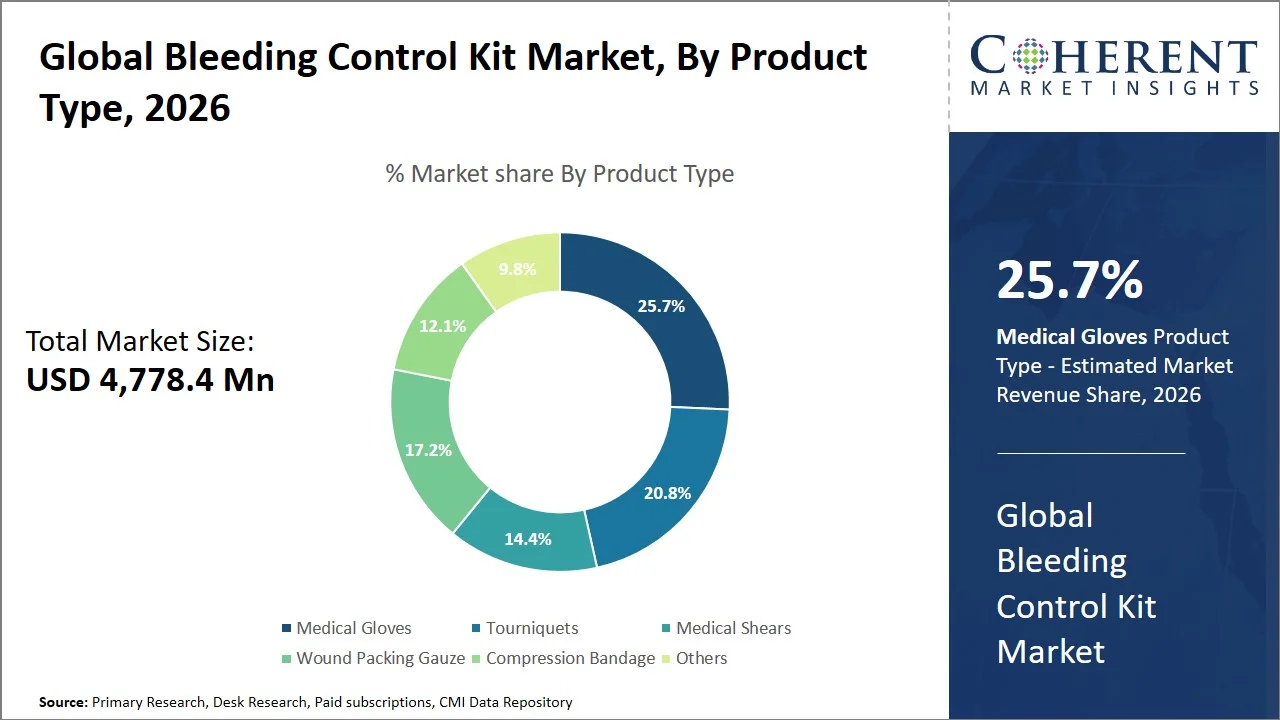
Why Do Medical Gloves Dominate the Global Bleeding Control Kit Market?
Medical gloves are projected to hold a market share of 25.7% in 2026, due to their critical importance for contamination prevention and hand protection for responders and patients. These products represent a key segment of the market due to their essential role in bleeding control kits used across emergency care, trauma situations, and wound management. Increased focus on infection prevention within pre-hospital situations and rising penetration of resilient nitrile, powder-free products fuel further growth. For instance, in February 2024, the U.S. Food and Drug Administration (FDA) released new recommendations reaffirming that health care workers should continue to use medical gloves as an essential component of personal protective equipment during emergency medical and first-aid procedures with blood and bodily fluids.
- Current Industry Events of 2026
- Market Size Estimation
- Regional Breakdown
- Competitive Landscape
- Customer Intelligence
- Segmental Analysis
- Pricing Analysis
- Key Market Drivers, Challenges & Future Trends
- Customized Insights Section
Why Does Basic Represent the Largest Kit Type Segment in the Bleeding Control Kit Market?
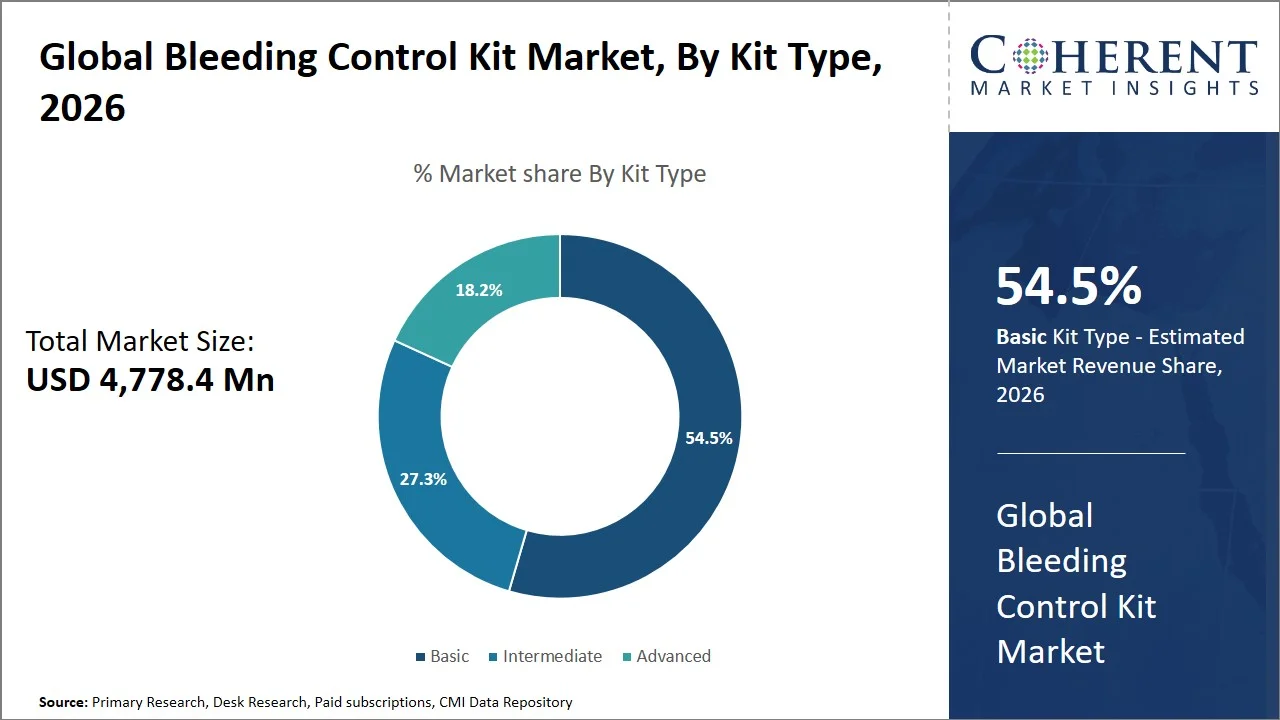
Basic is projected to hold a market share of 54.5% in 2026, because of their simple use, cost efficiency and practicality among non-medical personnel. The small and fundamental components of the hemorrhage management kits make it extremely effective for use in schools, work place environments, public area facilities and community centers, especially in the midst of urgent situations. For instance, in April 2025, The STOP THE BLEED Project announced the opening of applications for its 2025 grant program to provide bleeding control kits and training materials to schools, community organizations, and public buildings. The program is designed to increase access to public hemorrhage-control devices and hopefully help with further distribution of non-medical basic bleeding control kits.
Gunshot Wounds Segment Dominates the Global Bleeding Control Kit Market
The gunshot wounds segment is projected to hold a market share of 39.3% in 2026, owing to the enormity of hemorrhage following ballistic trauma and the urgent need for addressing it prior to definitive medical treatment. Such kits have been extensively adopted by law enforcement agencies, military forces, trauma responders and tactical care providers for addressing life-threatening bleeding in a pre-hospital environment. Increased focus on active-threat readiness and trauma response further sustains demand for gunshot wound bleeding control products. For instance, in August 2024, a review article published by the National Library of Medicine reported that mortality from firearms contributes more than 250,000 deaths each year globally, illustrating the considerable burden of ballistic trauma and the need for effective bleeding control interventions. (Source: National Library of Medicine)
Currents Events and their Impact
Current Events | Description and its Impact |
Missouri Enacts School Bleeding Control Kit Requirement Under Stop the Bleed Act (December 2025) |
|
Federal CARE Act Expands First-Responder Access to Bleeding Control Kits (December 2025) |
|
Bleeding Control Kit Market Dynamics
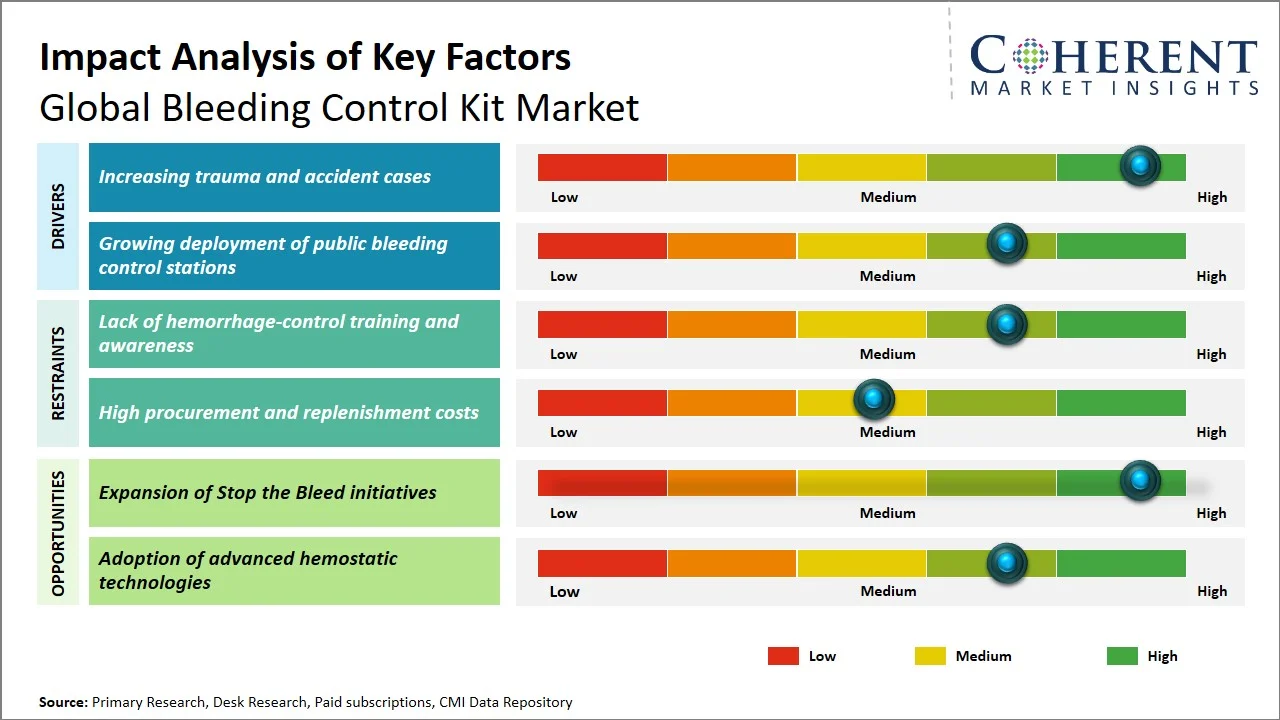
Market Drivers
- Increasing trauma and accident cases: The global demand for bleeding control kits is on the rise due to an increase in number of road traffic accidents, work-related injuries and other traumatic emergencies. With time being critical for managing hemorrhage effectively and in order to enhance survivability, emergency responders, healthcare agencies, public safety organizations are integrating bleeding control kits into trauma care plans.
- Growing deployment of public bleeding control stations: The deployment of dedicated bleeding control stations in schools, airports, transportation hubs, workplaces, and other public venues is gaining momentum as part of broader emergency preparedness efforts. Organizations are increasingly recognizing the importance of immediate hemorrhage control before professional medical assistance arrives. This trend is expanding public access to bleeding control kits and supporting wider adoption across non-medical settings.
Emerging Trends
- Expansion of Public-Access Bleeding Control Programs: Bleeding control kits are increasingly being deployed in schools, airports, workplaces, stadiums, and other public venues as part of broader emergency preparedness initiatives. This trend is expanding the market beyond healthcare and military settings, creating demand for easy-to-use kits designed for civilian responders.
- Growing Adoption of Advanced Hemostatic Technologies: Manufacturers are progressively adding advanced hemostatic dressings and enhanced hemorrhage-control materials to bleeding control kits to make them more effective in severe trauma situations. The trend reflects a rising focus on rapid bleeding management and improved patient outcomes in both pre-hospital and emergency care environments.
Regional Insights
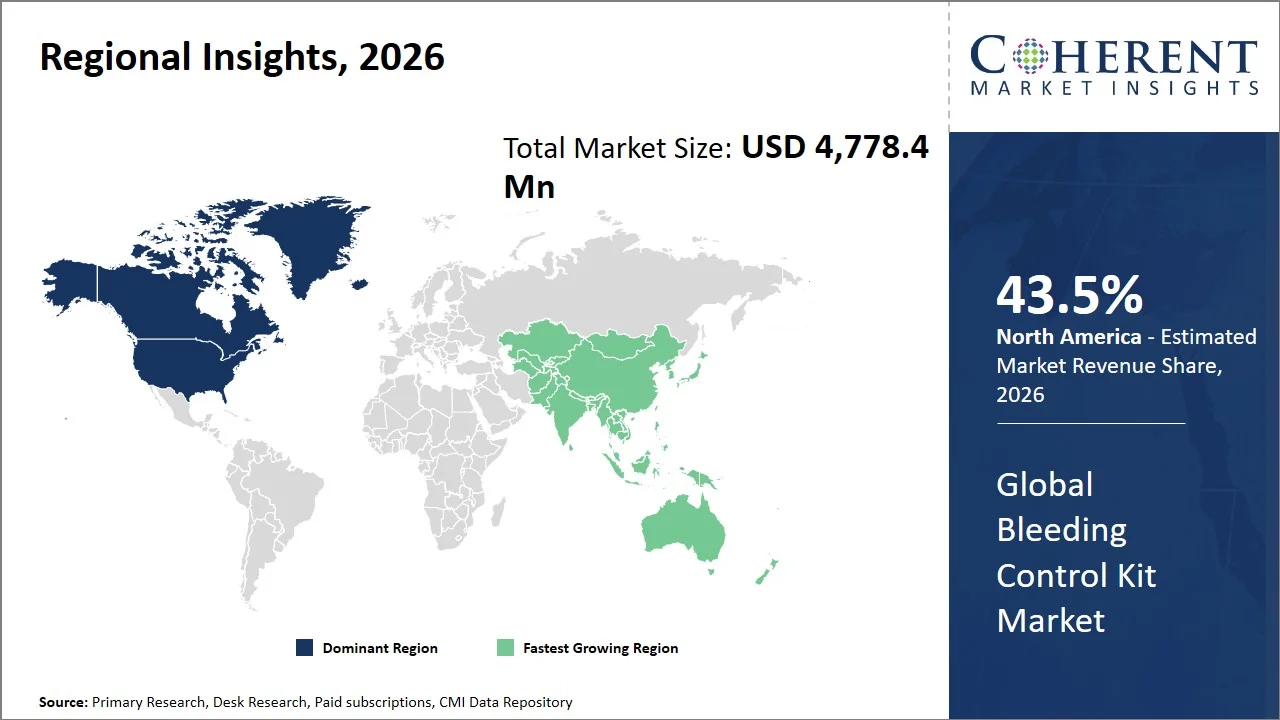
Why is North America a Strong Market for Bleeding Control Kits?
North America leads the global bleeding control kit market, accounting for an estimated 43.5% share in 2026, attributed to a resilient healthcare sector, responsive emergency aid networks and public health schemes targeting traumatic care and bleeding control education. The region is influenced by stringent regulations and substantial investment in safety awareness schemes funded by government entities. For instance, in August 2025, the U.S. Senate approved the Improving Police Critical Aid for Responding to Emergencies (CARE) Act, authorizing the procurement of bleeding control supplies and kits through the Edward J. Byrne Memorial Justice Assistance Grant Program. The legislation improves access to trauma supplies and the necessary hemorrhage-control skills for first responders and communities. (Source: American College of Surgeons) Moreover, a multitude of healthcare centers, first responders and trauma clinics in the region ensures increased utilization of kits in order to enhance treatment methods for bleeding related traumas and injuries.
Why Does the Asia Pacific Bleeding Control Kit Market Exhibit High Growth?
The Asia Pacific bleeding control kit market is expected to exhibit the fastest growth with an estimated contribution of 20.6% share to the global market in 2026, due to rapid improvements in healthcare facilities, increasing emphasis on emergency healthcare, and escalating levels of trauma care. Urbanization and industrialization growth coupled with increasing incidence rates of bleeding across both commercial and military regions is driving market demand for efficient emergency bleeding care. Governments of countries including India and China are increasingly investing in revamping the healthcare industry. For instance, Under the National Programme for Prevention and Management of Trauma and Burn Injuries (NPPMT & BI), the Government of India is enhancing trauma care capacities across India by establishing new trauma centers and up-gradation of existing trauma centers related to National Highways and high accident risk areas. (Source: Ministry of Health and Family Welfare)
Global Bleeding Control Kit Market Outlook for Key Countries
Why is the U.S. Leading Innovation and Adoption in the Bleeding Control Kit Market?
The U.S dominates the bleeding control kit market due to the mature trauma care infrastructure in the country along with emphasis on pre-hospital emergency response. The U.S has extensively implemented bleeding control kits in educational institutes, offices, transit points and public areas that have resulted in significant civilian adoption along with trauma trained medical professionals. With wide accessibility of trauma management courses and increasing demand for public access hemorrhage control methods, advanced bleeding management tools are quickly being adopted by organizations and individuals alike.
Is Japan a Favorable Market for Bleeding Control Kits?
Japan represents an excellent market opportunity for bleeding control kit due to its comprehensive emergency preparedness, emergency response initiatives, and the presence of a mature health sector. The nation’s commitment towards urgent response and safety favors usage of trauma care and hemorrhage-control products among hospitals, and emergency response centers. Furthermore, first-aid supplies availability in institutional premises and public areas, emphasize on trauma response planning to support the demand and proliferation of bleeding control kits in Japan.
Is China Emerging as a Key Growth Hub for the Bleeding Control Kit Market?
China is positioned as a key growth hub in the global bleeding control kit market due to consistent developments in emergency healthcare services, trauma care and public safety. Government spending on the country’s emergency response system and first-aid programs in schools is encouraging heightened awareness about loss of blood control. In addition to these factors, increasing development of healthcare centers, increasing attention to workplace and public safety regulations, and the growing use of trauma care devices will support the demand of bleeding control kits for business growth.
Why Does Germany Top the European Bleeding Control Kit Market?
Germany is the leader in the European market for bleeding control kits driven by well-structured healthcare ecosystem and emergency medical services in the country with well-organized care network, trauma treatment facilities. In addition to occupational safety, public safety has given rise to an exceptional presence and widespread market for bleeding control kits, supported by widespread implementation of various emergency response measures across healthcare centers, transportation, public locations, industry sector and other institutional places.
Is the Bleeding Control Kit Market Developing in India?
India has emerged as a favorable market for bleeding control kits owing to escalating expenditure in emergency care infrastructure and rising awareness regarding trauma care preparedness. Furthermore, the expanding rate of road accidents, occupational injuries and various trauma events further emphasize the necessity of readily available hemorrhage-control options in both medical facilities and public facilities. The upscaling growth in emergency medical facilities, safety programs in workplace and first aid trainings is further leading to increased market share of bleeding control kits across various domains.
Technology Maturity and Adoption Landscape in the Global Bleeding Control Kit Market
Technology Category | Current Market Position | Adoption Stage | Key End Users | Future Growth Potential |
Medical Gloves | Established | Mature | Hospitals, EMS, Military, Public Safety Organizations | Moderate |
Mechanical Tourniquets | Established | Mature | EMS Providers, Military Personnel, Law Enforcement Agencies | High |
Hemostatic Dressings | Growing | High Growth | Trauma Centers, Emergency Departments, Defense Organizations | Very High |
Chest Seals | Emerging | Early-to-Mid Adoption | Military Units, EMS Providers, Trauma Care Teams | High |
Advanced Public-Access Bleeding Control Kits | Emerging | Early Adoption | Schools, Airports, Workplaces, Public Venues | Very High |
QR-Enabled and Training-Integrated Trauma Kits | Nascent | Early Adoption | Educational Institutions, Corporate Facilities, Community Safety Programs | Very High |
How is the expansion of stop the bleed initiatives creating new growth opportunities in the bleeding control kit market?
The rising emphasis on hemorrhage control education has generated promising new growth opportunities for the bleeding control kit market. This expanding market is being driven by heightened attention to improving traumatic injury response led by the government, healthcare providers, and emergency management organizations who are prioritizing the development of bleeding control education programs and related kits. For instance, in March 2025, the American College of Surgeons (ACS) introduced enhanced on-going stop the bleed training. The program is aimed at encouraging a more widespread, and simplified access for the community, and in developing a more well-prepared population to manage life-threatening blood loss emergencies, while reducing severe hemorrhaging education and public preparation efforts. (Source: American College of Surgeons)
Market Players, Key Development, and Competitive Intelligence
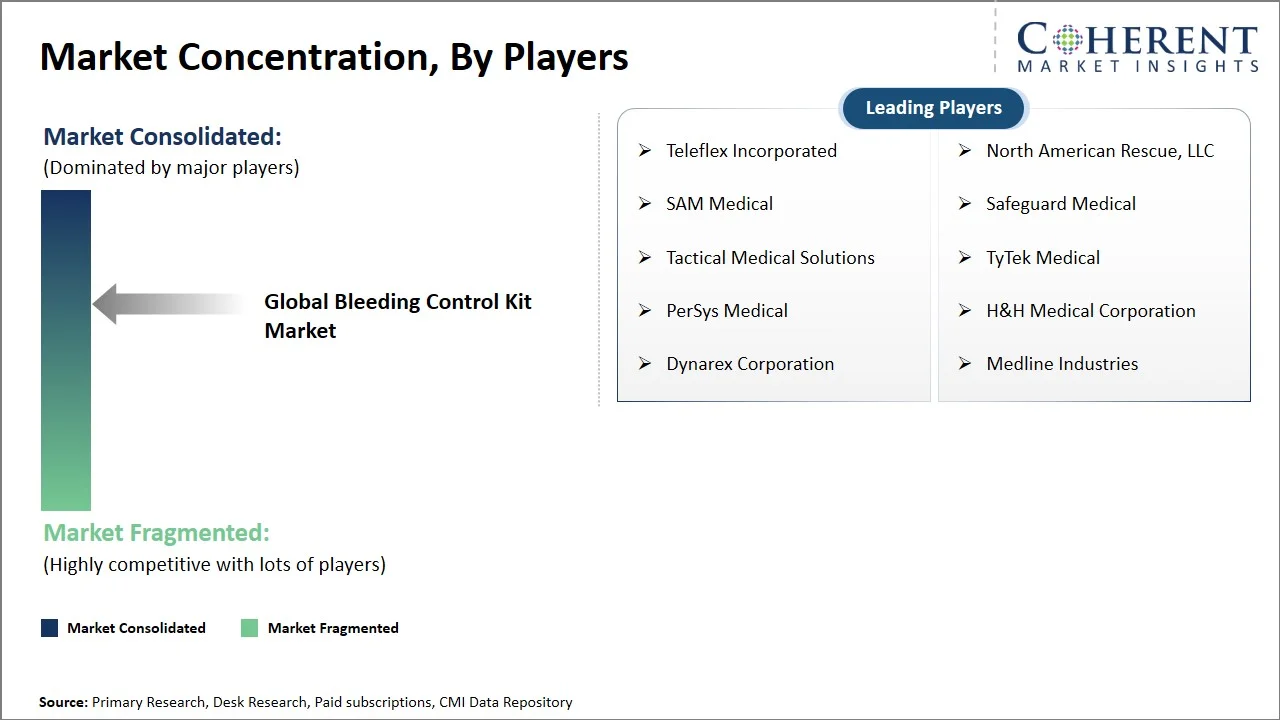
Key Developments
- In July 2025, SafetyBuyer expanded its trauma and bleeding control product range in partnership with Safety First Aid Group. The enhanced portfolio includes advanced hemorrhage-control solutions designed for workplaces, public facilities, and emergency response settings. This development reflects the growing emphasis on emergency preparedness and broader accessibility of bleeding control products beyond traditional healthcare environments.
- In May 2024, Tri-Tech Forensics acquired SAM Medical, a manufacturer of emergency medical and hemorrhage-control products. The acquisition expanded Tri-Tech’s emergency medical portfolio and strengthened its presence in the bleeding control market through access to SAM Medical’s trauma care and bleeding management solutions. The move reflects ongoing industry consolidation aimed at enhancing product offerings and market reach.
Competitive Landscape
The global bleeding control kit market is moderately consolidated, with key players increasing traction in the trauma care product range through product extension, acquisitions and public access bleeding control. Companies are concentrating on new-age hemostatic methods, next-generation tourniquets, along with simplistic kit set-ups, thus enhancing hemorrhage control efficiency in defense forces, EMS, medical facilities and among civilians. Stakeholders are further amplifying their foothold through association with emergency management agencies, trauma training initiatives, and supply chain to enhance distribution and usage. Key focus areas include:
- Development of advanced hemostatic dressings and hemorrhage-control technologies
- Expansion of public-access bleeding control and trauma preparedness programs
- Strategic acquisitions and partnerships to strengthen emergency care portfolios
- Product innovation focused on ease of use for non-medical responders
- Integration of bleeding control kits into workplace, school, and public safety infrastructure
- Geographic expansion through distributor partnerships and emergency response networks
Market Report Scope
Bleeding Control Kit Market Report Coverage
| Report Coverage | Details | ||
|---|---|---|---|
| Base Year: | 2025 | Market Size in 2026: | USD 4,778.4 Mn |
| Historical Data for: | 2020 To 2024 | Forecast Period: | 2026 To 2033 |
| Forecast Period 2026 to 2033 CAGR: | 3.7% | 2033 Value Projection: | USD 6,152.3 Mn |
| Geographies covered: |
| ||
| Segments covered: |
| ||
| Companies covered: | Teleflex Incorporated, North American Rescue, LLC, SAM Medical, Safeguard Medical, Tactical Medical Solutions, TyTek Medical, PerSys Medical, H&H Medical Corporation, Dynarex Corporation, and Medline Industries | ||
| Growth Drivers: |
| ||
| Restraints & Challenges: |
| ||
Analyst Opinion (Expert Opinion)
- Bleeding control kit market is expected to see consistent growth in the long term determined by the transition of hemorrhage-control interventions from hospitals to the public safety system. Rising focus on trauma care preparedness and proliferation of bleeding control kits in public domains, including school, offices, public transportation and others are anticipated to enhance the market for bleeding control kits by broadening application scope. The growing popularity of public access bleeding control programs across the globe is expected to fuel the demand for simple-to-use, standardized and quickly deployable kits.
- The maximum opportunities will probably exist within basic bleeding control kits for public-access emergency preparedness applications, particularly across North America. Continued expansion of Stop the Bleed initiatives, school safety programs, workplace emergency response requirements, and public venue preparedness measures is expected to drive large-volume procurement and recurring replacement demand. In addition, trauma care preparedness programs across healthcare institutions and emergency response organizations represent a promising avenue for sustained market growth.
- In order to obtain a competitive advantage, market participants should focus on developing user-friendly bleeding control kits tailored for non-medical responders, incorporating advanced hemostatic technologies and clear training guidance. Companies should also strengthen partnerships with emergency preparedness organizations, educational institutions, and public safety agencies to improve product visibility and adoption. Expanding training support services, certification programs, and strategic distribution networks will further help market participants differentiate their offerings and build long-term customer relationships.
Speak to the analyst
Want personalized insights?
Take the findings above to one of our principal consultants, or have the report rebuilt around the segments, geographies and competitors you actually track.
Market Segmentation
- Product Type Insights (Revenue, USD Mn, 2021 - 2033)
- Medical Gloves
- Tourniquets
- Medical Shears
- Wound Packing Gauze
- Compression Bandage
- Others
- Kit Type Insights (Revenue, USD Mn, 2021 - 2033)
- Basic
- Intermediate
- Advanced
- Injury Type Insights (Revenue, USD Mn, 2021 - 2033)
- Gunshot wounds
- Stab Wounds
- Sports Injuries
- Others
- End User Insights (Revenue, USD Mn, 2021 - 2033)
- Hospitals and Clinics
- Emergency Medical Services
- Urgent and Trauma Care Centers
- Military and Defense Units
- Sports Organizations
- Others
- Distribution Channel Insights (Revenue, USD Mn, 2021 - 2033)
- Online
- Offline
- Regional Insights (Revenue, USD Mn, 2021 - 2033)
- North America
- U.S.
- Canada
- Latin America
- Brazil
- Argentina
- Mexico
- Rest of Latin America
- Europe
- Germany
- U.K.
- Spain
- France
- Italy
- Russia
- Rest of Europe
- Asia Pacific
- China
- India
- Japan
- Australia
- South Korea
- ASEAN
- Rest of Asia Pacific
- Middle East
- GCC Countries
- Israel
- Rest of Middle East
- Africa
- South Africa
- North Africa
- Central Africa
- North America
- Key Players Insights
- Teleflex Incorporated
- North American Rescue, LLC
- SAM Medical
- Safeguard Medical
- Tactical Medical Solutions
- TyTek Medical
- PerSys Medical
- H&H Medical Corporation
- Dynarex Corporation
- Medline Industries
Sources
Primary Research Interviews
- Emergency physicians and trauma surgeons involved in hemorrhage management and emergency care
- Emergency medical services (EMS) personnel and first responders utilizing bleeding control kits in pre-hospital settings
- Hospital procurement managers responsible for emergency and trauma care supplies
- Military and tactical medicine specialists involved in combat casualty care programs
- Executives and product managers from bleeding control kit, tourniquet, and hemostatic dressing manufacturers
Stakeholders
- Bleeding control kit manufacturers and trauma care product suppliers
- Emergency medical services (EMS) organizations
- Hospitals and trauma care centers
- Military and defense medical units
- Workplace safety and emergency preparedness organizations
- End-use Sectors
- Hospitals and trauma centers
- Emergency medical services (EMS)
- Military and defense organizations
- Educational institutions and public facilities
- Industrial and workplace safety settings
- Regulatory & Health Bodies
- U.S. Food and Drug Administration (FDA)
- European Medicines Agency (EMA)
- Medicines and Healthcare products Regulatory Agency (MHRA), UK
- Pharmaceuticals and Medical Devices Agency (PMDA), Japan
- National Medical Products Administration (NMPA), China
- American College of Surgeons (ACS)
Databases
- FDA Medical Device Database
- EUDAMED (European Database on Medical Devices)
- ClinicalTrials.gov
- National Trauma Data Bank (NTDB)
- WHO Global Health Observatory
Magazines
- EMS World
- Emergency Medicine News
- JEMS (Journal of Emergency Medical Services)
- Trauma System News
- Medical Design & Outsourcing
Journals
- Journal of Trauma and Acute Care Surgery
- Prehospital Emergency Care
- World Journal of Emergency Surgery
- Scandinavian Journal of Trauma, Resuscitation and Emergency Medicine
- Trauma Surgery & Acute Care Open
Newspapers
- The Wall Street Journal
- Financial Times
- USA Today
- The Washington Post
- The New York Times
Associations
- American College of Surgeons (ACS)
- National Association of Emergency Medical Technicians (NAEMT)
- National Association of EMS Physicians (NAEMSP)
- European Society for Trauma and Emergency Surgery (ESTES)
- International Trauma Life Support (ITLS)
- Tactical Emergency Casualty Care (TECC) Committee
Public Domain Sources
- World Health Organization (WHO)
- U.S. Centers for Disease Control and Prevention (CDC)
- National Highway Traffic Safety Administration (NHTSA)
- American College of Surgeons – Stop the Bleed Program
- U.S. Department of Homeland Security (DHS)
- National Institutes of Health (NIH)
Proprietary Elements
- CMI Data Analytics Tool, Proprietary CMI Existing Repository of information for last 10 years.
Get access to 250+ pages report
Every segment, forecast, competitor profile and data table behind the analysis above — available for instant download.
- ESOMAR Member
- ISO 9001:2015 Certified
- D-U-N-S Registered
- GDPR & CCPA Compliant
Missing comfort of reading report in your local language? Find your preferred language:
Transform your Strategy with Exclusive Trending Reports
Frequently Asked Questions
The global bleeding control kit market is estimated to be valued at USD 4,778.4 Mn in 2026 and is expected to reach USD 6,152.3 Mn by 2033.
Medical gloves dominate due to their mandatory inclusion in emergency trauma kits and their critical role in preventing cross-contamination during hemorrhage management.
A bleeding control kit is a collection of medical supplies designed to rapidly control severe bleeding and stabilize trauma patients before advanced medical care is available.
The CAGR of the global bleeding control kit market is projected to be 3.7% from 2026 to 2033.
Increasing trauma and accident cases, and growing deployment of public bleeding control stations are the major factors driving the growth of the global bleeding control kit market.
Hemostatic dressings accelerate blood clot formation at the wound site, helping control severe bleeding more effectively than standard gauze.
Tourniquets are used to stop life-threatening extremity bleeding by applying controlled pressure to restrict blood flow until definitive medical treatment is provided.