

Skincare Devices Market Size and Forecast: 2026-2033
The skincare devices market size is estimated to be valued at USD 20.86 Bn in 2026 and is expected to reach USD 51.87 Bn by 2033, exhibiting a compound annual growth rate (CAGR) of 13.9% from 2026 to 2033.
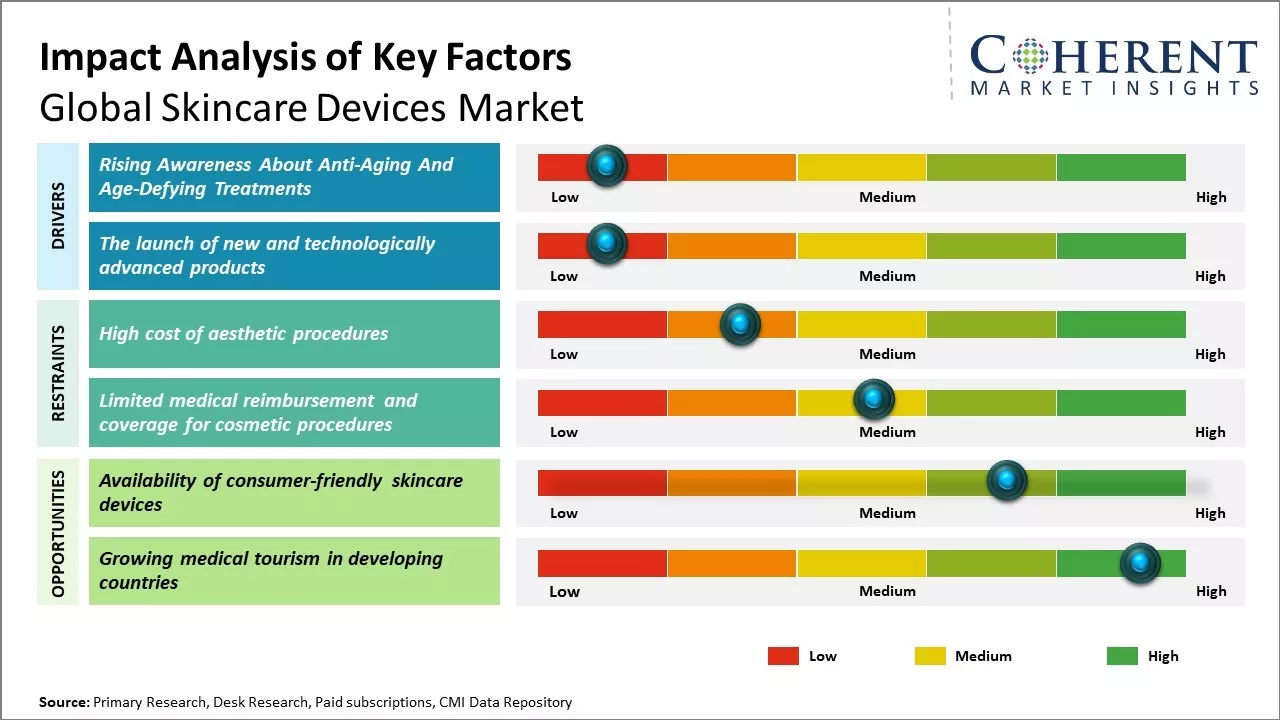
Key Takeaways of the Global Skincare Devices Market
- By product type, the treatment segment is expected to lead the skincare devices market, accounting for an 81.6% market share in 2026.
- By application, the disease diagnosis/treatment segment is projected to account for the largest market share, at 31.10%, in 2026.
- By end user, the dermatology clinics segment is anticipated to hold the largest market share of 29.7% in 2026.
- By region, North America is expected to dominate the global skincare devices market, with a market share of 36.8% in 2026.
Market Overview
The skincare devices market is anticipated to grow significantly owing to increasing demand for cutting-edge treatment options for skin issues like acne, pigmentation, and aging. Increasing consumer preference for minimally invasive and non-invasive cosmetic treatments is likely to provide potential market opportunities for players.
In addition, the heightened awareness about individual aesthetics, increased speed in the development of skincare technology, and wider access to dermatological treatment are some of the most influential drivers propelling the market forward. The advent of smart, intuitive, and compact skincare devices will continue to contribute to the skincare devices market growth through 2032.
However, high expenses related to sophisticated skincare devices, regulatory challenges, and limited availability in emerging markets still hamper mass adoption. Still, growing uses in disease diagnosis, home skincare therapy, and rising investments in aesthetic treatments are expected to create new opportunities for the market growth.
Current Events and Their Impact on the Skincare Devices Market
Current Events | Description and its impact |
Advancements in Smart Skincare Technology
|
|
Shift Toward Preventive Skin Health Management
|
|
Market Trends
- Rising Awareness about Anti-aging and Age-defying Treatments
The skincare devices market is witnessing rapid growth, mainly due to rising awareness about age-defying and anti-aging treatments. Consumers, especially aged people, are realizing more than ever before the importance of having smooth, healthy-looking skin. There is growing resistance to embracing the noticeable effects of aging—like wrinkles, fine lines, dark spots, and saggy skin—which is driving demand for treatments and equipment that effectively remove them.
Improved disposable incomes have further enabled consumers to invest in high-end skincare devices that help maintain a youthful look. Moreover, aggressive marketing campaigns conducted by top brands and the power of social media—where before-and-after photos of different treatments are showcased visibly—have made consumers aware of the solutions available, bolstering demand.
Increasing vanity culture and increasing focus on how one appears, fueled by the rampant use of mobile phone cameras and video chats, has resulted in people paying closer attention to the way they look, pushing anti-aging skin care technologies ever more into demand. Skin products that help boost collagen synthesis and tighten the skin are highly desirable to cater to these new demands for looks.
Reflecting this powerful market momentum, in September 2024, ArchiMed, a private equity firm that focuses on the healthcare sector, purchased Jeisys Medical—a South Korea-based energy-based medical aesthetic devices manufacturer—for USD 742 million. This purchase fits ArchiMed's strategic investment focus on the exploding aesthetic healthcare industry and highlights the growing consumer interest in innovative anti-aging and aesthetic therapies.
- Rising Launch of New and Technologically Advanced Products
Global skincare devices market growth is driven by the continual launch of innovative and technologically advanced products. There is a growing demand for multi-functional skincare devices that can address various skin concerns through personalized solutions. Manufacturers are investing heavily in R&D to develop smart and connected devices integrated with artificial intelligence, skin analytics, and therapeutic technologies.
In June 2022, Cynosure, a company that develops and manufactures lasers for medical and aesthetic treatment application, introduced the Elite iQ platform in the U.S., Europe, and Australia. Featuring patented Skintel technology, this platform provides personalized laser hair removal and skin revitalization treatments. These innovations are expected to attract new customers to skincare services and drive the market growth.
Market Opportunity: Availability of Consumer-friendly Skincare Devices
Global skincare devices market growth is driven by the rising availability of consumer-friendly devices. Traditionally, skincare devices were quite technical, large, and expensive, restricting their usage to professional salons and dermatologists. However, modern technology has enabled manufacturers to develop compact, easy-to-use, and affordable skincare devices for personal home use. Brands are launching skin care appliances which perform multiple functions with just one or two buttons. This has made complicated beauty routines convenient for everyday use.
For example, modern ultrasound skin lifting devices, micro-current facial toning tools, and anti-aging LED masks are quite similar to everyday electronic items like shavers in their ease of use. These offer salon-like treatments with just simple on/off switches and minimal learning curves. This has boosted accessibility enormously. Furthermore, skincare devices industry is recognizing changing consumer preferences for multi-functional gadgets and personalized care. New products allow customizing the treatment based on skin type, concern, and desired result. Devices also offer connected capabilities and integration with wellness apps to track progress. This provides users more control over their regimes and engaging them further.
- Current Industry Events of 2026
- Market Size Estimation
- Regional Breakdown
- Competitive Landscape
- Customer Intelligence
- Segmental Analysis
- Pricing Analysis
- Key Market Drivers, Challenges & Future Trends
- Customized Insights Section
Segmental Insights
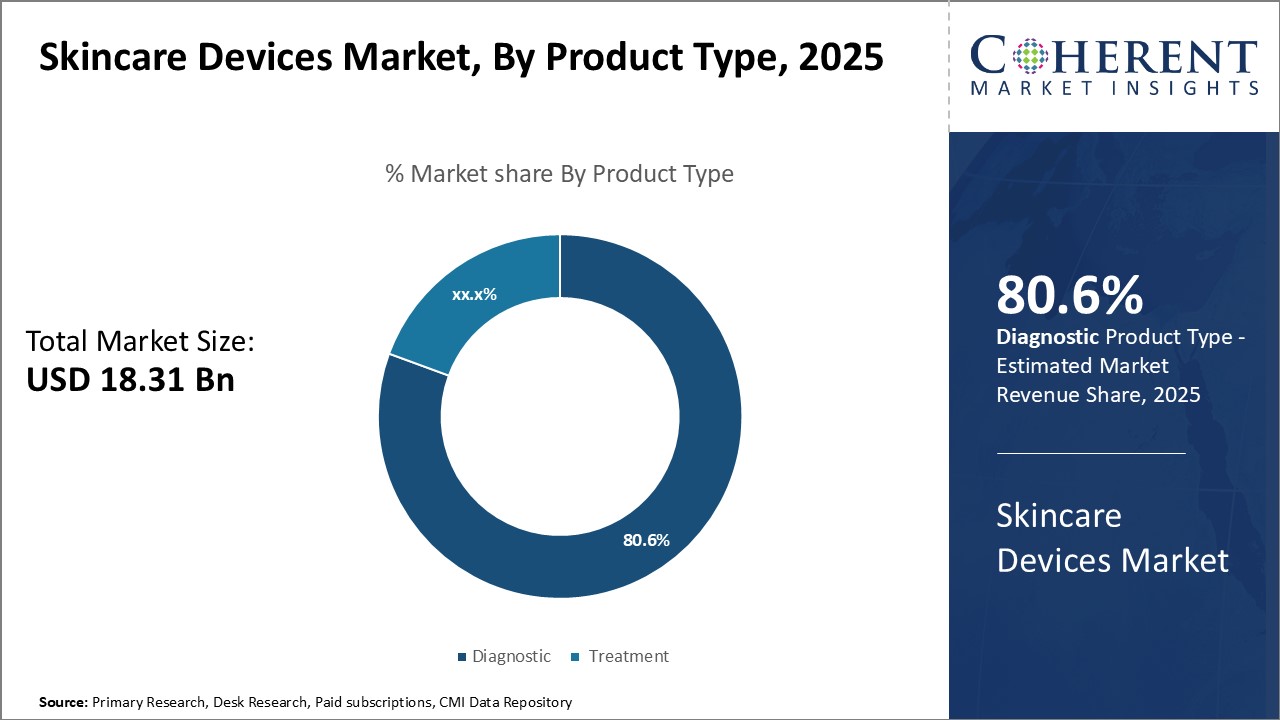
Global Skincare Devices Market Insights, By Product Type: Growth Driven by Advancements in Laser and Light-Based Therapies
In terms of product type, the treatment segment is estimated to contribute the highest market share of 81.6% in 2026, owing to continuous innovations and advancements in treatment technologies. A wide range of treatment devices are available that address an ever-growing set of skin conditions in a highly effective yet minimally invasive manner. Treatment devices such as laser and light therapy systems have revolutionized the treatment of various skin issues like acne, wrinkles, scars, pigmentation and others. These technologies work by emitting specific wavelengths of light that target and destroy abnormal cells while preserving healthy skin cells. Continuous improvements in laser and light source technologies have made these treatments highly precise and safe. New laser wavelengths, more focused light beams, adjustable parameters, and integrated cooling systems ensure maximal effectiveness with minimal side effects or downtime. Additional features like fractional modes and variable pulse durations have increased the ability to treat complex conditions.
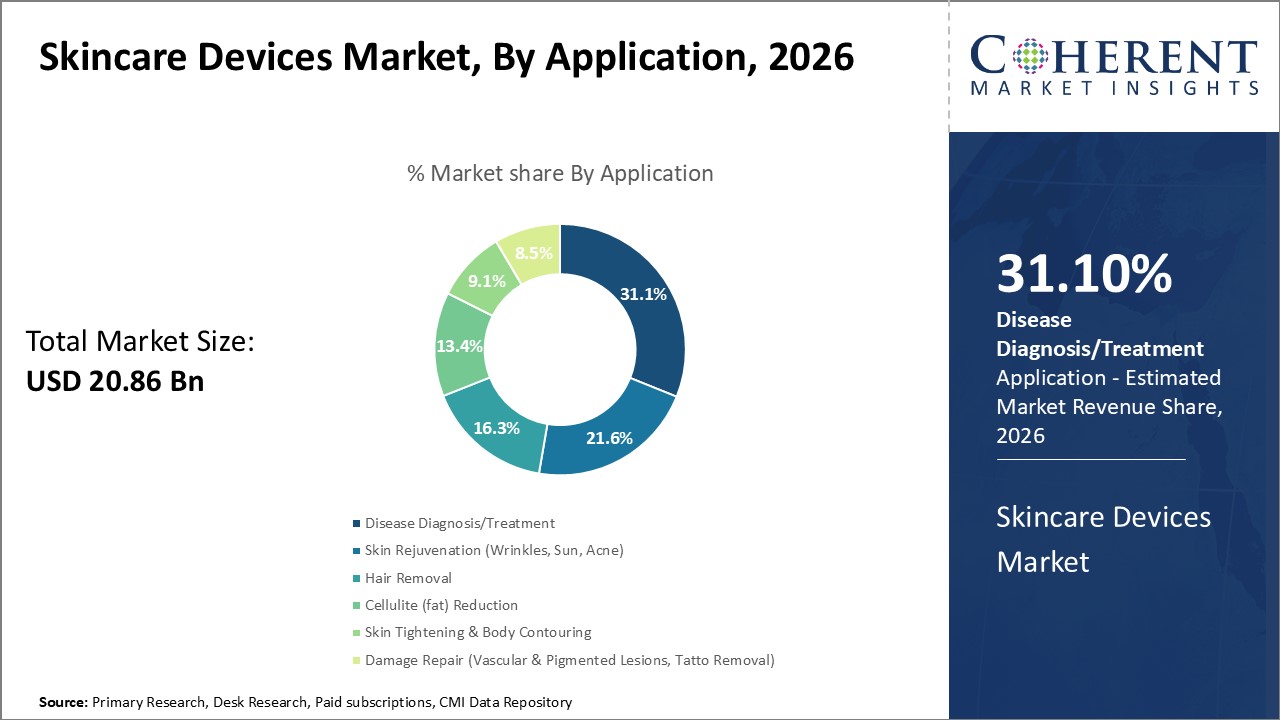
Global Skincare Devices Market Insights, By Application: Dominance Driven by Technological Advancements in Laser and Light-Based Therapies
In terms of application, the disease diagnosis/treatment segment is estimated to contribute the highest market share of 31.10% in 2026, owing to the global disease burden of various skin conditions. Rising prevalence of diseases like acne, psoriasis, skin cancer, eczema, dermatitis, infections, and others requires active diagnostic screening and clinical management. Acne affects over 50 million people in the U.S. every year. Psoriasis afflicts approximately 125 million individuals globally with inflammatory symptoms negatively impacting quality of life.
Skin cancer is one of the most common cancers with over 5.4 million non-melanoma and 132,000 melanoma cases diagnosed annually in the U.S. Managing such a huge disease burden requires extensive diagnostic screening followed by tailored treatment planning. Advanced diagnostic devices like dermatoscopes, magnifying cameras and confocal microscopes enable accurate examination, disease delineation and long-term monitoring. Combined with image archiving and AI analytical tools, these support early detection and timely intervention of diseases.
Treatment devices in the segment like lasers, intense pulsed light systems, RF devices and photodynamic therapy lamps are extensively used to manage a variety of disease symptoms from bacterial/viral lesions to precancerous keratosis to melanoma in-situ. This helps obviate costly, complex surgeries or invasive pharmacologics in many cases.
Global Skincare Devices Market Insights, By End User: Dominance of Dermatology Clinics Driven by Specialized Expertise and Advanced Infrastructure
In terms of end user, the dermatology clinics segment is estimated to contribute the highest market share of 29.7% in 2026, owing to the specialized expertise and customized care environment these provide. Only trained dermatologists and experts possess the required skillsets, experience and qualification to handle the myriads of complex skin conditions.
Clinics are equipped with the latest diagnostic devices, minimally invasive treatment technologies and support staff to ensure accurate evaluation, personalized treatment planning as well as multi-modal therapy involving lasers, phototherapy, injectables, imaging and pharmacology. These also maintain detailed patient records and images allowing long term monitoring, comparative analysis and coordinated chronic disease management.
As clinics exclusively focus on skin, patients are assured of privileged access to deep domain knowledge, state-of-the-art infrastructure and specialized care through every step of diagnosis, multi-modality treatment, follow-up and prevention. Compared to hospitals where dermatology may not be the core focus, clinics can dedicate more resources towards addressing each patient's unique needs.
Emerging Innovations in the Skincare Devices Market
Smart Mirrors and Augmented Reality (AR) Integration
- Application: The integration of smart mirrors with AI and AR technologies enables users to see skincare outcomes, get product suggestions, and monitor skin evolution over time. These devices increase user interaction and offer interactive skincare experiences.
- Example: At CES 2024, Mirroroid Co., Ltd. introduced the Mirart AI Mirror, a smart mirror designed for hair salons. This device utilizes AI and AR to perform detailed scalp analyses, simulate hairstyles and colors, and provide personalized styling recommendations, thereby transforming the traditional salon experience.
LED Light Therapy Devices for At-Home Use
- Application: LED light therapy equipment employs targeted wavelengths of light to address multiple skin issues, including acne, aging, and pigmentation. The equipment provides non-invasive treatments that are easily used at home.
- Example: CurrentBody Skin LED Light Therapy Mask has become more popular for the ability to transform skin texture as well as mitigate the signs of aging. Its use has been promoted by celebrities such as Ms. Kim Kardashian, drawing attention to the influence on beauty routines.
Regional Insights
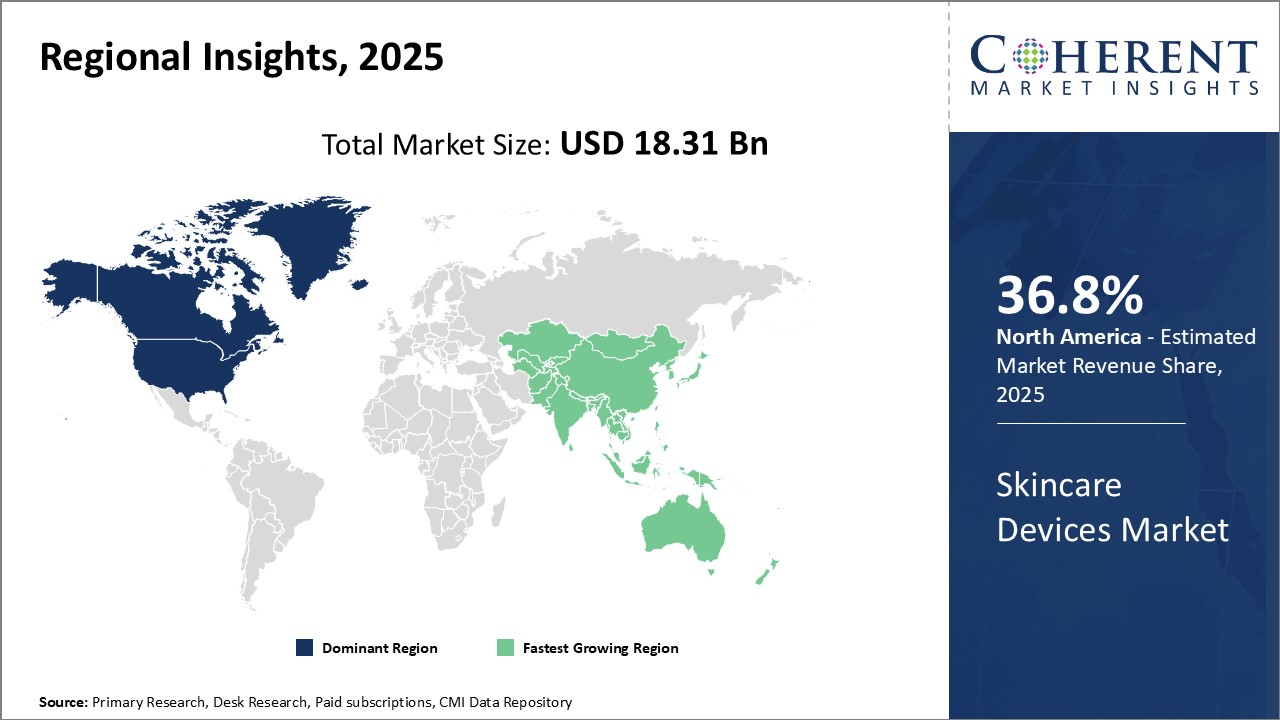
North America Skincare Devices Market Analysis and Trends
North America is the largest market in the world for skincare devices and is estimated to account for 36.8% of the market by the year 2026. Its leadership role is due to the widespread presence of major players like Lumenis, Cynosure, Alma Lasers, and Cutera, who have built extensive distribution and sales channels throughout the U.S. and Canada. These efforts have driven the adoption of skincare devices substantially among both dermatologists and consumers.
The area also sees some of the highest consumer expenditure on personal care products in the world, fueled by a cultural focus on looking young and postponing the visible signs of aging. This has spurred demand for anti-aging devices providing non-surgical treatments like skin rejuvenation, wrinkle elimination, and skin tightening with little or no downtime.
Consistent with technological innovation trends, companies are increasingly introducing intelligent skincare devices. For example, in February 2024, Nu Skin Enterprises introduced Nu Skin RenuSpa iO, an U.S. FDA-approved microcurrent body device that pairs with an app to provide real-time treatment information, mirroring consumers' increasing demand for personalized, connected skincare products.
Asia Pacific Skincare Devices Market Analysis and Trends
The Asia Pacific skincare devices market is growing at a fast pace due to growing consumer awareness, advancements in technology, and an emerging need for non-invasive aesthetic treatments. The countries leading this growth are China, Japan, South Korea, and India. The market in China is particularly driven by millennials who focus on skincare, and Japan's market is aided by an increase in the number of skincare spas and clinics. South Korea, also referred to as the "Beauty Capital," is still developing new skincare technology, while India is positioned to be the fastest-growing market because of its high population of young people and rising awareness of personal care.
Innovations in technology are transforming the market landscape. Incorporation of artificial intelligence (AI), augmented reality (AR), and the Internet of Things (IoT) into skincare devices is making personalization and effectiveness better. For example, AI-based skincare recommendation systems are being created to offer personalized skin care routines based on personal analysis of the skin.
The trend of K-Beauty and J-Beauty is also gaining momentum among consumers, with emphasis on multi-step care routines and the incorporation of novel ingredients and devices. Skincare devices available for use at home, including LED masks and microcurrent devices, are picking up pace due to their ease of use and efficiency.
U.S. Skincare Devices Market Analysis and Trends
The U.S. skincare devices market is growing steadily with increasing focus on personalized skincare solutions, mounting consumer demand for non-invasive procedures, and growing technological capabilities. Some of the most critical drivers for the growth include a growing incidence of skin disorders, an aging population in search of anti-aging solutions, and social media spreading aesthetic awareness. Consumers are increasingly spending money on in-home skincare devices that provide professional-level results, including LED therapy masks, microdermabrasion devices, and radiofrequency devices.
Technological advancements are leading the way in this market growth. Firms are incorporating artificial intelligence (AI) and the Internet of Things (IoT) into skin care devices to deliver customized treatments and instant feedback. For example, AI-driven devices can diagnose skin conditions and suggest customized skincare regimens, boosting user engagement and treatment effectiveness.
The U.S. skincare devices market also has a good penetration of key players in the industry, such as Lumenis, Cynosure, Alma Lasers, and Cutera, that keep innovating and developing more products. They are spending money on research and development to bring sophisticated devices to the market to treat a broad set of skin conditions, from treating acne to tightening the skin.
Pricing Analysis
- At-Home Consumer Skincare Devices
- The at-home skincare device segment has witnessed significant growth, offering consumers professional-grade treatments within the comfort of their homes.
- LED Therapy Masks: These devices, designed to improve skin texture and reduce signs of aging, are priced between USD 269.99 and USD 3,400. For instance, Shark's LED mask is available at USD 269.99, while Dior offers a premium model at USD 3,400.
- Professional Skincare Devices
- Professional-grade devices used in dermatology clinics and medical spas are more advanced and come at a higher price point.
- Laser Systems: Devices for skin resurfacing and hair removal are priced between USD 10,000 and USD 75,000, based on technology and capabilities.
- Microdermabrasion Machines: Professional microdermabrasion equipment ranges from USD 2,500 to USD 10,000, depending on features and brand.
- Radiofrequency (RF) Devices: Used for skin tightening, RF devices can cost between US$ 5,000 and US$ 50,000, influenced by the device's versatility and manufacturer.
- Consumables and Replacements
- LED Mask Components: Replacement LED panels or masks can cost between US$ 50 and US$ 200, depending on the device model.
- Microdermabrasion Tips: Disposable tips for microdermabrasion machines are priced at USD 1 to USD 5 each, with monthly usage varying based on patient volume.
- Maintenance and Calibration
- Professional Device Servicing: Annual maintenance contracts for professional devices can range from USD 500 to USD 2,000, covering calibration and software updates.
- Software Licenses: Devices integrated with software platforms may require annual subscriptions, costing between USD 100 and USD 1,000, depending on features and support levels.
Market Report Scope
Skincare Devices Market Report Coverage
| Report Coverage | Details | ||
|---|---|---|---|
| Base Year: | 2025 | Market Size in 2026: | USD 20.86 Bn |
| Historical Data for: | 2020 To 2024 | Forecast Period: | 2026 To 2033 |
| Forecast Period 2026 to 2033 CAGR: | 13.9% | 2033 Value Projection: | USD 51.87 Bn |
| Geographies covered: |
| ||
| Segments covered: |
| ||
| Companies covered: | Alma Lasers Ltd., Cutera, Inc., Cynosure, Inc., Lumenis Ltd., Syneron Medical Ltd., PhotoMedex, Inc., Valeant Pharmaceuticals International, Inc., ZELTIQ Aesthetics, Inc., Merz Pharma GmbH & Co. KGaA, Galderma S.A., Candela Corporation, Solta Medical, TRIA Beauty Inc., Koninklijke Philips N.V., Panasonic Corporation, Nu Skin Enterprises, Michelson Diagnostics Ltd., and Lutronic Corporation | ||
| Growth Drivers: |
| ||
| Restraints & Challenges: |
| ||
Skincare Devices Industry News
- In February 2025, Alkem Laboratories, a leading India-based pharmaceutical company, announced two strategic acquisitions to further cement its position in the domestic market. Alkem has signed a binding term sheet to acquire 100% stake of Adroit Biomed, a pharmaceutical company with focus on skincare segment, for around USD 16.8 million Also, Alkem’s subsidiary Alkem MedTech has signed a binding offer to acquire 100% stake of Bombay Ortho Industries, a manufacturer of orthopaedic implants, for around USD 17.64 million
Analyst View
- The global skincare devices market growth is being driven by technological advancements like AI-based diagnostics, smart mirrors, and consumer-friendly home-use devices. The growing demand for non-invasive and customized treatments, along with innovations displayed at major exhibitions like CES 2025, points towards a significant shift towards connected, intelligent skincare solutions. Devices such as L'Oréal's Cell BioPrint and Samsung's MICRO LED Beauty Mirror are transforming consumer expectations, driving the market towards preventive and personalized skincare strategies.
- The market is hindered by factors like high initial investments in professional-grade equipment (between $10,000 and $75,000), regulatory hurdles, and unequal access in emerging markets. Furthermore, the cost of maintenance of professional equipment, in addition to consumables, can constrain broad adoption beyond wealthier consumers and established dermatology clinics. Pricing pressures in home-use categories may also enhance competition and margin squeeze among companies.
- The future of the skincare devices sector is in the convergence of AI, IoT, and individualized skincare analytics. Players creating sleek, multi-feature, and app-linked devices that provide real-time diagnosis and customized treatment protocols will be best positioned for success. Tele-dermatology platform integrations and skincare-as-a-service models can also enable recurring revenue streams and stickiness.
- As older populations, increasing disposable income, and vanity-fueled consumer behavior fuel demand in North America, Asia-Pacific, and globally, companies that lead the way with technological innovation, affordability, and deep user engagement will define the next decade of skincare device adoption. The development of mature at-home skincare technologies and early-disease diagnostics herald a move away from treatment after the fact toward proactive management of skin health in the next decade.
Market Segmentation
- By Product Type
(Revenue, USD Bn, 2021 - 2033)- Diagnostic
- Treatment
- By Application
(Revenue, USD Bn, 2021 - 2033)- Disease Diagnosis/Treatment
- Skin Rejuvenation (Wrinkles, Sun, Acne)
- Hair Removal
- Cellulite (fat) Reduction
- Skin Tightening & Body Contouring
- Damage Repair (Vascular & Pigmented Lesions, Tattoo Removal)
- By Region (Revenue, USD Bn, 2021 - 2033)
- North America
- U.S.
- Canada
- Latin America
- Brazil
- Argentina
- Mexico
- Rest of Latin America
- Europe
- Germany
- U.K.
- Spain
- France
- Italy
- Russia
- Rest of Europe
- Asia Pacific
- China
- India
- Japan
- Australia
- South Korea
- ASEAN
- Rest of Asia Pacific
- Middle East
- GCC Countries
- Israel
- Rest of Middle East
- Africa
- South Africa
- North Africa
- Central Africa
- North America
- Company Profiles
- Alma Lasers Ltd.
- Cutera, Inc.
- Cynosure, Inc.
- Lumenis Ltd.
- Syneron Medical Ltd.
- PhotoMedex, Inc.
- Valeant Pharmaceuticals International, Inc.
- ZELTIQ Aesthetics, Inc.
- Merz Pharma GmbH & Co. KGaA
- Galderma S.A.
- Candela Corporation
- Solta Medical
- TRIA Beauty Inc.
- Koninklijke Philips N.V.
- Panasonic Corporation
- Nu Skin Enterprises
- Michelson Diagnostics Ltd.
- Lutronic Corporation
Sources
Stakeholders
- Skincare Device Manufacturers (e.g., Lumenis, Cynosure, Cutera)
- Dermatologists and Aesthetic Practitioners
- Dermatology Clinics and Medical Spas
- Consumer Electronics Companies (e.g., Samsung, LG)
- Home-use Beauty Device Brands (e.g., Foreo, Nu Skin, CurrentBody)
- AI and IoT Integration Tech Developers
- Cosmetic Dermatology Researchers
- Beauty and Personal Care Product Distributors
- Regulatory Bodies (e.g., FDA, EMA)
- Digital Health and Wellness App Developers
Databases
- World Health Organization (WHO) Skin Disease Reports
- National Center for Biotechnology Information (NCBI)
Magazines
- Dermatology Times
- Aesthetic Medicine Magazine
- Allure (Tech in Beauty Section)
- Vogue Business (Beauty Tech and Innovation)
- Beauty Packaging
- MedEsthetics
- Skin Inc.
- BeautyMatter
Journals
- Journal of Cosmetic and Laser Therapy
- Lasers in Medical Science
- Journal of Dermatological Treatment
- Dermatologic Surgery
- Skin Research and Technology
- International Journal of Dermatology
- Journal of the American Academy of Dermatology
- Journal of Clinical and Aesthetic Dermatology
Newspapers
- The New York Times (Style and Wellness Section)
- Financial Times (Healthcare Innovation Section)
- The Guardian (Lifestyle and Beauty Tech)
- Bloomberg (Consumer Health and Beauty Tech)
- Reuters (Health & Personal Care Devices)
Associations
- American Academy of Dermatology (AAD)
- International Society of Aesthetic Plastic Surgery (ISAPS)
- American Society for Laser Medicine and Surgery (ASLMS)
- The Aesthetic Society (ASAPS)
- Global Beauty and Wellness Association (GBWA)
- International Dermoscopy Society (IDS)
- U.S. Food & Drug Administration (FDA) – Medical Devices
- European Medicines Agency (EMA) – Medical Device Regulations
- World Health Organization (WHO) – Global Skin Disease Burden
- National Institutes of Health (NIH) – Skin Health Research
- Centers for Disease Control and Prevention (CDC) – Skin Disease Data
- OECD Health Data (Cosmetic Device Trends)
- United Nations Population Division – Aging and Demographics Reports
Proprietary Elements
- CMI Data Analytics Tool and Repository
- Proprietary CMI Existing Repository of Information for Last 8 Years
Get access to 250+ pages report
Every segment, forecast, competitor profile and data table behind the analysis above — available for instant download.
- ESOMAR Member
- ISO 9001:2015 Certified
- D-U-N-S Registered
- GDPR & CCPA Compliant
Missing comfort of reading report in your local language? Find your preferred language:
Transform your Strategy with Exclusive Trending Reports
Frequently Asked Questions
The Skincare Devices Market is estimated to be valued at USD 20.86 Bn in 2026, and is expected to reach USD 51.87 Bn by 2033.
The CAGR of the Skincare Devices Market is projected to be 13.9% from 2026 to 2033.
Rising awareness about anti-aging and age-defying treatments and the launch of new and technologically advanced products are the major factors driving the growth of global skincare devices market.
High cost of aesthetic procedures and limited medical reimbursement and coverage for cosmetic procedures are the major factors hampering the growth of global skincare devices market.
In terms of product type, diagnostic segment is estimated to dominate the market in 2026.
Alma Lasers Ltd., Cutera, Inc., Cynosure, Inc., Lumenis Ltd., Syneron Medical Ltd., PhotoMedex, Inc., Valeant Pharmaceuticals International, Inc., ZELTIQ Aesthetics, Inc., Merz Pharma GmbH & Co. KGaA, Galderma S.A., Candela Corporation, Solta Medical, TRIA Beauty Inc., Koninklijke Philips N.V., Panasonic Corporation, Nu Skin Enterprises, Michelson Diagnostics Ltd., Lutronic Corporation are the major players.
North America is expected to lead the global skincare devices market.