

Atherectomy Devices Market Size and Forecast: 2026-2033
The Atherectomy Devices Market is anticipated to grow at a CAGR of 7.1% with USD 18.6 Bn share in 2026 and is expected to reach USD 27.9 Bn in 2033. Rising prevalence of cardiovascular diseases, increasing cases of peripheral artery disease, and growing demand for minimally invasive procedures are driving the growth of the atherectomy devices market. Peripheral arterial disease (PAD), a common form of systemic atherosclerosis, affects more than 200 million people globally.
Key Takeaways
- Directional Atherectomy Devices hold the largest market share of 42.2% in 2026 owing to the rising prevalence of peripheral artery disease (PAD) and coronary artery disease (CAD). In 2023, roughly one in six cardiovascular disease (CVD) deaths occurred in adults under 65.
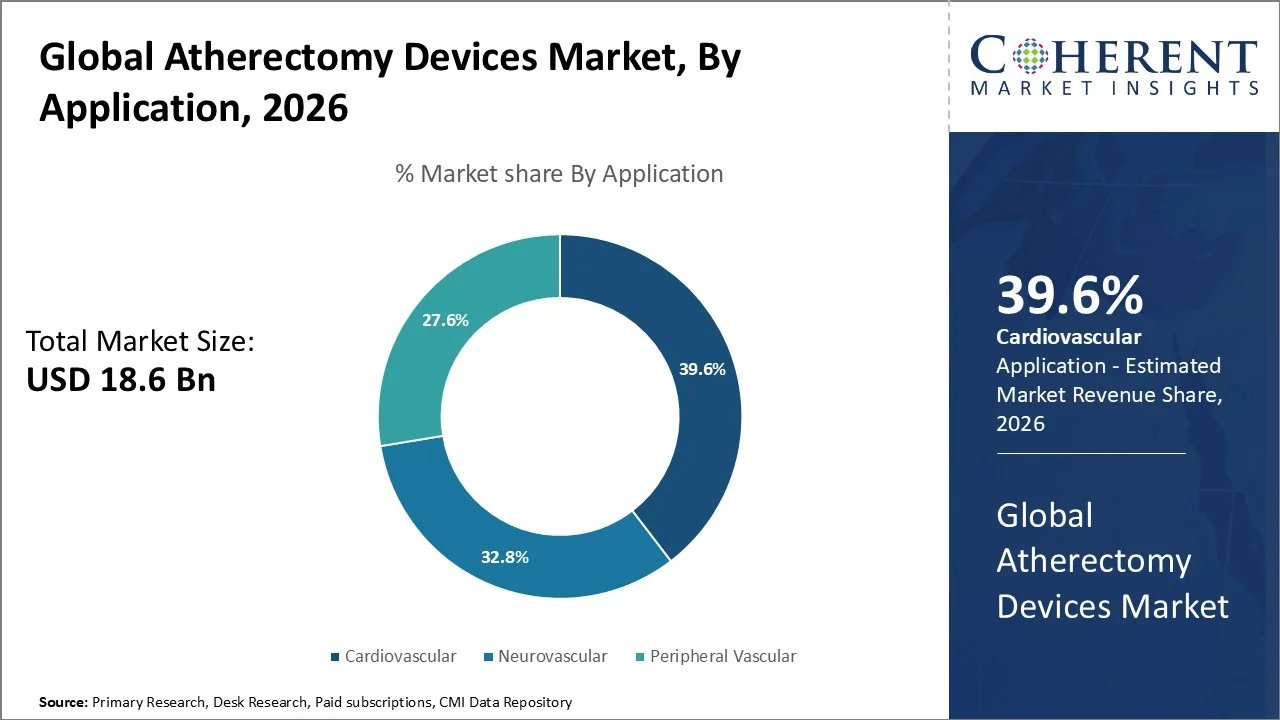
- Cardiovascular expected to hold the largest market share of 39.6% in 2026 owing to its growing burden of calcified coronary lesions.
- Hospitals acquired the prominent market share of 42.2% in 2026 owing to the availability of advanced surgical and diagnostic infrastructure.
- North America is expected to acquire the dominant share of 39.20% in 2026 owing to its high prevalence of cardiovascular and peripheral artery diseases. In the U.S., a heart attack occurs every 40 seconds.
Current Events and Their Impact on the Atherectomy Devices Market
Current Event | Description and its Impact |
U.S. FDA Class I Recall for Rotarex Atherectomy System |
|
CMS Final LCD for Endovascular Management of PAD |
|
Segmental Insights
- Current Industry Events of 2026
- Market Size Estimation
- Regional Breakdown
- Competitive Landscape
- Customer Intelligence
- Segmental Analysis
- Pricing Analysis
- Key Market Drivers, Challenges & Future Trends
- Customized Insights Section
Cardiovascular expected to hold the largest market share
Cardiovascular expected to hold the largest market share of 39.6% in 2026 owing to its Technological advancements in atherectomy systems. Rising cases of coronary artery disease, peripheral artery disease, and other cardiovascular disorders drive the cardiovascular segment in the atherectomy devices market. Healthcare providers increasingly adopt minimally invasive procedures and seek effective treatments for calcified and complex arterial lesions, which supports market growth. Manufacturers develop directional, rotational, orbital, and laser atherectomy devices that enhance procedural precision and improve patient outcomes. In addition, the growing geriatric population, rising percutaneous coronary interventions, and expanding advanced cardiac care facilities further boost demand. In March 2025, Shockwave Medical, a Johnson & Johnson MedTech company, launched the Javelin Peripheral IVL Catheter to target calcium in severely narrowed blood vessels among patients with peripheral artery disease (PAD) and chronic limb-threatening ischemia (CLTI).
Why is Directional Atherectomy Devices Acquiring the Largest Market Share?
Directional Atherectomy Devices hold the largest market share of 42.2% in 2026. The increasing prevalence of peripheral artery disease and coronary artery disease, especially among aging and diabetic populations, drives demand for directional atherectomy devices in the atherectomy devices market. Healthcare providers increasingly adopt minimally invasive vascular procedures to treat calcified and complex arterial lesions effectively. Manufacturers continue to develop advanced technologies that improve precision, plaque removal efficiency, and procedural safety, further boosting adoption. In addition, physicians increasingly use combination therapies with drug-coated balloons, while the expansion of advanced vascular treatment centers continues to support market growth. For instance, Medtronic launched the HawkOne directional atherectomy device to treat severely calcified lesions in the blood vessels of the lower extremities
Which End User segment dominates the market?
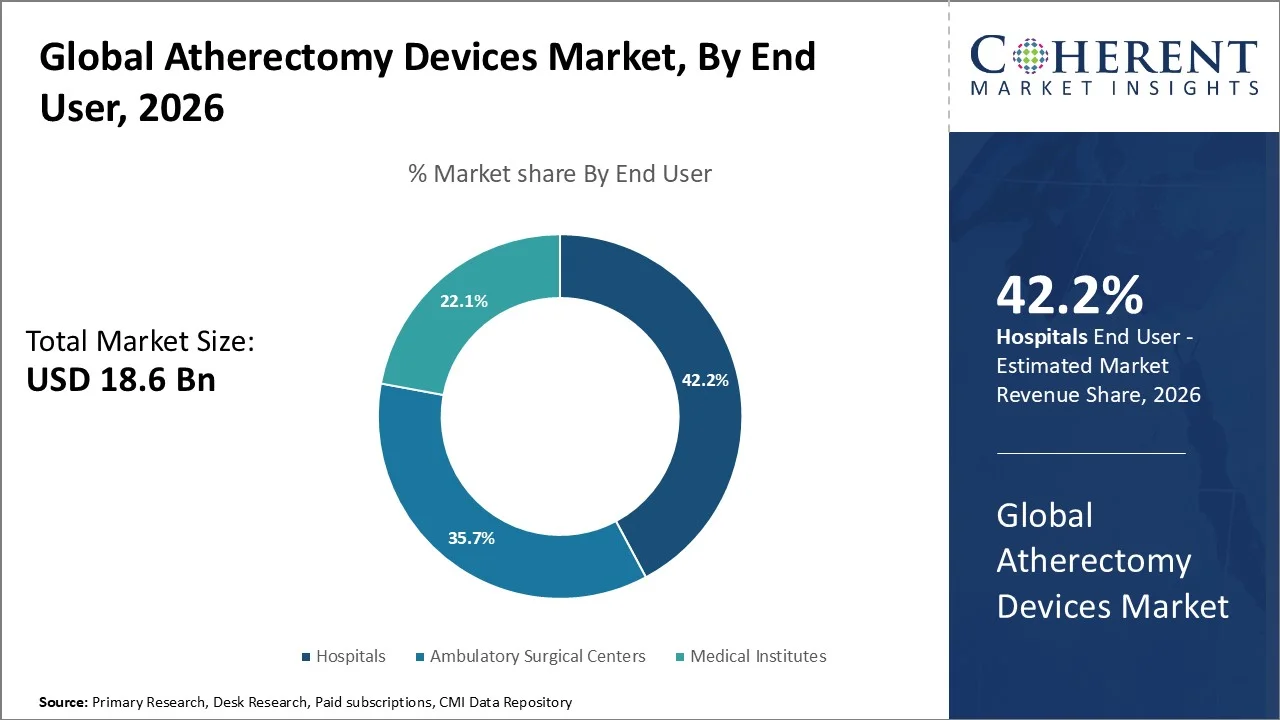 Hospitals acquired the prominent market share of 42.2% in 2026. Hospitals drive the atherectomy devices market as they perform increasing volumes of cardiovascular and peripheral vascular procedures that require advanced plaque removal technologies. Healthcare providers in hospitals actively adopt minimally invasive techniques to enhance patient outcomes and shorten recovery time. Hospitals utilize skilled specialists, advanced catheterization laboratories, and hybrid operating rooms to support atherectomy procedures. In addition, rising cases of complex and high-risk vascular diseases, expanding hospital infrastructure, and improved reimbursement coverage further strengthen device adoption in hospital settings.
Atherectomy Devices Market Trends
- Rising demand for minimally invasive vascular procedures: Over 3.2 million peripheral artery disease (PAD) interventions are performed annually worldwide, with atherectomy used in nearly 28 % of cases, enhancing patient safety, reducing hospital stays, and supporting faster recovery.
- Expanding use of intravascular imaging technologies: Intravascular ultrasound (IVUS) and optical coherence tomography (OCT) are used in 11.7 % of peripheral vascular interventions, enabling precise lesion assessment and better procedural outcomes.
- Growing prevalence of cardiovascular and peripheral artery diseases: PAD affects over 230 million people globally, with diabetic and elderly populations showing higher incidence, increasing demand for advanced plaque removal solutions.
Regional Insights
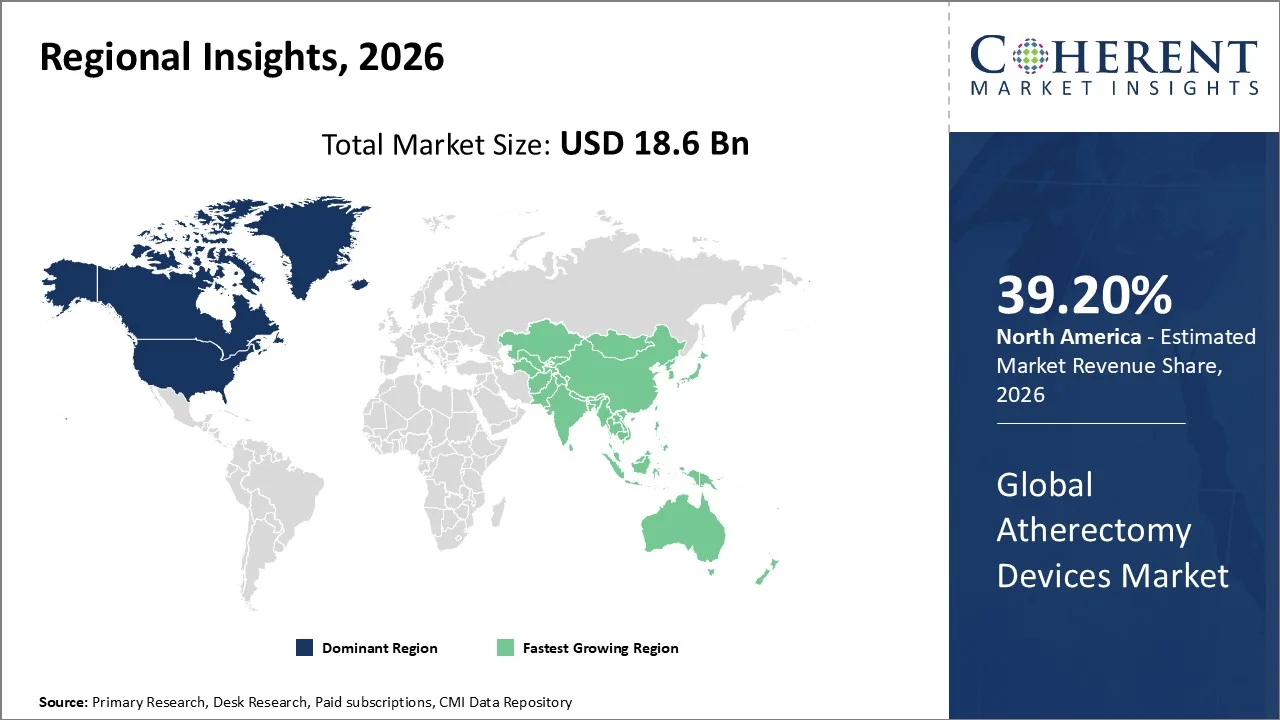
North America dominates owing to Technological advancements and early adoption of innovative devices
North America is expected to acquire the dominant share of 39.20% in 2026. North America drives the atherectomy devices market because of the high prevalence of cardiovascular and peripheral artery diseases, especially among aging and diabetic populations. Healthcare providers across the region actively adopt minimally invasive vascular procedures to enhance patient outcomes and shorten recovery time. Hospitals and clinics rely on advanced infrastructure, widely available catheterization laboratories, and skilled interventional specialists to perform atherectomy procedures. In addition, leading medical device companies operate strongly in the region, while favorable reimbursement policies, rising procedure volumes, and rapid technological adoption further strengthen market growth. For instance, Philips performed the first U.S. treatment using its new laser device that combines two PAD procedures, at the Cardiovascular Institute of the South, treating a 78-year-old male and marking a key advancement in PAD care.
Asia Pacific Atherectomy Devices Market Trends
Rising cases of peripheral artery disease and coronary artery disease in Asia Pacific, driven by an aging population along with growing diabetes and obesity rates, strongly propel the atherectomy devices market. Healthcare providers increasingly prefer minimally invasive procedures, while expanding hospital infrastructure and better access to advanced cardiovascular care further boost demand. Higher healthcare spending, improved awareness of early diagnosis, a growing pool of skilled interventional cardiologists, and ongoing technological advancements in atherectomy devices actively support market growth across the region.
United States Atherectomy Devices Market Trends
Rising cases of peripheral artery disease, diabetes, and obesity drive demand for atherectomy devices in the United States by increasing vascular complications that require treatment. Over 40 million Americans, about 12 % of the population, have diabetes. An aging population increases the need for minimally invasive endovascular procedures. Technological advancements enhance precision and safety in atherectomy systems and encourage clinical adoption. Physicians increasingly prefer outpatient settings due to faster recovery outcomes. A strong healthcare infrastructure, supportive reimbursement policies, and growing physician awareness further strengthen procedural adoption and market expansion. For instance, Straub Medical, through its U.S. subsidiary Straub Medical (United States), launched the Rotarex S atherectomy device and performed its first intervention for treating occlusive peripheral vascular disease (OPVD).
China Atherectomy Devices Market Trends
Rising cardiovascular disease cases are driving China’s atherectomy devices market, while healthcare providers increasingly prefer minimally invasive procedures. Expanding hospital infrastructure supports broader treatment adoption. An aging population and growing awareness of peripheral artery disease are boosting demand for advanced vascular care. The government actively invests in healthcare modernization and accelerates medical device approvals to promote innovation. Domestic manufacturers and global collaborations improve technology access. Enhanced diagnostics and better treatment reach in urban and tier-two cities further strengthen market growth.
Who are the Major Companies in Atherectomy Devices Industry
Some of the major key players in Atherectomy Devices are Medtronic plc, Koninklijke Philips N.V., Cardiovascular Systems, Inc., Boston Scientific Corporation, Avinger, Inc, C. R. Bard, Inc, Cardinal Health, Inc., Minnetronix, Inc., Straub Medical AG, and Biotronik.
Key News
- In January 2024, AngioDynamics announced that the U.S. FDA cleared the Auryon XL catheter for use with its Auryon atherectomy system to treat peripheral arterial disease (PAD), noting that radial access reduces major bleeding and access-site complications versus femoral access.
Market Report Scope
Atherectomy Devices Market Report Coverage
| Report Coverage | Details | ||
|---|---|---|---|
| Base Year: | 2025 | Market Size in 2026: | USD 18.6 Bn |
| Historical Data for: | 2020 To 2024 | Forecast Period: | 2026 To 2033 |
| Forecast Period 2026 to 2033 CAGR: | 7.1% | 2033 Value Projection: | USD 27.9 Bn |
| Geographies covered: |
| ||
| Segments covered: |
| ||
| Companies covered: | Medtronic plc, Koninklijke Philips N.V., Cardiovascular Systems, Inc., Boston Scientific Corporation, Avinger, Inc, C. R. Bard, Inc, Cardinal Health, Inc., Minnetronix, Inc., Straub Medical AG, and Biotronik. | ||
Analyst Opinion
- Atherectomy device demand is fundamentally driven by the heavy and rising burden of peripheral artery disease (PAD) rather than procedural preference alone. Clinical evidence indicates that PAD affects over 200 million people globally, with a significant proportion remaining undiagnosed until critical limb ischemia develops, forcing interventional treatment rather than elective care.
- Atherectomy is increasingly positioned as a lesion-modification strategy in complex calcified arterial disease, where conventional angioplasty shows limitations. Real-world registry data suggests that calcified lesions are present in nearly half of femoropopliteal interventions, making atherectomy devices a practical necessity rather than an optional upgrade in endovascular procedures.
- Directional and orbital atherectomy systems are gaining procedural preference in high-risk cardiovascular patients, particularly those with diabetes-related vascular calcification. Clinical studies in heavily calcified lesions report procedural success rates consistently above 90% when atherectomy is used as an adjunct before drug-coated balloon or stent placement, reinforcing its role in improving vessel preparation quality and long-term patency outcomes.
Speak to the analyst
Want personalized insights?
Take the findings above to one of our principal consultants, or have the report rebuilt around the segments, geographies and competitors you actually track.
Market Segmentation
- By Device Type (Revenue, USD Bn, 2021-2033)
- Directional Atherectomy Devices
- Rotational Atherectomy Devices
- Orbital Atherectomy Devices
- Laser Atherectomy Devices
- By Application (Revenue, USD Bn, 2021-2033)
- Cardiovascular
- Neurovascular
- Peripheral Vascular
- By End User (Revenue, USD Bn, 2021-2033)
- Hospitals
- Ambulatory Surgical Centers
- Medical Institutes
- By Region: (Revenue, USD Bn, 2021-2033)
- North America
- U.S.
- Canada
- Latin America
- Brazil
- Mexico
- Argentina
- Rest of Latin America
- Europe
- Germany
- U.K.
- France
- Italy
- Spain
- Russia
- Rest of Europe
- Asia Pacific
- China
- India
- Japan
- Australia
- South Korea
- ASEAN
- Rest of Asia Pacific
- Middle East
- GCC
- Israel
- Rest of Middle East
- Africa
- South Africa
- Central Africa
- North Africa
- North America
- Key Players
- Medtronic plc
- Koninklijke Philips N.V.
- Cardiovascular Systems, Inc
- Boston Scientific Corporation
- Avinger, Inc
- R. Bard, Inc
- Cardinal Health, Inc.
- Minnetronix, Inc.
- Straub Medical AG
- Biotronik
Sources
Primary Research Interviews
- Product Managers and Business Development Heads from atherectomy device manufacturers
- Interventional Cardiologists and Vascular Surgeons
- Procurement Managers from hospitals and ambulatory surgical centers
- Distributors and channel partners operating in cardiovascular devices
- Clinical research professionals and catheterization laboratory specialists
- Key opinion leaders (KOLs) in peripheral artery disease treatment
- Regulatory and reimbursement experts from the medical device industry
Databases
- PubMed
- ScienceDirect
- ClinicalTrials.gov
- FDA Medical Device Database
- European Medicines Agency (EMA) Database
- U.S. Centers for Medicare & Medicaid Services (CMS)
- WHO Global Health Observatory
- OECD Health Statistics
- UN Comtrade Database
Magazines
- Medical Device and Diagnostic Industry (MD+DI)
- Cardiovascular Business
- Medical Design & Outsourcing
- MedTech Dive
- Cath Lab Digest
- DeviceTalks Magazine
Journals
- Journal of the American College of Cardiology (JACC)
- Circulation
- Journal of Endovascular Therapy
- Catheterization and Cardiovascular Interventions
- Vascular Medicine
- European Heart Journal
- Journal of Vascular Surgery
Newspapers
- The Wall Street Journal
- Financial Times
- The New York Times
- Business Standard
- The Economic Times
- The Guardian
Associations
- American College of Cardiology (ACC)
- Society for Cardiovascular Angiography & Interventions (SCAI)
- American Heart Association (AHA)
- European Society of Cardiology (ESC)
- Cardiovascular Research Foundation (CRF)
- Medical Device Manufacturers Association (MDMA)
- Advanced Medical Technology Association (AdvaMed)
Public Domain Sources
- U.S. Food and Drug Administration (FDA) publications
- World Health Organization (WHO) reports
- Centers for Disease Control and Prevention (CDC) statistics
- National Institutes of Health (NIH) publications
- Government healthcare expenditure reports
- Hospital and healthcare system annual reports
- Company annual reports and investor presentations
- Clinical trial publications and white papers
Proprietary Elements
- CMI Data Analytics Tool
- Proprietary CMI Existing Repository of Information for Last 10 Years
Get access to 250+ pages report
Every segment, forecast, competitor profile and data table behind the analysis above — available for instant download.
- ESOMAR Member
- ISO 9001:2015 Certified
- D-U-N-S Registered
- GDPR & CCPA Compliant
Missing comfort of reading report in your local language? Find your preferred language:
Transform your Strategy with Exclusive Trending Reports
Frequently Asked Questions
The global atherectomy devices market is estimated to surpass USD 27.9 Bn by 2033.
Major players operating in the global atherectomy devices market include Medtronic plc, Koninklijke Philips N.V., Cardiovascular Systems, Inc., Boston Scientific Corporation, Avinger, Inc, C. R. Bard, Inc, Cardinal Health, Inc., Minnetronix, Inc., Straub Medical AG, and Biotronik.
Presence of alternative devices such as balloon angioplastyis one of the major factors that is expected to hamper growth of the market over the forecast period.
Increasing prevalence of cardiovascular diseases (CVDs) is one of the major factors that is expected to propel growth of the market over the forecast period.
The global atherectomy devices market is estimated to exhibit a CAGR of 7.1% over the forecast period.
Among regions, North America is expected to hold dominant position in the atherectomy devices market over the forecast period.