

Global Trauma Care Centers Market Size and Forecast – 2026 to 2033
The Global Trauma Care Centers Market is estimated to be valued at USD 20.21 Bn in 2026 and is expected to reach USD 34.41 Bn by 2033, reflecting a compound annual growth rate (CAGR) of 7.9% from 2026 to 2033.
Key Takeaways of the Trauma Care Centers Market
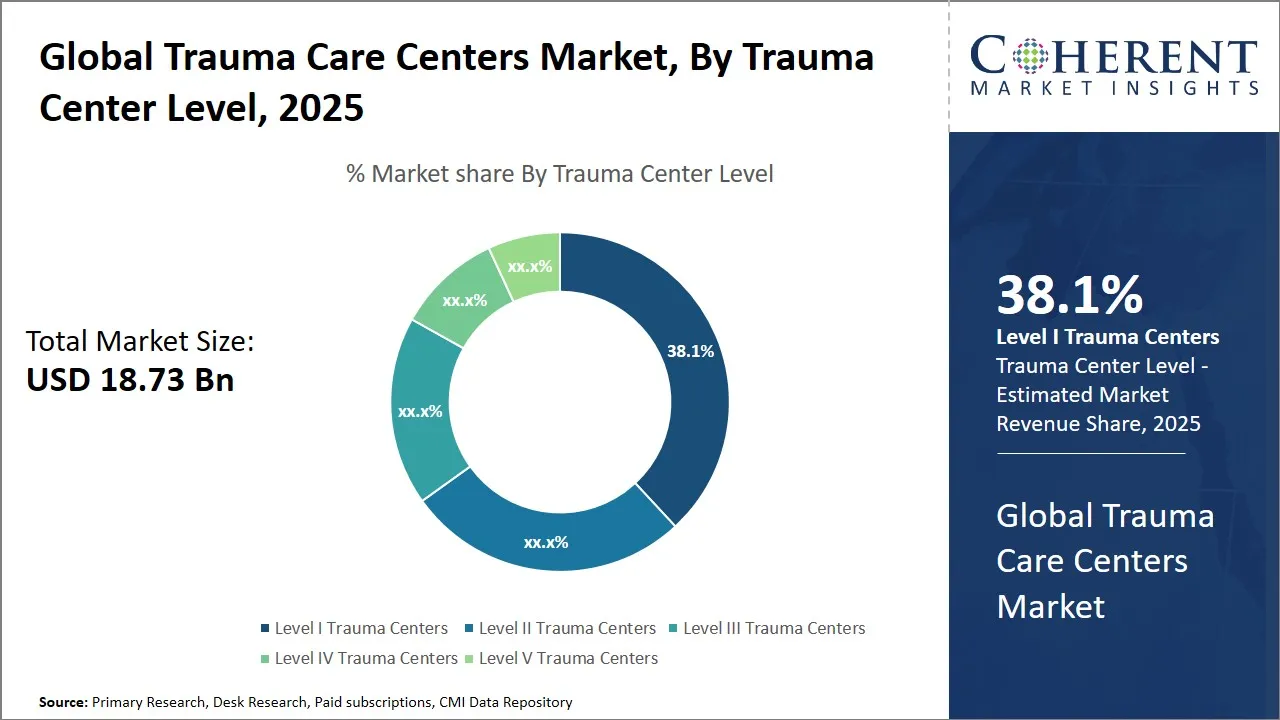
- Level I trauma centers segment is expected to account for the largest share of the trauma care centers market at 39.1 % share in 2026.
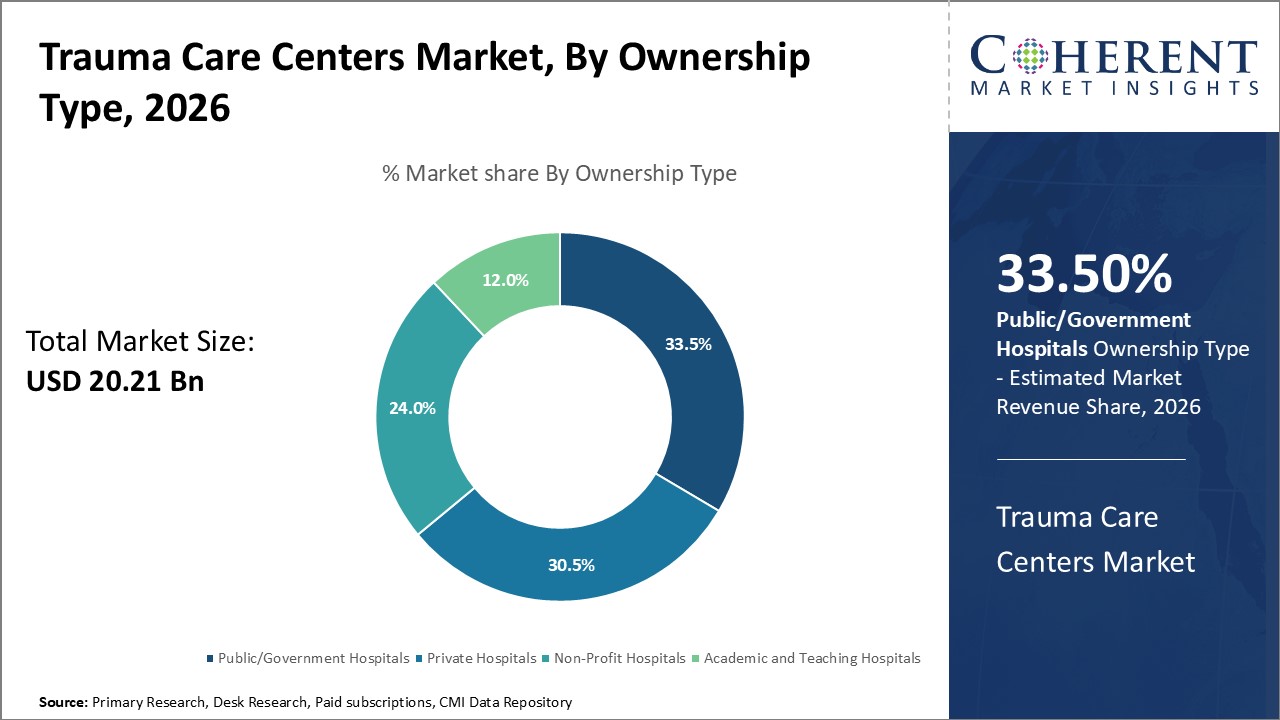
- Public/government hospitals segment is estimated to capture 33.5 % of the market share in 2026.
- Blunt trauma segment is projected to hold 25.2 % of the global trauma care centers market share in 2026.
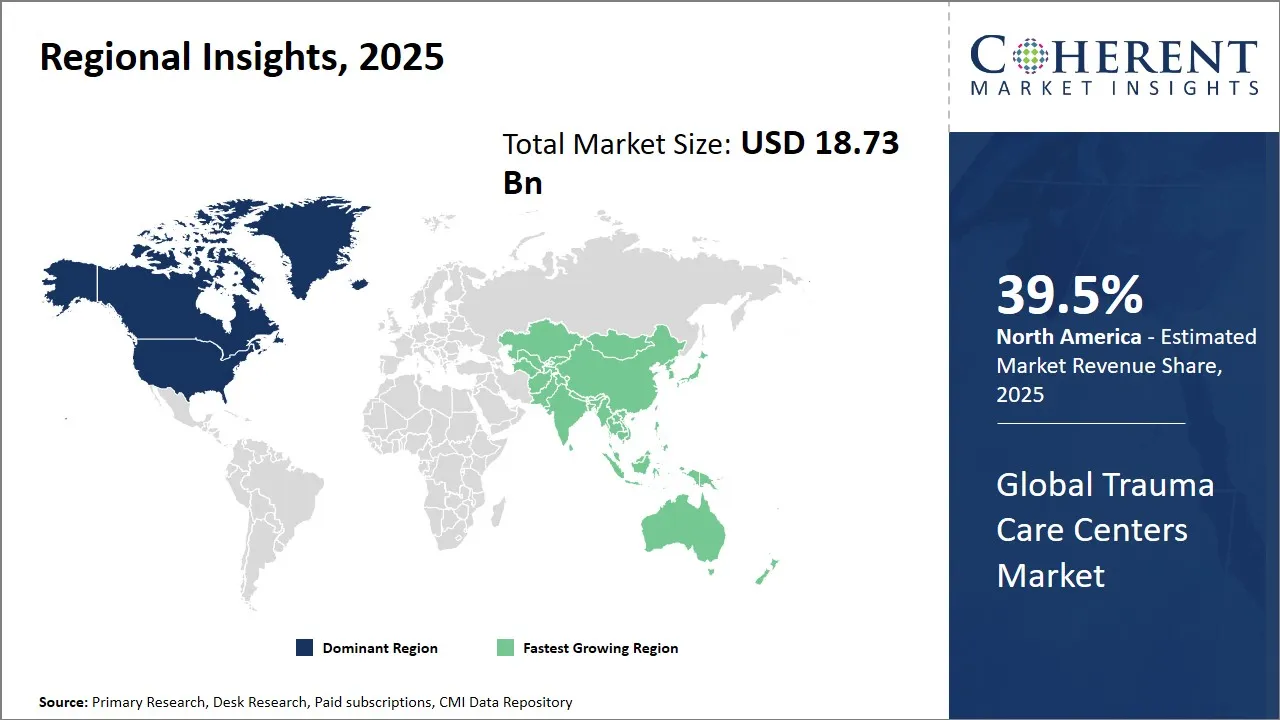
- North America is expected to lead the market, holding a share of 39.5 % in 2026.
- Asia Pacific is anticipated to be the fastest-growing region, with 24.2 % share in 2026.
Market Overview
- Key market trends include the integration of advanced technologies such as telemedicine, AI-powered diagnostics, and minimally invasive surgery that enhance patient treatment efficacy.
- Additionally, growing government initiatives to improve emergency healthcare services and rising awareness about trauma care benefits are boosting market expansion.
- The increasing demand for specialized trauma care centers in urban and rural areas further underscores the market’s robust growth trajectory over the forecast period.
Current Events and Its Impact
Current Events | Description and its Impact |
WHO focus on emergency-unit readiness and mass-casualty clinical training |
|
EU momentum toward simplifying medical device rules |
|
Segmental Insights
- Current Industry Events of 2026
- Market Size Estimation
- Regional Breakdown
- Competitive Landscape
- Customer Intelligence
- Segmental Analysis
- Pricing Analysis
- Key Market Drivers, Challenges & Future Trends
- Customized Insights Section
Why Do Level I Trauma Centers Contribute the Highest Share by Trauma Center Level?
In 2026, the market share of level I trauma centers is expected to hold 39.1% and offers the most extensive care services to patients with critical injury. These facilities have a complete range of specialists and specialized equipment around the clock, which makes it possible to provide multidisciplinary management of complex cases of trauma immediately. The critical factor that propels the dominance of Level I Trauma Centers in the market is their capability to provide both first resuscitation and surgery to rehabilitation and research inclusive of trauma services..
For instance, in May 2025, Saint Francis Health System, a locally owned healthcare network, advanced plans for a Level I Trauma Center. Backed by legislation, a public private partnership with Oklahoma State University Medical Authority expands Trauma Care Centers in Eastern Oklahoma, U.S. state. The initiative improves rapid emergency access, specialist availability, and physician training for adult and pediatric trauma care.
Source:https://www.saintfrancis.com/about-us/news/plan-level-i-trauma-center-eastern-oklahoma-moves-forward
Why Do Public/Government Hospitals Lead the Global Trauma Care Centers Market?
The global market of the trauma care centers is occupied mostly by the public/government hospitals with an estimated share of 33.5% in 2025. This domination is enabled by their central position in the national emergency response systems and broad coverage of population.
They are funded and assisted by the government, and thus, these hospitals achieve low-cost of maintaining trauma care centers with large geographic coverage, particularly in underserved or in rural areas where the possibility of private investments may be minimal. The major reason behind their monopoly in the market is their strategic position of delivering affordable and accessible trauma care to the population.
Blunt Trauma Dominates the Global Trauma Care Centers Market
Blunt trauma is the most prevalent trauma-inducing injury in the world with an estimated 25.2% share in 2026 and it is mainly caused by motor vehicle collisions, falls, assaults, and industrial accidents. Its dominant position in the trauma care centers market is highly anchored on the high number of cases of blunt trauma, which requires urgent and specialized care over a wide range of injuries, which include the various organ systems.
This dominance propels the desire to make trauma centers focus on blunt trauma handling ability thus spurring market expansion within this market segment. One of the reasons as to why blunt trauma has gained prominence is its inconsistent and confusing clinical picture that in most cases may include fractures, internal bleeding, organ concussion and head injuries.
Capital Equipment Readiness Index for Trauma Care Centers
- Capital equipment readiness is a core performance driver for Trauma Care Centers, directly affecting response time and clinical outcomes. Centers with high readiness scores show continuous availability of advanced imaging such as CT and MRI, dedicated trauma operating rooms, and rapid access to blood banks. Gaps in equipment uptime or availability often translate into delayed diagnosis, prolonged time to surgery, and higher complication risk, especially during peak trauma inflow.
- A structured Capital Equipment Readiness Index enables hospitals to benchmark preparedness across imaging utilization rates, or turnaround time, and blood product accessibility. Trauma Care Centers scoring higher on this index demonstrate better golden hour compliance and lower avoidable mortality. In contrast, low readiness scores signal underinvestment or poor maintenance practices, highlighting immediate needs for capital planning and infrastructure upgrades.
Regional Insights
North America Trauma Care Centers Market Analysis and Trends
The control of the global market in terms of trauma care centers in North America is predetermined by the well-developed healthcare infrastructure and the existence of the advanced trauma care centers with an estimated share of 39.5% in 2026. There is strong government healthcare policies that are aimed at enhancing emergency medical services and trauma care systems, which is backed up by huge investments by both the government and the people.
Close competition by the major companies in the industry like Johnson and Johnson, Medtronic and Stryker promotes innovation in the form of on-going research and development and the provision of advanced technologies and integrated solutions in trauma care. Also, the developed health insurance system in North America makes obtaining services in the field of trauma care easier.
Asia Pacific Trauma Care Centers Market Analysis and Trends
The fastest growing market in the trauma care centers industry is in Asia Pacific driven by an increase in the number of road traffic accidents and industrial injuries with an estimated 24.2% share in 2026 and rising government attention to the development of trauma care facilities. Third world countries like India, China, and Southeast Asian countries are also spending a lot of money on modernizing the emergency medical facilities and building of additional trauma facilities to enhance patient outcomes.
This expansion is also due to the increasing number of the middle-class population and the rising level of healthcare awareness. Additionally, positive political programs to improve healthcare availability and influx of multinational corporations such as Becton Dickinson, Siemens Healthineers and GE Healthcare increase the rate of technology adoption in this market.
Global Trauma Care Centers Market Outlook for Key Countries
U.S. Trauma Care Centers Market Trends
The U.S. is a world leader that has vast network coverage in both urban and rural regions of trauma care services with a huge federal funding and high trauma care regulations.
Large players like Medtronic and Stryker are well established, leading to innovation with a highly developed surgical equipment, patient monitoring technology and trauma imaging. The emphasis of the U.S. on trauma registries and continuous quality improvement programs will definitely improve clinical outcomes, which makes the U.S. strong on the market.
Germany Trauma Care Centers Market Trends
The trauma care market of Germany is marked by the systematic trauma networks and the standards of emergency care guidelines. The trend in which the government focuses on the development of integrated healthcare services and collaboration between the government and companies promotes the growth of the trauma care centers.
The key participants such as B. Braun Melsunge and Siemens Healthineers provide their share in terms of high-tech medical devices and diagnostic imaging solutions. The export-oriented economy of Germany also facilitates high-tech medical product innovations to be distributed all over the world.
India Trauma Care Centers Market Trends
The fast developing market of trauma care in India is predetermined by the rising number of road accidents and the number of injuries that require immediate medical service. Governmental programs like the National Trauma Program are meant to improve emergency management and the development of trauma care facilities in underserved areas.
Transasia Bio-Medicals that are Indian based and global companies such as GE Healthcare come together in an effort to enhance access to monitoring equipment and emergency medical devices. The growth of both private and government schemes regarding healthcare provision is critical in changing the trauma care situation in India.
China Trauma Care Centers Market Trends
China continues to lead expansion in trauma care infrastructure through large-scale government investments backed by policies promoting emergency healthcare reforms. The rising number of trauma cases and urbanization necessitate improvement in trauma center capacity and capabilities.
Companies like Mindray and Philips Healthcare play major roles in supplying critical care equipment and imaging systems. Additionally, collaborations with international firms accelerate technological advancement and operational efficiencies in trauma care services across the country.
Staffing Adequacy and Burnout Risk in Trauma Care Centers-
- Staffing adequacy is a critical determinant of outcomes in Trauma Care Centers, directly influencing mortality rates, medical errors, and care delays. Centers with 24/7 in house trauma surgeons, anesthesiologists, neurosurgeons, and dedicated nursing teams consistently show lower preventable mortality and faster intervention times. Conversely, understaffed centers experience longer door to surgery intervals, higher complication rates, and increased reliance on temporary staff, which raises variability in care quality. Staffing models that ensure shift overlap, surge capacity, and skill mix balance are strongly correlated with improved patient survival during peak trauma inflow periods.
- Burnout risk is emerging as a structural threat to trauma system sustainability. High patient acuity, prolonged shifts, and repeated exposure to critical incidents contribute to clinician fatigue, driving higher error probability and staff turnover. Trauma care centers with inadequate rest cycles and limited psychological support report elevated attrition among nurses and emergency physicians, further compounding staffing gaps. In contrast, centers adopting resilient workforce models including rotation based staffing, mental health support, and workload redistribution demonstrate lower turnover, better retention, and more stable clinical performance.
Market Players, Key Developments, and Competitive Intelligence
Key Developments
- In October 2025, Medicover Hospital a multinational healthcare provider launched Navi Mumbai’s first Advanced Trauma Centre. The facility strengthens trauma care centers by delivering end to end emergency, surgical, and rehabilitation services. It integrates pre hospital response, in house emergency teams, multispecialty care, and coordinated post hospital rehabilitation. Dedicated ambulances, a 24 hour helpline, and ICU ready teams support golden hour critical interventions.
- In June 2025, Government Medical College and Hospital, Chandigarh, a major public teaching hospital, completed construction of its long-awaited 283-bed Emergency-cum-Trauma Centre at Sector 32. The trauma center was sanctioned in 2019 but delayed by the pandemic and will decongest existing emergency services and improve critical care readiness. Once operational, it expands trauma capacity and beds, easing overload at PGIMER’s trauma center and shortening response times.
- In November 2024, Ministry of Health and Family Welfare, India’s central health authority, strengthened Trauma Care Centers under the National Program for Prevention and Management of Trauma and Burn Injuries. The program supports pre hospital, hospital, and rehabilitation care to reduce injury mortality nationwide. Over 196 government hospitals received trauma care infrastructure, equipment, and trained manpower support.
- In July 2024, ADP, a global HR and payroll solutions provider, announced construction of a trauma care center in Nalgonda district. The facility strengthens Trauma Care Centers by enabling rapid emergency response at the Korlapahad toll plaza. Located on the high risk NH 65 corridor, it targets faster treatment during the golden hour. The center supports public private collaboration to reduce accident fatalities and improve trauma outcomes.
Top Strategies Followed by Global Trauma Care Centers Market Players
Player Type | Strategic Focus | Examples |
Established Market Leaders | Heavy R&D investment in advanced trauma devices imaging systems surgical tools and critical care equipment; focus on AI enabled diagnostics robotics and integrated trauma workflows; strategic partnerships with hospital networks OEMs and technology firms; aggressive expansion across Asia Pacific and Latin America aligned with healthcare infrastructure growth | Medtronic advances trauma and critical care technologies with global hospital partnerships; Stryker expands trauma implants and surgical systems through innovation and international distribution |
Mid-Level Players | Cost effective trauma care solutions balancing performance and affordability; optimization of manufacturing and sourcing to reduce costs while meeting standards; collaborations with technology providers and regional distributors; focus on public hospitals and price sensitive markets in developing economies | Zimmer Biomet offers competitively priced trauma implants with regional partnerships; Smith & Nephew delivers value focused trauma and wound care solutions across emerging markets |
Small-Scale Players | Niche driven innovation targeting specific trauma needs; adoption of IoT enabled devices AI assisted diagnostics and portable trauma systems; rapid product development and localization; alliances with startups regional manufacturers and healthcare providers to ease market entry | RevMedx specializes in hemorrhage control technologies; Z-Medica focuses on portable bleeding control and emergency trauma solutions |
Market Report Scope
Trauma Care Centers Market Report Coverage
| Report Coverage | Details | ||
|---|---|---|---|
| Base Year: | 2025 | Market Size in 2026: | USD 20.21 Bn |
| Historical Data for: | 2020 To 2024 | Forecast Period: | 2026 To 2033 |
| Forecast Period 2026 to 2033 CAGR: | 7.9% | 2033 Value Projection: | USD 34.41 Bn |
| Geographies covered: |
| ||
| Segments covered: |
| ||
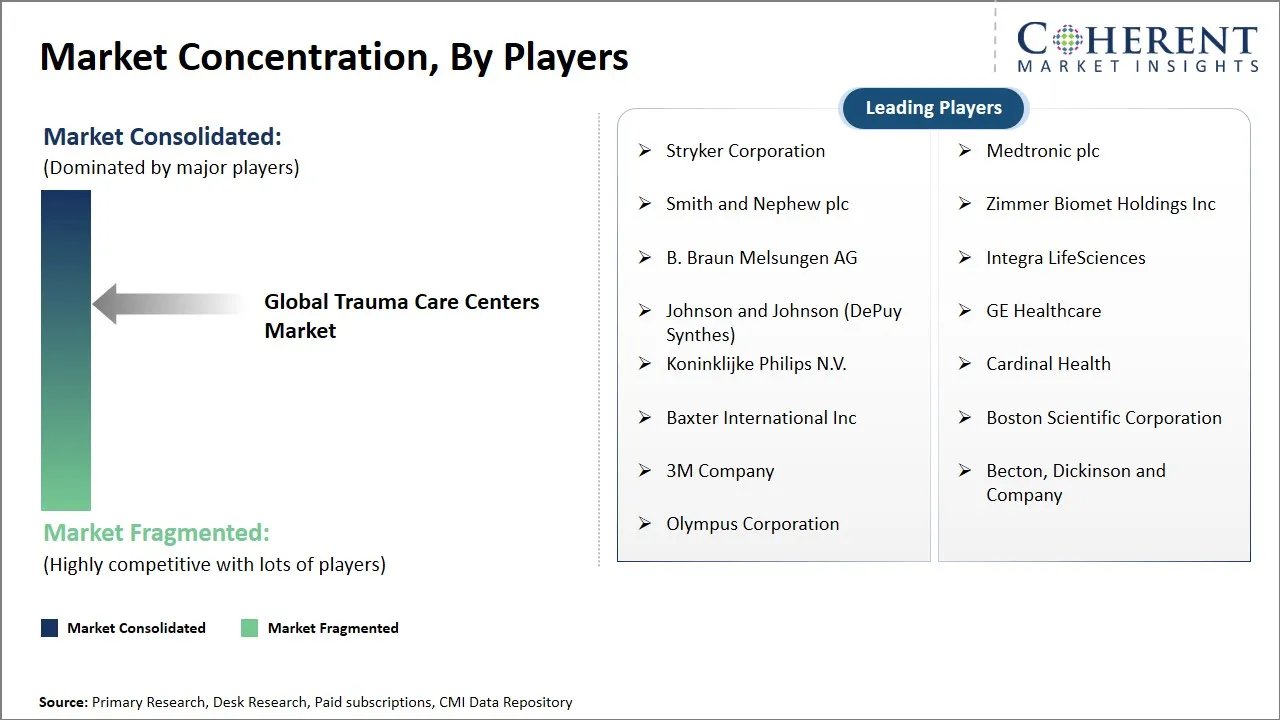
| Companies covered: | Stryker Corporation, Medtronic plc, Smith and Nephew plc, Zimmer Biomet Holdings Inc, B. Braun Melsungen AG, Integra LifeSciences, Johnson and Johnson (DePuy Synthes), GE Healthcare, Koninklijke Philips N.V., Cardinal Health, Baxter International Inc, Boston Scientific Corporation, 3M Company, Becton, Dickinson and Company, and Olympus Corporation | ||
| Growth Drivers: |
| ||
| Restraints & Challenges: |
| ||
Trauma Care Centers Market Dynamics
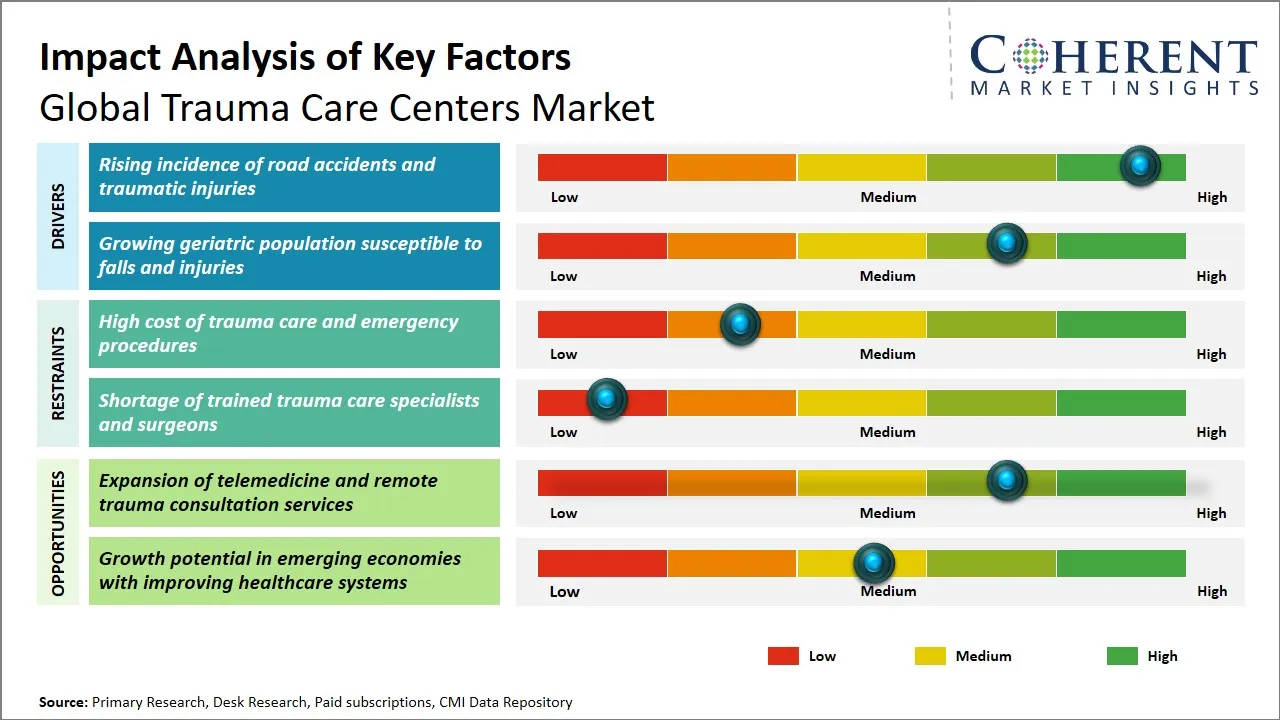
Trauma Care Centers Market Driver - Rising Incidence of Road Accidents and Traumatic Injuries
The increasing number of road accidents worldwide is a critical factor driving the expansion of trauma care centers globally. Rapid urbanization, growing vehicle ownership, and inadequate road safety measures in many regions have led to a surge in the frequency and severity of traumatic injuries requiring immediate medical attention. Trauma care centers equipped with advanced diagnostic and treatment technologies play a vital role in managing life-threatening injuries sustained from collisions, falls, and other accidents.
Additionally, the rising prevalence of high-impact sports and industrial accidents further contributes to the need for specialized trauma services. These factors collectively increase the demand for well-equipped trauma centers that offer prompt and comprehensive care to improve patient survival rates and reduce complications.
In December 2023, World Health Organization, the UN’s public health authority, highlighted rising global road traffic injuries. Nearly 1.19 million people die annually, driving urgent demand for Trauma Care Centers worldwide. The report stresses faster post-crash care, stronger enforcement, and safer systems to cut deaths by 2030.
Source:https://www.who.int/news-room/fact-sheets/detail/road-traffic-injuries
Trauma Care Centers Market Opportunity - Expansion of Telemedicine and Remote Trauma Consultation Services
The global trauma care centers market is witnessing a significant opportunity through the expansion of telemedicine and remote trauma consultation services. Advances in digital health technologies, combined with increasing internet penetration and smartphone usage, have paved the way for integrating telemedicine into trauma care protocols. This development enables trauma centers to overcome geographical barriers, providing timely expert consultation to patients in remote or underserved areas where specialized trauma care facilities may be limited or absent.
Additionally, remote trauma consultation facilitates faster decision-making during the critical golden hour following traumatic injuries, ultimately improving patient outcomes by enabling immediate intervention strategies without the delays associated with patient transfer.
On December 18, 2025, Apollo Hospitals, a leading private healthcare group, expanded tele trauma services across India. The model strengthens Trauma Care Centers by connecting remote teams to senior trauma specialists during the golden hour. Real time video guidance improves stabilization, survival, and outcomes before patient transfer.
Source:https://www.apollohospitals.com/departments/emergency-trauma-care-services-1
Analyst Opinion (Expert Opinion)
- The trauma care centers market is growing as governments and hospitals strengthen emergency readiness and critical care access. Key drivers include advanced imaging, AI supported triage, better ambulance integration, and policy support through national trauma and road safety programs. Public private partnerships and highway linked trauma centers are expanding coverage in emerging regions. Challenges remain around skilled workforce shortages, high setup costs, and uneven rural access, while opportunities are rising in tele trauma, hub and spoke networks, and integrated trauma to rehabilitation models.
- Recent knowledge exchange through the World Trauma Congress and International Conference on Emergency Medicine has supported standardization and technology adoption. Programmes such as India’s National Program for Prevention and Management of Trauma and Burn Injuries and new trauma centers by public hospitals and private providers are improving golden hour response and shaping long term market outlook.
Speak to the analyst
Want personalized insights?
Take the findings above to one of our principal consultants, or have the report rebuilt around the segments, geographies and competitors you actually track.
Market Segmentation
- Trauma Center Level Insights (Revenue, USD Bn, 2021 - 2033)
- Level I Trauma Centers
- Level II Trauma Centers
- Level III Trauma Centers
- Level IV Trauma Centers
- Level V Trauma Centers
- Ownership Type Insights (Revenue, USD Bn, 2021 - 2033)
- Public/Government Hospitals
- Private Hospitals
- Non-Profit Hospitals
- Academic and Teaching Hospitals
- Trauma Type Insights (Revenue, USD Bn, 2021 - 2033)
- Blunt Trauma
- Penetrating Trauma
- Burn Injuries
- Traumatic Brain Injuries
- Spinal Cord Injuries
- Orthopedic Trauma
- Polytrauma
- Patient Age Group Insights (Revenue, USD Bn, 2021 - 2033)
- Pediatric Trauma Care
- Adult Trauma Care
- Geriatric Trauma Care
- Service Type Insights (Revenue, USD Bn, 2021 - 2033)
- Emergency and Resuscitation Services
- Surgical and Operative Services
- Critical Care and Intensive Care Services
- Diagnostic and Imaging Services
- Rehabilitation and Post-Acute Care Services
- Mode of Admission Insights (Revenue, USD Bn, 2021 - 2033)
- Ambulance-Based Admissions
- Air Medical Transport Admissions
- Walk-In/Direct Admissions
- Inter-Hospital Transfers
- Regional Insights (Revenue, USD Bn, 2021 - 2033)
- North America
- U.S.
- Canada
- Latin America
- Brazil
- Argentina
- Mexico
- Rest of Latin America
- Europe
- Germany
- U.K.
- Spain
- France
- Italy
- Russia
- Rest of Europe
- Asia Pacific
- China
- India
- Japan
- Australia
- South Korea
- ASEAN
- Rest of Asia Pacific
- Middle East
- GCC Countries
- Israel
- Rest of Middle East
- Africa
- South Africa
- North Africa
- Central Africa
- North America
- Key Players Insights
- Stryker Corporation
- Medtronic plc
- Smith and Nephew plc
- Zimmer Biomet Holdings Inc
- Braun Melsungen AG
- Integra LifeSciences
- Johnson and Johnson (DePuy Synthes)
- GE Healthcare
- Koninklijke Philips N.V.
- Cardinal Health
- Baxter International Inc
- Boston Scientific Corporation
- 3M Company
- Becton, Dickinson and Company
- Olympus Corporation
Sources
Primary Research Interviews
- Industry Stakeholders List
- Hospital Administrators
- Trauma Surgeons
- End users List
- Emergency Medical Technicians (EMTs)
- Trauma Patients
Government and International Databases
- World Health Organization (WHO)
- Centers for Disease Control and Prevention (CDC)
- National Institutes of Health (NIH)
- European Centre for Disease Prevention and Control (ECDC)
- United Nations (UN) Health Data
- National Trauma Data Bank (NTDB)
Trade Publications
- Journal of Trauma and Acute Care Surgery
- Trauma Surgery & Acute Care Open
- Emergency Medicine Journal
- The American Journal of Surgery
- Journal of Emergency Medicine
- Health Affairs
Academic Journals
- The Lancet
- Journal of Trauma and Acute Care Surgery
- BMJ Open
- Injury Prevention
- Annals of Surgery
- The Journal of Trauma
Reputable Newspapers
- The New York Times (Health Section)
- The Guardian (Health and Social Care Section)
- The Washington Post (Health)
- BBC News (Health)
- Reuters (Health Section)
- The Wall Street Journal (Health)
Industry Associations
- American College of Surgeons (ACS)
- National Trauma Institute (NTI)
- Society of Trauma Nurses (STN)
- American Trauma Society (ATS)
- World Trauma Congress (WTC)
- European Society for Trauma and Emergency Surgery (ESTES)
Public Domain Resources
- National Institutes of Health (NIH) PubMed
- U.S. Department of Health & Human Services (HHS)
- National Trauma Data Bank (NTDB)
- National Health Service (NHS) UK
- Centers for Disease Control and Prevention (CDC) Data
- Global Health Data Exchange (GHDx)
Proprietary Elements
- CMI Data Analytics Tool: Proprietary analytics tool to analyze real-time market trends, consumer behavior, and technology adoption in market
- Proprietary CMI Existing Repository of Information for Last 8 Years
Get access to 250+ pages report
Every segment, forecast, competitor profile and data table behind the analysis above — available for instant download.
- ESOMAR Member
- ISO 9001:2015 Certified
- D-U-N-S Registered
- GDPR & CCPA Compliant
Missing comfort of reading report in your local language? Find your preferred language:
Transform your Strategy with Exclusive Trending Reports
Frequently Asked Questions
The global trauma care centers market is estimated to be valued at USD 20.21 Bn in 2026 and is expected to reach USD 34.41 Bn by 2033.
The CAGR of global trauma care centers market is projected to be 7.9% from 2026 to 2033.
Rising incidence of road accidents and traumatic injuries and growing geriatric population susceptible to falls and injuries are the major factors driving the growth of the global trauma care centers market.
High cost of trauma care and emergency procedures and shortage of trained trauma care specialists and surgeons are the major factors hampering the growth of global trauma care centers market.
In terms of trauma center level, level I trauma centers are estimated to dominate the market revenue share in 2026.
Stryker Corporation, Medtronic plc, Smith and Nephew plc, Zimmer Biomet Holdings Inc, B. Braun Melsungen AG, Integra LifeSciences, Johnson and Johnson (DePuy Synthes), GE Healthcare, Koninklijke Philips N.V., Cardinal Health, Baxter International Inc, Boston Scientific Corporation, 3M Company, Becton, Dickinson and Company, and Olympus Corporation are the major players.
The increasing elderly population is driving demand for trauma care services.