

Global Capsule Fertilizer Market Size and Forecast – 2026-2033
The global capsule fertilizer market is estimated to be valued at USD 1,829.8 Mn in 2026 and is expected to reach USD 2,996.4 Mn by 2033, exhibiting a compound annual growth rate (CAGR) of 7.3% from 2026 to 2033.
Key Takeaways of the Capsule Fertilizer Market
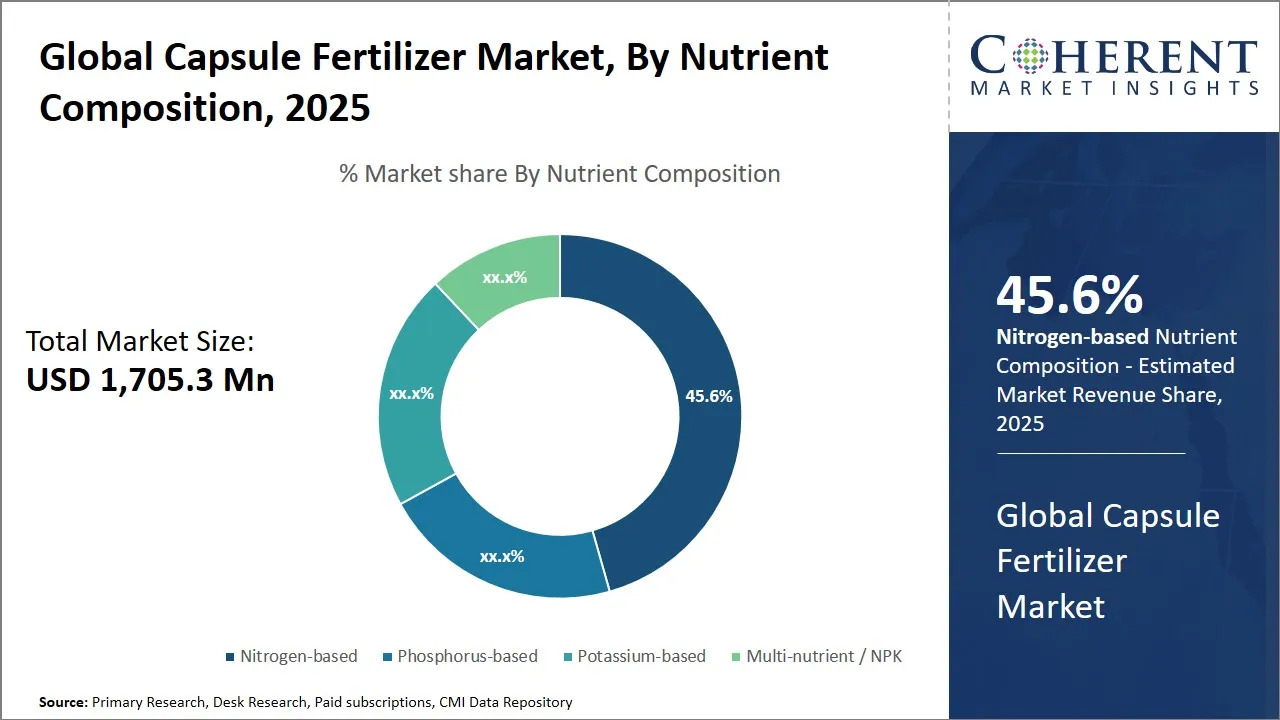
- The nitrogen-based segment is expected to account for 46.6% of the global capsule fertilizer market share in 2026.
- Immediate-release capsules segment is projected to hold 30.6% of the global capsule fertilizer market share in 2026.
- The cereal and grain crops segment are expected to hold a 26.7% share of the capsule fertilizer market by 2026.
- Asia Pacific is set to lead the global capsule fertilizer market in 2026 with a 38.4% share, driven by the increasing demand for efficient farming practices and advancements in agricultural technology. Europe, with a 19.5% share, will be the fastest-growing region, fueled by rising adoption of sustainable farming techniques, government support for eco-friendly solutions, and increasing awareness of soil health.
Market Overview
Key trends shaping the capsule fertilizer market include the rising emphasis on sustainable agriculture and precision farming techniques. Advances in capsule technology enable targeted nutrient release, minimizing environmental impact and enhancing crop yields. Additionally, growing investments in research and development, along with government initiatives promoting eco-friendly fertilizers, continue to drive the market expansion by encouraging farmers to integrate capsule fertilizers into modern agronomic practices.
Currents Events and their Impact
Current Events | Description and its Impact |
EU microplastics restriction affecting coated/encapsulated fertilizers |
|
China’s export controls on urea/MAP/DAP |
|
Segmental Insights
- Current Industry Events of 2026
- Market Size Estimation
- Regional Breakdown
- Competitive Landscape
- Customer Intelligence
- Segmental Analysis
- Pricing Analysis
- Key Market Drivers, Challenges & Future Trends
- Customized Insights Section
Capsule Fertilizer Market Insights, By Nutrient Composition - Nitrogen-based Segment Dominates the Market due to Critical Role in Crop Productivity
The nitrogen-based segment is expected to hold the 46.6% of the global capsule fertilizer market share in 2026. This is largely because of the primary role played by nitrogen as a key macronutrient that spurs vegetative growth, as well as the overall crop yield. Nitrogen is an essential element of the chlorophyll, amino acid, and nucleic acids, and, as a result, it is very important in the process of photosynthesis and protein synthesis. This has made farmers focus on the use of fertilizers that have high content of nitrogen to enhance growth of plants and also to maximize the quality of the harvest especially the staple crops which have high nitrogen requirements.
For instance, in the case of rice cultivation, which has high nitrogen requirements, nitrogen-rich fertilizers are often used to boost growth and improve yields. This demand is particularly strong in regions like Southeast Asia, where rice is a staple crop and efficient nitrogen use is critical for optimal production.
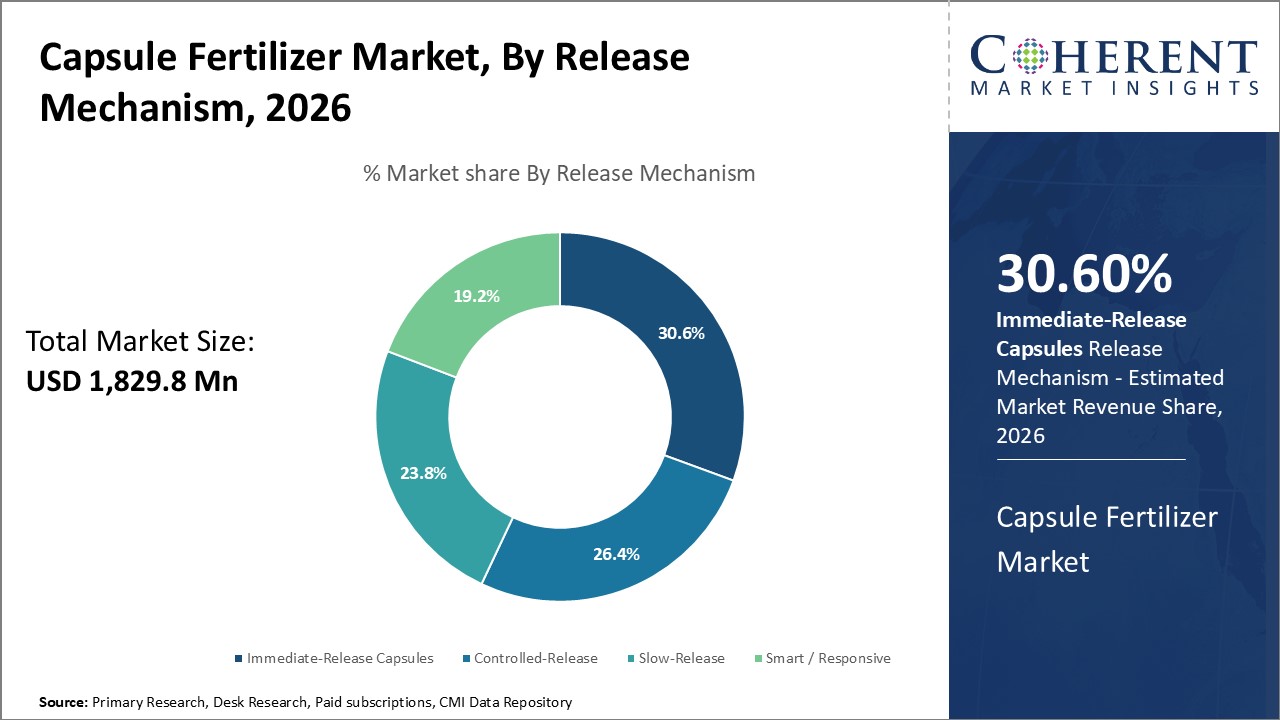
Capsule Fertilizer Market Insights, By Release Mechanism - Immediate-Release Capsules Segment Lead due to their Rapid Nutrient Availability
Immediate-release capsules represent the 30.6% of the global capsule fertilizer market share in 2026. Their main strength is that they provide the nutrients quickly to plants at the key development phases in order to promote rapid nutrient absorption and an instant response to the needs of crops. This characteristic is extremely desirable in agricultural conditions where fast absorption of nutrients is needed to rectify a deficiency or to induce early growth especially in the initial vegetative stage.
The farmers prefer immediate-release capsules due to their convenience and ease of use. This is due to the fact that they readily dissolve and deliver nutrients immediately thereby aiding in timely interventions and eliminating the need to apply them frequently. This feature is particularly useful in intensive cropping programs or areas that experience limited growing seasons all developmental stages have to be optimized to achieve maximum yields.
Capsule Fertilizer Market Insights, By Crop Application - Cereal and Grain Crops Segment Dominates the Market Driven by Global Staple Food Consumption
Cereal and grain crops segment are projected to account for 26.7% share of the capsule fertilizer market in 2026. This supremacy is based on the fact that the world food security is based on the cereals like wheat, rice, maize and barley which are the source of the calories of majority of the population of the world. The large number of acreages that has been planted with cereals worldwide generates a large and steady market need of crop-specific fertilizers to satisfy the nutritional requirements of the crops.
Cereals and grain crops are active feeders, especially in nitrogen, the phosphorus and potassium, to ensure high growth of biomass and grain filling of the crops. Cereal and grain specific capsule fertilizers enhance efficiency of nutrient delivery, minimization of losses and synchronization of nutrient availability during the growing period. This is deliberate nutrition that is essential in maximizing of the yields and quality considering the ever-growing challenges of soil erosion and climatic variations in the key cereal production areas.
Regional Insights
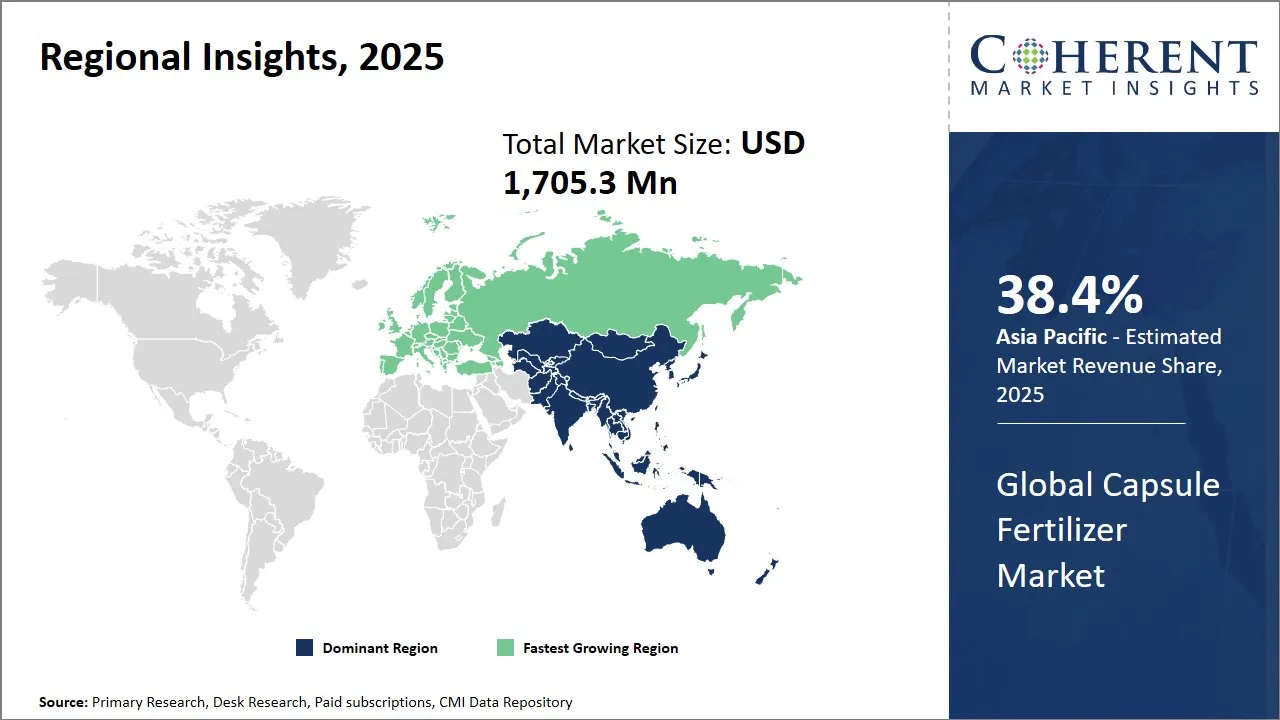
Asia Pacific Capsule Fertilizer Market Analysis and Trends
The Asia Pacific region is projected to lead the market with a 38.4% share in 2026, driven by the region’s vast agricultural landscape and high adoption of advanced agricultural technologies. The fact that the activities of big-scale farming are prevalent in such countries like China, India, and Japan makes the innovative and efficient fertilizer methods, such as capsule fertilizers, highly demanded, as these methods increase the delivery of nutrients to the soil and minimize the impacts on the environment.
The use of controlled-release forms of fertilizers has also been promoted by government programs on sustainable agriculture and organic farming. Also, Asia Pacific well-established supply chain and the presence of major industry participants like Kingenta, Haifa Group (Israeli company that operates in the region effectively) and NOVA Chemicals will help to provide the products and innovation and strengthen the market position of the region.
Europe Capsule Fertilizer Market Analysis and Trends
The Europe region is expected to exhibit the fastest growth in the market contributing 28.3% share in 2026, supported by sustainability mandates, soil nutrient management programs, and advanced farming systems. The adoption of the regions is spearheaded by the EUs Common Agricultural Policy (CAP) reforms that focus on precision fertilization, nutrient efficiency and emission reduction.
Western Europe, most notably France, Germany and the Netherlands is incorporating the use of capsule fertilizers in high value crop systems (fruits, vegetables, cereals) to limit leaching as well as enhance convenient nutrient discharge. Eastern Europe, such as Poland and Romania, is increasingly being adopted by government-provided incentives in restoration of soil health and EU funded modernization programs.
Global Capsule Fertilizer Market Outlook for Key Countries
China Capsule Fertilizer Market Analysis and Trends
China capsule fertilizer market has been characterized by a high level of government attention towards sustainable agriculture and the minimization of environmental degradation products of conventional fertilizers. The presence of large farming base in China has generated massive demand of capsule fertilizers as an integrated nutrient management practice. The most prominent stakeholders such as Kingenta and manufacturers in partnership with international companies support research and development by providing capsule fertilizers in accordance with the different types of crops.
India Capsule Fertilizer Market Analysis and Trends
The agricultural industry in India is slowly adopting the use of capsule fertilizers in the face of the increased awareness of soil health, and of the necessity to use nutrients efficiently. Market development is supported by the government programs like the Soil Health Card Scheme and organic farming. Increased product penetration in smallholder and commercial farms is achieved by the local firms, such as Coromandel International and by global corporations such as BASF, using their distribution networks. The many agro-climatic regions in Indias require the use of flexible capsule fertilizer formulations, driving product design and local production.
Japan Capsule Fertilizer Market Analysis and Trends
Japan is still at the forefront in adopting the use of precision agriculture technologies, and in this regard, the use of capsule fertilizers has been critical in improving the crop production, with little impact on the environment. The market is being influenced by constant innovation by the companies like Mitsubishi Chemical and Ube industries which has provided high-end capsule fertilizer products that combine with intelligent farming methods. The strict environmental policies of the country also drive the manufacturers and farmers to use controlled-release fertilizers, making Japan be an early adopter of the capsule fertilizer with a fully-grown ecosystem.
Brazil Capsule Fertilizer Market Analysis and Trends
The large agricultural industry and economy based on exports makes Brazil important market in Latin America in capsule fertilizers. The focus of the government in sustainable agriculture and the modern farming practices help in rapid adoption. Fertilizer firms, such as Yara International and Mercosur Seeds, which is a major industry partner, are leading the promotion of capsule fertilizers that are geared to the tropical weather and prime crops, including soybeans and sugarcane.
U.S. Capsule Fertilizer Market Analysis and Trends
The U.S. capsule fertilizer market for capsule fertilizer benefits from technological advancements and high levels of mechanization in agriculture. Growing interest in reducing fertilizer runoff and meeting environmental compliance standards boosts demand for capsule fertilizers. Major agribusiness corporations such as The Mosaic Company and Nutrien invest heavily in research and partnerships to develop specialized capsule fertilizer products. Robust distribution networks and farmer education programs further support market growth, particularly in corn and wheat-producing states.
Macro and Micro Economic Factors Impacting on Capsule Fertilizer Market Growth
Macro-Economic Factors
- Global Trade and Geopolitics: Trade policies, tariffs (e.g. U.S. tariffs on Canadian fertilizer imports), geopolitical conflicts (particularly in Ukraine), and supply chain disruptions have a major impact on fertilizer supply and prices across the globe.
- Government Policies and Subsidies: Government subsidies and price controls, as well as incentives on sustainable and precision farming, stimulate market growth and accessibility in the countries of India, China, and the U.S. in particular.
- Commodity Price Volatility: Large volatility in the prices of raw materials and energy (sulfur, phosphoric acid, natural gas) makes production costs high, which is a cause of cost-push inflation in the industry and impacts on the prices to farmers.
Micro Economic Factors
- Precision Application and Product Differentiation: The flexibility in the use of encapsulated and controlled-release capsule forms will enable the ability to deliver specific nutrient concentrations, provide better efficiency, and use fewer inputs, which are beneficial in core markets that demand higher returns and gain maximization.
- Farm-Level Innovations: Through smart farming devices (IoT, data-driven applications), farmers are able to monitor soil health and deploy capsule fertilizer more precisely, increasing yields with a minimal impact on the environment.
- Consumer Preferences and Sustainability: It is already seeing increasing demand of sustainable products that can help reduce run off, decrease greenhouse gases, and enhance soil health factors triggers capsule fertilizer adoption by producers and ultimate consumers.
- Crop Specialization: This specialty fertilizer is becoming increasingly popular as crops like cereals, grains, horticultural crops, etc. which have stricter nutrient needs can have their nutrient requirements met by the capsule fertilizers.
Market Players, Company Insights , and Competitive Intelligence
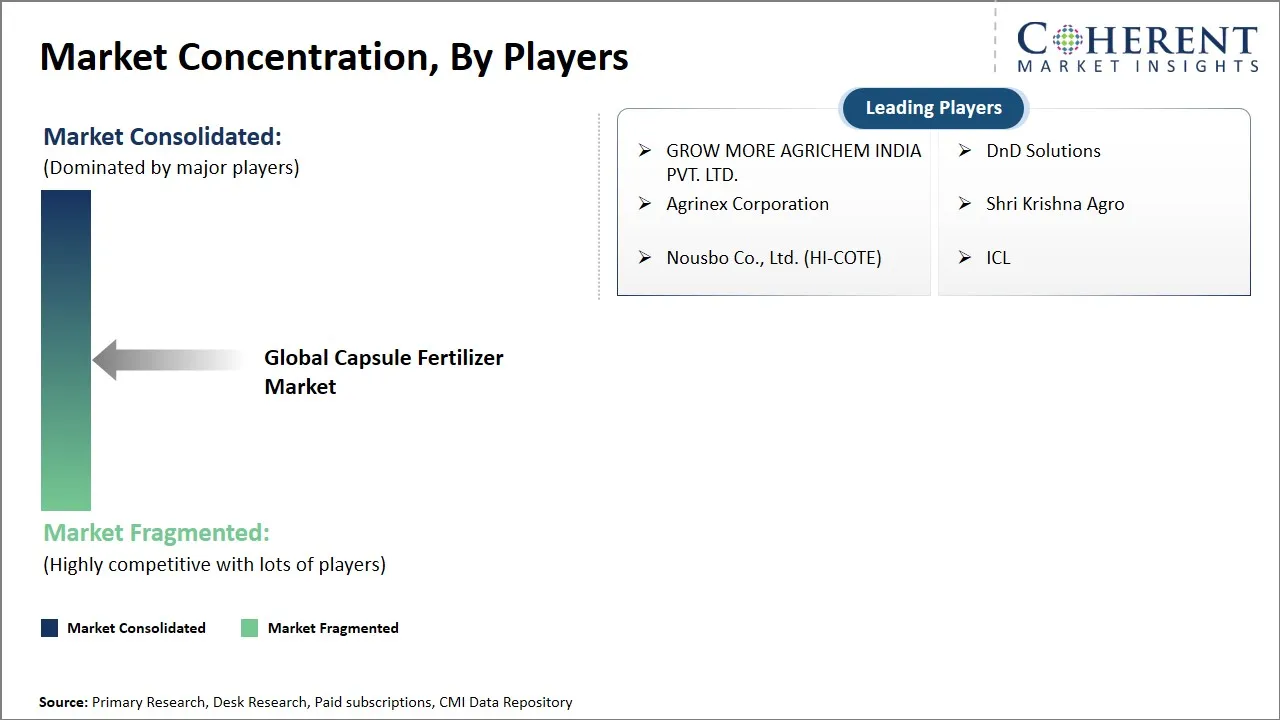
Company Insight
- GROW MORE Agrichem India Pvt. Ltd. based in Ahmedabad, Gujarat (created around 2017) that produces, distributes, and sells bio-fertilizers, nano bio-fertilizers, and plant protection inputs. They have product lines such as capsule formulations (and powder/sachet types) of biofertilizers and related biostimulants / plant protection agents.
Top Strategies Followed by Global Capsule Fertilizer Market Players
- Established companies dominate the landscape by heavily investing in research and development to innovate high-performance, efficient, and environmentally friendly capsule fertilizers. Their R / D work is aimed at the provision of better systems of nutrient delivery, the increased yield of crops and the reduction of the ecological footprint which serves the growing need of solutions to sustainable agriculture. Through these collaborations, they are able to develop solutions together, combine new technologies and capitalize on the experience shared.
- For example, in 2024, Yara, increased its R&D facility in Hanninghof, Germany, to create slow- and controlled-release fertilizers with polymer-coated capsules that minimize nitrogen losses by up to 40 %.
- Mid-level players in the capsule fertilizer market differentiate themselves primarily through a focus on affordability combined with acceptable quality, meeting the needs of price-sensitive consumers in developing regions and smaller-scale farmers. Being aware that cost limits usually guide the decision to buy a product, such companies streamline their manufacturing activity and design their products in a way so that they guarantee a balance between price and performance. In order to become competitive, the mid-tier companies are driven to enter into collaboration and joint ventures to increase production facilities and to obtain new technologies.
- For example, Jaipur Bio Fertilizers is a modern agriculture company. Develop products and systems to help farmers around the world grow crops while using the best of the inputs efficiently.
- The small-scale participants cut their niches in the market of the capsule fertilizer, focusing on the specifics of products and new solutions according to the needs of particular crops or soils. They are also flexible enough to embrace new technologies that are on the edge like nano-encapsulation or bio-based active components, which can go a long way in improving the efficacy and environmental friendliness of the product.
Market Report Scope
Capsule Fertilizer Market Report Coverage
| Report Coverage | Details | ||
|---|---|---|---|
| Base Year: | 2025 | Market Size in 2026: | USD 1,829.8 Mn |
| Historical Data for: | 2020 To 2024 | Forecast Period: | 2026 To 2033 |
| Forecast Period 2026 to 2033 CAGR: | 7.3% | 2033 Value Projection: | USD 2,996.4 Mn |
| Geographies covered: |
| ||
| Segments covered: |
| ||
| Companies covered: | GROW MORE AGRICHEM INDIA PVT. LTD., DnD Solutions, Agrinex Corporation, Shri Krishna Agro, Nousbo Co., Ltd. (HI-COTE), and ICL | ||
| Growth Drivers: |
| ||
| Restraints & Challenges: |
| ||
Capsule Fertilizer Market Dynamics
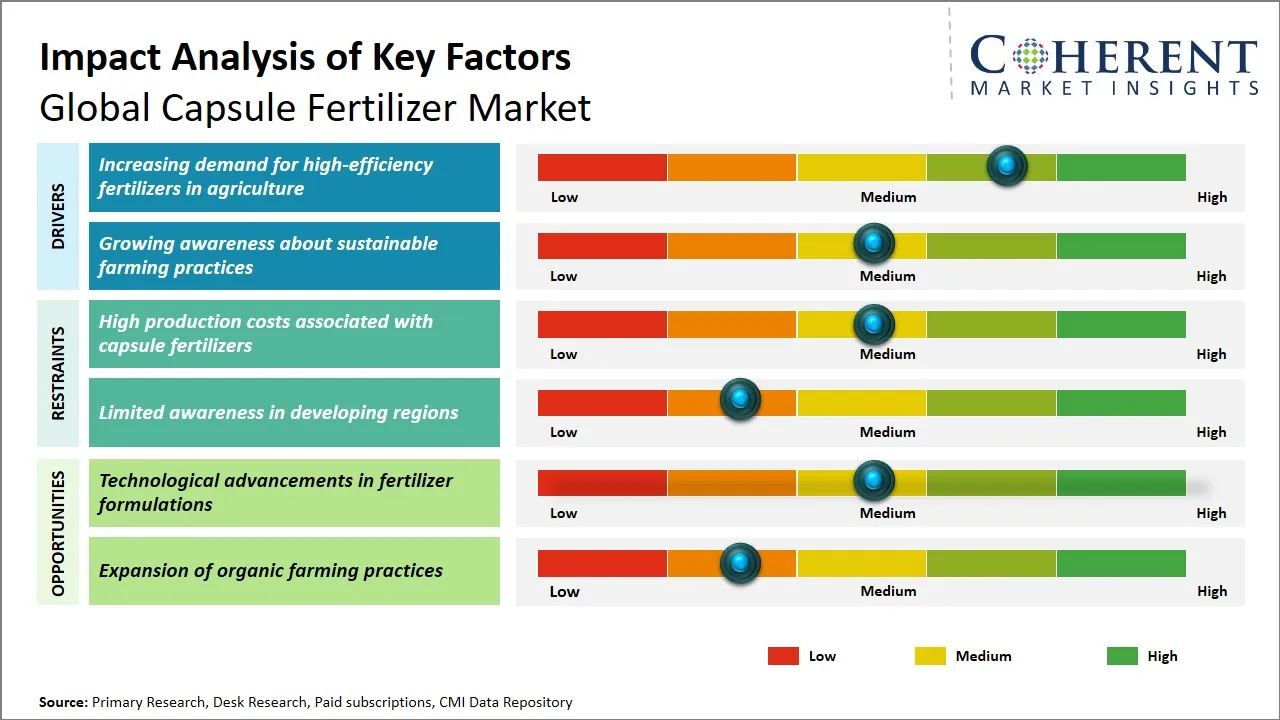
Capsule Fertilizer Market Driver - Increasing Demand for High-Efficiency Fertilizers in Agriculture
The increased world population and the consequent production requirement have contributed greatly to the demand to use high efficiency fertilizer including capsule fertilizers. These superior nutrient delivery systems provide a controlled release of the important nutrients in an accurate manner and reduces loss of the nutrients through leaching, volatilization, and runoff which is a drawback of the traditional fertilizers. Capsule fertilizers are a good solution to the current problem since farmers are interested in the optimization of the nutrient uptake and increase in crop yield alongside minimization of environmental impact. Also, regulatory forces and growing consciousness on the topic of soil health and environmental protection have driven the transition towards these new fertilizers faster.
The Controlled release fertilizer product known as ICLs Agroblen Tablet, capsule is recommended to be placed at the planting hole directly in orchards, vineyards and forestry. It involves coating (resin-release) to provide nutrients throughout time eliminating recurring applications.
Capsule Fertilizer Market Opportunity - Technological Advancements in Fertilizer Formulations
The capsule fertilizer market in the world is set to receive a boost through the continued technological innovation in fertilizer formulations making it a strong growth potential. Controlled-release and slow-release capsule fertilizers are some of the innovations that are infiltrating the market; these types of fertilizers make better use of the nutrients and reduce environmental effects. Such sophisticated formulations control the nutrient delivery according to the crop uptake, minimizing nutrient leaching and volatilization, which is a typical problem with conventional fertilizers.
Analyst Opinion (Expert Opinion)
- The global capsule fertilizer market is in a dynamic stage as more and more people press on accuracy in agriculture and environmental friendliness in farming. The findings of the International Fertilizer Association Conference (2023) and the Global Summit on Sustainable Agriculture (2022) demonstrated active innovations, as such companies as Yara International and Nutrien introduced a novel solution based on capsule fertilizer technology that allows to increase the effectiveness of nutrient delivery.
- The recent launch of biodegradable capsules is a strategic move by Yaras to offer greener solutions that address the environmentally-conscious customers. Debates during these conferences revealed the increased significance of smart farming technologies which combine capsule fertilizers with soil health monitoring systems which enable farmers to maximize inputs and minimize wastage. Nevertheless, issues like cost barriers by the smallholder farmers and regulatory hurdles like new formulations were regularly mentioned as possible barriers.
- Farmers are likely to increase market penetration by companies that concentrate their activities on informing farmers on the benefits of capsule fertilizers. Also, the collaboration with agricultural technologies companies can take innovation to the next level.
Speak to the analyst
Want personalized insights?
Take the findings above to one of our principal consultants, or have the report rebuilt around the segments, geographies and competitors you actually track.
Market Segmentation
- Nutrient Composition Insights (Revenue, USD Mn, 2021 - 2033)
- Nitrogen-based
- Phosphorus-based
- Potassium-based
- Multi-nutrient / NPK
- Release Mechanism Insights (Revenue, USD Mn, 2021 - 2033)
- Immediate-Release Capsules
- Controlled-Release
- Slow-Release
- Smart / Responsive
- Crop Application Insights (Revenue, USD Mn, 2021 - 2033)
- Cereal and Grain Crops
- Fruits and Vegetables
- Plantation and Cash Crops
- Turf, Ornamentals, and Home Gardening
- Regional Insights (Revenue, USD Mn, 2021 - 2033)
- North America
- U.S.
- Canada
- Latin America
- Brazil
- Argentina
- Mexico
- Rest of Latin America
- Europe
- Germany
- U.K.
- Spain
- France
- Italy
- Russia
- Rest of Europe
- Asia Pacific
- China
- India
- Japan
- Australia
- South Korea
- ASEAN
- Rest of Asia Pacific
- Middle East
- GCC Countries
- Israel
- Rest of Middle East
- Africa
- South Africa
- North Africa
- Central Africa
- North America
- Key Players Insights
- GROW MORE AGRICHEM INDIA PVT. LTD.
- DnD Solutions
- Agrinex Corporation
- Shri Krishna Agro
- Nousbo Co., Ltd. (HI-COTE)
- ICL
Sources
Primary Research Interviews
- R&D Director – Global Crop Nutrition Company
- Procurement Manager – Leading Agrochemicals Retailer
- Product Development Head – Renowned Fertilizer Manufacturer
- Sustainability Manager – Agricultural Certification Organization
Stakeholders
- Manufacturers (Capsule Fertilizer Producers, Innovators)
- End-use Sectors:
- Agriculture (Crops, Horticulture, Specialty Farming)
- Agro-retail & Farming Input Distributors
- Regulatory & Certification Bodies
- E-commerce Platforms and Retail Chains (Agro Inputs)
Databases
- UN Comtrade Database (Global trade data for fertilizer capsules)
- India Import Export (EXIM) Database (Capsule fertilizer trade flows)
Magazines
- Fertilizer International – Innovations in encapsulated fertilizers
- CropLife Magazine – Fertilizer technology and smart farming
- AgroTech Business Review – Trends in crop nutrition and specialty fertilizers
- AgriBusiness Global – Market growth opportunities for novel fertilizers
Journals
- International Journal of Agricultural Sciences – Efficacy and crop yield impact of capsule fertilizers
- Journal of Soil Science & Plant Nutrition – Smart delivery systems for fertilizers
- Journal of Environmental Science & Technology – Impacts of controlled release fertilizers on environment
- Journal of Agricultural and Food Chemistry – Formulation trends and technology in capsule fertilizers
Newspapers
- The Financial Times – Investments and market expansion in specialty fertilizers
- The Guardian – Sustainability trends in fertilizer products
- Asia Agri News – Growth and regulation of capsule fertilizers in Asia-Pacific
- European Agro Business News – Capsule fertilizer policies and regulations in Europe
Associations
- International Fertilizer Association (IFA)
- Fertilizer Institute
- European Plant Protection Association
- Indian Fertilizer Association
- Clean Label Project (Sustainability certifications)
Public Domain Sources
- Food & Agriculture Organization (FAO) – Guidelines and standards for fertilizer use
- European Commission – Fertilizer Regulation for agricultural inputs
- World Health Organization – Safety and health impact studies on fertilizers
- OECD – Environmental assessments for sustainable fertilizers
Proprietary Elements
- CMI Data Analytics Tool, Proprietary CMI Existing Repository of information for last 8 years.
Get access to 250+ pages report
Every segment, forecast, competitor profile and data table behind the analysis above — available for instant download.
- ESOMAR Member
- ISO 9001:2015 Certified
- D-U-N-S Registered
- GDPR & CCPA Compliant
Missing comfort of reading report in your local language? Find your preferred language:
Transform your Strategy with Exclusive Trending Reports
Frequently Asked Questions
The global capsule fertilizer market is estimated to be valued at USD 1,829.8 Mn in 2026 and is expected to reach USD 2,996.4 Mn by 2033.
The CAGR of the global capsule fertilizer market is projected to be 7.3% from 2026 to 2033.
Increasing demand for high-efficiency fertilizers in agriculture and growing awareness about sustainable farming practices are the major factors driving the growth of the global capsule fertilizer market.
High production costs associated with capsule fertilizers and limited awareness in developing regions are the major factors hampering the growth of the global capsule fertilizer market.
In terms of nutrient composition, the nitrogen-based segment is estimated to dominate the market revenue share in 2026.
GROW MORE AGRICHEM INDIA PVT. LTD., DnD Solutions, Agrinex Corporation, Shri Krishna Agro, Nousbo Co., Ltd. (HI-COTE), and ICL are the major players.
Asia Pacific is expected to lead the global capsule fertilizer market.