

Global Cortical Electrode Market Size and Forecast – 2026 To 2033
The global cortical electrode market is expected to grow from USD 215.8 Mn in 2026 to USD 468.4 Mn by 2033, registering a compound annual growth rate (CAGR) of 11.7% from 2026 to 2033. The market for cortical electrodes is poised for significant expansion, fueled by the soaring burden of neurological disorders necessitating sophisticated brain monitoring and neurosurgical procedures.
According to the World Health Organization (WHO), neurological conditions are the leading cause of ill health and disability, affecting over 1 in 3 people globally.
(Source: World Health Organization)
Key Takeaways of the Global Cortical Electrode Market
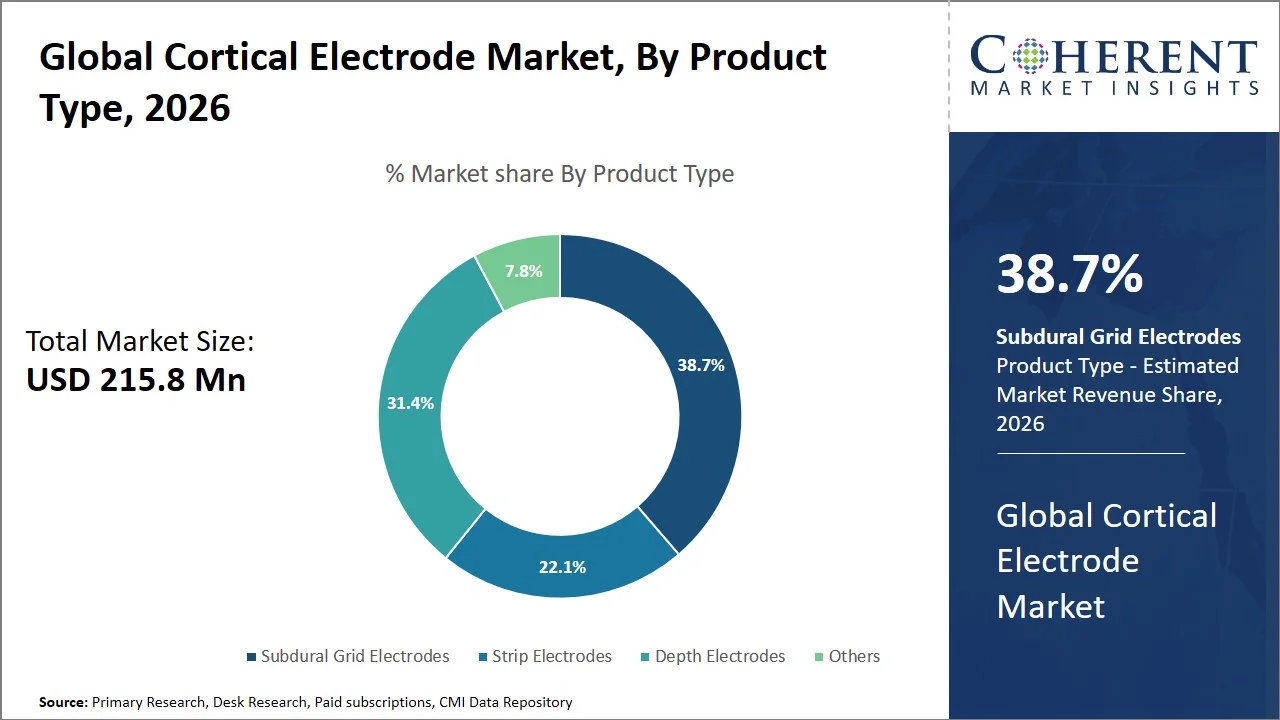
- Subdural grid electrodes are projected to hold 38.7 % of the global cortical electrode market share in 2026, making it the dominant product type segment across North America due to high volume of epilepsy surgery procedures and widespread use of intracranial brain mapping techniques. For instance, the National Institute of Neurological Disorders and Stroke (NINDS) funds the Epilepsy Centers Without Walls (CWOW) program to enhance the understanding and clinical application of drug-resistant epilepsy and surgical treatment. (Source: National Institute of Neurological Disorders and Stroke) Such initiatives encourage the use of subdural grid electrodes for accurately locating the origin of the seizures and mapping the cortex's function.
- Platinum-Iridium is projected to hold 58.6 % of the global cortical electrode market share in 2026, making it the dominant material segment, across Europe due to its superior electrical conductivity, corrosion resistance, and long-term biocompatibility in implantable neurodevices. For instance, the European Union's Horizon Europe program funds numerous neurotechnology and brain-computer interface projects incorporating implantable neural interfaces requiring durable electrode materials such as platinum-iridium. (Source: European Commission) These research efforts are contributing to sustained demand for materials with high performance cortical electrodes.
- Epilepsy monitoring and surgery is projected to hold 47.3 % of the global cortical electrode market share in 2026, making it the dominant application segment across Asia Pacific due to expanding epilepsy care infrastructure and increasing adoption of advanced neurodiagnostic procedures. For instance, since 2015, the "Establishing an Integrated Community Care System for Epilepsy" project has been implemented under the guidance of the Ministry of Health, Labour and Welfare (MHLW), designating the core epilepsy hospital and cooperative epilepsy care center throughout the country and strengthening their capacity to diagnose and operate on patients. (Source: Health and Global Policy Institute)
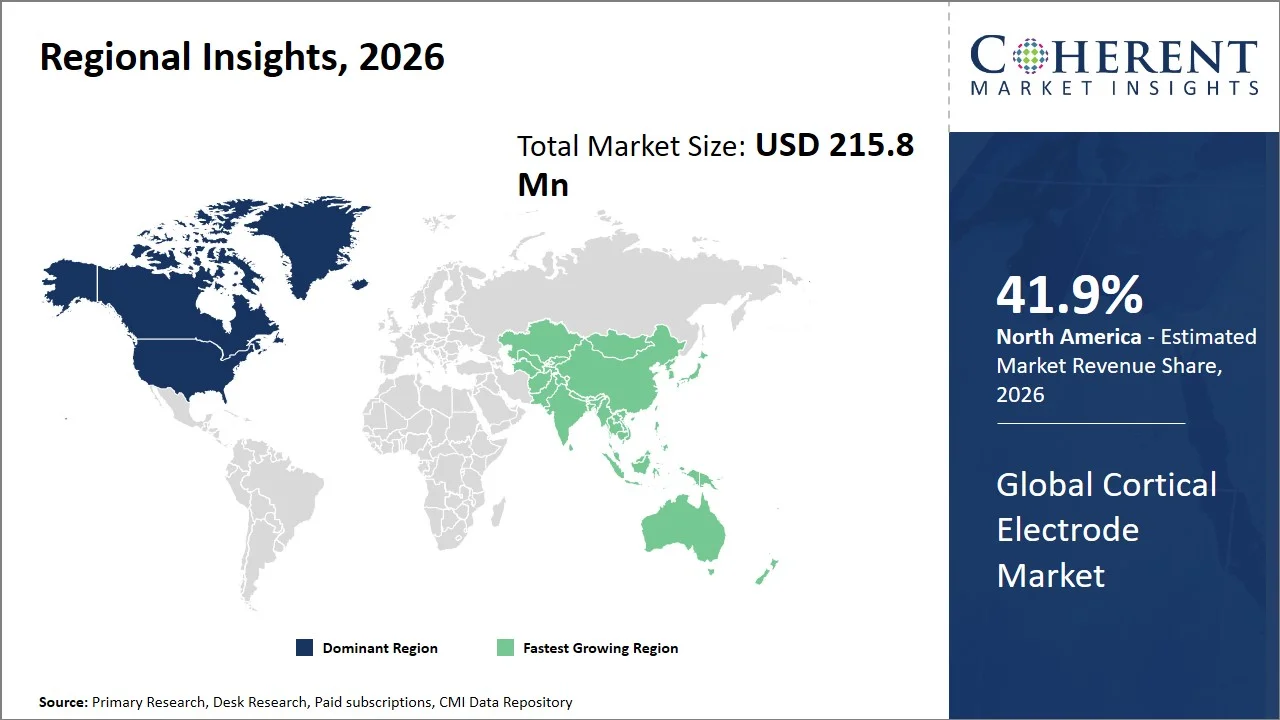
- North America maintains its dominance with an expected share of 41.9 % in 2026, bolstered by the robust presence of leading neurotechnology companies, advanced epilepsy surgery programs, and extensive neuroscience research activities. For instance, the U.S. National Institutes of Health (NIH) funds the Brain Research Through Advancing Innovative Neurotechnologies (BRAIN) Initiative to develop novel methods of neural recording and brain mapping. (Source: National Institutes of Health) These investments are furthering the usage of cortical electrodes for research and practice.
- Asia Pacific is expected to exhibit the fastest growth with an estimated contribution of 20.8 % share in 2026, propelled by expanding neuroscience research infrastructure and increasing government support for neurological disease management. For instance, the government of India promotes advanced neuroscientific research through the National Brain Research Centre (NBRC), an autonomous institute under the Department of Biotechnology engaged in neuroimaging, mapping, and neurological disorders. (Source: National Brain Research Centre)
- Expansion of Brain-Computer Interface (BCI) Applications: Rapid advancements in brain-computer interface (BCI) technology is spurring an increased need for high fidelity cortical electrodes for recording neural activity. Both academic institutions and neurotechnology firms are widely employing cortical interfaces in the realm of restoring communication and movement in individuals suffering from significant neurological disorders. This should also translate to an increase in cortical electrode use beyond its historical application to epilepsy monitoring.
- Development of Flexible and Wireless Cortical Electrodes: There has been increased emphasis by manufacturers on creating ultra-thin, flexible, wireless cortical electrodes which will likely minimize tissue damage and the long-term impact of implantation. These more advanced electrodes promise an increased level of patient comfort and will allow for long term continuous monitoring of the neural signals without the inconveniences of wiring. Future advancements in microelectronics and material science should push these technologies forward at an accelerated pace for both clinical and research application.
Segmental Insights
Why Do Subdural Grid Electrodes Dominate the Global Cortical Electrode Market?
Subdural grid electrodes are projected to hold a market share of 38.7% in 2026, because they allow the highly accurate localization of seizure onset zones and highly precise cortical mapping of the cortical regions during evaluations before epilepsy surgery. They offer vast cortical coverage, and are capable of fine functional mapping of the language, motor, and sensory areas. The demand for those electrodes has been increasing as more monitoring units and modern neurosurgery centers began to implant them. For instance, Mayo Clinic routinely utilizes subdural grid electrode monitoring in patients with medically refractory epilepsy for localization of seizure focus and mapping of eloquent cortex before epilepsy surgery. (Source: Mayo Clinic) These applications further emphasize the importance of subdural grids for clinical use in advanced epilepsy.
- Current Industry Events of 2026
- Market Size Estimation
- Regional Breakdown
- Competitive Landscape
- Customer Intelligence
- Segmental Analysis
- Pricing Analysis
- Key Market Drivers, Challenges & Future Trends
- Customized Insights Section
Why Does Platinum-Iridium Represent the Largest Material Segment in the Cortical Electrode Market?
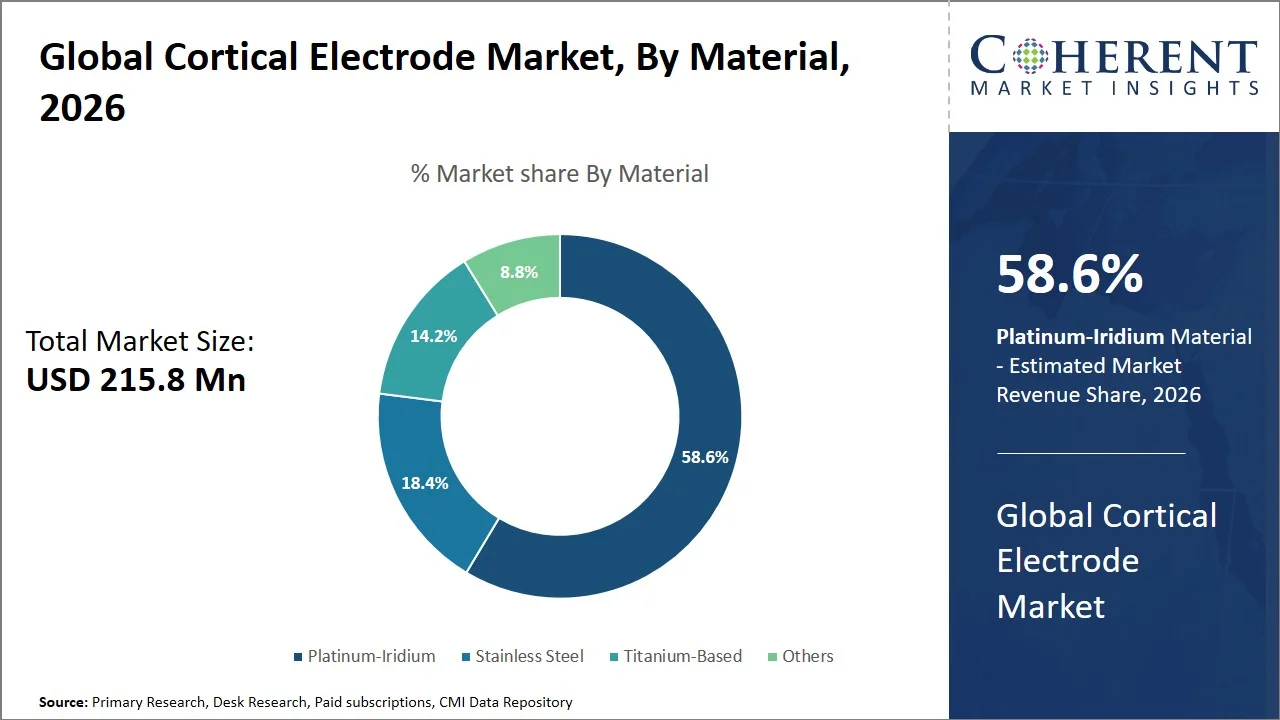
Platinum-Iridium is projected to hold a market share of 58.6% in 2026, due to its high electrical conductivity, corrosion resistance and biocompatibility with the biological environment for chronic neural recording. The stable signal retrieval is made possible and brain environment is hardly disturbed by the degradation due to presence of metal. Further, the mechanical stability of this material allows high-density electrode array to be designed for sophisticated neurodiagnostics and brain-mapping purposes. For instance, the Blackrock Neurotech's Utah Array is among the most commonly used implantable brain-computer interface platforms within neuroscience research and utilizes platinum-based electrode technology to record neural signals in the long-term. (Source: Blackrock Neurotech) The persisting role of platinum materials in cutting edge neural interface systems highlights the continuing significance of this class of materials in the cortical electrode market.
Epilepsy Monitoring and Surgery Segment Dominates the Global Cortical Electrode Market
The epilepsy monitoring and surgery segment is projected to hold a market share of 47.3% in 2026, due to accurately identifying the seizure onset zone in drug-resistant epilepsy patients requires detailed recording of the beginning of seizures. High resolution electrocorticography recorded using cortical electrodes helps in the mapping of brain function, which assists surgical planning. It enables the localization of the epileptic tissue, while at the same time retaining function of critical areas. For instance, The Epilepsy Surgery Program at Massachusetts General Hospital uses subdural grid and strip electrodes as invasive monitoring to define the onset zones of seizure and to map eloquent cortex before undertaking an operation. (Source: Massachusetts General Hospital) These advanced neurosurgical applications encourage the widespread use of cortical electrodes.
Currents Events and their Impact
Current Events | Description and its Impact |
U.S. FDA Clearance Advances Next-Generation Cortical Interface Technologies (April 2025) |
|
China Launches National Brain-Computer Interface Industry Development Plan (September 2025) |
|
(Source: Practical Neurology, Future US, Inc.)
Cortical Electrode Market Dynamics
Market Drivers
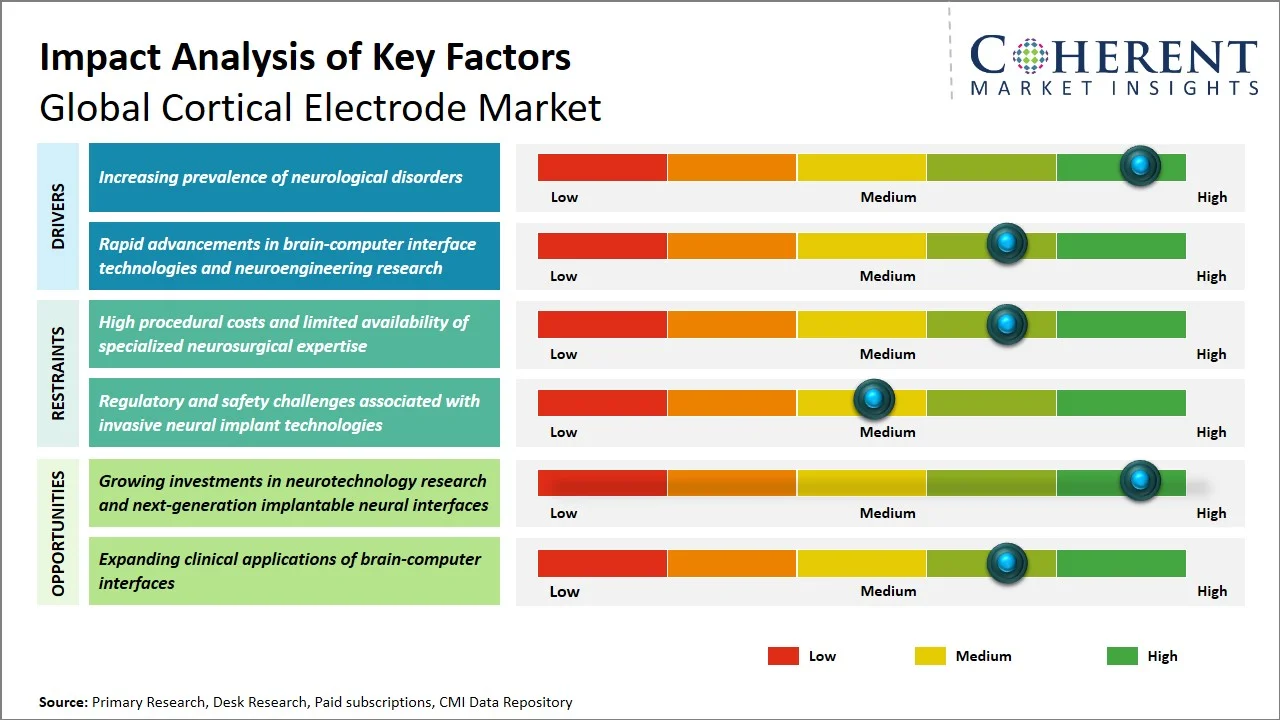
- Increasing prevalence of neurological disorders: Increasing rates of neurological diseases has been boosting the market of advanced technologies that enable effective monitoring of brain as well as neurosurgical interventions. Cortical electrodes are widely adopted for the diagnosis and treatment of neurological diseases. These electrodes are used for monitoring and recording of neural activity, for functionally mapping brain, and for determining precise seizure focus to neurological surgery. An increasing caseload of neurological disorders is projected to lead a consistent upswing in the uptake of cortical electrode technology. For instance, according to the Centers for Disease Control and Prevention (CDC), about 2.9 million U.S. adults 18 and older have active epilepsy, while about 456,000 U.S. children 17 and younger have active epilepsy, highlighting the substantial patient population requiring continuous neurological assessment and treatment continues to support the adoption of cortical electrodes in clinical practice. (Source: Centers for Disease Control and Prevention)
- Rapid advancements in brain-computer interface technologies and neuroengineering research: Continuous progress in the brain-computer interface field and neuroengineering has led to greater use of cortical electrodes both in research and clinical applications. Restoration of communication, locomotion and motor function to neurologically impaired patients who have lost these faculties will become ever more important in the coming years, and to achieve this, high-fidelity recordings of neural activity are required. Technological development has enabled the consistent advancement of signal processing, neural decoding, and implanted hardware and in the future the requirement for high-quality cortical electrode arrays should rise greatly as brain-computer interface moves toward commercial implementation. For instance, in November 2024, Health Canada granted approval to Neuralink to test its implantable brain computer interface at University Health Network (UHN), Toronto. The development illustrates increased movement in implantable neural interfaces and indicates a potential demand for cortical electrode platforms in the future. (Source: OECD)
Emerging Trends
- Integration of AI-Enabled Neural Signal Analytics: Artificial intelligence is being increasingly applied to cortical electrode arrays, helping to translate difficult neural signals into functional information. Complex AI algorithms can analyze brain activity in real time, leading to improved epilepsy localization, functional mapping, and neuroprosthetic control.
- Growing Adoption of Minimally Invasive Stereo-EEG (sEEG) Procedures: The widespread adoption of stereo-electroencephalography (sEEG) in the assessment of epilepsy is stimulating the development of superior cortical and depth electrodes. SEEG allows access to deeper intracerebral targets than conventional invasive monitoring while decreasing surgical morbidity and recuperation period.
Regional Insights
Why is North America a Strong Market for Cortical Electrodes?
North America leads the global cortical electrode market, accounting for an estimated 41.9% share in 2026, propelled by the region's well-established healthcare infrastructure, high adoption of technology and sizable investments in neurological R&D. The region harbors some of the leading medical device manufacturers with the presence of supportive government policies emphasizing development of diagnosis & treatments of neurological disorders thereby resulting in a favorable market environment. Especially, in the U.S., due to the high degree of integration between academic institutions and medical device companies, the region witnesses accelerated product innovation and increased application of cortical electrodes in various clinical practices. Furthermore, strict U.S. FDA regulatory standards further bolster confidence in market players and products. For instance, the Food and Drug Administration (FDA) has published guidelines for implanted Brain-Computer Interface (BCI) systems, which include recommendations for nonclinical and clinical studies, as well as long-term safety studies after implantation of neural interface technologies. (Source: Food and Drug Administration)
Why Does Asia Pacific Cortical Electrode Market Exhibit High Growth?
The Asia Pacific cortical electrode market is expected to exhibit the fastest growth with an estimated contribution of a 20.8% share to the global market in 2026, primarily attributed to growing expenditure in the healthcare sector, a rise in neurological diseases, and enhancing access to the latest technologies. Policies adopted by the governments of countries such as China, Japan, and India, promoting the development of cutting-edge neurotechnology solutions, have further boosted the market. For instance, the Cabinet Office of Japan promotes the innovation of brain science and neurotechnology via the Moonshot Research and Development Program which includes projects focused on high-performance brain-machine interface technology and future neural technologies. (Source: Government of Japan) Furthermore, the development of a solid infrastructure to support medical practices in addition to a cost-efficient manufacturing base and skilled neurologists makes the market environment robust.
Global Cortical Electrode Market Outlook for Key Countries
Why is the U.S. Leading Innovation and Adoption in the Cortical Electrode Market?
The U.S. holds the largest market share for innovation and adoption in cortical electrode market due to the high concentration of centers specializing in epilepsy surgery (such as Cleveland Clinic Epilepsy Center, Mayo Clinic Epilepsy Program, UCSF Epilepsy Center), innovative neurosurgical programs (such as programs by Massachusetts General Hospital, Johns Hopkins Hospital, Barrow Neurological Institute). and leading neurotechnology developers. The country has emerged as a leader in brain computer interfaces and has allowed the clinical testing of high-density cortical electrode systems used for recording and stimulating nerves. The early implementation of the brain mapping procedure (using invasive means) has helped with the advancement of cortical electrodes application.
Is Japan a Favorable Market for Cortical Electrodes?
Japan serves as an attractive market for cortical electrode due to a developed neurosurgery infrastructure and significant expertise in epilepsy diagnosis and treatment. Specialized epilepsy centers are already in operation and widespread throughout Japan that implement invasive brain monitoring and cortical mapping methods to identify surgical candidates and target brain areas. Also, Japan is actively involved in the areas of neurotechnology and brain-computer interfaces, driving adoption of more sophisticated cortical electrode systems in the clinical and research sectors, alongside a rapidly growing field of medical device development and advanced neurological care.
Is China Emerging as a Key Growth Hub for the Cortical Electrode Market?
China is becoming an important growth area in the cortical electrode market due to growing investments in the neurotechnology, brain computer interface (BCI) and neurosciences. The country is enhancing its capabilities in brain mapping, neural engineering and sophisticated neurosurgery that facilitate an adoption of cortical electrodes. Increased focus on diagnosis and treatment of brain related disorders, drives a growing demand for intracranial monitoring solutions.
Why Does Germany Top the European Cortical Electrode Market?
Germany stands at the top of the European cortical electrode market due to high competency in neurosurgery, established epilepsy surgery protocol, and high usage of sophisticated neurodiagnostic technologies. It possesses research centers (such as German Center for Neurodegenerative Diseases (DZNE), Max Planck Institute for Human Cognitive and Brain Sciences, Forschungszentrum Jülich) and academic hospitals (such as Charité – Universitätsmedizin Berlin, University Hospital Heidelberg, University Hospital Bonn) known in neurosciences research and routinely perform intraoperative cortical mapping and intra-cranial monitoring. Focus on translational neurotechnology research and application of neural interface technologies to clinical setting strengthens its leadership position. The country's medical device environment supports development of advanced cortical electrode technologies.
Is Cortical Electrode Market Developing in India?
India represents a growth opportunity for cortical electrode, as modern neurosurgical techniques are become increasingly available and greater emphasis is put on the management of chronic neurological diseases. There has been an increasing adoption of more comprehensive neurosurgical technologies, particularly regarding the procedures like epilepsy surgery, functional brain mapping and intracranial monitoring, in all the major neurological care centers. An increase in the integration of high-end neurodiagnostic technologies into the clinical setting is believed to lead to higher growth in the long term.
Evolution of Cortical Electrode Technologies and Clinical Adoption
Technology | Key Characteristics | Primary Use Case | Market Significance |
Subdural Grid Electrodes | High-density surface recording | Epilepsy monitoring & cortical mapping | Largest revenue-generating technology |
Strip Electrodes | Minimally invasive placement | Seizure localization | Widely used in presurgical evaluation |
Depth Electrodes (sEEG) | Deep brain signal acquisition | Drug-resistant epilepsy assessment | Fast-growing adoption in epilepsy centers |
Flexible Cortical Electrodes | Improved conformability and reduced tissue irritation | Long-term neural monitoring | Enhances patient safety and signal quality |
Wireless Cortical Electrodes | Cable-free neural signal transmission | BCI and neuroresearch applications | Expands next-generation neurotechnology use |
High-Density Electrode Arrays | Higher spatial resolution | Brain mapping and BCI research | Supports precision neural interfacing |
How are the growing investments in neurotechnology research and next-generation implantable neural interfaces creating new growth opportunities in the cortical electrode market?
The increase of neurotechnology investment leads to rapid advancement of superior cortical electrode systems with enhanced signal acquisition, resolution, and longevity. Additionally, the rising investment is stimulating research on brain mapping, neural decoding and Brain-Computer Interfaces, broadening the use of cortical electrodes in the clinic and the lab. Moreover, these investments promote partnerships among neurotechnology companies, academic centers and clinical practices in an attempt to accelerate product development and commercialization.
Manufacturers of neurotechnology products are increasingly moving towards next-generation cortical electrode platforms to keep pace with the growing demand for more advanced neural interface devices. For instance, in January 2026, the National Reconstruction Fund Corporation (NRFC) invested USD 20 million in Omniscient Neurotechnology to broadened its brain-mapping technology globally. (Source: National Reconstruction Fund) These investments will likely reinforce innovation across the neurotechnology ecosystem and accelerate the adoption of cutting-edge cortical electrode technologies.
Market Players, Key Development, and Competitive Intelligence
Key Developments
- In March 2026, China's National Medical Products Administration (NMPA) granted marketing approval for Neuracle's NEO brain-computer interface, which is the first invasive BCI medical device to receive commercial approval worldwide. This cortical neural sensing device reads the electrical signals generated from the brain for communication and movement applications, and this regulatory milestone in neural interface technology is expected to drive development and commercialization in cortical electrodes.
- In January 2026, Precision Neuroscience and Medtronic publicly stated a strategic partnership combining Precision's Layer 7 cortical interface with Medtronic's StealthStation surgical navigation system. The companies intend to deliver to surgeon's simultaneous functional brain mapping and anatomical navigation to assist surgeons in surgical decisions made during surgery. The partnership is a key step forward in gaining general surgical adoption of cortical electrode and brain computer interface technology.
Competitive Landscape
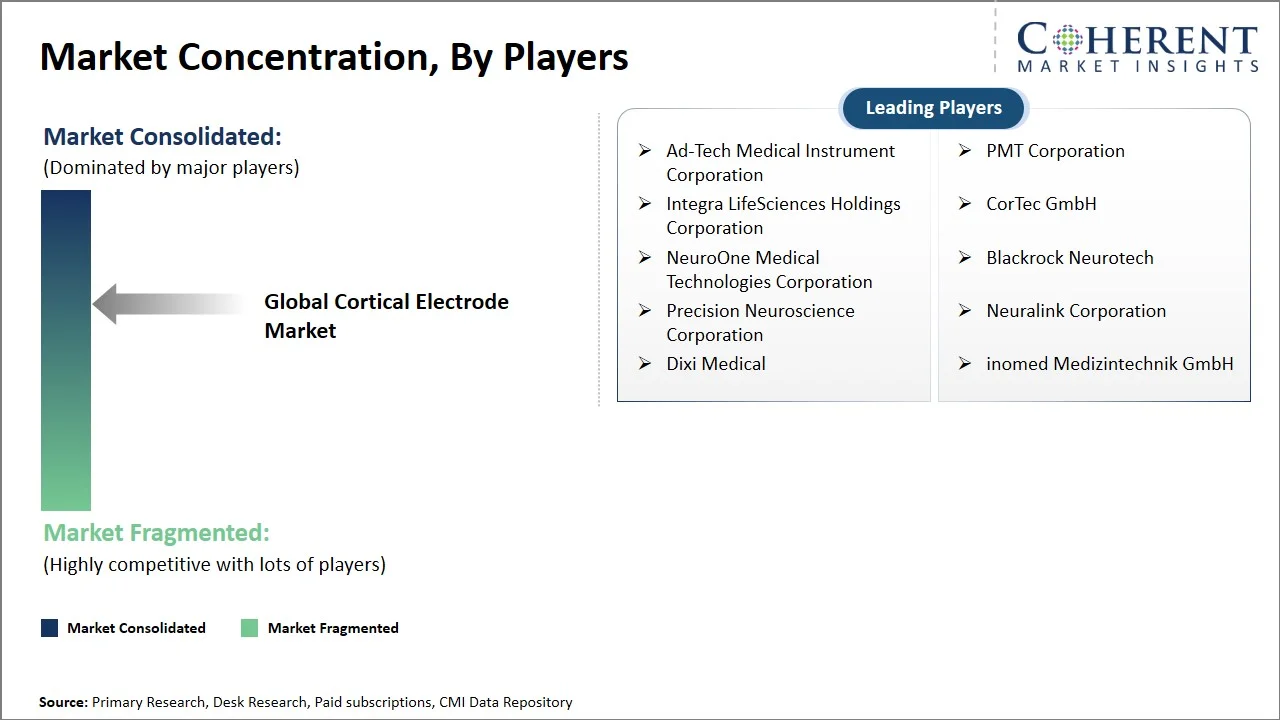
The global cortical electrode market is moderately consolidated, with competition arising over technological development, the performance of signal acquisition and the safety for long-term implantation. The key companies are focused on flexible electrode designs, wireless neural interfaces, the newest biocompatible materials for better clinical results, and advanced neurotechnology applications. Partnerships with academic institutions, neuro-science institutes and healthcare professionals play an essential role in developing new products. The increasing investments in brain computer interfaces and neural monitoring new-generation will characterize the market during the following years. Key focus areas include:
- Development of high-density, flexible, and wireless cortical electrode technologies
- Enhancement of biocompatibility and long-term neural signal stability
- Expansion of brain-computer interface (BCI) and neuroprosthetic applications
- Strategic partnerships with neuroscience research institutes and neurosurgical centers
- Investment in clinical validation studies and regulatory approvals to strengthen market adoption
Market Report Scope
Cortical Electrode Market Report Coverage
| Report Coverage | Details | ||
|---|---|---|---|
| Base Year: | 2025 | Market Size in 2026: | USD 215.8 Mn |
| Historical Data for: | 2020 To 2024 | Forecast Period: | 2026 To 2033 |
| Forecast Period 2026 to 2033 CAGR: | 11.7% | 2033 Value Projection: | USD 468.4 Mn |
| Geographies covered: |
| ||
| Segments covered: |
| ||
| Companies covered: | Ad-Tech Medical Instrument Corporation, PMT Corporation, Integra LifeSciences Holdings Corporation, CorTec GmbH, NeuroOne Medical Technologies Corporation, Blackrock Neurotech, Precision Neuroscience Corporation, Neuralink Corporation, Dixi Medical, and inomed Medizintechnik GmbH | ||
| Growth Drivers: |
| ||
| Restraints & Challenges: |
| ||
Analyst Opinion (Expert Opinion)
- The future trajectory of the cortical electrode market depends on the convergence of neurotechnology, brain-computer interfaces and precise neurosurgery. New flexible materials, wireless connectivity and high-density electrode arrays will enhance the signal quality, minimize invasiveness and expand the applications of cortical electrodes beyond epilepsy monitoring to neural prosthetics and neural rehabilitation.
- The maximum opportunities are foreseen in subdural grid electrodes in epilepsy monitoring and surgical planning in the U.S. The country possesses high number of epilepsy centers, neuroscience research institutions and neurotechnology developers. The U.S still provides sufficient opportunities for cortical mapping and seizure localization technology demand to continue. The increasing investment in brain-computer interfaces (BCIs) research will add to the demand in the market.
- In order to gain a competitive advantage market players should invest in electrodes with enhanced biocompatibility and stable long-term signals, and incorporate wireless connectivity into their product designs in order to acquire a competitive advantage. Partnerships with neuroscience research institutes, epilepsy centers and brain-computer interfaces (BCIs) designers will be key for fast product validation and commercialization. Manufacturers who integrate novel materials, miniaturization, and AI-enabled neural data analysis into their products will stand to improve their market positions.
Speak to the analyst
Want personalized insights?
Take the findings above to one of our principal consultants, or have the report rebuilt around the segments, geographies and competitors you actually track.
Market Segmentation
- Product Type Insights (Revenue, USD Mn, 2021 - 2033)
- Subdural Grid Electrodes
- Strip Electrodes
- Depth Electrodes
- Others
- Material Insights (Revenue, USD Mn, 2021 - 2033)
- Platinum-Iridium
- Stainless Steel
- Titanium-Based
- Others
- Application Insights (Revenue, USD Mn, 2021 - 2033)
- Epilepsy Monitoring and Surgery
- Brain-Computer Interface (BCI)
- Neuroscience Research
- Parkinson's Disease and Movement Disorders
- Others
- End User Insights (Revenue, USD Mn, 2021 - 2033)
- Hospitals
- Neurology and Neurosurgery Centers
- Research Institutes and Universities
- Others
- Regional Insights (Revenue, USD Mn, 2021 - 2033)
- North America
- U.S.
- Canada
- Latin America
- Brazil
- Argentina
- Mexico
- Rest of Latin America
- Europe
- Germany
- U.K.
- Spain
- France
- Italy
- Russia
- Rest of Europe
- Asia Pacific
- China
- India
- Japan
- Australia
- South Korea
- ASEAN
- Rest of Asia Pacific
- Middle East
- GCC Countries
- Israel
- Rest of Middle East
- Africa
- South Africa
- North Africa
- Central Africa
- North America
- Key Players Insights
- Ad-Tech Medical Instrument Corporation
- PMT Corporation
- Integra LifeSciences Holdings Corporation
- CorTec GmbH
- NeuroOne Medical Technologies Corporation
- Blackrock Neurotech
- Precision Neuroscience Corporation
- Neuralink Corporation
- Dixi Medical
- inomed Medizintechnik GmbH
Sources
Primary Research Interviews
- Epileptologists and neurologists involved in epilepsy diagnosis and surgical planning
- Functional neurosurgeons performing cortical mapping and epilepsy surgery procedures
- Neurophysiology laboratory directors and intracranial monitoring specialists
- Cortical electrode manufacturers and neurotechnology device developers
- Brain-computer interface (BCI) researchers and neural engineering experts
- Neuroscience research institute leaders and academic investigators
Stakeholders
- Cortical electrode manufacturers and neural interface technology providers
- End-use Sectors
- Tertiary care hospitals with neurology and neurosurgery departments
- Comprehensive epilepsy centers and epilepsy monitoring units (EMUs)
- Academic medical centers and neuroscience research institutes
- Brain-computer interface (BCI) research laboratories
- Neurorehabilitation and functional neurosurgery centers
- Government and university-funded neuroscience programs
- Regulatory & Health Bodies
- U.S. Food and Drug Administration (FDA)
- European Medicines Agency (EMA)
- European Commission Medical Device Regulation (EU MDR)
- Pharmaceuticals and Medical Devices Agency (PMDA), Japan
- National Medical Products Administration (NMPA), China
- Central Drugs Standard Control Organization (CDSCO), India
Databases
- World Health Organization (WHO) Global Health Observatory – neurological disease statistics
- Centers for Disease Control and Prevention (CDC) – epilepsy and neurological disorder surveillance data
- National Institutes of Health (NIH) RePORTER – neuroscience and neurotechnology research funding
- OECD Health Statistics – healthcare expenditure and neurological care indicators
- Eurostat Healthcare Database – healthcare infrastructure and medical technology indicators
Magazines
- Neurotech Business Report
- NeuroNews International
- Brain & Life Magazine
- Medical Device Network
- MedTech Dive
Journals
- Journal of Neural Engineering
- Brain Stimulation
- Epilepsia
- Clinical Neurophysiology
- Frontiers in Neuroscience
Newspapers
- The Wall Street Journal – Medical device companies, healthcare innovation, and neurotechnology investments.
- Financial Times – Healthcare technology funding, medtech commercialization, and global medical device trends.
- The New York Times (Health & Science) – Brain research, neuroscience breakthroughs, and neural interface technologies.
- The Guardian (Science & Health) – Neurotechnology, neurological disorders, and emerging healthcare technologies.
- USA Today (Health Section) – Medical technology developments and neurological healthcare advancements.
Associations
- American Epilepsy Society (AES)
- International League Against Epilepsy (ILAE)
- Congress of Neurological Surgeons (CNS)
- American Association of Neurological Surgeons (AANS)
- Society for Neuroscience (SfN)
Public Domain Sources
- World Health Organization (WHO) – neurological disease prevalence and disability statistics
- Centers for Disease Control and Prevention (CDC) – epilepsy surveillance and epidemiology data
- U.S. Food and Drug Administration (FDA) – neurodevice approvals and guidance documents
- National Institutes of Health (NIH) / BRAIN Initiative – neurotechnology research and funding programs
- European Commission – medical device regulations and neuroscience research policies
Proprietary Elements
- CMI Data Analytics Tool, Proprietary CMI Existing Repository of information for last 10 years.
Get access to 250+ pages report
Every segment, forecast, competitor profile and data table behind the analysis above — available for instant download.
- ESOMAR Member
- ISO 9001:2015 Certified
- D-U-N-S Registered
- GDPR & CCPA Compliant
Missing comfort of reading report in your local language? Find your preferred language:
Transform your Strategy with Exclusive Trending Reports
Frequently Asked Questions
The global cortical electrode market is estimated to be valued at USD 215.8 Mn in 2026 and is expected to reach USD 468.4 Mn by 2033.
Subdural grid electrodes dominate due to their ability to provide high-resolution cortical mapping and precise seizure localization during epilepsy monitoring and neurosurgical procedures.
A cortical electrode is a neural interface device placed on or near the cerebral cortex to record or stimulate brain electrical activity for diagnostic, therapeutic, or research purposes.
The CAGR of the global cortical electrode market is projected to be 11.7% from 2026 to 2033.
Platinum-iridium offers excellent electrical conductivity, corrosion resistance, and long-term biocompatibility for chronic neural applications.
High-density arrays enable more precise neural signal acquisition and improved spatial resolution for brain mapping and brain-computer interface applications.
High procedural costs and limited availability of specialized neurosurgical expertise, and regulatory and safety challenges associated with invasive neural implant technologies are the major factors hampering the growth of the global cortical electrode market.