

Global Digital Biology Market Size and Forecast – 2026 To 2033
The global digital biology market is expected to grow from USD 17,350.0 Mn in 2026 to USD 46,117.9 Mn by 2033, registering a compound annual growth rate (CAGR) of 15% from 2026 to 2033. The market for global digital biology is poised for significant expansion, fueled by the increasing government investment in AI-enabled biomedical research and computational biology infrastructure.
In July 2026, the U.S. National Science Foundation (NSF) announced USD 83 million in awards to integrate scientific data with computing and AI resources, supporting large-scale, data-intensive research and AI-driven discovery. This highlights the growing public investment in AI-enabled research infrastructure and the increasing integration of computational capabilities with biological data, supporting the expansion of digital biology applications.
Key Takeaways of the Global Digital Biology Market
- Software is projected to hold 49.8% of the global digital biology market share in 2026, making it dominant component segment across North America due to the region’s strong pharmaceutical R&D, computational biology infrastructure, and adoption of AI-enabled research tools. For instance, the U.S. FDA’s Center for Biologics Evaluation and Research (CBER) has documented the use of AI/ML across biological-product development, including clinical, CMC, and pharmacovigilance applications, supporting demand for specialized biological software platforms.
- Cloud is projected to hold 63.6% of the global digital biology market share in 2026, making it dominant deployment mode segment across Europe due to the development of federated cloud and multi-cloud infrastructure for life-science research. For instance, ELIXIR Europe’s Compute Platform is developing federated hybrid- and multi-cloud services that enable researchers to access, share, and analyze large biological datasets across European research infrastructures.
- Artificial intelligence and machine learning is projected to hold 31.6% of the global digital biology market share in 2026, making it dominant technology segment across Europe due to increasing regulatory integration of AI into medicine development and evidence generation. For instance, in January 2026, the European Medicines Agency (EMA) and U.S. Food and Drug Administration (FDA) established 10 common principles for good AI practice in medicine development, covering AI use across research, clinical development, manufacturing, and safety monitoring.
- North America market maintains dominance with an expected share of 40.8% in 2026, bolstered by its established biomedical research infrastructure, extensive genomic datasets, and advanced computational capabilities. For instance, the U.S. National Institutes of Health (NIH) All of Us Research Program provides researchers with data from more than 747,000 participants, including over 535,000 whole-genome sequences linked to nearly 482,000 electronic health records. The dataset also includes proteomics data from nearly 10,000 participants and RNA sequencing data from nearly 9,000 participants, strengthening the infrastructure for AI-driven biological analysis and multi-omics research.
- Asia Pacific is expected to exhibit the fastest growth in the global digital biology market, registering an estimated CAGR of 16.8% during 2026–2033, driven by expanding genomic databases, computational biology infrastructure, and government-backed AI–biotechnology programs. For instance, as of February 2026, India’s GenomeIndia initiative had completed whole-genome sequencing for more than 10,000 individuals representing major population groups, creating a large national genomic resource for computational and precision-medicine research.
Segmental Insights
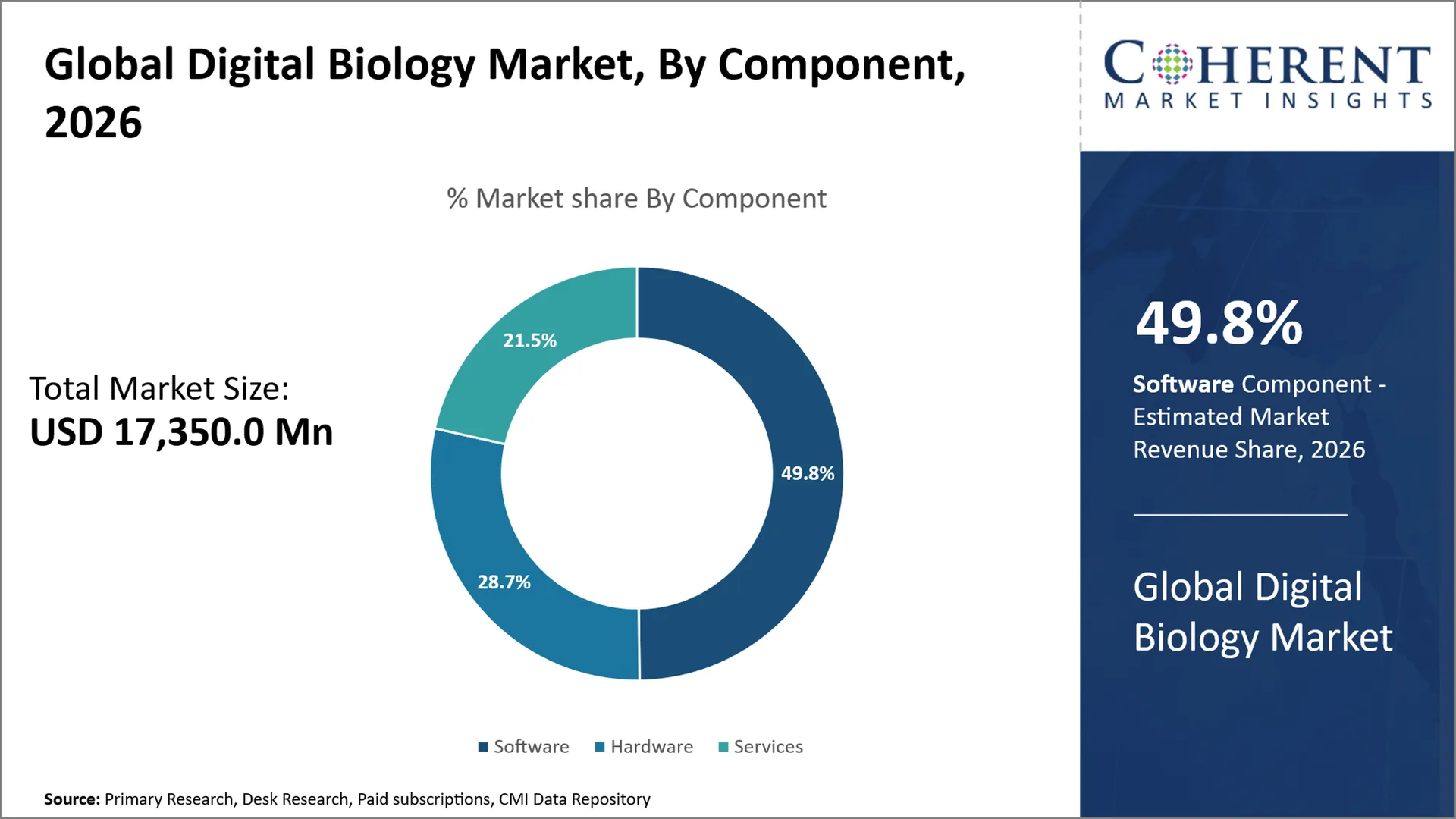
Why Do Software Dominate the Global Digital Biology Market?
Software is projected to hold the market share of 49.8% in 2026, attributed to the ability of software tools to support integration, analysis and interpretation of large-scale biological data, such as multi-omics, proteomics and genomics data, using scalable computational workflows. Additionally, the versatile nature of these software platforms enables their integration with various laboratory systems, cloud infrastructure and applications like artificial intelligence-based analytics. For instance, in May 2026, the U.S. National Institutes of Health (NIH) unveiled its Data Science and Artificial Intelligence initiative to accelerate computational and artificial intelligence (AI) approaches to understand multimodal biomedical data.
- Current Industry Events of 2026
- Market Size Estimation
- Regional Breakdown
- Competitive Landscape
- Customer Intelligence
- Segmental Analysis
- Pricing Analysis
- Key Market Drivers, Challenges & Future Trends
- Customized Insights Section
Why Does Cloud Represent the Largest Deployment Mode Segment in the Digital Biology Market?
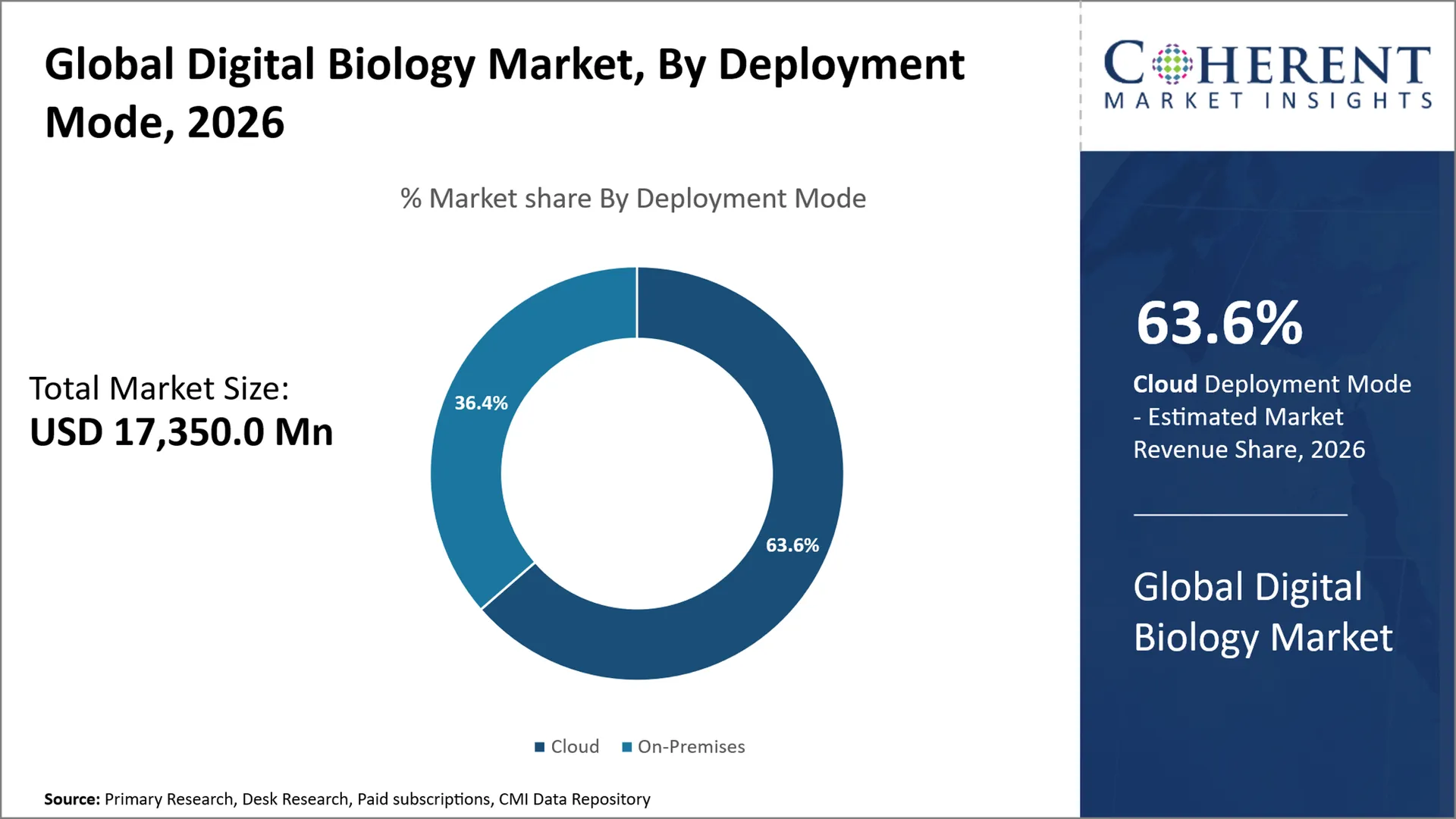
Cloud is projected to hold a market share of 63.6% in 2026, as they can provide scalable storage and processing power to support the increasing size of omics datasets of ever more precise scales. Cloud platforms can facilitate the secure sharing of data and collaborative analysis between research institutions without requiring large on-premises infrastructure. For instance, in June 2026, the European Molecular Biology Laboratory (EMBL) upgraded their data cloud through the European Open Science Cloud (EOSC) to enable federated access to biological data and computational services across European research communities. (Source: European Commission)
Artificial Intelligence and Machine Learning Segment Dominates the Global Digital Biology Market
The artificial intelligence and machine learning segment is projected to hold a market share of 31.6% in 2026, based on their ability to analyze complex biological data sources, detect patterns and generate predictive insights. Furthermore, their use in genomics, proteomics, drug discovery, biomarker detection and biological modeling will probably speed up data-driven research and reduce the analytical burden. For instance, the U.S. Food and Drug Administration (FDA) Center for Biologics Evaluation and Research (CBER) has identified more than 70 Investigational New Drug applications that use Artificial Intelligence and Machine Learning as of 2016, including clinical and chemistry manufacturing and controls and pharmacovigilance applications.
Current Events and their Impact
Current Events | Description and its Impact |
EU Assesses Biological AI Models and Data Infrastructure Needs (August 2026) |
|
NSF Expands Integrated Data Infrastructure for AI-Driven Science (July 2026) |
|
ARPA-H Launches AI-Powered Intelligent Generator of Research Program (May 2026) |
|
Digital Biology Market Dynamics
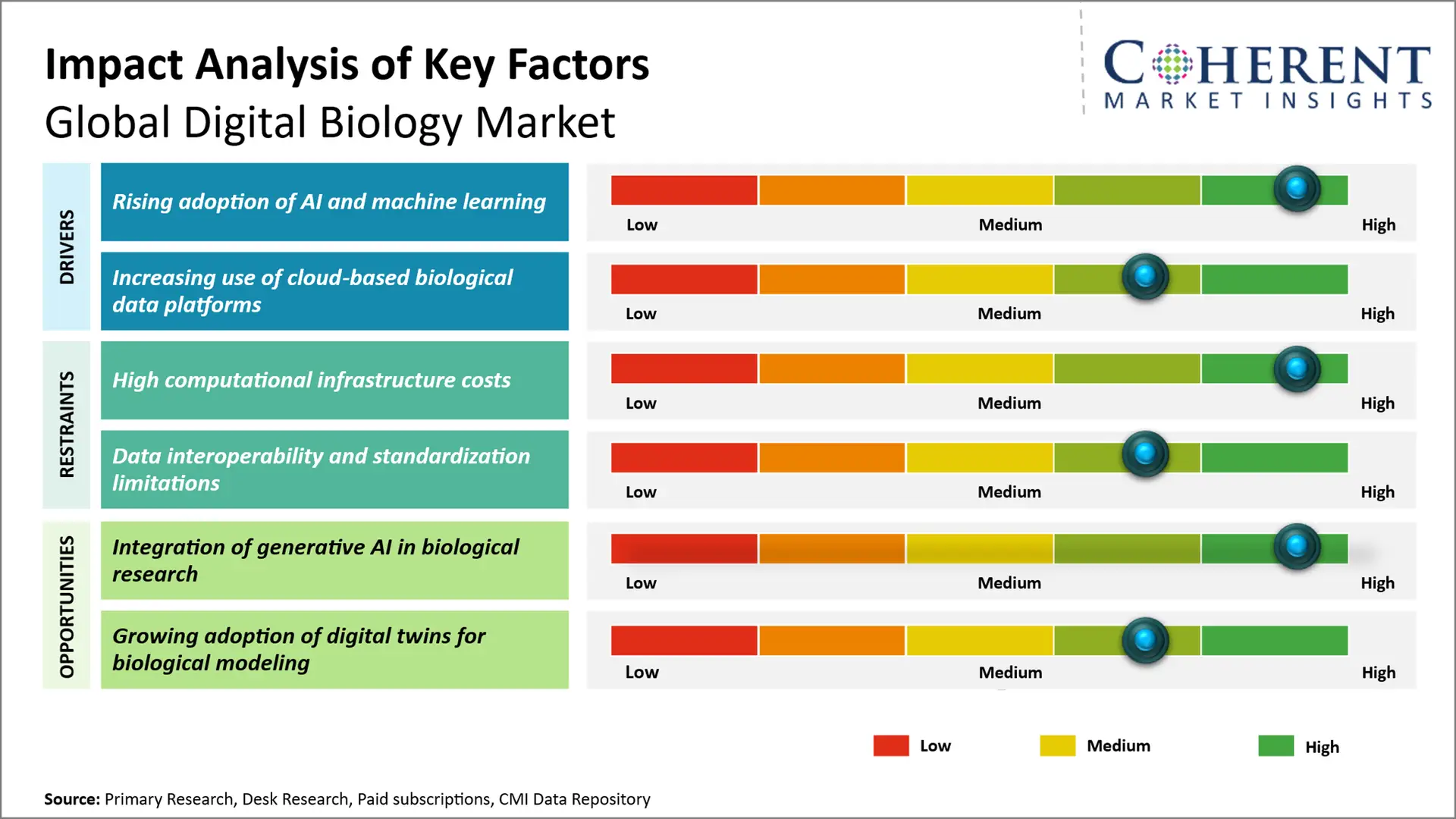
Market Drivers
- Rising adoption of AI and machine learning: The growing volume and complexity of biomedical datasets is driving adoption of AI/ML for biological data analysis, computational modeling, and research discovery. AI-ready datasets and advanced computing are enabling researchers to identify biological patterns and accelerate hypothesis generation, while computational biology is increasingly integrated into biomedical research workflows. For instance, in January 2026, U.S. NIH advanced its Bridge2AI program to Stage 2, focusing on AI-ready biomedical datasets, AI-enabled research tools, and a network supporting AI-driven health research.
- Increasing use of cloud-based biological data platforms: The growing volume of genomic, multi-omics, and other biological datasets is increasing demand for cloud platforms that provide scalable storage, computing, data sharing, and analytical capabilities. Cloud-based environments allow researchers to process large datasets without maintaining extensive on-premises infrastructure, supporting more collaborative and reproducible digital biology workflows. NIH is also expanding cloud-based biomedical data infrastructure to improve access to datasets and computational resources. For instance, in 2026, NIH’s Cloud Resources Program continued supporting researchers in using cloud computing for biomedical research, including projects involving large genomic datasets, bioinformatics, AI, and computational analysis.
- Growing integration of multi-omics data: The increasing integration of genomic, transcriptomic, proteomic, metabolomic, and clinical datasets is expanding the need for digital biology platforms capable of harmonizing and analyzing high-dimensional biological information. This convergence enables deeper biological insights and supports biomarker discovery, disease modeling, precision medicine, and computational drug development. For instance, in June 2026, NIH reported that its All of Us Research Program had made data from more than 747,000 participants available to researchers, including over 535,000 whole-genome sequences linked to nearly 482,000 electronic health records, creating a large integrated resource for precision-medicine research.
Emerging Trends
- Integration of Generative AI in Biological Research: Generative AI is increasingly being integrated into genomics, protein design, molecular modeling, and drug discovery to generate biological predictions and accelerate research workflows. Its ability to work across complex biological datasets is expanding the scope of computational biology.
- Digital Twins for Biological Modeling: Digital twins are emerging as computational models of cells, tissues, biological systems, and disease processes, enabling researchers to simulate biological behavior and test scenarios digitally. Their adoption could support more efficient drug development, disease modeling, and personalized medicine.
- Convergence of Multi-omics and AI-driven Analytics: Integration of genomics, transcriptomics, proteomics, and metabolomics with AI-driven analytics is becoming a key trend in digital biology. Combining multi-omics datasets enables more comprehensive biological insights and supports biomarker discovery, target identification, and precision medicine.
Regional Insights
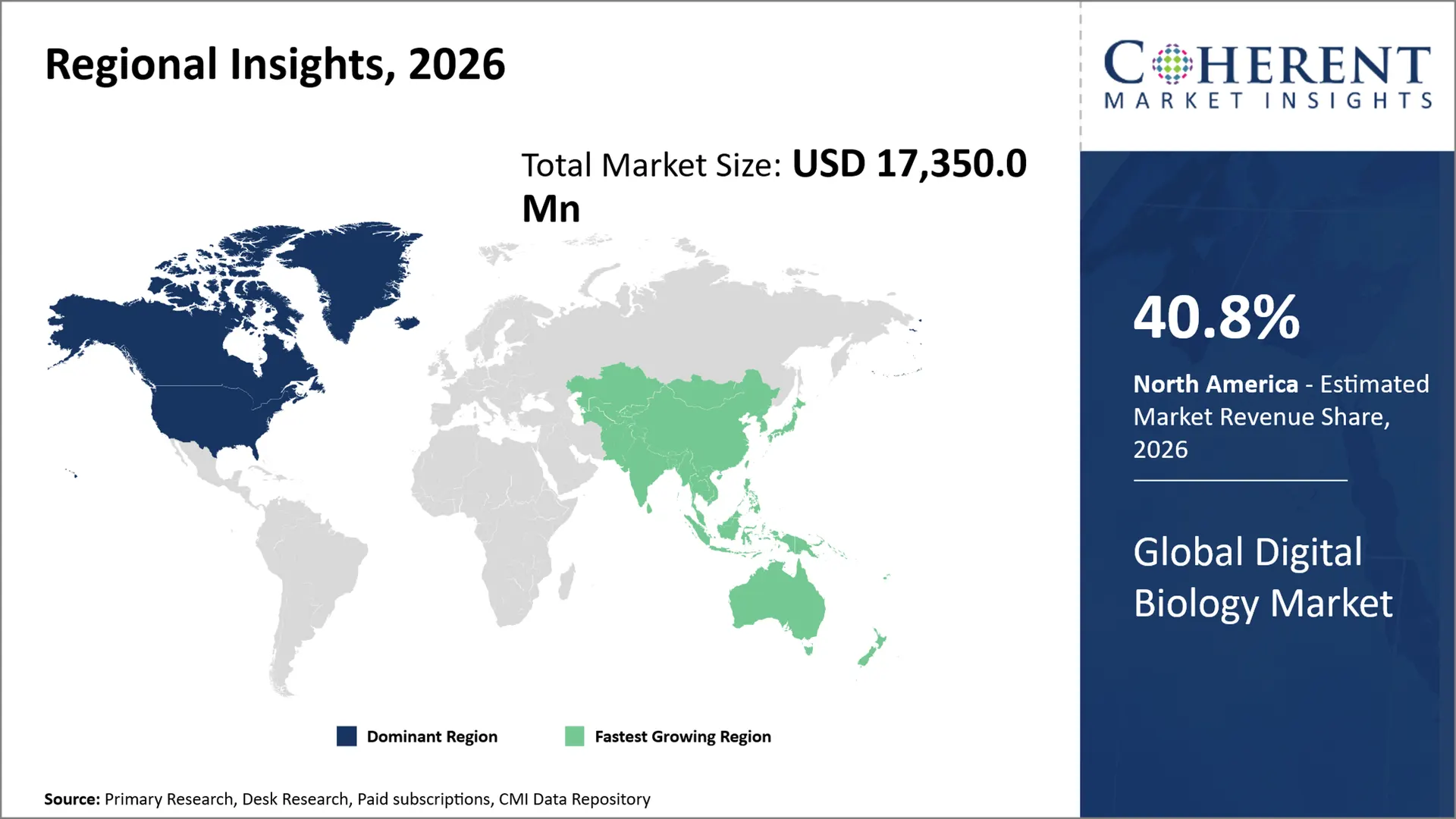
Why is North America a Strong Market for Digital Biology?
North America leads the global digital biology market, accounting for an estimated 40.8% share in 2026, owing to its well-developed biotechnology ecosystem, developed healthcare ecosystem, and high investments in research and development. The region also seems to be gaining advantage from developed research facilities, advanced computer power, and the existence of key research institutions that may support digital biology solutions for applications in bioinformatics, synthetic biology, genomics, and computational biology. Additionally, the presence of investments and funding from the governments for life sciences research, artificial intelligence, and digital health may further aid the regional ecosystem.
For instance, On September 21, 2026, the U.S National Institutes of Health (NIH) announced investments of over USD 88 million in human-based research infrastructure and technologies, focused on the use of artificial intelligence, robotics, human organoids and data capabilities. Moreover, the presence of major research organizations, research hospitals, and research organizations is expected to drive the growth of digital biology.
Why Does Asia Pacific Digital Biology Market Exhibit High Growth?
Asia Pacific is expected to exhibit the fastest growth in the global digital biology market, registering an estimated CAGR of 16.8% during 2026–2033. The region is projected to account for 23.1% of the global market in 2026, owing to the rising interest of emerging economies in genomics, biotechnology, and healthcare infrastructure investments. Innovation-friendly government policies, promoting startup incubation and public private partnerships are expected to be key growth enablers. For instance, India's Department of Biotechnology (DBT) is establishing 15 Bio-AI Hubs, after receiving more than 1,000 proposals. The main aim of this project is the intersection of artificial intelligence and biotech research, including everything from biomolecular design, to genome diagnostics and synthetic biology.
Additionally, the improved research infrastructure and increasing number of personnel with expertise seem to be fostering the technology adoption. Furthermore, a significant rise in the healthcare needs and improved research infrastructure are likely to increase the scope of applications of digital biology such as precision medicine, bioinformatics, and computational research.
Global Digital Biology Market Outlook for Key Countries
Why is the U.S. Leading Innovation and Adoption in the Digital Biology Market?
The U.S. is considered to be a country of rapid innovation and digital biology market adoption due to the advanced integration of AI, genomics, and computational biology and the large number of data-driven biomedical platforms. The research ecosystem is further building up an extensive interconnected system of genomic, clinical, proteomic and other biological data with sophisticated computational and AI computing. Additionally, there is a high digital biology market acceptance in areas like drug discovery, precision medicine, biological modeling, and data-driven life sciences.
Is Japan a Favorable Market for Digital Biology Market?
Japan is considered an attractive country for digital biology as it has a mature biotech/biomedical research infrastructure. The country has strong genomics capabilities and is adopting more artificial intelligence (AI) and computational techniques to life-science research. Due to the use of biological data, precision medicine and digital transformation, there will be opportunities for digital biology platforms in drug discovery, diagnostics and research.
Is China Emerging as a Key Growth Hub for the Digital Biology Market?
China is recognized as one of the top emerging areas for digital biology market with increasing availability of genomics capabilities, growth of AI and expansion of the computational infrastructure in biotech research. The convergence of biological data with artificial intelligence, bioinformatics and computational modeling is expected to provide opportunities for drug discovery, precision medicine, and genomics. Additionally, the government initiative to promote innovation in biotech and to undertake digital transformation is strengthening the digital biology ecosystem in the country.
Why Does Germany Top the European Digital Biology Market?
Germany's role in the European digital biology market is strengthened by strong biomedical research base, capabilities in R&D in pharmaceuticals, and extensive genomics and bioinformatics platforms. The convergence of AI, computational biology and high-performance computing in life sciences by Germany demonstrates a huge potential for digital biology in applications such as drug discovery and precision medicine as well as for various biological data analysis technologies. The predominant bridging between research and industry institutes could also help propel digital biology adoption.
Is Digital Biology Market Developing in UK?
The UK digital biology market has a strong growth rate, which is attributable to the country's strong genomic and life sciences research base, and increasing use of computational approaches in biomedical research. Integration of AI, genomics, bioinformatics, and precision medicine capabilities indicates that digital biology ecosystem in UK can expand into drug discovery, diagnostics and research. Government supported life science and data projects are also factored to assist this digital biology ecosystem.
Global Growth of GenBank and Whole Genome Shotgun (WGS) Sequence Data, 2024–2026
GenBank Release | Date | GenBank Sequences | GenBank Bases | WGS Sequences | WGS Bases |
Release 260 | Apr 2024 | 250.8 Mn | 3.21 Tn | 3.33 Bn | 27.23 Tn |
Release 265 | Feb 2025 | 255.7 Mn | 5.42 Tn | 4.15 Bn | 35.64 Tn |
Release 269 | Dec 2025 | 259.7 Mn | 6.65 Tn | 4.54 Bn | 42.13 Tn |
Release 270 | Feb 2026 | 260.9 Mn | 7.01 Tn | 4.62 Bn | 43.58 Tn |
Release 271 | Apr 2026 | 261.5 Mn | 7.29 Tn | 4.76 Bn | 45.63 Tn |
Release 272 | Jun 2026 | 264.2 Mn | 7.62 Tn | 4.99 Bn | 49.08 Tn |
Release 273 | Aug 2026 | 267.4 Mn | 8.24 Tn | 5.13 Bn | 50.83 Tn |
How is the integration of generative AI in biological research creating new growth opportunities in the digital biology market?
The rise of generative artificial intelligence is poised to open up new vistas in digital biology by enabling more efficient analysis of complex biological data sets and the generation of new hypotheses, biological sequences and molecular designs. The application of generative AI in genomics, proteomics, protein engineering and drug discovery is already heralding potential shortcuts in target identification, biomarker discovery and biological modeling, that could decrease dependence on time-consuming experimental cycles. Integration with automated research workflows and multi-omics is further broadening the potential uses of generative AI in pharma, biotech and healthcare. For instance, in July 2026, the U.S. National Institutes of Health (NIH) launched the Bio Genesis Mission, which uses artificial intelligence, advanced computing, biological data and research infrastructure to accelerate the development of new knowledge in medicine, including AI-driven prediction of living systems and drug discovery.
Market Players, Key Development, and Competitive Landscape
Key Developments
- On September 17, 2026, Anthropic PBC launched its Life Sciences Verification Program (LSVP), providing verified life-science organizations access to its advanced AI models for drug discovery, research biology, clinical development, and manufacturing. The initiative demonstrates the growing integration of AI into biological research workflows and strengthens the role of computational and AI-enabled tools within the digital biology market.
- In August 2026, DualityBio entered a global collaboration and license agreement with Genentech to develop next-generation antibody-drug conjugates using DualityBio’s DUPAC novel-payload platform. The development demonstrates the application of advanced biological platforms and disease-biology insights to accelerate next-generation drug discovery and development, supporting the broader convergence of computational and biological innovation.
- In June 2026, ThinkBio.Ai and Cleveland Clinic entered a co-development and know-how licensing agreement to develop, validate, and advance AI-driven point-of-care oncology solutions. The collaboration combines AI and biomedical knowledge systems with clinical expertise, demonstrating the increasing application of AI and biological data integration in real-world healthcare and precision oncology.
- In February 2024, Biofourmis announced four new agreements with top-20 pharmaceutical companies focused on digital biomarkers and safety-monitoring algorithms for oncology clinical trials. The programs use digital technologies for remote data collection and patient monitoring, highlighting the growing integration of digital biomarkers and AI-enabled data analytics into clinical research.
Competitive Landscape
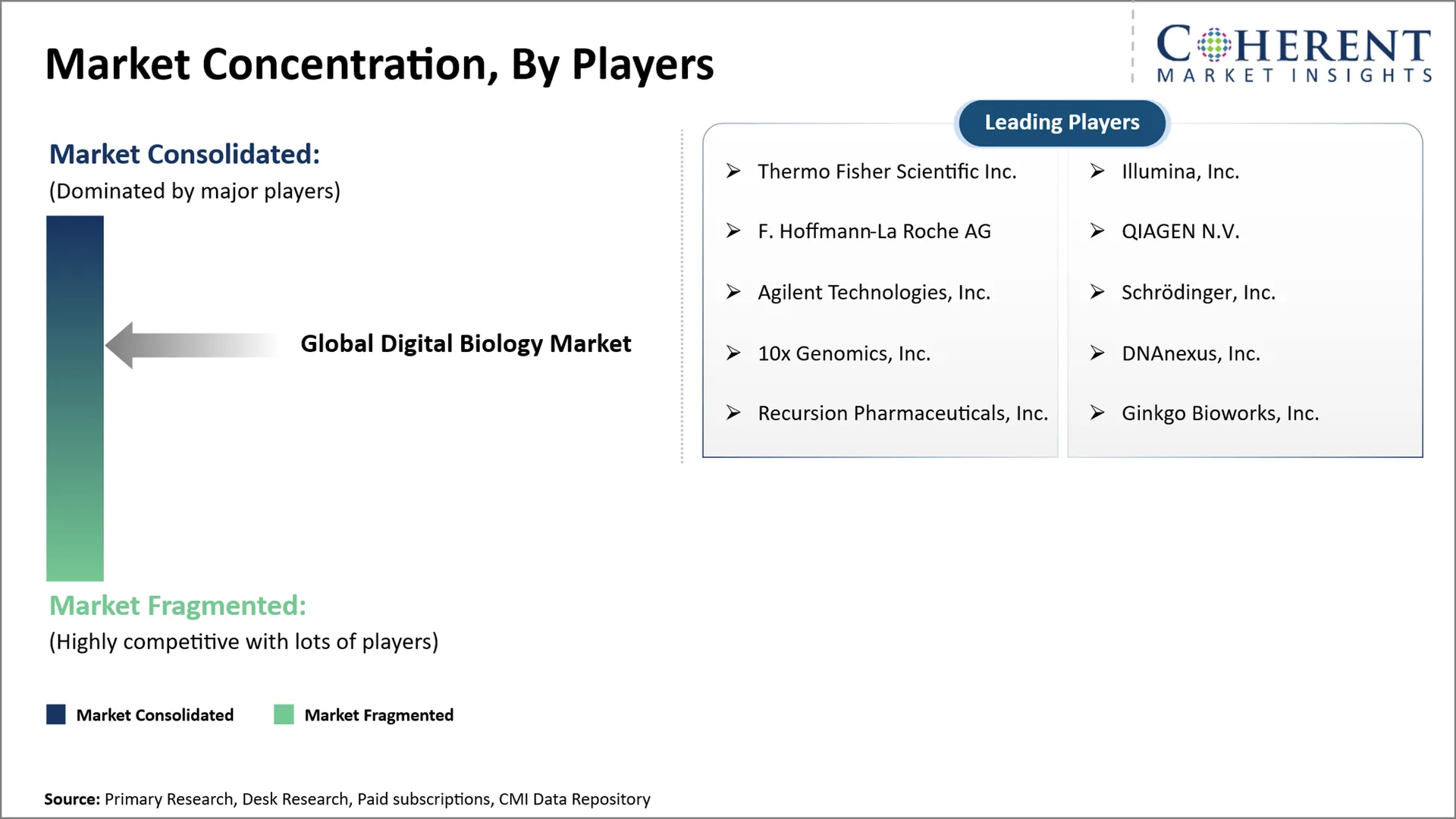
The global digital biology market is moderately competitive, with competition centered on AI capabilities, biological data integration, computational modeling, platform scalability, data quality, and interoperability. Market participants are increasingly focusing on expanding biological data platforms, strengthening AI-driven analytics, developing advanced computational models, and integrating digital tools across drug discovery, precision medicine, and biological research. Key focus areas include:
- Expansion and integration of multi-omics, genomic, proteomic, and high-throughput biological datasets
- Development of AI- and machine learning-enabled platforms for biological analysis, prediction, and drug discovery
- Advancement of computational modeling and simulation for proteins, cells, biological pathways, and disease mechanisms
- Integration of cloud computing, bioinformatics, and data analytics to enable scalable biological research
- Enhancement of data interoperability, quality, privacy, security, and regulatory compliance across digital biology workflows
Market Report Scope
Digital Biology Market Report Coverage | |||
Report Coverage | Details | ||
Base Year | 2025 | Market Size in 2026: | USD 17,350.0 Mn |
Historical Data For: | 2020 To 2024 | Forecast Period: | 2026 To 2033 |
Forecast Period 2026 To 2033 CAGR: | 15% | 2033 Value Projection: | USD 46,117.9 Mn |
Geographies covered: |
| ||
Segments covered: |
| ||
Companies covered: | Thermo Fisher Scientific Inc., Illumina, Inc., F. Hoffmann-La Roche AG, QIAGEN N.V., Agilent Technologies, Inc., Schrödinger, Inc., 10x Genomics, Inc., DNAnexus, Inc., Recursion Pharmaceuticals, Inc., Ginkgo Bioworks, Inc. | ||
Growth Drivers: |
| ||
Restraints & Challenges: |
| ||
Analyst Opinion (Expert Opinion)
- In the coming years, global digital biology market is expected to evolve from standalone biological data-analysis tools toward integrated AI-driven platforms capable of connecting biological datasets, predictive models, simulations, and laboratory workflows. Greater convergence of AI, multi-omics, cloud computing, and automated experimentation is expected to make digital biology increasingly embedded across the research and drug-development lifecycle.
- The maximum opportunities are foreseen within AI and machine learning for drug discovery in the U.S, where computational biology can address high-value activities such as target identification, protein design, molecular screening, and candidate optimization. The opportunity is particularly strong for platforms that connect biological datasets with predictive models and experimental validation.
- In order to gain a competitive advantage market players should focus on developing integrated, interoperable platforms rather than isolated analytical tools, combining AI, multi-omics, biological modeling, and scalable cloud infrastructure. Building proprietary biological datasets, improving model accuracy and interpretability, and enabling seamless integration between computational predictions and laboratory workflows can create stronger differentiation.
Speak to the analyst
Want personalized insights?
Take the findings above to one of our principal consultants, or have the report rebuilt around the segments, geographies and competitors you actually track.
Market Segmentation
- Component Insights (Revenue, USD Mn, 2021 - 2033)
- Software
- Hardware
- Services
- Deployment Mode Insights (Revenue, USD Mn, 2021 - 2033)
- Cloud
- On-Premises
- Technology Insights (Revenue, USD Mn, 2021 - 2033)
- Artificial Intelligence and Machine Learning
- Bioinformatics
- Computational Biology
- Biological Simulation and Modeling
- Data Analytics and Visualization
- Digital Twins
- Others
- Application Insights (Revenue, USD Mn, 2021 - 2033)
- Drug Discovery and Development
- Precision Medicine
- Clinical Diagnostics
- Synthetic Biology
- Genomics and Proteomics
- Agricultural Biotechnology
- Environmental Biotechnology
- Others
- End User Insights (Revenue, USD Mn, 2021 - 2033)
- Pharmaceutical and Biotechnology Companies
- Academic and Research Institutes
- Healthcare Providers
- Contract Research Organizations (CROs)
- Agricultural and Food Biotechnology Companies
- Government and Regulatory Organizations
- Others
- Regional Insights (Revenue, USD Mn, 2021 - 2033)
- North America
- U.S.
- Canada
- Latin America
- Brazil
- Argentina
- Mexico
- Rest of Latin America
- Europe
- Germany
- U.K.
- Spain
- France
- Italy
- Russia
- Rest of Europe
- Asia Pacific
- China
- India
- Japan
- Australia
- South Korea
- ASEAN
- Rest of Asia Pacific
- Middle East
- GCC Countries
- Israel
- Rest of Middle East
- Africa
- South Africa
- North Africa
- Central Africa
- North America
- Key Players Insights
- Thermo Fisher Scientific Inc.
- Illumina, Inc.
- F. Hoffmann-La Roche AG
- QIAGEN N.V.
- Agilent Technologies, Inc.
- Schrödinger, Inc.
- 10x Genomics, Inc.
- DNAnexus, Inc.
- Recursion Pharmaceuticals, Inc.
- Ginkgo Bioworks, Inc.
Sources
Primary Research Interviews
- Computational biologists and bioinformaticians involved in biological data analysis and modeling
- AI/ML scientists developing models for genomics, proteomics, drug discovery, and biological prediction
- Genomics and multi-omics researchers working with large-scale biological datasets
- Drug discovery scientists using computational platforms for target identification and molecular design
- Data scientists and software specialists developing cloud-based biological research platforms
- Research and regulatory professionals evaluating AI-enabled and computational biological tools
Stakeholders
- Pharmaceutical and biotechnology companies
- Computational biology and bioinformatics platform providers
- Genomics, proteomics, and next-generation sequencing companies
- Contract research organizations (CROs) and computational research service providers
- Academic institutions and biomedical research centers
- Healthcare providers and precision-medicine organizations
- Cloud computing and high-performance computing providers
- End-use Sectors
- Pharmaceutical and Biotechnology
- Healthcare and Clinical Research
- Academic and Research Institutions
- Contract Research Organizations (CROs)
- Agricultural Biotechnology
- Food and Nutrition Biotechnology
- Environmental Biotechnology
- Government and Public Research Organizations
- Regulatory & Health Bodies
- U.S. Food and Drug Administration (FDA) – AI/ML applications in biological products, drug development, and medical products
- European Medicines Agency (EMA) – AI, computational methods, and advanced data applications across medicine development
- Medicines and Healthcare products Regulatory Agency (MHRA), United Kingdom – AI and software-based technologies in healthcare and medicines regulation
- Pharmaceuticals and Medical Devices Agency (PMDA), Japan – regulatory evaluation of advanced computational and digital technologies in medical products
- National Medical Products Administration (NMPA), China – digital technologies, AI applications, and computational approaches in medical-product development
Databases
- NCBI GenBank – genomic sequence data and biological annotations
- NCBI Gene Expression Omnibus (GEO) – functional genomics and gene-expression datasets
- NCBI Sequence Read Archive (SRA) – high-throughput sequencing data
- Protein Data Bank (PDB) – experimentally determined three-dimensional macromolecular structures
- European Nucleotide Archive (ENA) – nucleotide sequence and genomics data
- UniProt – protein sequence and functional information
- ClinicalTrials.gov – clinical research and trial information relevant to computational and AI-enabled drug development
Associations
- International Society for Computational Biology (ISCB) – computational biology and bioinformatics research
- Global Alliance for Genomics and Health (GA4GH) – genomic and health-data standards and interoperability
- Human Genome Organisation (HUGO) – human genomics research and scientific collaboration
- International Society for Computational Biology Student Council (ISCB-SC) – computational biology education and research community
- Biotechnology Innovation Organization (BIO) – biotechnology research, innovation, and industry development
Public Domain Sources
- National Institutes of Health (NIH) – biomedical data, AI, computational biology, and research initiatives
- National Center for Biotechnology Information (NCBI) – genomic, molecular biology, and computational research resources
- National Science Foundation (NSF) – computational science, AI, and biotechnology research funding
- U.S. Department of Energy (DOE) – high-performance computing, computational biology, and biological data research
- World Health Organization (WHO) – global health, genomics, biotechnology, and digital-health information
- National Academies of Sciences, Engineering, and Medicine – assessments of AI, biological data, computational biology, and life-science technology
- European Commission – European research, digital biology, genomics, and biotechnology initiatives
- OECD – biotechnology, artificial intelligence, health data, and life-science policy information
Proprietary Elements
- CMI Data Analytics Tool, Proprietary CMI Existing Repository of information for last 10 years.
Get access to 250+ pages report
Every segment, forecast, competitor profile and data table behind the analysis above — available for instant download.
- ESOMAR Member
- ISO 9001:2015 Certified
- D-U-N-S Registered
- GDPR & CCPA Compliant
Missing comfort of reading report in your local language? Find your preferred language:
Frequently Asked Questions
The global digital biology market is estimated to be valued at USD 17,350.0 Mn in 2026 and is expected to reach USD 46,117.9 Mn by 2033.
Software dominates due to its central role in biological data analysis, computational modeling, and AI-enabled research workflows.
Digital biology combines biological sciences with AI, computational tools, and data analytics to analyze, model, and predict biological systems.
The CAGR of global digital biology market is projected to be 15% from 2026 to 2033.
Rising adoption of AI and machine learning, and increasing use of cloud-based biological data platforms are the major factors driving the growth of the global digital biology market.
High computational infrastructure costs, and data interoperability and standardization limitations are the major factors hampering the growth of the global digital biology market.
In terms of application, drug discovery and development is estimated to dominate the market revenue share in 2026.