

Global Digital Gene Manufacturing Market Size and Forecast – 2026 To 2033
The global digital gene manufacturing market is expected to grow from USD 1,620.0 Mn in 2026 to USD 5,191.2 Mn by 2033, registering a compound annual growth rate (CAGR) of 18.1% from 2026 to 2033. The market for global digital gene manufacturing is poised for significant expansion, fueled by the rising government investment in automated and scalable genetic-medicine manufacturing.
On September 1, 2026, Advanced Research Projects Agency for Health (ARPA-H) committed up to USD 125 million through its GIVE program to develop automated, distributed manufacturing systems for on-demand RNA-based genetic medicines, including integrated DNA/RNA production and digital process management. This investment supports the shift toward digitally enabled, automated gene-manufacturing workflows.
Key Takeaways of the Global Digital Gene Manufacturing Market
- Services are projected to hold 49.7% of the global digital gene manufacturing market share in 2026, making it dominant component segment across Europe due to regulatory support for innovative and digitalized manufacturing. For instance, the European Medicines Agency (EMA) has established a Quality Innovation Group specifically to address innovative manufacturing and control technologies, including digitalization, advanced manufacturing, and decentralized manufacturing, while its 2026–2028 work plan continues to focus on innovative manufacturing technologies.
- DNA Synthesis is projected to hold 42.8% of the global digital gene manufacturing market share in 2026, making it dominant technology segment across Europe due to established regulatory guidance for synthetic nucleic-acid manufacturing. For instance, the European Medicines Agency (EMA) has developed specific guidance covering the manufacturing, characterization, specifications, and analytical control of synthetic oligonucleotides, including considerations for personalized-medicine applications.
- Drug discovery and development is projected to hold 25.6% of the global digital gene manufacturing market share in 2026, making it dominant application segment with North America leading due to regulatory support for genetically targeted therapeutic development. In May 2026, the U.S. FDA issued final guidance outlining CMC flexibilities for human cellular and gene therapy products, including approaches intended to facilitate development and review of therapies for serious or life-threatening conditions.
- North America market maintains dominance with an expected share of 40.6% in 2026, bolstered by a mature regulatory framework for synthetic nucleic acid research and gene-based technologies. For instance, in March 2026, U.S. NIH revised its Guidelines for Research Involving Recombinant or Synthetic Nucleic Acid Molecules, continuing institutional biosafety oversight for research involving synthetic nucleic acids and requiring Institutional Biosafety Committee review. This established regulatory infrastructure supports the region’s extensive use of synthetic DNA and related digital gene-manufacturing workflows.
- Asia Pacific is expected to exhibit the fastest growth in the global digital gene manufacturing market, registering an estimated CAGR of 19.4% during 2026–2033, driven by expanding government-backed biomanufacturing and bio-AI infrastructure. For instance, India’s Department of Biotechnology advanced the BioE3 Policy through Biofoundries, Biomanufacturing Hubs, and Bio-AI Hubs, with priority areas including synthetic biology, biomolecular design, genome diagnostics, and precision biotherapeutics. The government reported funding support for 17 BioEnabler facilities and recommendations for 15 Bio-AI Hubs, creating infrastructure directly relevant to digitally enabled gene design and manufacturing.
Segmental Insights
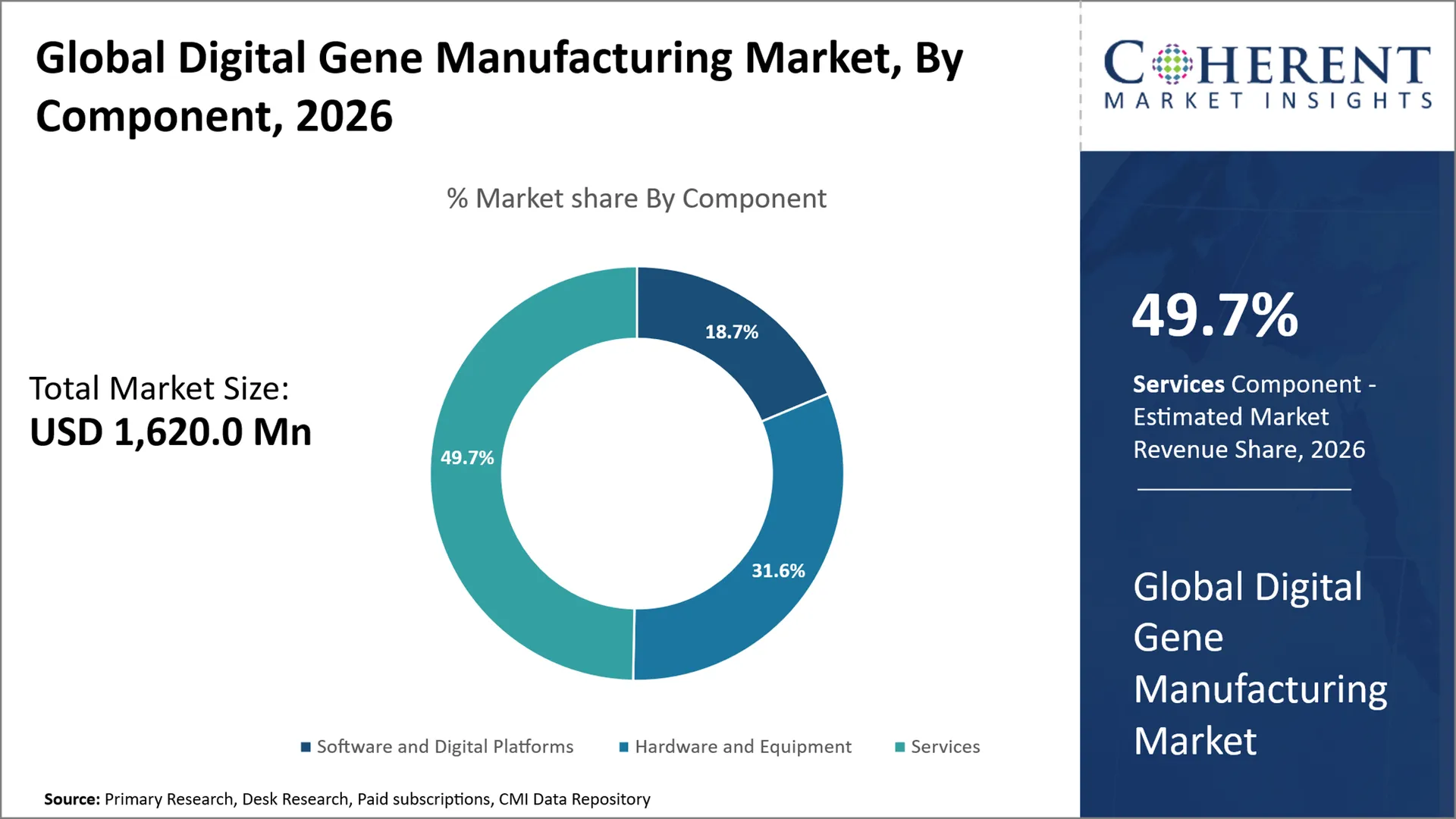
Why Do Services Dominate the Global Digital Gene Manufacturing Market?
Services are projected to hold the market share of 49.7% in 2026, due to the increasing demand for contract manufacturing of complex and customized genetic sequences. Specialized providers allow researchers to access advanced synthesis capabilities without large capital expenditures for in-house facilities as the complexity of the sequences increases. For instance, In May 2026, Twist Bioscience beefed up its Clonal Genes product line with the launch of Complex Genes service-designed to synthesize structurally complex and highly engineered protein-coding sequences to aid AI-enabled drug discovery and nucleic-acid therapeutics.
- Current Industry Events of 2026
- Market Size Estimation
- Regional Breakdown
- Competitive Landscape
- Customer Intelligence
- Segmental Analysis
- Pricing Analysis
- Key Market Drivers, Challenges & Future Trends
- Customized Insights Section
Why Do DNA Synthesis Represent the Largest Technology Segment in the Digital Gene Manufacturing Market?
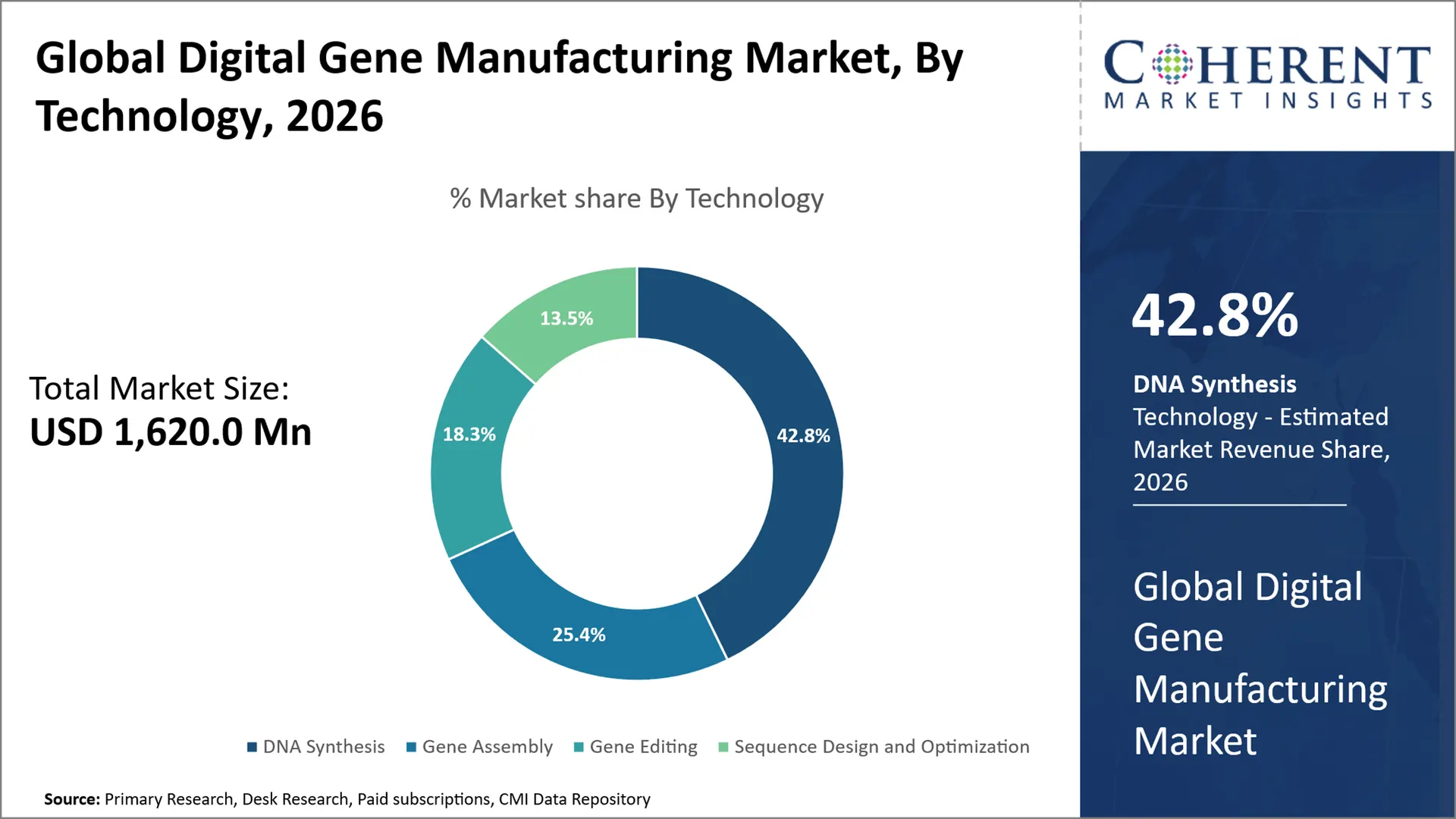
DNA synthesis is projected to hold a market share of 42.8% in 2026, as it is the basic stage of producing the actual DNA from a digitally designed sequence. Advancement in enzymatic synthesis increases the ability to produce longer, high quality and complex sequences. For instance, In May 2026, 4basebio PLC rolled out a high-throughput enzymatic ssDNA product line that can make gene and cell editing and nucleic-acid medicine with up to 10,000 bases, demonstrating the amplifying manufacturing capability for complex genetic constructs.
Drug Discovery and Development Segment Dominates the Global Digital Gene Manufacturing Market
The drug discovery and development segment is projected to hold a market share of 25.6% in 2026, attributed to increasing use of digitally designed genetic constructs to determine targeted therapies and to help in biologic and precision-medicine development. Speedy synthesis and iterative testing enable researchers to test and compare multiple genetic variants and therapeutics more efficiently. For instance, in January 2026, the U.S. Food and Drug Administration (FDA) and the European Medicines Agency (EMA) jointly published 10 principles for the use of artificial intelligence in drug discovery processes, including nonclinical testing, clinical development, manufacturing and post-market strategies.
Current Events and their Impact
Current Events | Description and its Impact |
UK Opens USD 11.2 Million (£8.5 Million) Engineering Biology Collaborative R&D Program (September 2026) |
|
UK Launches USD 6.6 Million (£5 Million) Engineering Biology Access to Infrastructure Pilot (September 2026) |
|
UK Medicines and Healthcare products Regulatory Agency (MHRA) Consults on Updated Gene Therapy Definitions (May 2026) |
|
Digital Gene Manufacturing Market Dynamics
Market Drivers
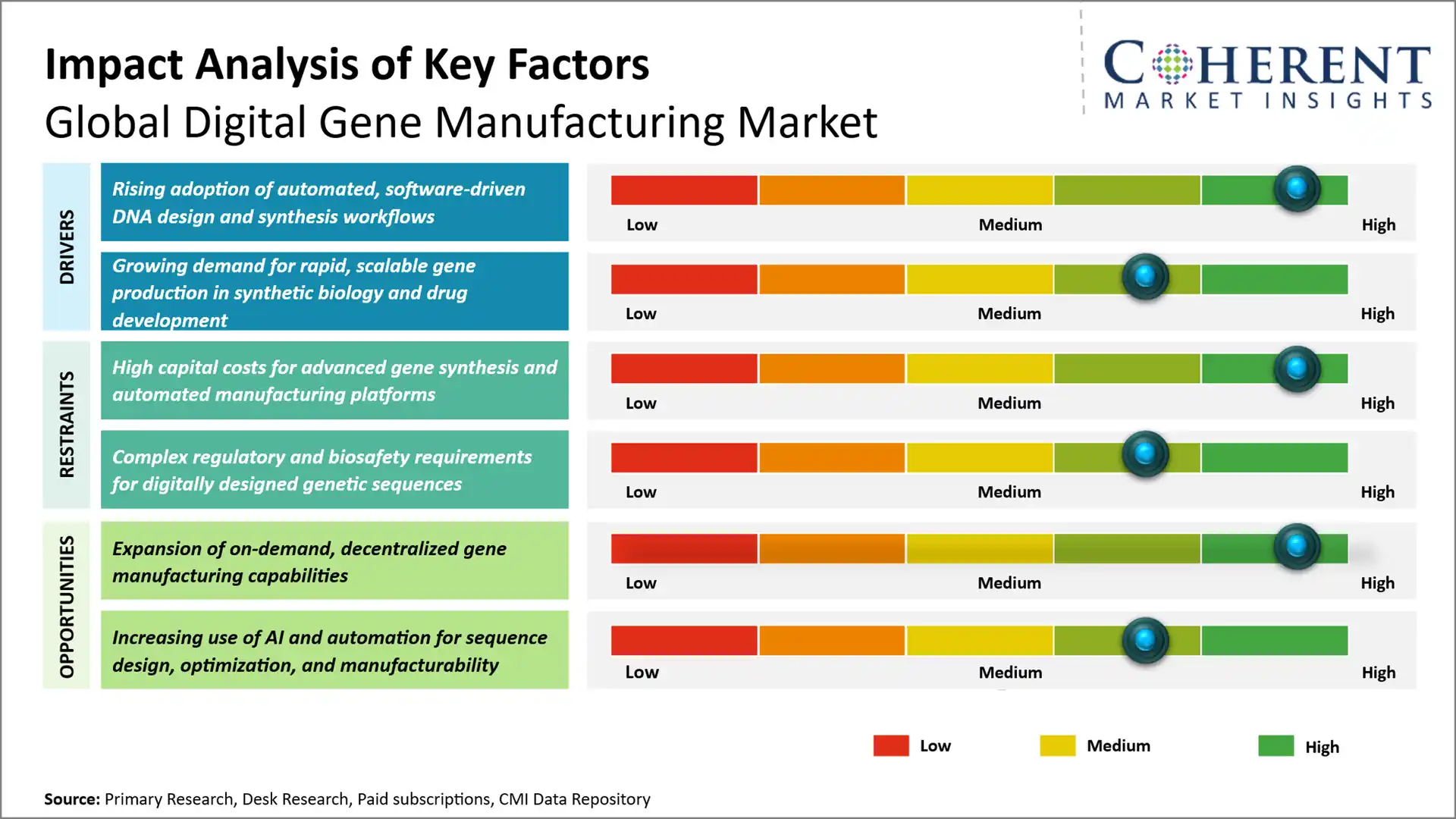
- Rising adoption of automated, software-driven DNA design and synthesis workflows: The shift toward automated, software-driven DNA manufacturing is enabling laboratories to connect sequence design, synthesis setup, and production within integrated workflows, reducing manual intervention and accelerating design-build-test cycles. This is increasing the scalability and accessibility of digital gene manufacturing across biotechnology and pharmaceutical research. For instance, in August 2026, Telesis Bio announced commercial licensing agreements for its Gibson SOLA platform, which combines AI-powered sequence design with automated, on-demand DNA synthesis for AI-native drug discovery laboratories.
- Growing demand for rapid, scalable gene production in synthetic biology and drug development: The increasing need to generate large numbers of genetic constructs rapidly is pushing biotechnology companies toward high-throughput DNA assembly and scalable production platforms. Faster design-to-build cycles allow researchers to evaluate more biological candidates in synthetic biology and accelerate therapeutic discovery and development. For instance, in February 2026, Generate Biomedicines highlighted its integrated platform combining scalable DNA assembly, rapid protein production, and high-throughput assays, enabling large numbers of biological designs to be generated and tested within accelerated discovery cycles.
- Growing adoption of enzymatic, cell-free DNA manufacturing: The shift toward enzymatic and cell-free DNA production is improving the ability to manufacture longer, complex genetic constructs without relying on conventional bacterial cloning. These approaches can shorten production timelines, reduce process complexity, and support scalable DNA manufacturing for advanced genetic medicines. For instance, in May 2026, 4basebio launched a high-capacity enzymatic ssDNA platform designed to support large-scale gene editing, cell engineering, and nucleic-acid medicine development, addressing manufacturing limitations associated with conventional chemical synthesis.
Emerging Trends
- AI-driven gene design and optimization: AI and machine learning are increasingly being integrated into sequence design to predict gene performance, identify optimal sequences, and improve manufacturability before synthesis.
- Decentralized and on-demand gene manufacturing: Compact, automated synthesis platforms are enabling DNA production closer to end users, supporting faster turnaround, reduced inventory requirements, and more flexible manufacturing.
- Integration of digital gene manufacturing with synthetic biology: Digital gene manufacturing is increasingly being integrated with synthetic biology workflows to rapidly design, assemble, and test complex genetic circuits, engineered pathways, and biological systems.
Regional Insights
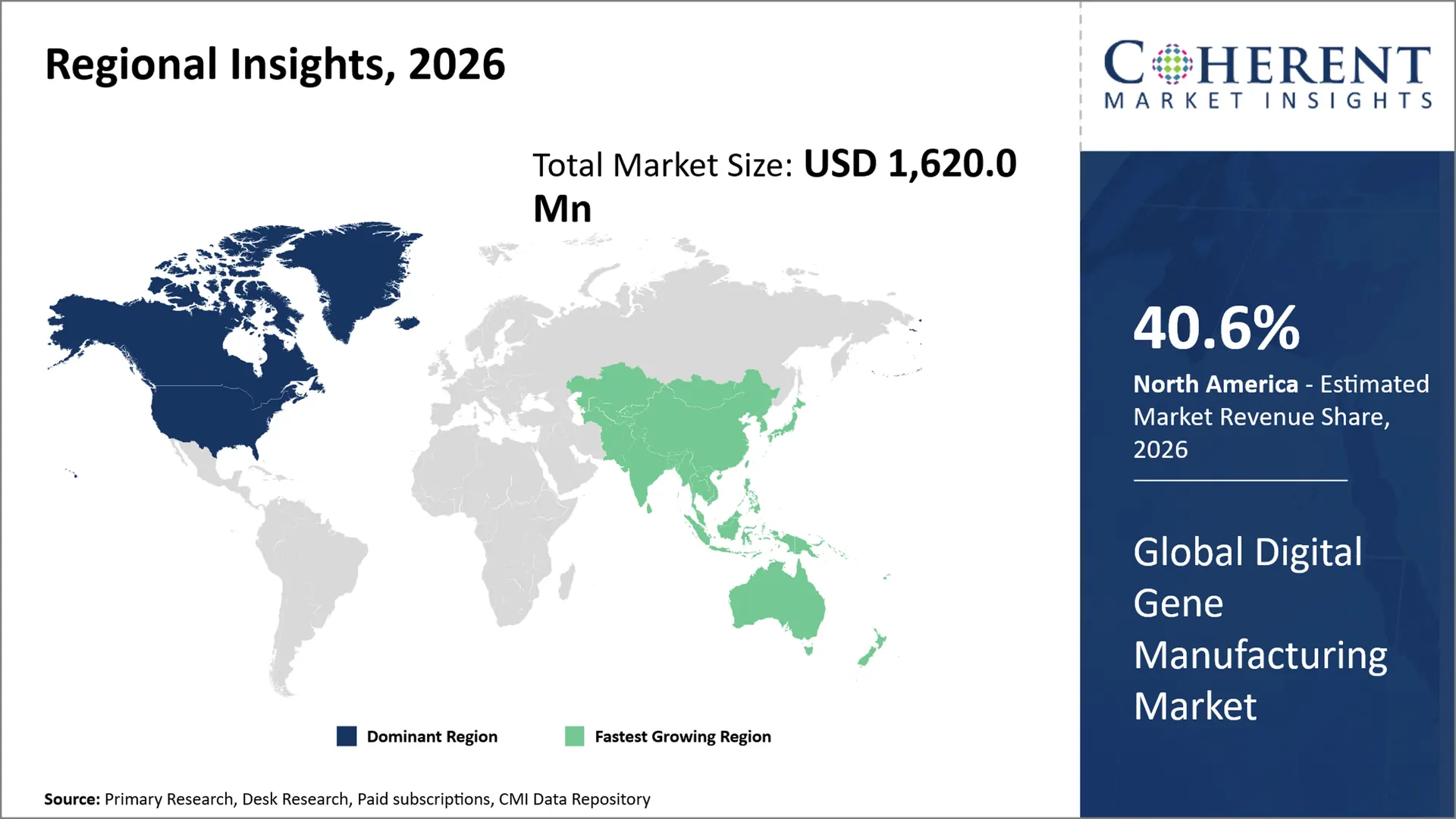
Why is North America a Strong Market for Digital Gene Manufacturing?
North America leads the global digital gene manufacturing market, accounting for an estimated 40.6% share in 2026, owing to the existence of high-end biotech industry with a variety of essential biotech facilities, pharmaceutical, and research. Additionally, the high expense on government-funded genomic and biotech research and development are expected to drive the region, where innovative environment, high intellectual property protection, and other intellectual capital are likely to make it easier for the region to foster the commercialization of gene synthesis, editing, and computational biology technology.
For instance, in February 2026, Advanced Research Projects Agency for Health (ARPA-H) awarded up to USD 9.3 million to Bio Curie to develop ENGINE, an AI platform that employs computational modeling and AI/ML to optimize the manufacture of gene therapies and to reduce development times and experimental cycles. Moreover, superior regulation and policy support may also help in the rapid commercialization process of this technology.
Why Does Asia Pacific Digital Gene Manufacturing Market Exhibit High Growth?
Asia Pacific is expected to exhibit the fastest growth in the global digital gene manufacturing market, registering an estimated CAGR of 19.4% during 2026–2033. The region is projected to account for 25.8% of the global market in 2026, owing to the growth of the biotechnology infrastructure, growing health care industry, and rising government funding in life sciences. Countries across the region is supporting innovation clusters through different policies to build a conducive environment for biotech startups and FDI.
For instance, the Japan’s Cabinet Office has implemented its 2026 Program for Promotion of Foreign Direct Investment, aiming for USD 764 billion (¥120 trillion) of inward FDI stock by 2030 and highlighting initiatives to attract overseas capital, human resources, and technology. (Source: Foreign Direct Investment in Japan) Moreover, the presence of strong CROs, manufacturing capabilities, and improving infrastructure of R&D are luring the industry players to undertake their research activities over the regions, which are further bolstered by various initiatives regarding biotechnology commercialization, joint research, and regulation.
Global Digital Gene Manufacturing Market Outlook for Key Countries
Why is the U.S. Leading Innovation and Adoption in the Digital Gene Manufacturing Market?
The U.S. is expected to drive innovation and adoption of digital gene manufacturing market as it has a well-established biotechnological infrastructure along with strong ecosystem for genomics research and expertise in DNA synthesis and gene engineering. In addition, the large-scale government support for biotechnological research and development, regulation environment, and intellectual property rights are expected to significantly drive the adoption and enable commercialization of digital gene manufacturing technology. The large-scale integrated research, manufacturing, and biopharmaceutical ecosystems are further expected to aid the adoption of digital gene manufacturing technology.
Is Japan a Favorable Market for Digital Gene Manufacturing Market?
Japan is seen as an attractive market for digital gene manufacturing, driven by the significant focus of the government on biotechnology, synthetic biology and advanced medicine. Bio-healthcare, advanced medical technology is one of the strategic priorities in the 2026 Integrated Innovation Strategy of Japan. Synthetic biology, biomanufacturing and gene therapy are set out as key industry sectors in the bioeconomy strategy.
Is China Emerging as a Key Growth Hub for the Digital Gene Manufacturing Market?
China is gaining momentum as a major growth driver in the market owing to the increase in the synthetic-biology infrastructure as well as the government initiatives for biomanufacturing. In 2026, Ministry of Industry and Information Technology, China, started an initiative to locate and commercialize biomanufacturing products, covering AI-enabled tools and equipment. Furthermore, Beijing is providing a boost to large-scale synthetic-biology manufacturing through innovation as well as pilot-production platforms.
Why Does Germany Top the European Digital Gene Manufacturing Market?
Germany is projected to dominate the European digital gene manufacturing market, with its strong base of biotech research and development expertise, state-of-the-art biomanufacturing infrastructure and an integrated stance of government to gene and cell therapy technologies. Moreover, the country's focus to upgrade in the arena of biotechnology innovation, research-industry synergies and commercialization strength seems to foster the application of digital gene manufacturing.
Is Digital Gene Manufacturing Market Developing in UK?
The U.K. digital gene manufacturing market is on a growth trajectory, driven by its thriving engineering biology ecosystem, increase in synthetic biology capabilities and government-funded investments in biotechnology infrastructure to unlock the potential for engineering biology deployment in the country. In addition, the focus of the country on scale-up of engineering biology, research collaboration, commercialization, and other digital innovations to provide an edge is creating favorable conditions for digital gene manufacturing applications.
Digital Gene Manufacturing Market: Technology-to-Application Landscape
Technology | Manufacturing Role | Key Output | Major Applications |
DNA Synthesis | Converts digital sequences into physical DNA | Synthetic genes, oligonucleotides, DNA fragments | Drug Discovery & Development, Synthetic Biology, Gene & Cell Therapy |
Gene Assembly | Combines DNA fragments into larger genetic constructs | Complex genes, plasmids, genetic circuits | Synthetic Biology, Gene Therapy, Industrial Biotechnology |
Gene Editing | Precisely modifies designed genetic sequences | Edited genetic constructs/cells | Gene & Cell Therapy, Diagnostics, Agricultural Biotechnology |
Sequence Design & Optimization | Digitally designs and improves genetic sequences before manufacturing | Optimized sequences and genetic constructs | Drug Discovery, Synthetic Biology, Gene Therapy |
AI & Computational Design | Predicts sequence performance and manufacturability | AI-optimized gene designs | Therapeutics, Synthetic Biology, Industrial Biotechnology |
How is the expansion of on-demand, decentralized gene manufacturing capabilities creating new growth opportunities in the digital gene manufacturing market?
On-demand decentralized gene manufacturing is expected to enable more flexible production of DNA closer to researchers and end users and thus minimize reliance on centralized facilities. It also shortens production timelines. Cloud-based DNA sequence design, automated synthesis, and miniature manufacturing systems will allow faster, more flexible DNA manufacturing at higher throughput with less inventory and logistics. This concept has potential to be useful in personalized healthcare, vaccine design and gene therapy. For instance, in August 2026, the Advanced Research Projects Agency for Health (ARPA-H) granted up to USD 26 million to GE Health Care and the project partners, including DNA Script, to develop a modular platform to enable rapid, decentralized manufacturing of DNA at the point of care.
Market Players, Key Development, and Competitive Intelligence
Key Developments
- On September 11, 2026, Exegenesis Bio and Modalis Therapeutics entered a collaboration to advance MDL-201 for Duchenne muscular dystrophy. The program combines Exegenesis Bio’s EMC181 muscle-targeting AAV capsid with Modalis’ CRISPR-GNDM epigenome-editing platform, demonstrating the integration of computational gene-design and advanced delivery technologies in gene-therapy development.
- In August 2026, the U.S. FDA approved Ultragenyx’s GENGLYCOS, the first FDA-approved gene therapy for glycogen storage disease type Ia (GSDIa). The AAV8-based therapy delivers a functional G6PC gene and is manufactured at Ultragenyx’s Gene Therapy Manufacturing Facility in Massachusetts. The approval highlights continued commercialization of gene therapies and expansion of specialized gene-therapy manufacturing infrastructure.
- In March 2026, Merck signed a memorandum of understanding with Cyto-Facto to advance cell and gene therapy manufacturing capabilities across the Asia-Pacific region. The collaboration supports the expansion of manufacturing infrastructure and capabilities for developers of advanced therapies in APAC.
- In January 2026, Eli Lilly entered a global research collaboration and licensing agreement with Germany-based Seamless Therapeutics to develop programmable recombinase-based treatments for hearing loss. Seamless will design and program site-specific recombinases capable of precise DNA insertions, while Lilly receives an exclusive license for development and commercialization; the deal is valued at more than USD 1.12 billion including milestones.
Competitive Landscape
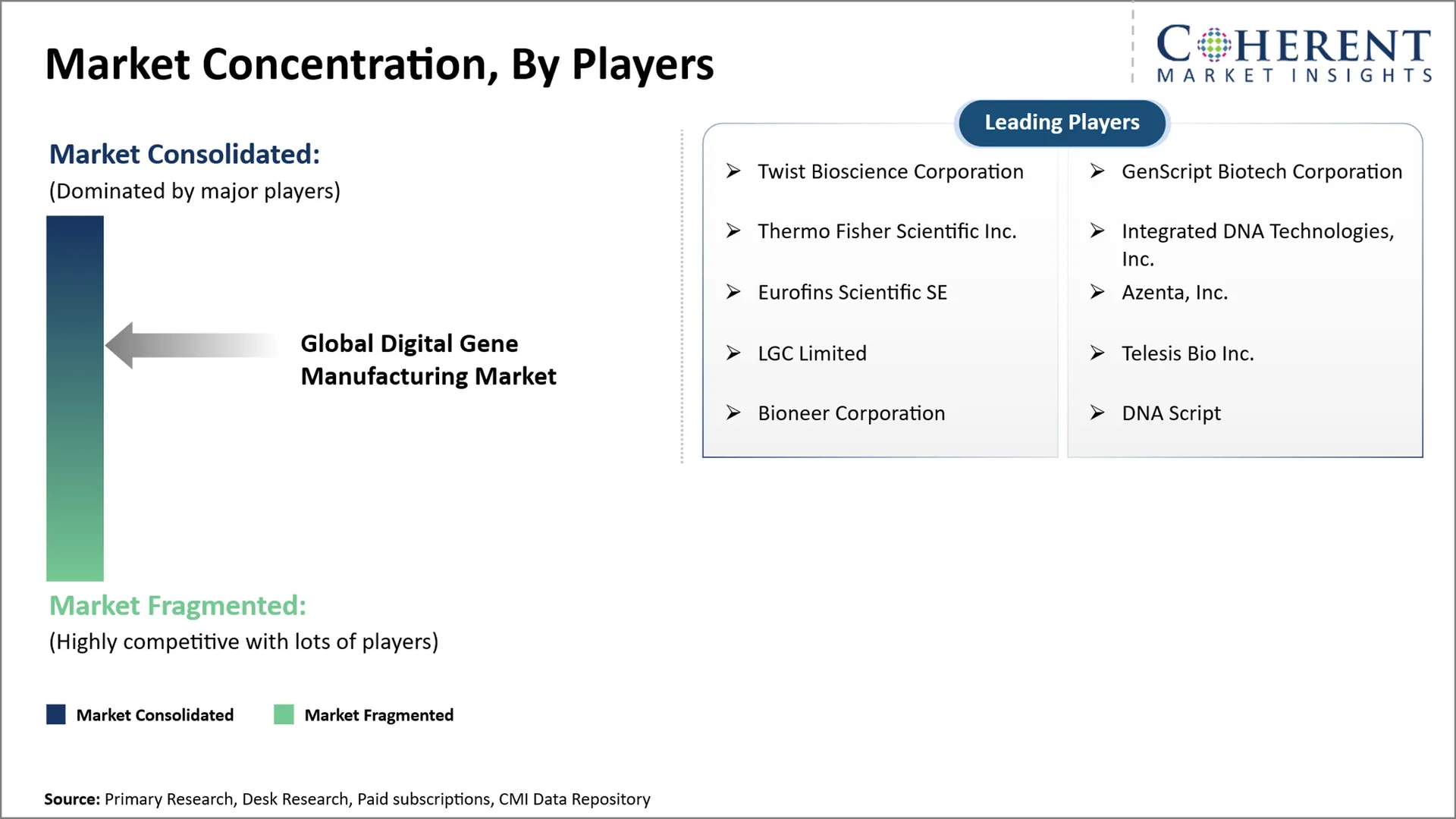
The global digital gene manufacturing market is moderately competitive, with market dynamics shaped by advances in automated DNA synthesis, computational gene design, AI-enabled sequence optimization, and integrated digital-to-biological manufacturing workflows. Market participants are increasingly focusing on improving synthesis accuracy, shortening production timelines, scaling complex genetic constructs, and expanding applications across therapeutic, research, agricultural, and industrial biotechnology.
Key focus areas include
- Development of AI-enabled gene design, sequence optimization, and manufacturability prediction
- Expansion of automated DNA synthesis and gene assembly platforms for high-throughput production
- Integration of digital gene-design platforms with automated laboratory and manufacturing systems
- Development of scalable workflows for gene and cell therapy, synthetic biology, and drug discovery applications
- Enhancement of cloud-based ordering, workflow automation, and real-time tracking of gene manufacturing processes
Digital Gene Manufacturing Market Report Scope
Global Digital Gene Manufacturing Market Report Coverage | |||
Report Coverage | Details | ||
Base Year | 2025 | Market Size in 2026: | USD 1,620.0 Mn |
Historical Data For: | 2020 To 2024 | Forecast Period: | 2026 To 2033 |
Forecast Period 2026 To 2033 CAGR: | 18.1% | 2033 Value Projection: | USD 5,191.2 Mn |
Geographies covered: |
| ||
Segments covered: |
| ||
Companies covered: | Twist Bioscience Corporation, GenScript Biotech Corporation, Thermo Fisher Scientific Inc., Integrated DNA Technologies, Inc., Eurofins Scientific SE, Azenta, Inc., LGC Limited, Telesis Bio Inc., Bioneer Corporation, DNA Script | ||
Growth Drivers: |
| ||
Restraints & Challenges: |
| ||
Analyst Opinion (Expert Opinion)
- In the coming years, global digital gene manufacturing market will shift from standalone DNA synthesis toward integrated, software-driven manufacturing ecosystems that connect sequence design, optimization, synthesis, assembly, quality control, and data management in a single workflow. AI-assisted design and automation are expected to reduce development cycles and enable more complex genetic constructs, while decentralized and on-demand manufacturing could broaden access beyond large research and biopharmaceutical organizations.
- The maximum opportunities are foreseen within AI-enabled gene design and automated DNA synthesis for cell and gene therapy development in the U.S. The combination of complex therapeutic constructs, demand for rapid design-to-manufacturing cycles, and an established biotechnology ecosystem creates a high-value opportunity for companies that can connect digital sequence design with scalable physical production.
- In order to gain a competitive advantage market players should prioritize end-to-end platform integration rather than competing solely on synthesis capacity. Building proprietary AI-driven sequence optimization, improving automation and turnaround time, offering seamless digital-to-manufacturing workflows, and developing specialized solutions for high-value therapeutic applications can create stronger differentiation and customer retention.
Speak to the analyst
Want personalized insights?
Take the findings above to one of our principal consultants, or have the report rebuilt around the segments, geographies and competitors you actually track.
Market Segmentation
- Component Insights (Revenue, USD Mn, 2021 - 2033)
- Software and Digital Platforms
- Hardware and Equipment
- Services
- Technology Insights (Revenue, USD Mn, 2021 - 2033)
- DNA Synthesis
- Gene Assembly
- Gene Editing
- Sequence Design and Optimization
- Application Insights (Revenue, USD Mn, 2021 - 2033)
- Drug Discovery and Development
- Synthetic Biology
- Gene and Cell Therapy
- Diagnostics
- Agricultural Biotechnology
- Industrial Biotechnology
- Others
- End User Insights (Revenue, USD Mn, 2021 - 2033)
- Pharmaceutical and Biotechnology Companies
- Academic and Research Institutes
- CROs/CMOs
- Agricultural and Industrial Biotechnology Companies
- Others
- Regional Insights (Revenue, USD Mn, 2021 - 2033)
- North America
- U.S.
- Canada
- Latin America
- Brazil
- Argentina
- Mexico
- Rest of Latin America
- Europe
- Germany
- U.K.
- Spain
- France
- Italy
- Russia
- Rest of Europe
- Asia Pacific
- China
- India
- Japan
- Australia
- South Korea
- ASEAN
- Rest of Asia Pacific
- Middle East
- GCC Countries
- Israel
- Rest of Middle East
- Africa
- South Africa
- North Africa
- Central Africa
- North America
Sources
Primary Research Interviews
- DNA synthesis and gene-design specialists involved in digital sequence design and automated gene manufacturing
- Synthetic biology researchers developing engineered genetic constructs and biological systems
- Biopharmaceutical R&D and gene-therapy specialists using synthetic genes and genetic constructs
- CRO/CMO and CDMO professionals involved in outsourced gene synthesis, assembly, and manufacturing
- Academic researchers and biotechnology scientists working with synthetic DNA, gene editing, and computational biology
Stakeholders
- Digital gene manufacturing, DNA synthesis, and gene-design platform developers
- Automated DNA synthesis, gene assembly, and laboratory automation technology providers
- Bioinformatics, AI-enabled sequence-design, and computational biology software providers
- DNA synthesis reagent, oligonucleotide, sequencing, and laboratory equipment suppliers
- Pharmaceutical, biotechnology, gene-therapy, and synthetic biology companies
- Contract research, development, and manufacturing organizations supporting gene production
- End-use Sectors
- Pharmaceutical & Biotechnology Companies
- Academic & Research Institutions
- Contract Research & Manufacturing Organizations (CROs/CMOs)
- Agricultural Biotechnology Companies
- Industrial Biotechnology Companies
- Diagnostics & Molecular Testing Companies
- Regulatory & Health Bodies
- U.S. Food and Drug Administration (FDA) – biologics, gene therapy, synthetic nucleic acids, and biotechnology products
- National Institutes of Health (NIH) – synthetic nucleic acids, genomics, synthetic biology, and biomedical research
- European Medicines Agency (EMA) – advanced therapy medicinal products and biotechnology-based medicines
- Medicines and Healthcare products Regulatory Agency (MHRA), UK – advanced therapies and biological medicines
- Pharmaceuticals and Medical Devices Agency (PMDA), Japan – gene therapy and regenerative medicine products
- National Medical Products Administration (NMPA), China – biological products and advanced therapies
- Central Drugs Standard Control Organisation (CDSCO), India – biological products and gene-therapy-related regulatory oversight
- U.S. Department of Agriculture (USDA) – agricultural biotechnology and genetically engineered products
Databases
- NCBI GenBank – public DNA sequence database and synthetic construct records
- NCBI Gene – curated gene information, sequences, annotations, and genomic resources
- NCBI Sequence Read Archive (SRA) – high-throughput sequencing data
- European Nucleotide Archive (ENA) – nucleotide sequence and genomic data
- DNA Data Bank of Japan (DDBJ) – nucleotide sequence database
- ClinicalTrials.gov – clinical studies involving gene and cell therapies
- USPTO Patent Center – patents and intellectual-property information related to gene synthesis and biotechnology
Associations
- Biotechnology Innovation Organization (BIO)
- International Society for Cell & Gene Therapy (ISCT)
- International Genetically Engineered Machine (iGEM) Foundation
- Synthetic Biology Leadership Council
- American Society for Microbiology (ASM)
- American Chemical Society (ACS)
- Federation of European Microbiological Societies (FEMS)
Public Domain Sources
- U.S. National Institutes of Health (NIH) – genomics, synthetic biology, synthetic nucleic acids, and biotechnology research
- National Center for Biotechnology Information (NCBI) – genomic databases and sequence-analysis resources
- U.S. Food and Drug Administration (FDA) – gene therapy, biologics, and biotechnology regulatory information
- National Institute of Standards and Technology (NIST) – biotechnology measurement science and standards
Proprietary Elements
- CMI Data Analytics Tool
- Proprietary CMI Existing Repository of information for last 10 years.
Get access to 250+ pages report
Every segment, forecast, competitor profile and data table behind the analysis above — available for instant download.
- ESOMAR Member
- ISO 9001:2015 Certified
- D-U-N-S Registered
- GDPR & CCPA Compliant
Frequently Asked Questions
The global digital gene manufacturing market is estimated to be valued at USD 1,620.0 Mn in 2026 and is expected to reach USD 5,191.2 Mn by 2033.
Services dominate due to strong demand for outsourced gene design, DNA synthesis, assembly, optimization, and related manufacturing workflows.
Digital gene manufacturing integrates computational gene design, automated synthesis, and data-driven workflows to convert genetic sequences from digital designs into physical biological constructs.
The CAGR of global digital gene manufacturing market is projected to be 18.1% from 2026 to 2033.
Rising adoption of automated, software-driven DNA design and synthesis workflows, and growing demand for rapid, scalable gene production in synthetic biology and drug development are the major factors driving the growth of the global digital gene manufacturing market.
High capital costs for advanced gene synthesis and automated manufacturing platforms, and complex regulatory and biosafety requirements for digitally designed genetic sequences are the major factors hampering the growth of the global digital gene manufacturing market.
In terms of technology, DNA synthesis is estimated to dominate the market revenue share in 2026.