

Global DNA Manufacturing Market Size and Forecast – 2026 to 2033
The Global DNA Manufacturing Market is estimated to be valued at USD 7.56 Bn in 2026 and is expected to reach USD 23.24 Bn by 2033, exhibiting a compound annual growth rate (CAGR) of 17.4% from 2026 to 2033. This substantial growth underscores increasing investments in genomic research, advancements in synthetic biology, and rising demand for personalized medicine and biopharmaceuticals, which collectively drive the market expansion.
Key Takeaways of the global DNA manufacturing market
- Synthetic DNA is set to dominate the global DNA manufacturing market in 2026, holding a 50.2% share.
- In terms of application, oncology segment is expected to lead with a 25.3% market share in 2026.
- PCR technology leads the technology segment, capturing an estimated 33.3% share in 2026.
- North America is expected to lead the market, holding a share of 38. 5% in 2026. Asia Pacific is anticipated to be the fastest-growing region, with a market share of 25.4% in 2026.
Market Overview
Current market trends highlight the rapid adoption of innovative DNA synthesis technologies that improve accuracy and reduce production time. Additionally, growing collaborations between biotech firms and research institutions, along with the increasing integration of AI and machine learning for process optimization, are transforming traditional DNA manufacturing processes. The surge in demand for custom DNA sequences in therapeutics, diagnostics, and agriculture further propels the market growth, emphasizing the sector’s evolution toward greater scalability and efficiency.
Currents Events and Its Impact
Current Events | Description and its impact |
Expansion in gene and cell therapy |
|
Major technological innovations in DNA synthesis |
|
Segmental Insights
- Current Industry Events of 2026
- Market Size Estimation
- Regional Breakdown
- Competitive Landscape
- Customer Intelligence
- Segmental Analysis
- Pricing Analysis
- Key Market Drivers, Challenges & Future Trends
- Customized Insights Section
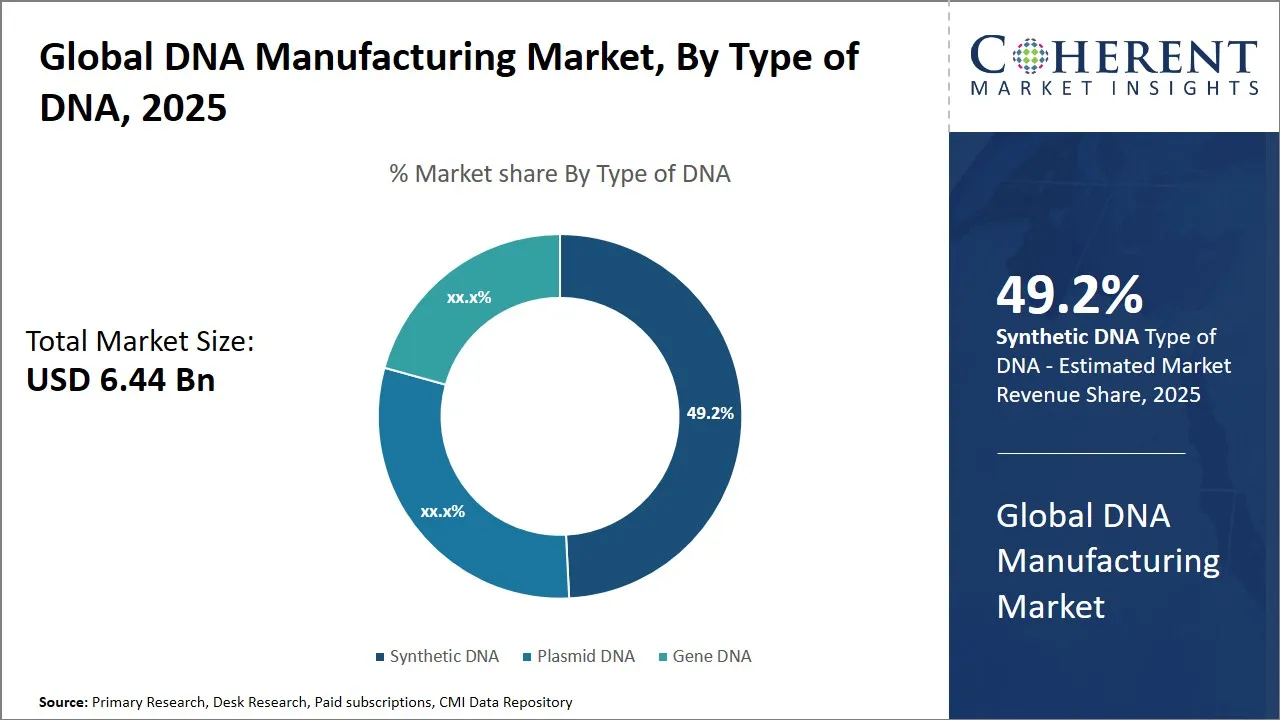
Global DNA Manufacturing Market Insights, By Type of DNA - Synthetic DNA Leads Due to Versatility and Advanced Customization
In terms of the type of DNA, Synthetic DNA is expected to hold the largest share of 50.2% in 2026 in the global DNA manufacturing market, primarily driven by its unparalleled versatility and customizable nature that cater to a wide array of scientific and commercial applications. Synthetic DNA refers to artificially designed sequences that are chemically synthesized to meet specific genetic or research requirements, which makes it integral to many cutting-edge biotechnological areas. One of the main growth drivers for synthetic DNA is its critical role in accelerating research timelines, enabling scientists to bypass the limitations of natural DNA sourcing and directly generate sequences tailored for experimental or therapeutic purposes.
Advancements in synthesis technologies have significantly improved the fidelity, length, and complexity of synthetic DNA, allowing researchers to create longer and more accurate DNA strands. This capability is particularly important in fields such as synthetic biology and drug discovery, where precise genetic constructs are necessary to study gene functions, develop recombinant proteins, or engineer novel biological systems. Moreover, synthetic DNA enables the production of rare or previously inaccessible genetic material, fostering innovation across genomics, personalized medicine, and agricultural biotechnology.
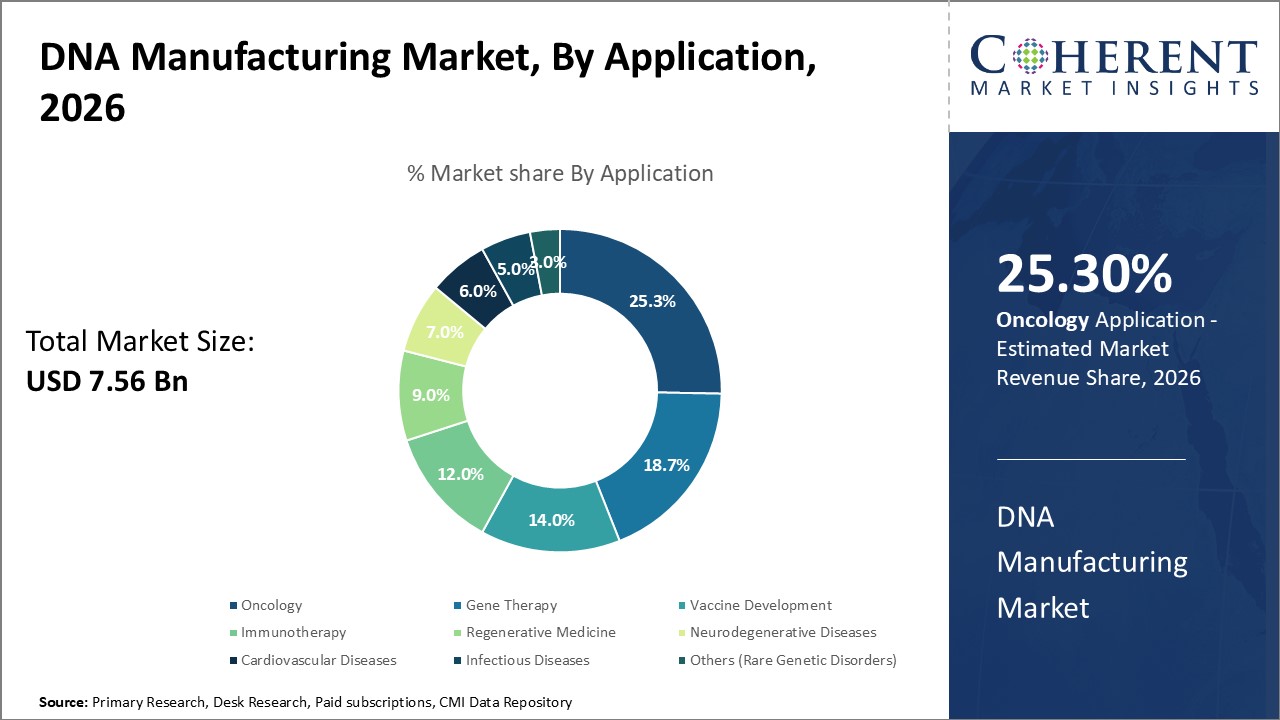
DNA Manufacturing Market, By Application - Oncology Leads DNA Manufacturing Applications Due to Rising Emphasis on Personalized Therapies
Among various applications in the global DNA manufacturing market, oncology leads with an estimated share of 25.3% in 2026, a trend driven by the increasing prevalence of cancer worldwide and the growing emphasis on personalized medicine. Cancer’s complex genetic landscape necessitates advanced DNA manufacturing technologies to develop targeted diagnostics, therapeutics, and treatment monitoring tools. The need for precision oncology—where therapies are tailored based on the genetic makeup of tumors—propels the demand for high-quality, custom-made DNA products that facilitate biomarker discovery, mutation analysis, and gene expression profiling.
DNA manufacturing plays a vital role in oncology research, especially in creating synthetic genes, oligonucleotides, and plasmids that are essential for developing targeted therapies such as CAR-T cells and gene therapies. These innovative treatments rely on engineered DNA sequences to modify patients' immune cells or correct genetic mutations responsible for cancer progression. Consequently, synthetic and custom DNA products are increasingly required to design and produce therapeutic constructs efficiently.
DNA Manufacturing Market, By Technology - PCR Dominates Owing to its Fundamental Role in Molecular Biology
PCR (Polymerase Chain Reaction) technology is expected to lead the DNA manufacturing market with a share of 32.3% in 2025, as it remains the cornerstone methodology for DNA amplification and analysis in research, diagnostics, and clinical applications.
In November 2024, Takara Bio USA, a subsidiary of Takara Bio Inc., launched the SmartChip ND Real-Time PCR System, a high-throughput, cost-effective solution designed for DNA manufacturing and infectious disease research. The automated, research-use-only system offers flexibility, scalability, and efficiency, allowing users to customize assay formats for various research stages.
The driving force behind PCR's dominance is its critical role in enabling numerous downstream applications, such as genetic testing, disease diagnosis, forensic analysis, and environmental monitoring. Manufacturing of synthetic primers, probes, and DNA templates essential for PCR reactions fuels demand for precise DNA synthesis aligned with this technology. Custom DNA sequences designed for PCR assays must meet stringent quality criteria, further emphasizing the importance of advanced manufacturing capabilities.
Regional Insights
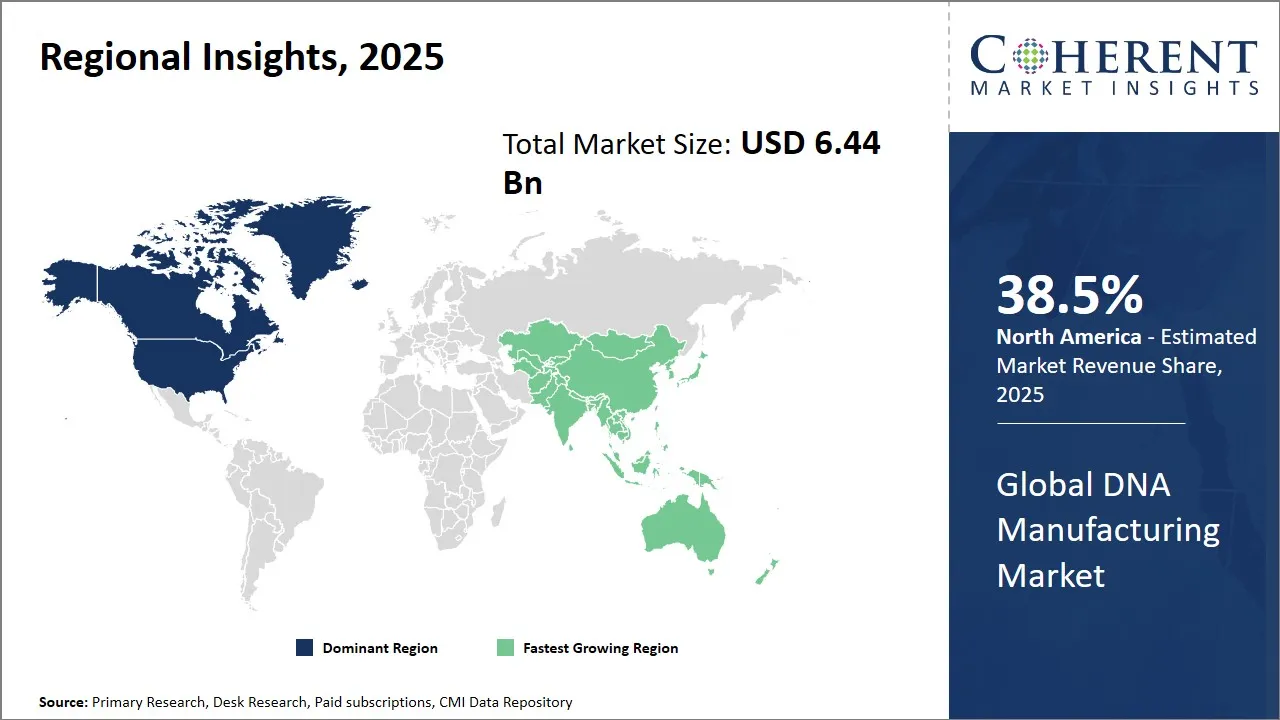
North America DNA Manufacturing Market Analysis and Trends
North America’s dominance in the global DNA manufacturing market, with a projected share of 38.5% in 2026, is driven by its well-established biotechnology ecosystem, strong government support, and robust healthcare infrastructure. The presence of leading academic institutions and research centers contributes significantly to innovation and technological advancements. U.S. policies promoting biotech research funding, coupled with streamlined regulatory frameworks, further foster the market growth. Major companies such as Thermo Fisher Scientific, Illumina, and Twist Bioscience have their headquarters or significant operations in the region, driving advancements in DNA synthesis, sequencing technologies, and synthetic biology tools. The region’s dynamic trade environment with easy access to global markets also facilitates efficient supply chains and partnerships.
Asia Pacific DNA Manufacturing Market Analysis and Trends
The Asia Pacific exhibits the fastest growth in the DNA manufacturing market with a share of 25.4% in 2026, fueled by increasing investments in biotech infrastructure, expanding research activities, and rising demand for genetic testing and diagnostics. Rapid advancements in healthcare and growing government initiatives, such as China’s Thousand Talents Plan and India’s biotech parks, provide a favorable environment for the market expansion. The availability of a large skilled workforce and relatively lower manufacturing costs also attract global companies and startups. Key regional players like BGI Group in China and Macrogen Inc. in South Korea are leading in innovative DNA sequencing and synthesis technologies, boosting the regional market momentum.
Global DNA Manufacturing Market Outlook for Key Countries
U.S. DNA Manufacturing Market Trends
The U.S. remains a global leader in DNA manufacturing due to its cutting-edge research facilities and vast biotech industry presence. Companies such as Integrated DNA Technologies and Ginkgo Bioworks are pioneering scalable DNA synthesis platforms and synthetic biology applications. Strong government programs like the National Institutes of Health (NIH) funding and public-private partnerships amplify innovation. The U.S. market benefits from a mature regulatory framework that supports rapid commercialization of breakthroughs in gene editing and personalized medicine.
In January 2026, Bionova Scientific, a leading provider of contract research and development services, announced the opening of a dedicated plasmid DNA manufacturing facility in Texas, U.S.
China DNA Manufacturing Market Trends
China DNA manufacturing market has emerged as one of the largest in the Asia-Pacific region, fueled by significant government investments in genomics and biotechnology research. The Chinese government's support for gene therapy development, coupled with the increasing healthcare needs of its aging population, has boosted the demand for synthetic and plasmid DNA for gene therapy applications.
For example, in May 2026, scientists at Fudan University successfully cured thalassemia in children using the domestically developed CS-101 DNA base editing therapy, marking a significant advance in gene therapy for blood disorders in China. Additionally, the country's expanding biotech ecosystem, supported by initiatives such as the "Made in China 2026" plan, continues to drive the need for high-quality DNA manufacturing solutions for both research and commercial uses.
U.K. DNA Manufacturing Market Trends
The U.K. DNA manufacturing market is experiencing robust growth, driven by the presence of renowned research institutions like the Francis Crick Institute and its leadership in gene-editing technologies such as CRISPR. The UK government has launched initiatives like the Life Sciences Industrial Strategy to enhance the country’s biotech sector, including DNA manufacturing.
For example, in April 2026, 4basebio received GMP certification from the U.K.’s MHRA, allowing it to produce and supply GMP-grade synthetic DNA for clinical trials, particularly in cell and gene therapies and mRNA vaccines. With a rising emphasis on personalized medicine and cancer treatment, the demand for DNA-based therapies and gene synthesis is steadily increasing, positioning the U.K. as a key market for DNA manufacturing.
Germany DNA Manufacturing Market Trends
Germany's DNA manufacturing market is experiencing substantial growth, fueled by the country's strong focus on pharmaceutical manufacturing and biotech research. Germany benefits from advanced infrastructure, a skilled workforce, and close collaboration between academia and industry, all of which are driving the demand for high-quality synthetic DNA.
For example, in January 2024, Elegen, a leading provider of DNA synthesis technologies, entered into a collaboration and licensing agreement with GSK to use Elegen's cell-free DNA manufacturing grade for GSK’s vaccines and medicines. This grade enables the rapid production of high-complexity, clonal-quality linear DNA, offering significant time and cost savings for mRNA, cell, and gene therapies. Additionally, Germany's favorable regulatory environment, backed by the European Medicines Agency (EMA), provides a stable framework for the approval of gene-based treatments, further boosting demand for plasmid and synthetic DNA products in clinical applications.
End User Feedback and Unmet Needs
- Across the global DNA manufacturing market, end users from pharmaceutical companies, biotechnology firms, academic labs, and clinical research organizations consistently emphasize both strengths and limitations experienced throughout their workflows. Many have expressed appreciation for the enhanced reliability of GMP-grade plasmid DNA, which has enabled the successful commercialization of gene and cell therapies without compromising on consistency or regulatory compliance. For instance, a European biomanufacturer noted its ability to launch a rare disease gene therapy ahead of schedule, crediting streamlined batch processing and on-demand access to high-quality DNA. This level of performance often translates to greater confidence in product timelines and a tangible reduction in costly delays—a sentiment echoed by clients pursuing mRNA vaccine candidates as well.
- However, operational feedback also surfaces persistent challenges, such as long lead times for custom synthetic DNA and barriers to fast integration with automation systems. A major contract research organization in Asia reported that frequent supply chain disruptions and high minimum order quantities compelled them to postpone preclinical studies, pointing to a need for flexible production models and better transparency in logistics.
- Unmet needs in this landscape are clearly shaped by technological gaps, lack of customization, affordability of advanced DNA constructs, and limitations in user support. Many end-users, from mid-sized biotech startups to government-funded public health initiatives, are seeking platforms that can accommodate sequence-specific modifications and scalable manufacturing—without escalating costs or sacrificing turnaround times. There is growing demand for tailored support models, such as cloud-based order management, real-time quality analytics, and direct technical liaison, which are currently sparse in the sector. If manufacturers, developers, and policymakers address these needs with more agile production technologies, improved supply chain infrastructure, and customer-centric service enhancements, they have a real opportunity to not only drive market growth but also build long-lasting relationships and fuel innovation.
Market Players, Key Developments, and Competitive Intelligence
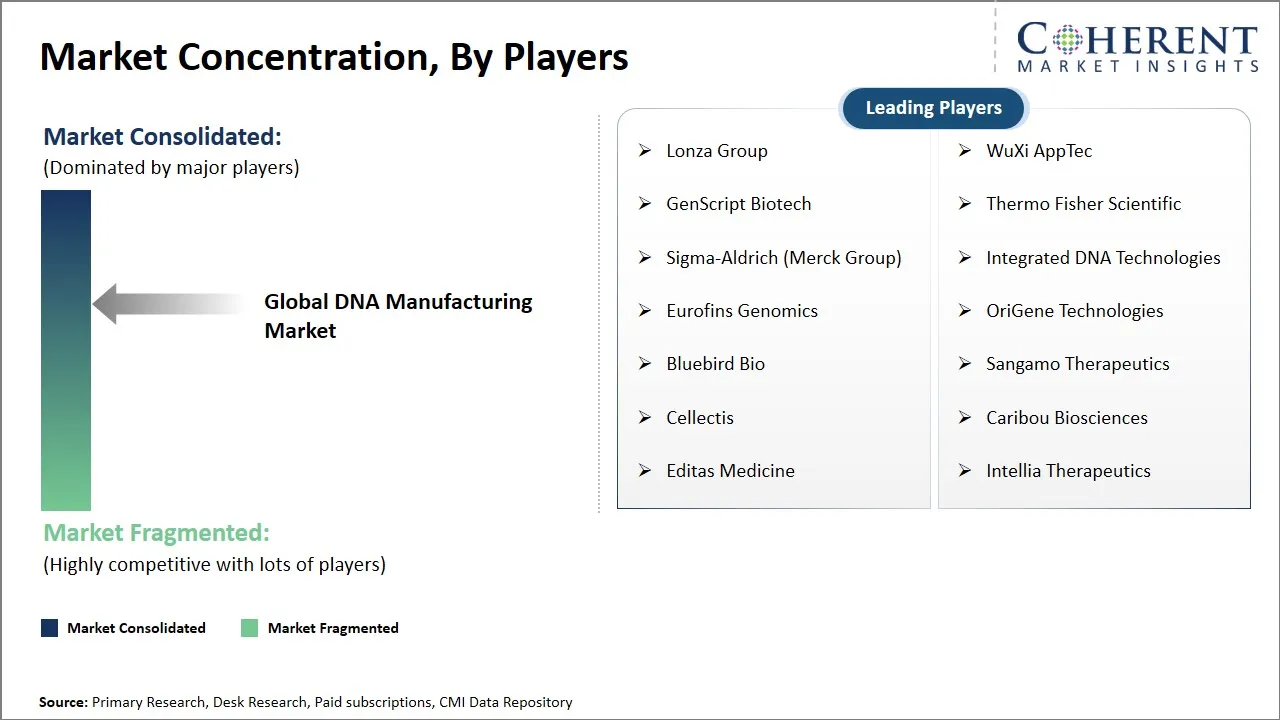
Key Developments
- In May 2025, VGXI, a contract development and manufacturing organization (CDMO) specializing in nucleic acid-based therapeutics, successfully completed an FDA inspection at its Conroe, Texas facility. This achievement allows its client to submit a Biologics License Application (BLA) for plasmid DNA used in gene therapies and mRNA vaccines, solidifying VGXI's position as a leader in scalable, high-purity plasmid DNA manufacturing.
- In April 2025, ProBio, a global contract development and manufacturing organization (CDMO), launched GMP Plasmid DNA manufacturing services at its Hopewell, NJ facility. The new service offers clinical-grade plasmid DNA production from cell bank to batch release in just three months, accelerating the development of gene and cell therapies. The Hopewell facility serves both the U.S. and European markets, providing an integrated manufacturing approach with in-house analytical testing, method development, and project management.
- In January 2025, Aldevron, a global leader in DNA, RNA, and protein production, launched its next-generation Alchemy cell-free DNA technology. This innovative technology uses a cell-free, enzymatic process to produce linear DNA (linDNA) templates for mRNA synthesis, offering a faster and more efficient method for researchers. Available at research grade, Alchemy technology accelerates DNA production by over 50%, providing cleaner and higher-purity DNA templates free from host cell proteins, gDNA, and endotoxins. Aldevron plans to offer a cGMP version of this technology in 2025 to support clinical applications.
- In January 2025, Catalent, a global provider of advanced delivery technologies, partnered with Galapagos NV to support decentralized manufacturing of GLPG5101, an investigational CAR-T therapy for relapsed/refractory non-Hodgkin lymphoma. The collaboration aims to reduce logistical barriers and improve patient access by bringing production closer to treatment centers. Galapagos' platform enables delivery of fresh, stem-like cell therapy within a median vein-to-vein time of seven days, eliminating the need for cryopreservation.
Top Strategies Followed by Global DNA Manufacturing Market Players
- Established market leaders dominate by heavily investing in research and development (R&D) to continuously innovate and produce high-performance DNA synthesis products that cater to advanced applications in biotechnology, pharmaceuticals, and genomics research. Additionally, global expansion is a key priority for these leading companies; they systematically broaden their distribution networks and establish regional offices or manufacturing hubs to effectively penetrate emerging markets in Asia Pacific, Latin America, and the Middle East, where rising demand for genetic research tools is prominent.
- In September 2024, Eurofins Genomics US, a leading provider of genomic services and products, opened a GMP-certified oligonucleotide manufacturing facility in Louisville, Kentucky, to address the growing demand for high-quality synthetic DNA and RNA. The facility features separate RUO and GMP production streams, ensuring regulatory compliance and preventing cross-contamination. With advanced automation, the facility boosts efficiency, purity, and traceability, nearly doubling production capacity and improving lead times for NGS applications.
- Mid-level players in the DNA manufacturing market adopt a different approach centered on balancing cost and quality to serve a more price-sensitive yet quality-conscious consumer base. These companies focus on providing cost-effective DNA synthesis solutions that maintain sufficient performance standards, thereby attracting academic institutions, small biotech firms, and clinical laboratories with constrained budgets. To enhance their competitive edge, mid-tier companies often engage in collaborative agreements with technology providers or contract manufacturers to scale up production capacity and integrate more advanced synthesis technologies without incurring the full expense of in-house development.
- In March 2025, Elegen, a leading provider of next-generation synthetic DNA, has announced a 25% price reduction on its ENFINIA DNA products, including both linear and plasmid DNA. This price drop makes high-quality, long, and complex DNA more accessible for researchers and biotech innovators, with ENFINIA DNA now available as low as USD 0.15 per base pair.
- Small-scale players operate within more specialized segments of the global DNA manufacturing arena, adopting niche strategies to ensure survival and growth. They typically focus on developing innovative products with unique features—such as ultra-high accuracy DNA synthesis, rapid turnaround times, or compatibility with novel biological platforms—that distinguish them from mass-market competitors. Embracing cutting-edge technologies like microfluidics, enzymatic synthesis, or automation allows these firms to maintain technological relevance despite limited resources.
- In September 2022, Forge Biologics, a contract development and manufacturing organization (CDMO) specializing in gene therapy, has launched plasmid DNA manufacturing services to enhance its support for AAV (adeno-associated virus) clients. These services include Research-Grade, GMP-Pathway, and cGMP options, designed to accelerate clinical trial timelines, with GMP-grade plasmids expected in 2023.
Market Report Scope
DNA Manufacturing Market Report Coverage
| Report Coverage | Details | ||
|---|---|---|---|
| Base Year: | 2025 | Market Size in 2026: | USD 7.56 Bn |
| Historical Data for: | 2020 To 2024 | Forecast Period: | 2026 To 2033 |
| Forecast Period 2026 to 2033 CAGR: | 17.4% | 2033 Value Projection: | USD 23.24 Bn |
| Geographies covered: |
| ||
| Segments covered: |
| ||
| Companies covered: | Lonza Group, WuXi AppTec, GenScript Biotech, Thermo Fisher Scientific, Sigma-Aldrich (Merck Group), Integrated DNA Technologies, Eurofins Genomics, OriGene Technologies, Bluebird Bio, Sangamo Therapeutics, Cellectis, Caribou Biosciences, Editas Medicine, and Intellia Therapeutics | ||
| Growth Drivers: |
| ||
| Restraints & Challenges: |
| ||
DNA Manufacturing Market Dynamics
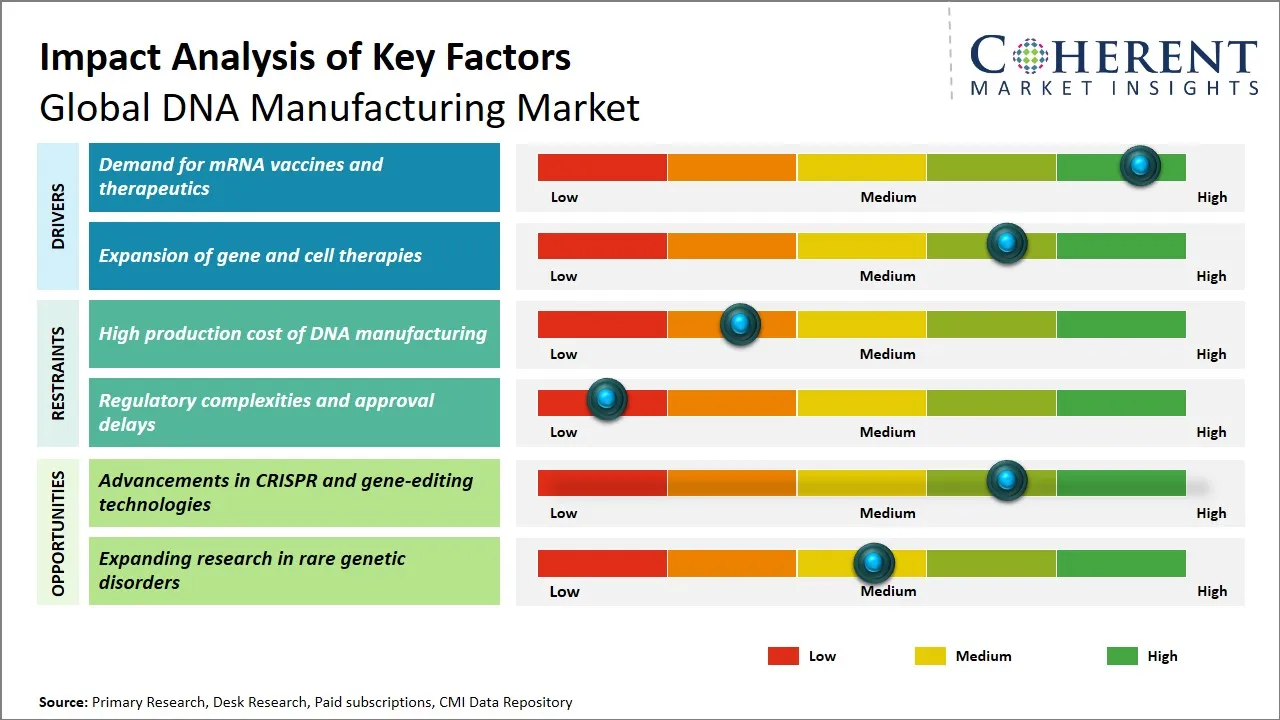
DNA Manufacturing Market Driver - Demand for mRNA vaccines and therapeutics
The expanding focus on mRNA technology as a revolutionary platform in vaccine development and therapeutics is significantly fueling the growth of the global DNA manufacturing market. The success of mRNA vaccines in combating the COVID-19 pandemic has spotlighted the advantages of nucleic acid-based therapies, encouraging pharmaceutical companies and research institutions to intensify investments in this space. This surge in demand compels manufacturers to scale up production capabilities for high-quality plasmid DNA, a critical component in the synthesis of mRNA. Additionally, the versatility of mRNA therapeutics extends beyond infectious diseases to include applications in oncology, rare genetic disorders, and personalized medicine, further driving the need for reliable DNA manufacturing processes. This increased reliance on high-purity plasmid DNA not only enhances the efficiency of mRNA vaccine production but also prompts advancements in manufacturing technologies, automation, and quality control, thereby shaping the dynamics of the overall DNA manufacturing landscape.
In March 2021, Maravai LifeSciences a leading provider of life science reagents and services, expanded its contract development and manufacturing organization (CDMO) capabilities with the launch of plasmid DNA (pDNA) manufacturing services at TriLink BioTechnologies. This new offering provides customers with an integrated, end-to-end mRNA solution, streamlining the production of GMP-grade plasmid DNA for mRNA vaccines and therapeutics
DNA Manufacturing Market Opportunity: Advancements in CRISPR and Gene-Editing Technologies
The rapid advancements in CRISPR and gene-editing technologies represent a significant opportunity for the global DNA manufacturing market. CRISPR's precision, efficiency, and cost-effectiveness have revolutionized genetic research, enabling the development of novel therapies for previously untreatable genetic disorders, as well as breakthrough innovations in agriculture and synthetic biology. As gene-editing techniques become more sophisticated, the demand for customized DNA synthesis, high-throughput gene editing tools, and complex genetic constructs is expected to surge. These technologies require highly accurate and scalable DNA manufacturing capabilities to support the design, testing, and validation of gene edits, driving growth in both the reagent and service segments of the market.
In April 2020, Merck, a global leader in science and technology, has been granted a second U.S. patent for its CRISPR-chrom technology by the United States Patent and Trademark Office. This innovation, which fuses chromatin-modulating peptides with CRISPR proteins, enhances access to genomic DNA, improving the efficiency of gene editing. Merck is now the only company holding a patent in the CRISPR chromatin space. This patent, part of the company’s growing portfolio of CRISPR-related patents, underscores Merck's commitment to advancing gene-editing technologies.
Analyst Opinion (Expert Opinion)
- The global DNA manufacturing market is experiencing rapid growth, driven by several key factors including technological advancements, rising demand for personalized medicine, and increasing investments in gene therapies. Innovations in synthetic biology and gene editing technologies like CRISPR are expanding production capabilities and reducing costs, making DNA synthesis more accessible. Additionally, regulatory support, particularly in the U.S. and Europe, is fostering growth by streamlining approval processes for gene-based therapies and treatments. However, the market faces challenges such as scalability issues, high production costs for large-scale DNA synthesis, and the need for stringent quality control. Despite these obstacles, emerging opportunities, particularly in the therapeutic and biotechnology sectors, are opening new avenues for market growth, especially in personalized healthcare.
- In recent years, significant global conferences and events, like the International Conference on DNA Synthesis & Applications (held in 2023), have become platforms for showcasing innovations and discussing regulatory frameworks that influence DNA manufacturing. These events have played a crucial role in knowledge-sharing, promoting industry collaboration, and shaping future policies. Moreover, initiatives such as the EU's Horizon 2020 project, which focuses on advancing gene therapy technologies, and the U.S. FDA's initiatives to support gene editing technologies, are expected to drive the market’s growth trajectory. With increasing investments from both private and public sectors, the DNA manufacturing industry is set to impact not just the medical field, but a variety of applications including agriculture and synthetic biology.
Speak to the analyst
Want personalized insights?
Take the findings above to one of our principal consultants, or have the report rebuilt around the segments, geographies and competitors you actually track.
Market Segmentation
- Type of DNA Insights (Revenue, USD Bn, 2021 - 2033)
- Synthetic DNA
- Oligonucleotide synthesis
- Custom DNA synthesis
- Plasmid DNA
- Gene DNA
- Synthetic DNA
- Application Insights (Revenue, USD Bn, 2021 - 2033)
- Oncology
- Gene Therapy
- Vaccine Development
- Immunotherapy
- Regenerative Medicine
- Neurodegenerative Diseases
- Cardiovascular Diseases
- Infectious Diseases
- Others (Rare Genetic Disorders)
- Technology Insights (Revenue, USD Bn, 2021 - 2033)
- PCR (Polymerase Chain Reaction)
- CRISPR/Cas9
- Next-Generation Sequencing (NGS)
- Gene Synthesis
- Others (Gene Editing and Modification)
- Grade Insights (Revenue, USD Bn, 2021 - 2033)
- GMP Grade (Good Manufacturing Practice)
- R and D Grade (Research and Development)
- Production Scale Insights (Revenue, USD Bn, 2021 - 2033)
- Commercial Scale Production
- Custom Scale Production
- End User Insights (Revenue, USD Bn, 2021 - 2033)
- Pharmaceutical Companies
- Biotechnology Companies
- Contract Research Organizations
- Others (Academic and Research Institutions, etc.)
- Regional Insights (Revenue, USD Bn, 2021 - 2033)
- North America
- U.S.
- Canada
- Latin America
- Brazil
- Argentina
- Mexico
- Rest of Latin America
- Europe
- Germany
- U.K.
- Spain
- France
- Italy
- Russia
- Rest of Europe
- Asia Pacific
- China
- India
- Japan
- Australia
- South Korea
- ASEAN
- Rest of Asia Pacific
- Middle East
- GCC Countries
- Israel
- Rest of Middle East
- Africa
- South Africa
- North Africa
- Central Africa
- North America
- Key Players Insights
- Lonza Group
- WuXi AppTec
- GenScript Biotech
- Thermo Fisher Scientific
- Sigma-Aldrich (Merck Group)
- Integrated DNA Technologies
- Eurofins Genomics
- OriGene Technologies
- Bluebird Bio
- Sangamo Therapeutics
- Cellectis
- Caribou Biosciences
- Editas Medicine
- Intellia Therapeutics
Sources
Primary Research Interviews
- Industry Stakeholders:
- National Institutes of Health (NIH)
- European Commission Directorate-General for Research and Innovation
- End users:
- Genomics and biotechnology research laboratories
- Pharmaceutical and diagnostics companies
Government and International Databases
- European Nucleotide Archive (ENA)
- National Institutes of Health (NIH)
- World Health Organization (WHO)
Trade Publications
- Genetic Engineering & Biotechnology News (GEN)
- BioProcess International
- Biotechnology Journal
- Nature Biotechnology
- BioTechniques
Academic Journals
- Nature Biotechnology
- Biotechnology Advances
- The Journal of Gene Medicine
- Gene Therapy
- Molecular Therapy
Industry Associations
- Biotechnology Innovation Organization (BIO)
- International Federation of Pharmaceutical Manufacturers & Associations (IFPMA)
- American Society of Gene & Cell Therapy (ASGCT)
- International Society for Stem Cell Research (ISSCR)
- European Biotech Association (EuropaBio)
Public Domain Resource
- National Center for Biotechnology Information (NCBI)
- United States Food and Drug Administration (FDA) Data
- United Nations Industrial Development Organization (UNIDO)
- European Medicines Agency (EMA) Data
- OpenBio (Open Biology Resources)
Proprietary Elements
- CMI Data Analytics Tool: Proprietary analytics tool to analyze real-time market trends, consumer behavior, and technology adoption in market
- Proprietary CMI Existing Repository of Information for Last 8 Years
Get access to 250+ pages report
Every segment, forecast, competitor profile and data table behind the analysis above — available for instant download.
- ESOMAR Member
- ISO 9001:2015 Certified
- D-U-N-S Registered
- GDPR & CCPA Compliant
Missing comfort of reading report in your local language? Find your preferred language:
Transform your Strategy with Exclusive Trending Reports
Frequently Asked Questions
The Global DNA Manufacturing Market is estimated to be valued at USD 7.56 Bn in 2026 and is expected to reach USD 23.24 Bn by 2033.
The CAGR of global DNA manufacturing market is projected to be 17.4% from 2026 to 2033.
Demand for mRNA vaccines and therapeutics and expansion of gene and cell therapies are the major factors driving the growth of the global DNA manufacturing market.
High production cost of DNA manufacturing and regulatory complexities and approval delays are the major factors hampering the growth of Global DNA Manufacturing Market.
In terms of Type of DNA, Synthetic DNA segment is estimated to dominate the market revenue share in 2026.
Lonza Group, WuXi AppTec, GenScript Biotech, Thermo Fisher Scientific, Sigma-Aldrich (Merck Group), Integrated DNA Technologies, Eurofins Genomics, OriGene Technologies, Bluebird Bio, Sangamo Therapeutics, Cellectis, Caribou Biosciences, Editas Medicine, and Intellia Therapeutics are the major players.
North America is expected to lead the global DNA manufacturing market in 2026.