

Epigenetics Market Size and Forecast — 2026-2033
The Global Epigenetics Market size is estimated to be valued at USD 3.93 billion in 2026 and is expected to reach USD 10.46 billion by 2033, exhibiting a compound annual growth rate (CAGR) of 15.0% from 2026 to 2033.
Overview
Epigenetics products encompass a wide range of research tools, reagents, and analytical platforms designed to study heritable changes in gene expression without altering the DNA sequence. Major product categories include DNA methylation kits, histone modification assays, chromatin immunoprecipitation (ChIP) reagents, next-generation sequencing (NGS) systems, and bioinformatics software. These tools are used in oncology, developmental biology, neurology, and regenerative medicine research. Technological advancements have led to high-throughput, single-cell, and multi-omics platforms capable of profiling complex epigenetic interactions at scale.
Key Takeaways
The epigenetic drugs segment leads the product market with a 43% share as companies focus on refining assay sensitivity and throughput.
Cancer epigenetics remains the dominant application segment, commanding more than 53% of the market revenue due to ongoing oncology research investments.
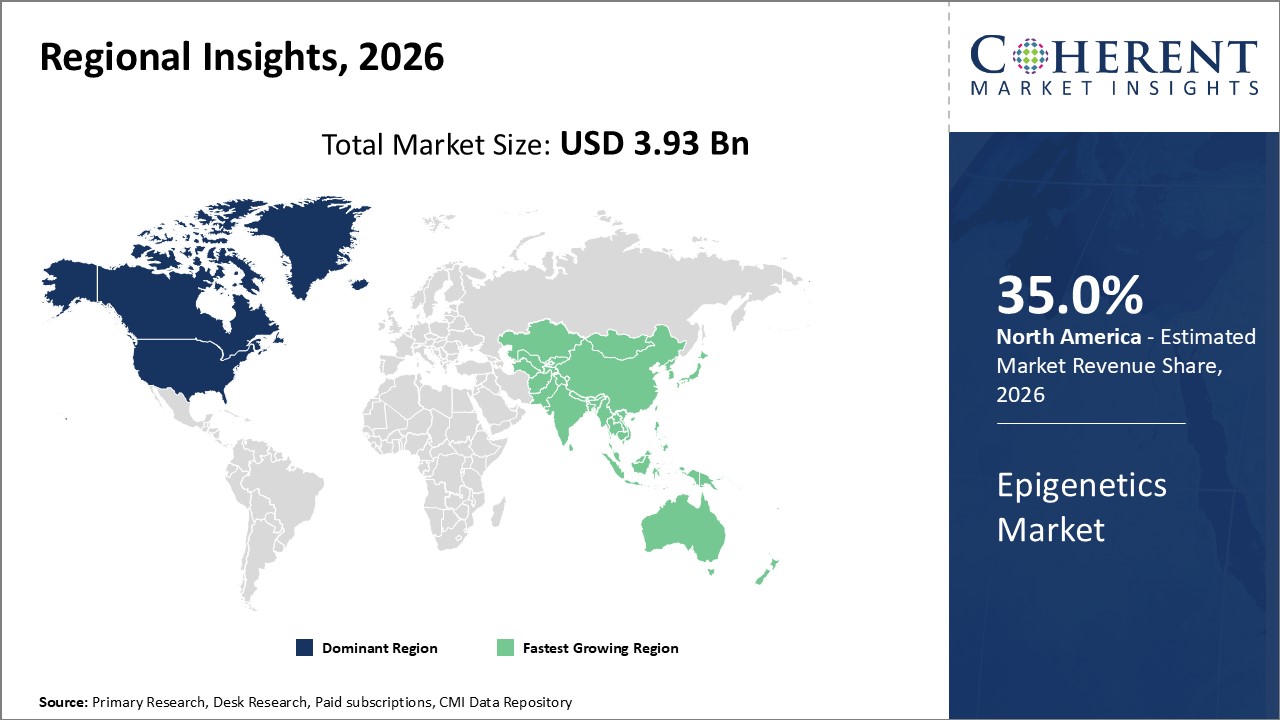
North America continues its dominant market position with over 35% market share, supported by strong innovation ecosystems and extensive funding.
Asia Pacific emerges as the fastest-growing region with a CAGR nearing 16%, underpinned by policy support and increased healthcare infrastructure investments.
Epigenetics Market Segmentation Analysis
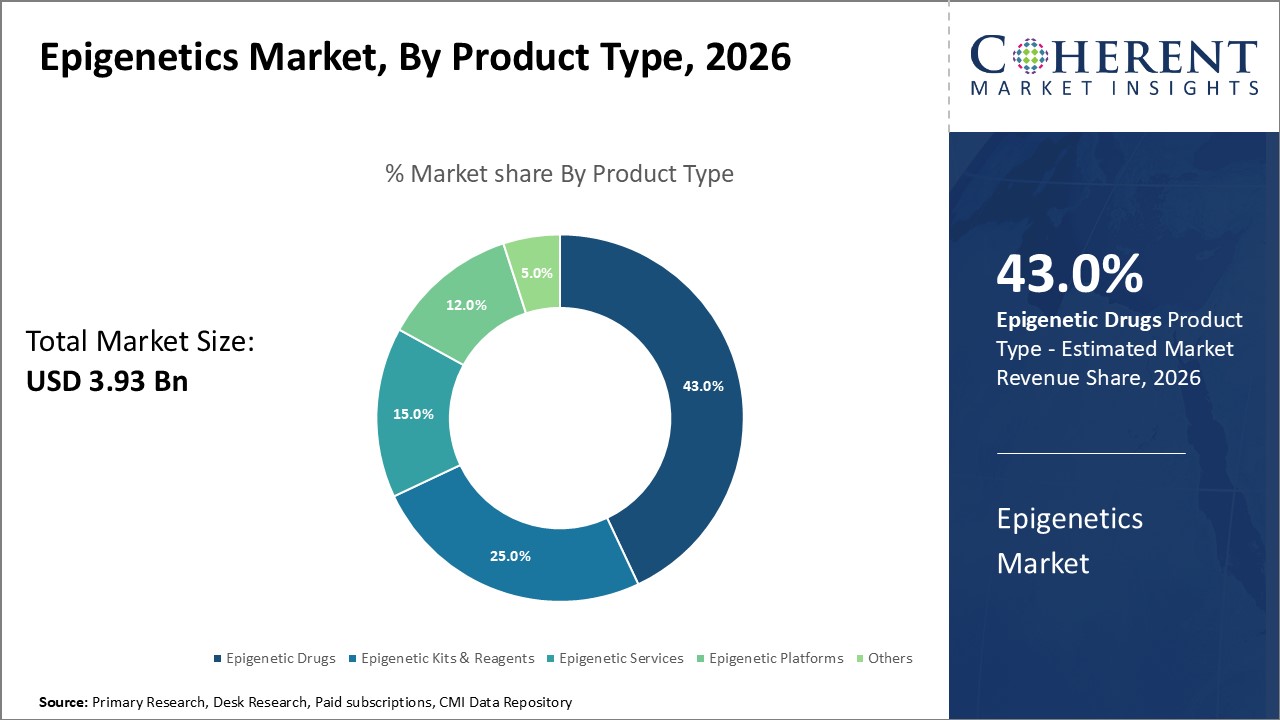
Epigenetics Market Insights, By Product Type
Epigenetic Drugs dominate the market share. This segment accounts for the largest revenue, primarily driven by the surge in oncology-based epigenetic therapeutics like DNA methyltransferase inhibitors and histone deacetylase inhibitors, which have demonstrated clinical efficacy and secured multiple regulatory approvals in 2025. The growing pipeline of epigenetic drugs for neurological disorders further accelerates this dominance. Epigenetic Kits & Reagents represent the fastest-growing subsegment due to rising adoption in research labs and diagnostic centers, where advances in assay sensitivity and reduced costs fuel demand.
Epigenetics Market Insights, By Application
Cancer Diagnostics & Treatment commands the dominant market share. The elevated prevalence of cancer worldwide and the critical role epigenetic modifications play in tumor progression have spurred investments and adoption of epigenetic drugs and diagnostic biomarkers, accounting for over half of the market revenue. The fastest-growing subsegment is Neurological Disorders, bolstered by rising research into epigenetic mechanisms underlying diseases like Alzheimer’s and Parkinson’s; recent translational studies in 2026 have validated several epigenetic biomarkers, encouraging market uptake.
Epigenetics Market Insights, By Technology
DNA Methylation dominates with the largest market share, justified by its extensive application in disease diagnostics and established assay platforms that offer high reliability and sensitivity, forming the backbone of epigenomic analysis pipelines. Histone Modification is the fastest-growing subsegment, propelled by rising clinical trials targeting histone modifiers and an increasing number of diagnostic kits developed for histone acetylation patterns. RNA-based Epigenetics includes emerging non-coding RNA therapies and is gaining traction in research applications.
Epigenetics Market Trends
Recent market trends indicate diversification of epigenetic applications beyond oncology into neurological and cardiovascular diseases, backed by increasing clinical evidence.
Data from 2025 shows a 26% annual increase in neurological disorder-related epigenetics research projects.
Enhanced AI-driven predictive analytics are accelerating biomarker discovery, reducing development timelines by nearly 21% on average, based on bioinformatics deployment statistics from leading biotech firms.
Epigenetics Market Insights, By Geography
North America Epigenetics Market Analysis and Trends
In North America, the epigenetics market dominance stems from established pharmaceutical hubs, comprehensive research networks, and substantial venture capital investment, contributing over 35% to the global market share. Government-sponsored programs such as NIH initiatives further propel business growth and innovation, particularly in the U.S.
Asia Pacific Epigenetics Market Analysis and Trends
Meanwhile, Asia Pacific exhibits the fastest growth with a CAGR of approximately 16%, driven by improving healthcare infrastructure and increasing epigenetic research funding from governments in India and China. The rise of local biotech startups capitalizing on affordable epigenetic analysis tools strengthens regional market revenue potential.
Epigenetics Market Outlook for Key Countries
USA Epigenetics Market Analysis and Trends
The USA remains a key market due to its robust research environment and significant public-private funding. For example, in 2025, the U.S. accounted for nearly 60% of global epigenetic clinical trials, underlining its pivotal role. Dominant companies such as Illumina and Thermo Fisher Scientific, headquartered in the U.S., continually innovate by launching new sequencing platforms and assay kits, supporting sustained market revenue growth.
China Epigenetics Market Analysis and Trends
China’s market is rapidly expanding, driven by government-backed genomics initiatives and rising biotech investments. In 2025, China increased its R&D expenditure on epigenetics by 35%, boosting market penetration and facilitating partnerships between domestic firms and international players. This growth reflects intensified activity in cancer epigenetics and biomarker discovery, positioning China as a future market leader.
Analyst Opinion
The surge in epigenetic drug pipelines marks a critical demand-side indicator generating substantial market growth. In 2025, there were over 200 clinical trials for epigenetic therapies worldwide, with a 46% increase in phase II/III trials compared to 2023, highlighting robust pipeline maturation. Cancer epigenetics dominates, accounting for nearly 63% share of the drug development initiatives.
Supply-side dynamics reveal enhanced production capabilities of key reagents such as DNA methylation kits and histone modification assay tools. For instance, in 2026, reagent production volumes increased by 28%, primarily driven by North American manufacturers scaling to accommodate a rise in genomic research demand.
Geographically, Asia Pacific’s demand increase is notable, with imports of epigenetic profiling kits soaring by 35% in 2025, supported by government initiatives in India and China to boost genomics and personalized medicine sectors. This demand push aligns with a 16% Y-o-Y market expansion in the region.
Micro-indicators also identify pricing strategies as pivotal, with a downward price trend of 9% in assay kits contributing to broader adoption among academic and biotech laboratories. This affordability factor has led to a 23% increase in new market entrants Asia-wide, stimulating enhanced competition and innovation.
- Current Industry Events of 2026
- Market Size Estimation
- Regional Breakdown
- Competitive Landscape
- Customer Intelligence
- Segmental Analysis
- Pricing Analysis
- Key Market Drivers, Challenges & Future Trends
- Customized Insights Section
Market Scope
| Report Coverage | Details | ||
|---|---|---|---|
| Base Year: | 2025 | Market Size in 2026: | USD 3.93 billion |
| Historical Data for: | 2020 To 2024 | Forecast Period: | 2026 To 2033 |
| Forecast Period 2026 to 2033 CAGR: | 15.0% | 2033 Value Projection: | USD 10.46 billion |
| Geographies covered: |
| ||
| Segments covered: |
| ||
| Companies covered: | F. Hoffmann-La Roche AG, Thermo Fisher Scientific Inc., Merck KGaA, Bio-Rad Laboratories, Inc., New England Biolabs, Inc., Epizyme, Inc., PerkinElmer, Inc., Olink Proteomics AB, Sysmex Corporation, Aridis Pharmaceuticals, Inc. | ||
| Growth Drivers: |
| ||
Epigenetics Market Growth Factors
Rapid technological advancements in epigenetic sequencing and assay development have drastically reduced time and cost barriers, thus expanding market scope and adoption. Increasing government funding initiatives, such as the US NIH’s $300 million Epigenome Roadmap Program, have accelerated research, translating to increased market revenue streams in North America and Europe. Growing prevalence of chronic diseases such as cancer and neurodegenerative disorders has pushed market demand for diagnostic epigenetics, with cancer-related applications constituting over 50% of total revenue in 2025. Lastly, the rise of personalized medicine and companion diagnostics adoption globally is strongly influencing market dynamics, as tailored epigenetic therapies advance clinical outcomes and market growth strategies.
Epigenetics Market Development
In January 2026, Tune Therapeutics completed a US $175 million Series B financing round to advance its epigenetic editing therapies, anchored by its lead candidate Tune‑401 for chronic hepatitis B (HBV). The round was led by investors including New Enterprise Associates (NEA), Yosemite, Regeneron Ventures and the Hevolution Foundation. The funding will also support the development of additional gene, cell and regenerative therapy programs within Tune’s epigenomic “TEMPO” platform.
In January 2025, Novo Nordisk entered into a strategic research collaboration with Omega Therapeutics to develop novel obesity treatments leveraging Omega’s epigenomic-controller platform technology. The collaboration, part of a broader framework with Flagship Pioneering, seeks to move beyond traditional appetite-regulation approaches by enhancing metabolic activity through epigenomic modulation.
Key Players
Leading market players include:
F. Hoffmann-La Roche AG
Thermo Fisher Scientific Inc.
Merck KGaA
Bio-Rad Laboratories, Inc.
New England Biolabs, Inc.
Epizyme, Inc.
Olink Proteomics AB
Sysmex Corporation
Aridis Pharmaceuticals, Inc.
Competitive strategies have included strategic partnerships and acquisitions to expand product portfolios and geographic presence. For example, Thermo Fisher Scientific’s acquisition of PPD enabled stronger service capabilities, directly translating into a 12% increase in pharmaceutical service revenues in 2025. Illumina’s collaboration with biotech firms for next-generation sequencing innovation resulted in a 20% uplift in assay kit sales year-over-year.
Epigenetics Market Future Outlook
The future of the Epigenetics Market appears exceptionally strong, with expanding clinical and diagnostic applications reshaping personalized medicine. The convergence of single-cell epigenomics, CRISPR-based epigenetic editing, and AI-driven data interpretation will fuel innovation across both research and clinical domains. Pharmaceutical pipelines are increasingly populated with epigenetic modulators targeting histone deacetylases and methyltransferases, offering new treatment avenues for cancer and rare genetic disorders. As translational research matures and regulatory frameworks adapt, the market is expected to sustain double-digit growth, potentially becoming a multi-billion-dollar sector by 2035.
Epigenetics Market Historical Analysis
The Epigenetics Market experienced exponential growth over the past two decades, driven by breakthroughs in understanding gene regulation mechanisms beyond DNA sequence. Initially confined to academic research, epigenetic studies gained commercial traction as pharmaceutical companies recognized the potential of epigenetic biomarkers and drug targets in cancer, neurodegenerative, and metabolic diseases. The proliferation of sequencing platforms, methylation assays, and chromatin analysis tools expanded research capabilities dramatically. Rising funding for precision medicine and multi-omics integration further strengthened market growth during the 2010s and early 2020s.
Sources
Primary Research Interviews:
Molecular Biologists
Epigenetic Researchers
Genomics Lab Heads
Pharmaceutical R&D Scientists
Clinical Geneticists
Databases:
PubMed
Scopus
Magazines:
Nature Biotechnology
GenomeWeb
Genetic Engineering & Biotechnology News
BioTechniques
Journals:
Epigenetics
Nature Reviews Genetics
Trends in Genetics
Clinical Epigenetics
Newspapers:
The Guardian (Science)
- The New York Times (Health)
The Hindu (Science)
Financial Times (Biotech)
Associations:
American Society of Human Genetics (ASHG)
European Society of Human Genetics (ESHG)
International Society for Epigenetics Research
Get access to 250+ pages report
Every segment, forecast, competitor profile and data table behind the analysis above — available for instant download.
- ESOMAR Member
- ISO 9001:2015 Certified
- D-U-N-S Registered
- GDPR & CCPA Compliant
Missing comfort of reading report in your local language? Find your preferred language:
Transform your Strategy with Exclusive Trending Reports
Frequently Asked Questions
Leading players include Illumina, Thermo Fisher Scientific, Danaher Corporation, F. Hoffmann-La Roche AG, and Merck KGaA, known for extensive portfolios in epigenetic reagents and platforms.
The Epigenetics market size is expected to grow from USD 3.93 billion in 2026 to USD 10.46 billion by 2033 with a CAGR of 15.0%.
Pharmaceutical & biotechnology companies are the fastest adopters, primarily due to their substantial investments in epigenetic drug research and diagnostics.
Integration of AI in epigenetic data analysis and adoption of liquid biopsy for non-invasive diagnostics will drive market dynamics and revenue.
High R&D expenses and the complexity of epigenetic mechanisms pose challenges, but continuous innovation and strategic collaborations are reshaping competitive dynamics.
Alliances for technology integration, mergers & acquisitions to expand portfolios, and regional expansion targeting emerging markets are primary growth strategies.