

Middle East and Asia Pacific Cell and Gene Therapy Market Size and Forecast – 2026 to 2033
The Middle East and Asia Pacific Cell and Gene Therapy Market is estimated to be valued at USD 41.3 Bn in 2026 and is expected to reach USD 68.7 Bn by 2033, exhibiting a compound annual growth rate (CAGR) of 11.8% from 2026 to 2033.
Key Takeaways
- By Therapy Type, Cell Therapy hold the largest market share of 52.2% in 2026 owing to its rising burden of chronic and genetic diseases.
- By Indication, Dermatology expected to hold the largest market share of 34.3% in 2026 owing to the increasing prevalence of skin disorders and chronic wounds.
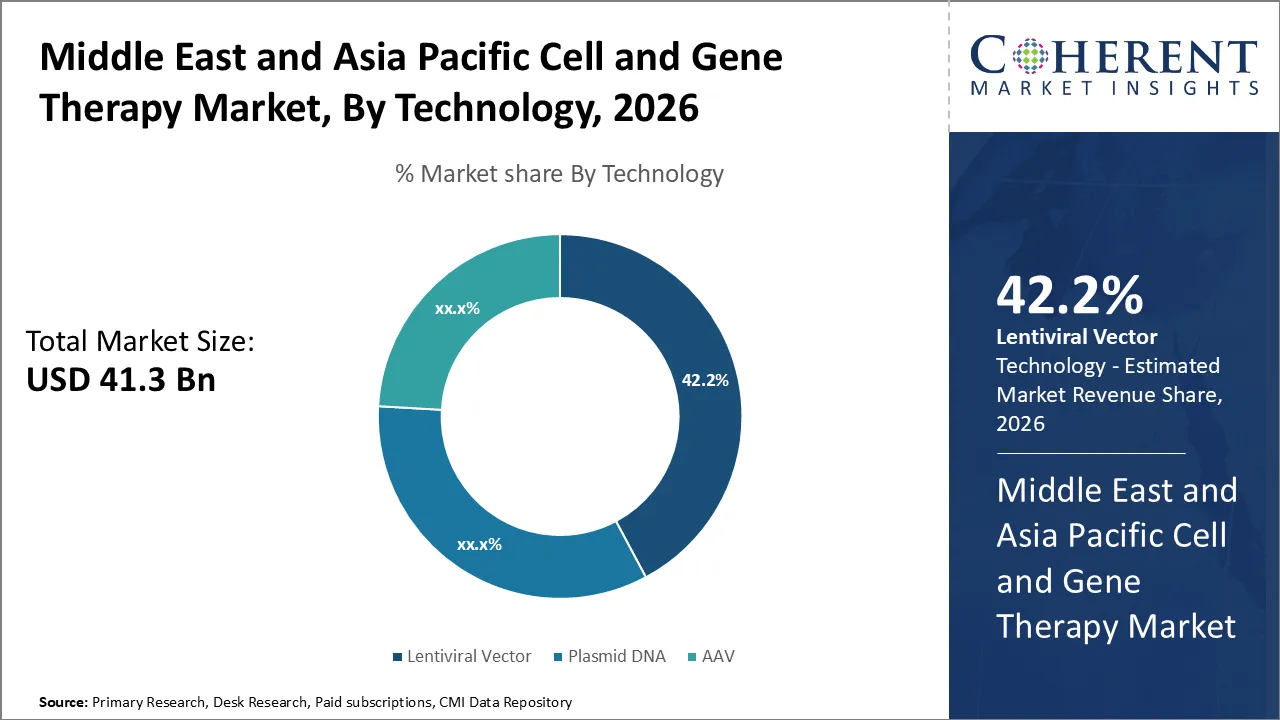
- By Technology, Lentiviral Vector acquired the prominent market share of 42.2% in 2026 owing to its rapid growth of gene and cell therapy
- By Region, Asia Pacific dominates the overall market with an estimated share of 38.80% in 2026 owing to the strong government support and funding.
Market Overview
Healthcare providers and biotechnology companies are steadily expanding the Middle East and Asia Pacific Cell and Gene Therapy market as demand for advanced treatments for cancer, rare genetic disorders, and chronic diseases continues to rise. Governments and private investors are increasing funding for biotechnology research, improving healthcare infrastructure, and supporting initiatives that accelerate the development and adoption of innovative therapies. Pharmaceutical companies are also strengthening the market by conducting more clinical trials and forming collaborations with regional research institutions. In addition, growing awareness of personalized medicine and regenerative therapies is encouraging wider adoption and commercialization across the region.
Current Events and their Impact on the Middle East and Asia Pacific Cell and Gene Therapy Market
Current Events | Description and its impact |
Geopolitical Developments in Middle East and Asia Pacific |
|
Regulatory and Policy Updates |
|
Economic Trends and Investment Flows |
|
Segmental Insights
- Current Industry Events of 2026
- Market Size Estimation
- Regional Breakdown
- Competitive Landscape
- Customer Intelligence
- Segmental Analysis
- Pricing Analysis
- Key Market Drivers, Challenges & Future Trends
- Customized Insights Section
Middle East and Asia Pacific Cell and Gene Therapy Market Insights, By Technology: Lentiviral Vector contribute the highest share of the market owing to its strong government funding and biotech investments.
Lentiviral Vector acquired the prominent market share of 42.2% in 2026. Biotech companies and research institutions are driving the demand for lentiviral vectors in the Middle East and Asia Pacific Cell and Gene Therapy market by developing gene-modified therapies, including CAR-T and stem cell-based treatments. They are increasingly using lentiviral vectors to achieve precise gene delivery in both ex-vivo and in-vivo applications. Governments and private investors are expanding vector production facilities and funding clinical research. At the same time, advancements in vector design, safety, and scalability are enabling wider adoption of lentiviral vectors for innovative cell and gene therapy programs throughout the region.
Middle East and Asia Pacific Cell and Gene Therapy Market Insights, By Therapy Type: Cell Therapy contribute the highest share of the market owing to its rapid development of biomanufacturing infrastructure.
Cell Therapy hold the largest market share of 52.2% in 2026. Rising demand for advanced treatments for cancer, autoimmune disorders, and degenerative diseases is driving the growth of cell therapy in the Middle East and Asia Pacific Cell and Gene Therapy market. Researchers and biotechnology companies are expanding work in stem cell technologies and immunotherapies, which is leading to the development of innovative therapeutic solutions. Governments and private organizations are promoting regenerative medicine initiatives through funding and strategic collaborations. Healthcare providers are also establishing specialized treatment centers and enhancing laboratory capabilities, enabling broader clinical use of cell-based therapies across hospitals and research institutions in the region. For instance, in March 2026, Terumo Blood and Cell Technologies (Terumo BCT) introduced its new Cell & Gene Therapy (C>) Ecosystem Blueprint, offering a practical, collaborative framework that enables developers in the Asia-Pacific (APAC) region to advance therapies from early-stage development to scalable and repeatable delivery.
Middle East and Asia Pacific Cell and Gene Therapy Market Insights, By Indication: Dermatology contributes the highest share of the market owing to its technological advancements in regenerative dermatology.
Dermatology expected to hold the largest market share of 34.3% in 2026. The rising incidence of chronic skin conditions, burns, and wound-healing disorders is driving growth in the dermatology segment of the Middle East and Asia Pacific Cell and Gene Therapy market. Researchers and healthcare providers are advancing regenerative medicine techniques, including stem cell-based skin repair and tissue engineering, to expand treatment options. Dermatology clinics and research institutions are actively adopting cell-based approaches for skin regeneration and scar management. Additionally, increasing demand for minimally invasive aesthetic procedures and skin rejuvenation treatments is promoting the use of innovative cell and gene therapy solutions across the region.
Regional Insights
Asia Pacific Cell and Gene Therapy Market Trends
Asia Pacific dominates the overall market with an estimated share of 38.80% in 2026. Biotechnology and regenerative medicine investments are driving dynamic growth in the Asia Pacific Cell and Gene Therapy market. Companies and research institutions are actively developing CAR-T therapies, stem cell treatments, and gene-editing technologies. Governments are promoting innovation by providing funding, regulatory incentives, and establishing specialized research hubs. Expanding clinical trials, collaborations between global and regional pharmaceutical firms, and enhanced manufacturing infrastructure are accelerating therapy development. At the same time, increasing awareness of personalized medicine is encouraging broader adoption of advanced cell and gene therapies throughout the region. For instance, in November 2025, Science and Technology Minister Dr. Jitendra Singh launched India’s first indigenous CRISPR-based gene therapy for Sickle Cell Disease, BIRSA 101, primarily targeting the tribal population, in honor of Bhagwan Birsa Munda’s 150th anniversary.
Middle East Cell and Gene Therapy Market Trends
Healthcare providers and biotech companies are driving the expansion of the Middle East Cell and Gene Therapy market by adopting advanced treatments for cancer, genetic disorders, and chronic diseases. Governments are supporting research through funding, regulatory incentives, and the creation of specialized biotech hubs. International pharmaceutical partnerships and ongoing clinical trials are accelerating the development of innovative therapies. At the same time, growing awareness of regenerative medicine and personalized treatments, along with improvements in manufacturing infrastructure and specialized treatment centers, is enabling wider access to cell and gene therapy solutions across the region. For instance, in February 2026, The UAE embraced a new era of precision medicine as Emirates Health Services (EHS) launched two ambitious gene therapy projects targeting the underlying causes of autism and rare brain disorders, moving beyond mere symptom management.
End-User Feedback and Unmet Needs in the Middle East and Asia Pacific Cell and Gene Therapy Market
- Demand for Accessible and Affordable Therapies: Patients and healthcare providers report that the high cost of cell and gene therapies limits access. There is a need for more affordable treatment options and reimbursement support to ensure broader availability across hospitals and clinics in both urban and remote regions.
- Need for Faster Therapy Availability: End-users highlight delays in therapy delivery due to limited manufacturing capacity and regulatory processes. Streamlined approval pathways, faster logistics, and local production facilities are critical to reduce waiting times and provide timely access to life-saving treatments.
- Standardization and Clinical Support: Healthcare professionals emphasize the need for standardized protocols and guidelines for administering cell and gene therapies. Enhanced training, clinical support, and best practice frameworks are necessary to ensure consistent outcomes and improve patient safety across institutions.
Middle East and Asia Pacific Cell and Gene Therapy Market Trend
Rising Focus on Advanced Oncology Therapies
Biotech companies and healthcare providers are prioritizing CAR-T, TCR-T, and stem cell-based therapies to address cancer and hematological disorders. Increasing collaborations between regional hospitals and global pharmaceutical firms are accelerating clinical development, enabling faster access to innovative oncology treatments and expanding patient reach across both urban and emerging markets.
Strengthening Biomanufacturing and Research Infrastructure
Governments and private investors are developing GMP-compliant production facilities, specialized research hubs, and treatment centers. Enhanced infrastructure is supporting scalable manufacturing, improving therapy availability, and ensuring quality control, which collectively strengthens the regional cell and gene therapy ecosystem.
Middle East and Asia Pacific Cell and Gene Therapy Market Opportunity
Growth of Regenerative and Personalized Medicine
The rising interest in regenerative medicine for dermatology, chronic wounds, and autoimmune disorders offers opportunities for novel cell-based therapies. Tailoring treatments to individual genetic and molecular profiles allows companies to address unmet medical needs and differentiate their offerings in competitive healthcare markets.
Market Report Scope
Middle East and Asia Pacific Cell and Gene Therapy Market Report Coverage
| Report Coverage | Details | ||
|---|---|---|---|
| Base Year: | 2025 | Market Size in 2026: | USD 41.3 Bn |
| Historical Data for: | 2020 To 2024 | Forecast Period: | 2026 To 2033 |
| Forecast Period 2026 to 2033 CAGR: | 11.8% | 2033 Value Projection: | USD 68.7 Bn |
| Geographies covered: |
| ||
| Segments covered: |
| ||
| Companies covered: | Novartis International AG, Pfizer, Inc., Sanofi S.A., Amgen, Inc., Regeneron Pharmaceuticals, Inc., F. Hoffmann-La Roche AG, Bluebird Bio, Inc. (Celgene Corporation), Gene biotherapeutics, Sibiono GeneTech Co. Ltd., Kolon TissueGene, Inc., Horama S.A., MeiraGTx Limited, Gilead Sciences, Inc., Biogen INC., Organogenesis, Inc., JCR Pharmaceuticals Co. Ltd, uniQure N.V., WuxiAppTec, Lonza, and Immuneel Therapeutics Pvt Ltd. | ||
| Growth Drivers: |
| ||
| Restraints & Challenges: |
| ||
Middle East and Asia Pacific Cell and Gene Therapy Market News
- In October 2024, Teijin Limited and Singapore-based Hilleman Laboratories signed a Memorandum of Understanding to form a strategic international partnership aimed at expanding CDMO services in cell and gene therapy.
Analyst Opinion (Expert Opinion)
- The Middle East and Asia Pacific Cell and Gene Therapy market is entering a transformative phase driven by substantial clinical and regulatory momentum rather than mere theoretical potential. Asia Pacific now accounts for roughly 23% of global cell and gene therapy clinical trial activity, with China alone responsible for about 42% of regional studies, and over 530 trials focused on oncology and neurological indications—an indication of deep translational research capacity and industry engagement. Japan and South Korea also contribute significant trial portfolios and are fast‑tracking innovative therapies through modern regulatory pathways.
- In contrast, the Middle East’s current footprint, while smaller, is distinctive in its strategic achievements and rapid capability building. The region contributes meaningfully to global activity with around 7% of ongoing clinical trials, led by Israel and the UAE, where national biotechnology strategies have accelerated approvals and partnerships with European CROs. Recent approvals, such as the UAE’s authorization of Itvisma for spinal muscular atrophy, position the country as an early adopter of cutting‑edge therapies outside traditional Western markets.
- Despite this progress, both subregions face systemic challenges in scaling manufacturing and long‑term commercialization. While Asia Pacific has expanded its GMP and biomanufacturing base with a growing number of facilities, regulatory heterogeneity and fragmented reimbursement frameworks remain persistent barriers. In the Middle East, infrastructure and trained personnel shortages continue to constrain broader deployment, even as early clinical successes—such as the first CRISPR‑based gene therapy in Abu Dhabi for inherited blood disorders—demonstrate the region’s potential when innovation converges with focused policy support.
- Overall, the market narrative is no longer speculative: Asia Pacific is staking a claim as a global innovation corridor for cell and gene therapy, while the Middle East is strategically building clinical hubs and regulatory experiments that punch above its scale, offering a compelling juxtaposition of depth and emerging capability within the broader global ecosystem.
Speak to the analyst
Want personalized insights?
Take the findings above to one of our principal consultants, or have the report rebuilt around the segments, geographies and competitors you actually track.
Market Segmentation
- By Therapy Type
- Cell Therapy
- Stem Cells
- T Cells
- Dendritic Cells
- NK Cells
- Gene Therapy
- Germline Gene Therapy
- Somatic Gene Therapy
- Cell Therapy
- By Indication
- Dermatology
- Musculoskeletal
- Oncology
- Immunology
- Cardiology & Neurology
- Others
- By Technology
- Lentiviral Vector
- Plasmid DNA
- AAV
- By Region
- Middle East
- GCC Countries
- Israel
- Rest of Middle East
- Asia Pacific
- China
- India
- Japan
- Australia
- South Korea
- ASEAN
- Rest of Asia Pacific
- Middle East
- Key Players Insights
- Novartis International AG
- Pfizer, Inc.
- Sanofi S.A.
- Amgen, Inc.
- Regeneron Pharmaceuticals, Inc.
- Hoffmann-La Roche AG
- Bluebird Bio, Inc. (Celgene Corporation)
- Gene biotherapeutics
- Sibiono GeneTech Co. Ltd.
- Kolon TissueGene, Inc.
- Horama S.A.
- MeiraGTx Limited
- Gilead Sciences, Inc.
- Biogen INC.
- Organogenesis, Inc.
- JCR Pharmaceuticals Co. Ltd
- uniQure N.V.
- WuxiAppTec
- Lonza
- Immuneel Therapeutics Pvt Ltd.
Sources
Primary Research interviews
- Clinical investigators and principal researchers in cell and gene therapy centers across China, Japan, South Korea, UAE, and Saudi Arabia
- Medical directors and oncologists administering CAR-T and stem cell therapies
- Regulatory affairs professionals from national health authorities (e.g., Japan PMDA, Singapore HSA)
- Heads of biomanufacturing facilities and quality assurance teams
- Hospital pharmacists and clinical trial coordinators involved in gene therapy programs
Databases
- ClinicalTrials.gov for regional cell and gene therapy trials
- WHO International Clinical Trials Registry Platform (ICTRP)
- NCBI Gene Expression Omnibus and PubChem for vector and gene target data
- National health statistics portals (e.g., China CDC, Ministry of Health Japan)
- UN Comtrade for biotech equipment imports/exports
Magazines
- Nature Biotechnology
- Genetic Engineering & Biotechnology News (GEN)
- BioPharma Asia
- The Lancet Oncology Magazine
- Middle East Healthcare News
Journals
- Molecular Therapy – Methods & Clinical Development
- Cell Stem Cell
- Human Gene Therapy
- Journal of Translational Medicine
- Frontiers in Immunology – Gene and Cell Therapy
Newspapers
- Gulf News (healthcare and biotech coverage)
- South China Morning Post (medical research features)
- The Straits Times (healthcare innovation updates)
- The Korea Herald (science and medical section)
- The Times of India (biotech policy and health news)
Associations
- International Society for Cell & Gene Therapy (ISCT)
- Society for Immunotherapy of Cancer (SITC)
- Asia Pacific Association of Medical Journal Editors (APAME)
- Arab Health Federation
- Asia Pacific Hematology Consortium
Public Domain sources
- National health strategy documents (e.g., Saudi Vision 2030 Health Sector Blueprint)
- Regulatory guidelines from PMDA, HSA, and other national authorities
- WHO reports on genetic disorders, cancer, and non-communicable diseases
- Patent filings from WIPO for CAR-T, lentiviral vectors, and gene-editing technologies
- Clinical practice guidelines for cell and gene therapies in oncology, hematology, and regenerative medicine
Proprietary Elements
- CMI Data Analytics Tool
- Proprietary CMI Existing Repository of information for last 8 years
Get access to 250+ pages report
Every segment, forecast, competitor profile and data table behind the analysis above — available for instant download.
- ESOMAR Member
- ISO 9001:2015 Certified
- D-U-N-S Registered
- GDPR & CCPA Compliant
Missing comfort of reading report in your local language? Find your preferred language:
Transform your Strategy with Exclusive Trending Reports
Frequently Asked Questions
The Middle East and Asia Pacific Cell and Gene Therapy Market is estimated to be valued at USD 41.3 Bn in 2026 and is expected to reach USD 68.7 Bn by 2033.
Increasing launch and approval of novel gene therapies for the treatment of various rare diseases and robust pipeline of products are expected to drive the market growth over the forecast period.
Cell therapy segment is expected to hold major market share.
Asia Pacific holds the largest market share in the market.
Major factor hampering growth of the market include unfavorable reimbursement policies for cell and gene therapy products.
Major players operating in the market include Novartis International AG, Pfizer, Inc., Sanofi S.A., Amgen, Inc., Regeneron Pharmaceuticals, Inc., F. Hoffmann-La Roche AG, Bluebird Bio, Inc. (Celgene Corporation), Gene biotherapeutics, Sibiono GeneTech Co. Ltd., Kolon TissueGene, Inc., Horama S.A., MeiraGTx Limited, Gilead Sciences, Inc., Biogen INC., Organogenesis, Inc., JCR Pharmaceuticals Co. Ltd, uniQure N.V., WuxiAppTec, Lonza, and Immuneel Therapeutics Pvt Ltd.