

Biobank Market Size and Forecast — 2026 - 2033
The Global Biobank Market size is estimated to be valued at USD 9.8 billion in 2026 and is expected to reach USD 21.6 billion by 2033, exhibiting a compound annual growth rate (CAGR) of 12.3% from 2026 to 2033.
Overview
The Biobank Market offers a diverse range of products essential for the collection, processing, storage, and distribution of biological samples. Key products include sample storage systems such as ultra-low temperature freezers, cryogenic storage tanks, and automated storage units, which ensure long-term preservation of specimens. Sample collection kits, including blood, tissue, and DNA/RNA kits, facilitate standardized and contamination-free acquisition. Laboratory consumables like vials, tubes, and reagents support sample handling and processing. Additionally, biobank management software enables efficient data tracking, inventory management, and regulatory compliance. These products collectively drive research in genomics, personalized medicine, and clinical trials.
Key Takeaways
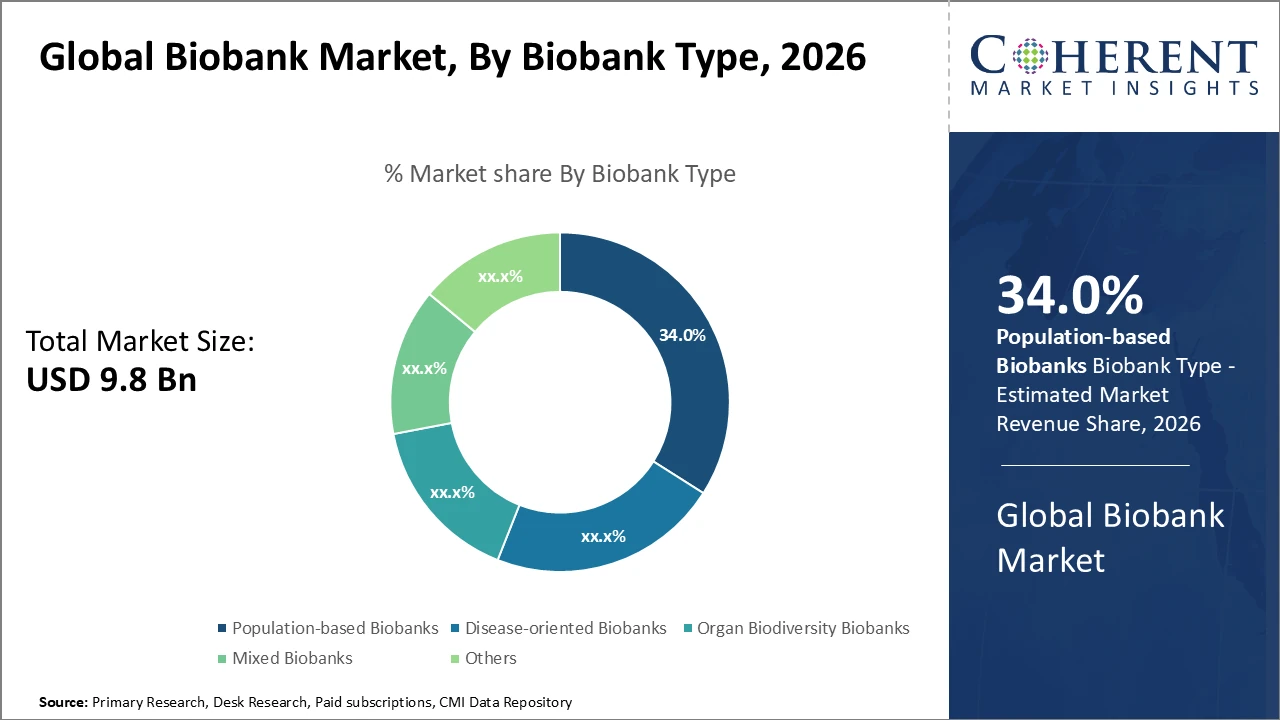
The Population-based Biobanks segment holds a commanding market share of 34%, driven by large-scale epidemiological studies and longitudinal research projects.
Blood Samples dominate the Sample Type market share at 41%, favored for their versatility and ease of collection.
Pharmaceutical & Biotechnology Companies lead the End User segment with a 36% market share, fueled by robust R&D investment and biobank partnerships.
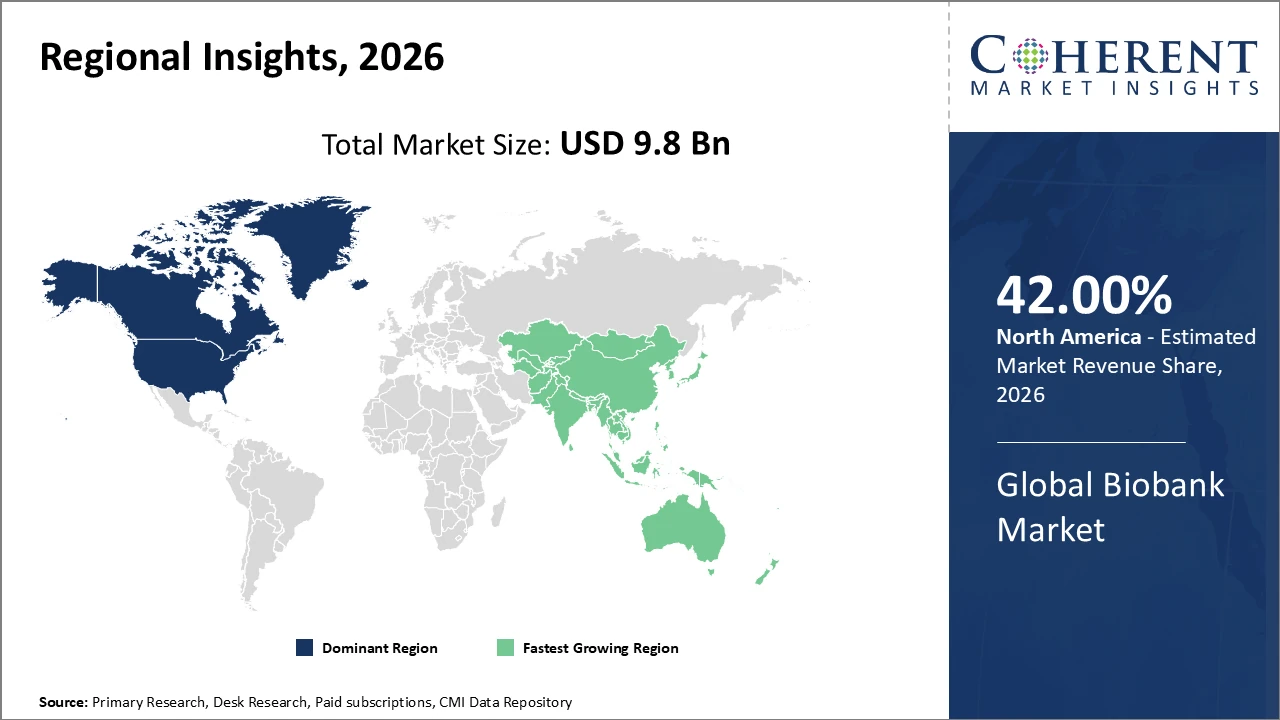
North America commands the largest share of the Biobank Market, benefiting from a mature healthcare ecosystem, substantial public and private funding, and the presence of key market players.
Biobank Market Segmentation Analysis
Biobank Market Insights, By Biobank Type
Population-based Biobanks dominate with a market share of 34%, leveraging large cohorts to enable comprehensive epidemiological research and longitudinal studies that inform public health policies. Their extensive and diverse specimen collections support wide-ranging disease association studies. Disease-oriented Biobanks are the fastest-growing segment, driven by the rising burden of chronic and rare diseases, focusing on disease-specific samples to advance targeted drug development and precision therapeutics. Organ Biodiversity Biobanks preserve diverse organ types for transplantation and regenerative medicine, while Mixed Biobanks combine population and disease-specific specimens to enhance research flexibility. The Others subsegment caters to rare and specialized sample collections.
Biobank Market Insights, By Sample Type
Blood Samples lead this segment with a 41% share, driven by their broad clinical applications and ease of collection, preserving critical biomarkers for systemic diseases. Tissue Samples are the fastest-growing subsegment, supported by advances in molecular pathology and cancer research that require high-quality tissue specimens for molecular profiling. DNA/RNA Samples play a key role in genomics and transcriptomics studies, enabling precision medicine and multi-omics research. Urine Samples offer non-invasive biomarker sources, increasingly used in renal and metabolic disorder investigations. Other sample types, including saliva, cerebrospinal fluid, and rare biospecimens, serve specialized roles in niche research areas.
Biobank Market Insights, By End User
Pharmaceutical and biotechnology companies dominate with a 36% market share, utilizing biobank specimens extensively for drug discovery, clinical trial enrichment, and biomarker validation. Their investment in biobanking infrastructure supports targeted therapy development and the growth of personalized medicine. Academic and research institutes are the fastest-growing subsegment, driven by government funding and international collaborations that promote translational research. Hospitals and diagnostic centers work with biobanks for clinical sample collection and disease registries to improve patient care. Contract research organizations use biobank resources to design and conduct clinical trials efficiently, while others include government agencies and non-profits supporting biobank operations and governance.
Biobank Market Trends
Biobanks are evolving from static repositories to dynamic, integrated hubs of biomedical data.
The integration of AI and blockchain technologies has enhanced data integrity and accessibility, improving sample traceability by 35% in 2025.
Sustainability is gaining focus, with biobanks adopting green cryopreservation protocols to meet environmental objectives.
Multi-modal data analytics platforms are increasingly being adopted, enabling more comprehensive insights and supporting precision medicine breakthroughs by 2026.
These trends collectively highlight the shift toward smarter, environmentally conscious, and technology-driven biobanking practices.
Biobank Market Insights, By Geography
North America Biobank Market Analysis and Trends
In North America, the Biobank Market is dominated by advanced healthcare infrastructure, substantial government funding, and the presence of leading companies such as Thermo Fisher Scientific and Guardant Health. The region held over 42% of the global market share in 2026, driven by extensive population-based biobanks and disease-oriented repositories that support large-scale genomic and epidemiological studies. These biobanks enable high-quality sample collection, storage, and data management, facilitating groundbreaking research in precision medicine, drug development, and biomarker discovery. Strong collaborations between public institutions, private companies, and academic centers further strengthen North America’s leadership in the global biobank ecosystem.
Asia Pacific Biobank Market Analysis and Trends
Asia Pacific demonstrates the fastest growth in the Biobank Market, with a CAGR exceeding 14% between 2026 and 2033. Key drivers include increasing government investments in biotechnology, the expansion of healthcare infrastructure in countries such as China and India, and the establishment of regional biobank facilities by multinational companies. Market players in the region are adopting customized biobanking solutions to address local disease prevalence and the diverse patient population. These efforts support large-scale genomic research, clinical trials, and precision medicine initiatives. The combination of rising funding, infrastructure development, and strategic collaborations fuels the rapid market expansion in Asia Pacific.
Biobank Market Outlook for Key Countries
USA Biobank Market Analysis and Trends
The U.S. biobank market plays a key role in shaping global trends, driven by federal initiatives such as the All of Us Research Program, which enrolled over 300,000 participants by 2025, creating a comprehensive repository of biospecimens linked with extensive clinical data. Leading companies, including Thermo Fisher Scientific and BioIVT, operate large-scale biobanks supported by advanced cryopreservation and data management systems. Academic and clinical biobanks further contribute to market growth by collaborating with pharmaceutical and biotechnology firms, particularly in oncology and rare disease research, enabling precision medicine, biomarker discovery, and enhanced clinical trial outcomes.
Germany Biobank Market Analysis and Trends
Germany’s biobank market is growing steadily, driven by a strong healthcare infrastructure, robust regulatory frameworks, and collaborative research initiatives. The country hosts numerous population-based and disease-oriented biobanks, supporting large-scale genomic and epidemiological studies. Emphasis on precision medicine and personalized healthcare is fueling demand for high-quality tissue, blood, and DNA/RNA samples. Academic institutions, research centers, and pharmaceutical companies actively collaborate on translational research and clinical trials. Emerging trends include the integration of AI and data analytics for sample management, adoption of sustainable cryopreservation practices, and participation in cross-border biobank networks, enhancing Germany’s position as a leading European biobank hub.
Analyst Opinion
The surge in biobank market revenue is driven by rising demand in precision medicine and genomic research; in 2025, over 60% of large pharmaceutical R&D initiatives incorporated biobank samples, highlighting their role in advanced therapeutic development and global market growth.
Production capacity of biobank specimens has increased due to technological advancements in cryopreservation and automated sample management; as of 2024, automated biobanking systems accounted for approximately 47% of new facility installations, improving data accuracy and sample viability.
Pricing dynamics are influenced by public-private partnerships, especially in North America and Europe, where government-backed biobanks offset costs; in 2026, public funding contributed about 38% of total biobank infrastructure investments.
Adoption of AI-driven sample cataloging has improved utilization rates of stored biospecimens; data from 2025 shows a 33% increase in retrieval efficiency in AI-integrated biobanks, enhancing turnaround times and overall market growth.
- Current Industry Events of 2026
- Market Size Estimation
- Regional Breakdown
- Competitive Landscape
- Customer Intelligence
- Segmental Analysis
- Pricing Analysis
- Key Market Drivers, Challenges & Future Trends
- Customized Insights Section
Market Scope
| Report Coverage | Details | ||
|---|---|---|---|
| Base Year: | 2025 | Market Size in 2026: | USD 9.8 billion |
| Historical Data for: | 2020 To 2024 | Forecast Period: | 2026 To 2033 |
| Forecast Period 2026 to 2033 CAGR: | 12.3% | 2033 Value Projection: | USD 21.6 billion |
| Geographies covered: |
| ||
| Segments covered: |
| ||
| Companies covered: | BioIVT, Qiagen N.V., Takara Bio Inc., Lonza Group AG, Thermo Fisher Scientific, Invitae Corporation, BGI Group, Guardant Health, Guerbet Group, Stemcell Technologies | ||
| Growth Drivers: |
| ||
Biobank Market Growth Factors
The growing adoption of precision medicine and personalized therapies is the primary driver of the biobank market, as biobanks provide essential biological samples and data for tailored treatment development. In 2026, over 72% of clinical trials utilized biobank samples for patient stratification. Increasing government initiatives and funding, particularly in developed economies, support market expansion by lowering entry barriers for new research projects. Digital biobanking platforms with AI and cloud computing enhance data management and accessibility, enabling cross-institutional collaboration. Rising demand from emerging economies, driven by healthcare infrastructure growth and awareness, creates new opportunities despite regulatory and ethical challenges.
Biobank Market Development
In November 2025, the National Accreditation Board for Testing and Calibration Laboratories (NABL), under the Quality Council of India (QCI), launched a biobanking accreditation program aligned with ISO 20387:2018. This initiative aims to bring Indian biobanks up to international standards, ensuring the quality and reliability of biological materials for advanced research and personalized medicine.
Key Players
Leading Companies of the Market
BioIVT
Takara Bio Inc.
Thermo Fisher Scientific
Invitae Corporation
BGI Group
Guardant Health
Stemcell Technologies
Lonza Group AG
Guerbet Group
Several leading market players have pursued aggressive expansion strategies through acquisitions and collaborations to strengthen their biobank portfolios. In 2025, Qiagen N.V. acquired a major tissue biobank facility in Europe, enhancing its end-to-end market presence and contributing to a 14% increase in market share. Similarly, Thermo Fisher Scientific formed strategic partnerships with regional hospitals in the U.S., increasing its sample volume by 22%. These initiatives have enabled both companies to accelerate pharmaceutical collaborations, expand access to high-quality biospecimens, and drive business growth through optimized biobanking solutions, reflecting a broader trend of consolidation and strategic alignment in the global biobank market.
Biobank Market Future Outlook
The Biobank Market is expected to witness strong growth in the coming years, driven by the rising demand for precision medicine, genomic research, and personalized therapies. Advances in AI, blockchain, and cloud-based platforms will enhance data management, sample traceability, and cross-institutional collaboration. Expansion in emerging economies, supported by increasing healthcare infrastructure and government initiatives, will open new opportunities for market players. Sustainability practices, including green cryopreservation and energy-efficient storage, will gain importance. Strategic partnerships, mergers, and acquisitions are likely to continue, enabling companies to access comprehensive biobank datasets and strengthen their position in a rapidly evolving global market.
Biobank Market Historical Analysis
The global Biobank Market has experienced steady growth over the past decade, driven by advancements in genomics, proteomics, and molecular biology research. Early development focused on population-based and disease-specific biobanks to support epidemiological studies and clinical research. Technological improvements in cryopreservation, automated storage, and sample tracking enhanced specimen quality and operational efficiency. Strategic collaborations between academic institutions, pharmaceutical companies, and government agencies expanded the scope and accessibility of biobank resources. Rising investment in personalized medicine and translational research further fueled market expansion, establishing biobanks as critical infrastructure for biomarker discovery, drug development, and precision healthcare initiatives worldwide.
Sources
Primary Research Interviews:
Biobank managers and laboratory directors
Pharmaceutical and biotechnology R&D heads
Academic and clinical researchers
Contract research organizations (CROs) and diagnostic centers
Industry consultants and biobanking technology experts
Magazines:
Genetic Engineering & Biotechnology News – Biobank Research & Innovations
BioTechniques – Sample Handling and Biobanking Technologies
Nature Biotechnology – Biobank Developments and Applications
The Scientist – Biobank Research Trends
Journals:
Biopreservation and Biobanking – Biobank Methods and Management
Journal of Translational Medicine – Biobank Applications in Clinical Research
PLOS ONE – Biobank Data and Biospecimen Studies
Newspapers:
The Wall Street Journal – Biotechnology and Biobank Industry News
Financial Times – Global Biotech Investments and Biobank Infrastructure
Reuters – Biobanking and Pharmaceutical Research Updates
Bloomberg – Biotech Market Developments and Biobank Trends
Associations:
International Society for Biological and Environmental Repositories (ISBER)
European, Middle Eastern & African Society for Biopreservation and Biobanking (ESBB)
Biobanking and BioMolecular Resources Research Infrastructure (BBMRI-ERIC)
Society for Laboratory Automation and Screening (SLAS)
Get access to 250+ pages report
Every segment, forecast, competitor profile and data table behind the analysis above — available for instant download.
- ESOMAR Member
- ISO 9001:2015 Certified
- D-U-N-S Registered
- GDPR & CCPA Compliant
Missing comfort of reading report in your local language? Find your preferred language:
Transform your Strategy with Exclusive Trending Reports
Frequently Asked Questions
The market is led by companies such as Thermo Fisher Scientific, BGI Group, and Qiagen N.V., which hold significant biobank infrastructure and technological capabilities influencing market share.
The Biobank Market size is expected to nearly double from USD 9.8 billion in 2026 to USD 21.6 billion by 2033, reflecting a CAGR of 12.3%.
Pharmaceutical and biotechnology companies represent the largest share and opportunity due to increased R&D investment and reliance on biobank samples for drug discovery.
Integration with multi-omics data, AI-powered biobank management, and decentralized blockchain-enabled models will redefine market dynamics and foster collaboration.
The landscape is highly competitive with emphasis on expansion via acquisitions and partnerships, though market growth is restrained by regulatory complexities and ethical considerations.
Market players focus on strategic alliances with research institutions, technology integration, and expansion into emerging economies to enhance market penetration and revenue generation.