

Drug Addiction Treatment Market Size and Trends Forecast – 2026 - 2033
The drug addiction treatment market is estimated to be valued at USD 20.40 Bn in 2026 and is expected to reach USD 33.98 Bn by 2033, exhibiting a compound annual growth rate (CAGR) of 7.6% from 2026 to 2033.
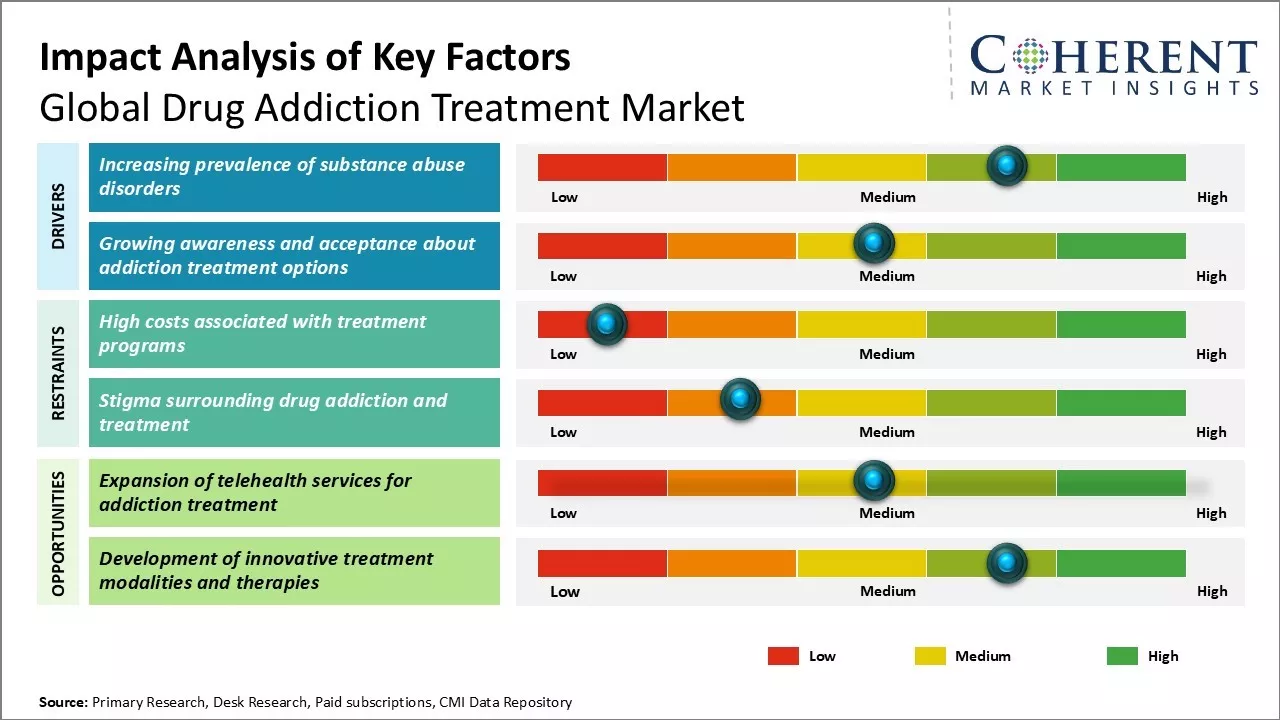
Key Takeaways of the Drug Addiction Treatment Market
- Based on types, the opioid addiction segment is expected to contribute the highest share of the market with 44.6 % in 2026.
- Based on treatment, the therapy segment is expected to contribute the highest share of the market with 52% in 2026.
- Based on route of administration, the oral segment is expected to contribute the highest share of the market with 42.6 7% in 2026.
- North America remains the dominant region in the global drug addiction treatment market and is estimated to hold 36.7 % of the market share in 2026.
Market Overview
The demand for drug addiction treatment has been consistently rising across both developed and developing countries. Growing awareness about the availability of effective treatment options and increasing health insurance coverage for substance abuse treatment are some of the key factors that are expected to drive the market growth during the forecast period.
However, stigma surrounding drug addiction and treatment are restraining the market growth.
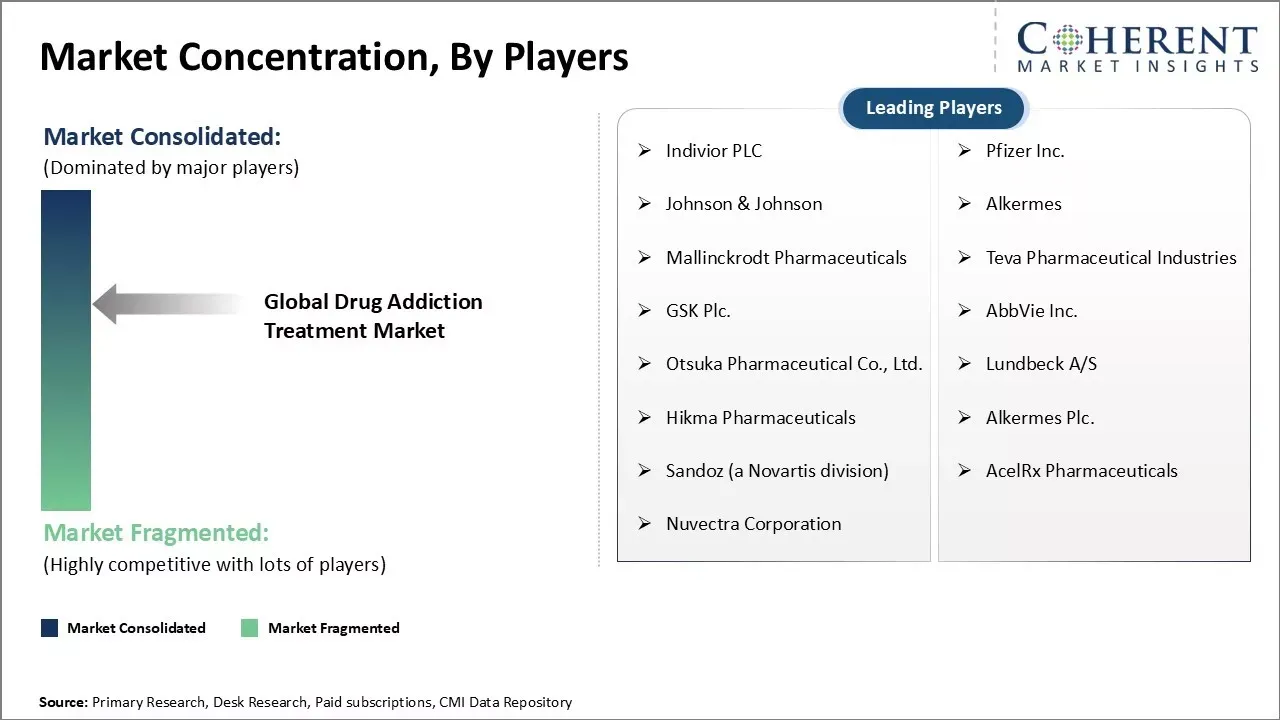
Market Concentration and Competitive Landscape
Current Events and Its Impact
Current Events | Description and its impact |
Global Regulatory and Policy Shifts |
|
Socioeconomic and Public Health Developments |
|
- Current Industry Events of 2026
- Market Size Estimation
- Regional Breakdown
- Competitive Landscape
- Customer Intelligence
- Segmental Analysis
- Pricing Analysis
- Key Market Drivers, Challenges & Future Trends
- Customized Insights Section
Market Trends
Growing Demand for Renewable Energy and Clean Power Solutions
The escalating global emphasis on renewable energy and clean power solutions is significantly propelling the demand for portable power stations. As nations commit to reducing carbon emissions and enhancing energy access in off-grid regions, portable power stations have emerged as vital tools in this transition. These devices, typically powered by rechargeable lithium-ion batteries and often paired with solar panels, offer an eco-friendly and convenient power source for a wide range of applications such as outdoor activities, emergency backup, and remote work environments.
For instance, according to Ember, in 2025, record renewables growth led by solar helped push clean power past 40% of global electricity in 2024, but heatwave-related demand spikes led to a small increase in fossil generation.
Segmental Insights
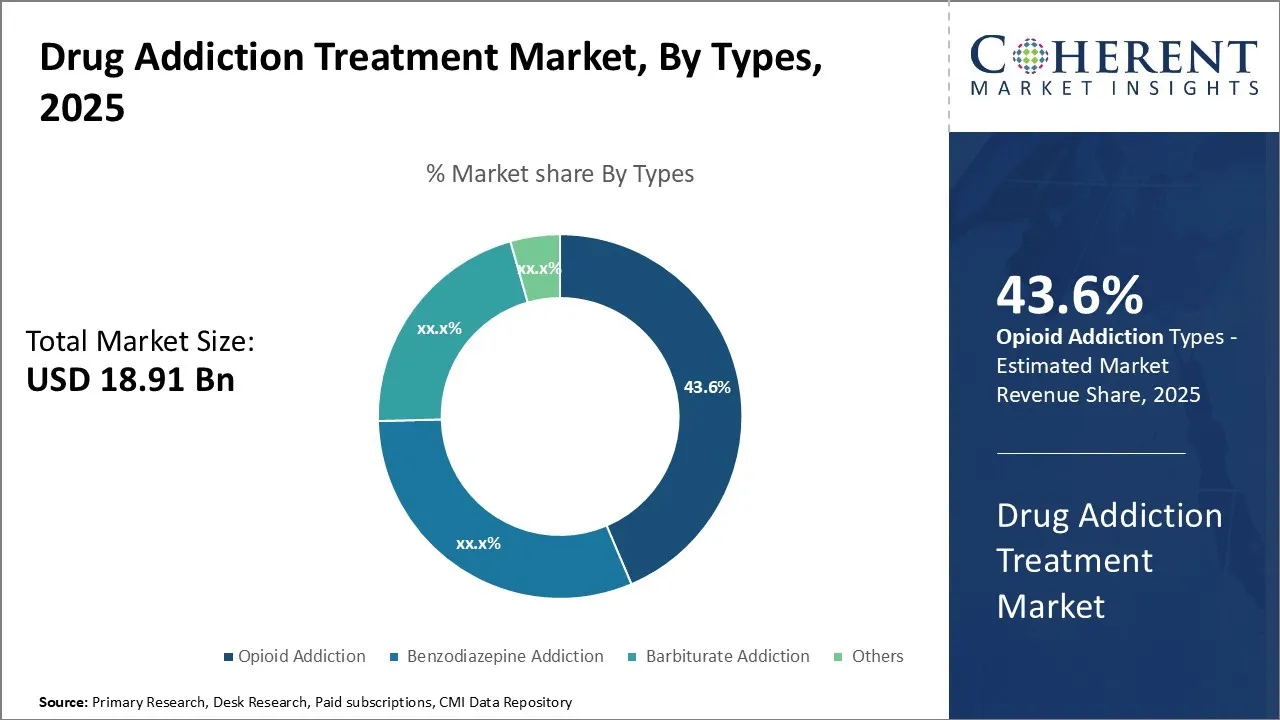
Drug Addiction Treatment Market Insights by Types: Rising Abuse Propels Opioid Addiction to the Forefront
Opioid addiction segment is expected to dominate the market with a share of 44.6% in 2026, driven by the overprescription of painkillers and aggressive marketing minimizing addiction risks.
Easy access to unused medications and heroin as a cheaper alternative has fueled dependency, particularly in economically distressed areas. Co-occurring mental health issues like depression exacerbate misuse, while inadequate government policies have allowed the crisis to escalate. The combination of overprescription, availability, and untreated mental health creates a perfect storm for rising opioid addiction rates.
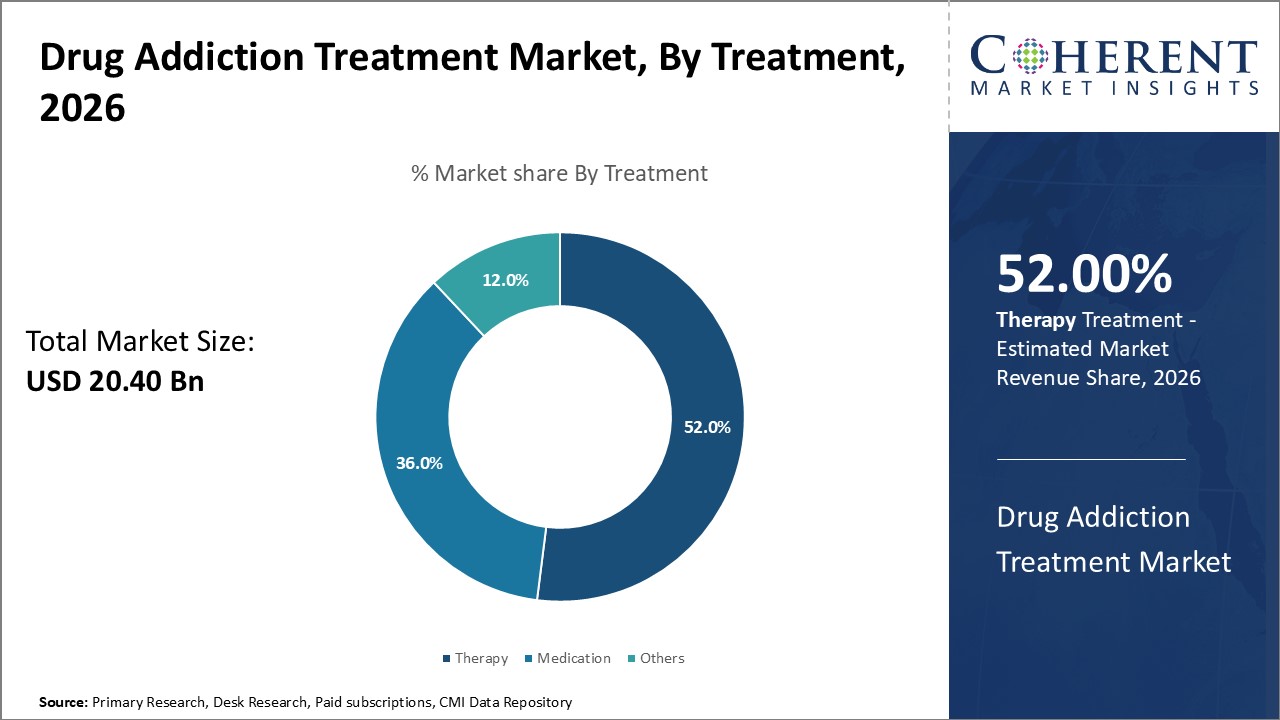
Drug Addiction Treatment Market Insights, by Treatment: Therapy Dominates Due to Holistic Treatment Approach
In terms of treatment, the therapy segment is expected to contribute the highest share of 52% in 2026, due to being viewed as the most comprehensive option for long-term recovery from drug addiction.
Behavioral counseling is essential for addressing the underlying reasons driving substance abuse as well as developing coping strategies to maintain sobriety. Alone, medication is inadequate for treating the complex psychological aspects of addiction. Therapy provides a supportive environment where patients can gain insight into destructive behaviors and learn healthier ways of relating to others.
Drug Addiction Treatment Market Insights, by Route of Administration: Oral Administration Remains the Most Prevalent Route
In terms of route of administration, the oral segment is expected to contribute the highest share of 43.6% in 2026, due to patients strongly preferring pills, capsules, and liquids that can be self-administered without needles or medical supervision.
The non-invasive nature of oral medications aligns with people generally disliking injections unless absolutely necessary. Some key advantages of oral administration include ease of use without medical training, discretion allowing covert consumption, greater portability, and prevention of needle-related health risks like HIV or hepatitis.
Emerging Innovations in the Drug Addiction Treatment Market
- Mobile health applications (mHealth)
- Mobile health applications (mHealth) are also gaining traction. These apps offer features like immediate access to support groups, cognitive behavioral therapy (CBT) exercises, medication adherence reminders, and even real-time tracking of cravings or relapse triggers. Some apps employ artificial intelligence (AI) to provide personalized recommendations and coping strategies, making self-management more effective. The data collected through these tools also helps clinicians tailor interventions more precisely to individual patient needs.
- Rapid Advancement is in the Application of Neurotechnology
- Transcranial magnetic stimulation (TMS) and transcranial direct current stimulation (tDCS) are non-invasive methods being explored to modulate brain activity linked with addiction behaviors. These techniques aim to reduce cravings and withdrawal symptoms by targeting specific neural circuits, offering a potential alternative or complement to traditional pharmacological and behavioral therapies.
Impacts of Artificial Intelligence (AI) in the Drug Addiction Treatment Market
By leveraging AI, companies and healthcare providers can improve patient outcomes, streamline processes, and deliver tailored care in a field traditionally challenged by high relapse rates and complex behavioral patterns.
- One prominent example is Pear Therapeutics, a digital therapeutics company that incorporates AI algorithms in its prescription digital therapeutics (PDTs) for substance use disorders. Pear’s product, reSET-O, approved by the U.S. Food and Drug Administration (FDA), combines cognitive behavioral therapy with AI-driven insights to adapt treatment based on patient engagement and progress. This integration of AI into therapeutic design exemplifies how technology is reshaping standard treatment pathways, enabling more responsive and data-driven approaches.
- The company, Sober Grid, employs AI within its mobile platform to monitor mood and activity patterns of recovering individuals. Using machine learning, Sober Grid can identify warning signs of relapse and alert patients or clinicians in real time, vastly improving early intervention capabilities and reducing hospital readmissions.
Regional Insights
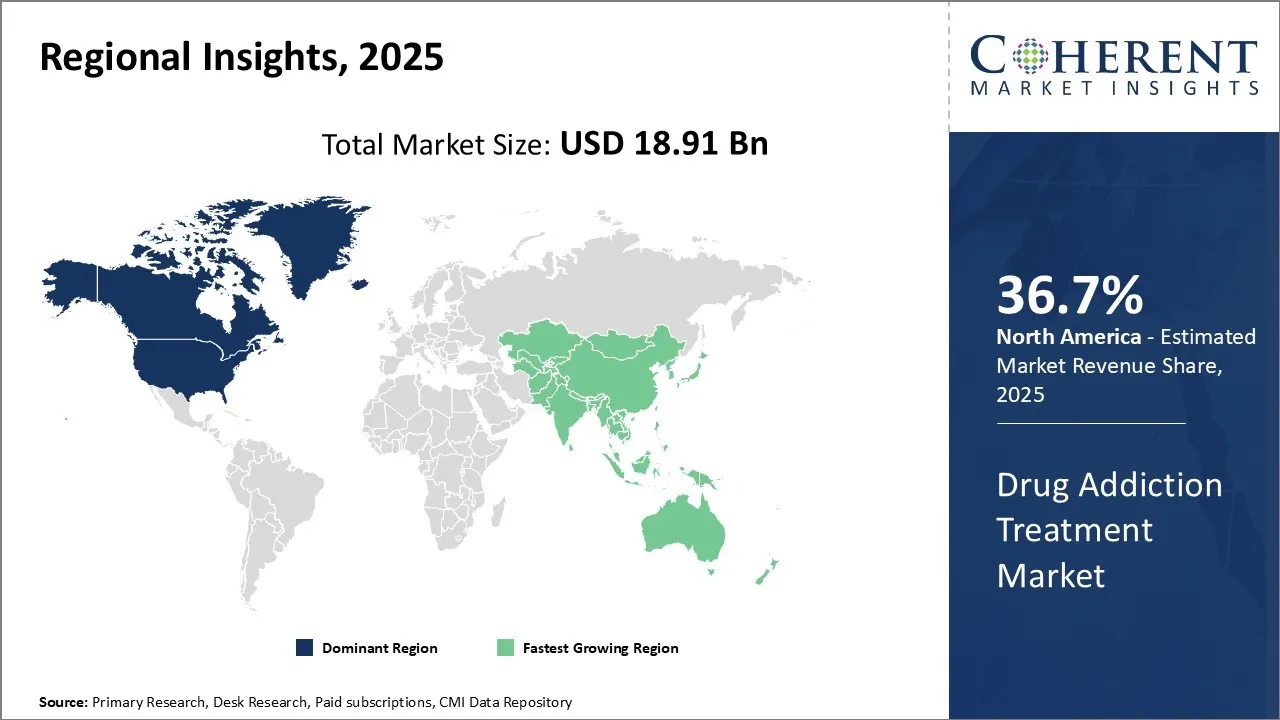
North America Drug Addiction Treatment Market Analysis and Trends
North America is expected to dominate the drug addiction treatment market with a share of 36.7% in 2026, which can be attributed to factors such as the increasing consumption of illicit drugs and a strong healthcare system. The region has a high disease burden and awareness among the population has boosted preventive healthcare spending. Additionally, the presence of leading treatment providers and support from the government through initiatives have further provided momentum to market growth.
For instance, according to the National Center for Drug Abuse Statistics, among Americans aged 12 years and older, 47.7 million were current illegal drug users (used within the last 30 days) as of 2023. 16.8% of Americans 12 and over used drugs in the last month, a 1.9% increase year-over-year (YoY).
Asia Pacific Drug Addiction Treatment Market Analysis and Trends
The Asia Pacific region exhibits the fastest growth, driven by improving access to treatment options coupled with the increasing prioritization of mental health issues. Rapid economic development and growth of private healthcare facilities have enhanced service availability across countries. Rising youth population susceptible to drug abuse and changing social trends also contribute to the rising demand.
For instance, the United Nation reports that a record 236 tons of methamphetamine (commonly known as meth) was seized in East and Southeast Asia in 2024, a 24 per cent increase from 2023.
U.S Drug Addiction Treatment Market Trends
The U.S. drug addiction treatment industry benefits from comprehensive insurance coverage and programs for substance abuse disorders. Key players like American Addiction Centers and CRC Health Group have strengthened their presence nationally through acquisitions and new facilities.
China Drug Addiction Treatment Market
China's drug addiction treatment industry is propelled by growing mindfulness and opening of treatment focuses particularly in metropolitan territories. Providers such as Beijing Wuzhou Changsheng Rehabilitation Center offer customized programs.
Japan Drug Addiction Treatment Market
Japan continues to lead in East Asia backed by government subsidies and increased by awareness campaigns. Prominent rehabilitation organizations like Seikyo Geka Hospital provide a full spectrum of evidence-based care.
India Drug Addiction Treatment Market
India's drug addiction treatment market is experiencing steady growth as stigma diminishes and more options become available in Tier I and II cities, such as Mumbai and Pune. Leading healthcare providers like Fortis Healthcare are leveraging their extensive network of over 40 hospitals across the country to expand specialized addiction treatment programs.
Pricing Analysis of the Drug Addiction Treatment Market
- End User Pricing Insight
- For individual patients paying out-of-pocket, branded medications like Vivitrol and Suboxone can be cost-prohibitive (USD 1,000+ monthly).
- Insurance typically covers buprenorphine and methadone at higher reimbursement rates.
- Clinics purchasing in bulk may get discounts, especially on generic drugs.
- Pharmacological Products
- Suboxone (Buprenorphine/Naloxone): USD 400 – USD 600 monthly (branded), generics USD 200 – USD 350. Widely used for opioid dependence.
- Vivitrol (Naltrexone Injection): USD 1,000+ per monthly dose. Higher cost but high compliance benefits.
- Antabuse (Disulfiram): USD 30 – USD 100 per month. Generic versions reduce cost.
- Campral (Acamprosate): USD 150 – USD 300 monthly.
Market Report Scope
Drug Addiction Treatment Market Report Coverage
| Report Coverage | Details | ||
|---|---|---|---|
| Base Year: | 2025 | Market Size in 2026: | USD 20.40 Bn |
| Historical Data for: | 2020 To 2024 | Forecast Period: | 2026 To 2033 |
| Forecast Period 2026 to 2033 CAGR: | 7.6% | 2033 Value Projection: | USD 33.98 Bn |
| Geographies covered: |
| ||
| Segments covered: |
| ||
| Companies covered: | Indivior PLC, Pfizer Inc., Johnson & Johnson, Alkermes, Mallinckrodt Pharmaceuticals, Teva Pharmaceutical Industries, GSK Plc., AbbVie Inc., Otsuka Pharmaceutical Co., Ltd., Lundbeck A/S, Hikma Pharmaceuticals, Alkermes Plc., Sandoz (a Novartis division), AcelRx Pharmaceuticals, and Nuvectra Corporation | ||
| Growth Drivers: |
| ||
| Restraints & Challenges: |
| ||
Drug Addiction Treatment Industry News
- In June 2025, in Cairo, Egypt, the World Health Organization (WHO) marked the International Day Against Drug Abuse and Illicit Trafficking on June 26 by highlighting the devastating impact of the drug trade on public health and well-being.
- In March 2025, the U.S. Department of Health and Human Services (HHS) announced a large restructuring of several programs that support health, research, and addiction treatment programs. The plan is to consolidate several programs, including the Substance Abuse and Mental Health Services Administration (SAMHSA), into a unified entity under the new Administration for a Healthy America (AHA).
- In May 2025, a clinical trial has begun in Seoul, Korea, to investigate whether focused ultrasound can safely and effectively treat psychostimulant use disorder—a serious condition involving abuse of methamphetamine, cocaine, or other stimulants.
- In June 2025, the Indian government has invited proposals to set up District De-Addiction Centres (DDACs) in 291 “gap” districts identified by the Ministry of Social Justice and Empowerment across 30 States and Union Territories in the country as part of its National Action Plan for Drug Demand Reduction.
Analyst View
- The drug addiction treatment market is witnessing significant transformation driven by growing awareness about substance abuse and increasing government initiatives to combat addiction globally. Rising prevalence of drug abuse, coupled with the surge in mental health disorders, is amplifying the demand for effective treatment options, ranging from behavioral therapies to pharmacological interventions. Advances in personalized medicine and the integration of digital health technologies, such as telemedicine and mobile health applications, present substantial opportunities for enhancing patient engagement and treatment adherence.
- However, the market faces challenges including social stigma associated with addiction, limited access to quality treatment in low-income regions, and stringent regulatory frameworks that can delay the approval of innovative therapies. Additionally, the high cost of treatment and lack of reimbursement in certain markets act as barriers to widespread adoption.
- North America remains the dominant region due to well-established healthcare infrastructure, higher healthcare spending, and extensive government support for substance abuse programs. Meanwhile, the Asia Pacific region is emerging as the fastest-growing market, driven by increasing awareness, improving healthcare facilities, and rising incidence of drug abuse in countries like India and China.
Speak to the analyst
Want personalized insights?
Take the findings above to one of our principal consultants, or have the report rebuilt around the segments, geographies and competitors you actually track.
Market Segmentation
- By Types Insights (Revenue, USD Billion, 2021 - 2033)
- Opioid Addiction
- Benzodiazepine Addiction
- Barbiturate Addiction
- Others
- By Treatment Insights (Revenue, USD Billion, 2021 - 2033)
- Therapy
- Medication
- Others
- By Route of Administration Insights (Revenue, USD Billion, 2021 - 2033)
- Oral
- Parenteral
- Others
- By End User Insights (Revenue, USD Billion, 2021 - 2033)
- Hospitals
- Specialty Clinics
- Rehabilitation Center
- Others
- Regional Insights (Revenue, USD Billion, 2021 - 2033)
- North America
- U.S.
- Canada
- Latin America
- Brazil
- Argentina
- Mexico
- Rest of Latin America
- Europe
- Germany
- U.K.
- Spain
- France
- Italy
- Russia
- Rest of Europe
- Asia Pacific
- China
- India
- Japan
- Australia
- South Korea
- ASEAN
- Rest of Asia Pacific
- Middle East
- GCC Countries
- Israel
- Rest of Middle East
- Africa
- South Africa
- North Africa
- Central Africa
- Key Players Insights
- Indivior PLC
- Pfizer Inc.
- Johnson & Johnson
- Alkermes
- Mallinckrodt Pharmaceuticals
- Teva Pharmaceutical Industries
- GSK Plc.
- AbbVie Inc.
- Otsuka Pharmaceutical Co., Ltd.
- Lundbeck A/S
- Hikma Pharmaceuticals
- Alkermes Plc.
- Sandoz (a Novartis division)
- AcelRx Pharmaceuticals
- Nuvectra Corporation
Sources
Primary Research Interviews
- Rehabilitation Center Directors
- Addiction Treatment Specialists
- Pharmaceutical Company Executives
- Healthcare Providers in Addiction Medicine
- Others
Magazines
- Addiction Professional
- Behavioral Healthcare
- Psychiatric Times
- Substance Abuse & Mental Health Magazine
- Others
Journals
- Journal of Substance Abuse Treatment
- Addiction Journal
- Journal of Drug and Alcohol Dependence
- Others
Newspapers
- The New York Times (Health Section)
- The Guardian (Health & Science)
- The Washington Post (Health)
- Others
Associations
- National Institute on Drug Abuse (NIDA)
- American Society of Addiction Medicine (ASAM)
- Substance Abuse and Mental Health Services Administration (SAMHSA)
- World Federation for Addiction
- Others
Public Domain Sources
- World Health Organization (WHO) Reports
- Centers for Disease Control and Prevention (CDC) Data
- National Institutes of Health (NIH) Publications
- United Nations Office on Drugs and Crime (UNODC) Reports
- Others
Proprietary Elements
- CMI Data Analytics Tool – Drug Addiction Treatment Market
- CMI Existing Repository of Information for the Last 8 Years
*Definition: The drug addiction treatment market encompasses the development, manufacturing, and delivery of medical and therapeutic solutions designed to help individuals overcome substance use disorders. This market includes a range of treatments such as medications, behavioral therapies, rehabilitation programs, and support services aimed at reducing addiction symptoms, preventing relapse, and promoting long-term recovery. It serves healthcare providers, rehabilitation centers, and patients seeking effective interventions for various drug dependencies.
Get access to 250+ pages report
Every segment, forecast, competitor profile and data table behind the analysis above — available for instant download.
- ESOMAR Member
- ISO 9001:2015 Certified
- D-U-N-S Registered
- GDPR & CCPA Compliant
Missing comfort of reading report in your local language? Find your preferred language:
Transform your Strategy with Exclusive Trending Reports
Frequently Asked Questions
The drug addiction treatment market is estimated to be valued at USD 20.40 Billion in 2026, and is expected to reach USD 33.98 Billion by 2033.
The CAGR of the drug addiction treatment market is projected to be 7.6% from 2026 to 2033.
Increasing prevalence of substance abuse disorders and the growing awareness and acceptance of addiction treatment options are the major factors driving the growth of the global drug addiction treatment market.
High costs associated with treatment programs and stigma surrounding drug addiction and treatment are the major factors hampering the growth of the global drug addiction treatment market.
The long-term vision for the drug addiction treatment market is to integrate personalized, technology-driven therapies and holistic care models that adapt to evolving substance use patterns and regulatory landscapes.
In terms of types, the opioid addiction segment is estimated to dominate the market revenue share in 2026.
Indivior PLC, Pfizer Inc., Johnson & Johnson, Alkermes, Mallinckrodt Pharmaceuticals, Teva Pharmaceutical Industries, GSK Plc., AbbVie Inc., Otsuka Pharmaceutical Co., Ltd., Lundbeck A/S, Hikma Pharmaceuticals, Alkermes Plc., Sandoz (a Novartis division), AcelRx Pharmaceuticals, and Nuvectra Corporation are the major players in the drug addiction treatment market.