

Global Physical Therapy Market Size and Forecast – 2026 to 2033
The Global Physical Therapy Market is estimated to be valued at USD 30.00 Bn in 2026 and is expected to reach USD 47.87 Bn by 2033, exhibiting a compound annual growth rate (CAGR) of 6.9% from 2026 to 2033.
Key Takeaways of the Global Physical Therapy Market
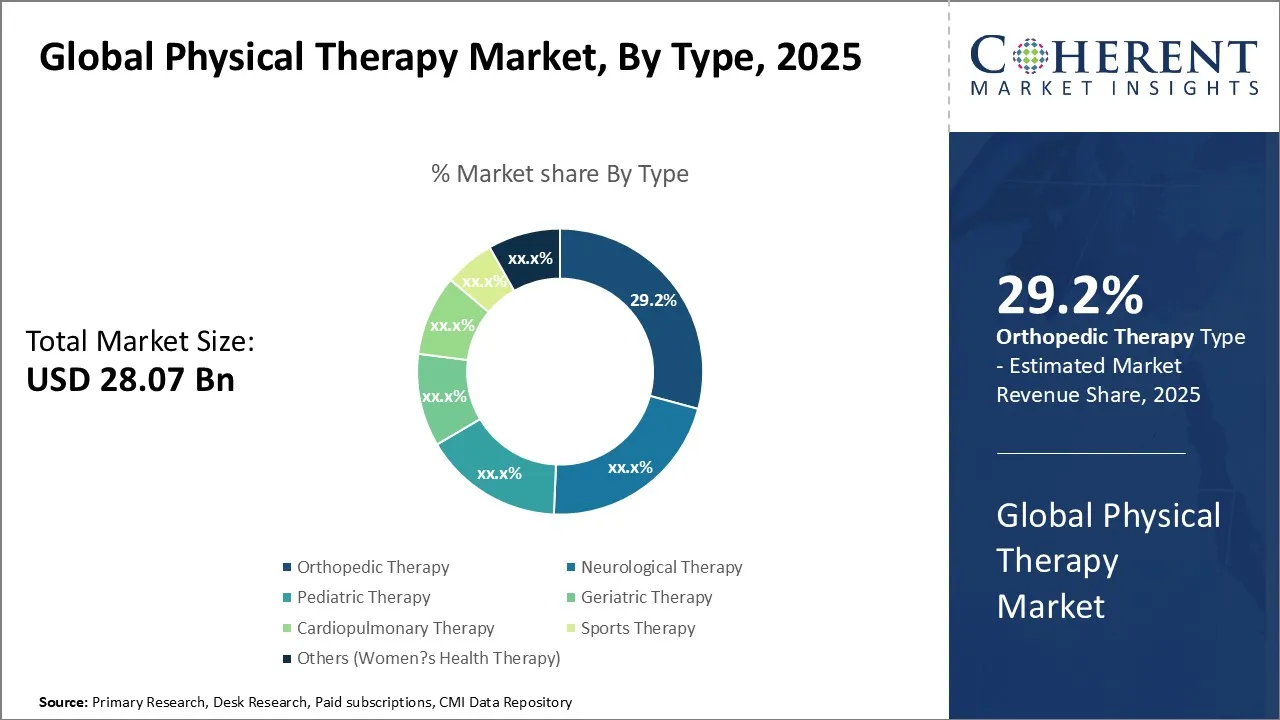
- By Type, Orthopedic Therapy is projected to hold the largest market share of 30.2% in 2026.
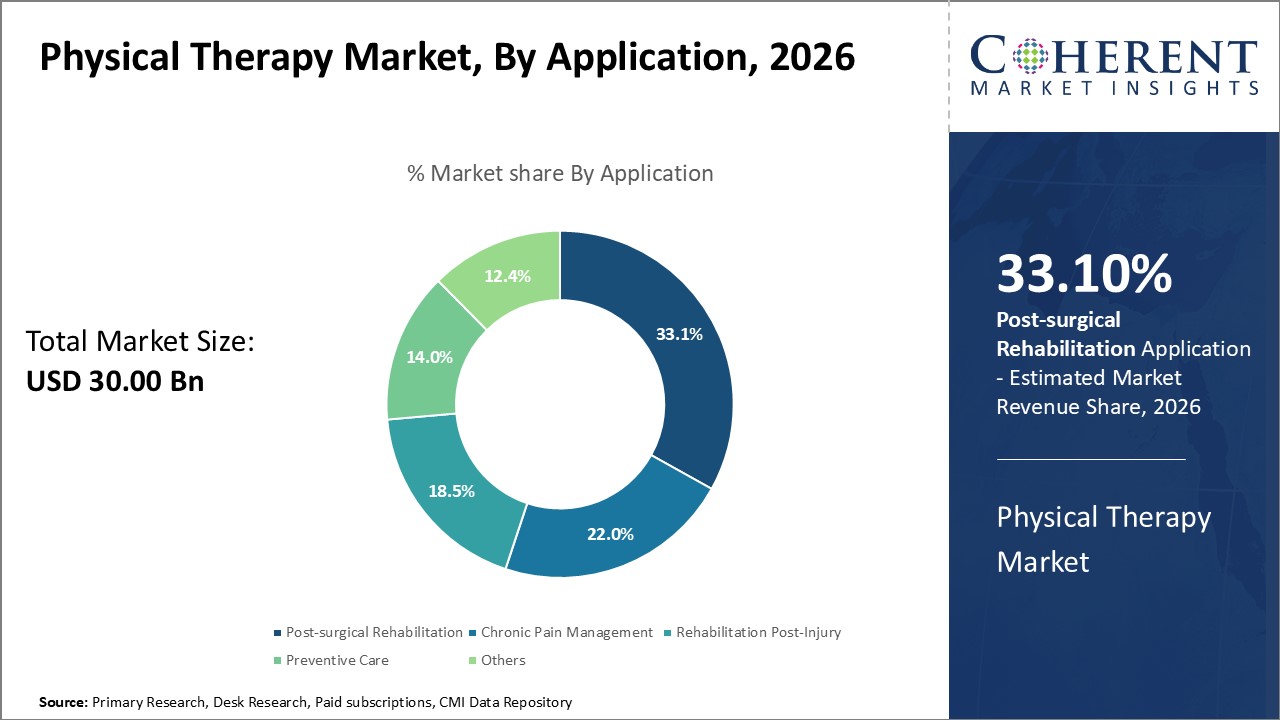
- By Application, Post-surgical Rehabilitation is expected to lead with a 33.1% share in 2026.
- By Age Group, Pediatrics segment is projected to account for the highest market share of 44.2% in 2026.
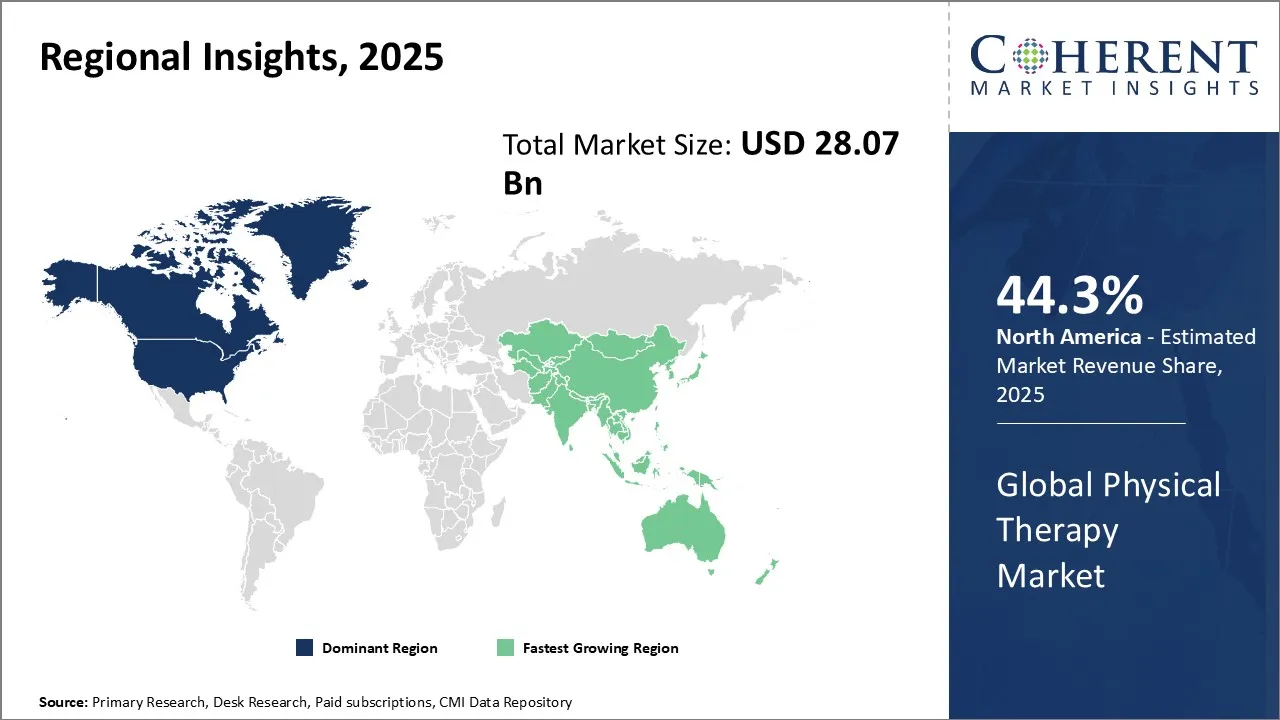
- North America is expected to lead the market, holding a share of 44.3% while Asia Pacific is anticipated to be the fastest-growing region, with a market share of 30.2% in 2026.
Market Overview
The physical therapy market is experiencing significant growth due to several factors, including aging population, the increasing prevalence of chronic diseases, and growing emphasis on preventive healthcare. Additionally, advancements in technology, such as telerehabilitation and robotic-assisted therapy, are driving innovation in the market. Growing demand for personalized medicine treatment plans and rising popularity of sports medicine are also contributing to the market's expansion.
Current Events and Its Impact
Current Events | Description and its impact |
Hinge Health's IPO Filing |
|
Technological Innovations in Physical Therapy |
|
Segmental Insights
- Current Industry Events of 2026
- Market Size Estimation
- Regional Breakdown
- Competitive Landscape
- Customer Intelligence
- Segmental Analysis
- Pricing Analysis
- Key Market Drivers, Challenges & Future Trends
- Customized Insights Section
Physical Therapy Market insights, By Type - Orthopedic Therapy Dominates as It Addresses Musculoskeletal Disorders
In terms of Type, Orthopedic Therapy is projected to contribute the highest market share of 30.2% in 2026 owing to the increasing prevalence of musculoskeletal disorders, such as arthritis, back pain, and sports injuries. The growing elderly population, coupled with sedentary lifestyles and obesity, has led to a significant rise in the incidence of these conditions. Orthopedic therapy plays a crucial role in managing pain, restoring mobility, and improving the overall quality of life for individuals affected by musculoskeletal disorders.
The demand for orthopedic therapy is further driven by advancements in treatment techniques and technologies. Manual therapy, exercise therapy, and the use of assistive devices have proven to be effective in reducing pain, increasing joint flexibility, and strengthening muscles. Moreover, the integration of technology, such as robotic-assisted therapy and virtual reality, has enhanced the precision and effectiveness of orthopedic rehabilitation programs. For example, in February 2025, Tufts University School of Medicine and ATI Physical Therapy, a leading U.S. physical therapy provider, partnered to address the growing demand for physical therapists. This collaboration offers scholarships to up to 45 ATI employees each semester for Tufts’ accelerated Doctor of Physical Therapy (DPT) programs.
Physical Therapy Market insights, By Application - Post-surgical Rehabilitation Leads the Market, Ensuring Optimal Recovery and Functional Outcomes
In terms of Application, Post-surgical Rehabilitation is projected to account for the highest market share of 33.1% in 2026. The increasing number of surgical procedures, particularly in the orthopedic and cardiovascular domains, has created a significant demand for post-surgical rehabilitation services. Physical therapy plays a vital role in helping patients regain strength, mobility, and function following surgery, thereby reducing the risk of complications and improving overall recovery outcomes.
Post-surgical rehabilitation programs are tailored to the distinct recovery requirements of patients according to their surgical procedure. For example, individuals who undergo joint replacement surgeries necessitate targeted physical therapy protocols focused on regaining joint range of motion, rebuilding muscle strength around the implant, and correcting altered gait mechanics to ensure functional mobility. In contrast, patients recovering from cardiac or pulmonary operations engage in carefully monitored exercise regimens designed to progressively enhance cardiovascular capacity and respiratory efficiency, addressing the unique challenges posed by their cardiopulmonary conditions.
Physical Therapy Market insights, By Age Group - Pediatric Physical Therapy Dominates the Market, Promoting Optimal Development and Addressing Childhood Disabilities
In terms of Age Group, Pediatrics segment is expected to hold the highest market share of 44.2% in 2026. The increasing prevalence of developmental disabilities, such as autism spectrum disorders, cerebral palsy, and Down syndrome, has created a significant demand for pediatric physical therapy services. Physical therapy plays a crucial role in promoting optimal motor development, enhancing functional abilities, and improving the quality of life for children with disabilities.
Pediatric physical therapists work closely with children and their families to develop individualized treatment plans that address specific developmental milestones and functional goals. They utilize a variety of techniques, such as play-based therapy, sensory integration, and neurodevelopmental treatment, to promote motor learning and improve gross motor skills. Additionally, pediatric physical therapists often collaborate with other healthcare professionals, such as occupational therapists and speech-language pathologists, to provide comprehensive care for children with complex needs.
Role of Artificial Intelligence (AI) in the Global Physical Therapy Market
Artificial Intelligence (AI) is rapidly transforming the global physical therapy market by enhancing efficiency, reducing costs, and enabling data-driven decision-making. AI-powered tools facilitate predictive analytics, allowing therapists to forecast patient recovery trajectories and tailor interventions accordingly. Personalization is significantly improved through AI algorithms that adapt therapy plans based on real-time patient data, optimizing treatment outcomes. Process automation streamlines administrative tasks such as scheduling and progress tracking, freeing clinicians to focus more on patient care. Furthermore, AI-driven virtual assistants and telehealth platforms enhance customer experiences by providing accessible, on-demand therapy sessions and continuous remote monitoring. Operational improvements, including better resource allocation and workflow optimization, further contribute to cost savings and scalability across physical therapy providers.
Emerging opportunities in this space include novel business models like AI-enabled home-based rehabilitation and digital therapeutics that expand market reach and foster innovation in product and service offerings. Companies leveraging AI effectively gain competitive advantages through improved patient engagement, faster recovery rates, and scalable service delivery. For instance, Reflexion Health, a U.S.-based digital health company, employs AI and motion tracking to deliver personalized remote physical therapy programs, enhancing accessibility and outcomes. While AI offers significant benefits, challenges such as data privacy concerns, potential biases in algorithms, and the need for clinician training must be managed carefully. Overall, AI is a valuable enabler for growth and long-term success in the physical therapy market when implemented thoughtfully alongside human expertise.
Regional Insights
North America Physical Therapy Market Analysis and Trends
North America is projected to dominate the global physical therapy market with a share of 44.3% in 2026. The region boasts a well-established healthcare infrastructure, with a strong emphasis on rehabilitation and physical therapy services. The presence of leading medical institutions and research centers has fostered innovation and the adoption of advanced treatment techniques. Moreover, favorable reimbursement policies and increasing healthcare expenditure have contributed to the growth of the physical therapy market in North America.
For instance, in December 2024, the University of Kansas (KU) School of Health Professions launched a new hybrid Doctor of Physical Therapy (DPT) program combining online courses with on-campus lab sessions. Approved by CAPTE, this flexible pathway allowed students to complete most coursework remotely while attending intensive labs at KU Medical Center in Kansas City, U.S.
Asia Pacific Physical Therapy Market Analysis and Trends
The Asia Pacific region is expected to exhibit the fastest growth in the global physical therapy market with share of 30.2% in 2026. The rapid economic development, increasing healthcare awareness, and rising disposable incomes in countries like China, India, and Japan have fueled the demand for quality physical therapy services.
Governments in the region have implemented supportive policies and initiatives to improve healthcare access and infrastructure, creating a conducive environment for market growth. Additionally, the growing prevalence of chronic diseases, such as cardiovascular disorders and diabetes, has led to a higher demand for physical therapy as a means of rehabilitation and preventive care.
Global Physical Therapy Market Outlook for Key Countries
U.S. Physical Therapy Market Trends
The U.S. market for physical therapy is characterized by a robust healthcare system, advanced medical technologies, and a high level of patient awareness. The country's aging population and increasing prevalence of chronic conditions have driven the demand for physical therapy services.
For instance, in October 2024, Preferred Physical Therapy (PPT), part of the Advanced and Preferred Physical Therapy family with clinics across U.S, acquired Elite Sports Medicine & Physical Therapy, a respected therapist-owned practice in the U.S. This acquisition expands PPT’s reach, enhancing patient care throughout the state. CEO Mr. Karen Wilson praised Elite’s nearly 20 years of community service and expressed enthusiasm for strengthening their impact and helping more patients recover.
China Physical Therapy Market Trends
China's market for physical therapy is experiencing rapid growth, driven by the country's large population, increasing healthcare expenditure, and government efforts to improve healthcare access. The rising incidence of musculoskeletal disorders and the growing emphasis on preventive care have fueled the demand for physical therapy services.
For instance, in August 2024, China Pharma Holdings, Inc., a NYSE-listed company with a specialty pharmaceuticals subsidiary in China, announced plans to launch its patented Dry Eye Disease Therapeutic Device in China in Q1 2026 through its wholly owned subsidiary, Hainan Helpson Medical and Biotechnology Co. The device uses oxygen-enriched atomization therapy to spray tiny oxygen-rich droplets into the eyes, improving moisture and tear quality without drug side effects.
Japan Physical Therapy Market Trends
Japan's market for physical therapy is shaped by its aging population, advanced healthcare infrastructure, and increasing emphasis on rehabilitation services. The country's government has implemented policies to promote the integration of physical therapy into primary care, driving the market growth.
For instance, in February 2021, Fujitsu Limited, a global technology company, launched its AI-powered physical rehabilitation solution "HOPE ROMREC" in Japan. This tool uses AI to automatically measure and visualize shoulder and elbow joint movement from videos, improving efficiency compared to manual measurements by therapists.
India Physical Therapy Market Trends
India's market for physical therapy is witnessing significant growth, driven by the increasing prevalence of chronic diseases, rising healthcare awareness, and expanding middle-class population. The government's initiatives to improve healthcare access and the growing number of private healthcare facilities have created opportunities for market expansion.
For instance, in January 2026, Genrobotics, a leading robotics company, launched India’s first robotic-assisted Paediatric Gait Trainer, the G-Gaiter Paediatric, to aid physical rehabilitation for children with mobility issues like cerebral palsy. The device combines advanced VR technology and interactive games to create engaging therapy sessions.
Market Players, Key Development, and Competitive Intelligence
Key Developments
- On May 05, 2025, LainaHealth, formerly IncludeHealth, a virtual care company innovating physical therapy access through AI, launched a virtual physical therapy model that pairs licensed physical therapists with their proprietary AI assistant, Laina. This USFDA-registered, HIPAA-compliant WebAI guides patients in real time during exercises while keeping therapists informed to tailor care plans.
- In September 2024, SPRY Therapeutics, a developer of the first fully integrated AI-powered EMR for rehab therapy, unveiled SPRY BI and Fax AI tools at APTA Private Practice 2024. These innovations provide small and medium-sized rehab clinics with advanced business intelligence to streamline operations and improve decision-making.
- In July 2022, Orbit Telehealth, a leader in virtual musculoskeletal (MSK) care, announced the launch of the industry’s first-ever platform designed to empower over 300,000 traditional brick-and-mortar physical therapy providers to deliver hybrid virtual care. This innovative solution enables patients to seamlessly access telehealth appointments with their physical therapists alongside personalized, exercise-based care plans tailored to their stage of recovery.
Top Strategies Followed by Global Physical Therapy Market Players
- Established Players in the global physical therapy market are focusing on extensive research and development to innovate high-performance products. These companies are investing heavily in R&D to develop cutting-edge technologies and advanced treatment methods to stay ahead of the competition. Strategic partnerships are also a key strategy for established players to solidify their market presence. These alliances with major industry players or OEMs allow companies to leverage each other's strengths and expand their market reach.
- For instance, in February 2025, PT Solutions Physical Therapy, a leading rehabilitation services provider, acquired the physical therapy division of OrthoCarolina, which includes 24 clinics across the Charlotte and surrounding North Carolina areas. Partnering with Novant Health, PT Solutions aims to expand access to high-quality physical therapy and rehabilitation services in the Southeast.
- Mid-level players in the global physical therapy market are focusing on delivering cost-effective solutions to target price-sensitive consumers. These companies are developing quality products that are more affordable than those offered by established players.
- For example, in February 2024, TRX, a leader in functional training, expanded into the physical therapy and rehabilitation sector with PT-approved tools, science-backed education, and expert-led rehab programs via the TRX App. Its equipment, used for years in VA hospitals, supports recovery for clients of all ages and abilities.
- Small-scale players in the global physical therapy market are targeting niche markets with unique features or innovative products. These companies are focusing on specific market segments and developing products that cater to the unique needs of these segments.
- For instance, in October 2024, Brooks Rehabilitation partnered with Reflexion Health to launch a Microsoft Kinect-based physical therapy pilot aimed at improving recovery after knee or hip replacement. Using Reflexion’s Vera software, which employs Kinect’s motion-tracking technology, patients can engage interactively with their home exercise programs.
Market Report Scope
Physical Therapy Market Report Coverage
| Report Coverage | Details | ||
|---|---|---|---|
| Base Year: | 2025 | Market Size in 2026: | USD 30.00 Bn |
| Historical Data for: | 2020 To 2024 | Forecast Period: | 2026 To 2033 |
| Forecast Period 2026 to 2033 CAGR: | 6.9% | 2033 Value Projection: | USD 47.87 Bn |
| Geographies covered: |
| ||
| Segments covered: |
| ||
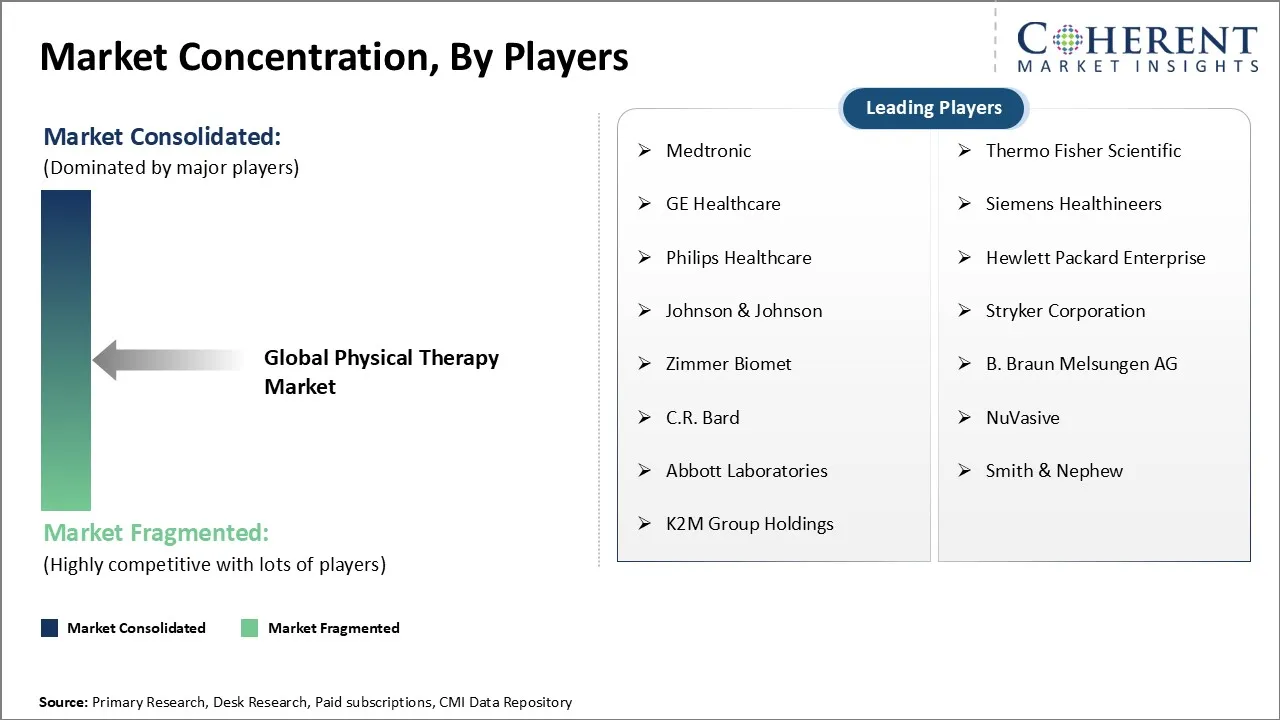
| Companies covered: | Medtronic, Thermo Fisher Scientific, GE Healthcare, Siemens Healthineers, Philips Healthcare, Hewlett Packard Enterprise, Johnson & Johnson, Stryker Corporation, Zimmer Biomet, B. Braun Melsungen AG, C.R. Bard, NuVasive, Abbott Laboratories, Smith & Nephew, and K2M Group Holdings | ||
| Growth Drivers: |
| ||
| Restraints & Challenges: |
| ||
Physical Therapy Market Dynamics
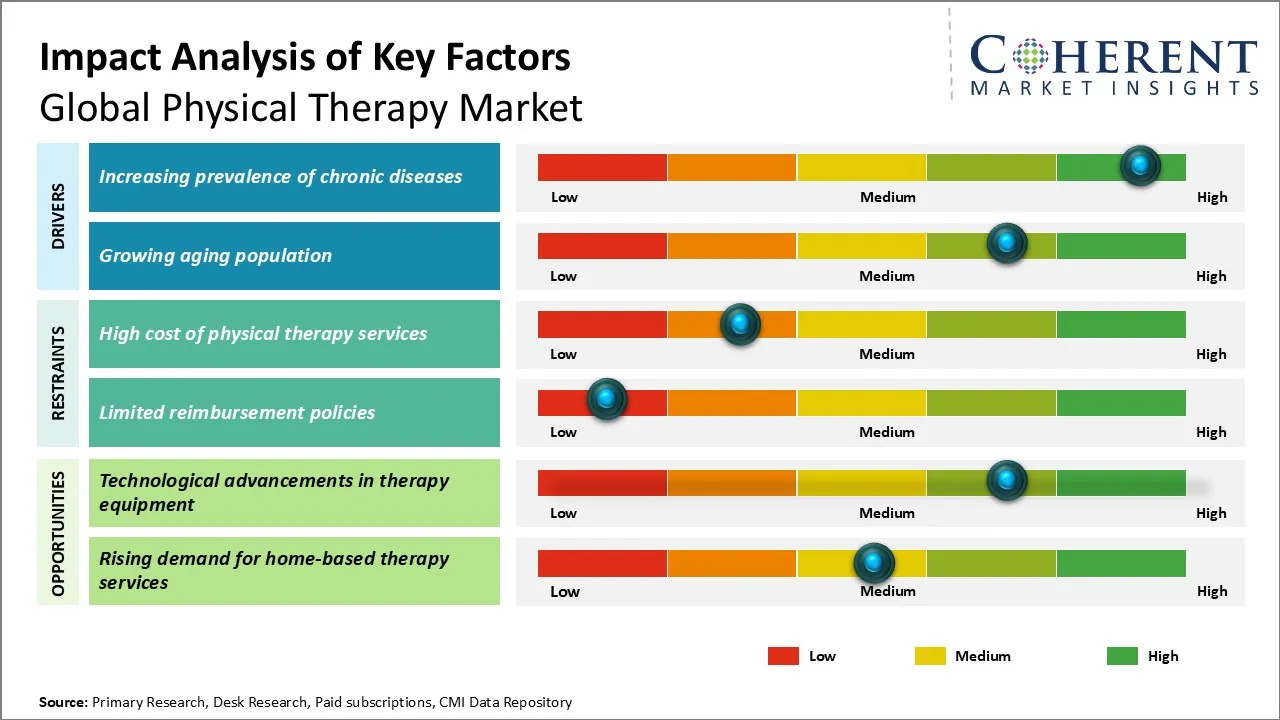
Physical Therapy Market Driver - Increasing prevalence of chronic diseases
The rising prevalence of chronic diseases across the globe is a significant driver for the growth of the global physical therapy market. Chronic conditions such as cardiovascular diseases, diabetes, obesity, and neurological disorders often require long-term physical therapy interventions to manage symptoms, improve mobility, and enhance the overall quality of life for patients. As the global population continues to age and adopt sedentary lifestyles, the burden of chronic diseases is expected to increase, leading to a higher demand for physical therapy services. Moreover, growing awareness among patients and healthcare providers about the benefits of physical therapy in managing chronic conditions is further fueling the market growth.
In June 2024, new data from the World Health Organization (WHO) revealed that nearly 1.8 billion adults—about 31% globally—did not meet recommended physical activity levels in 2022, marking a 5-percentage point increase since 2010. If this trend continues, inactivity is expected to reach 35% by 2030, undermining global health targets. Physical inactivity raises the risk of cardiovascular diseases, type 2 diabetes, dementia, and certain cancers. The highest inactivity rates are seen in the high-income Asia Pacific (48%) and South Asia (45%) regions, with women and adults over 60 being particularly affected.
Physical Therapy Market Opportunity: Technological advancements in therapy equipment
The global physical therapy market is witnessing a significant opportunity in the form of technological advancements in therapy equipment. The integration of cutting-edge technologies such as robotics, virtual reality, and sensor-based devices is revolutionizing the way physical therapy is delivered and experienced by patients. These innovative solutions offer enhanced precision, real-time feedback, and personalized treatment plans, enabling therapists to provide more targeted and efficient interventions. For instance, robotic exoskeletons and gait training systems assist patients with mobility impairments, promoting faster recovery and improved functional outcomes. Virtual reality platforms create immersive and engaging therapy environments, motivating patients to adhere to their treatment regimens and enhancing the overall therapy experience.
Furthermore, the advent of wearable sensors and connected devices allows for remote monitoring and tele-rehabilitation, expanding the reach of physical therapy beyond traditional clinical settings. For instance, in September 2021, IncludeHealth, a musculoskeletal (MSK)-focused startup, launched MSK-OS, a virtual physical therapy platform developed in collaboration with Google and ProMedica Health Systems. MSK-OS enables clinicians to deliver remote MSK care on any device with a forward-facing camera, using pose estimation to assess patients’ balance, strength, and range of motion without sensors. The platform allows personalized medicine treatment plans stored in the cloud, facilitating seamless integration of in-person and virtual care.
Analyst Opinion (Expert Opinion)
- The global physical therapy market is experiencing robust growth driven by rapid technological advancements such as tele-rehabilitation platforms, AI-powered diagnostic tools, and wearable therapeutic devices. Increased regulatory support and reimbursement policies in key regions are further accelerating adoption. Rising prevalence of chronic diseases, aging populations, and growing awareness of physical therapy benefits are also key demand drivers. However, challenges like high treatment costs and limited access in developing regions remain hurdles. Emerging opportunities include the integration of virtual reality for enhanced patient engagement and expansion of home-based therapy solutions, which are reshaping care delivery models.
- Recent global conferences like the World Confederation for Physical Therapy Congress (2023), the International Conference on Rehabilitation Medicine, and regional summits in Europe and North America have played crucial roles in advancing research collaboration, policy discussions, and technology demonstrations. Initiatives such as the U.S. Medicare telehealth expansion pilot and government-backed rehabilitation programs in Europe have significantly impacted market accessibility and service quality. Additionally, corporate partnerships, such as between Philips and leading healthcare providers to develop remote rehabilitation tools, highlight ongoing efforts to innovate and expand the market’s reach.
Speak to the analyst
Want personalized insights?
Take the findings above to one of our principal consultants, or have the report rebuilt around the segments, geographies and competitors you actually track.
Market Segmentation
- Type Insights (Revenue, USD Bn, 2021 - 2033)
- Orthopedic Therapy
- Neurological Therapy
- Pediatric Therapy
- Geriatric Therapy
- Cardiopulmonary Therapy
- Sports Therapy
- Others (Women’s Health Therapy)
- Application Insights (Revenue, USD Bn, 2021 - 2033)
- Post-surgical Rehabilitation
- Chronic Pain Management
- Rehabilitation Post-Injury
- Preventive Care
- Others
- Age Group Insights (Revenue, USD Bn, 2021 - 2033)
- Pediatrics
- Adults
- Elderly
- Technology Insights (Revenue, USD Bn, 2021 - 2033)
- Robotic-assisted Therapy
- Tele-rehabilitation
- Wearable Devices
- Virtual Reality Therapy
- Others
- Service Setting Insights (Revenue, USD Bn, 2021 - 2033)
- Outpatient Clinics
- Inpatient Rehabilitation Facilities
- Hospitals and Clinics
- Long-term Care Facilities
- Home Healthcare
- Others
- Distribution Channel Insights (Revenue, USD Bn, 2021 - 2033)
- Direct Sales
- Online Sales
- Retail Pharmacies
- Specialty Clinics
- Regional Insights (Revenue, USD Bn, 2021 - 2033)
- North America
- U.S.
- Canada
- Latin America
- Brazil
- Argentina
- Mexico
- Rest of Latin America
- Europe
- Germany
- U.K.
- Spain
- France
- Italy
- Russia
- Rest of Europe
- Asia Pacific
- China
- India
- Japan
- Australia
- South Korea
- ASEAN
- Rest of Asia Pacific
- Middle East
- GCC Countries
- Israel
- Rest of Middle East
- Africa
- South Africa
- North Africa
- Central Africa
- North America
- Key Players Insights
- Medtronic
- Thermo Fisher Scientific
- GE Healthcare
- Siemens Healthineers
- Philips Healthcare
- Hewlett Packard Enterprise
- Johnson & Johnson
- Stryker Corporation
- Zimmer Biomet
- Braun Melsungen AG
- R. Bard
- NuVasive
- Abbott Laboratories
- Smith & Nephew
- K2M Group Holdings
Sources
Primary Research Interviews
- Interviews with licensed physical therapists and rehabilitation specialists
- Discussions with hospital administrators and outpatient clinic managers
- Consultations with healthcare policymakers and regulators
- Expert interviews with medical device manufacturers’ R&D teams
- Surveys of patients undergoing physical therapy treatments.
Databases
- World Health Organization (WHO) Global Health Observatory
- Centers for Disease Control and Prevention (CDC) National Center for Health Statistics
- U.S. National Institutes of Health (NIH) – National Institute of Arthritis and Musculoskeletal and Skin Diseases (NIAMS)
- European Medicines Agency (EMA) healthcare data
- National Health Service (NHS) Digital Statistics (UK)
Magazines
- Journal of Orthopaedic & Sports Physical Therapy
- Physical Therapy Journal (American Physical Therapy Association)
- Rehabilitation Journal
- International Journal of Physical Therapy and Rehabilitation
- Physiotherapy Research International
- Journal of Physical Therapy Science
Journals
- The Lancet Global Health
- Journal of Rehabilitation Medicine
- BMC Musculoskeletal Disorders
- Clinical Rehabilitation
- European Journal of Physical and Rehabilitation Medicine
- American Journal of Physical Medicine & Rehabilitation
- Archives of Clinical Neuropsychology
Newspapers
- The New York Times – Health Section
- The Guardian – Health and Science
- Reuters Health News
- BBC News – Health
- The Washington Post – Health
Associations
- World Confederation for Physical Therapy (WCPT)
- American Physical Therapy Association (APTA)
- Chartered Society of Physiotherapy (CSP)
- European Region of the World Confederation for Physical Therapy (ER-WCPT)
- Canadian Physiotherapy Association (CPA)
- Australian Physiotherapy Association (APA)
- International Federation of Orthopaedic Manipulative Physical Therapists (IFOMPT)
Public Domain Sources
- WHO Global Action Plan on Physical Activity reports
- National physical activity guidelines published by governments
- Public health campaigns and educational materials on physical activity
- Census and demographic data from national statistics bureaus
- Clinical practice guidelines published by health ministries
- Open-access rehabilitation program case studies
- Government health expenditure reports
Proprietary Elements
- CMI Data Analytics Tool: Proprietary analytics tool to analyze real-time market trends, consumer behavior, and technology adoption in market
- Proprietary CMI Existing Repository of Information for Last 8 Years
Get access to 250+ pages report
Every segment, forecast, competitor profile and data table behind the analysis above — available for instant download.
- ESOMAR Member
- ISO 9001:2015 Certified
- D-U-N-S Registered
- GDPR & CCPA Compliant
Missing comfort of reading report in your local language? Find your preferred language:
Transform your Strategy with Exclusive Trending Reports
Frequently Asked Questions
The global physical therapy market is estimated to be valued at USD 28.07 Bn in 2025 and is expected to reach USD 44.20 Bn by 2032.
The CAGR of the global physical therapy market is projected to be 6.7% from 2025 to 2032.
Increasing prevalence of chronic diseases and growing aging population are the major factors driving the growth of global physical therapy market.
High cost of physical therapy services and limited reimbursement policies are the major factors hampering the growth of the global physical therapy market.
In terms of Type, Orthopedic Therapy segment is estimated to dominate the market revenue share in 2025.
Medtronic, Thermo Fisher Scientific, GE Healthcare, Siemens Healthineers, Philips Healthcare, Hewlett Packard Enterprise, Johnson & Johnson, Stryker Corporation, Zimmer Biomet, B. Braun Melsungen AG, C.R. Bard, NuVasive, Abbott Laboratories, Smith & Nephew, and K2M Group Holdings are the major players.
North America is expected to lead the global physical therapy market in 2025.