

Global ENT (Ear, Nose, and Throat) Devices Market Size and Forecast – 2026 To 2033
The global ENT (Ear, Nose, and Throat) devices market is expected to grow from USD 28,709.5 Mn in 2026 to USD 51,910.0 Mn by 2033, registering a compound annual growth rate (CAGR) of 8.8% from 2026 to 2033. The market for ENT (Ear, Nose, and Throat) devices is poised for significant expansion, fueled by the soaring burden of ENT disorders, particularly hearing loss, and the growing demand for advanced diagnostic and surgical technologies.
According to the World Health Organization, over 5% of the world’s population or 430 million people require rehabilitation to address their disabling hearing loss (including 34 million children). Furthermore, it is estimated that by 2050, nearly 2.5 billion people are projected to have some degree of hearing loss, and more than 700 million will require hearing rehabilitation, driving the demand for hearing aids, cochlear implants, endoscopes, and other ENT devices.
Key Takeaways of the Global ENT (Ear, Nose, and Throat) Devices Market
- Surgical devices are projected to hold 32.1 % of the global ENT (Ear, Nose, and Throat) devices market share in 2026, making it the dominant product type segment across North America due to the increasing adoption of minimally invasive ENT procedures. For instance, in December 2023, the U.S. Food and Drug Administration (FDA) issued updated guidance on marketing submission recommendations for ear, nose, and throat endoscopic devices, reinforcing performance, safety, and clinical evaluation requirements for endoscopic surgical systems used in ENT procedures.
- Ear is projected to hold 40.4 % of the global ENT (Ear, Nose, and Throat) devices market share in 2026, making it the dominant organ type segment, due to the rising prevalence of hearing disorders and increasing adoption of hearing devices. For instance, in August 2022, the U.S. Food and Drug Administration (FDA) issued the final rule establishing a new category of over-the-counter (OTC) hearing aids, enabling adults with perceived mild-to-moderate hearing loss to purchase FDA-regulated hearing aids without a prescription, thereby improving access to hearing care.
- Hospitals are projected to hold 41.5 % of the global ENT (Ear, Nose, and Throat) devices market share in 2026, making it the dominant end user segment across Europe due to the availability of advanced surgical infrastructure and stringent medical device quality standards. For instance, the European Union fully implemented the Medical Device Regulation (EU MDR 2017/745) for medical devices, strengthening clinical evidence, post-market surveillance, and patient safety requirements for devices used in hospital-based ENT diagnosis and surgery.
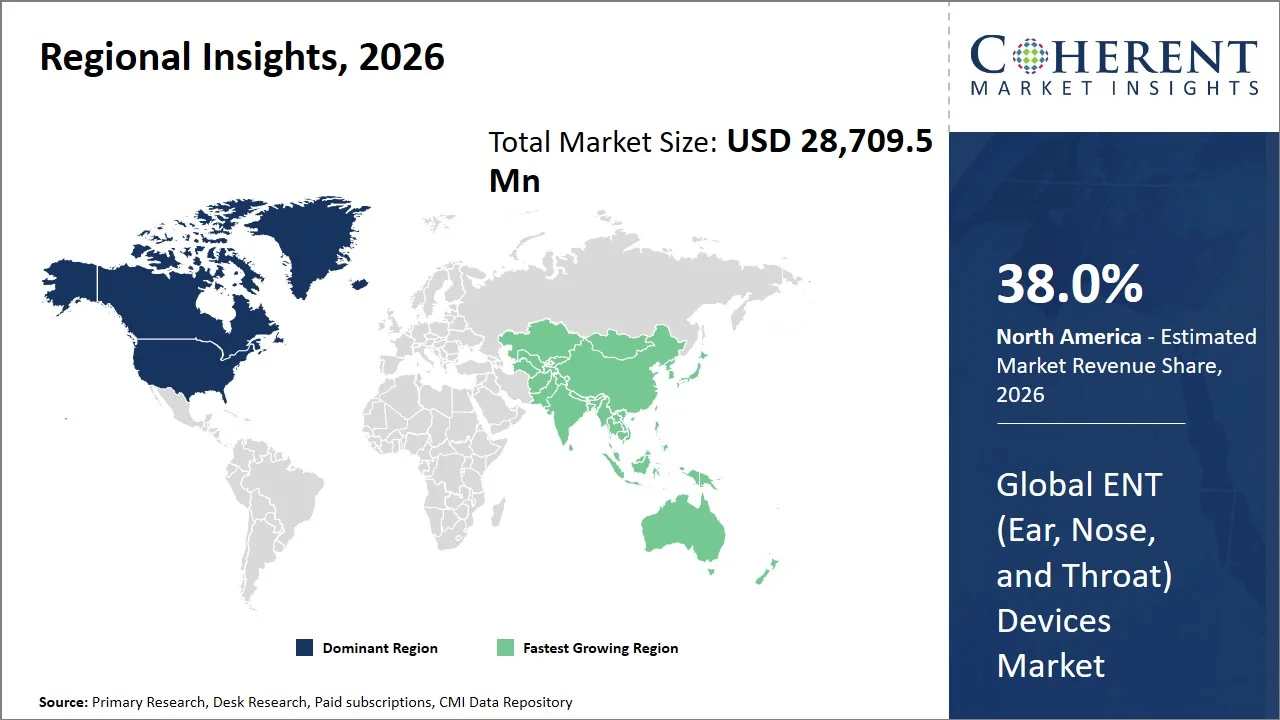
- North America maintains its dominance with an expected share of 38.0 % in 2026, bolstered by the high adoption of advanced ENT surgical technologies, favorable reimbursement policies, and the presence of leading medical device manufacturers. For instance, the U.S. Centers for Medicare & Medicaid Services (CMS) provides reimbursement for cochlear implantation and other medically necessary ENT procedures, supporting the widespread adoption of advanced ENT devices across healthcare facilities.
- Asia Pacific is expected to exhibit the fastest growth with an estimated contribution of 22.5 % share in 2026, driven by the expanding healthcare infrastructure, rising ENT disease burden, and increasing government investments in hearing healthcare. For instance, Japan's Ministry of Health, Labour and Welfare (MHLW) include cochlear implantation under its national health insurance system, improving patient access to advanced hearing restoration technologies and supporting regional market growth.
- Growing Adoption of Robotic-Assisted ENT Surgery: The growing adoption of robotic-assisted surgery is creating significant opportunities in the global ENT (Ear, Nose, and Throat) devices market. Robotic platforms enable enhanced precision, improved visualization, and better access to anatomically complex regions, particularly in transoral, skull base, and head and neck procedures. Increasing investments in robotic surgical technologies and the expanding preference for minimally invasive interventions are expected to further drive demand for advanced ENT devices.
- Expansion of ENT Surgical Navigation Systems: The increasing adoption of ENT surgical navigation systems is creating significant growth opportunities in the global ENT (Ear, Nose, and Throat) devices market. These systems provide real-time anatomical guidance, improving surgical precision and safety during complex sinus, skull base, and otologic procedures while minimizing complications. Rising demand for image-guided, minimally invasive ENT surgeries and continuous advancements in navigation technologies are expected to accelerate market adoption during the forecast period.
Segmental Insights
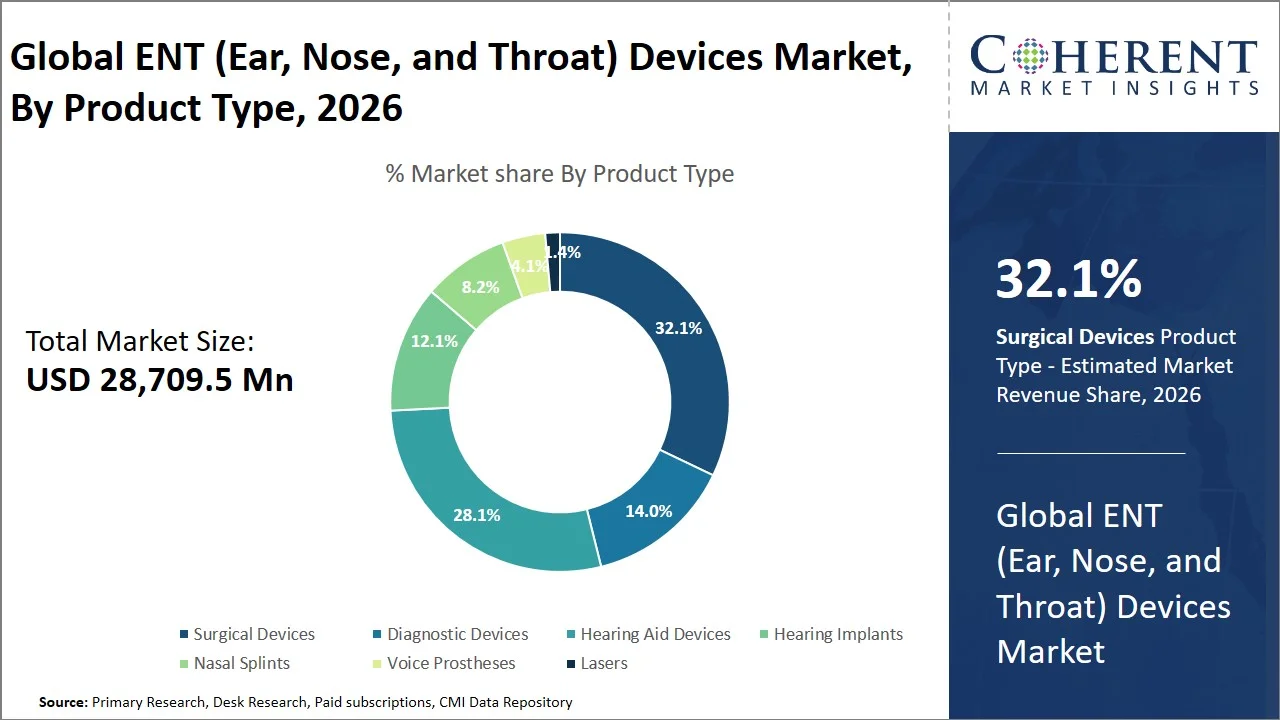
Why Do Surgical Devices Dominate the Global ENT (Ear, Nose, and Throat) Devices Market?
Surgical devices are projected to hold a market share of 32.1% in 2026, attributed to the growing adoption of minimally invasive ENT procedures and prevalent use of advanced image-guided ENT surgical, powered ENT surgical and endoscopic ENT surgical devices. Technical advancements in the development of the best-in-class endoscopic systems, high-definition imaging and surgical navigation system have made the procedures safer and more effective, resulting in the demand for such devices. Furthermore, the shift toward outpatient ENT surgeries has driven the adoption of ENT surgical devices in outpatient clinics and hospitals. For instance, on July 15, 2026, Smith+Nephew unveiled the LYNX COBLATION Wand for ENT airway surgery, designed to facilitate tissue ablation with precise plasma technology for minimally invasive airway applications with decreased thermal effect on the adjacent tissue.
- Current Industry Events of 2026
- Market Size Estimation
- Regional Breakdown
- Competitive Landscape
- Customer Intelligence
- Segmental Analysis
- Pricing Analysis
- Key Market Drivers, Challenges & Future Trends
- Customized Insights Section
Why Does Ear Represent the Largest Organ Type Segment in the ENT (Ear, Nose, and Throat) Devices Market?
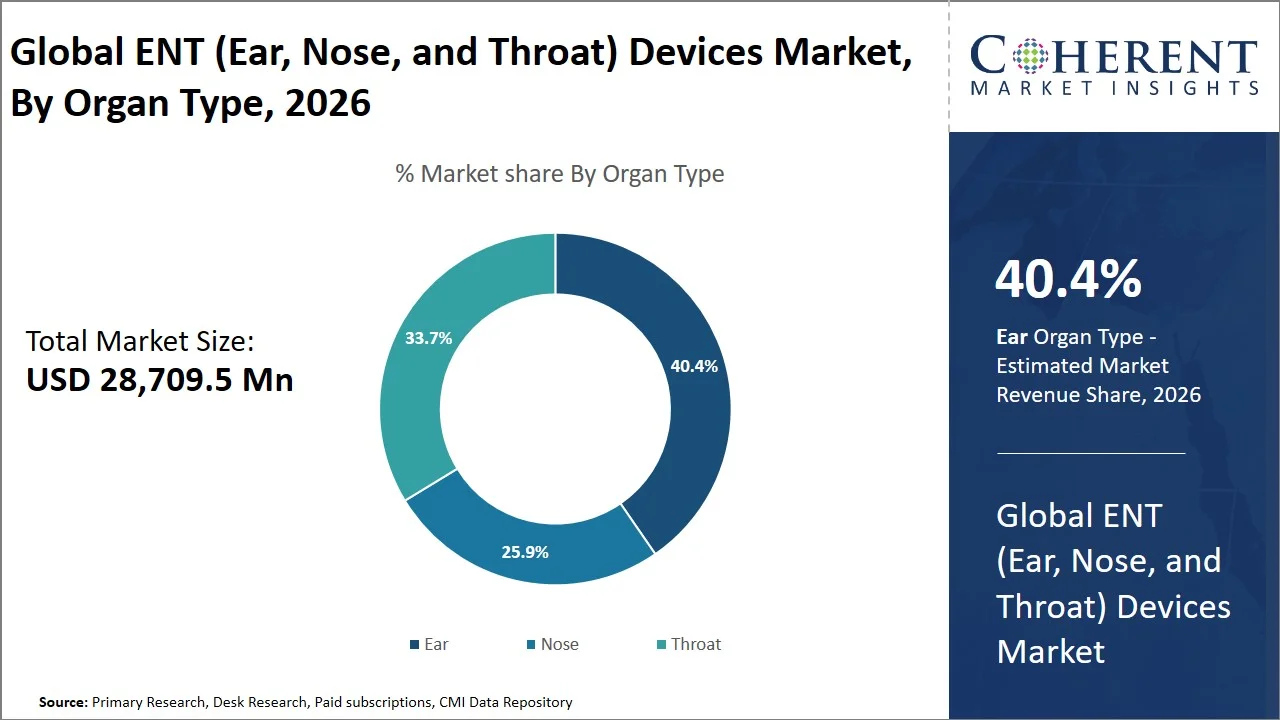
Ear is projected to hold a market share of 40.4% in 2026, owing to the increasing incidences of hearing loss and growing demand for advanced hearing restoration technologies such as hearing aids, cochlear implants, and bone conduction systems. Technological innovations such as advancements in sound processing, wireless connectivity, and implant technology have better hearing outcomes and patient adoption. For instance, on July 13, 2026, Cochlear Ltd. received U.S. FDA approval for its Osia 3 Sound Processor featuring improved sound processing, rechargeability and enable further connectivity for individuals suffering from conductive and mixed hearing loss.
Hospitals Segment Dominates the Global ENT (Ear, Nose, and Throat) Devices Market
The hospitals segment is projected to hold a market share of 41.5% in 2026, owing to the extensive diagnosis, surgery, and rehabilitation procedures performed in these settings. Hospitals are well-equipped with a range of sophisticated technologies and specialized ENT departments, and access to advanced technologies. This necessitates a higher demand for sophisticated products such as high-end endoscopic systems, surgical navigation platforms, hearing implants and ENT diagnostic devices. For instance, in July 2025, Dr. D. Y. Patil Medical College, Hospital & Research Centre inaugurated the world’s first hybrid endoscopic & microscopic ENT skill Lab with U.S. patented EndoHold to upgrade its minimally invasive ENT surgical training facilities. This initiative highlights the continued efforts for ultra-modern ENT and surgery setup in the hospitals with advanced equipment.
Current Events and their Impact
Current Events | Description and its Impact |
European Commission Strengthens Regulatory Framework for Medical Devices (May 2026) |
|
European Commission Expands Electronic Instructions for Use (eIFU) for Professional Medical Devices (July 2025) |
|
Global ENT (Ear, Nose, and Throat) Devices Market Dynamics
Market Drivers
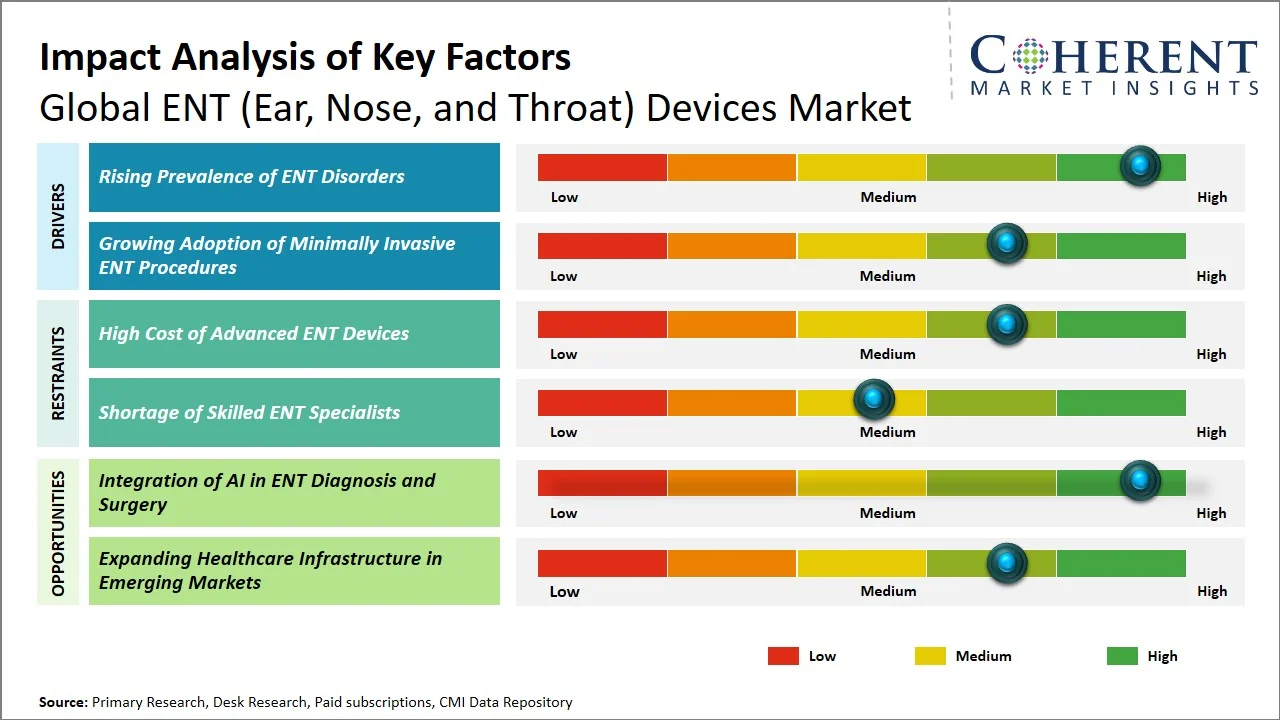
- Rising Prevalence of ENT Disorders: The growing clinical burden of hearing impairment, allergic rhinitis, tonsillitis, otitis media, and other otorhinolaryngological conditions is accelerating the demand for advanced ENT diagnostic and therapeutic devices. Increasing emphasis on early diagnosis, timely intervention, and minimally invasive treatment approaches is further supporting the adoption of innovative ENT technologies. For instance, in August 2025, a study published by Panacea Journal of Medical Sciences, reported that allergic rhinitis (29.4%), tonsillitis (22.3%), and otitis media (13.6%) were among the most common ENT conditions observed in patients attending a tertiary care center, highlighting the growing need for specialized ENT care and advanced medical devices.
- Growing Adoption of Minimally Invasive ENT Procedures: The increasing preference for minimally invasive ENT procedures is driving the demand for advanced endoscopes, balloon dilation systems, powered surgical instruments, and image-guided technologies. These procedures offer reduced surgical trauma, shorter hospital stays, faster recovery, and improved clinical outcomes, making them increasingly preferred across hospitals and ambulatory surgical centers. For instance, in April 2025, the American Academy of Otolaryngology–Head and Neck Surgery released updated clinical practice guidelines for nasal obstruction, emphasizing evidence-based minimally invasive interventions, including nasal valve procedures, to improve patient outcomes and standardize ENT care.
Emerging Trends
- Rising Adoption of Single-Use ENT Endoscopes: Healthcare providers are increasingly adopting single-use ENT endoscopes to minimize the risk of cross-contamination, eliminate reprocessing requirements, and improve workflow efficiency. Growing emphasis on infection prevention and patient safety, particularly in outpatient and ambulatory care settings, is accelerating the demand for disposable ENT visualization devices.
- Increasing Integration of Connected Hearing Care and Remote Audiology: The integration of digital hearing technologies, remote fitting platforms, and tele-audiology solutions is transforming ENT care delivery. AI-enabled hearing devices and cloud-based monitoring platforms allow clinicians to remotely assess, program, and optimize hearing devices, improving patient accessibility and supporting the expansion of decentralized hearing care services.
Regional Insights
Why is North America a Strong Market for ENT (Ear, Nose, and Throat) Devices?
North America leads the global ENT (Ear, Nose, and Throat) devices market, accounting for an estimated 38.0% share in 2026, owing to its well-established healthcare facilities, the availability of specialty clinics and hospitals for otorhinolaryngology treatment, and increased access to modern diagnostic and surgical medical devices. Also, favorable government regulations and an increased rate of medical product approval result in the rapid deployment of new ENT devices in this region. For instance, the U.S. Food and Drug Administration, implemented the Breakthrough Devices Program, a program intended to facilitate the timely development, assessment, and review of eligible medical devices through priority interactions and shortened regulatory pathways to enhance patients’ timely access to innovative technologies. Additionally, rising healthcare spending and continued research & development in medical field further reinforce the region's market leadership.
Why Does the Asia Pacific ENT (Ear, Nose, and Throat) Devices Market Exhibit High Growth?
The Asia Pacific ENT (Ear, Nose, and Throat) devices market is expected to exhibit the fastest growth with an estimated contribution of 22.5% share to the global market in 2026, owing to the increased investments in medical device industry, augmentation of hospital infrastructure, and modernization of facilities of large countries. Regional governments are enabling investments for improving the infrastructure for patient treatment and expanding the availability of diagnosis and surgery tools as well as strengthening ENT specialty care. For instance, the National Medical Devices Policy, 2023 of India focuses on incentivizing investment, establishing medical device manufacturing and MedTech parks, simplifying regulations, and fostering innovation for an improved healthcare infrastructure in India and robust medical devices ecosystem. Furthermore, growing levels of consciousness about ENT diseases, vast patient base and rise in the minimally invasive ENT procedures are further accelerating market growth.
Global ENT (Ear, Nose, and Throat) Devices Market Outlook for Key Countries
Why is the U.S. Leading Innovation and Adoption in the ENT (Ear, Nose, and Throat) Devices Market?
The U.S. dominates the ENT (Ear, Nose, and Throat) devices market driven by its early clinical use of robotic-assisted head and neck surgeries, imaging-guided ENT surgical navigation systems and high-definition endoscopic visualization systems within tertiary care centers. In addition, ongoing efforts to collaborate closely with tertiary academic centers, specialized ENT surgeons and ENT device manufacturers help speed the clinical evaluation of the latest ENT technologies to market. Furthermore, high volume of modern hearing reconstruction and skull base surgeries coupled with an already existing, thriving outpatient surgical market provides a base for the increasing demand for innovative ENT products.
Is Japan a Favorable Market for ENT (Ear, Nose, and Throat) Devices?
Japan is one of the most promising markets for the ENT (Ear, Nose, and Throat) devices market, owing to the presence of proficient medical professionals, higher uptake of endoscopic ENT procedure and extensive use of advanced surgical microscope and navigation system. Furthermore, the market has strong ecosystem in the field of cochlear implants and hearing restoration owing to existence of leading medical device manufacturers (such as Olympus Corporation, HOYA Corporation, and RION Co., Ltd.) Moreover, high R&D investment (Japan's gross domestic expenditure on R&D reached USD 157.1 billion (23.79 trillion yen) in FY2024) and swift adoption of advanced surgical procedures in the country drives the market in an optimistic manner.
Is China Emerging as a Key Growth Hub for the ENT (Ear, Nose, and Throat) Devices Market?
China is positioned as a key growth hub in the global ENT (Ear, Nose, and Throat) devices market due to rapid modernization of tertiary hospitals, expanding use of endoscopic/minimally invasive ENT procedures, and increased investment in domestic medical technologies. Additionally, the country is witnessing surging demand for hearing aids, surgical navigation solutions, and high-definition vision systems. Moreover, China’s growing domestic medical production, and the incorporation of digital solutions into ENT care are further supporting market growth.
Why Does Germany Top the European ENT (Ear, Nose, and Throat) Devices Market?
Germany leads the European ENT (Ear, Nose, and Throat) devices market owing to a well-established network of ENT sub-specialized hospitals in the country (such as University Hospital Freiburg, Charité – Universitätsmedizin Berlin, and University Hospital Heidelberg), and an early implementation of image-guided sinus and skull base surgeries. Moreover, wide adoption of cutting-edge endoscopy visualization and navigation systems within the nation as well as a robust medical device manufacturing base contribute to the nation's competitive position.
Is the ENT (Ear, Nose, and Throat) Devices Market Developing in India?
India is a high-potential market for ENT (Ear, Nose, and Throat) devices due to the swift development of multispecialty hospitals, increased access to standalone ENT departments, rising penetration of endoscopy sinus surgeries and hearing restoration operations. Furthermore, domestic medical device manufacturing capabilities are expanding, coupled with greater availability of diagnostic tools and modern surgical equipment in Tier I & Tier II cities, which would propel the market growth in the country.
Innovation Focus Matrix of the Global ENT (Ear, Nose, and Throat) Devices Market
Innovation Area | Recent Technology/Innovation | Clinical Advantage | Commercial Impact |
ENT Endoscopy | 4K/3D HD endoscopy | Enhanced visualization | Improves surgical precision |
Hearing Devices | AI-enabled hearing aids | Personalized hearing optimization | Increases patient adoption |
Surgical Systems | Robotic-assisted ENT surgery | Greater accuracy & dexterity | Expands complex ENT procedures |
Navigation Systems | Image-guided navigation | Real-time anatomical guidance | Reduces surgical complications |
Diagnostics | Portable AI-enabled ENT diagnostics | Faster diagnosis | Expands point-of-care testing |
How is the integration of AI in ENT diagnosis and surgery creating new growth opportunities in the ENT (Ear, Nose, and Throat) devices market?
Integration of AI in ENT devices will boost the opportunities in various avenues, including diagnostics, treatment, surgical planning, and decision making. AI driven image processing, predictive data analytics, and computer aided surgery or navigation tools have paved the way to better diagnostics, procedural effectiveness, and tailor-made treatment solutions. The use of AI technologies in the healthcare sector, accompanied by the adoption of digital health technologies, is likely to contribute to next-generation ENT device innovations. For instance, in September 2025, the U.S Food and Drug Administration released an updated list of U.S. FDA-approved AI-enabled medical devices that include several AI imaging technologies and diagnostic technologies applicable to otolaryngology and related specialties, highlighting the expanding regulatory acceptance of AI-driven medical innovations.
Market Players, Key Development, and Competitive Landscape
Key Developments
- In April 2026, Bionix launched the OneLight Illumination Platform, a fully integrated system of lighted tools designed for ear, nose, and throat (ENT) procedures in ambulatory care settings. Built around a single rechargeable light source, the platform enhances visualization, streamlines clinical workflows, and improves procedural efficiency across a range of in-office ENT applications.
- In March 2026, Medtronic plc received U.S. FDA clearance for the Stealth Axis Surgical System for cranial and ENT procedures. The system integrates advanced navigation and intraoperative imaging capabilities to enhance surgical precision and workflow efficiency. The approval marks a significant advancement in image-guided ENT surgery and supports the adoption of minimally invasive surgical technologies.
- In September 2025, Olympus Corporation announced the U.S. launch of the VISERA S OTV-S500 imaging platform for ENT and urological applications. The platform delivers advanced diagnostic imaging with enhanced visualization capabilities and is designed for use in both office-based and outpatient settings. The launch underscores the growing emphasis on next-generation imaging technologies to improve diagnostic accuracy and procedural efficiency in ENT care.
Competitive Landscape
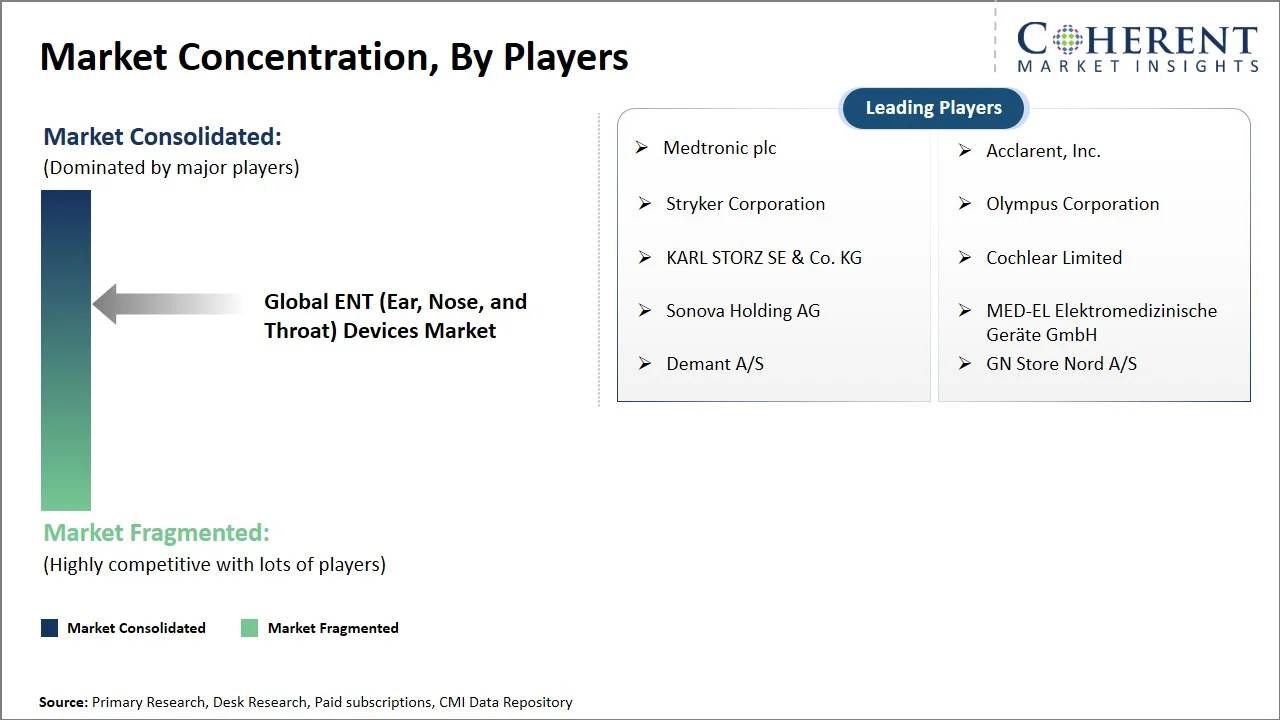
The global ENT (Ear, Nose, and Throat) devices market is moderately consolidated, with competition centered on technological innovation, product quality, regulatory compliance, and the expansion of comprehensive ENT product portfolios. Market participants are investing in AI-enabled diagnostics, advanced endoscopy systems, hearing implants, surgical navigation platforms, and minimally invasive technologies to enhance clinical outcomes. Strategic collaborations with hospitals and healthcare providers, along with continuous product innovation and geographic expansion, remain key competitive strategies.
Key focus areas include
- Development of AI-enabled and digital ENT diagnostic solutions
- Expansion of minimally invasive and image-guided ENT surgical technologies
- Strengthening hearing care portfolios through advanced hearing aids, cochlear implants, and remote audiology solutions.
- Investment in high-definition endoscopy and visualization platforms
- Regulatory approvals, strategic partnerships, and geographic expansion
Market Report Scope
ENT (Ear, Nose, and Throat) Devices Market Report Coverage
| Report Coverage | Details | ||
|---|---|---|---|
| Base Year: | 2025 | Market Size in 2026: | USD 28,709.5 Mn |
| Historical Data for: | 2020 To 2024 | Forecast Period: | 2026 To 2033 |
| Forecast Period 2026 to 2033 CAGR: | 8.8% | 2033 Value Projection: | USD 51,910.0 Mn |
| Geographies covered: |
| ||
| Segments covered: |
| ||
| Companies covered: | Medtronic plc, Acclarent, Inc., Stryker Corporation, Olympus Corporation, KARL STORZ SE & Co. KG, Cochlear Limited, Sonova Holding AG, MED-EL Elektromedizinische Geräte GmbH, Demant A/S, and GN Store Nord A/S | ||
| Growth Drivers: |
| ||
| Restraints & Challenges: |
| ||
Analyst Opinion (Expert Opinion)
- In the coming years, the ENT (Ear, Nose, and Throat) devices market is expected to be shaped by the growing adoption of AI-enabled diagnostics, minimally invasive surgical technologies, advanced hearing care solutions, and image-guided procedures. Continuous technological innovation, coupled with the increasing burden of ENT disorders and expanding outpatient care, will accelerate the transition toward precision, digital, and patient-centric ENT care.
- The maximum opportunities will probably exist within surgical devices, particularly image-guided endoscopy and surgical navigation systems, across North America and Asia Pacific. North America will continue to drive innovation through rapid adoption of advanced technologies, while Asia Pacific is projected to witness the fastest growth owing to expanding healthcare infrastructure, increasing healthcare expenditure, and a large patient population.
- In order to obtain a competitive advantage, market participants should focus on developing AI-integrated diagnostic and surgical platforms, expanding minimally invasive ENT product portfolios, strengthening regulatory compliance, and investing in strategic collaborations with hospitals and specialty ENT centers. Enhancing digital capabilities, improving clinical evidence through physician-led studies, and expanding presence in high-growth emerging markets will further help companies differentiate their offerings and sustain long-term growth.
Speak to the analyst
Want personalized insights?
Take the findings above to one of our principal consultants, or have the report rebuilt around the segments, geographies and competitors you actually track.
Market Segmentation
- Product Type Insights (Revenue, USD Mn, 2021 - 2033)
- Surgical Devices
- Diagnostic Devices
- Hearing Aid Devices
- Hearing Implants
- Nasal Splints
- Voice Prostheses
- Lasers
- Organ Type Insights (Revenue, USD Mn, 2021 - 2033)
- Ear
- Nose
- Throat
- End User Insights (Revenue, USD Mn, 2021 - 2033)
- Hospitals
- Clinics
- Ambulatory Surgical Centers
- Home Care Settings
- Others
- Regional Insights (Revenue, USD Mn, 2021 - 2033)
- North America
- U.S.
- Canada
- Latin America
- Brazil
- Argentina
- Mexico
- Rest of Latin America
- Europe
- Germany
- U.K.
- Spain
- France
- Italy
- Russia
- Rest of Europe
- Asia Pacific
- China
- India
- Japan
- Australia
- South Korea
- ASEAN
- Rest of Asia Pacific
- Middle East
- GCC Countries
- Israel
- Rest of Middle East
- Africa
- South Africa
- North Africa
- Central Africa
- North America
- Key Players Insights
- Medtronic plc
- Acclarent, Inc.
- Stryker Corporation
- Olympus Corporation
- KARL STORZ SE & Co. KG
- Cochlear Limited
- Sonova Holding AG
- MED-EL Elektromedizinische Geräte GmbH
- Demant A/S
Sources
Primary Research Interviews
- ENT surgeons (Otolaryngologists) and Head & Neck surgeons
- Audiologists and hearing care specialists
- Rhinologists and skull base surgery specialists
- Hospital procurement and biomedical engineering professionals
- Ambulatory surgery center (ASC) administrators
- Clinical specialists involved in ENT diagnostics and endoscopic procedures
- Medical device quality assurance and regulatory professionals from ENT device manufacturers
- Product managers and R&D executives from ENT device companies
Stakeholders
- ENT (Ear, Nose, and Throat) device manufacturers
- Hearing aid and cochlear implant manufacturers
- Endoscopy and surgical navigation system providers
- Medical device distributors and healthcare procurement organizations
- End-use Sectors
- Hospitals and multispecialty healthcare facilities
- Ambulatory Surgery Centers (ASCs)
- ENT specialty clinics
- Audiology and hearing care centers
- Academic and research hospitals
- Regulatory & Health Bodies
- U.S. Food and Drug Administration (FDA)
- European Commission – Medical Devices (EU MDR)
- Medicines and Healthcare products Regulatory Agency (MHRA), U.K.
- Pharmaceuticals and Medical Devices Agency (PMDA), Japan
- National Medical Products Administration (NMPA), China
- Therapeutic Goods Administration (TGA), Australia
- Health Canada
- U.S. Centers for Medicare & Medicaid Services (CMS)
Databases
- FDA 510(k) Premarket Notification Database
- FDA De Novo Database
- FDA Medical Device Registration and Listing Database
- EUDAMED (European Database on Medical Devices)
- OECD Health Statistics
- World Bank Open Data
- WHO Global Health Observatory (GHO)
- CMS Healthcare Cost Report Information System (HCRIS)
Magazines
- Medical Design & Outsourcing
- Medical Device Network
- MedTech Dive
- ENTtoday
- The Hearing Review
- Medical Product Outsourcing (MPO)
Journals
- The Laryngoscope
- Otolaryngology–Head and Neck Surgery
- International Journal of Pediatric Otorhinolaryngology
- Clinical Otolaryngology
- JAMA Otolaryngology–Head & Neck Surgery
- Hearing Research
Newspapers
- The Wall Street Journal
- Financial Times
- USA Today
- The New York Times
- The Guardian
Associations
- American Academy of Otolaryngology–Head and Neck Surgery (AAO-HNS)
- American Rhinologic Society (ARS)
- American Neurotology Society (ANS)
- European Rhinologic Society (ERS)
- European Academy of Otology & Neurotology (EAONO)
- Hearing Industries Association (HIA)
- British Society of Otology (BSO)
Public Domain Sources
- World Health Organization (WHO)
- U.S. Centers for Disease Control and Prevention (CDC)
- National Institute on Deafness and Other Communication Disorders (NIDCD)
- European Commission – Medical Devices
- U.S. Food and Drug Administration (FDA)
- Organisation for Economic Co-operation and Development (OECD)
- World Bank Open Data
Proprietary Elements
- CMI Data Analytics Tool, Proprietary CMI Existing Repository of information for last 10 years.
Get access to 250+ pages report
Every segment, forecast, competitor profile and data table behind the analysis above — available for instant download.
- ESOMAR Member
- ISO 9001:2015 Certified
- D-U-N-S Registered
- GDPR & CCPA Compliant
Missing comfort of reading report in your local language? Find your preferred language:
Transform your Strategy with Exclusive Trending Reports
Frequently Asked Questions
The global ENT (Ear, Nose, and Throat) devices market is estimated to be valued at USD 28,709.5 Mn in 2026 and is expected to reach USD 51,910.0 Mn by 2033.
Surgical devices dominate due to the increasing adoption of minimally invasive ENT procedures, technological advancements in endoscopy and surgical navigation, and the rising volume of ENT surgeries.
ENT (Ear, Nose, and Throat) devices are medical devices used to diagnose, monitor, and treat disorders affecting the ear, nose, throat, head, and neck.
The CAGR of the global ENT (Ear, Nose, and Throat) devices market is projected to be 8.8% from 2026 to 2033.
Major ENT surgical devices include endoscopes, powered surgical instruments, surgical navigation systems, laser systems, and balloon sinuplasty devices.
Modern ENT procedures commonly utilize high-definition endoscopy, CT- and MRI-based image-guided navigation, and 3D visualization systems to improve surgical precision and clinical outcomes.
Rising prevalence of ENT disorders, and growing adoption of minimally invasive ENT procedures are the major factors driving the growth of the global ENT (Ear, Nose, and Throat) devices market.