

Global Enteral Pump Market Size and Forecast – 2026 to 2033
The global enteral pump market is estimated to be valued at USD 1.68 Bn in 2026 and is expected to reach USD 2.47 Bn by 2033, exhibiting a compound annual growth rate (CAGR) of 5.7% from 2026 to 2033. The steady growth can be attributed to increasing demand for advanced enteral feeding systems due to an increased prevalence of chronic diseases, an increasing age group, and an expanding healthcare infrastructure. The market is expected to grow with technology advancements and increasing awareness regarding home healthcare management.
Key Takeaways of the Global Enteral Pump Market
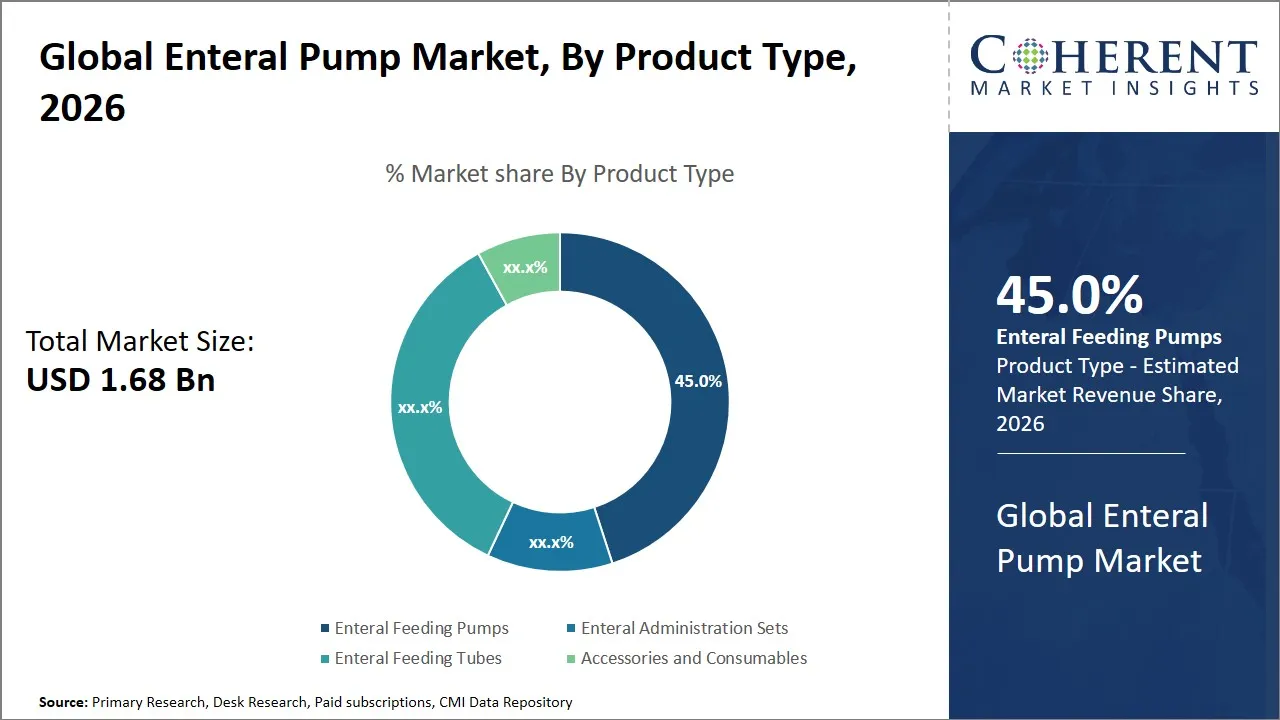
- The enteral feeding pumps segment is expected to dominate the global enteral pump market, accounting for 45.0% share in 2026.
- The portable enteral pumps segment is estimated to represent 57.0% of the market share in 2026.
- The adult segment is projected to hold 63.0% of the global enteral pump market share in 2026.
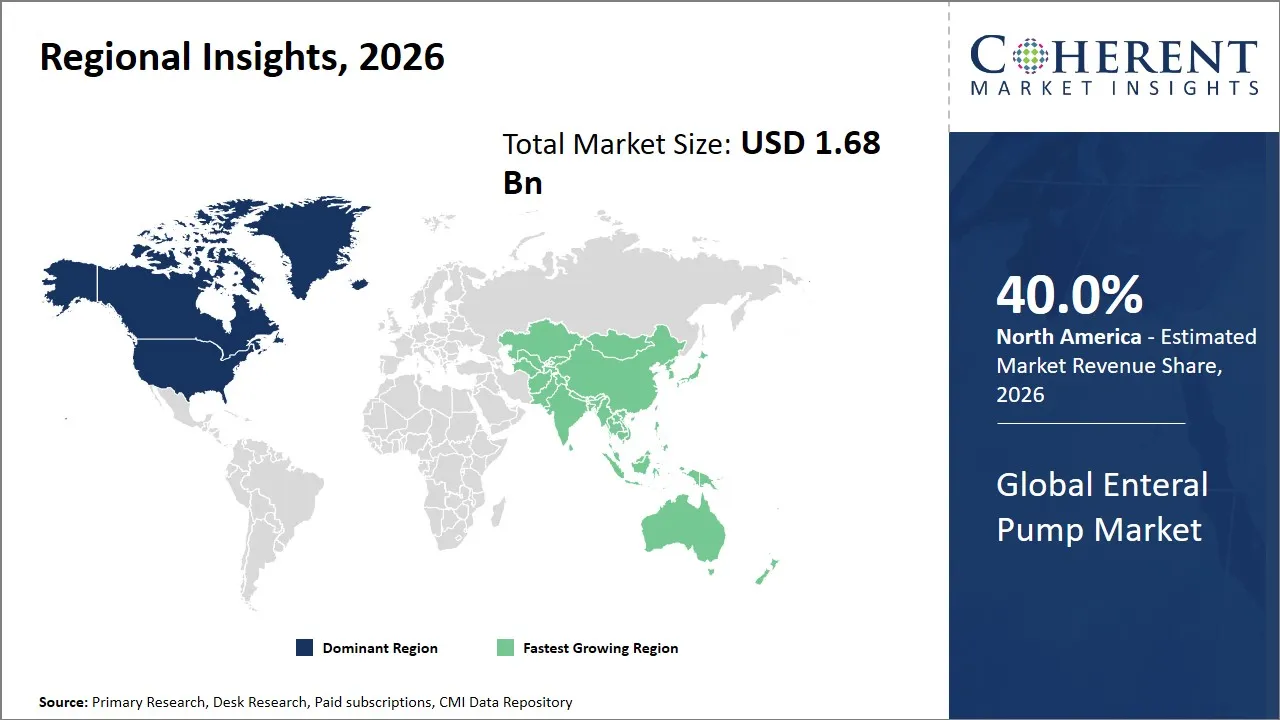
- North America is expected to dominate the global enteral pump market in 2026, accounting for 40.0% share.
- Asia Pacific is anticipated to witness the fastest growth, holding a market share of 22.0% in 2026.
Market Overview
- Enteral pumps are medical devices used to administer nutrition, fluids, and medications to the gastrointestinal tract of patients who are unable to consume food and liquids by the oral route. The enteral pump is used to accurately and continuously deliver enteral nutrition to the patient.
- The enteral pump market is growing at a rapid pace due to the increase in the prevalence of chronic diseases like cancer, neurological, and gastrointestinal diseases, which require enteral nutrition support. In addition, the increase in hospitalization and surgical procedures has boosted the demand for enteral pumps.
- Furthermore, the market is witnessing a trend where there is an increased demand for advanced and portable enteral pumps, including smart pumps with enhanced safety features. In addition to this, the increased preference for home care settings and ambulatory care settings is also driving the global enteral pump market.
Currents Events and their Impact
Current Events | Description and its Impact |
Increasing Regulatory Scrutiny & Product Recalls |
|
Rising Adoption of Advanced & Smart Enteral Pumps |
|
Segmental Insights
- Current Industry Events of 2026
- Market Size Estimation
- Regional Breakdown
- Competitive Landscape
- Customer Intelligence
- Segmental Analysis
- Pricing Analysis
- Key Market Drivers, Challenges & Future Trends
- Customized Insights Section
Why Does the Enteral Feeding Pumps Segment Dominate the Global Enteral Pump Market in 2026?
The enteral feeding pumps segment is anticipated to hold a market share of 45.0% in 2026. Enteral feeding pumps are essential tools that have to be used to provide nutrition to patients. The flow rates are critical to patient recovery. The use of enteral feeding pumps is fueled by advances in technology that have been incorporated into these pumps to make them efficient to use. These pumps have been designed to have various modes of feeding, which has helped to reduce the chances of patient complications such as clogged tubes as well as overfeeding.
Another important factor is the increasing rate of chronic illnesses, which include cancer, stroke, and neurological disorders, which affect the patient’s ability to swallow, thus requiring enteral nutrition. These pumps help in providing the patient with the required nutrients in a controlled manner, thus reducing hospitalization.
Furthermore, the miniaturization and portability of enteral feeding pumps have also increased their application in different healthcare settings, thus driving the market. The flexibility of enteral feeding pumps in accommodating different feeding regimens, which include bolus, intermittent, and continuous feeding, also makes them a preferred choice among healthcare professionals. The focus on patient safety, as emphasized by regulatory authorities, has led to increased innovation and adoption of sophisticated enteral feeding pumps, thus maintaining their position as market leaders in the product type segment.
For instance, in May 2025, the U.S. Food and Drug Administration (FDA) issued an early alert on Baxter International’s Infusion Pumps due to software problems, which affect the precise delivery of fluids. The problem has been linked to a number of serious injuries, which demonstrate the potential hazard of under- or over-infusion. This incident underscores the growing need for sophisticated enteral feeding pumps, equipped with enhanced safety features.
(Source: U.S. Food and Drug Administration)
Why Does the Portable Enteral Pumps Segment Dominate the Global Enteral Pump Market in 2026?
The portable enteral pumps segment is set to have the highest market share of 57.0% in 2026, attributed to the increased importance given to independence and mobility in chronic and post-acute care. The most significant advantage offered by portable enteral pumps is the continuation of the patient’s activities with the nutrition they receive. This is very important in enhancing the quality of life and mental well-being. The advancements in battery life, reduced weights, and designs have made these pumps easier to use.
The growing trend towards home healthcare and outpatient care has led to an increased rate of adoption of portable enteral pumps. This modality is particularly advantageous to patients, especially pediatrics and adults who require nutritional support on a long-term basis. They prefer to have a less restrictive form of feeding. Healthcare professionals also recommend the use of portable pumps to reduce hospital visits. This reduces healthcare costs and minimizes the risk of infection. The incorporation of smart features such as Bluetooth connectivity and reminders also makes portable pumps more attractive to patients. All these factors combined have led to portable pumps dominating the modality segment of the global enteral pump market.
The Adult Segment Dominates the Global Enteral Pump Market
Adult segment is expected to capture 63.0% of the market share in 2026, attributed to the increasing prevalence of adult diseases that affect normal nutrition intake. Such diseases include stroke, chronic obstructive pulmonary disease (COPD), cancer, and other neurological disorders that affect the digestive system. In such cases, enteral nutrition is provided to facilitate recovery from the illness. This increases the use of enteral pumps in the adult segment. The adult segment also represents a larger number of chronic diseases that require long-term enteral nutrition either in a hospital setting, nursing home setting, or home setting.
In addition, with an increased life expectancy and aging populations across the globe, age-related diseases that require nutritional support through enteral feeding, such as dementia and Parkinson’s disease, are on the rise. These diseases require precise nutritional support to prevent malnutrition, as well as to prevent any complications that may arise or to hasten healing. As such, there will be a need for specialized pumps for this patient population. The intricacy of nutritional support required by adults, which ranges from nutritional-dense solutions to feeding regimens, makes this patient population the largest in the market, as healthcare systems focus on efficient nutritional therapy for this patient population because of its critical nature.
Clinical Nutrition Guidelines Driving Standardization of Enteral Feeding Practices
Aspect | Description | Impact on Enteral Pump Market |
Global Clinical Guidelines Adoption | Clinical bodies such as ASPEN and ESPEN recommend early initiation of enteral nutrition (within 24–48 hours) in critically ill and post-surgical patients, along with standardized feeding protocols. | Drives consistent and early use of enteral pumps across ICUs and hospitals, increasing baseline demand globally |
Protocol-Driven Feeding Practices | Hospitals are increasingly implementing protocol-based enteral feeding pathways, including defined flow rates, dosing schedules, and monitoring standards. | Enhances dependence on programmable and accurate enteral pumps, supporting adoption of advanced devices |
Focus on Patient Safety & Outcomes | Guidelines emphasize minimizing complications such as aspiration, underfeeding, and overfeeding through controlled delivery systems. | Increases demand for precision-driven pumps with safety features, boosting replacement and upgrade cycles |
Standardization Across Care Settings | Alignment of feeding practices across hospitals, long-term care, and home healthcare settings through guideline-based approaches. | Expands enteral pump usage beyond hospitals into home care, strengthening overall market penetration |
Regional Insights
North America Enteral Pump Market Analysis and Trends
The North America region is projected to lead the market with a 40.0% share in 2026, attributed to the established healthcare system with high healthcare spending and technology adoption. In this region, a strong regulatory system helps to ensure product efficacy and safety. This provides a conducive environment for innovation in enteral feeding pumps.
The region enjoys a strong product launch environment and a strong network of healthcare professionals with expertise in chronic disease management. In addition, government initiatives in the US and Canada are focused on improving patient health by investing in home healthcare initiatives. Theis further fuels the demand for enteral pumps used in ambulatory care settings.
Furthermore, large industry players like Medtronic, Cardinal Health, and B. Braun Melsungen have a strong presence with a wide range of customizable and technologically advanced enteral pumps. This further reinforces the dominance in the global enteral pump market. Additionally, the region is geographically closer to R&D centers, which further fuels innovation in enteral pumps.
For instance, in April 2024, Baxter International launched Novum IQ large volume infusion pump with Dose IQ Safety Software following the clearance from U.S. FDA to enhance patient safety and clinical efficiency. The infusion pump system consists of smart pump technology, connectivity, and dose error reduction to provide more accurate administration of fluids and nutrients. The launch demonstrates the growing need for advanced and safety-focused feeding and infusion systems. The launch further emphasizes the industry’s focus on developing advanced pumps to reduce complications
(Source: Baxter International)
Asia Pacific Enteral Pump Market Analysis and Trends
Asia Pacific is anticipated to witness the fastest growth holding a market share of 22.0% in 2026, driven by the increase in healthcare access, the prevalence of chronic diseases, and awareness about clinical nutrition. Additionally, the region has high urbanization, which is reflected by the increase in healthcare facilities and favorable reimbursement policies in countries like China and India. The governments in this region have invested greatly in healthcare reforms and regulations related to medical devices, which has led to the entry of international companies in emerging markets like Asia Pacific.
The enteral pump market in Asia Pacific is expanding, fueled by a substantial patient population requiring nutritional assistance, a rapidly aging demographic, and the rising preference for home healthcare. Fresenius Kabi, Koninklijke Philips, and Terumo Corporation are establishing a presence in this area, recognizing the significant demand for nutritional support. These companies are forming partnerships with local entities to better serve the region's unique requirements.
Enteral Pump Market Outlook for Key Countries
How is the U.S. Helping in the Growth of the Enteral Pump Market?
The U.S. represents the major portion of the global enteral pump market owing to the strong healthcare system, healthcare expenditure, and medical practices. Patent protection and regulatory support from organizations like the FDA are significant factors for the growth of the industry. Medtronic and Cardinal Health are the industry leaders, given their wide range of products that are smart, user-friendly, and innovative to cater to the growing medical needs. The US home healthcare industry is another factor that contributes to the growth of portable enteral pumps. Partnerships between manufacturers and hospitals are beneficial for patient education regarding the use of the pump.
For instance, in March 2024, Cardinal Health declared that it had completed its acquisition of Specialty Networks, which enhances its partnership with more than 11,500 healthcare providers in the U.S. This is an expansion of care coordination and data-driven clinical support in U.S. hospital and provider networks. This is an indication of the increasing trend in manufacturer-provider relationships in the U.S. healthcare system.
(Source: Cardinal Health)
How is Germany Helping in the Growth of the Enteral Pump Market?
Germany has an advanced healthcare infrastructure. The focus of the German government on patient-centric care models is relatively supportive for enteral feeding technology. The major players, like B. Braun Melsungen and Fresenius Kabi, are already established in the country. These players are producing very reliable and precise pumps. Additionally, the country has a very advanced medical device industry that ensures constant innovation in enteral pumps, along with export to neighboring countries, thereby making this country a hub for Europe.
Key Drivers for the Growth of the China Enteral Pump Market
The enteral pump market in China is growing attributed to the rise in demand, which is being driven by the high patient pool and the rise in funding. The regulatory environment is favorable that makes product approvals easier, which attracts global industry leaders like Terumo Corporation and Philips to increase their investment in the market. In addition, the awareness of enteral pump care in the home environment, along with the rise in gastrointestinal diseases, is also driving the increase in demand. The local industry players are entering the market, providing affordable products, which can be implemented in different healthcare environments, even in rural hospitals, due to the initiative taken by the government, "Healthy China 2030."
Japan Enteral Pump Market Trends
The eternal pump market in Japan is marked by the use of modern medical technology, the aging population that demands assistance for enteral nutrition, and regulatory standards that encourage the use of quality products. The Japan enteral pump market is ideal for international innovators such as Terumo Corporation and Philips. The healthcare policies of Japan focus on the elderly and chronic diseases, creating a need for sophisticated enteral pumps that are capable of delivering nutrients to the patient without errors and at the same time being user-friendly. Strategic alliances are critical in designing customized pumps that meet the demands of the patient, making the market more stable.
Reimbursement Landscape & Policy Impact on Enteral Nutrition Adoption
Region | Reimbursement Scenario | Impact on Enteral Pump Market |
North America | Strong reimbursement coverage for enteral nutrition under Medicare, Medicaid, and private insurers; includes home enteral nutrition (HEN) support | High adoption of enteral pumps, especially in home care; drives recurring demand for devices and consumables |
Europe | Favorable reimbursement policies in Western Europe (Germany, U.K., France) with structured clinical nutrition programs | Supports stable market growth and widespread adoption in hospitals and home settings |
Asia Pacific
| Limited and fragmented reimbursement; improving policies in countries like Japan, Australia, and urban China | Moderate adoption; high out-of-pocket costs restrict penetration in developing regions |
Latin America | Partial reimbursement; largely dependent on public healthcare systems with budget constraints | Slower adoption, especially in home care; demand concentrated in urban hospitals |
Middle East & Africa | Minimal reimbursement frameworks; reliance on government-funded healthcare in select countries | Low adoption; growth limited to private healthcare and high-income regions |
Market Players, Key Developments, and Competitive Intelligence
Key Developments
- In November 2025, Alcresta Therapeutics was granted clearance by the U.S. FDA for the expanded use of its RELiZORB Cartridge for the treatment of neonates and infants. This increases the overall patient base and improves the outcome for patients in the enteral nutrition segment.
- In September 2025, the National Home Infusion Association published a white paper on home enteral nutrition. This document focuses on the impact of competitive bidding on patient access and quality of patient care. The document raises concerns over the reduction in supplier participation and its effect on patient access to enteral feeding devices.
- In May 2025, Avanos Medical, Inc. announced its decision to take direct control of the sales and distribution of its MIC-KEY enteral feeding products in the U.K., effective July 2025. This move by the company is geared towards enhancing customer relationships in the enteral feeding devices sector.
Top Strategies Followed by Global Enteral Pump Market Players
Player Type | Strategic Focus | Examples |
Established Market Leaders | Established market leaders emphasize investing heavily in R&D to develop advanced, high-performance, and user-friendly enteral pumps. Emphasis on innovation, reliability, and performance. Strategic alliances with OEMs and industry players to develop advanced technology. Aggressive global market expansion through distribution channels, targeting emerging markets in the Asia Pacific, Latin American, and African regions, which provide opportunities due to the rise in healthcare infrastructure and chronic diseases. | Fresenius Kabi was awarded the "Premier Supplier Legacy Award" in July 2025. The award recognizes the company's outstanding performance in supply chain management, in addition to continuous innovations in nutrition and infusion products, enteral nutrition, etc. |
Mid-Level Players | Mid-level players focus more on providing cost-effective solutions that are dependable. They think of targeting markets in developing countries and small health facilities by improving efficiencies in supply chain and manufacturing to reduce costs. They form joint ventures to enhance technology and market access. | In March 2025, B. Braun Melsungen AG expanded its enteral nutrition portfolio by strengthening its distribution partnerships across emerging markets, focusing on improving accessibility of cost-effective feeding solutions. This initiative enabled the company to enhance its regional presence while maintaining affordability and operational efficiency. |
Small-Scale Players | Small-scale players focus on niche strategies involve focusing on specific product features like portability, enhanced safety, and IoT connectivity with remote monitoring capabilities. Highlighting innovation in specific areas or patient groups is another strategy. Building partnerships with local distributors or startups to improve access to the markets is important. | In June 2024, Micrel Medical Devices continued expansion of its portable enteral feeding pump portfolio (e.g., Amy Pump), focusing on lightweight, ambulatory solutions designed for homecare and patient mobility. |
Market Report Scope
Enteral Pump Market Report Coverage
| Report Coverage | Details | ||
|---|---|---|---|
| Base Year: | 2025 | Market Size in 2026: | USD 1.68 Bn |
| Historical Data for: | 2020 To 2024 | Forecast Period: | 2026 To 2033 |
| Forecast Period 2026 to 2033 CAGR: | 5.7% | 2033 Value Projection: | USD 2.47 Bn |
| Geographies covered: |
| ||
| Segments covered: |
| ||
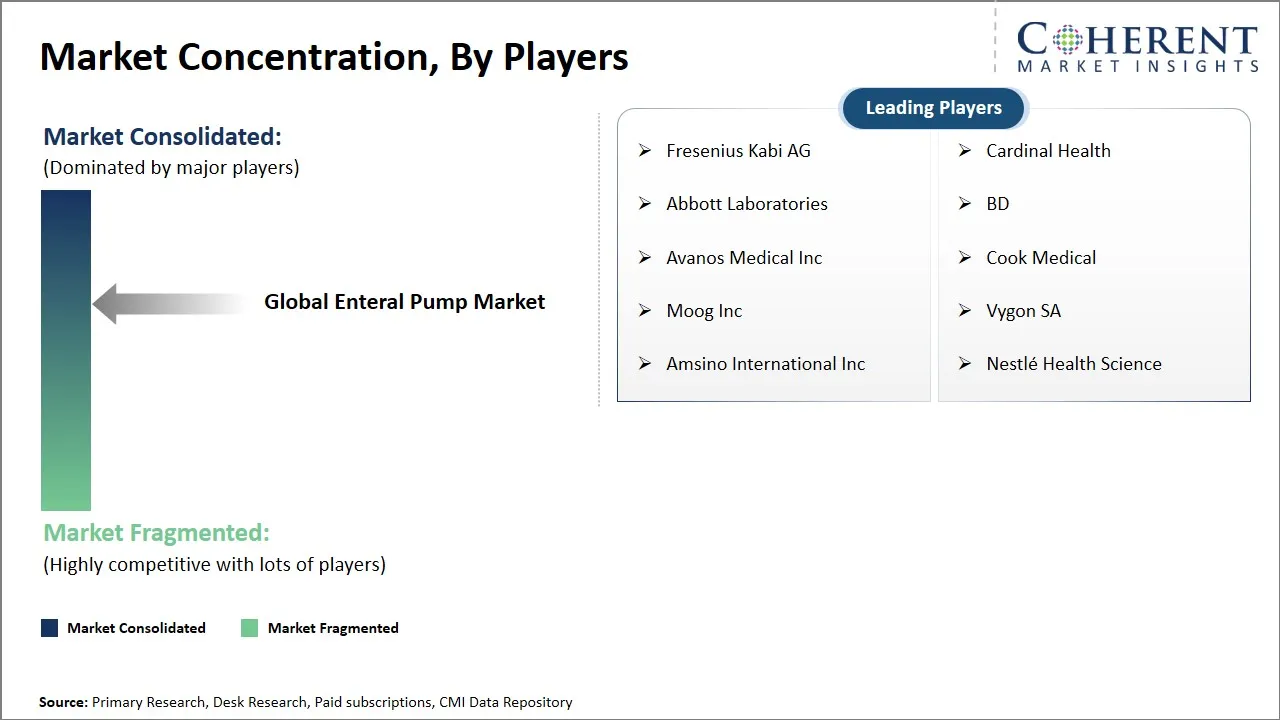
| Companies covered: | Fresenius Kabi AG, Cardinal Health, Abbott Laboratories, BD, Avanos Medical Inc, Cook Medical, Moog Inc, Vygon SA, Amsino International Inc, and Nestlé Health Science | ||
| Growth Drivers: |
| ||
| Restraints & Challenges: |
| ||
Global Enteral Pump Market Dynamics
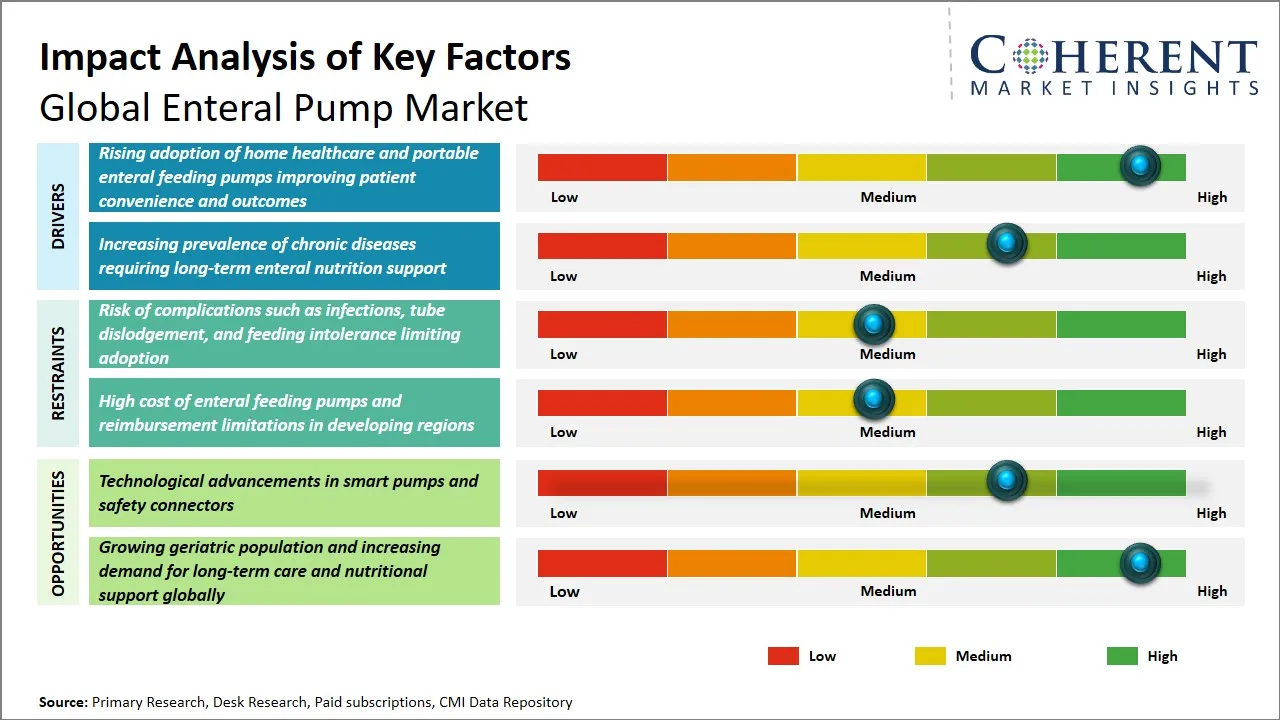
Global Enteral Pump Market Driver – Rising Adoption of Home Healthcare and Portable Enteral Feeding Pumps Improving Patient Convenience and Outcomes
The increased preference for home healthcare settings is a major factor in the growth of portable enteral feeding pumps, as they provide more convenience and flexibility to patients who are in need of nutritional support. Portable enteral feeding pumps provide patients with uninterrupted nutritional support in different settings away from traditional hospital settings. This provides patients with an opportunity to carry out their daily routines with minimal interruptions. This is particularly important for elderly patients and those who are chronically ill and are in need of quality health care in different settings away from traditional hospitals. In addition to this, advances in enteral feeding pumps provide patients with uninterrupted nutritional support with minimal complications. This includes aspiration and feeding intolerance. The lightweight and compact design of enteral feeding pumps are particularly important in promoting patient mobility and comfort. This is an important factor in promoting patient compliance with nutritional regimens.
Global Enteral Pump Market Opportunity - Technological Advancements in Smart Pumps and Safety Connectors
The global enteral pump market is expected to grow significantly due to the technological advancements that are being made in the field of enteral pumps, specifically smart enteral pumps and safety connectors. Smart enteral pumps are changing the face of patient care by delivering scheduled feedings, monitoring, and dosing accuracy with nutrients. The use of wireless connectivity and IoT technology in smart enteral pumps is helping healthcare organizations to remotely control the process of enteral feeding, thus increasing efficiency.
Furthermore, there are technological advancements being made to safety connectors, specifically to standardized connectors such as ENFit. These are helping to address the critical challenges that are associated with enteral pumps, specifically regarding misconnections and contamination. These connectors are designed to meet international safety standards, thus minimizing the risk of any adverse event.
With hospitals and home care facilities increasingly focusing on smart and safe enteral feeding systems, companies are investing in these technological improvements stand a high chance of reaping a large market share. Additionally, the improvements help in the collection of more information, which can be used in decision-making. Therefore, smart technology integration and safety improvements provide a great opportunity to revolutionize the current enteral feeding system in the world.
For instance, in September 2024, a scoping review study published in Journal of Chemical Health Risks stated that "there have been advancements in the technology of enteral pumps to provide more accurate dosing, patient safety, and clinical workflow efficiencies with smart pump technology. “The study further stated that "there are several trends in enteral pump technology, including integration with electronic health records and mobile devices to provide real-time patient monitoring."
(Source: Journal of Chemical Health Risks)
Analyst Opinion (Expert Opinion)
- The rise of chronic conditions such as cancer, neurological disorders, and gastrointestinal disorders will remain one of the significant factors that will influence the global enteral pump market. These chronic conditions will continue to require nutrition support over an extended period of time, hence significantly increasing the demand for precise and accurate enteral nutrition.
- The increasing trend of home healthcare services and ambulatory care settings will continue to boost the growth of the global enteral pump market. Portable, user-friendly, and home healthcare-focused enteral pumps are increasingly gaining traction, considering the need to minimize hospital stays and healthcare expenses.
- In addition, the constant evolution of technology in terms of features such as smart pumps, accurate dosing, alarms, and connectivity will continue to enhance patient safety and efficiency.
Speak to the analyst
Want personalized insights?
Take the findings above to one of our principal consultants, or have the report rebuilt around the segments, geographies and competitors you actually track.
Market Segmentation
- Product Type Insights (Revenue, USD Bn, 2021 - 2033)
- Enteral Feeding Pumps
- Enteral Administration Sets
- Enteral Feeding Tubes
- Accessories and Consumables
- Modality Insights (Revenue, USD Bn, 2021 - 2033)
- Portable Enteral Pumps
- Stationary Enteral Pumps
- Age Group Insights (Revenue, USD Bn, 2021 - 2033)
- Adult
- Pediatric
- Neonatal
- Application Insights (Revenue, USD Bn, 2021 - 2033)
- Oncology
- Gastroenterology
- Diabetes
- Neurology
- Critical Care
- Others
- End-use Industry Insights (Revenue, USD Bn, 2021 - 2033)
- Hospitals
- Homecare Settings
- Ambulatory Surgical Centers
- Distribution Channel Insights (Revenue, USD Bn, 2021 - 2033)
- Direct Sales
- Online Sales
- Regional Insights (Revenue, USD Bn, 2021 - 2033)
- North America
- U.S.
- Canada
- Latin America
- Brazil
- Argentina
- Mexico
- Rest of Latin America
- Europe
- Germany
- U.K.
- Spain
- France
- Italy
- Russia
- Rest of Europe
- Asia Pacific
- China
- India
- Japan
- Australia
- South Korea
- ASEAN
- Rest of Asia Pacific
- Middle East
- GCC Countries
- Israel
- Rest of Middle East
- Africa
- South Africa
- North Africa
- Central Africa
- North America
- Key Players Insights
- Fresenius Kabi AG
- Cardinal Health
- Abbott Laboratories
- BD
- Avanos Medical Inc
- Cook Medical
- Moog Inc
- Vygon SA
- Amsino International Inc
- Nestlé Health Science
Sources
Primary Research Interviews
Industry Stakeholders
- Medical Device Manufacturers (Enteral Pumps & Feeding Systems)
- Enteral Nutrition Product Companies
- Contract Manufacturing Organizations (CMOs)
- Component & Raw Material Suppliers
- Regulatory and Compliance Experts
- Distributors and Hospital Procurement Specialists
End Users
- Hospitals and Intensive Care Units (ICUs)
- Ambulatory Surgical Centers (ASCs)
- Home Healthcare Providers
- Gastroenterologists, Dietitians, and Clinical Nutritionists
- Nursing Professionals and Caregivers
Government and International Databases
- World Health Organization (WHO) – Malnutrition, clinical nutrition, and healthcare infrastructure data
- U.S. Food and Drug Administration (FDA) – Medical device approvals, recalls, and safety alerts (enteral pumps)
- European Medicines Agency (EMA) / European Commission – Medical device regulations (MDR)
- National Institutes of Health (NIH) – Clinical nutrition and chronic disease research
- ClinicalTrials.gov – Enteral feeding and nutrition-related clinical studies
Trade Publications
- Medical Device Network
- MedTech Dive
- Fierce Biotech / Fierce MedTech
- Becker’s Hospital Review
- Healthcare Packaging
Academic Journals
- Journal of Parenteral and Enteral Nutrition (JPEN)
- Clinical Nutrition Journal
- Nutrition in Clinical Practice
- The American Journal of Gastroenterology
- Journal of Human Nutrition and Dietetics
Reputable Newspapers
- The Wall Street Journal – Healthcare sector developments
- Financial Times – Global medical device trends
Industry Associations
- American Society for Parenteral and Enteral Nutrition (ASPEN)
- Medical Device Manufacturers Association (MDMA)
- Advanced Medical Technology Association (AdvaMed)
- European Society for Clinical Nutrition and Metabolism (ESPEN)
- Association for Nutrition (AfN)
Public Domain Resources
- ClinicalTrials.gov
- WHO Reports
- NIH Databases
Proprietary Elements
- CMI Data Analytics Tool: Proprietary analytics tool to analyze real-time market trends, consumer behavior, and technology adoption in market
- Proprietary CMI Existing Repository of Information for Last 8 Years
Get access to 250+ pages report
Every segment, forecast, competitor profile and data table behind the analysis above — available for instant download.
- ESOMAR Member
- ISO 9001:2015 Certified
- D-U-N-S Registered
- GDPR & CCPA Compliant
Missing comfort of reading report in your local language? Find your preferred language:
Transform your Strategy with Exclusive Trending Reports
Frequently Asked Questions
The global enteral pump market is estimated to be valued at USD 1.68 billion in 2026 and is expected to reach USD 2.47 billion by 2033.
The CAGR of the global enteral pump market is projected to be 5.7% from 2026 to 2033.
Rising adoption of home healthcare and portable enteral feeding pumps improving patient convenience and outcomes and increasing prevalence of chronic diseases requiring long-term enteral nutrition support are the major factors driving the growth of the global enteral pump market.
Enteral pumps use rate control and volume control systems. These pumps deliver a specific volume of nutrients over a specified period of time. These pumps have sensors and alarms that detect occlusions, interruptions in the flow, and air in the line, thus providing a constant and safe delivery of nutrients. This is important in the management of patients who require controlled feeding, especially those in critical care units and those with metabolic disorders.
The contemporary enteral pumps are equipped with sophisticated safety features that include dose error reduction systems (DERS), anti-free flow protection, and alarms. Such features assist in minimizing overfeeding, underfeeding, and wrong route administration. Moreover, enteral pumps can be connected to digital monitoring systems to track patients in real-time, thus minimizing human error and improving patient safety.
Risk of complications such as infections, tube dislodgement, and feeding intolerance limiting adoption and high cost of enteral feeding pumps and reimbursement limitations in developing regions are the major factors hampering the growth of the global enteral pump market.
In terms of product type, the enteral feeding pumps segment is estimated to dominate the market revenue share in 2026.