

Global Fish Pumps Market Size and Forecast – 2026-2033
The Global Fish Pumps Market is estimated to be valued at USD 190.1 Mn in 2026 and is expected to reach USD 297.3 Mn by 2033, reflecting a compound annual growth rate (CAGR) of 6.6% from 2026 to 2033.
Key Takeaways of the Fish Pumps Market
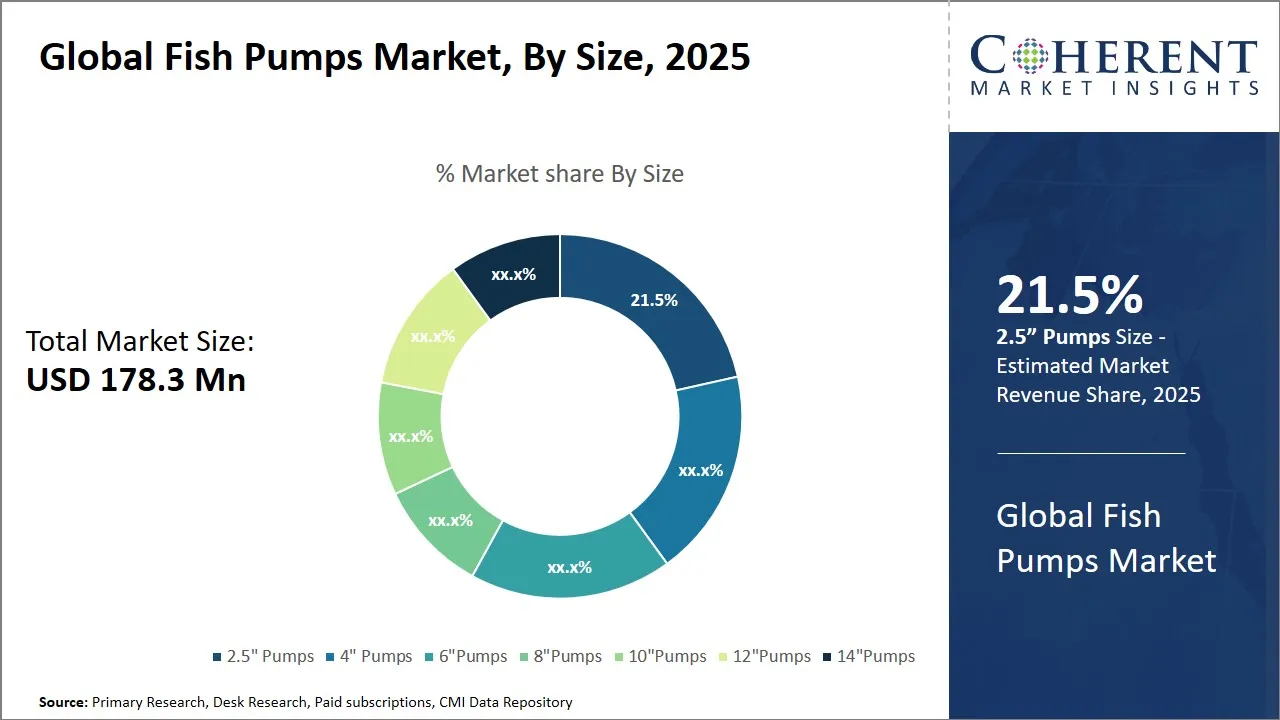
- The 2.5” pumps segment is expected to hold a 22.5 % of the market share in 2026.
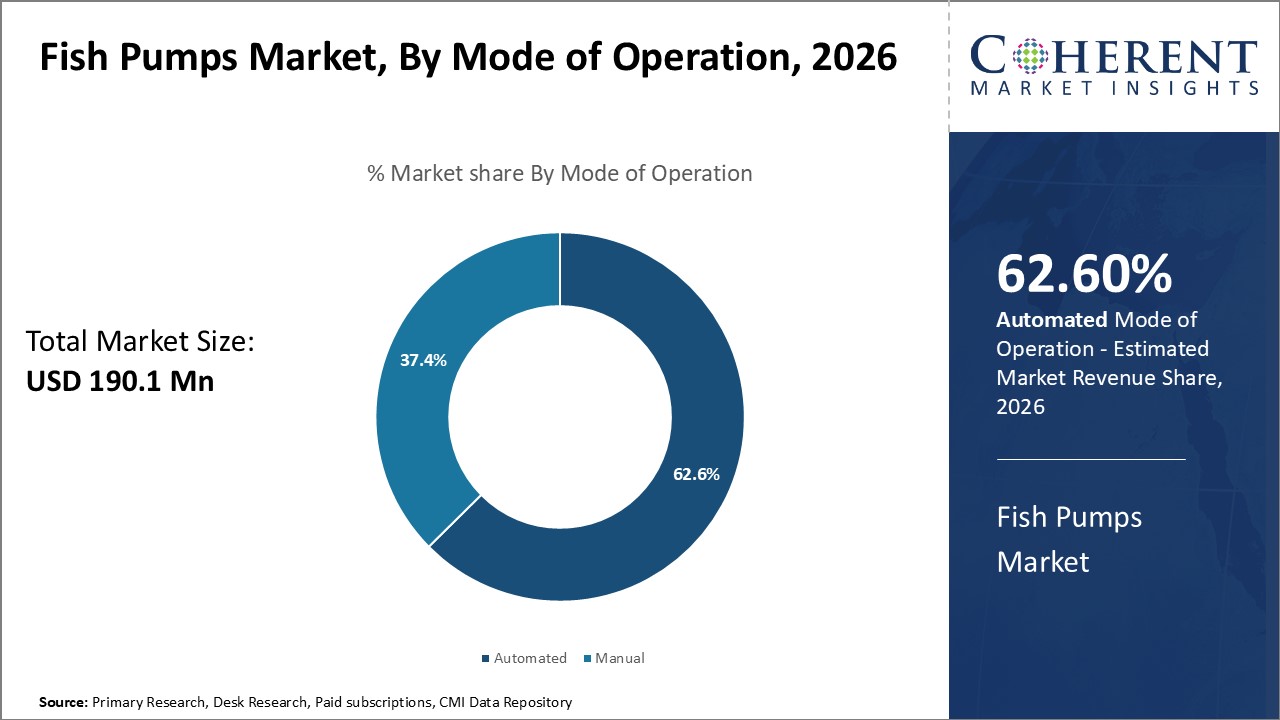
- The automated segment is estimated to capture 62.6 % of the fish pumps market share in 2026.
- The aquaculture segment is projected to hold a 57.7 % share in 2026.
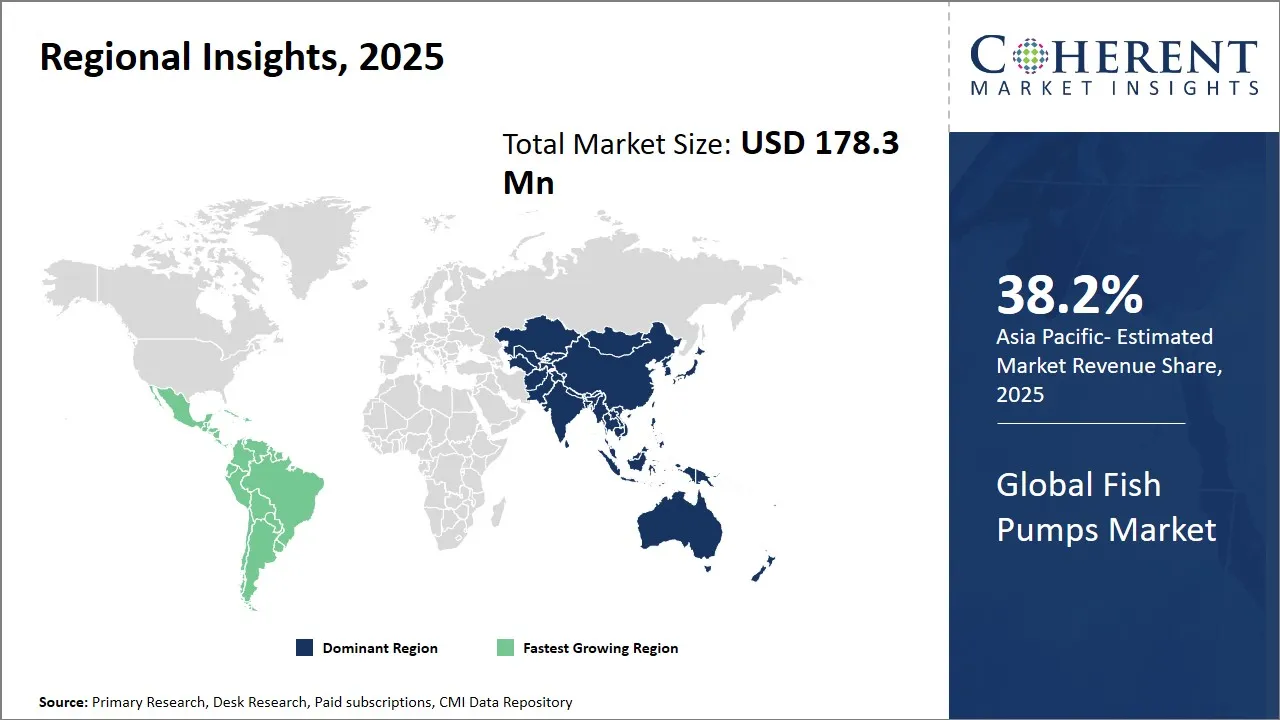
- Asia Pacific will lead the fish pumps market in 2026 with 38.2 % share.
- Latin America will hold 14.3 % share in 2026 and grow fastest.
Market Overview
- According to the market trends, there is increased preference for using energy efficient, durable as well as corrosion resistant fish pumps coupled with smart technologies that support remote monitoring and automation.
- Also, the sustainability of aquaculture and environmental protection are also driving innovation in the field of pump design, coupled with the spread of aquaculture practices.
- The new markets also enhance the market growth with the focus on implementing the new pumping solutions to increase the productivity and minimize the costs of operations.
Current Events and Its Impact
Current Events | Description and its Impact |
Acceleration of recirculating aquaculture systems (RAS) investment and build-outs (2023–2025) |
|
Energy-cost pressure and operating-expenditure (OpEx) focus in aquaculture facilities (ongoing; amplified by power price volatility) |
|
Segmental Insights
- Current Industry Events of 2026
- Market Size Estimation
- Regional Breakdown
- Competitive Landscape
- Customer Intelligence
- Segmental Analysis
- Pricing Analysis
- Key Market Drivers, Challenges & Future Trends
- Customized Insights Section
Why Does 2.5” Pumps Dominate the Fish Pumps Market in 2026?
2.5” pumps segment is expected to hold 22.5% of the global fish pumps market share in 2026, because of the compact size of the segment that incurs the highest versatility in various applications. Small-scale fish farming systems and mobile fishing applications are the best application of these pumps as their maneuverability and simple installation is of vital importance. They can fit in tight places and be used in both inland and coastal waters by operators without huge infrastructure change-ups due to their relatively small footprint.
Besides, 2.5 pumps offer adequate flow rates and pressure capacities to accommodate moderate amounts of water that meet the operational requirements of the majority of fish farmers, who demand on the consistent and continuous supply of water to the pond to provide maximum comfort to the fish.
In shrimp and tilapia farms across Southeast Asia (Vietnam, Indonesia), 2.5” fish pumps are widely deployed in small to mid-sized earthen ponds (0.5–2 hectares). Farmers use these pumps for daily water exchange, fingerling transfer, and oxygenation support, where space is limited and power availability is moderate.
Why are Automated Segment Leading the Market Through Efficiency and Technological Advancements?
Automated segment is expected to capture 62.6% of the market share in 2026, because they can significantly improve operational efficiency, as well as the need of manual labor in a fish farm and fishing vessel. These pumps are expected to keep the optimum circulation, aeration, and fish transportation condition without human interference, hence maintain high productivity and sustainability in aquaculture systems.
Increase in technological advancement has significantly led to emergence of automated pumps. Online connectivity to digital monitoring and control systems makes it possible to track the performance and conditions of the pumps and aquatic environments in real time. These intelligent features enable operator to make informed decisions, remotely adjust parameters and provide early warning alerts of possible failures or maintenance requirements. Such a high level of automation will minimize the possibility of human error, assist in the stable level of water quality, and, finally, guarantee healthier fish stocks.
Aquaculture Dominates the Fish Pumps Market
The aquaculture segment is projected to hold 57.7% of the fish pumps market share in 2026, fueled by the global relentless pursuit of sustainable fish production and food security. In aquaculture ponds, fish pumps play a vital role in the provision of the appropriate water circulation, oxygen, and elimination of wastes, which are important in keeping the aquatic environment healthy and the growth rate of the fish high.
A major factor that has led to the rapid growth of aquaculture in the world is the declining wild fish catch and the growing demand of seafood among the consumers. With the conventional fishing quotas approaching sustainability levels, fish farms have to depend on tools such as fish pumps to create artificial aquatic environment and facilitate intensive farming. Pumps allow the careful regulation of such parameters as the flow of water, the temperature, and the level of oxygen and provide the possibility to stock at a higher density and shorten production cycles without affecting aquatic health.
Regional Insights
Asia Pacific Fish Pumps Market Analysis and Trends
The Asia Pacific region is projected to lead the market with a 38.2% share in 2026. The market ecosystem here is supported by a large base of fish farming enterprises, numerous small to large-scale fishing operations, and a strong supply chain network. The ecosystem of the market is enabled by the presence of vast number of fish farming industries, dozens of small- and large-scale fishing industries and extensive network of supply chain. Measures by the government to enhance sustainable aquaculture and enhance the infrastructure of fish production, play a great role in stabilizing and driving the market.
There is also rich supply of fresh and marine ecosystems that enhance large quantities of fish production and generate a strong market that needs effective fish pump technologies. Pentair Aquatic Eco-Systems, Tsurumi Manufacturing Co., and Ebara Corporation are prominent companies that serve the needs of the areas rich in aquaculture with a well-developed fish pumping solution.
Latin America Fish Pumps Market Analysis and Trends
The Latin America region is expected to exhibit the fastest growth in the market contributing 14.3% share in 2026, fueled by rapidly expanding aquaculture sectors in countries like Brazil and Chile. The area has seen more development in modernization of fishing and aquaculture facilities, and positive governmental support schemes toward expanding export and retaining fish production. Moreover, the successful export market in seafood motivates the introduction of the technologically advanced pumps used to pump fish in order to increase the efficiency of the working process and avoid the losses.
This is because of the easy access to major international markets of seafood, the dynamics of trade are favorable in the shape of geographical advantage, which is increasing the demand of quality fish pumping equipment. Hidrostal, Sulzer and domestic market leaders are other companies that have started increasing their presence in this region and are providing bespoke solutions as the industry continues to grow.
Global Fish Pumps Market Outlook for Key Countries
Is China the Global Backbone of Growth for the Fish Pumps Market?
The China market for fish pumps is strong because the country has dominated the production of aquaculture in the world. Chinese manufacturers and global actors cooperate with each other with huge government backing of blue economy projects and sustainable aquaculture projects. Other companies such as Pentair and Tsurumi are also involved in the supply of durable and efficient pumps that are used in inland and coastal fish farming. The fact that the company has incorporated new energy saving pump technologies also fits the environmental standards of Chinas, and modernization is also propelled throughout the industry.
Japan Fish Pumps Market Trends
Japan has remained dominant in bringing in the latest technology in the fish pumps market. This trend of the countries towards aquaculture systems that are highly automated and mechanized increases the need of precision-engineered pumps. Japanese companies such as Ebara and Tsurumi dominate the market with their innovations such as corrosion free materials and power consuming motors. The policies implemented by the government supporting the management of coast resources and sustainable fishing also contribute to the increased receptivity of the markets to the solutions of fish pump development.
Is Brazil Emerging as the Next High-Growth Hub for the Fish Pumps Market?
The vast Brazilian aquaculture industry drives pumps sales in the fish sector as infrastructure improvements become more common. The government encourages development of aquaculture by subsidizing and providing technical training to people to embrace modern equipment. The central role is played by large-scale pisciculture farms, which are equipped with pumps by prominent companies like Hidrostal and Sulzer, and which enable Brazil to be a major exporter of seafood globally. The advantage of these continental water sources is that they help the market to exploit the fresh water resources in fish farming.
Chile Fish Pumps Market Trends
The Chile market for fish pumps is also important because salmon farming and seafood export are the priorities of the country. The need to find the innovative solutions has been necessitated by the demand to find the consistent pumping technologies which are able to work effectively in the severe marine conditions. Global producers and local suppliers offer custom-made pumps that are used to process and transfer high volumes of water that are used in salmon farming. The regulation of the government targeting environmental protection and sustainable practices of fish farming are able to complement the industry contribution to sustainable fish farming practices, which influence the design and deployment strategies of the products in the market.
U.S. Fish Pumps Market Trends
The fish pumps market in the U.S. is also defined by an established aquaculture sector with high research and innovation centers. Sustainable production of fish and new technological implementation are encouraged by government programs, which provide a competitive market niche to such players as Pentair and Flygt (Xylem). The U.S. has a number of aquatic ecosystems and high-level consumer demand on sea food hence this encourages continued investment in the efficient pumping systems. In addition, there are trade policies that have promoted the development of domestic aquaculture that adds impetus to the market by promoting the uptake of state-of-the-art fish pump.
Regulatory & Animal Welfare Compliance
This framework evaluates how fish pump designs align with aquaculture regulations and welfare standards. It covers fish injury rates, stress indicators, mortality during transfer, and compliance with regional norms. Pumps using low-shear impellers and smooth flow paths score higher. Non-compliant systems face licensing delays and operational restrictions.
Biosecurity & Disease Transmission Risk Analysis
This analysis assesses contamination and pathogen transfer risks linked to pump operation. It analyzes cleanability, material hygiene, cross-pond water movement, and biofilm formation. Closed-loop systems and CIP-compatible pumps reduce disease spread. High-risk setups increase outbreak probability and farm-wide losses.
Energy Consumption & OPEX Benchmarking
This benchmark measures power usage, maintenance costs, and lifecycle operating expenses of fish pumps. Metrics include kWh per cubic meter pumped, downtime frequency, and spare-part intensity. Automated pumps with VFDs show lower energy intensity and stable OPEX. Inefficient pumps erode margins despite lower upfront costs.
Market Players, Key Development, and Competitive Intelligence
Key Development
- In July 2023, Pump Supplies, the owner and operator of the U.K.’s largest hire fleet of electric submersible pumps and accessories, has launched a new range of eel friendly pumps. Within U.K. or EU water bodies, the protection of eels and other small fish life has increasingly become a priority for effective fisheries management. Eel populations have plummeted in recent decades and the 2015 Eel Regulations require companies who abstract and use raw water to ensure that their activity enables at least 40% eel ‘escapement’.
Top Strategies Followed by Global Fish Pumps Market Players
- The sector is dominated by established players who invest a lot in research and development (R&D) to be innovative and introduce high-performance products which respond to the changing needs of the industry. These firms continuously aim at enhancing the efficiency of pumps, durability and flexibility, such that their products meet different needs of aquaculture. These players can increase the availability of their sophisticated products in the markets by expanding in markets such as Southeast Asia, Latin America, and Africa as well as by offering better after-sales services, which complements their overall competitive advantage.
- For example, businesses like Xylem, Pentair AES, and Landia specialize in the design of high-efficiency and low shear pumps which reduce fish stress and mortality rates and reach large volumes. Such players combine high-technology features like variable frequency drives (VFDs) and non-corrosive materials and automated control systems to enhance lifecycle performance.
- Small-scale manufacturers of fish pumps tend to take a differentiation strategy by targeting specialized features or new technology to distinguish themselves in the flood of the market. These market players normally venture into niche markets including green pumping systems, energy efficient models or pumps that are specifically designed to suit local aquaculture conditions. Small businesses aim to create their own value propositions to the customers by introducing the latest technologies, e.g. IoT-based monitoring systems or materials that would extend the life of the pump.
Market Report Scope
Fish Pumps Market Report Coverage
| Report Coverage | Details | ||
|---|---|---|---|
| Base Year: | 2025 | Market Size in 2026: | USD 190.1 Mn |
| Historical Data for: | 2020 To 2024 | Forecast Period: | 2026 To 2033 |
| Forecast Period 2026 to 2033 CAGR: | 6.6% | 2033 Value Projection: | USD 297.3 Mn |
| Geographies covered: |
| ||
| Segments covered: |
| ||
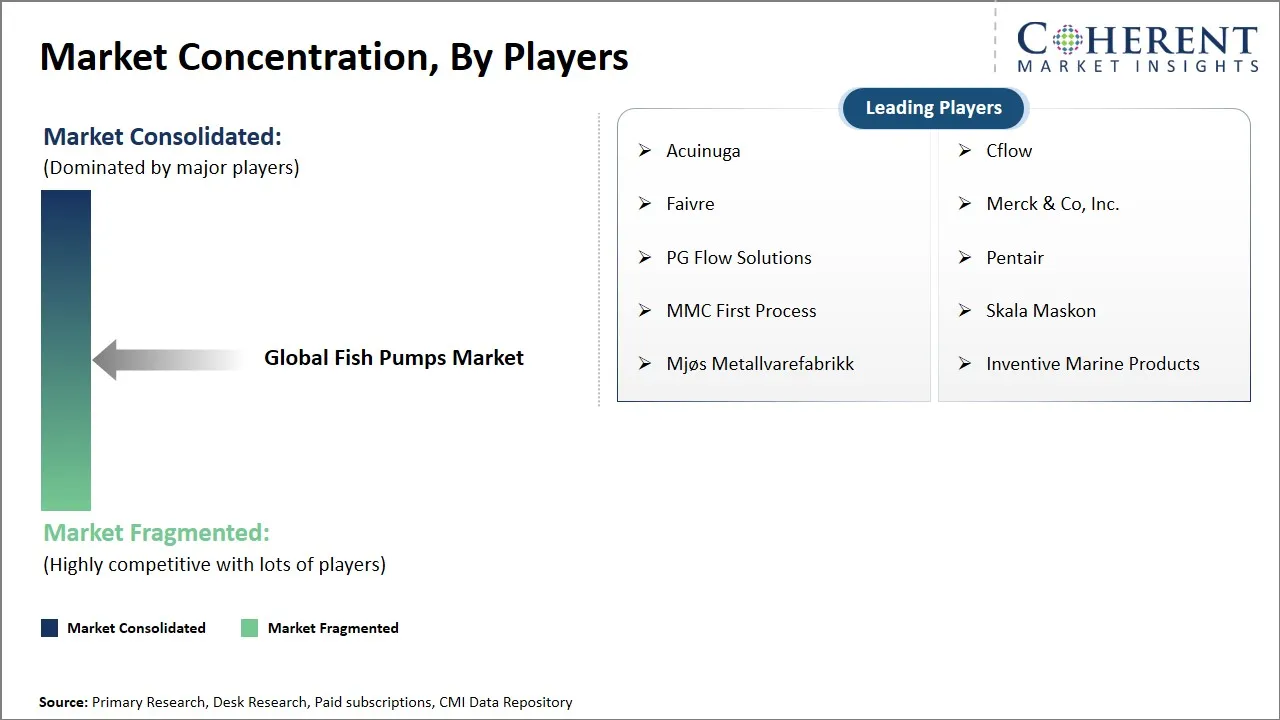
| Companies covered: | Acuinuga, Cflow, Faivre, Merck & Co, Inc., PG Flow Solutions, Pentair, MMC First Process, Skala Maskon, Mjøs Metallvarefabrikk, and Inventive Marine Products | ||
| Growth Drivers: |
| ||
| Restraints & Challenges: |
| ||
Fish Pumps Market Dynamics
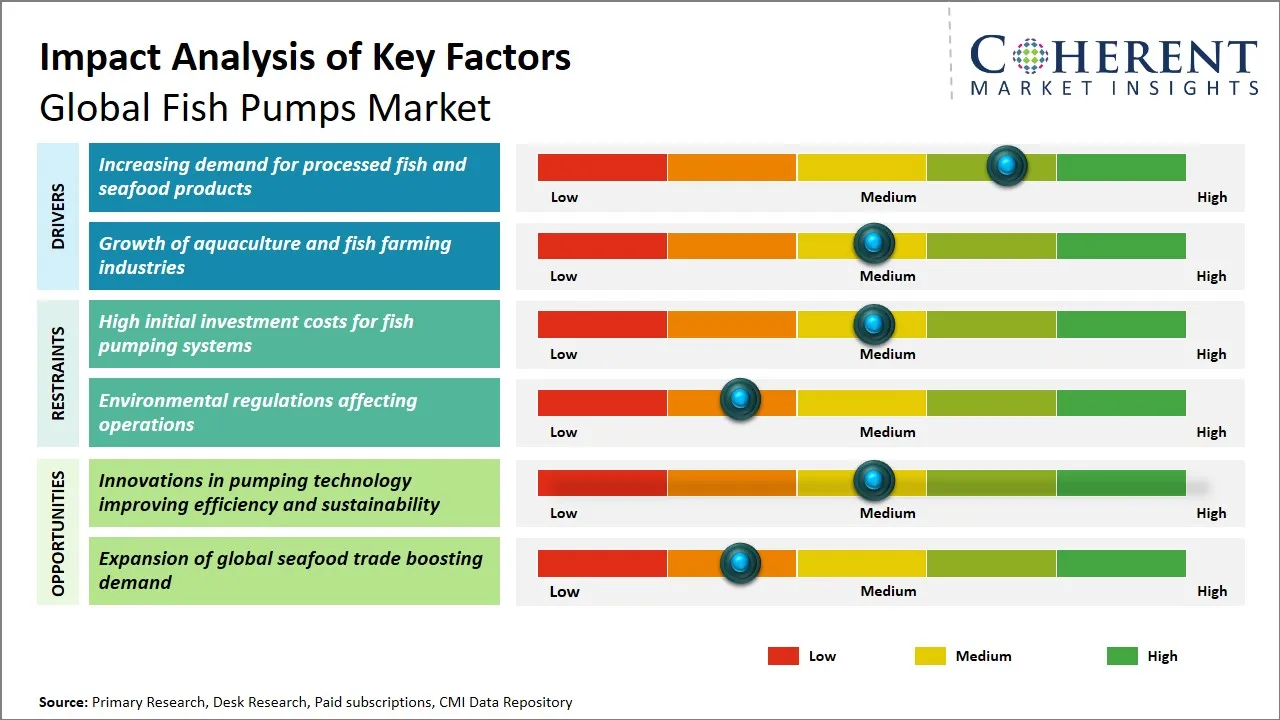
Fish Pumps Market Driver - Increasing Demand for Processed Fish and Seafood Products
The increasing use of processed fish and seafood products by consumers is largely contributing to the demand of fish pumps across the world. As urbanization and busy lifestyles continue to gain popularity, consumers are becoming more interested in convenient and ready-to-cook sustainable seafood products, and this means that there are more processing activities taking place at different stages of the supply chain. In this regard, fish pumps are important in facilitating efficient, gentle and safe handling and transportation of live fish in aquaculture farms to processing facilities. This reduces the stress levels and damage to the fish hence conserving the quality and the freshness of fish, which are important attributes to processed seafood products.
China Tilapia and catfish processing, Integrated aquaculture-processing clusters Processing of fish involves the use of fish pumps to force live fish into processing plants that produce frozen fillets and breaded products, and the integrity of the flesh directly influences the yield and price.
Fish Pumps Market Opportunity - Innovations in Pumping Technology Enhancing Efficiency and Sustainability
The market of fish pumps is growing rapidly all over the world due to the high rate of technological development of pumps that are making both the functioning process and the environmentally friendly. Energy efficient motors, variable frequency drives (VFDs) and intelligent control systems are some of the innovations that are allowing fish pumps to be run with precision and less power. Such technological improvements not only reduce costs of operation in aquaculture and fisheries, but also reduce the impacts of the environment through carbon emissions and waste of water.
University of Florida aquaculture research shows VFDs can significantly reduce energy use in pump systems by adjusting motor speed to match water demand, directly lowering operational costs.
Analyst Opinion (Expert Opinion)
- The market for fish pumps is experiencing radical development, as there is growing automation of aquaculture and processing industries. The presentations at the International Aquaculture Conference (2023) and the Global Fisheries and Seafood Expo (2022) have revealed the major innovations, and such companies as Aquatic Equipment and Design and Graco are ahead of other producers in the sphere of designing and optimizing pumping systems.
- Recent developments in the industry with the introduction of a high-capacity fish pump by Aquatic Equipment, which ensures minimal stress to the live seafood, signify the concern of the industry on animal welfare and efficiency in the processes. Conferences held in these countries have focused on the increased tendency towards sustainability of aquaculture practices that have pressurized producers to engage in systems that are able to not only enhance their operations efficiency but also minimize environmental impact. Nevertheless, potential barriers were usually associated with difficulties like changes in the cost of raw materials or the adherence to particular regulations.
- The firms investing in the development of new pump technology through research and development and focusing on the education of its users on the best practices to use in operating the pump will probably gain a competitive advantage. Finally, the future development of the fish pumps market will be based on its capability to be innovative in every aspect and keep in line with the needs of the aquaculture industry aimed at productivity, sustainability, and animal welfare.
Speak to the analyst
Want personalized insights?
Take the findings above to one of our principal consultants, or have the report rebuilt around the segments, geographies and competitors you actually track.
Market Segmentation
- Size Insights (Revenue, USD Mn, 2021 - 2033)
- 5” Pumps
- 4” Pumps
- 6” Pumps
- 8” Pumps
- 10” Pumps
- 12” Pumps
- 14” Pumps
- Mode of Operation Insights (Revenue, USD Mn, 2021 - 2033)
- Automated
- Manual
- Application Insights (Revenue, USD Mn, 2021 - 2033)
- Aquaculture
- Fishing
- Regional Insights (Revenue, USD Mn, 2021 - 2033)
- North America
- U.S.
- Canada
- Latin America
- Brazil
- Argentina
- Mexico
- Rest of Latin America
- Europe
- Germany
- U.K.
- Spain
- France
- Italy
- Russia
- Rest of Europe
- Asia Pacific
- China
- India
- Japan
- Australia
- South Korea
- ASEAN
- Rest of Asia Pacific
- Middle East
- GCC Countries
- Israel
- Rest of Middle East
- Africa
- South Africa
- North Africa
- Central Africa
- North America
- Key Players Insights
- Acuinuga
- Cflow
- Faivre
- Merck & Co, Inc.
- PG Flow Solutions
- Pentair
- MMC First Process
- Skala Maskon
- Mjøs Metallvarefabrikk
- Inventive Marine Products
Sources
Primary Research Interviews
- CEO – Leading Fish Pump Manufacturer (e.g., Pentair or PG Flow Solutions)
- Supply Chain Director – Major Aquaculture Equipment Distributor
- Production Lead – Fish Handling Technology Provider
- Sustainability Officer – Aquaculture Welfare Certification Authority
Stakeholders
- Manufacturers
- End-use Sectors
- Aquaculture Farms (Fish Farms, Hatcheries)
- Fishing Vessels and Processing Plants
- Research Institutions and Aquaponics Facilities
- Regulatory & Certification Bodies
- E-commerce Platforms and Retailers (Online B2B Retailers, Alibaba Industrial Suppliers)
- Technology Integration Players: AI and IoT-enabled pump innovators
Databases
- UN Comtrade Database (Aquaculture Equipment Trade)
- USGS Aquaculture Reports (Fish Handling Equipment)
- Eurostat Trade Statistics for Machinery
- Global Trade Atlas for Pumps and Aquaculture
Magazines
- Pumps India – Trends in aquaculture pumps
- World Pumps – Fish-friendly pump innovations
- Global Aquaculture Advocate – Fish handling technologies
Journals
- Aquaculture Engineering – Fish pump design and efficiency
- Aquacultural Engineering Society Journal – Movement in jet fish pumps
- Journal of Fish Biology – Fish welfare in pumping systems
Newspapers
- Reuters – Aquaculture equipment market growth
- The Fish Site News – Fish pump adoption trends
- SeafoodSource – Supply chain for fish handling tech
Associations
- US Aquaculture Society
- European Pump Manufacturers Association
- National Fisheries Development Board
- Florida Aquaculture Association
- Global Aquaculture Alliance
- World Aquaculture Society
Public Domain Sources
- FAO – Guidelines for sustainable aquaculture equipment
- EPA – Fish handling and water quality standards
- European Commission – Aquaculture machinery regulations
- OECD – Trade reports on fishery equipment
Proprietary Elements
- CMI Data Analytics Tool, Proprietary CMI Existing Repository of information for last 8 years.
Get access to 250+ pages report
Every segment, forecast, competitor profile and data table behind the analysis above — available for instant download.
- ESOMAR Member
- ISO 9001:2015 Certified
- D-U-N-S Registered
- GDPR & CCPA Compliant
Missing comfort of reading report in your local language? Find your preferred language:
Transform your Strategy with Exclusive Trending Reports
Frequently Asked Questions
The global fish pumps market is estimated to be valued at USD 190.1 Mn in 2026 and is expected to reach USD 297.3 Mn by 2033.
The CAGR of global fish pumps market is projected to be 6.6% from 2026 to 2033.
Increasing demand for processed fish and seafood products and growth of aquaculture and fish farming industries are the major factors driving the growth of the global fish pumps market.
High initial investment costs for fish pumping systems and environmental regulations affecting operations are the major factors hampering the growth of the global fish pumps market.
In terms of size, 2.5” pumps are estimated to dominate the market revenue share in 2026.
Acuinuga, Cflow, Faivre, Merck & Co, Inc., PG Flow Solutions, Pentair, MMC First Process, Skala Maskon, Mjøs Metallvarefabrikk, and Inventive Marine Products are the major players.
Asia Pacific is expected to lead the global fish pumps market in 2026.