

Incontinence Skin Care Products Market Size and Share Analysis- 2026 To 2033
The Incontinence Skin Care Products Market size is anticipated to grow at a CAGR of 5.1% with USD 4 Bn 2026 and is expected to reach USD 5.67 Bn in 2033. The primary drivers are defined by the rising prevalence of urinary and fecal incontinence, expanding elderly populations, increasing long-term care admissions, and growing demand for effective skin protection. According to a 2024 peer-reviewed study available through the U.S. National Institutes of Health, urinary incontinence affects approximately 25%–45% of women and 11%–34% of men worldwide. This is strengthening demand for wipes, barrier creams, cleansers, moisturizers, and protective formulations across hospitals, nursing homes, rehabilitation centers, assisted-living facilities, outpatient clinics, and home healthcare services for dependent patients.
Key Takeaways
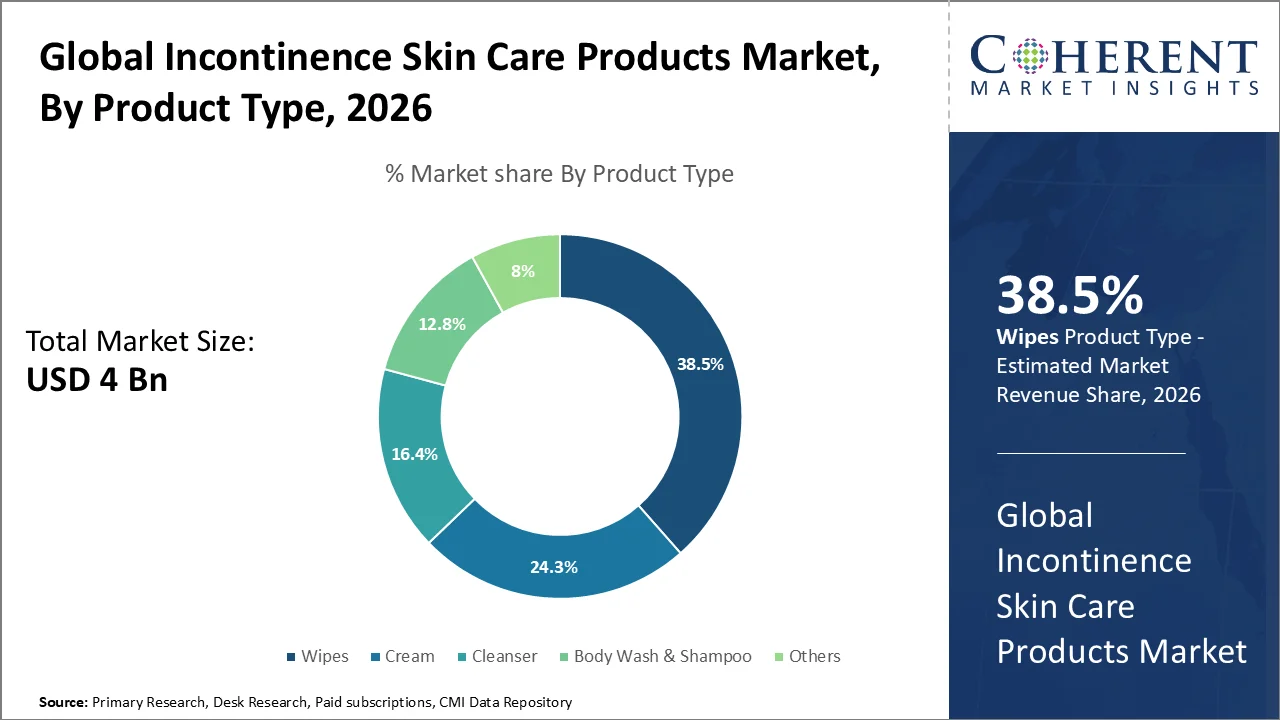
- The wipes segment is likely to dominate the market with 38.5% in 2026. The segment’s growth is owing to the convenient application, effective cleansing, portability, and suitability for frequent use.
- The supermarkets segment is set to lead with 31.2% in 2026. The segment’s growth is owing to the extensive product availability, competitive pricing, private-label offerings, and convenient one-stop purchasing.
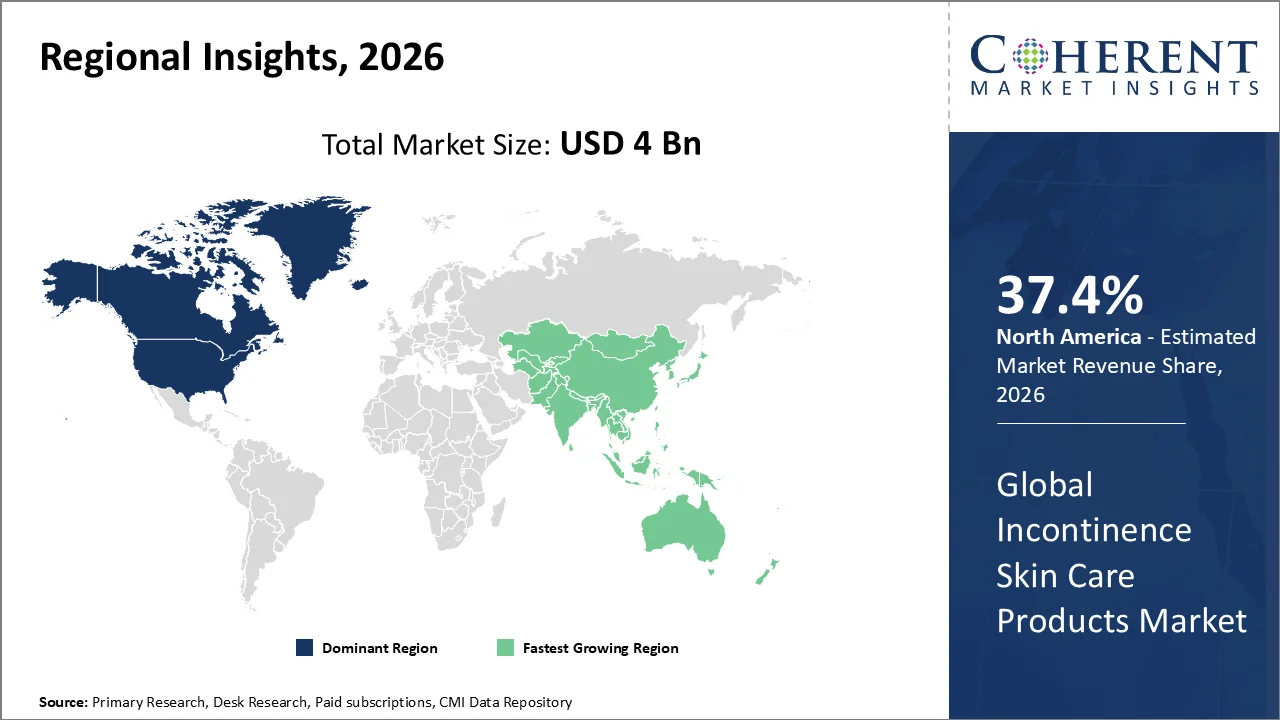
- North America is expected to acquire the prominent share of 37.4% in 2026. The region’s growth is owing to the expanding elderly population, high awareness of continence care, and developed retail and healthcare infrastructure. The U.S. population aged 65 years and above reached 61.2 million in 2024, increasing by 3.1% annually.
Segmental Insights
Why is Wipes Segment Acquiring the Largest Share?
On the basis of product type, the wipes segment is projected to account for the largest Incontinence Skin Care Products Market share of 38.5% in 2026. The segment’s growth is owing to the rapid, waterless cleansing, portability, caregiver convenience, and ability to reduce prolonged contact between fragile perineal skin and urine or feces.
CDC/NCHS survey data show that 43.8% of noninstitutionalized Americans aged 65 years and older reported urinary leakage, creating a substantial recurring need for gentle cleansing products.
In April 2026, WaterWipes expanded its personal care portfolio by launching Feminine and Incontinence Care Wipes made with over 99% water and minimal ingredients. The incontinence range offers three extra-large, pH-friendly options supporting cleansing, odor control, hydration, and skin-barrier protection.
- Current Industry Events of 2026
- Market Size Estimation
- Regional Breakdown
- Competitive Landscape
- Customer Intelligence
- Segmental Analysis
- Pricing Analysis
- Key Market Drivers, Challenges & Future Trends
- Customized Insights Section
Supermarkets hold the Largest Market Share
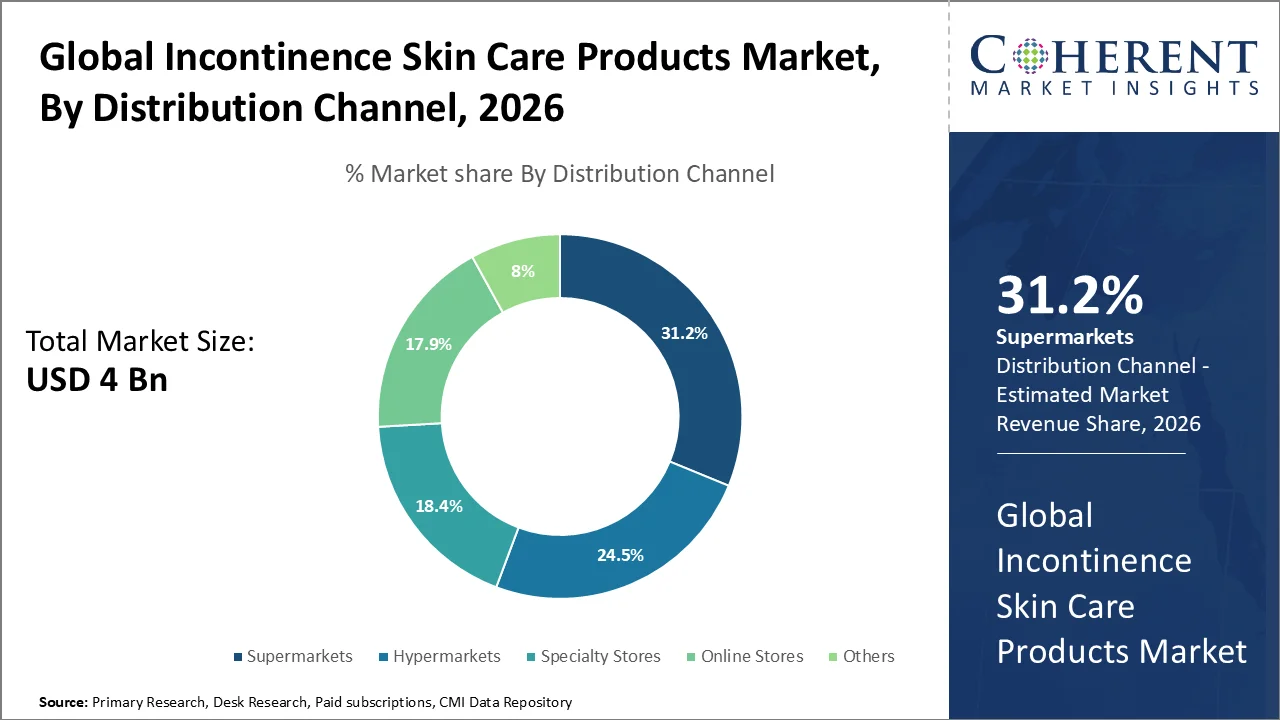
On the basis of distribution channel, the supermarkets segment lead with a major 31.2% share in 2026. The growth is owing to the access, discreet self-selection, competitive pricing, promotions, and convenient purchase of wipes, cleansers, barrier creams, and moisturizers alongside absorbent products.
The CDC estimates urinary incontinence affects 15%–30% of people aged 60 years and older in the U.S., supporting recurring demand for products that protect skin from prolonged urine exposure. NHS England also reports that more than 14 million people in the U.K. experience bladder problems, thereby indicating a large consumer base requiring hygiene and skin-barrier care.
Market Drivers
Rising Incontinence Burden is Driving Demand for Incontinence Skin Care Products
Urinary and fecal incontinence expose the perineal skin to moisture, digestive enzymes, changes in skin pH, and repeated friction during cleansing. Prolonged or repeated exposure can weaken the skin barrier and contribute to inflammation, redness, erosion, pain, and incontinence-associated dermatitis. Consequently, continence management increasingly includes products that cleanse gently, moisturize dry or fragile skin, and form a protective barrier against subsequent exposure.
Fecal incontinence creates an especially high risk of skin damage because stool contains digestive enzymes and microorganisms. A global systematic review covering 548,316 community-dwelling adults estimated pooled fecal-incontinence prevalence at 8.0%. Prevalence was 9.3% among people aged 60 years and above, compared with 4.9% among younger adults.
The United Nations reports that the population aged 60 years and above increased to approximately 1.2 billion in 2025 and is projected to reach 2.1 billion by 2050. WHO also identifies urinary incontinence as one of the complex geriatric syndromes that becomes more common with aging. The combination of population aging and continence-related functional dependence is expected to increase recurring consumption of wipes, wash creams, no-rinse cleansers, barrier creams, protective sprays, and barrier films across hospitals, care homes, and home-care environments.
Innovations in Multifunctional Wipes are Transforming the Incontinence Skin Care Products Market in Germany
Germany is an important market for incontinence skin care because of its aging population, organized pharmacy and medical-supply channels, developed residential-care sector, and presence of established continence-care manufacturers. Product innovation is focused on simplifying skin care for users and caregivers by combining cleansing, moisturization, and barrier protection in one product.
In 2025, HARTMANN relaunched its MoliCare SKIN 3-in-1 wet wipes for adults. The product is designed for sensitive and incontinence-stressed skin and is positioned as a water-free solution for use at home, during travel, and in professional care settings. Each wipe performs three functions of cleansing contaminants, moisturizing the skin, and depositing a protective layer.
The formulation contains 3% dimethicone, which forms a breathable protective barrier. It also includes amino acids, sweet almond oil, and essential fatty acids for skin conditioning. The wipes are pH-balanced to support the skin’s natural barrier and minimize irritation.
Current Events and Their Impact on the Incontinence Skin Care Products Market
Current Event | Description and its Impact |
FDA implementation of MoCRA registration requirements |
|
FY 2026 Medicare Skilled Nursing Facility Payment Update in the U.S. |
|
Incontinence Skin Care Products Market Trends
- The rising adoption of pH-balanced, alcohol- and fragrance-free no-rinse cleansers and pre-moistened wipes minimizes friction, preserves skin-barrier function, as well as improves caregiver efficiency.
- Multifunctional 3-in-1 wipes combining cleansing, protection, and moisturization simplify care routines, reduce product steps, and encourage consistent use in hospitals and long-term care
- Durable film-forming barriers containing dimethicone, acrylate terpolymers, or cyanoacrylate are gaining traction. They assist in providing breathable protection, resisting wash-off, and enabling continuous skin inspection.
- Aging global populations and rising urinary and fecal incontinence prevalence are increasing the demand for preventive creams, cleansers, wipes, and protectants. As of 2026, a Swedish elderly-population study reported urinary incontinence among 28% of men and 42% of women aged above 80 years. WHO expects the global population aged 80 years and older to triple to 426 million by 2050.
- Evidence-based incontinence-associated dermatitis protocols is strengthening the institutional product adoption and standardized skin-care purchasing. The 2026 Wounds International best-practice update recommends cleansing at every continence-product change, prompt cleansing after fecal episodes, and consistent barrier protection. It also reports that structured care bundles using barrier-cream cloths reduced dermatitis prevalence while lowering product costs and hospital length of stay.
Regional Insights
North America Dominates Owing to the High Incontinence Prevalence
The North America region accounts for 37.4% of the market share in 2026. The region’s growth is owing to the large incontinence-affected population, extensive long-term-care infrastructure, and routine use of barrier creams, no-rinse cleansers, protective wipes, and moisturizers to limit urine- and feces-related skin damage.
In the United States, NIDDK reports that about 54% of women aged 20 years and older experienced urinary incontinence during the previous 12 months, indicating a substantial recurring need for preventive perineal skin care.
A notable 2026 product-development initiative began at the University of Alberta in May. A recruiting randomized study is evaluating whether a 0.5% beta-glucan moisturizing cream added to standard cleansing and barrier protection can improve healing, discomfort, safety, and tolerability in adults with incontinence-associated dermatitis during hospital care.
Asia Pacific Incontinence Skin Care Products Market Trends
Asia Pacific is expected to witness strong growth in market over the forecast period. The region’s growth is owing to the expanding elderly population, rising institutional care needs, and focus on preventing incontinence-associated dermatitis (IAD).
Japan had 36.24 million people aged 65 years and above in 2024, representing 29.3% of its population, indicating a user base requiring continence and perineal skin care. Australia’s Department of Health reports that 6%–23% of residential aged-care recipients experience IAD, supporting demand for barrier creams, skin cleansers, wipes, and no-rinse formulations.
Need for Moisture-associated Skin Damage Prevention is Accelerating the Incontinence Skin Care Products Market in Canada
In Canada, the Incontinence Skin Care Products Market is influenced by the country’s ageing population and sustained need for moisture-associated skin damage prevention. Health Canada and the Public Health Agency of Canada estimate that more than one in five Canadian seniors experiences bladder-control problems, thereby supporting the demand for gentle cleansers, barrier creams, protective ointments, and wipes.
In June 2026, ClinicalTrials.gov updated Scotiaderm’s randomized study evaluating Dermategrity Everyday Barrier Cream against standard zinc oxide for fecal incontinence-associated skin damage. The 40-patient trial will assess healing, erythema, symptoms, safety, and satisfaction over 14 days in an ambulatory population.
China Incontinence Skin Care Products Market Trends
China’s Incontinence Skin Care Products Market is expanding as population ageing increases people requiring continence management and protection against moisture-associated skin damage. China’s National Bureau of Statistics reported 223.09 million people aged 65 years or older in 2025, representing 15.87% of the population, supporting demand for barrier creams, cleansers, wipes, and protective films.
In December 2025, the Chinese Clinical Trial Registry recorded the launch of a Shanghai Pudong New Area Gongli Hospital study evaluating the clinical effectiveness and cost-effectiveness of a skin protectant for elderly patients with mild incontinence-associated dermatitis. This highlights institutional focus on evidence-based product selection and skin-integrity outcomes.
Who are the Major Companies in Incontinence Skin Care Products Industry
Some of the major key players in Incontinence Skin Care Products Market are Abena Group, Svenska Cellulosa AB, Attends Ltd, ConvaTec Group Plc., Coloplast A/S, Emilia Personal Care, Medline Industries Inc., and Coloplast.
Key News
- In June 2026, Vernacare launched the Conti Kind Collection, a range of plastic-free dry and wet cleansing wipes for continence care and patient hygiene. Made from plant-based fibres, the wipes provide gentle cleansing, strength, absorbency, and support healthcare sustainability goals.
- In February 2026, Ontex launched its Sensitive adult incontinence range in European healthcare institutions, combining protection with skin-health support. The products feature faster absorption, hypoallergenic materials, odor control, botanical ingredients, and caregiver training to help prevent dermatitis and irritation effectively.
Market Report Scope
Incontinence Skin Care Products Market Report Coverage
| Report Coverage | Details | ||
|---|---|---|---|
| Base Year: | 2025 | Market Size in 2026: | USD 4 Bn |
| Historical Data for: | 2020 To 2024 | Forecast Period: | 2026 To 2033 |
| Forecast Period 2026 to 2033 CAGR: | 5.1% | 2033 Value Projection: | USD 5.67 Bn |
| Geographies covered: |
| ||
| Segments covered: |
| ||
| Companies covered: | Abena Group, Svenska Cellulosa AB, Attends Ltd, ConvaTec Group Plc., Coloplast A/S, Emilia Personal Care, Medline Industries Inc., and Coloplast. | ||
| Growth Drivers: |
| ||
| Restraints & Challenges: |
| ||
Analyst Opinion
- Incontinence skin care products are driven by clinical need. More than 200 million people worldwide experience urinary or faecal incontinence, creating demand for cleansers, moisturizers, barrier creams, and protective wipes that help maintain skin integrity and prevent avoidable complications.
- Older adults represent a major demand group. Incontinence affects approximately 60–80% of people in geriatric and long-term care settings. This is because repeated exposure to urine or stool increases the risk of skin irritation and incontinence-associated dermatitis.
- Preventive skin care is becoming central to continence management, as studies report incontinence-associated dermatitis in 13.3% of incontinent older-care residents and up to 45.7% of incontinent acute-care patients. This burden is encouraging hospitals, nursing homes, and home-care providers to adopt structured cleansing, moisturizing, and barrier-protection protocols, supporting wider use of pH-balanced cleansers, barrier creams, and disposable skin-protection products.
Speak to the analyst
Want personalized insights?
Take the findings above to one of our principal consultants, or have the report rebuilt around the segments, geographies and competitors you actually track.
Market Segmentation
- By Product Type (Revenue, USD Bn, 2021-2033)
- Wipes
- Wet Wipes
- Dry Wipes
- Cream
- Barrier Cream
- Repair Cream
- Cleanser
- Body Wash & Shampoo
- Others
- Wipes
- By Distribution Channel (Revenue, USD Bn, 2021-2033)
- Hypermarkets
- Supermarkets
- Specialty stores
- Online Stores
- Others
- By Region (Revenue, USD Bn, 2021-2033)
- North America
- U.S.
- Canada
- Latin America
- Brazil
- Mexico
- Argentina
- Rest of Latin America
- Europe
- Germany
- U.K.
- France
- Italy
- Spain
- Russia
- Rest of Europe
- Asia Pacific
- China
- India
- Japan
- Australia
- South Korea
- ASEAN
- Rest of Asia Pacific
- Middle East
- GCC
- Israel
- Rest of Middle East
- Africa
- South Africa
- Central Africa
- North Africa
- North America
Sources
Primary Research Interviews
- Dermatologists
- Wound, ostomy, and continence nurses
- Urologists and urogynecologists
- Geriatricians and elderly-care specialists
- Hospital and long-term care facility administrators
- Nursing home and home healthcare managers
- Incontinence skin care product manufacturers
- Medical and personal care product distributors
- Pharmacists and retail procurement managers
- Key opinion leaders (KOLs) in wound care, continence management, and dermatology
Databases
- World Health Organization (WHO)
- Centers for Disease Control and Prevention (CDC)
- National Institutes of Health (NIH)
- Organisation for Economic Co-operation and Development (OECD)
- Centers for Medicare & Medicaid Services (CMS)
- Eurostat
- United Nations Population Division
- National Health Service (NHS)
Magazines
- Wound Management & Prevention
- Wounds International
- Advances in Skin & Wound Care
- McKnight’s Long-Term Care News
- HomeCare Magazine
- Nursing Times
Journals
- Journal of Wound, Ostomy and Continence Nursing
- International Wound Journal
- Journal of Clinical Nursing
- Advances in Skin & Wound Care
- BMC Geriatrics
- Neurourology and Urodynamics
- International Urogynecology Journal
Newspapers
- The New York Times
- The Guardian
- The Wall Street Journal
- Financial Times
- The Washington Post
Associations
- Wound, Ostomy and Continence Nurses Society
- International Continence Society
- European Wound Management Association
- Association for Continence Advice
- Society of Urologic Nurses and Associates
- American Urological Association
- International Society of Dermatology
Public Domain Sources
- Company Annual Reports and Investor Presentations
- Government Health Ministry Publications
- Public Healthcare Expenditure and Demographic Databases
- Product Approval and Medical Device Regulatory Databases
- Clinical Trial Registries, such as ClinicalTrials.gov
- Hospital, Nursing Home, and Long-Term Care Statistics
- Company Product Catalogues, Press Releases, and Sustainability Reports
- Patent Databases and Scientific Conference Proceedings
Proprietary Elements
- CMI Data Analytics Tool
- Proprietary CMI Existing Repository of Information for Last 10 Years
Get access to 250+ pages report
Every segment, forecast, competitor profile and data table behind the analysis above — available for instant download.
- ESOMAR Member
- ISO 9001:2015 Certified
- D-U-N-S Registered
- GDPR & CCPA Compliant
Missing comfort of reading report in your local language? Find your preferred language:
Transform your Strategy with Exclusive Trending Reports
Frequently Asked Questions
The Incontinence Skin Care Products Market is expected to reach USD 5.67 Bn in 2033.
Major players operating in the global Incontinence Skin Care Products Market include Abena Group, Svenska Cellulosa AB, Attends Ltd, ConvaTec Group Plc., Coloplast A/S, Emilia Personal Care, Medline Industries Inc., and Coloplast.
The high product costs, lack of insurance reimbursement, social stigma, and environmental waste concerns are the key factors hampering growth of the market.
The rising geriatric population, increased awareness of personal hygiene, and continuous product innovations is boosting the demand for Incontinence Skin Care Products.
The Incontinence Skin Care Products Market is anticipated to grow at a CAGR of 5.1% between 2026 and 2033.
Among regions, North America is expected to account for a largest market share in the global Incontinence Skin Care Products Market over the forecast period.
The market outlook remains positive due to growing aging population, rising personal hygiene awareness, and technical advancements in skin-friendly formulations.